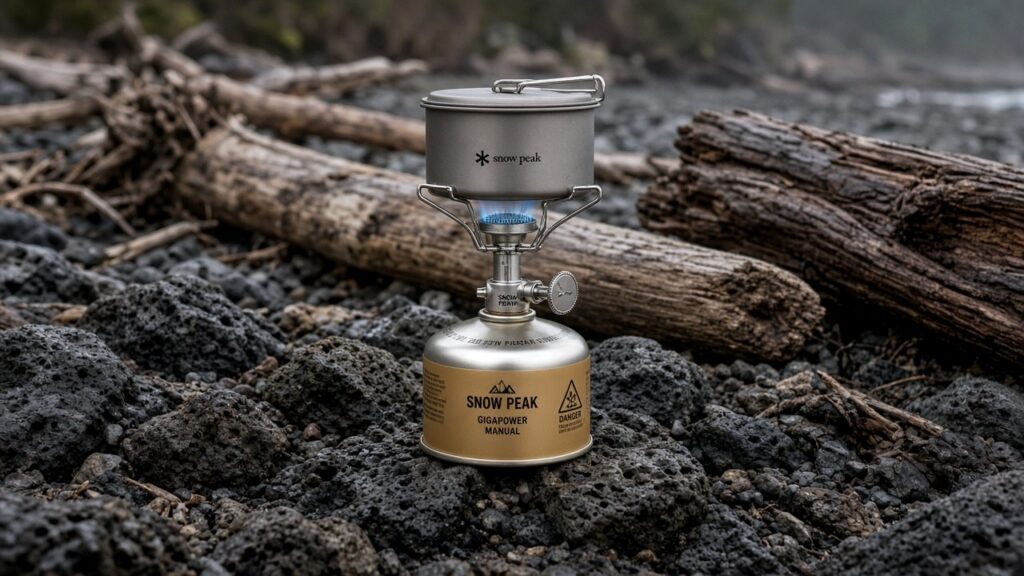
Buy if you want a genuinely compact solo cookset that gives you both a 900 ml pot and a separate fry-pan lid, while nesting a GigaPower stove, roughly 250 g fuel canister, and Trek 700 inside. Skip if you routinely cook thick foods that need sustained heat, want heavy cookware with forgiving heat distribution, or rarely use the fry pan.
What Stands Out
- Two cooking surfaces: The 900 ml pot and separate fry-pan lid give me a pot for boiling and a second surface for eggs, tortillas, small sauté jobs, or covering the pot.
- Highly efficient nesting: The cookset nests a GigaPower stove and approximately 250 g fuel canister inside, with a Trek 700 fitting inside and a Trek 1400 fitting over it.
- Complete cookset weight: Snow Peak’s official retail weight is 6.2 oz / 175 g for the cookset, not merely the pot.
- Ultralight titanium construction: Titanium keeps the kit light without giving up the durability I want for repeated trail use.
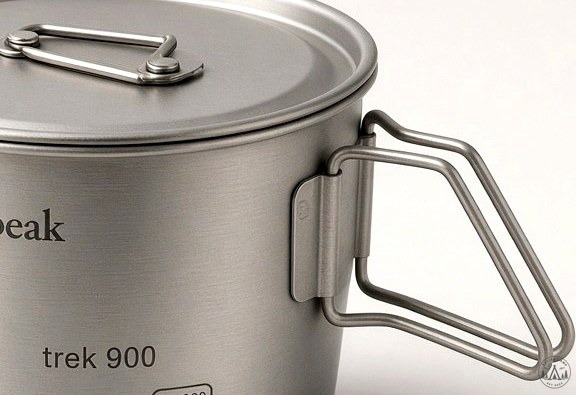
- Folding handle: The folding handle keeps the 900 ml pot compact when packed and gives me a simple way to handle it over the stove.
- Fast heat response: The thin titanium walls heat quickly, which makes the cookset particularly effective for boiling and requires more technique when preparing thicker foods.
- Solo-focused capacity: The approximately 30.4 fl oz / 900 ml capacity is well matched to solo meals and fast-and-light overnight cooking rather than group-sized portions.
In The Field
The Snow Peak Trek 900 Titanium Cookset is best understood as cookware, not a stove system. Its appeal is the combination of ultralight titanium construction, a 900 ml pot, a separate 5-inch fry-pan lid, folding handle, and unusually efficient nesting. At 6.2 oz / 175 g for the complete cookset, it is light enough for fast-and-light overnights while still giving me two cooking surfaces. The thin titanium walls heat quickly, which is excellent when boiling water but requires more attention when cooking thicker foods that can scorch.
The Snow Peak Trek 900 Titanium Cookset is one of those pieces of gear that makes more sense once I stop looking at the individual components and look at the packed system.
On a fast-and-light overnight in the Cascades, I don’t necessarily want a collection of cooking equipment. I want one compact package that gives me a pot, a pan, and a place for the rest of the cooking kit to disappear. That is where the Trek 900 works particularly well.
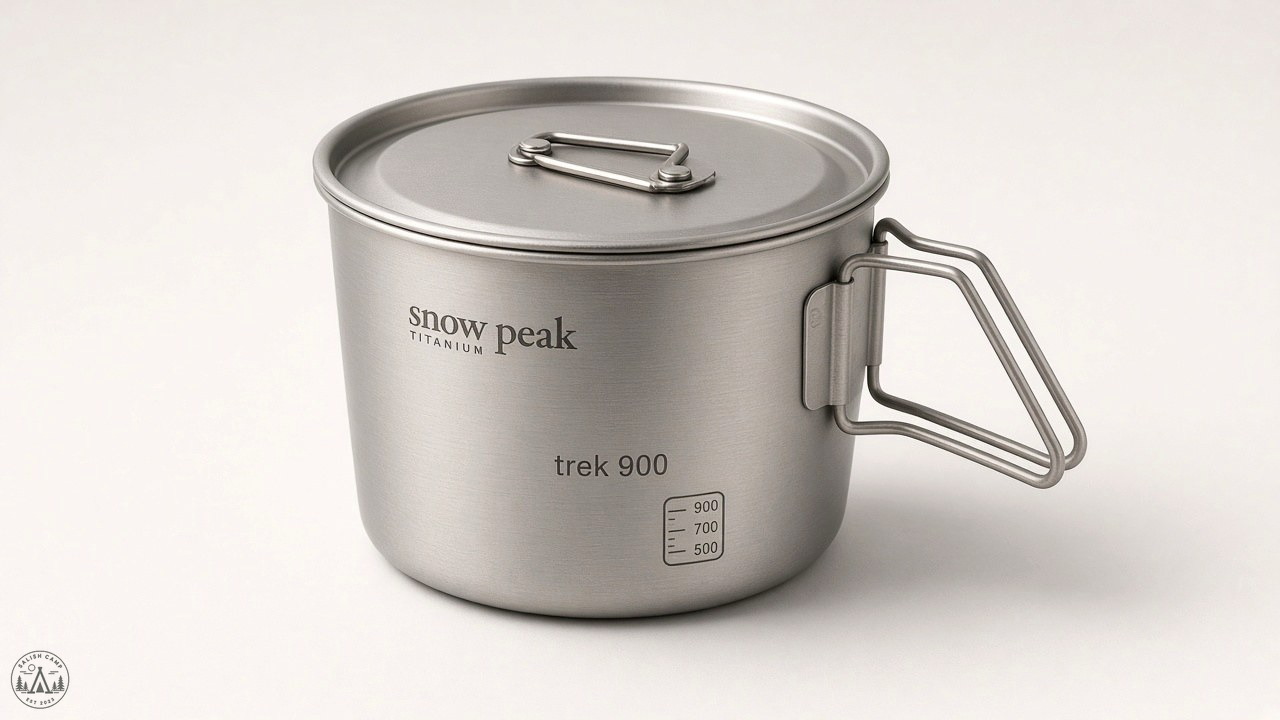
The first thing I notice is the weight. The official retail weight for the cookset is 6.2 ounces / 175 grams. That distinction matters because I am not looking at a pot-only specification. The package includes the 900 ml pot, separate fry pan, and mesh bag.
For a novice, I would start by treating the cookset as a nesting exercise rather than immediately trying to cook with it. The folding handle needs to be understood in its folded and deployed positions, and I want to make sure the components fit together cleanly before I am standing beside a trail camp trying to make dinner. Once I understand the packing order, the compactness becomes one of the best features.
The cookset can nest a GigaPower stove and approximately 250 g fuel canister, with a Trek 700 fitting inside and a Trek 1400 fitting over it. That is a lot of cooking equipment organized around a relatively small titanium pot.
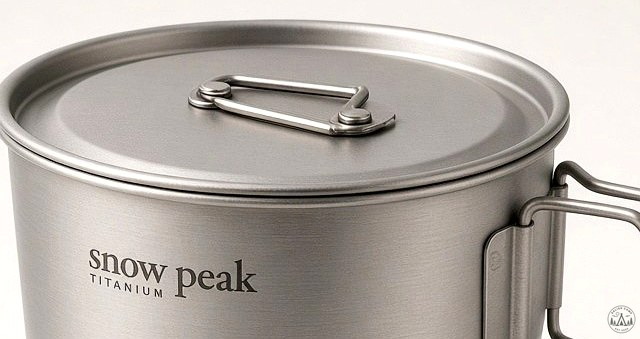
This is particularly useful for the way I approach short PNW trips. I can build the cooking kit around the Trek 900 rather than treating every piece as a separate object. The pot becomes the container for the stove and fuel, while the larger Trek components can nest around it.
The result is less about carrying an impressively light pot and more about getting an efficient cooking system into my pack. The 900 ml capacity is also well chosen for solo use. At 30.4 fluid ounces, it is large enough for the kind of meals I actually want on a fast-and-light overnight while remaining compact enough that I do not feel like I am carrying excess cookware.
The separate fry-pan lid is what makes the cookset more interesting than a basic titanium pot. I can use the 900 ml vessel for boiling water or cooking a meal while using the fry pan as a separate cooking surface. That means eggs can go in the pan while something else heats in the pot. I can use the pan for a tortilla or small sauté job, or simply use it as a lid when that is more useful.
Having two cooking surfaces does not magically turn a solo cookset into a camp kitchen, but it gives me more options without requiring another large piece of cookware. The 5-inch diameter fry pan is compact, so I keep my expectations realistic. This is a solo cooking surface, not a large skillet. Its value is that it is already part of the package.
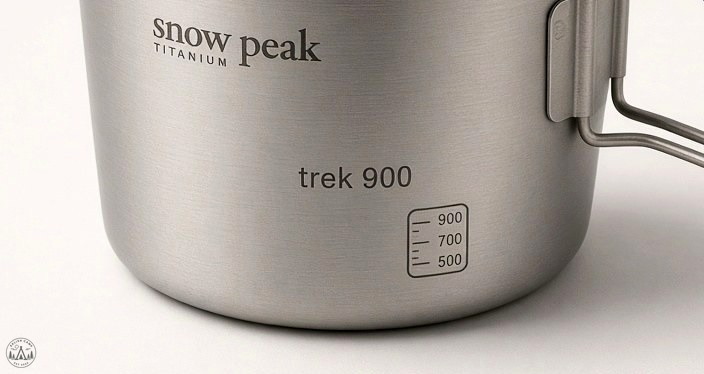
The titanium construction is another major reason I like the Trek 900 for fast-and-light trips. Titanium gives me the strength and durability I expect from trail cookware without adding much mass. The folding handle contributes to the compact packed profile, and the entire cookset can disappear into a small area of the pack.
There is, however, a technique adjustment that comes with thin titanium. The walls heat quickly. That is excellent when my objective is boiling water. I can bring water up to temperature without waiting for a heavy vessel to absorb and distribute a lot of heat. But that same responsiveness can become a liability when I put thicker food directly into the pot.
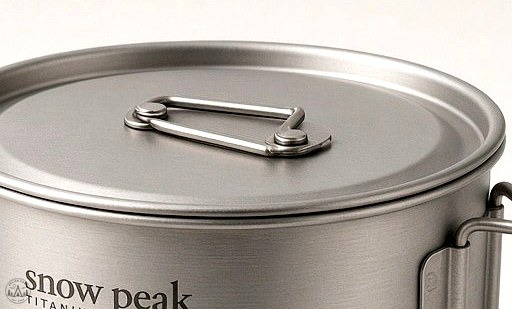
Thick foods can scorch if I treat the Trek 900 like heavy cookware. That is probably the most important novice-use lesson with this cookset: thin titanium rewards attention.
I use an appropriate flame rather than automatically running the burner at maximum output. I stir thicker food frequently. I pay attention to what is happening at the bottom of the pot instead of assuming that a fast boil translates into equally forgiving cooking performance. For simple boil-and-eat meals, this is barely an issue. Add oatmeal, a thick sauce, or another food that wants to stick, and technique matters considerably more.
Snow Peak describes the cookware for measuring, straining, and boiling over heat sources, which is a useful way to think about its intended role. The cookset is optimized around versatile trail cooking rather than pretending to provide the thermal behavior of thick, heavy cookware.
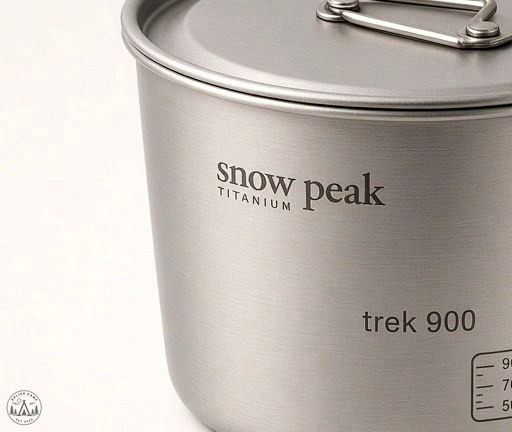
The Trek 900 also works particularly well for the type of meal I want after a long day in the Pacific Northwest: something fast, hot, and reasonably simple. I can boil water, cook a compact meal, use the fry pan for a separate component, and pack everything away without a long cleanup session. On an overnight where I am trying to keep moving, that matters.
The mesh bag gives me a dedicated place to keep the cookset together, and the folding handle helps keep the pot compact during transport. The nesting is arguably the bigger win, though.
When the GigaPower stove and approximately 250 g fuel canister disappear inside the Trek 900, I am no longer thinking about the stove and fuel as separate pieces of gear. The Trek 700 can fit inside, while the Trek 1400 can fit over it. That nesting flexibility makes the cookset useful as part of a broader Snow Peak cookware setup as well as on its own.
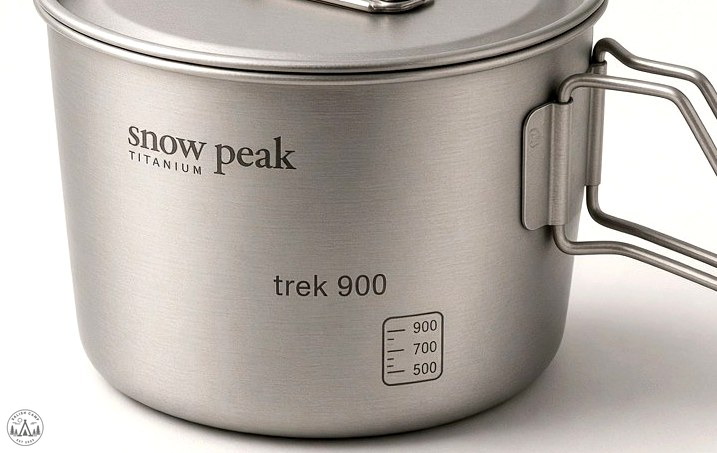
There is a subtle difference between the Trek 900 being ultralight and being ultralight cookware that behaves like heavy cookware. It does not. The titanium is thin. The heat response is quick. That is part of why the cookset weighs only 6.2 ounces / 175 grams. If I use the cookware with that understanding, I get the benefits without fighting the material.
In the Cascades, that means I am happiest using the Trek 900 for fast meals, boiling, straining, and straightforward solo cooking. I use the fry pan when I want a second surface, and I keep the heat controlled when the food itself is more prone to scorching.
The cookset also encourages a particular kind of packing discipline. Because so much equipment can nest into and around the pot, I can establish a repeatable packing order. Stove inside. Fuel positioned appropriately. Trek 700 inside when I am carrying it. Trek 1400 over the assembly when that larger piece is part of the kit. Mesh bag around the cookware.
That consistency matters on the trail. I do not have to dig through several pockets looking for a small stove component at camp.
The Trek 900 is therefore less about any single specification and more about how efficiently the specifications work together. A 900 ml capacity gives me a useful solo vessel. Titanium keeps the cookset light. The folding handle reduces bulk. The fry pan creates a second cooking surface. And the nesting geometry lets the cooking kit become one compact package.
For a fast-and-light overnight in the Pacific Northwest, that is a compelling combination.
The limitation is equally straightforward: this is still thin titanium cookware. If I expect to cook dense, thick food without paying attention to heat and stirring, the material will punish that technique. If I want a big cooking surface, the 5-inch fry pan is not going to provide it.
But those are reasonable limitations for a 6.2-ounce cookset. I would rather understand how the Trek 900 wants to be used than criticize it for not behaving like cookware built around entirely different priorities.
For solo trail cooking, the priorities are clear: low weight, compact nesting, two cooking surfaces, and fast heating. The Trek 900 delivers those priorities in a remarkably small package.
Pros
- Two-purpose cookware: The 900 ml pot and separate 5-inch fry pan provide two cooking surfaces without requiring a second dedicated pan.
- Excellent nesting: The cookset accommodates a GigaPower stove and approximately 250 g fuel canister, with Trek 700 nesting inside and Trek 1400 fitting over it.
- Very low complete-kit weight: The official 6.2 oz / 175 g cookset weight includes the pot, fry pan, and mesh bag.
- Trail-friendly titanium: Thin titanium and a folding handle keep the complete cookset compact and exceptionally light for fast-and-light trips.
Cons
- Thin walls require technique: Titanium heats quickly, so thick foods can scorch if I use excessive heat or fail to stir.
- Small fry pan: The 5 × 1.5-inch fry pan is useful for solo portions but provides limited cooking area.
- Solo-sized capacity: The 30.4 fl oz / ~900 ml pot is optimized for solo meals rather than large portions.
| Product | Snow Peak Trek 900 Titanium Cookset |
|---|---|
| SKU | SCS-008T |
| Brand | Snow Peak |
| Price | $54.95 |
| Weight | 6.2 oz / 175 g (cookset) |
| Capacity | 30.4 fl oz (~900 ml) |
| Pot size | D 4.75 × H 4.25 in |
| Pan size | D 5 × H 1.5 in |
| Contents | Pot, fry pan, mesh bag |
| Materials | Titanium |
| Nesting | GigaPower + ~250 g fuel; Trek 700 in; Trek 1400 over |
| Best for | Solo boil-and-eat kits |
| Field focus | Fast-and-light overnights |
| Buy | snowpeak.com/products/trek-900-titanium-cookset |
Final Thoughts
The Snow Peak Trek 900 Titanium Cookset succeeds because it is not trying to be a general-purpose kitchen. It is compact solo cookware designed around efficient packing and fast-and-light use.
The 6.2-ounce / 175-gram complete cookset weight is the number I would pay attention to. That is the weight of the cookset, not merely the pot, and it includes the separate fry pan and mesh bag. The combination gives me two cooking surfaces while the nesting arrangement can absorb a GigaPower stove, approximately 250 g fuel canister, Trek 700, and Trek 1400. That is an unusually efficient use of space.
The titanium construction and folding handle make sense for the same reason. This is cookware for someone who cares about pack volume and trail weight, but still wants more versatility than a single pot provides.
The tradeoff is cooking technique. Thin titanium heats rapidly, which I love for boiling but respect when cooking anything thick. I keep the heat controlled and pay attention to the food rather than assuming the pot will distribute heat like heavier cookware.
For solo boil-and-eat kits and fast-and-light PNW overnights, the Trek 900 hits a very specific target: a 900 ml pot, a separate fry-pan lid, and an exceptionally compact nesting package at just 6.2 ounces.
That is what makes it useful. Not that it is simply titanium, and not that it is simply light, but that the entire cookset has been designed to make a small solo cooking kit occupy remarkably little space in the pack.
For burners that nest with this cookset, see GigaPower, PocketRocket Deluxe, and Soto WindMaster. Integrated systems are covered in the Jetboil Flash, Primus Lite+, and Reactor 1.7L; basecamp cooks should compare the Flat Burner. Stability accessories include the Camping Moon Z01 stand, and use the Nemo Dragonfly Osmo 2P or Amenity Dome M as a reminder that shelter and kitchen choices are connected.