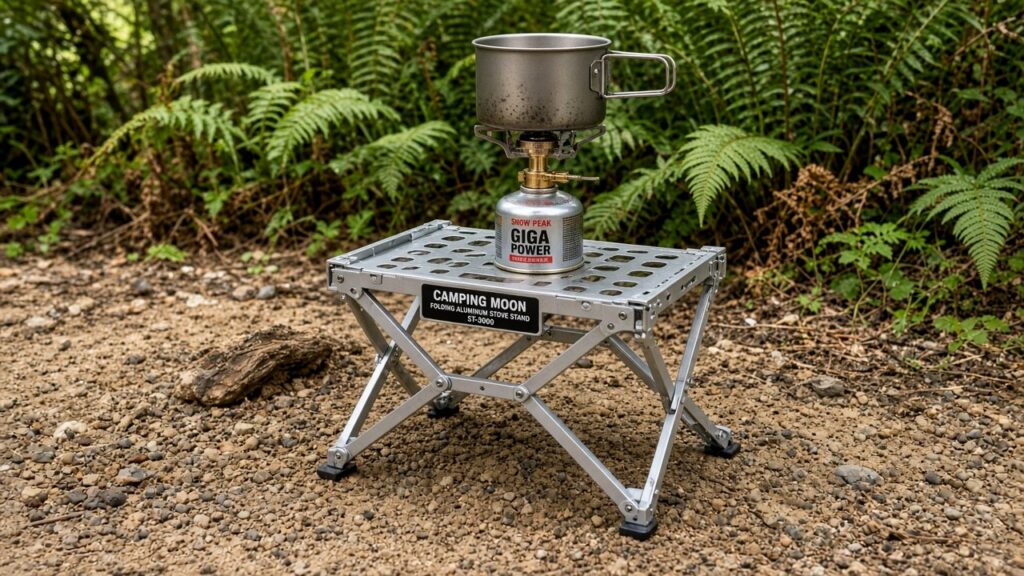
Buy if you use an upright EN417 canister stove on uneven ground, cook with larger pots, or want a high/short stand that gives a canister stove a much more stable base. Skip if you are looking for an ultralight accessory, need a windscreen, or only use small cookware on flat tables where additional stability is unnecessary.
What Stands Out
- Two-stage High/short configuration: The divided lower support lets the Z01 operate at two heights, giving me a taller cooking position or a shorter, more compact configuration depending on the cookware and setup.
- Large notched SS304 upper trivet: The upper support is deliberately broad and notched to accommodate larger pots while keeping the cookware positioned over the stove.
- 22-pound load capacity: At 22 lb / 10 kg, the Z01 is built around stability rather than saving a few vanity grams.
- 450 g canister support: The Z01 accepts 110 / 227 / 450 g EN417 canisters; the larger 450 g / 16 oz capacity is a meaningful distinction from the lower-capacity Z02.
- Built-in check valve: The EN417 Lindal in/out interface incorporates a check valve that helps prevent the stand from leaking while it is attached to the canister.
- Table-friendly rubber feet: Rubber feet let the stand sit directly on a table without the metal support scratching the surface.
- Expandable interface: Compatibility with the Z03 spacer adapter and multi-outlet adapters gives the Z01 more flexibility than a basic canister support.
In The Field
The Camping Moon Smart Stove Stand (High), Z01 / US-Z01, solves a specific problem: upright canister stoves can be remarkably top-heavy once you put a large pot on them. The Z01 adds a substantial support structure around the canister, with a large notched SS304 upper trivet, two-stage height adjustment, rubber feet, and a stated 22-pound / 10 kg load capacity. The roughly 11-ounce weight is the tradeoff. I would not describe that weight as unnecessary bulk. It is the stability tax for a stand designed to support up to 22 pounds and accommodate 450 g / 16 oz EN417 canisters.
Just as important, this is not a windscreen. The stand stabilizes the stove and canister on uneven ground; it does not block wind around the burner.
I first appreciate the Camping Moon Smart Stove Stand (High) when the ground is exactly the way I expect a Pacific Northwest campsite to be: uneven, damp, and not particularly interested in helping me cook dinner.
At a flat picnic table, an upright canister stove can seem perfectly stable. Put that same stove on uneven ground, add a large pot, and the geometry changes quickly. The cooking vessel becomes a lever above a relatively small base. The Z01 addresses that problem by making the entire stove-and-canister assembly much more substantial.
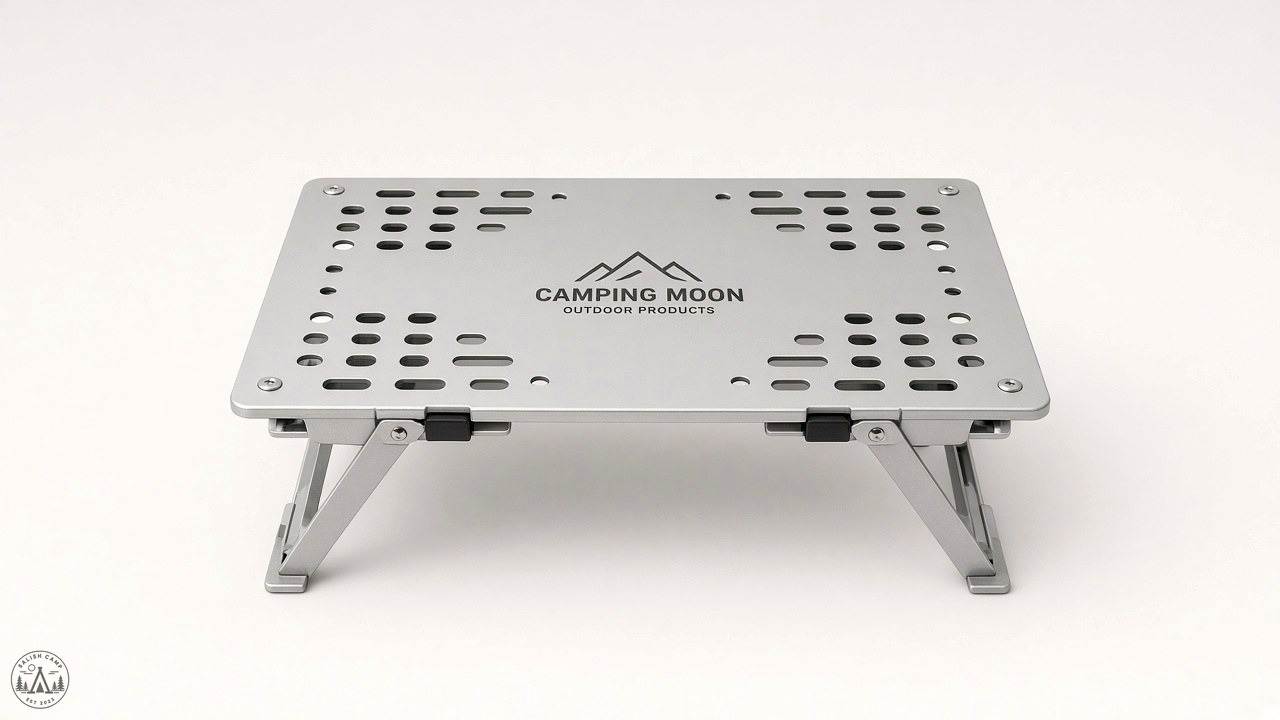
The first thing I would explain to someone using the Z01 for the first time is that this is a stand for the stove and canister, not a replacement burner. The stove screws onto the stand, and the stand then interfaces with the canister. The distinction matters because the Z01 becomes part of the support structure beneath an existing upright canister stove.
Once I understand that sequence, the setup is straightforward. I select the appropriate height configuration, assemble the divided lower support, position the stand securely, and then attach the stove and canister according to the intended interface. I want everything seated correctly before putting a pot on top.
The Z01 has two height modes: High and short. The divided lower support is what makes that possible. For a novice, I would keep the first setup deliberately slow. I want to understand how the two-stage support locks together and how the stove, stand, and canister relate before trying to cook.
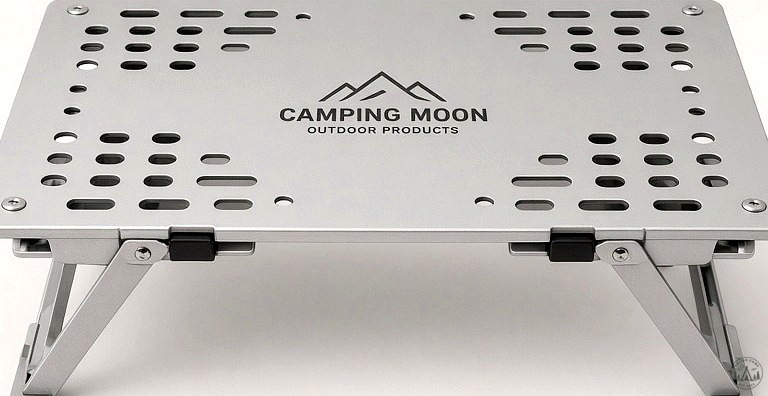
The reason for carrying the Z01 becomes obvious when I put a larger pot on the upper trivet. The trivet is made from SS304 and has a large, notched shape that provides considerably more support than the small pot supports found on many upright stove configurations.
The important point is not simply that the trivet is large. It is that the whole assembly is designed around keeping a loaded cooking vessel stable. That is particularly useful in the Cascades, where I routinely encounter ground that looks level until I actually put something on it. A few degrees of slope can make a loaded pot feel surprisingly precarious. The Z01 gives me a larger footprint and more confidence in the cooking setup.
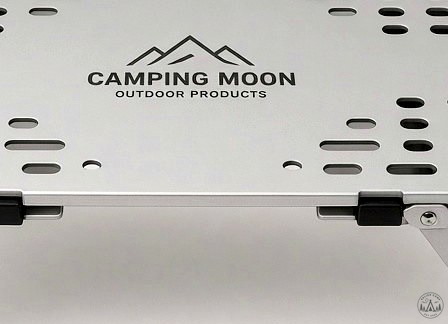
The roughly 11-ounce weight is impossible to ignore, but I think it is easy to misunderstand what that weight represents. This is not a product where the manufacturer has added a bunch of material simply because ultralight performance was never a consideration. The Z01 is rated to support 22 pounds / 10 kg. That is a very different design target from building the lightest possible canister stand.
I think of the 11 ounces as a stability tax. If I am carrying an upright canister stove because I want the convenience and cooking height it provides, adding a stand that substantially improves its stability can be worthwhile. The question is not whether 11 ounces is heavy in isolation. The question is whether I value the stability enough to carry those 11 ounces. For a base-camp dinner in the North Cascades, I generally do.
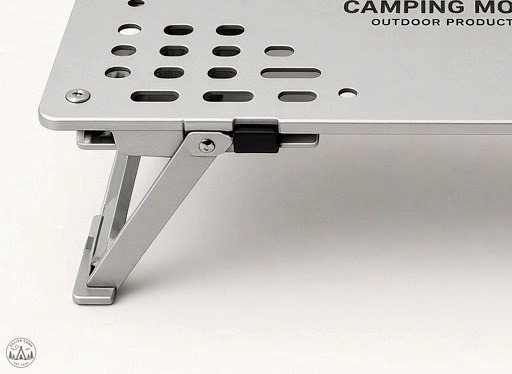
The large upper trivet also changes how I approach cookware. With a bigger pot, I want the support points to feel intentional. The Z01’s notched SS304 trivet gives the cookware a broader platform while maintaining the necessary opening around the stove.
That makes it easier to work with a pot that is carrying several pounds of food and water. I can stir, add ingredients, or lift the lid without feeling like every movement might shift the entire setup.
This is where the Z01’s 22-pound capacity becomes relevant. I would never treat the rating as permission to ignore safe stove operation, but it does explain the physical design. The stand is engineered around a meaningful load rather than simply supporting an empty pot. The Z01 also supports 110, 227, and 450 g EN417 canisters. The ability to use the larger 450 g / 16 oz canister is important because it gives the Z01 a broader range of use than a stand limited to smaller canisters.
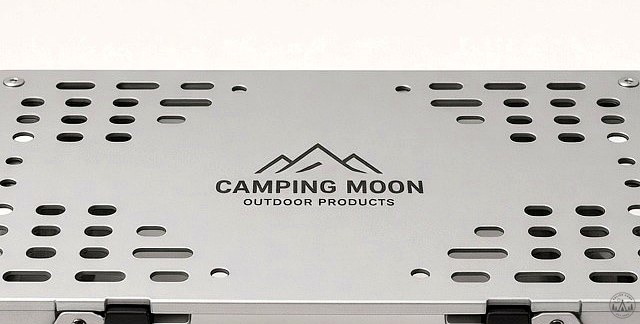
One of the less obvious features I appreciate is the built-in check valve. The interface uses EN417 Lindal in/out connections with a check valve, designed to prevent the stand from leaking while it is on the canister. For a novice, I would still treat every fuel connection as something worth checking carefully. A check valve is a useful mechanical feature, not a substitute for making sure the connection is properly seated and the equipment is used as intended.
The Z01’s compatibility with the Z03 spacer adapter and multi-outlet adapters is another indication that this is more than a simple folding base. There is a small ecosystem around the interface, which can make the stand more useful as a camp kitchen evolves.
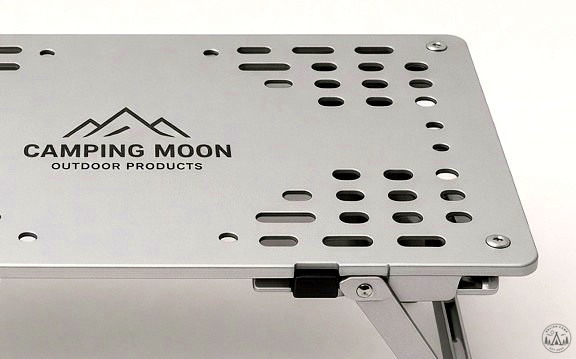
The rubber feet are another feature that becomes more important in actual use than it sounds on a specification sheet. When I move the cooking setup onto a table, I do not want bare metal feet scraping the surface. The rubber feet give the stand a more table-friendly contact point while also helping it sit securely.
That flexibility is useful in the Pacific Northwest because my cooking surface can change from trip to trip. One night I might be working from a sturdy camp table; another time I might be setting up on uneven ground beside camp. The Z01 can support both situations without requiring me to treat it as a dedicated table-only accessory.
The included canvas storage bag also matters. There are multiple pieces to keep track of, particularly with the divided support structure and accessories. Having a dedicated bag means the stand does not have to become a loose collection of metal components rattling around in the rest of my kitchen gear.
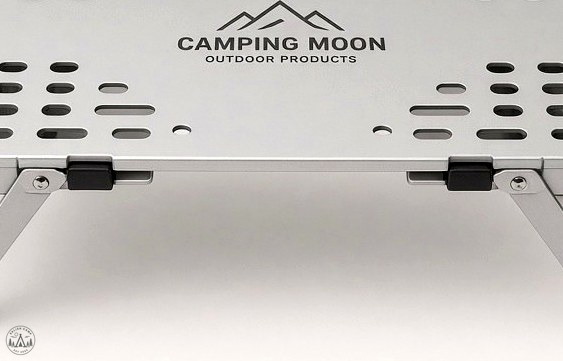
There is one limitation I would make especially clear before buying: the Z01 does not block wind. That sounds obvious once stated, but the tall support structure can visually resemble a wind-management component. It is not. The Z01 stabilizes the canister stove on uneven ground and provides a stronger cooking platform. It does not function as a windscreen around the burner.
That distinction matters on an exposed Cascades ridge. If the weather turns windy while I am cooking, I still need to think about campsite positioning and appropriate wind protection for the stove itself. The Z01 solves stability; it does not solve every environmental variable.
That separation of functions actually makes the product easier to understand. I am not buying the Z01 because it promises to make a stove impervious to weather. I am buying it because an upright canister stove with a large pot deserves a stable foundation.
For me, that is the product’s strongest argument. The Z01 takes an upright canister stove and gives it a much more substantial relationship with the ground or table underneath it. The two-stage height system adds flexibility, the SS304 trivet handles larger cookware, the rubber feet make table use practical, and the 22-pound rating explains why the stand weighs roughly 11 ounces.
It is not ultralight, and it should not pretend to be. It is a stability accessory designed for people who have discovered that a loaded cooking pot can make an otherwise capable canister stove feel much less secure than it did with an empty cup. In the Cascades, where flat ground is not always available and dinner often happens after a long day outside, that stability is useful enough that I am willing to pay the weight penalty.
Pros
- Two-stage cooking height: The Z01 provides both High and short configurations through its divided lower support.
- Large-pot support: The SS304 notched upper trivet provides a broad, stable platform for larger cookware.
- High load rating: The 22 lb / 10 kg capacity makes the Z01 a substantial stability platform rather than an ultralight accessory.
- 450 g canister compatibility: The Z01 supports 110 / 227 / 450 g EN417 canisters, including 450 g / 16 oz canisters.
Cons
- 11-ounce stability tax: At 11 oz / ~313 g, the Z01 adds meaningful weight to a canister stove setup.
- Not a windscreen: The Z01 provides stability, not wind blocking, so exposed cooking still requires appropriate wind management.
- Additional setup: The stove must screw onto the stand and the stand onto the canister, adding another component and connection to the cooking system.
| Product | Camping Moon Smart Stove Stand (High) |
|---|---|
| SKU | Z01 (US-Z01) |
| Brand | Camping Moon |
| Price | ~$35–$42 |
| Weight | 11 oz / ~313 g |
| Load capacity | 22 lb / 10 kg |
| Canister support | 110 / 227 / 450 g EN417 (Z01) |
| Interface | EN417 Lindal in/out + check valve |
| Height modes | High / short (2-stage legs) |
| Materials | SS304 trivet + aluminum alloy + rubber feet |
| Included | Stand + storage bag (Z03 spacer often sold as set) |
| Best for | Stable canister cooking on uneven ground |
| Field focus | Windy ridge dinners (stability, not wind block) |
| Buy | campingmoon.com Z01 / Amazon US-Z01 |
Final Thoughts
The Camping Moon Smart Stove Stand (High) is easy to misunderstand if I look only at its weight. At roughly 11 ounces, it is heavier than the kind of accessory I would normally want to add to a minimalist stove kit. But that is not really the design objective. The Z01 is built around stability, a 22-pound load rating, larger cookware, and compatibility with 450 g / 16 oz EN417 canisters.
That makes the weight make sense.
The two-stage High/short configuration is genuinely useful, the large notched SS304 trivet provides the kind of cookware support that matters with a full pot, and the rubber feet make the stand practical on a table without turning the surface into a scratch test. The built-in check valve is another useful detail, while Z03 spacer and multi-outlet compatibility give the interface room to grow.
Most importantly, the Z01 does exactly what I want a stand like this to do: it makes an upright canister stove substantially more stable on uneven ground.
It does not replace the stove. It does not act as a windscreen. It does not eliminate the need to choose a sensible cooking location. It simply gives the stove a much better foundation.
For windy ridge dinners in the Cascades, uneven forest campsites, and larger-pot cooking where stability matters more than shaving ounces, that is a worthwhile trade.
For upright canister burners that pair with a stand, see PocketRocket Deluxe, GigaPower, and Soto WindMaster. Integrated systems are covered in the Jetboil Flash, Primus Lite+, and Reactor 1.7L; basecamp cooks should compare the Flat Burner. Pair small pots with the Trek 900, and use the Nemo Dragonfly Osmo 2P or Amenity Dome M as a reminder that shelter and kitchen choices are connected.