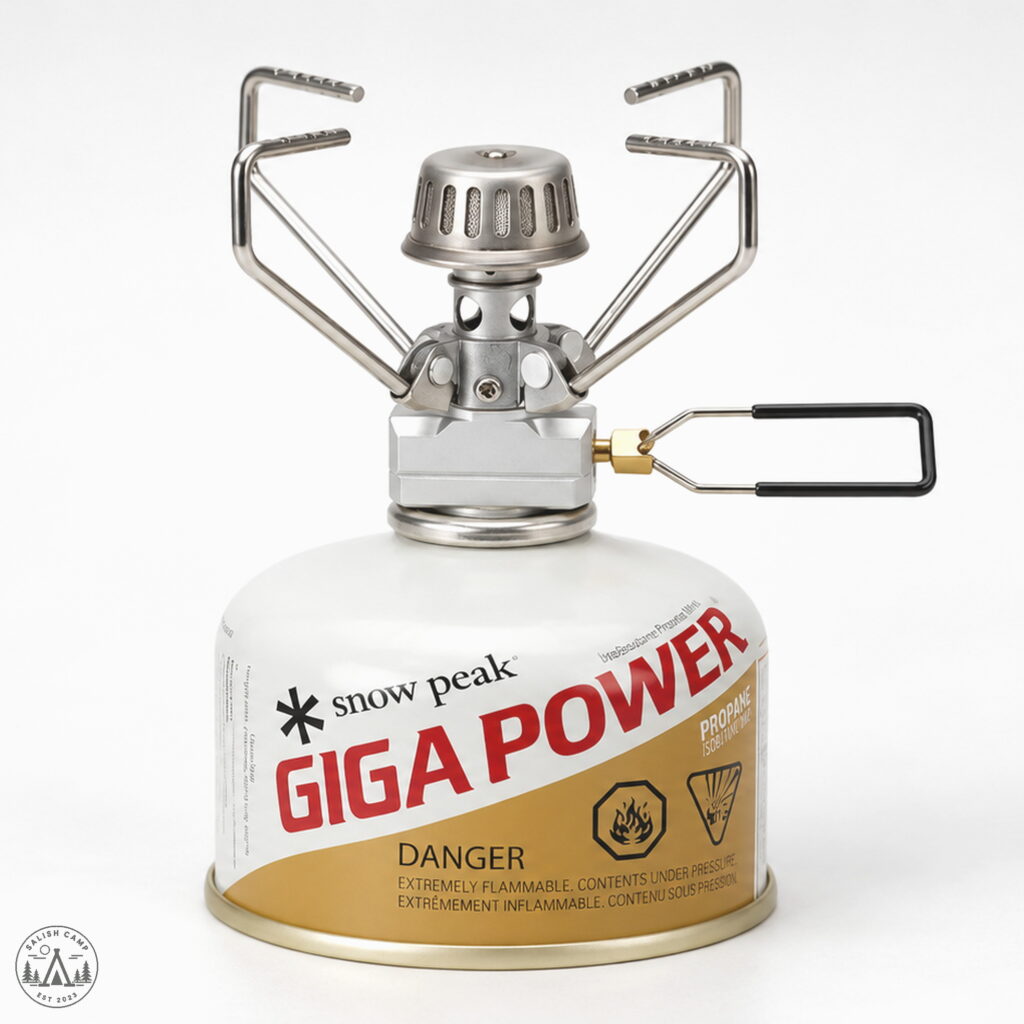
Buy if you want a genuinely light, straightforward upright canister stove for Cascade backpacking, already carry a lighter, and care about having enough flame control to do more than hammer every meal at full output. At 2.64 oz / 75 g, the GigaPower Stove Manual Renewed keeps the stove itself small in the pack while its four folding arms and ribbed trivet give a pot a defined platform once you stop for breakfast.
Skip if you specifically want push-button ignition, more protection from wind, or an integrated stove-and-pot system. Snow Peak sells the separate GigaPower Stove 2.0 Auto, GS-100AR2-US, with an auto-igniter, while this Manual Renewed model has no igniter listed. For a more substantial Snow Peak base-camp kitchen, I would move toward the Flat Burner rather than asking this 75 g backpacking burner to do a different job.
What Stands Out
- The current Manual Renewed stove is GS-100R2-US. That distinction matters because it is neither the auto-igniting GS-100AR2-US nor the older GS-100A.
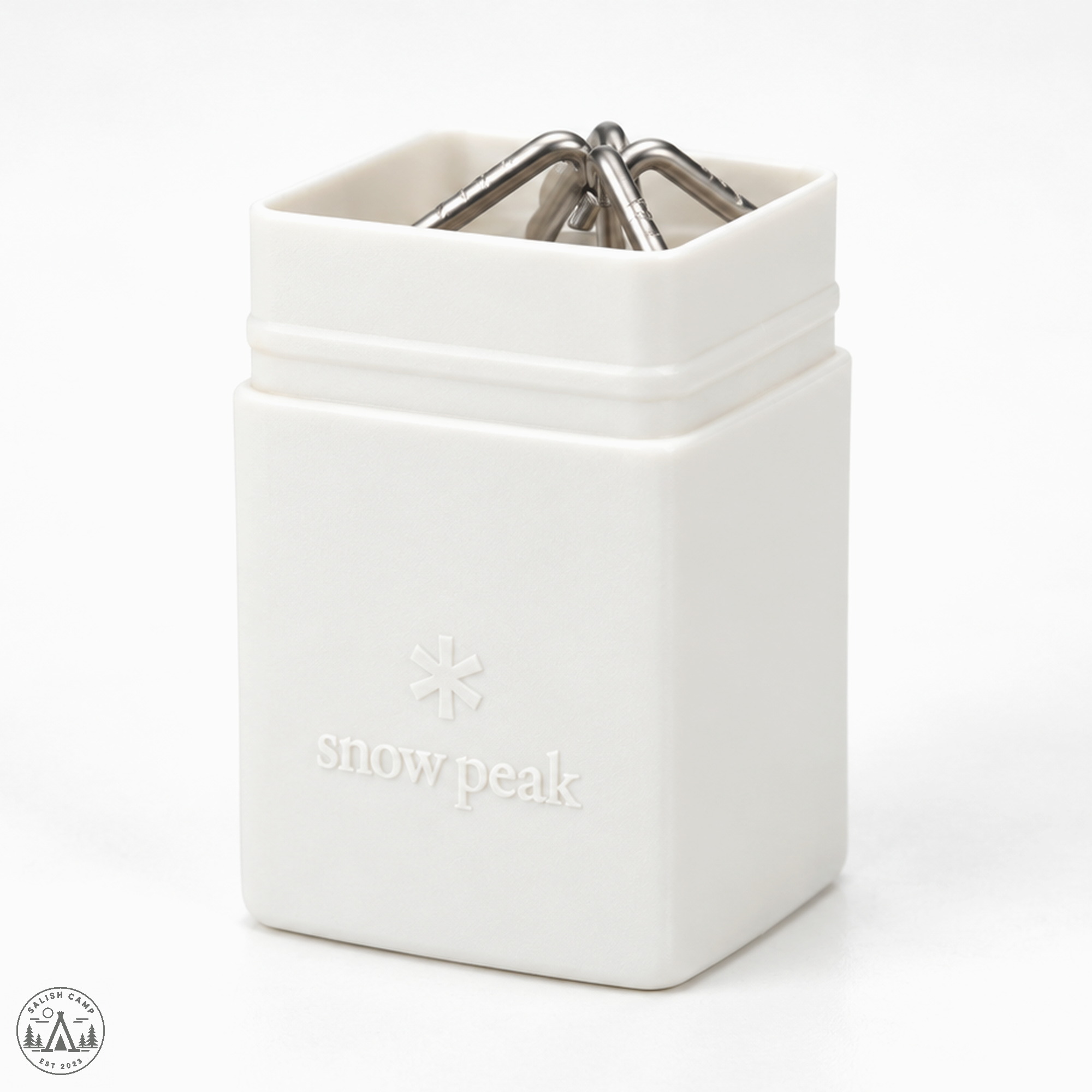
- The listed weight is 2.64 oz / 75 g. Snow Peak also lists a storage case in the contents.
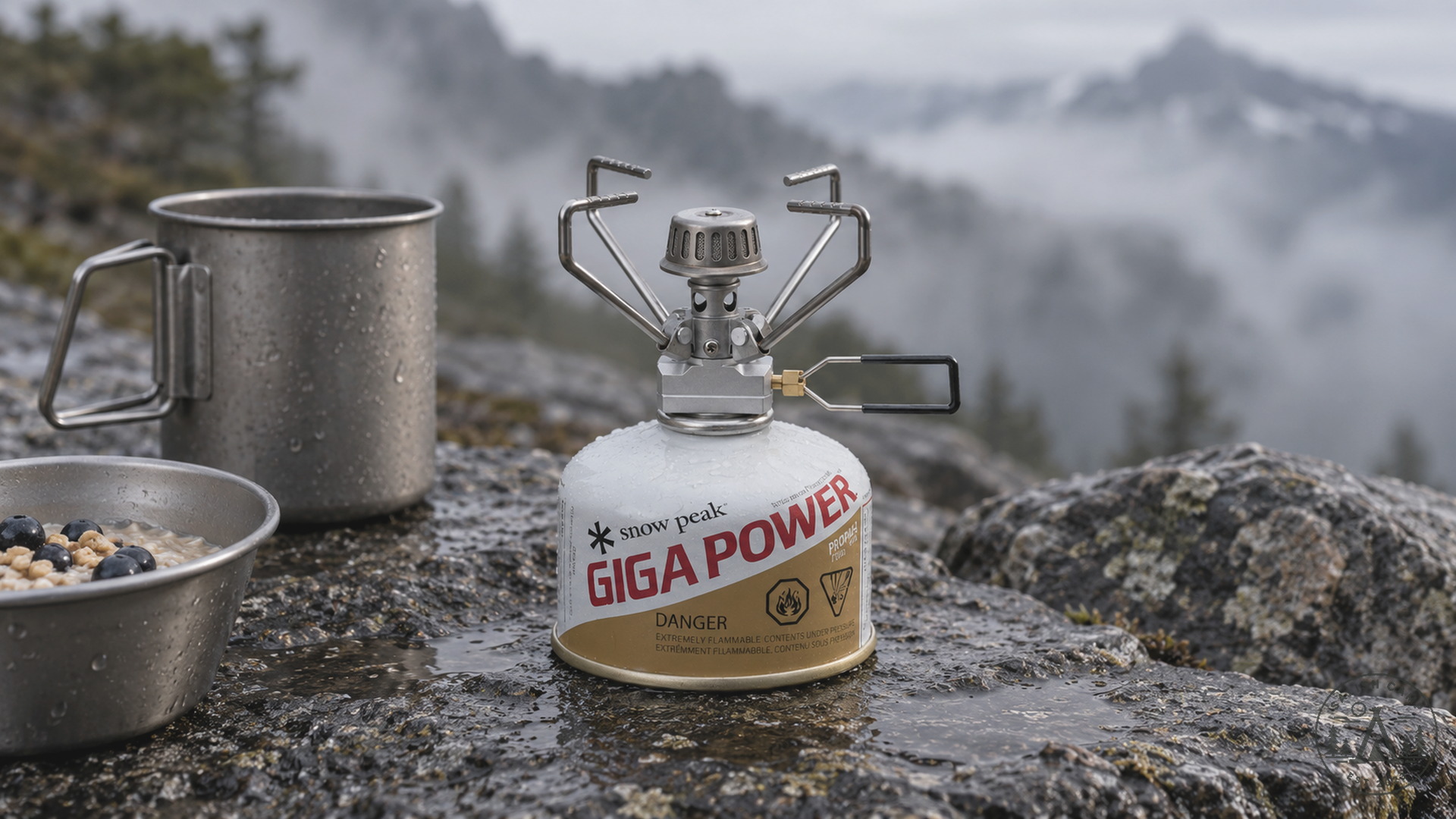
- Four folding arms form the cooking platform. They open around the burner rather than relying on a smaller three-support arrangement.
- The trivet is ribbed. Snow Peak specifically calls out those ribs as a stability feature where the cookware contacts the supports.
- The fuel lever now has a rubber coating. It is a small but model-specific update that makes the current Renewed version easy to distinguish in the details.
- Output is listed at 10,000 BTU. That gives this tiny manual stove real burner output without turning it into an integrated system.
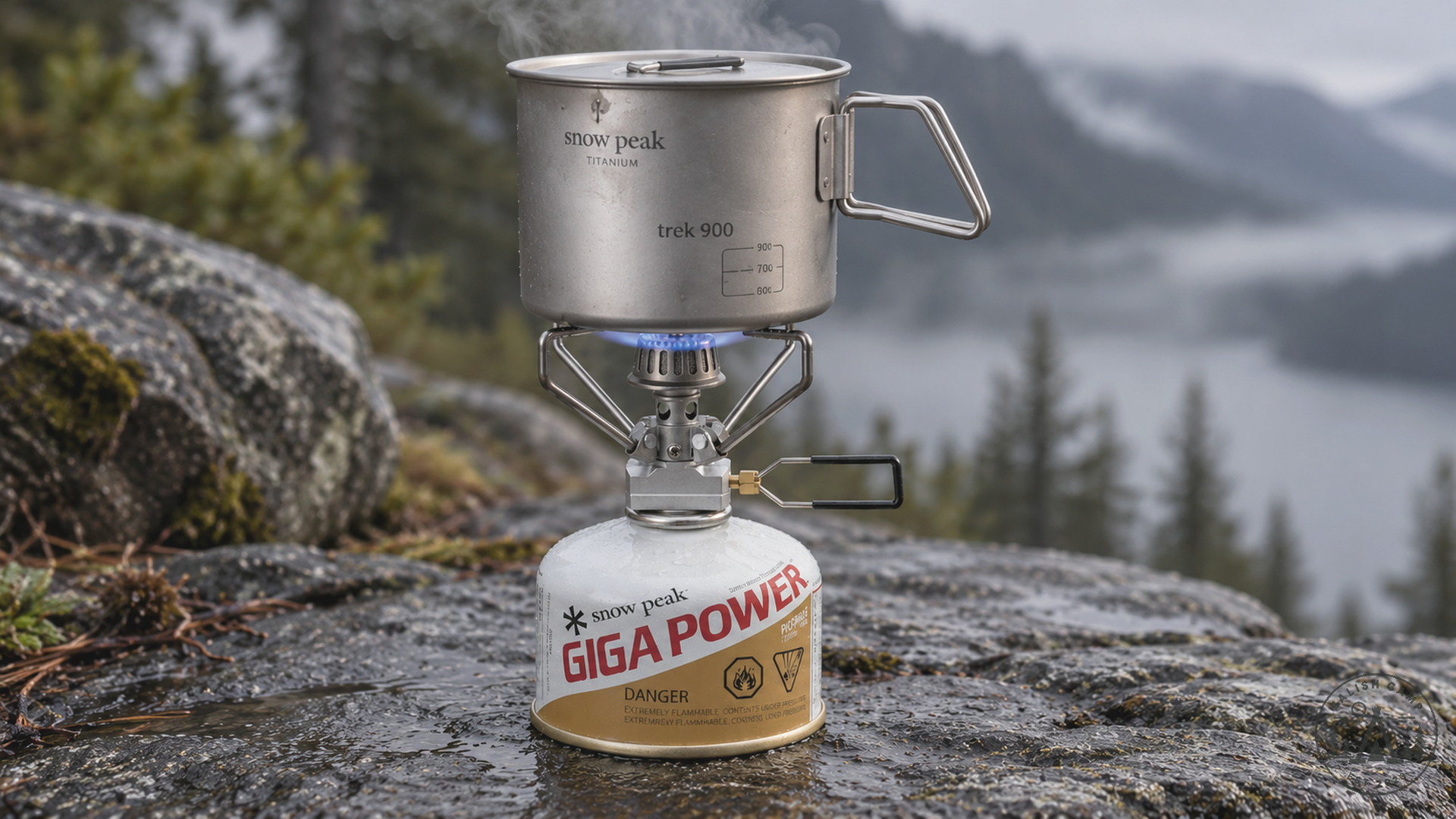
- Snow Peak specifically pairs the Manual Renewed with the Trek 900 Titanium. That makes the Trek 900 the natural Snow Peak cookware reference for this particular SKU.
In The Field
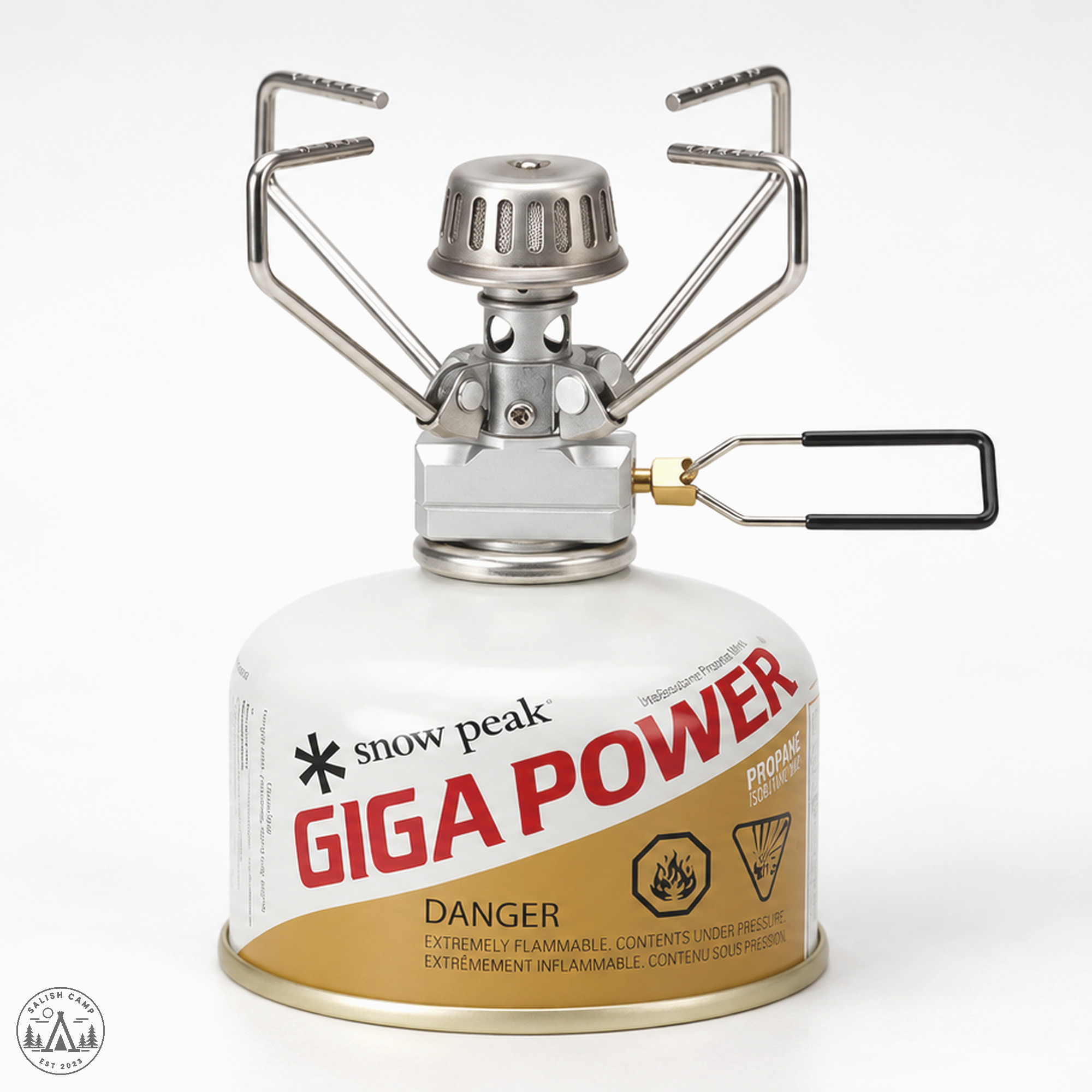
The appeal of the GigaPower Stove Manual Renewed makes sense to me on a damp Cascade morning. I am not setting up a kitchen. I am finding the flattest rock or patch of firm ground I can, putting down the canister, threading on a tiny stove, opening four arms, and getting water going before my hands get colder.
That simplicity is the point.
The first thing to understand if you are new to this stove is what manual means. Snow Peak does not list an auto-igniter on the GS-100R2-US. I carry a lighter in my cook kit, so in practical use that means I open the fuel lever enough to establish gas flow and light the burner myself. There is no button to push and no reason to confuse this stove with the separate GigaPower Stove 2.0 Auto.
That distinction is particularly important when shopping online because the two current stoves are close enough in name to invite mistakes. The Manual Renewed is GS-100R2-US, weighs 2.64 oz / 75 g, costs $35.95, and has no listed auto-igniter. The GigaPower Stove 2.0 Auto is GS-100AR2-US and adds an auto-igniter. If I already know I am comfortable carrying a lighter, I prefer evaluating the Manual on its own terms rather than treating the missing igniter as something Snow Peak forgot.
It is deliberately a manual stove.
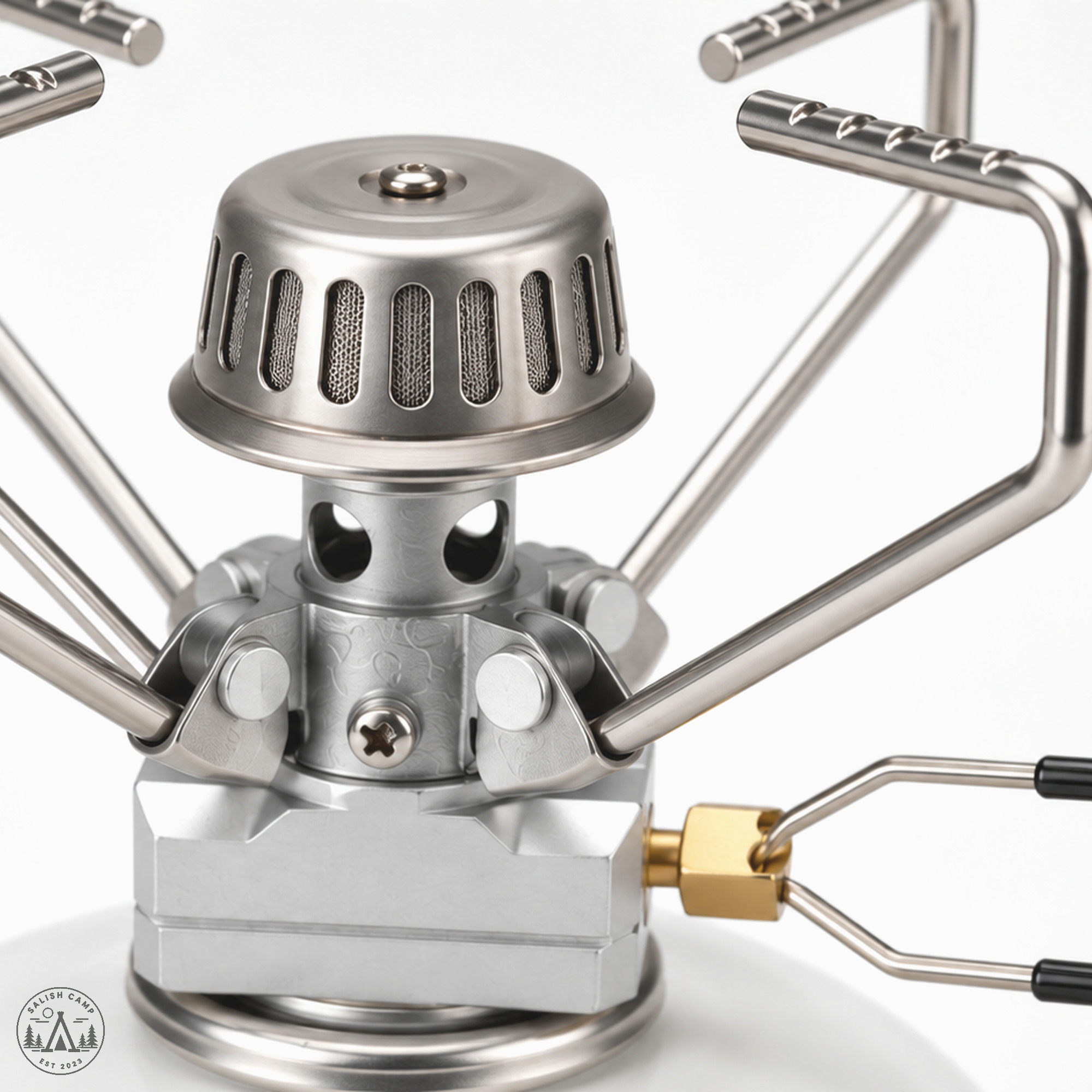
Once those four arms are unfolded, the other defining part of the design becomes obvious. Snow Peak uses a four-point cooking platform and specifically describes the trivet as ribbed for higher stability. That does not mean I stop paying attention to where I put the stove. An upright canister stove still places the burner and cookware directly over the fuel canister, so the quality of the ground underneath the canister matters.
On wet granite, I look for a level section rather than the most photogenic one. On dirt, I make sure the canister is not rocking on a root or sinking unevenly into soft duff. The arms can support the cookware at the burner, but they cannot fix an unstable foundation below the canister.
That is one reason I like the four-arm layout. The contact points are easy to see before the pot goes on. I unfold each arm completely, set the canister where I want it, and then place the cookware over the burner. There is very little mystery to the setup.
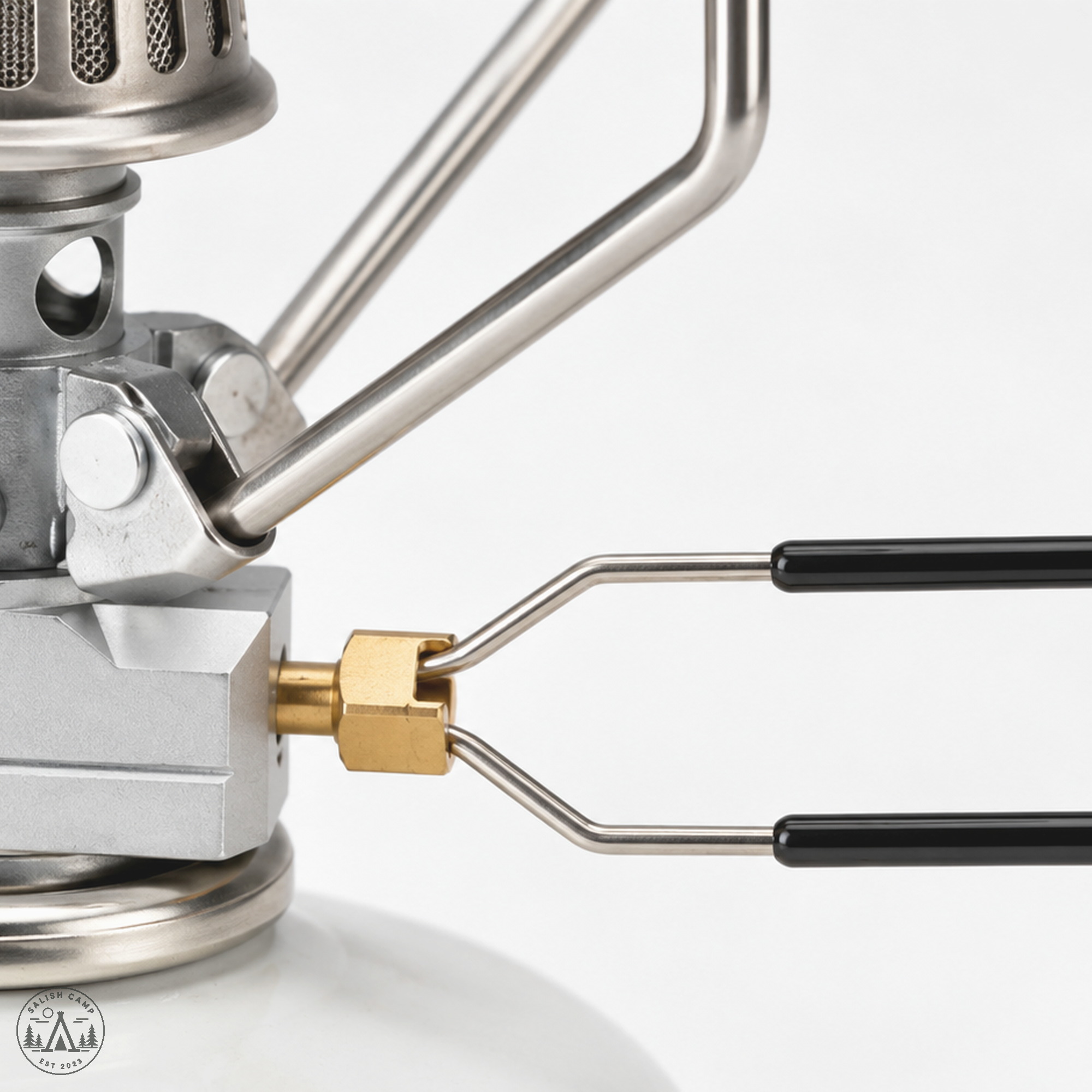
The rubber-coated fuel lever is another small detail that becomes more relevant in actual use than it sounds in a specification list. Snow Peak explicitly identifies the coating as an update to the Renewed stove. More importantly for the way I cook, the lever is not just an on/off control.
I often start with the obvious backpacking job: boil water. But once water is hot or food is cooking, I do not automatically leave a burner wide open. I turn it down when the meal calls for less heat. Snow Peak publishes the stove’s maximum output as 10,000 BTU; it does not publish a boil time or burn time for this Manual Renewed PDP, and I would rather not manufacture those numbers from an idealized test anyway.
What matters to me is having a direct fuel control that I can operate while cooking.
That makes the GigaPower more useful to my style of backpacking than a stove I would regard purely as a water-boiling appliance. It still remains a tiny upright canister burner, but breakfast does not always end when water reaches a boil.
There is also a useful distinction between small and having an official packed dimension. The arms fold inward, and Snow Peak lists the stove’s overall size as D 4.17 inches × H 2.65 inches. The US page does not identify that measurement as a stowed or packed size. So I would not relabel it as one.
For packing decisions, the more useful facts are that the supports fold and that Snow Peak includes a storage case. That case gives the metal stove its own place in a cook kit instead of leaving the folded supports loose against other equipment.
Snow Peak also specifically names the Trek 900 Titanium as the pairing for this Manual model. I like that reference because it provides an actual manufacturer-supported context without pretending Snow Peak publishes a maximum pot diameter here. It does not.
If you are considering that cookware combination, my Snow Peak Trek 900 Titanium review goes deeper into the pot itself.
Fuel is equally straightforward, with one purchasing detail that a first-time buyer should not miss. The stove uses an iso-butane canister, and Snow Peak explicitly says fuel is sold separately.
So the $35.95 stove is not a complete ready-to-light package by itself. You need the appropriate fuel canister, and because this is the Manual version, you also need your own ignition source. For me, that is simply the lighter that already lives in the cook kit.
Wind is where I keep expectations realistic. The US Manual Renewed page does not list a windscreen, so I am not going to turn the absence of one into an imaginary feature. More broadly, this is an exposed upright burner rather than an integrated canister system designed around enclosing or protecting the burner as part of a complete cooking package.
That distinction affects how I choose equipment.
If my primary objective is a highly integrated system, I would buy that kind of stove. The GigaPower Manual attracts me for almost the opposite reason: at 75 g, it gives me a separate burner with folding supports, manual ignition, direct fuel control, and 10,000 BTU of listed output. I choose the cookware separately and accept the exposed architecture that comes with that decision.
In the Cascades, that means site selection still matters. A calm morning on a level rock is the kind of use where this design makes immediate sense. Conditions that punish an exposed flame make its limitations more apparent. Snow Peak does not provide a windscreen with the stove, and I would not describe it as a wind-protected system.
The alternative inside Snow Peak’s lineup also depends heavily on where I am going.
For backpacking, the GigaPower Manual’s 2.64 oz / 75 g weight is central to its appeal. At a car-camp site, I care much less about saving grams and much more about having a substantial cooking surface and a comfortable kitchen arrangement. That is where the Snow Peak Flat Burner makes more sense to me, particularly as part of an Entry IGT setup.
Those are not really competing versions of the same stove. They solve different camp-kitchen problems.
The more relevant decision for a backpacker is Manual versus Auto. Both current models are rated at 10,000 BTU, but the Auto adds its built-in ignition hardware and is a different SKU with different published specifications. If reaching for a separate lighter every morning sounds irritating, the Auto gives you a clear reason to skip this one. If a lighter is already non-negotiable equipment in your cook kit, the Manual’s stripped-down arrangement is equally easy to understand.
After using this type of stove on backpacking mornings, that is ultimately what I want from it: very little ceremony. Unfold the four arms. Attach it to the separately purchased iso-butane canister. Put it somewhere level. Open the fuel control. Light it manually. Cook. Turn it down when I need less heat.
No integrated pot. No claimed wind protection. No published one-liter boil race to repeat as marketing shorthand.
Just a 75 g manual burner with a clear job.
Pros
- 2.64 oz / 75 g listed weight makes the GS-100R2-US easy to justify in a lightweight backpacking cook kit.
- Four folding arms with a ribbed trivet provide a purposeful cookware-support layout rather than minimizing the stove to the fewest possible contact points.
- 10,000 BTU listed output with a rubber-coated fuel lever gives me substantial maximum heat plus direct control when I want to turn the burner down.
- Storage case is included, and the folding support design keeps the burner compact enough in concept without inventing a packed-size specification Snow Peak does not publish.
Cons
- No auto-igniter is listed, so this Manual model requires a separate ignition source such as the lighter I already carry.
- No windscreen is listed, and the exposed upright architecture does not provide the integrated wind protection some backpackers want.
- Fuel is sold separately, so the $35.95 purchase alone is not a complete cooking setup.
Technical Specifications
| Product | Snow Peak GigaPower Stove Manual Renewed |
|---|---|
| SKU | GS-100R2-US |
| Price | $35.95 (snowpeak.com, 2026-10-04) |
| Weight | 2.64 oz / 75 g |
| Size | D 4.17 in × H 2.65 in (not described as packed) |
| Output | 10,000 BTU |
| Fuel | Iso-butane canister, sold separately |
| Ignition | Not listed. Auto-igniter is the other SKU (GS-100AR2-US) |
| Supports | Four foldable arms, ribbed trivet |
| Update | Rubber coating on the fuel lever |
| Materials | Stainless steel, aluminum alloy, brass |
| Included | Stove, storage case |
| Named pairing | Trek 900 Titanium |
| Not on PDP | Stowed size, boil time, burn time, windscreen |
Final Thoughts
The GigaPower Stove Manual Renewed works because Snow Peak has kept the proposition unusually clear. For $35.95 and 2.64 oz / 75 g, I get a stainless-steel, aluminum-alloy, and brass upright stove with four folding arms, a ribbed trivet, 10,000 BTU of listed output, the updated rubber-coated fuel lever, and a storage case.
I do not get fuel. I do not get a listed auto-igniter. I do not get a windscreen or an integrated cooking system. Those omissions matter, but they also define who should buy the GS-100R2-US.
For my Cascade backpacking kit, carrying a lighter is trivial. I value the low stove weight, like having four supports under the cookware, and want a burner I can turn down after the initial boil. The exposed burner is the tradeoff I have to accept, particularly when conditions get less cooperative.
If automatic ignition matters more, the GigaPower Stove 2.0 Auto is the sibling worth considering. If I am building a heavier Snow Peak car-camp kitchen, I would skip both and look at the Flat Burner and IGT ecosystem instead. And if maximum wind protection and an integrated pot are the priority, I would start with an integrated canister system rather than trying to make the GigaPower into something it is not.
For a minimalist manual canister kit, though, the GS-100R2-US gets the fundamentals right without adding much weight or complexity.