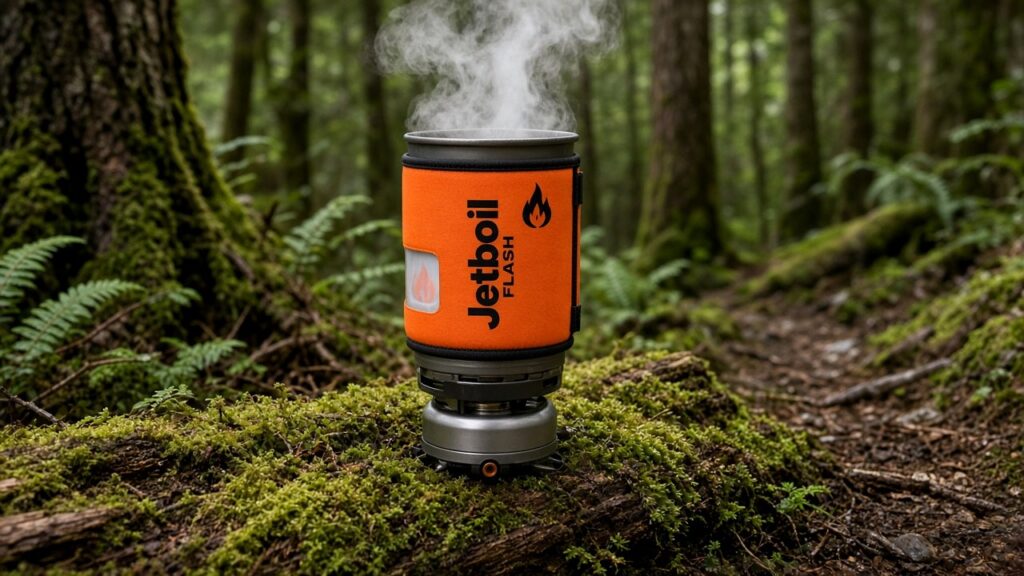
Buy if You want an easy-to-use system for ultra-fast solo boils, coffee, dehydrated meals, and dawn alpine starts, and you value integrated packing and turn-and-click ignition more than minimum weight or cooking versatility. Skip if You need to cook rather than primarily boil, want precise simmer control, or are optimizing every ounce of a lightweight kit.
What Stands Out
- ~120-second 0.5 L boil: The Flash 1.0L is purpose-built around getting a useful solo quantity of water boiling quickly.
- 13.1 oz / 371 g system weight: The weight is reasonable for an integrated fast-boil system, though it is not aimed at absolute minimum pack weight.
- 1.0 L FluxRing aluminum cup: The cup provides a dedicated, integrated vessel for the burner rather than requiring separate cookware.
- Turn-and-click piezo ignition: The built-in ignition makes startup particularly straightforward for novice users and cold-morning routines.
- 5,300 BTU/h output: The burner provides the heat needed to support the Flash’s fast-boil design.
- ~4.3 × 7.5 in packed size: The cylindrical format keeps the cooking system compact and organized inside a pack.
- Insulated cozy: The cozy makes the heated cup easier to handle and fits the Flash’s emphasis on simple, efficient trail cooking.
In The Field
The Jetboil Flash makes the most sense to me on a cold morning in the Cascades, when the goal is not to create an elaborate breakfast but to get hot water, coffee, and calories into me without turning camp into a kitchen.
That is where the Flash’s design starts to feel less like a collection of features and more like a coherent system.
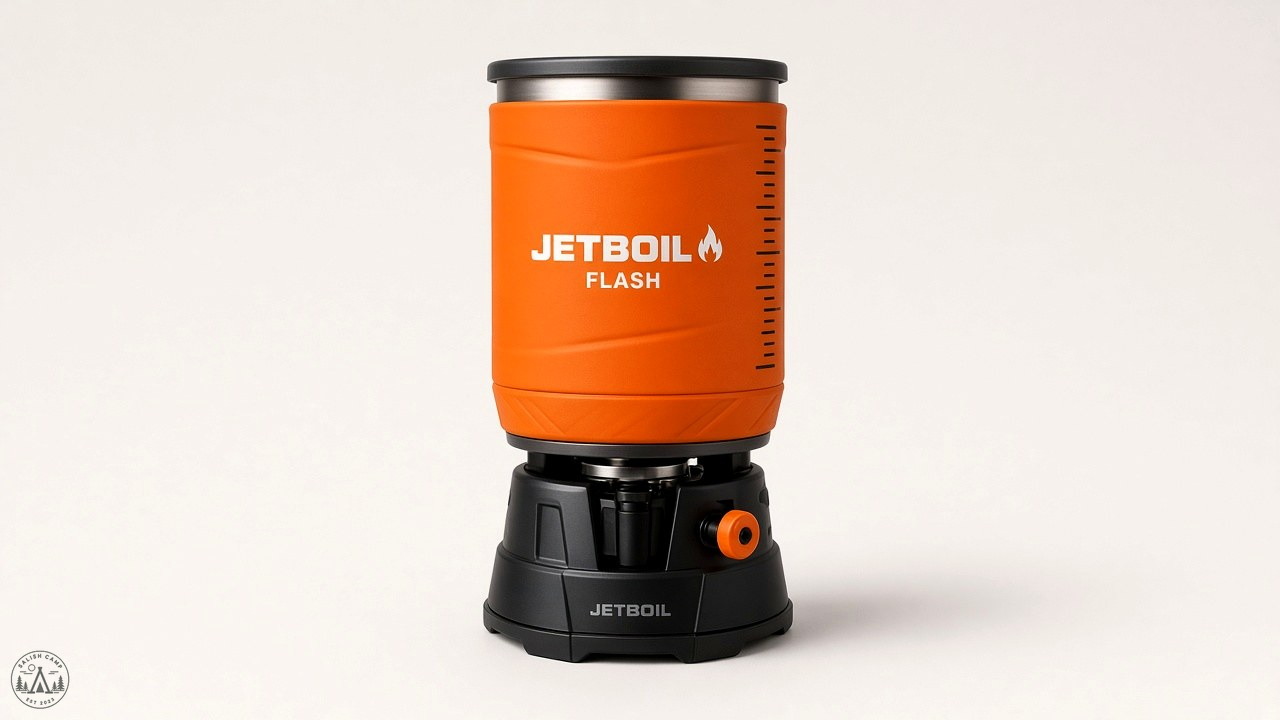
I can pull the Flash from my pack and immediately understand what I am looking at. The 1.0-liter cup, insulated cozy, lid, burner, and associated components are designed to travel together. For someone new to backpacking stoves, that matters. There are fewer loose pieces to identify and fewer decisions to make before breakfast.
The first step is connecting the appropriate isobutane/propane canister. Once the burner is attached and the system is sitting securely, the turn-and-click piezo ignition is particularly welcome. A novice does not have to figure out how to hold a lighter in one hand while manipulating a separate stove control with the other. The Flash’s ignition is integrated into the basic operating sequence.
That simplicity is valuable at 5 a.m.
In the Pacific Northwest, early starts frequently mean cold hands, damp gear, and limited patience. I would rather spend those first few minutes getting water hot than troubleshooting a complicated cooking arrangement. The Flash reduces the number of steps between opening the pack and having useful heat.
Once the burner is running, the cooking cup is the centerpiece of the system. The FluxRing aluminum cup is designed specifically around transferring heat efficiently, and the Flash’s approximately 120-second boil time for 0.5 liter is the specification I notice most in actual use.
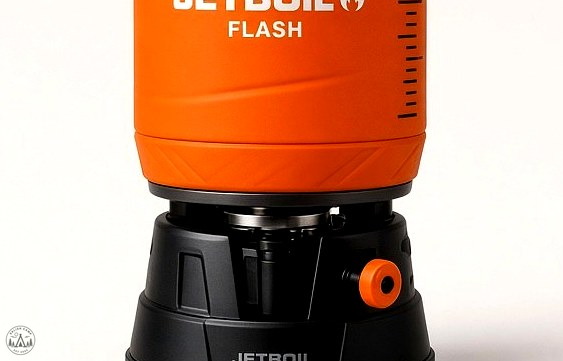
Half a liter is also a sensible amount for solo backpacking. It is enough for a dehydrated meal or a substantial hot drink, and I do not have to heat substantially more water than I need. The 1.0-liter cup therefore should not be interpreted as a one-liter boiling target. The provided 0.5-liter boil max-fill is the number I would use when planning meals.
That distinction is especially important for someone new to the system.
A novice could easily see “1.0 L” and assume the Flash is intended to bring a full liter to a boil. It is better to think of the cup as a 1.0-liter vessel with a 0.5-liter maximum boiling fill. Once that becomes familiar, the sizing makes much more sense.
The other thing I appreciate is how little attention the Flash demands once it is running. On a cold Cascades morning, I can start heating water and use those couple of minutes to organize the rest of my breakfast. The goal is not to stare at a flame. The system is designed to get the water hot while I get ready to hike.
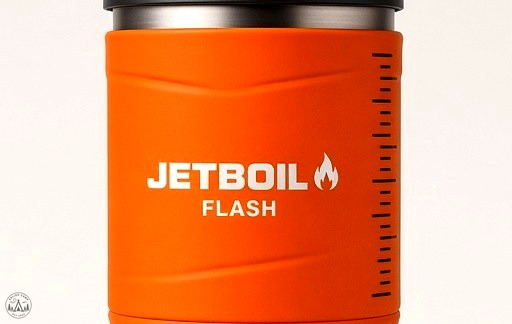
The insulated cozy becomes useful as the cup heats. A dedicated insulated exterior means I am not grabbing the bare aluminum vessel once the water is hot. It also reinforces the idea that this is a drinking-and-boiling system rather than a conventional cooking pot.
That distinction changes how I use it.
I would not approach the Flash expecting to fry breakfast or spend fifteen minutes carefully managing a simmer. Its strength is boiling water quickly. For coffee, tea, oatmeal, or a dehydrated meal, that specialization is an advantage. I can keep the process short and predictable.
For a novice backpacker, I think that specialization also makes the Flash easier to learn.
There are fewer variables. You are not trying to understand complicated cookware positioning or learn delicate flame control immediately. You are learning a basic sequence: connect the canister, establish a stable setup, ignite the burner, heat the appropriate amount of water, shut it down, and handle the cup using the intended surfaces.
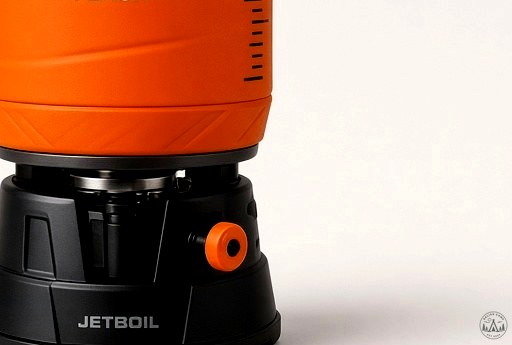
The Flash’s compact packed shape is another field advantage. At approximately 4.3 × 7.5 inches, it occupies a predictable cylindrical footprint. That makes it easy to identify inside a backpack and easy to repack when breakfast is finished.
On wet PNW trips, I especially appreciate gear that has an obvious home.
A stove system with multiple small components can become scattered across a shelter or cooking area. The Flash encourages me to keep the cooking components together. That is useful when I am packing quickly after a rainy night or trying to get moving before the weather changes.
The system’s weight is a more nuanced consideration.
At 13.1 ounces / 371 grams, the Flash is not something I would choose solely because I wanted the lightest possible cooking setup. The weight reflects the integrated cup, burner, heat-transfer design, ignition, and other components that make the system convenient.
For me, the relevant question is whether those ounces save enough hassle to justify themselves.
On a Cascades day hike or overnight where I want a genuinely easy hot-drink routine, the answer is straightforward. The Flash is compact, quick, and uncomplicated. On a longer trip where I am scrutinizing every component of my base weight, I would pay much closer attention to whether I actually need an integrated fast-boil system.
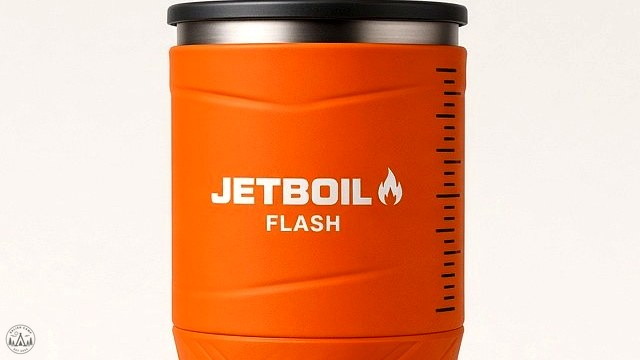
Fuel is another part of the field experience that becomes more apparent over repeated trips. The Flash uses an isobutane/propane canister and is rated at 5,300 BTU/h with a 100-gram can. The fast-boil design means the stove is spending relatively little time running for each 0.5-liter heating cycle.
That is useful during repeated mornings when I want coffee before breaking camp and hot food after a long day.
Cold weather does require more awareness. PNW winter and shoulder-season conditions can be dramatically different from a mild summer camp. Cold temperatures affect canister performance, and cold water simply takes more energy to heat. I would therefore treat the approximately 120-second boil time as a useful benchmark rather than a promise that every boil will take exactly two minutes.
Wind is similarly contextual. The Flash’s integrated design helps keep the heating process efficient, but I would still choose a naturally sheltered cooking location when practical. A novice user should resist the temptation to improvise around the stove simply to chase faster boil times.
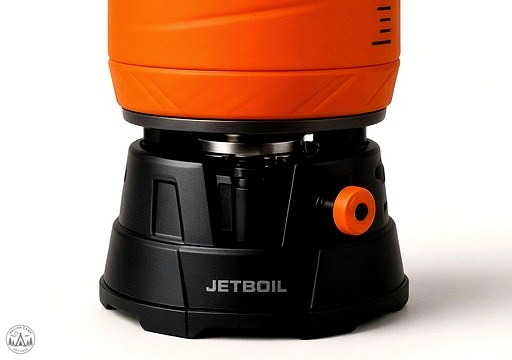
The Flash is also easy to appreciate after the meal.
If I am using it primarily to boil water rather than cooking directly in the cup, cleanup is minimal. The insulated cozy stays on the outside, the cup remains dedicated to heating water, and the system can be nested again once everything has cooled appropriately.
That makes the Flash particularly well suited to a “boil, eat, pack, hike” routine.
There is a psychological benefit here that does not show up in the specifications. Backpacking mornings can involve enough small tasks already. When the cooking system is obvious and repeatable, I spend less mental energy managing it.
The same thing happens at the end of a long day. After several hours on a trail in the Cascades, I do not necessarily want a complicated cooking process. I want hot water and dinner. The Flash’s design aligns with that use case.
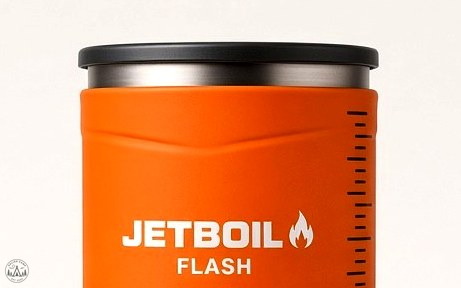
Ultimately, the Jetboil Flash is most convincing when I judge it as a dedicated fast-boil system rather than as a miniature all-purpose kitchen.
Its 1.0-liter cup, 0.5-liter boil max-fill, 5,300 BTU/h output, approximately 120-second boil time, compact packed dimensions, and integrated ignition all point in the same direction. The system is optimized around getting a useful amount of water hot quickly and making that process approachable.
For dawn starts, solo meals, and cold-weather coffee in the Cascades, that focus is exactly what makes it appealing.
Pros
- ~120-second / 0.5 L boil: Excellent fit for fast solo breakfasts, coffee, and dehydrated meals.
- Turn-and-click piezo ignition: Simple startup mechanics are especially useful for novice users and cold mornings.
- FluxRing aluminum cup + insulated cozy: Integrated heat transfer and easier handling keep the system focused on efficient boiling.
- ~4.3 × 7.5 in packed size: Compact cylindrical storage keeps the Flash easy to organize in a backpack.
Cons
- 13.1 oz / 371 g: The system carries meaningful weight for a dedicated fast-boil setup.
- 0.5 L boil max-fill: The 1.0 L cup does not mean you can boil a full liter at once.
- Best for ultra-fast solo boils: Its specialization makes it less appropriate for uses beyond its intended boiling-focused role.
| Product | Jetboil Flash 1.0L Fast Boil System |
|---|---|
| SKU / line | Flash 1.0L (color SKUs e.g. FLCB3) |
| Brand | Jetboil |
| Price | ~$120–$130 |
| Weight | 13.1 oz / 371 g (excl. stabilizer) |
| Cup volume | 1.0 L (0.5 L boil max-fill) |
| Packed size | ~4.3 × 7.5 in |
| Fuel | Isobutane/propane canister |
| Output | 5,300 BTU/h (100 g can) |
| Boil time | ~120 s / 0.5 L |
| Ignition | Turn-and-click piezo |
| Materials | FluxRing aluminum cup + insulated cozy |
| Best for | Ultra-fast solo boils |
| Field focus | Dawn alpine starts |
| Buy | jetboil.johnsonoutdoors.com Flash 1.0L |
Final Thoughts
The Jetboil Flash 1.0L succeeds because it does not try to be everything.
It is a fast-boil system designed around a very specific trail routine: heat water quickly, keep the process simple, and get back to hiking. The integrated 1.0-liter cup, 0.5-liter boil max-fill, FluxRing aluminum construction, insulated cozy, turn-and-click piezo ignition, and compact packed size all reinforce that purpose.
For PNW backpacking, I find the appeal easiest to understand on a cold alpine morning. When I want coffee before sunrise or a hot meal without turning breakfast into a project, the Flash’s simplicity becomes the feature.
At 13.1 ounces / 371 grams, it is not an argument for carrying less at any cost. It is an argument for carrying a purpose-built system that makes one common backpacking task exceptionally straightforward.
If ultra-fast solo boils are the center of your camp kitchen, the Flash is built around exactly that job.
For solo modular burners, see GigaPower, PocketRocket Deluxe, and Soto WindMaster. Other integrated systems are covered in the Reactor 1.7L; basecamp cooks should compare the Flat Burner. Pair small pots with the Trek 900, and use the Nemo Dragonfly Osmo 2P or Amenity Dome M as a reminder that shelter and kitchen choices are connected.