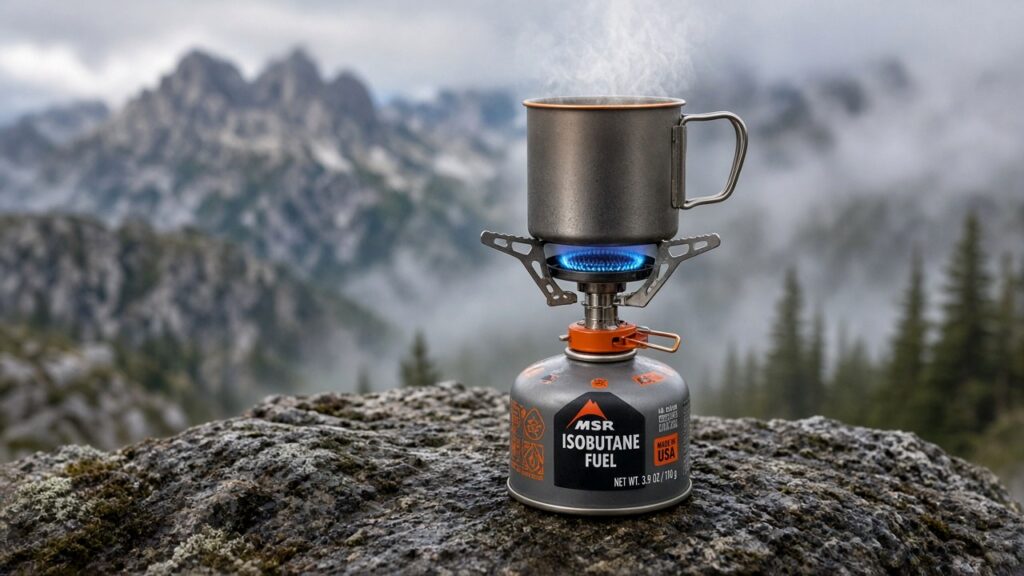
Buy if you want a very light, modular canister stove but regularly cook in conditions where a pressure regulator, better simmer control, and a more wind-resistant burner matter—especially for cold Cascades mornings. Skip if your priority is the absolute minimum weight and you are happy with a simpler stove, or you want an integrated windproof cooking system rather than an upright canister-mounted design.
What Stands Out
- The pressure regulator is the defining upgrade. The PocketRocket Deluxe’s regulator is specifically designed to maintain more consistent burner performance as the canister gets cold or its fuel level drops, addressing one of the limitations of an unregulated stove such as the PocketRocket 2.
- The broad burner head changes how the flame behaves. Instead of concentrating everything into a small needle-like flame, the Deluxe spreads heat across a broader burner area, giving it more useful simmering range while also improving resistance to wind.
- A wind-blocking burner lip adds another layer of protection. It is a small physical detail, but it works with the broad burner head rather than relying entirely on an external windscreen.
- The piezo ignition is protected inside the burner assembly. The push-start is built into the stove rather than being an exposed separate igniter, keeping the ignition mechanism within the compact burner package.
- 83 grams gets you the Deluxe feature set. At a minimum weight of 2.9 ounces / 83 grams, the stove is only about 10 grams heavier than the PocketRocket 2 while adding pressure regulation, protected piezo ignition, and the broader burner design.
- The packaged weight remains backpack-friendly. With its included stuff sack, the official packaged weight is 3.4 ounces / 97 grams, so there is little penalty for keeping the complete stove package together.
- It stays modular rather than locking you into one pot. The upright canister-mount design works with separate cookware, and the stove nests in many 1-liter pots, making it a conventional backpacking kitchen rather than an integrated vessel-and-burner system.
In The Field
For the kind of cooking I do around the Cascades, I like a stove that disappears into the kitchen until I actually need it. The PocketRocket Deluxe does that particularly well because the burner itself is only 2.9 ounces at minimum weight, yet it doesn’t require a proprietary cooking vessel. I can pack the stove into a compatible 1-liter pot, add a threaded self-sealing isobutane canister separately, and build the rest of the kitchen around whatever cookware the trip calls for.
That modularity is important if you’re new to backpacking stoves. The Deluxe is not an integrated cooking system. The fuel canister sits underneath the stove, the burner points upward, and your pot sits directly on the stove’s supports. That means the cooking vessel, burner, and fuel canister are separate pieces. It also means the stove doesn’t give you the same inherently enclosed cooking environment as an integrated system.
The upside is flexibility. A 1-liter pot is an obvious pairing, but the stove isn’t limited to one specific vessel. If I want to boil water in one pot and cook something in another, the burner is the common component rather than the pot dictating the entire system. For someone assembling a lightweight kitchen instead of buying a complete integrated system, that’s a useful distinction.
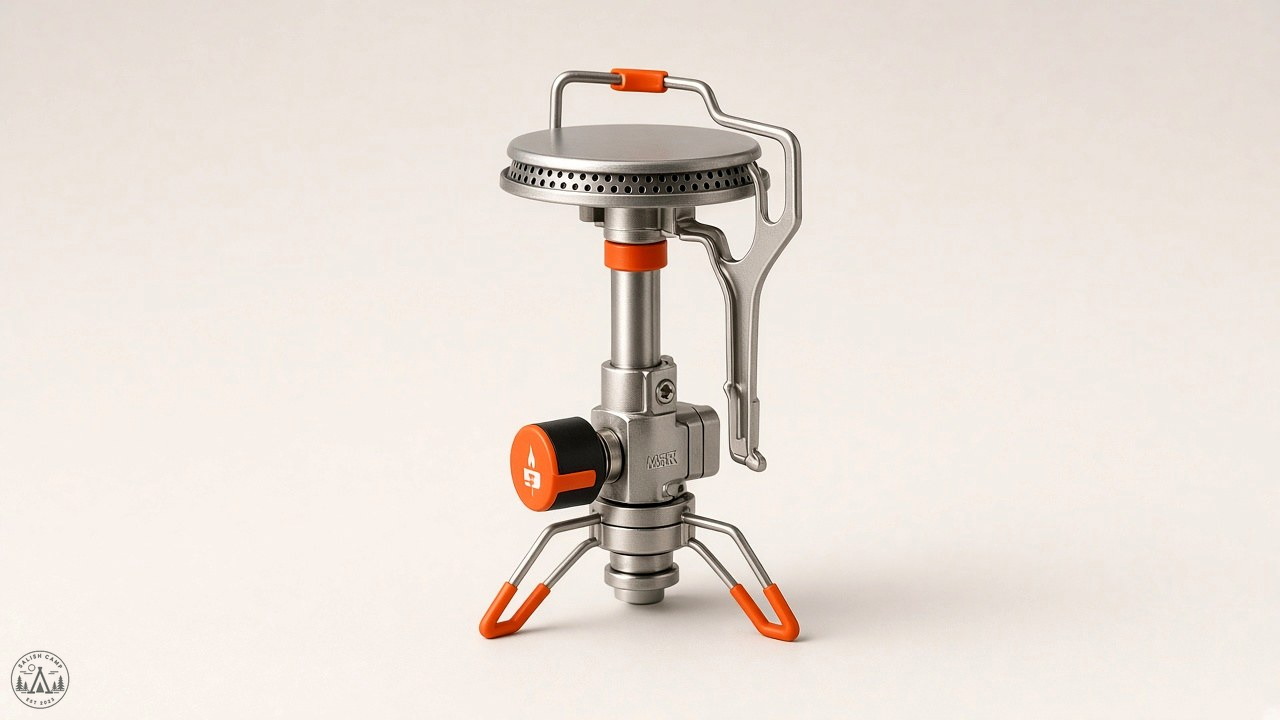
The burner head is where the Deluxe starts to distinguish itself from a basic ultralight canister stove. MSR uses a broad burner head rather than the smaller, more concentrated burner arrangement found on simpler PocketRocket designs. That matters when I move beyond simply boiling water. The broader burner gives the stove more useful simmering versatility, while the burner lip helps block wind around the flame.
That doesn’t turn the Deluxe into a completely windproof stove. It remains an upright canister stove, so I still pay attention to where I put it and how exposed the burner is. A sheltered cooking location is still preferable to setting the stove on an open ridgeline in a strong breeze. The important difference is that the burner has physical features specifically intended to improve wind resistance rather than leaving the entire job to campsite positioning.
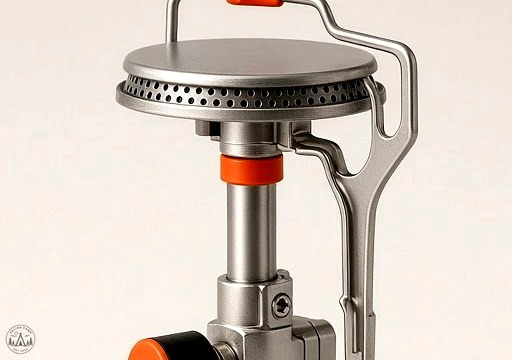
The pressure regulator is the feature I would pay the most attention to if my trips include cold mornings. A conventional unregulated canister stove can lose burner performance as conditions change and fuel pressure falls. The Deluxe is designed to provide more consistent boiling performance when the canister is cold or getting low.
That’s particularly relevant when the first thing I want in the morning is hot water. MSR rates the Deluxe at 3.3 minutes to boil 1 liter using IsoPro, and the regulator is intended to help maintain that kind of performance across changing canister pressure. I wouldn’t interpret the number as a promise that every liter will boil in exactly 3.3 minutes in the field; temperature, starting-water temperature, wind, cookware, and fuel conditions all affect actual results. But it gives a useful benchmark for the stove’s intended performance.
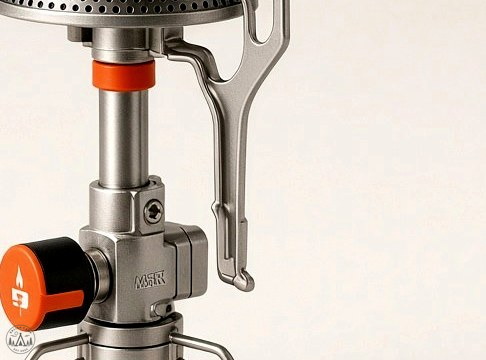
The regulator also makes the Deluxe a more interesting choice for trips where fuel gets used throughout the day rather than simply heating one mug of water. MSR rates the stove for 60 minutes of burn time from a 227-gram canister, with an official water-boiled figure of 17 liters per 227 grams of fuel. Those figures give me a practical way to think about fuel planning: this is not just a stove designed around one quick coffee stop, but a compact burner with enough stated capacity for repeated cooking and boiling.
Ignition is another small detail that becomes noticeable when you’re tired, cold, or cooking before sunrise. The Deluxe has a protected piezo push-start located inside the burner assembly. I like the idea of not needing a separate lighter every time I start the stove, while still carrying a backup ignition source on any serious trip. The important point isn’t that piezo ignition eliminates the need for preparation; it’s that the ignition control is incorporated into the stove and protected within the burner design.
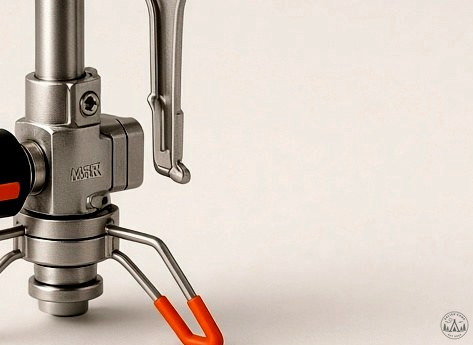
The stove’s dimensions—1.5 × 2.2 × 3.3 inches—also explain why it disappears so easily into a backpacking kitchen. The burner is small enough to nest in many 1-liter pots, and the 83-gram minimum weight means the entire burner doesn’t become a significant percentage of a lightweight cook kit.
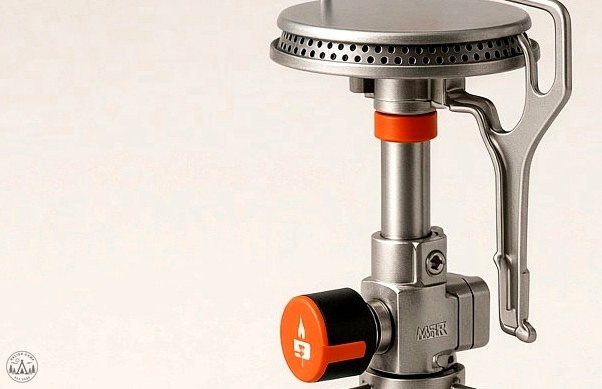
There is one tradeoff I would keep in mind: the Deluxe isn’t the lightest possible PocketRocket configuration. At 2.9 ounces, it is approximately 10 grams heavier than the PocketRocket 2. For me, the reason to accept those extra grams is straightforward. The Deluxe spends them on features that affect actual cooking: pressure regulation, a protected piezo, and a broader burner with improved wind resistance and simmer versatility.
The 3.4-ounce / 97-gram packaged weight is also worth using when comparing complete gear lists. That’s the number that better represents what I carry if the included stuff sack stays with the stove. Either way, the weight remains low enough that I don’t have to build an elaborate ultralight justification around carrying it.
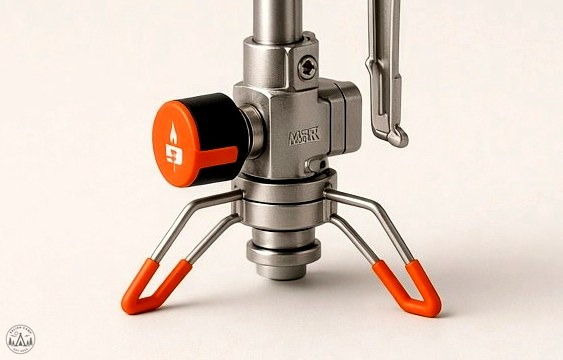
The fuel connection is conventional: the Deluxe uses threaded self-sealing isobutane canisters, including MSR IsoPro. That makes fuel selection straightforward, but it also means the stove depends on the availability of the appropriate threaded canister. Before a trip, I want to know that my fuel supply matches the stove rather than assuming every backpacking fuel container uses the same connection.
One other thing I appreciate about this design is that the Deluxe doesn’t force me into an integrated pot. If I’m already carrying cookware I like, the stove can become the burner underneath it. That’s useful for a two-person kit, for changing pot sizes, or simply for someone who wants to build a kitchen from individual components.
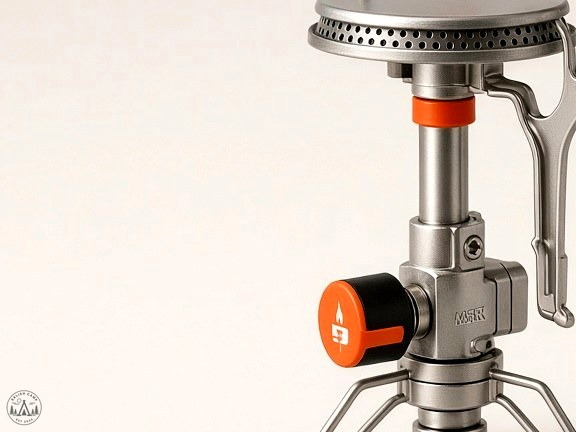
For a novice, the basic operating concept is therefore simple: attach the stove to the compatible threaded canister, unfold the stove’s supports, place the cooking vessel on top, use the protected piezo to ignite it, and control the flame with the stove’s burner control. Keep the canister upright during normal operation and give the burner enough open space for safe combustion. The Deluxe’s wind-resistant burner features help, but they aren’t a substitute for sensible stove placement.
The biggest reason I would choose this particular PocketRocket is not simply that it is small. Plenty of backpacking stoves are small. It’s that MSR has put pressure regulation and a more capable burner into an 83-gram package. For cold-weather mornings, repeated cooking, and meals where I want something more nuanced than full blast, those are meaningful features rather than specifications that exist only on the box.
Pros
- Pressure regulator helps maintain more consistent performance with cold or partially depleted canisters.
- Broad burner head and wind-blocking lip provide better wind resistance and more usable simmer control.
- Protected piezo ignition keeps push-start ignition integrated into the burner assembly.
- 83-gram minimum weight delivers the Deluxe feature set without a major weight penalty.
Cons
- Not the absolute-lightest PocketRocket: the 2.9-ounce minimum weight is about 10 grams more than the PocketRocket 2.
- Upright canister architecture remains wind-exposed: the burner lip improves resistance but does not make the stove an enclosed windproof system.
- Requires threaded isobutane canisters: fuel availability and compatibility still need to be considered when planning a trip.
| Product | MSR PocketRocket Deluxe |
|---|---|
| SKU | 10955 |
| Brand | MSR |
| Price | $84.95 |
| Minimum weight | 2.9 oz / 83 g |
| Packaged weight | 3.4 oz / 97 g |
| Dimensions | 1.5 × 2.2 × 3.3 in |
| Fuel | Isobutane canister (IsoPro) |
| Boil time (1 L) | 3.3 min |
| Burn time / 227 g | 60 min |
| Water / 227 g | 17 L |
| Ignition | Protected piezo |
| Key tech | Pressure regulator + broad burner |
| Origin | Made in South Korea |
| Best for | Fast boils with pressure regulation |
| Field focus | Cold mornings |
| Buy | msrgear.com PocketRocket Deluxe |
Final Thoughts
The PocketRocket Deluxe makes the most sense when its three defining upgrades—pressure regulation, the broad burner, and protected piezo ignition—are features you will actually use. At 83 grams, it remains firmly in lightweight backpacking territory, but it doesn’t chase the lowest possible number at the expense of burner capability.
The regulator is the clearest reason to choose the Deluxe over a simpler unregulated PocketRocket. MSR specifically positions it for more consistent boils when the canister is cold or fuel is running low, while the 3.3-minute official 1-liter boil time and 17-liter water output per 227-gram canister give the stove a useful performance baseline. The broad burner and wind-blocking lip then address the other common limitation of tiny upright stoves: keeping the flame useful when conditions aren’t perfectly calm.
The tradeoff is equally clear. This is still an upright canister stove, not an enclosed integrated cooking system, and it weighs slightly more than the PocketRocket 2. If every gram matters more than regulation or simmer capability, that difference is worth considering.
For my kind of backpacking kitchen, though, the Deluxe occupies a useful middle ground: 83 grams, fast stated boil performance, pressure regulation, protected ignition, and cookware flexibility. It adds those capabilities without turning a simple stove into a complicated system, which is exactly why the PocketRocket Deluxe remains an easy stove to build a lightweight cook kit around.
For a solo comparison, see GigaPower, PocketRocket Deluxe, and Soto WindMaster. Integrated systems are covered in the Jetboil Flash and Reactor 1.7L; basecamp cooks should compare the Flat Burner. Pair small pots with the Trek 900, and use the Nemo Dragonfly Osmo 2P or Amenity Dome M as a reminder that shelter and kitchen choices are connected.