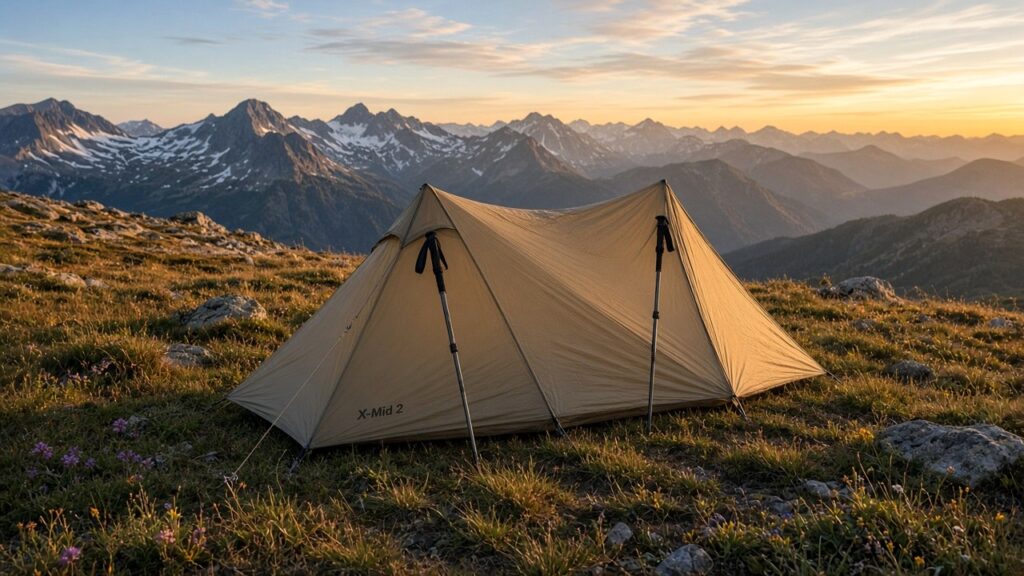
Buy if you already carry trekking poles or want remarkable shelter weight and floor space for the money. Skip if you camp on stake-hostile ground, dislike tensioned pitches, or need a freestanding tent that can be moved after setup.
What Stands Out
- About 32 ounces makes a two-person shelter unusually easy to justify in a backpack.
- Trekking-pole geometry creates diagonal interior space and two useful vestibules.
- Silpoly handles wet conditions without the same stretch pattern as many silnylon tents.
- Four primary stakes form the foundation of a fast, repeatable pitch.
- The design gives excellent storm-shedding geometry for its weight.
- Learning the pitch is the price of admission for such a light, spacious shelter.
In The Field
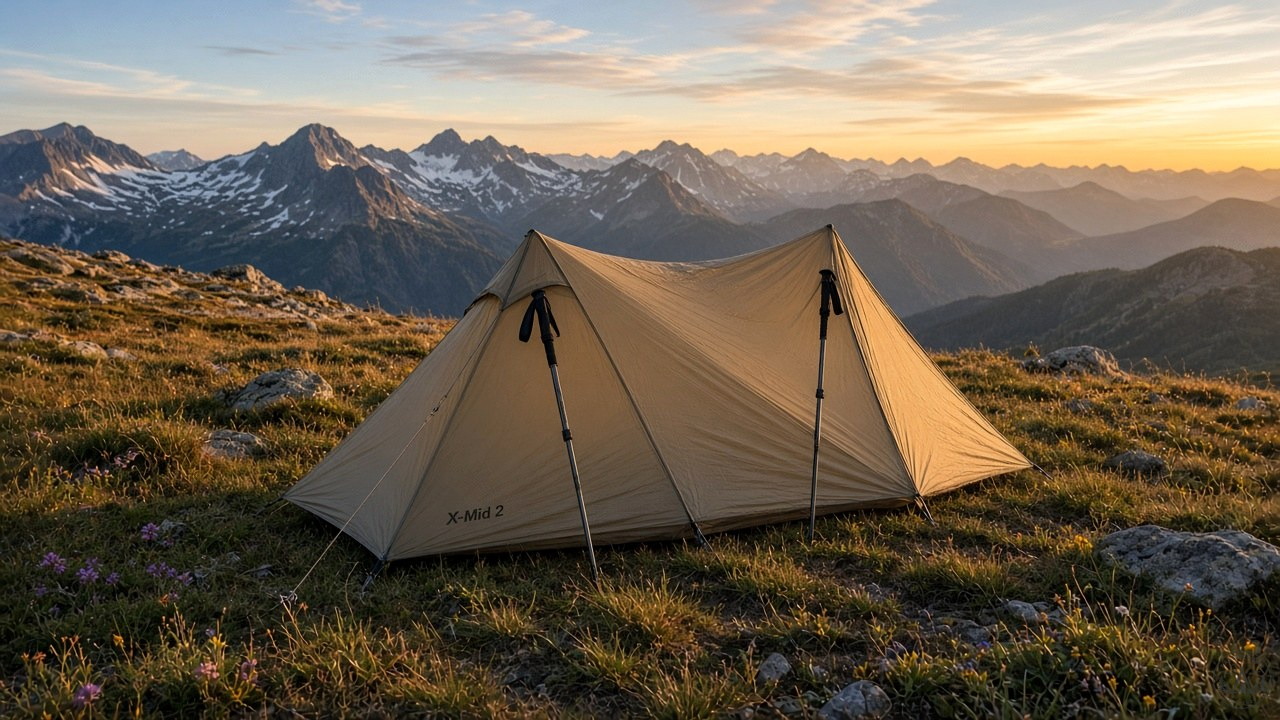
The X-Mid 2 makes its argument in my hand before it ever makes it in camp. At about thirty-two ounces, it leaves room in a pack for warmer sleep gear, food, or simply less strain on a long Washington route. Yet the floor is not a one-person compromise. The diagonal layout and two vestibules create a surprising amount of usable shelter. The trade is equally clear: this is not a freestanding tent. I bring dependable trekking poles, good stakes, and the willingness to learn a pitch that behaves more like a tensioned system than a small dome.
A first-time user should practice at home before taking it into a storm. The core sequence is simple once learned: establish the four primary corners, set the trekking poles to the intended height, connect the peaks, and refine tension around the perimeter. The order matters because each corner influences the next. I use a patch of lawn or a clean floor, follow the current instructions, and mark the pole height I prefer. Five calm practice pitches are worth more than one hurried tutorial at a wet trailhead.
The lack of freestanding ability is not automatically a disadvantage in the Pacific Northwest. Many forest pads accept stakes well, and the tent’s footprint can fit between roots more readily than a rigid rectangle with crossing poles. But rocky beaches, compacted campsites, and alpine slabs change the equation. I carry stakes suited to the ground and know a few alternatives, such as deadman anchors where appropriate. If every usual campsite is stake-hostile, the MSR Hubba Hubba NX 2 review or Nemo Dragonfly Osmo 2P review is a safer recommendation.
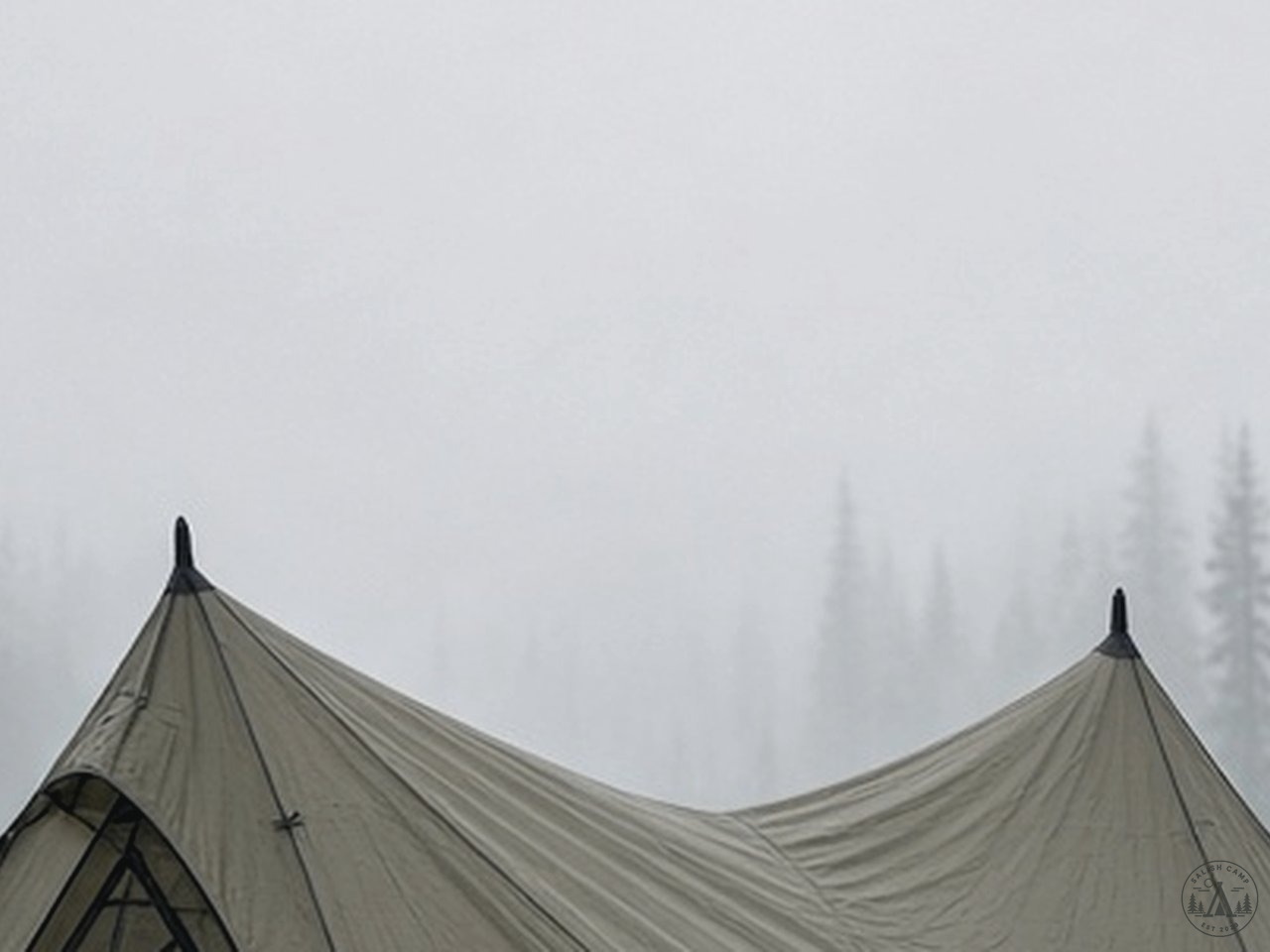
The interior diagonal is the design’s clever part. Two sleepers lie with their heads near opposite corners, gaining shoulder room while the center remains open enough for changing a layer. It is not tall-person magic; measure your pad and sleeping bag. The ridge height is greatest where it matters, but the long sides slope away. Sitting is easiest near the peaks or middle, and reaching across to a partner feels less natural than in a rectangular freestanding dome. The reward is a large sleeping footprint at very low weight.
The vestibules are genuinely useful, not just triangular scraps of fly. Each person gets a protected entry and a place for a pack, shoes, and wet outer layer. I keep cooking outside with generous clearance, regardless of how stormy the evening becomes. The vestibules can be opened in stages for ventilation, and their geometry sheds rain away from the inner door when pitched with care. A new camper should learn to unzip the fly without letting the whole panel collapse onto wet ground.
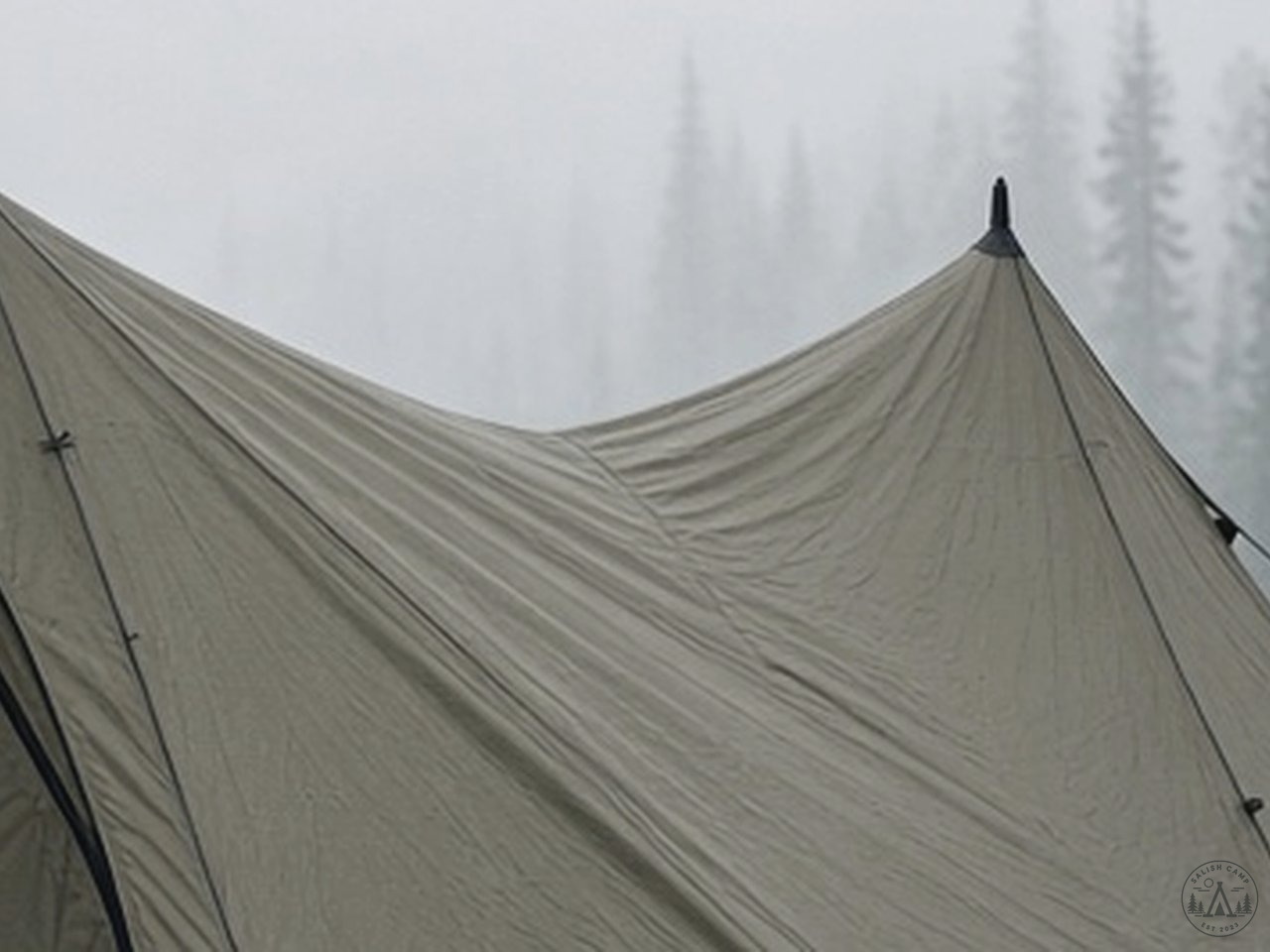
Silpoly is an especially relevant material in our damp climate because it does not absorb water the same way a nylon-based fly does. That does not make the shelter waterproof by wishful thinking. Seams, floor pressure, abrasion, and pitch tension still decide performance. On a wet Olympic Peninsula night I keep the fly taut, avoid contact between damp gear and the inner walls, and open opposing doors when conditions allow. The fabric’s stable behavior helps, but ventilation remains a user responsibility.
The floor perimeter is designed to shed splash when the shelter is pitched at the right height. I check that the bathtub edge is raised evenly and that no groundsheet extends beyond it. A footprint that sticks out can collect rain and send it underneath, a common novice mistake across all tents. I choose a site with drainage, clear only what needs clearing, and use the tent’s adjustable points to keep the fly from sagging into the inner. Precision matters more when a few stakes define the whole structure.
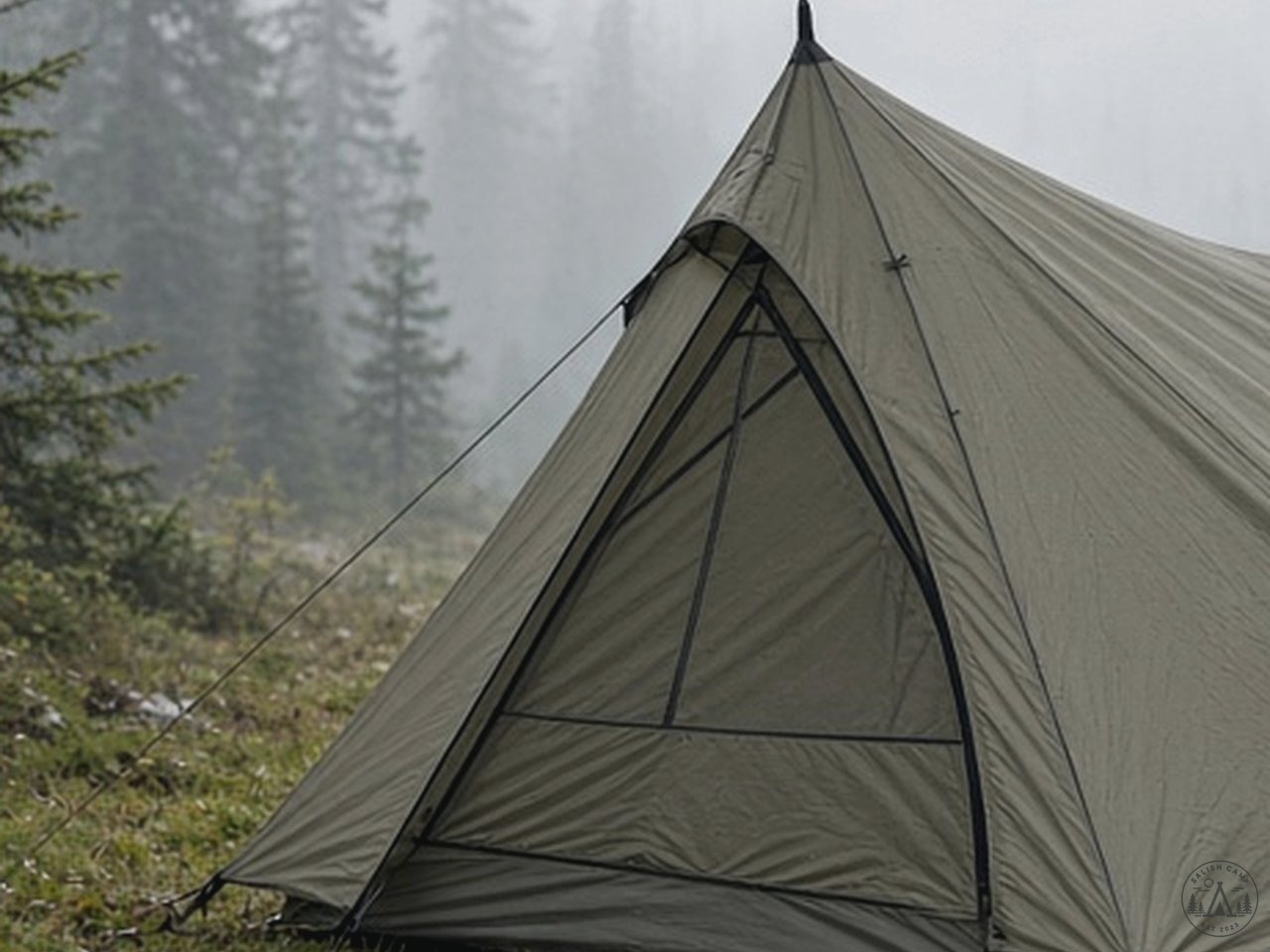
Trekking poles change the packing story. I already carry them on steep trails, so the tent does not need a separate aluminum frame. The packed bundle is short and light, and the poles remain available for hiking after camp is broken. If I do not hike with poles, compatible support poles add cost and erase some of the weight advantage. This is why a specification can never be the whole review: the X-Mid is 32 ounces in a system that assumes tools I may already own.
Wind is where technique becomes visible. I orient the ridgeline and doors with the forecast, stake the windward corners deeply, set both poles evenly, and add secondary guylines before the front arrives. The sloped panels shed weather well, but an imperfect pitch can leave a noisy, flapping roof or a low wet inner. I retension after the fabric settles. The shelter does not promise that weather will be quiet; it gives a good structure if I build the structure correctly.
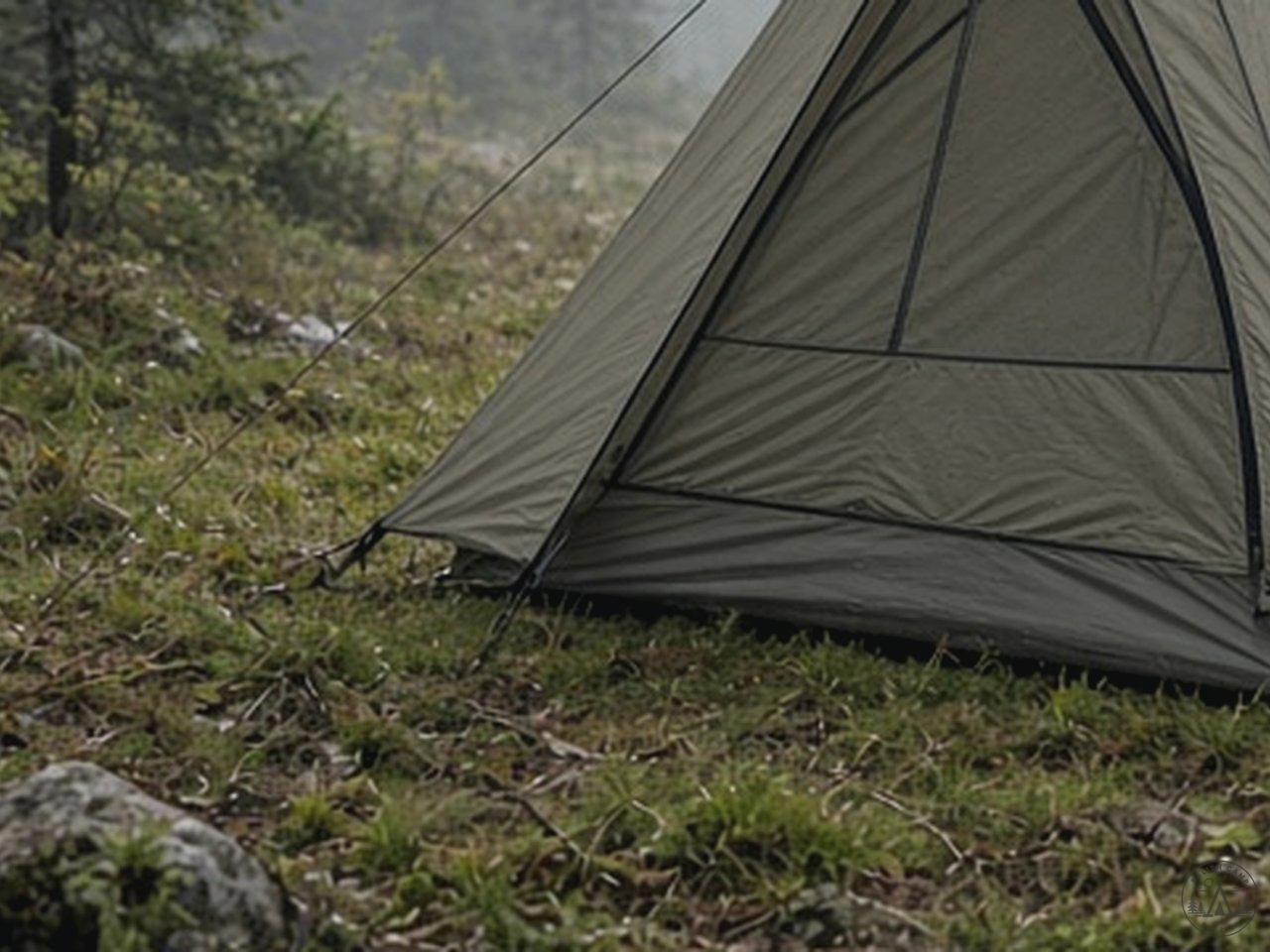
The learning curve is gentler when I treat the tent like a small engineering project instead of a pop-up. The corners should form a coherent rectangle, the peaks should be centered, and the fly should have enough tension to keep contact off the inner. If one side looks wrong, I do not pull harder on a random guyline. I step back, check the primary stake geometry, and reset the source of the error. That habit prevents the frustration that causes many first pitches to be abandoned.
On the trail, the low weight changes my decisions. A forecast with two wet days no longer automatically becomes a reason to leave the shelter at home, and a partner can share a comfortable tent without dividing a heavy pole bundle. The saved ounces are most noticeable late in the day, when a light pack improves foot placement and patience. This is not a reason to pack carelessly; it is an opportunity to spend the weight budget on safety, insulation, or food.
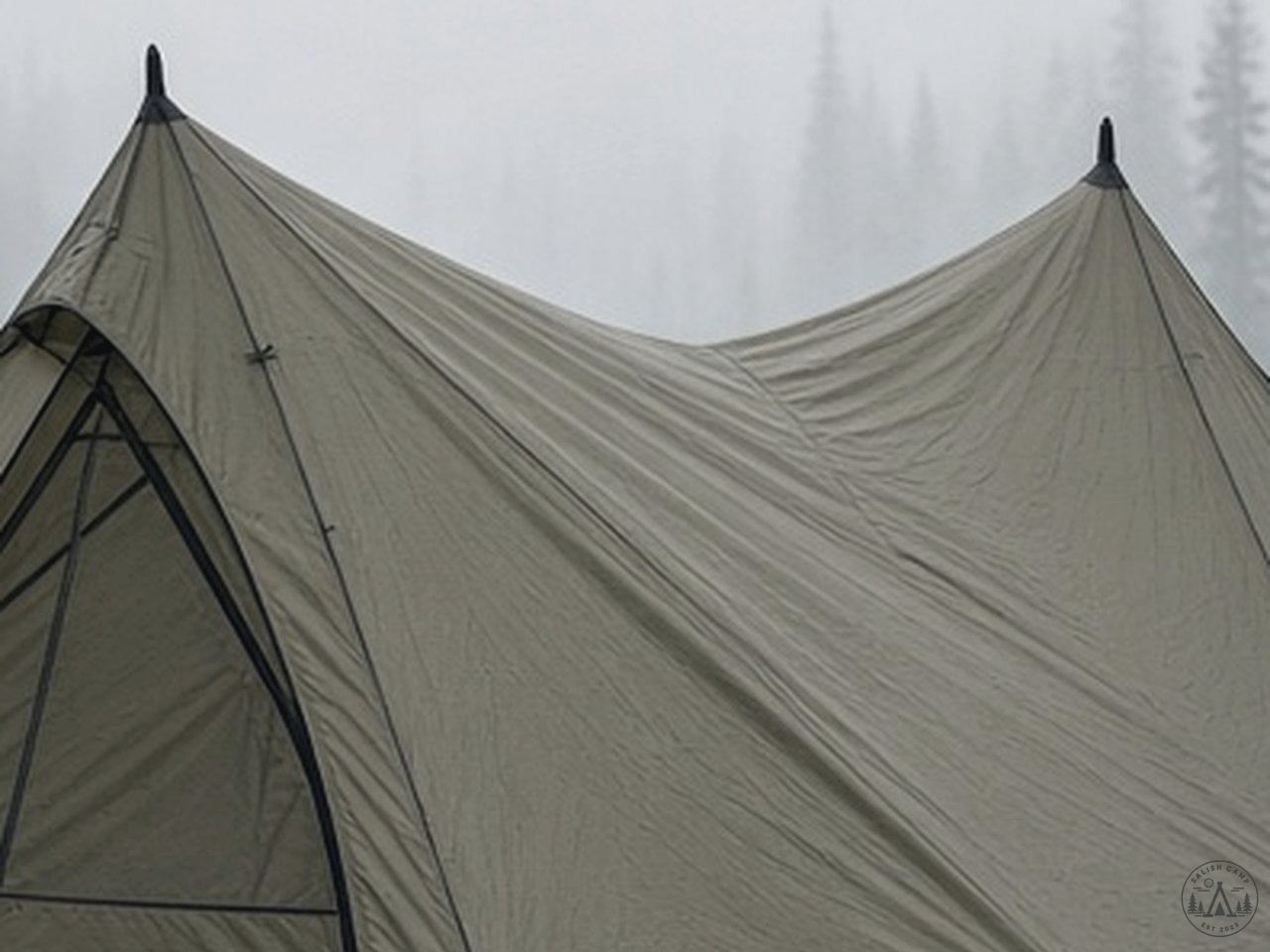
The closest comparison in this batch is the Big Agnes Copper Spur HV UL2 review, which provides freestanding convenience and high-volume headroom at a heavier weight. The X-Mid’s interior may actually feel more spacious to a sleeper, but its roof geometry is less generous for sitting everywhere. The Nemo Dragonfly offers a more conventional frame and OSMO material story. I choose the Durston when trail weight and value dominate, and I accept that a perfect pitch is part of the product.
Ventilation can be excellent because the two doors are large and opposite, but I have to use them. In rain, I crack the upper portions while keeping sleeping bags inside the dry line; in clear weather, I open wide and let the breeze pass through. Condensation is influenced by bodies, wet ground, and wind. I never dry socks against the inner roof and I keep the vents clear of a sleeping bag. Those simple behaviors make the shelter feel much larger and less humid by morning.
Packing wet is straightforward but requires separation. I shake mud from the stakes before putting them away, wipe the floor edge, and stuff the fly so that the wettest panel can be reached quickly at a break. The tent is light enough to deploy for lunch drying if conditions permit. At home it gets a full air-dry before storage. Silpoly’s damp-weather strengths do not excuse leaving a compressed wet shelter in a pack or closet.
A novice asking whether they should start with a non-freestanding tent deserves a practical answer. If their regular trips use good soil, they hike with poles, and they are willing to practice, the X-Mid is unusually rewarding. If they want to arrive late, throw a tent on a random pad, and move it after setup, it will feel like the wrong tool. Both answers are valid. The goal is not to buy the lightest thing; it is to buy the shelter whose operating habits match the trips actually taken.
The price reinforces the value case. At roughly three hundred dollars, it leaves budget for a better sleeping pad, warmer quilt, or weather-appropriate stakes. I do not call it cheap because a failed shelter has a real cost, and I would still inspect seams, webbing, and pole tips. But the combination of low weight, two vestibules, and a full two-person floor is difficult to ignore. It is a design that spends money on geometry rather than a large aluminum skeleton.
At the end of a wet trip, the X-Mid has asked me for more attention than a freestanding dome but carried far less attention’s worth of material. I know when the pitch is right because the doors move cleanly, the inner stays clear, and the fly sheds rain without slapping. That relationship is the product’s real character. The shelter rewards skill, not because it is fussy for its own sake, but because removing a frame transfers some structure to the person setting it up.
Pros & Cons
Pros
- Outstanding weight-to-space ratio.
- Two doors and vestibules in a genuinely backpackable package.
- Silpoly is well suited to persistently damp trips.
- Simple four-corner foundation once learned.
- Excellent value compared with many freestanding competitors.
Cons
- Not freestanding; site and stake quality are critical.
- Requires trekking poles or compatible supports.
- Pitch takes practice and careful tension.
- Low doors and sloping geometry are less inviting for sitting.
Technical Specifications
| Packed weight | Approx. 32 oz / 907 g, configuration dependent |
|---|---|
| Capacity | 2 people |
| Structure | Trekking-pole supported, non-freestanding |
| Fabric | Silpoly fly and floor construction |
| Doors / vestibules | 2 / 2 |
| Season | Three-season |
| Floor | Bathtub-style perimeter |
| Best use | Ultralight backpacking with reliable stakes and trekking poles |
Final Thoughts
Durston X-Mid 2 is best understood as a deliberate set of trade-offs rather than a universal winner. The field evidence points to a shelter that matches its stated role, and the limitations are easy to plan around when the buyer chooses the right trips. I would buy it for the use case in the verdict, maintain it with a dry-storage routine, and pair it with sound site selection and weather judgment.
For a broader kit, I would cross-shop the Hyperlite Unbound 2 for pack context, the Soto WindMaster for wet-weather cooking, and the Hyperlite Southwest 40 when refining carried weight. A comfortable shelter also makes a small Helinox Chair Zero feel worth considering at camp, but the shelter should come first. The right choice is the one that gets used often, pitches safely, and leaves enough energy to enjoy the Northwest around it.