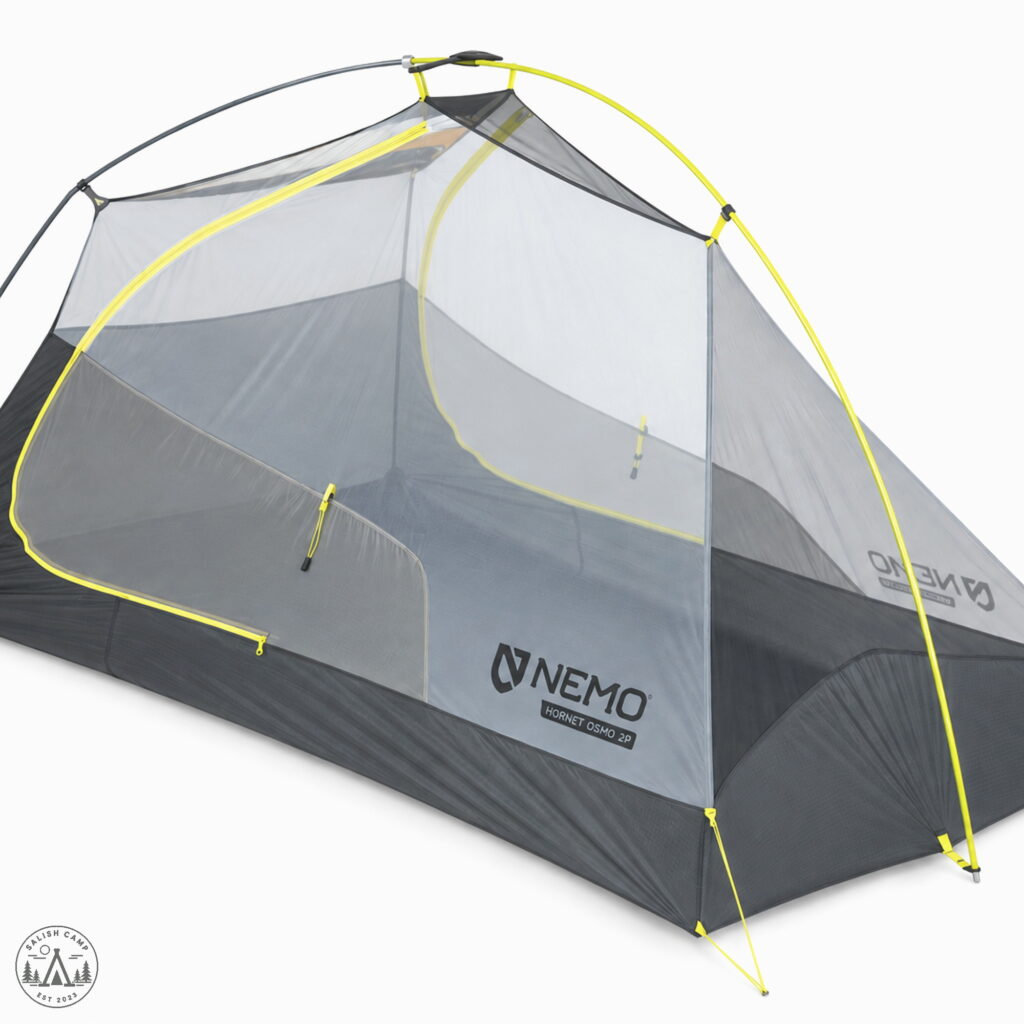
Buy if you want an ultralight two-person backpacking tent that keeps packed volume under control without stripping away the things that make a shelter pleasant after a wet day in the Cascades. The 2P's 2 lb 1 oz minimum weight, 2 lb 8 oz packed weight, dual doors, twin 7.1-square-foot vestibules, 39-inch peak height, Flybar, and OSMO fly and floor make a convincing package for PNW miles where both weight and wet-fabric behavior matter.
Skip if you want a fully freestanding shelter, routinely camp on platforms or hard ground where staking is difficult, or expect a roomy two-person tent to feel like a small basecamp. The Hornet OSMO is semi-freestanding and gets the most from its shape only when the corners and guy-outs are properly tensioned. At $479.95 for the 2P, it also asks a premium price for those weight and packed-size savings.
What Stands Out
- 2 lb 1 oz minimum / 2 lb 8 oz packed for the 2P: Those are the numbers I would use when comparing this tent with another shelter on a real packing list.
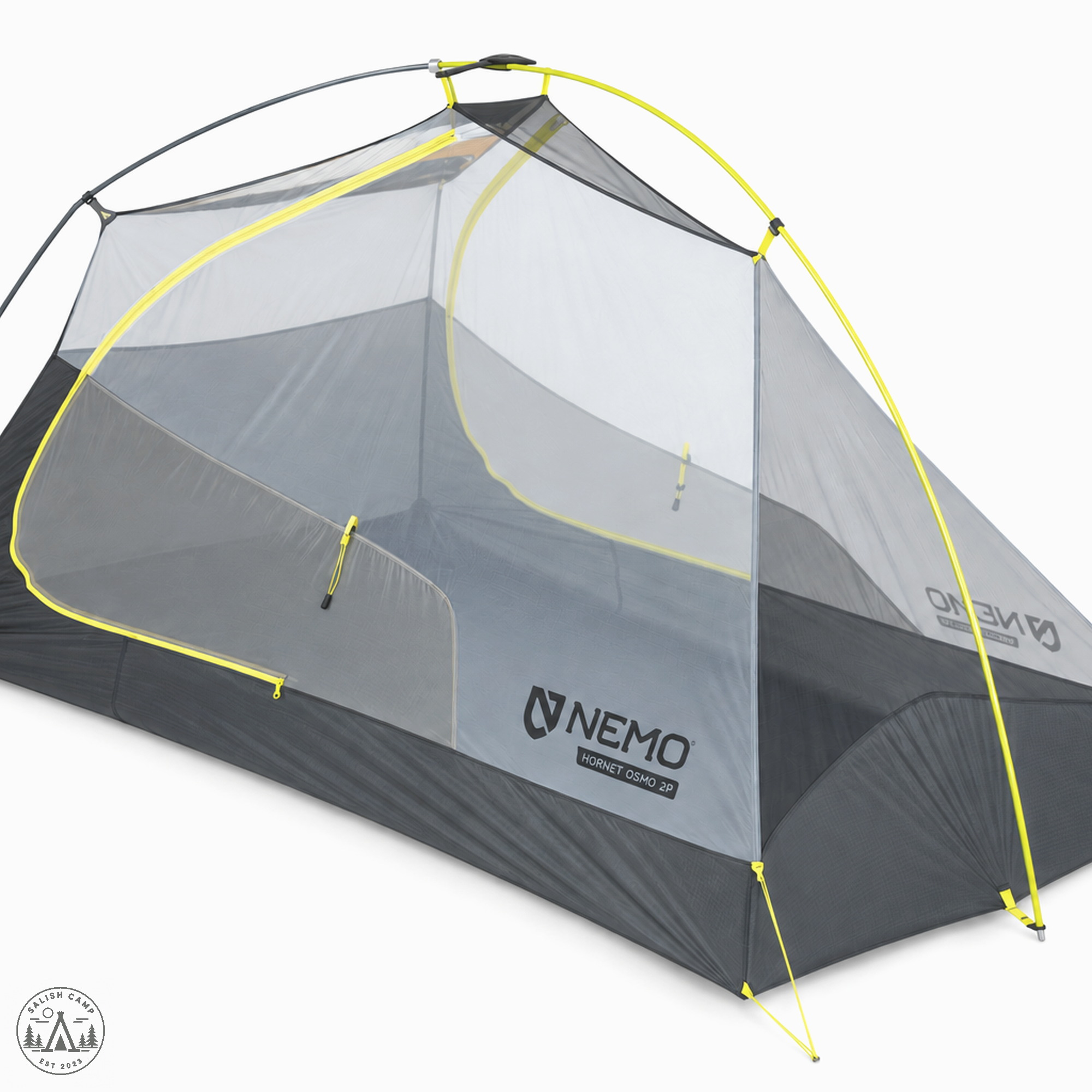
- Two doors and two 7.1-square-foot vestibules: For a tent this light, having independent entry and covered gear space on both sides makes sharing the 2P considerably easier.
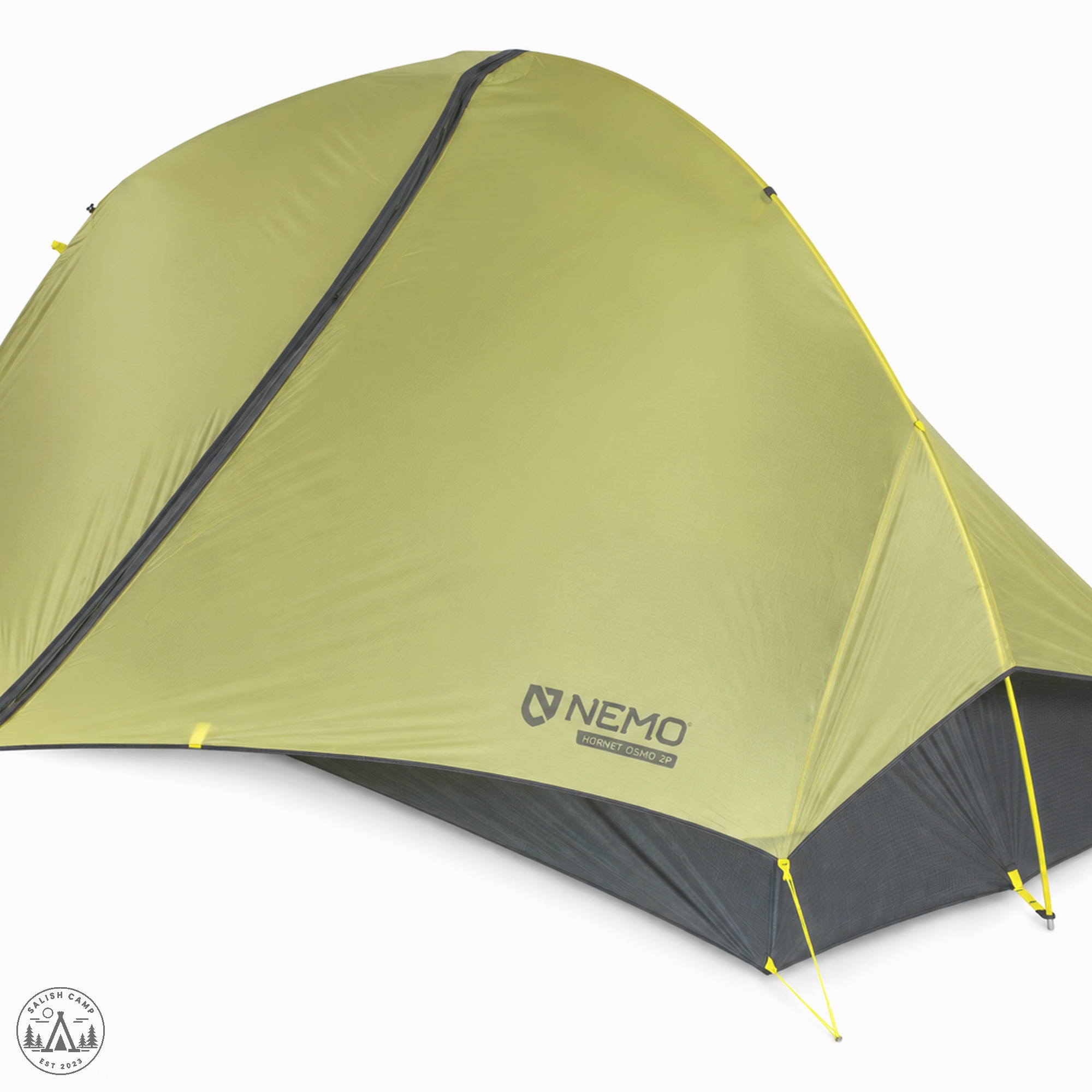
- OSMO fly and floor: NEMO says its OSMO fabric has 3x less wet stretch and longer-lasting water repellency, which addresses a particularly relevant problem on damp PNW trips: a fly becoming progressively slacker through a wet night.
- Semi-freestanding architecture: The single-hub DAC Featherlite pole structure keeps the tent light, but this isn't a shelter I would casually pitch without properly staking the unsupported sections.
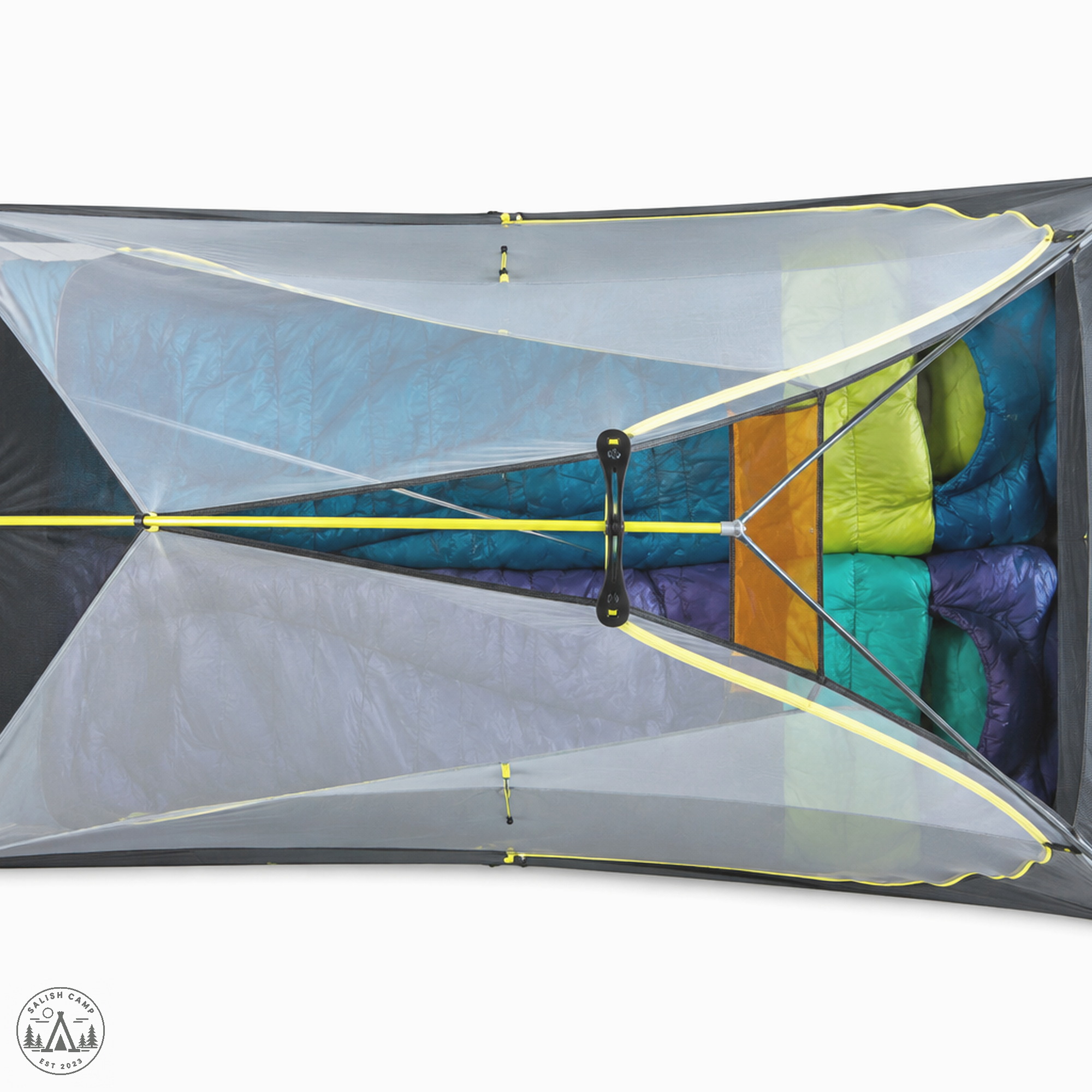
- Flybar adds usable head space: On the 2P, the small crosswise Flybar spreads the upper tent near the head instead of leaving the interior dictated entirely by the main pole arc.
- Foot-end volume is deliberately managed: Corner struts and triangulated guy-outs help pull fabric away from sleeping bags, useful when condensation is waiting on the other side of a lightweight tent wall.
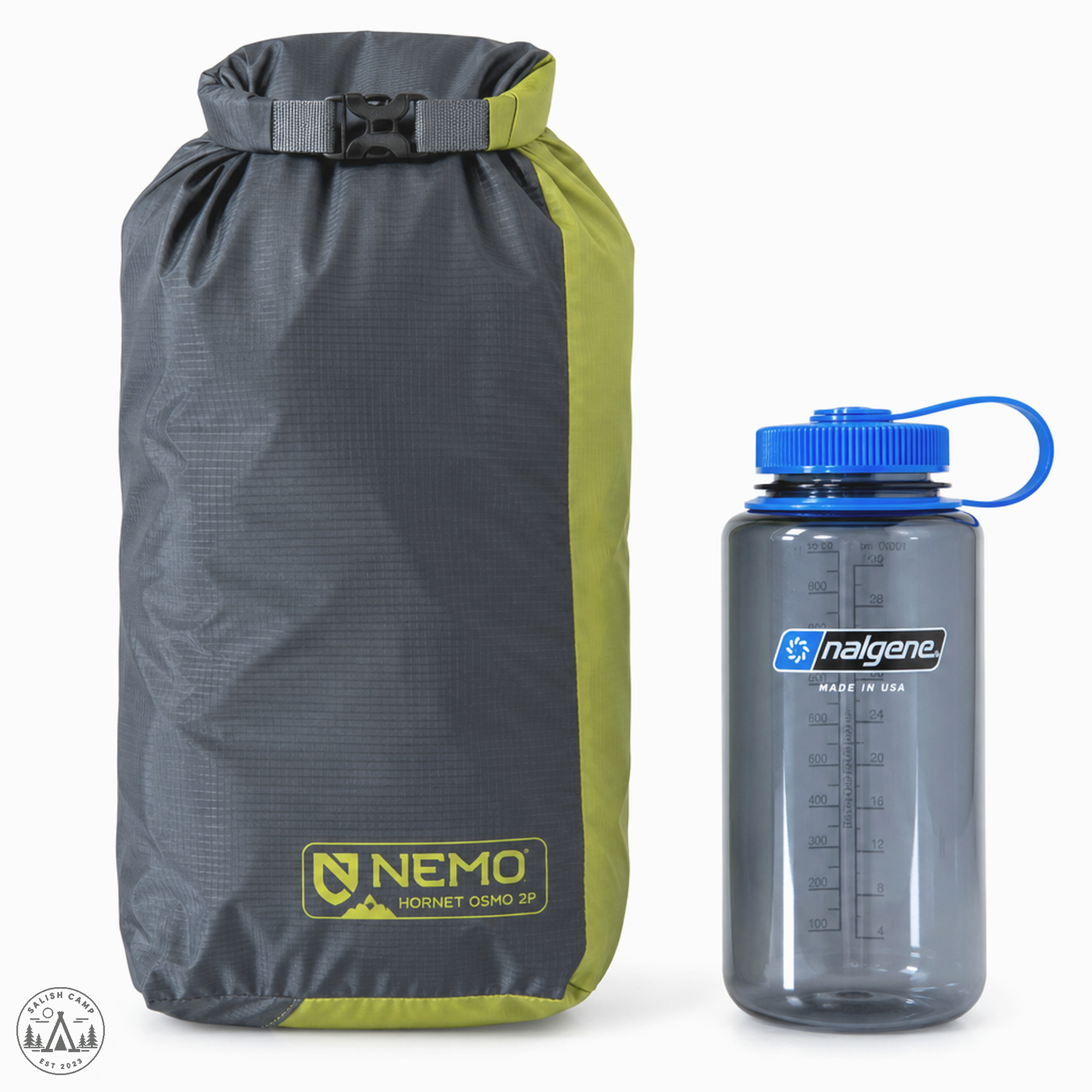
- Divvy Cube is genuinely pack-oriented: Its rectangular shape is easier to place inside a backpack than a traditional long tent sack, and it can be divided between partners when two people are carrying the shelter.
In The Field
The Hornet OSMO 2P makes the most sense to me as a tent for trips where I am counting ounces because I actually have miles and elevation ahead of me, not because I want the lightest specification on a spreadsheet. In the Cascades and Olympics, that distinction matters. A shelter may spend most of the day buried in my pack, but once I reach a damp campsite I still want enough room to change layers, protect my sleeping gear, sort tomorrow's food, and get through a rainy evening without feeling as though every item I own has to occupy the same square foot.
The starting point is weight: 2 lb 1 oz minimum and 2 lb 8 oz packed for the 2P. I would plan around those PDP figures. NEMO also uses the shorthand that the 2P "clocks in at only two pounds" on the same page, but the minimum and packed specifications above are the useful numbers for an actual buying comparison.
At 12.5 x 7.5 x 3.5 inches packed, the Hornet OSMO also attacks the other half of the ultralight shelter problem: volume. Weight gets most of the attention, but a bulky tent can be just as annoying when I'm trying to keep a smaller backpack organized. The Divvy Cube's rectangular format makes sense here. Rather than automatically strapping a long tent package outside the pack, I can work this shape into the main compartment or lower compartment around softer equipment.
With two people, the Divvy concept also gives me the option to distribute shelter components instead of making one person carry the complete tent. That isn't essential, but it is useful when two hikers are already dividing shared gear.
Once pitched, the Hornet's priorities become obvious. This is not a conventional freestanding dome shrunk down with thinner materials. Its DAC Featherlite poles connect through a single hub, and the structure relies on staking and tension to create the finished shape. The PDP correctly calls it semi-freestanding.
For someone new to this style of tent, that means campsite selection deserves a little more thought. On normal forest soil, established backcountry sites, or ground where I can place stakes securely, I don't see that as a major problem. I would pitch the pole structure, position the body carefully, stake the required points with good tension, and then use the guy-outs when weather warrants them.
The compromise becomes more apparent on surfaces that don't accept stakes easily. A wooden platform, very rocky ground, or a site with shallow soil can require more improvisation than a fully freestanding tent. I wouldn't buy the Hornet OSMO expecting to throw the poles in, drop the tent anywhere, and have its final geometry automatically established.
That matters even more in wet weather. Proper tension isn't just about making the tent look tidy for a photograph. It helps preserve interior volume and keeps the shelter fabrics where they are supposed to be relative to my sleeping bag.
The two-door layout is one of the strongest reasons I like the 2P configuration. Each vestibule provides 7.1 square feet, so I have covered space on both sides rather than one shared entrance becoming the tent's traffic jam.
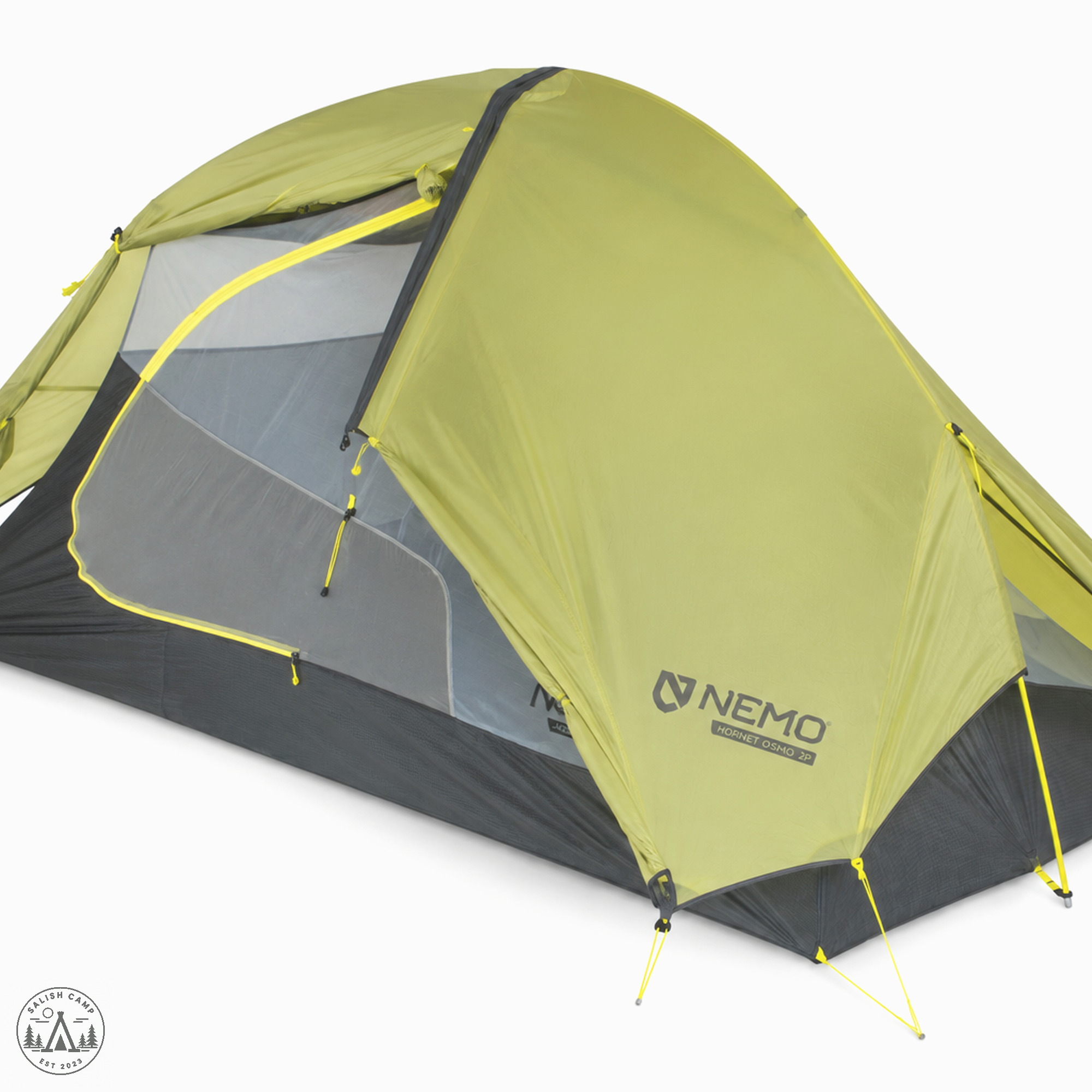
For two hikers, that changes the experience more than another small reduction in trail weight would. I can keep my shoes and wet equipment on my side, my partner can do the same, and neither of us has to crawl over the other for a midnight exit. In sustained PNW drizzle, separating wet vestibule gear from the sleeping area is exactly the kind of mundane feature that starts feeling luxurious.
The interior floor is 27.7 square feet, measuring 85 inches long and tapering from 51 to 43 inches wide. That taper is part of the weight-saving equation. I would think of this as a backpacking two-person tent, not a generously oversized two-person room. Two sleepers need to be comfortable organizing their equipment rather than expecting piles of spare interior floor space.
The 39-inch peak height is similarly adequate rather than extravagant. What helps is that NEMO isn't relying on peak height alone to determine how the tent feels. The Flybar spreads the structure around the head, while the door clips and other volumizing hardware work to preserve useful space.
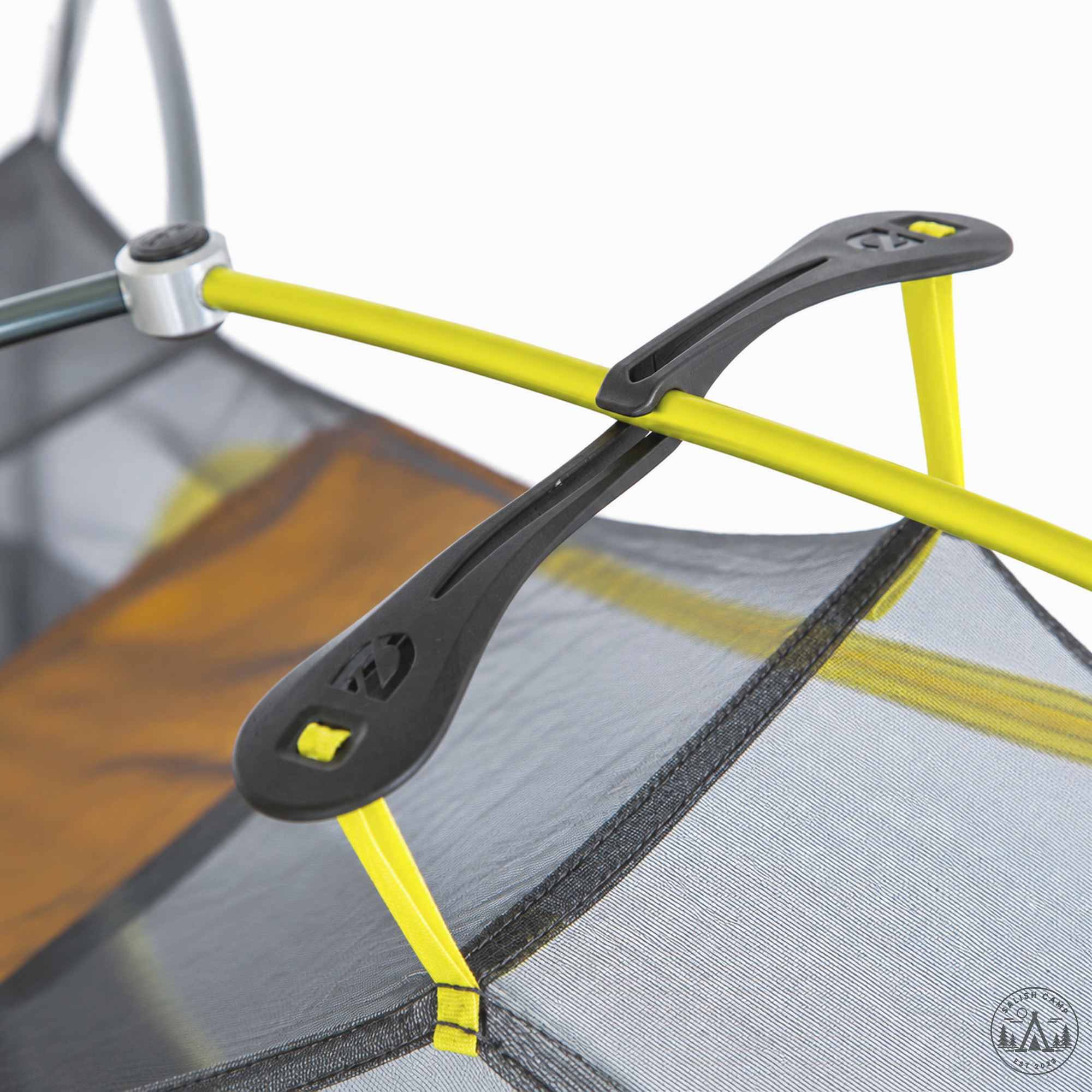
At the foot, the corner struts and triangulated volumizing guy-outs are more important than they initially sound. A common annoyance in small ultralight shelters is waking to find the end of a sleeping bag pressed against a damp wall. Pulling that area outward creates a little more separation between insulation and condensation.
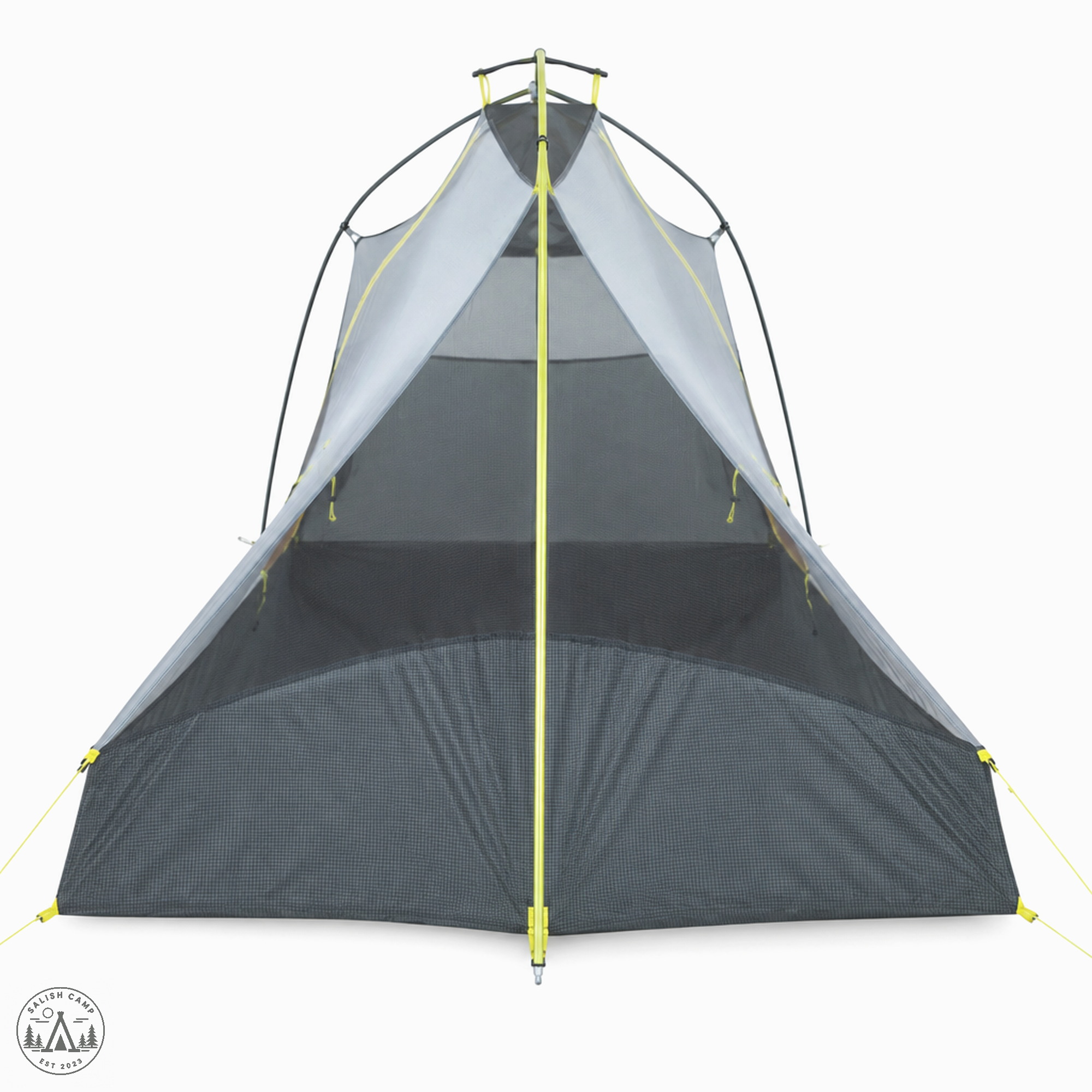
It doesn't eliminate condensation. No three-season backpacking tent can promise that in the combination of saturated ground, cool temperatures, high humidity, and limited airflow that I routinely encounter in the Pacific Northwest. Site choice and ventilation still matter. I avoid low depressions when I can, use available airflow, and try not to bring soaked equipment farther into the sleeping area than necessary.
What interests me about OSMO in this environment is wet stretch. NEMO says the material has three times less wet stretch, alongside its water-repellency claim. Anyone who has tensioned a lightweight shelter before bed and found the fly noticeably slacker after hours of rain understands why that matters. Less wet stretch should mean less change in the fly's tension as conditions become wetter.
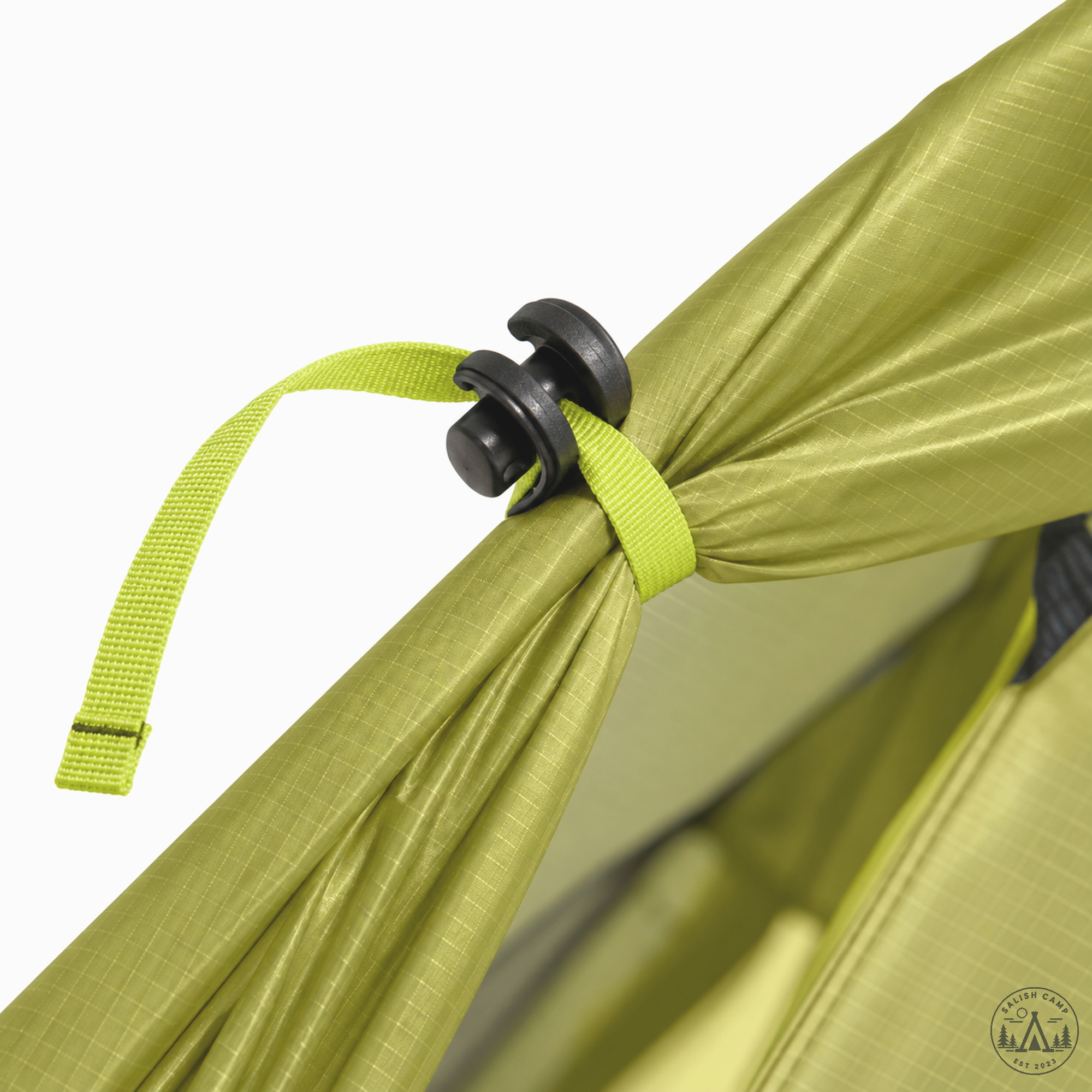
I would still tension the tent correctly from the start. Fabric technology doesn't replace a sound pitch.
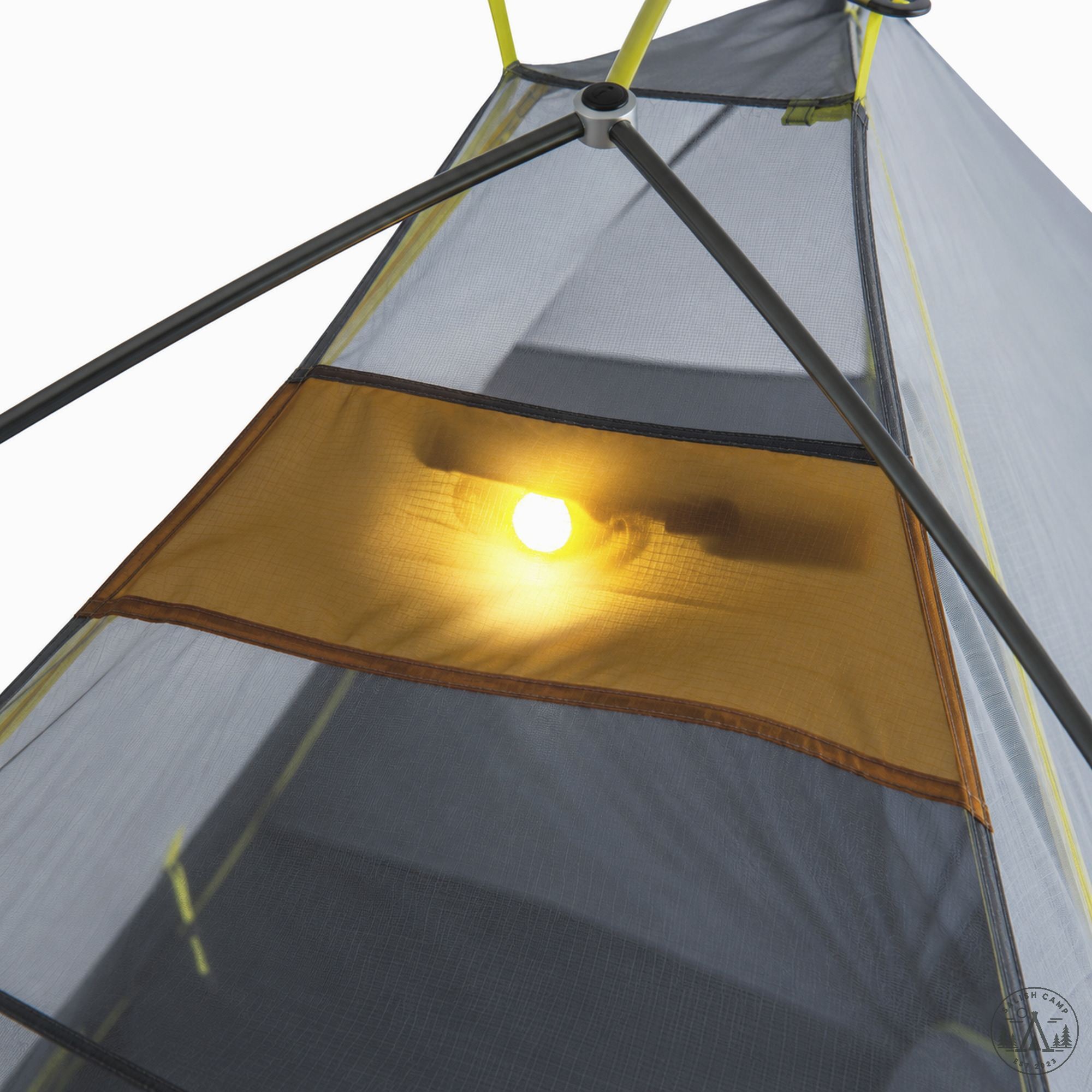
The smaller usability features are restrained, which suits the Hornet. The overhead Nightlight Pocket lets me turn a headlamp into softer ambient illumination. It's a minor convenience until I'm sharing a small tent and don't want a concentrated LED beam pointing directly at the other person every time I look for something.
Gatekeeper door clips are another small detail I appreciate because tent doors are handled constantly. Being able to secure an open door without a fiddly operation is the kind of feature that disappears into normal use when it works well.
None of this changes the fundamental character of the shelter. The Hornet OSMO is still an ultralight tent. Its canopy uses 15D nylon ripstop and no-see-um mesh, and the architecture is deliberately minimal. I wouldn't approach it with the expectations I bring to a heavier shelter designed around maximum interior space or casual campsite flexibility.
The question for a first-time ultralight-tent buyer is whether those compromises will be irritating in everyday use. For me, the answer depends mostly on what happens before reaching camp.
If I'm hiking substantial mileage, gaining Cascade elevation, or carrying several days of food, saving shelter weight and pack volume pays me back for hours. Once I understand that I need to stake the Hornet properly and organize my equipment rather than spreading it across the floor, the trade makes sense.
If the hiking is short and camp comfort is the dominant priority, I become less convinced. A $479.95 shelter earns its place here through low carried weight, compact packing, and efficient livability. If those aren't valuable to the trip, much of the reason to accept a semi-freestanding layout disappears.
The footprint is also optional rather than included. For the 2P it's $89.95. Whether I carry one depends on the ground and how conservative I want to be with the tent floor. On abrasive or messy sites, a footprint can simplify protecting the floor and keeping the underside cleaner. On trips where I'm deliberately minimizing carried weight, it's another component I have to decide whether I actually need.
For wet shoulder-season backpacking, my bigger concern would be using the Hornet within its intended three-season envelope rather than trying to make an ultralight shelter perform a different job. Rain, damp camps, cool mornings, and ordinary backpacking weather fit the brief. The lightweight architecture doesn't turn it into a shelter I would choose specifically for severe conditions simply because the fly handles rain.
That distinction leaves the Hornet OSMO 2P in a useful middle ground. It is light enough that I would notice the savings during a long climbing day, yet it retains two entrances, two vestibules, practical headroom management, foot-end volume, and small interior features that keep it from feeling like a pure gram-counting exercise.
For a solo hiker wanting extra room, the 2P becomes especially interesting if the packed weight fits the rest of the system. For two people, it requires more discipline with interior space but rewards that discipline with an impressively low shared shelter load.
If I'm already refining the rest of a lightweight sleep system, our NEMO Tensor review is a natural companion read: our NEMO Tensor review.
Pros
- 2 lb 1 oz minimum and 2 lb 8 oz packed weight for the 2P
- Two doors and two 7.1-square-foot vestibules give two hikers independent access and covered gear storage
- OSMO fabric specifically targets wet stretch, a meaningful advantage for long damp PNW nights
- Flybar, corner struts, and volumizing guy-outs make smart use of a deliberately minimal structure
Cons
- Semi-freestanding design requires a deliberate, properly staked pitch
- $479.95 for the 2P is a substantial investment
- Tapered 27.7-square-foot floor rewards organized packing more than sprawling two-person camp living
Technical Specifications
| Specification | Details |
|---|---|
| Product | NEMO Hornet OSMOâ„¢ Ultralight Backpacking Tent |
| Size in photos / primary | 2-Person, SKU 811666036711, $479.95 |
| Other sizes | 1-Person 811666036704 $459.95; 3-Person 811666036728 $579.95 |
| Color | Birch Bud / Goodnight Gray |
| Price | $479.95 (2P); $459.95 (1P); $579.95 (3P) (nemoequipment.com, 2026-10-06, in stock) |
| Best use | Ultralight backpacking, backpacking |
| Season | 3 |
| Structure | Semi-freestanding |
| Minimum weight (2P) | 2 lb 1 oz / 948 g |
| Packed weight (2P) | 2 lb 8 oz / 1.1 kg |
| Packed size (2P) | 12.5 x 7.5 x 3.5 in / 32 x 19 x 8.5 cm |
| Peak height (2P) | 39 in / 98 cm |
| Floor area (2P) | 27.7 sq ft / 2.6 sq m |
| Floor dimensions (2P) | 85 x 51–43 in / 216 x 130–109 cm |
| Vestibules (2P) | 7.1 + 7.1 sq ft / 0.7 + 0.7 sq m; 2 doors / 2 vestibules |
| 1P weights (context) | Min 1 lb 13 oz / 822 g; packed 2 lb 4 oz / 1.0 kg; packed size 12.5 x 7.5 x 3.0 in; floor 20.6 sq ft; 1 door / 1 vestibule 7.3 sq ft; peak 39 in |
| 3P weights (context) | Min 2 lb 13 oz / 1.28 kg; packed 3 lb 5 oz / 1.5 kg; packed size 17.5 x 8.0 x 3.5 in; floor 39.7 sq ft; peak 44 in; vestibules 8.6 + 8.6 sq ft; 2 doors / 2 vestibules; no Flybar |
| Canopy | 15D nylon ripstop / no-see-um mesh |
| Rainfly | OSMOâ„¢ ripstop (1200 mm) |
| Floor | OSMOâ„¢ ripstop (1500 mm) |
| Stuff sack | Divvy Cubeâ„¢ |
| Included | Divvy Cube stuff sack, stakes, guy-out cord, pole repair splint |
| Footprint (sold separately) | 1P $79.95; 2P $89.95; 3P $99.95 |
Final Thoughts
The Hornet OSMO 2P hits the balance I want from an ultralight PNW shelter: the weight savings are meaningful on the trail, but the design hasn't discarded every feature I appreciate once the hiking stops. A separate door and vestibule for each sleeper, a compact Divvy Cube, the Flybar, and intentional foot-end volume all make the tent easier to live with than its minimalist pole architecture initially suggests.
OSMO is particularly relevant to how I camp. Around the Cascades and Olympics, I'm less interested in abstract fabric claims than in what happens after a fly has spent hours exposed to drizzle and saturated air. Reduced wet stretch addresses a real annoyance, though I would still treat careful staking, tensioning, ventilation, and campsite selection as part of owning this tent.
The main decision is whether I actually need what the Hornet is selling. If I'm covering real backpacking miles and want a two-person shelter at 2 lb 1 oz minimum and 2 lb 8 oz packed without giving up dual vestibules, the answer is easy to understand. If I prioritize a forgiving freestanding pitch, abundant floor space, or lower cost over carried weight and packed volume, this isn't the tent I would force into that role.