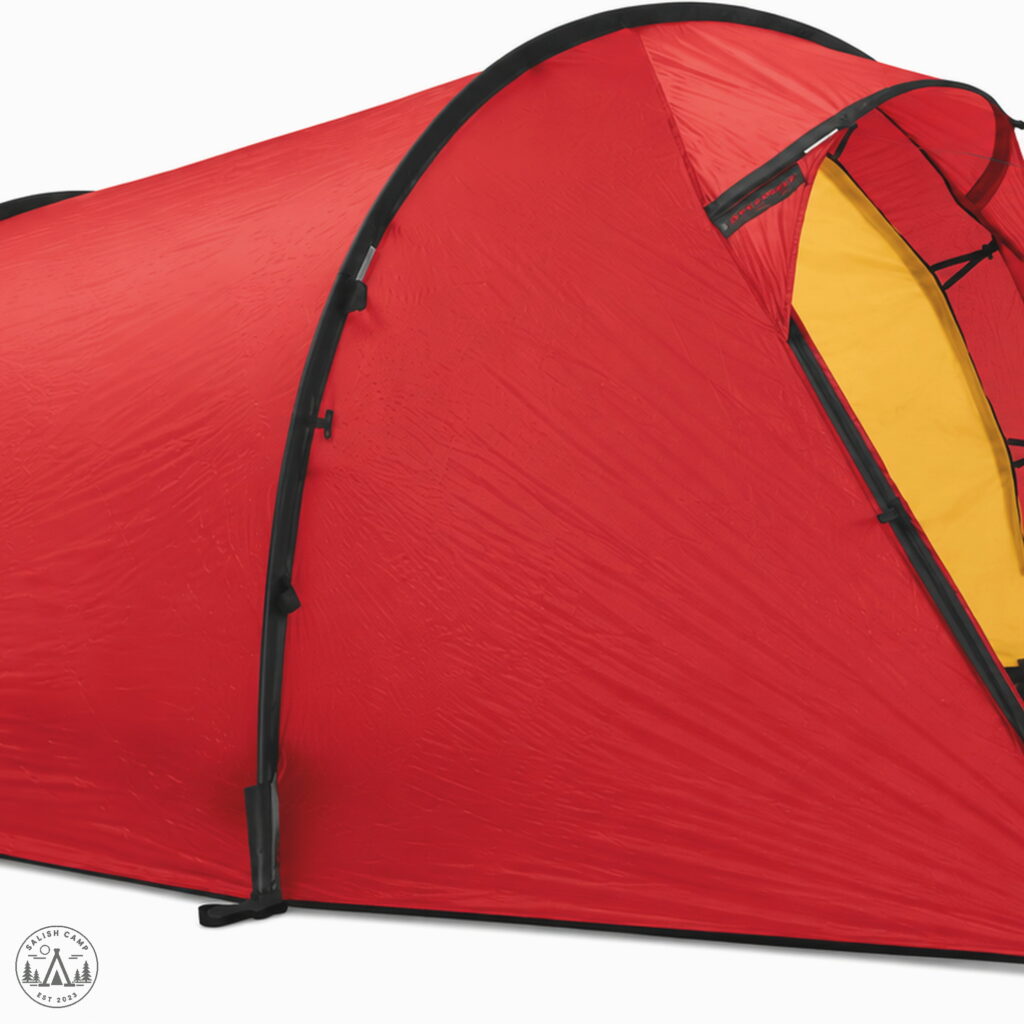
Buy if you want a true all-season two-person shelter without immediately jumping into expedition-tent weight. The Nallo 2 gets down to a 4 lb 7 oz / 2.0 kg minimum weight, while its Kerlon 1200 outer, ground-reaching fly, adjustable fabric-backed mesh, linked inner and outer tents, and tunnel architecture give it the weather-oriented construction I want for shoulder-season Cascades and Olympics trips. I also like that Hilleberg hasn't complicated the basic pitch: two poles, continuous sleeves, pole tensioners, and a tunnel structure meant to be properly staked.
Skip if $1,030 USD is difficult to justify, you routinely camp where getting solid stakes into the ground is problematic, or you want multiple doors and vestibules. The standard Nallo 2 has one entrance and one 14.0 sq ft vestibule. This also isn't the shelter I'd buy simply to minimize three-season trail weight. Its appeal is carrying less than I expect from a genuinely all-season tent without stripping away the construction features that make me willing to use it when the forecast deteriorates.
What Stands Out
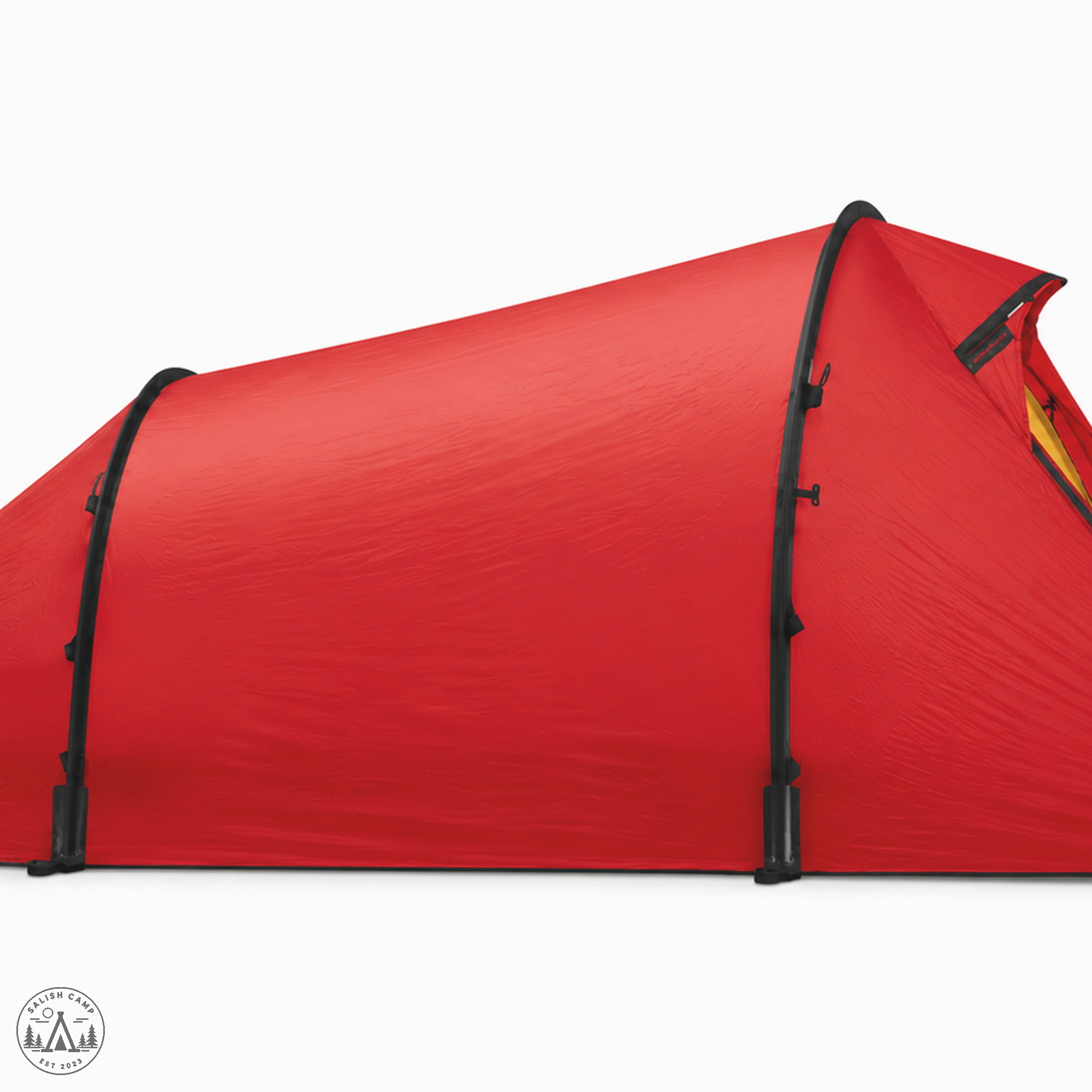
- Kerlon 1200 at a notably low all-season weight. Minimum weight is 4 lb 7 oz / 2.0 kg; packed weight is 5 lb 5 oz / 2.4 kg.
- Linked inner and outer tents pitch together. In sustained PNW rain, I can put the shelter up without deliberately exposing the inner tent first.
- Two-pole tunnel construction keeps the architecture simple. The Nallo 2 uses two 9 mm poles, measuring 305 cm and 260 cm.
- Continuous pole sleeves are open from one side. Combined with the pole tensioners, the system is straightforward once I understand how to orient and tension a tunnel tent.
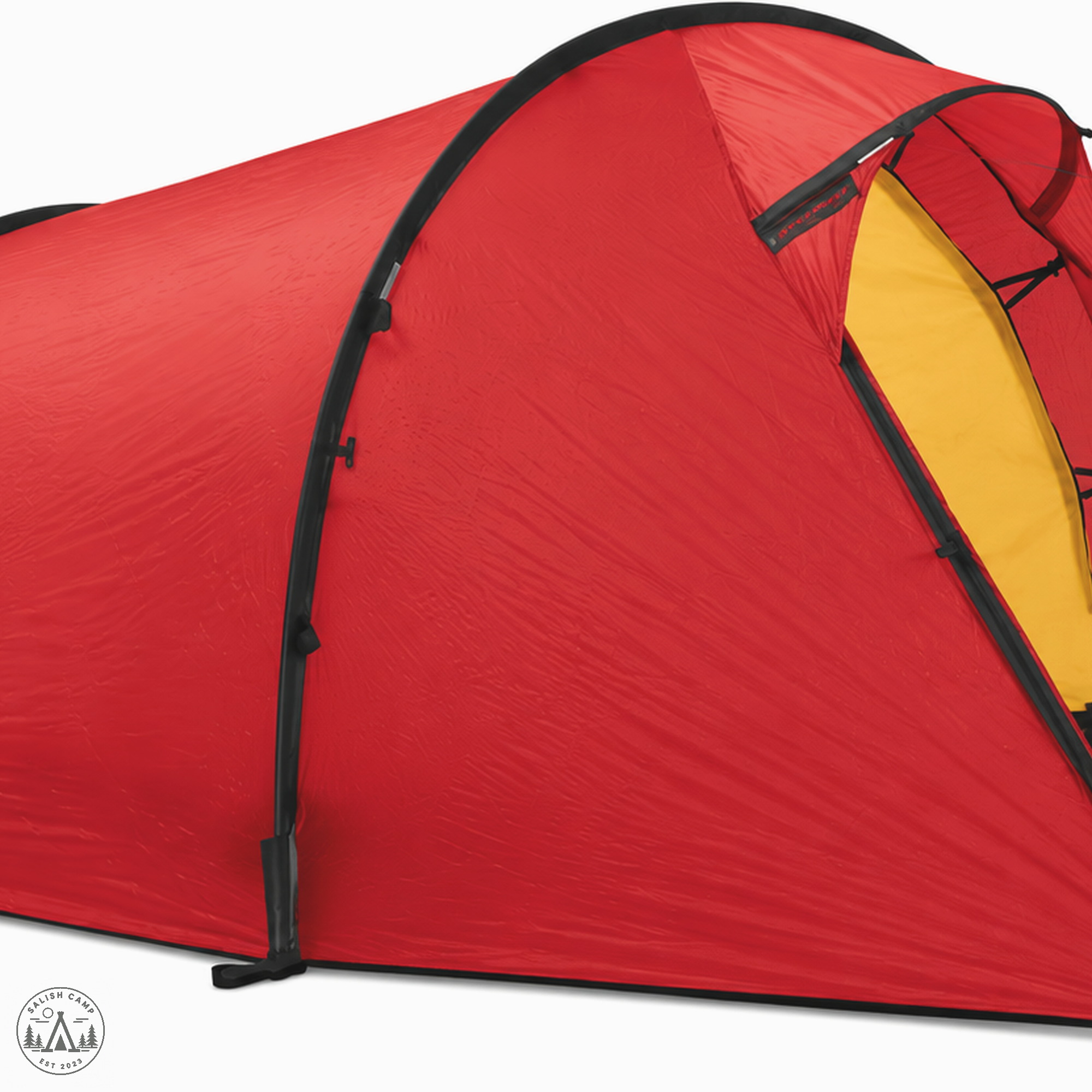
- The outer tent reaches the ground. Mesh areas are backed by adjustable fabric panels, which is a meaningful distinction when I'm choosing a shelter for cold wind and early snow rather than summer ventilation alone.
- The rear outer wall provides another ventilation option. Its lower section can be rolled upward when conditions allow more airflow.
- The single vestibule is an intentional weight trade. I get 14.0 sq ft of vestibule area and one entrance rather than the extra access and redundancy of a two-door layout.
In The Field
The reason I'd carry a Nallo 2 in the Pacific Northwest isn't because I need a bombproof winter fortress every night. It's because our shoulder seasons make shelter choices awkward.
A Cascades trip can start with mild temperatures below tree line, turn into hours of rain, and finish at an exposed camp with hard wind and wet snow. In the Olympics, persistent moisture can be the bigger problem. I still have to carry the shelter over real mileage, so taking a much heavier tent purely as insurance isn't particularly attractive.
That middle ground is where the Nallo makes sense to me.
The first numbers I'd look at are the two weight figures, because they describe different things and shouldn't be blurred together. Minimum weight for the Nallo 2 is 4 lb 7 oz / 2.0 kg. Packed weight is 5 lb 5 oz / 2.4 kg. Neither makes this an ultralight three-season shelter. What catches my attention is getting an all-season Red Label tunnel with Kerlon 1200 at those weights.
That distinction shapes how I'd use it. I wouldn't carry the Nallo 2 on an easy midsummer trip simply because it's a Hilleberg. I'd reach for it when weather resistance is important enough that I'm willing to carry more than a minimalist shelter, but I'm still covering enough ground that every extra pound matters.
The linked inner and outer tent is particularly useful in the Northwest. With some shelter designs, pitching in rain means trying to keep the inner protected while assembling the outer structure. Here, the two can remain connected and go up together.
That's not a glamorous feature until I'm setting camp in cold rain.
It means I can arrive tired, get the poles into their sleeves, establish the tunnel, stake and tension the shelter, and move inside rather than treating the inner tent like something I have to protect during assembly. The inner and outer can be separated when needed, but for normal wet-weather use I'd take advantage of the linked configuration.
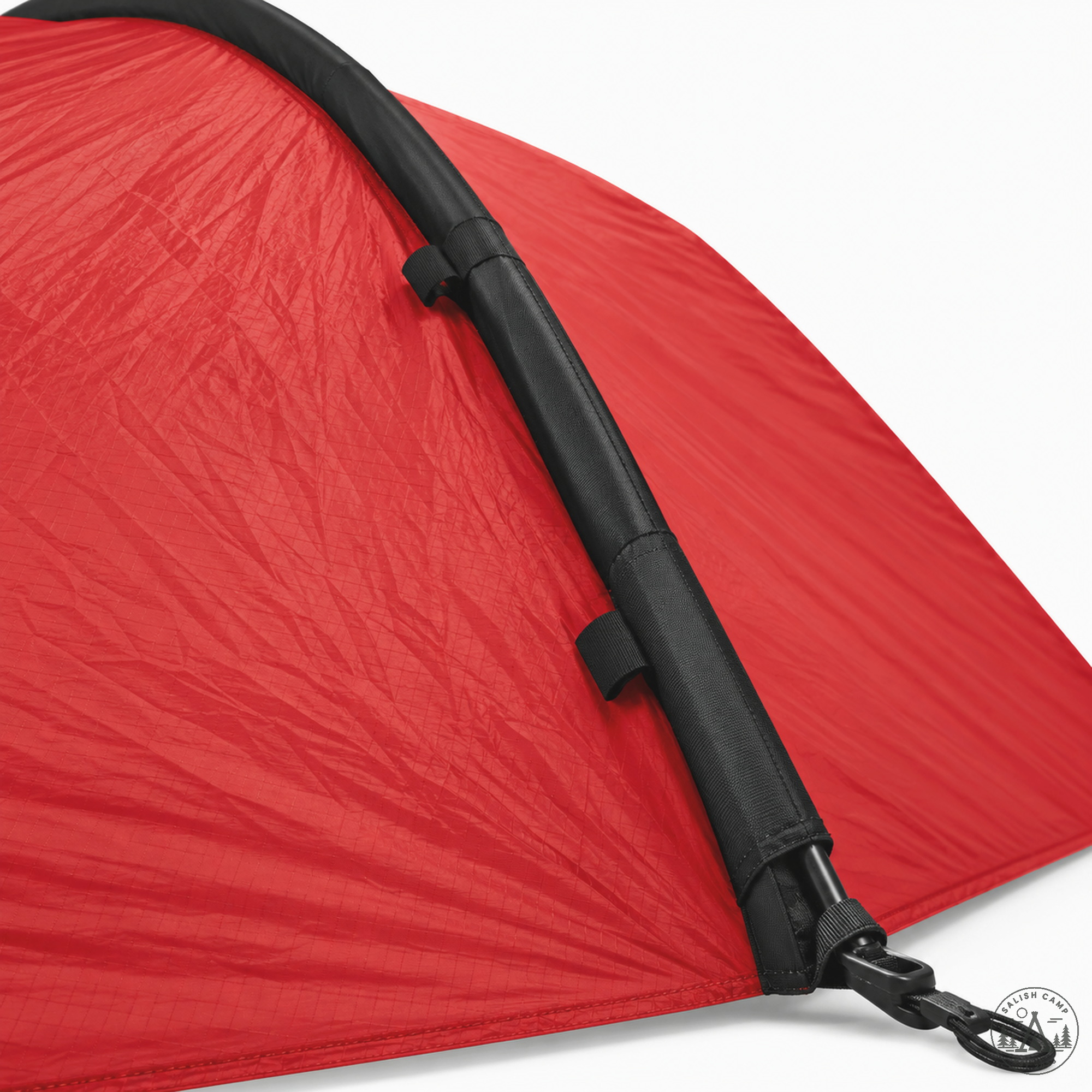
The pole arrangement is refreshingly understandable. The Nallo 2 uses two 9 mm poles, one 305 cm and one 260 cm. Each goes through a continuous sleeve from a single opening and works with a pole tensioner.
There's an important nuance for someone new to tunnel tents: simple pole architecture doesn't mean staking is optional.
Hilleberg says the tunnel design requires only four pegs for pitching. That statement shouldn't be confused with what comes in the bag. The Nallo 2 includes 16 V-Pegs. More importantly, I wouldn't read the four-peg figure as permission to casually anchor four points and ignore the rest when the weather is ugly.
A tunnel gets its useful structure from being properly oriented, anchored, and tensioned. In an exposed Cascade camp, I'd pay attention to the expected wind, use suitable anchors for the ground, and tension the shelter deliberately. If my normal camping style is dropping a mostly freestanding tent onto rock and figuring out anchors afterward, the Nallo requires a different mindset.
I'm comfortable with that trade because a tunnel gives me a lot of usable enclosure for its structural weight. But I want to know what kind of campsite I'm walking into. Deep soil, forest duff, gravel, snow, and shallow alpine ground can demand different anchoring approaches.
The Nallo's low rear profile is another part of that tunnel strategy. Inside, the floor is 220 cm long, with a 130 cm front width tapering to 109 cm at the rear. Maximum inner height is 100 cm / 39.4 in.
That geometry matters more than the raw floor-area figure.
The Nallo 2 provides 2.6 m² / 28.0 sq ft of inner floor area. For two people, I see it as legitimate backpacking space rather than luxury accommodations. The broader and taller front is where I naturally want more upper-body room, while the narrowing rear end saves material where I need less volume.
For one person, it becomes extremely generous without requiring a huge weight commitment. That's one of the more interesting uses of the Nallo 2: a solo backpacker deliberately buying substantial interior room while still keeping minimum shelter weight at 4 lb 7 oz / 2.0 kg.
For two, gear management shifts toward the vestibule. The standard Nallo 2 gives me 14.0 sq ft of vestibule space, but there's only one vestibule and one entrance. Wet boots, packs, shells, and cooking-related gear all compete for that covered area.
The simplicity helps keep weight down, but couples accustomed to having their own doors will notice the difference immediately.
The GT versions exist for people who prioritize covered storage and vestibule living space. For context, the Nallo 2 GT expands vestibule area to 23.7 sq ft and was listed at $1,155 USD in the supplied official catalog data. The GT's extended vestibule also gets entrances on either side. That's useful context, but I wouldn't automatically choose it. The regular Nallo 2 is compelling precisely because it preserves the leaner interpretation of this tent.
Ventilation deserves equal attention because “all-season” doesn't mean condensation disappears.
The outer walls extend to the ground, and mesh areas have adjustable fabric panels behind them. That's exactly the sort of configuration I want when wind-driven rain turns cold or an October alpine forecast begins producing snow. The tradeoff is that I have to manage airflow according to conditions rather than expecting huge expanses of mesh to do everything automatically.
The lower portion of the rear outer wall can be rolled upward, providing another way to increase ventilation when weather permits.
On damp Northwest nights, I'd use those options actively. Two people sleeping inside a relatively compact shelter generate plenty of moisture. Wet shells and gear add more. When the weather gives me an opportunity to increase airflow without inviting rain inside, I take it.
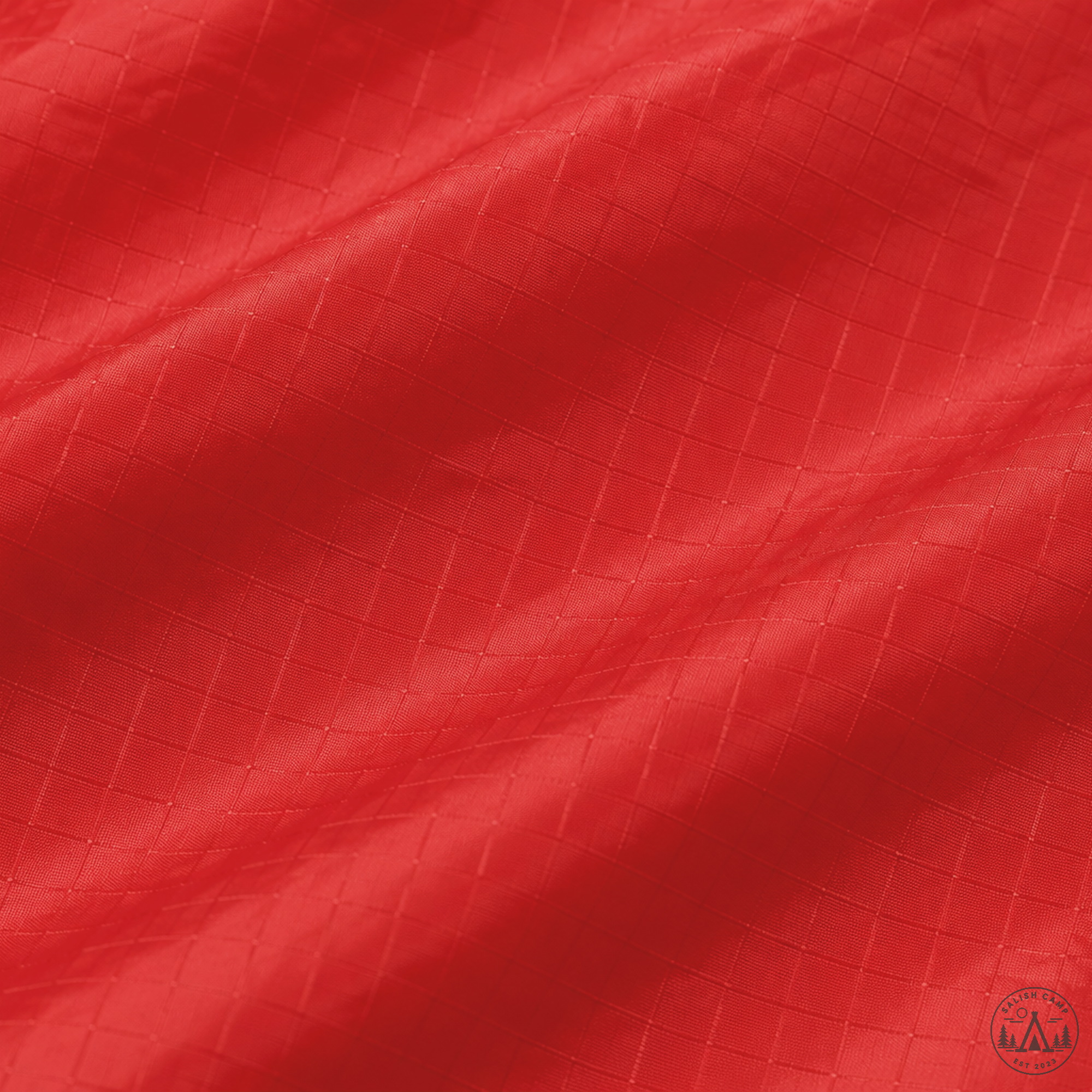
The material specification is another reason the Nallo occupies an unusual niche. The outer is Kerlon 1200, Hilleberg's listed 30-Denier High Tenacity Ripstop Nylon 66 with a three-times silicone coating and 5000 mm specification. I'm not interested in turning that into an abstract fabric-number contest. What matters for this review is the combination Hilleberg has chosen: a light outer-tent material paired with the all-season architecture and 9 mm pole system that defines the Nallo.
That combination is what I'm paying for.
And I am paying substantially for it.
At $1,030 USD for the Nallo 2, this is a deliberate purchase. Hilleberg's official catalog also listed EUR 1,180 and SEK 11,950. I wouldn't recommend spending that money simply because someone wants a premium backpacking tent. The case gets stronger when the buyer can actually use the Nallo's overlap between backpacking weight and all-season capability.
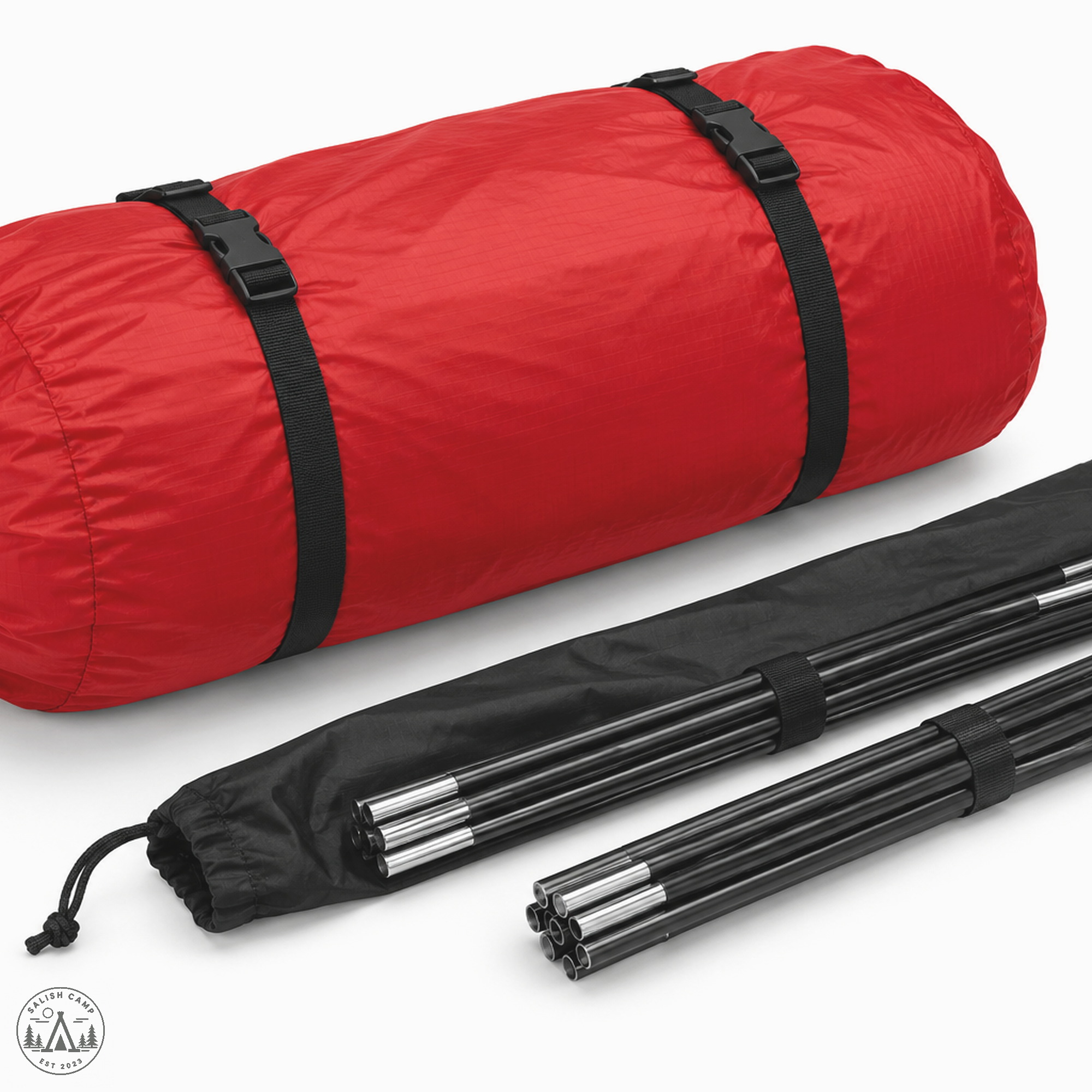
The packed size is 48 x 17 cm. That's manageable for the kind of multi-day trips I have in mind, and splitting components between two hikers is an obvious option when sharing the shelter.
I would also make a deliberate decision about the footprint rather than treating it as mandatory. The Nallo 2 footprint was listed separately at $85 USD. It covers the entire outer-tent area, including the vestibule, connects directly to the tent, and can remain attached while pitching. That's attractive for especially wet or abrasive camps, but it's still optional equipment rather than part of the standard package.
Similarly, the Mesh Inner and the pole holders needed to pitch the standard inner alone are optional. The supplied configuration is already the one I'd primarily want for shoulder-season PNW use: linked inner and outer, poles, and the included V-Pegs.
Ultimately, the question I'd ask before buying the Nallo isn't, “Is this light?”
It's, “Light compared with what?”
Against dedicated three-season ultralight shelters, 4 lb 7 oz minimum isn't remarkable. Against the expectations I normally have when asking a tent to cover genuine all-season conditions, it becomes much more interesting.
That's the Nallo 2's lane.
For wet Cascades mileage, Olympic Peninsula weather, shoulder-season traverses, and trips where early snow isn't enough to cancel the itinerary, I can accept the single entrance. I can accept needing good stakes and deliberate tensioning. I can even understand the four-figure price if I'm actually using the shelter across those conditions.
What I wouldn't do is buy it and then treat it like a casual freestanding summer tent. The Nallo rewards the person willing to choose a good site, think about wind direction, anchor the tunnel properly, and manage ventilation. Do that, and its combination of space, all-season construction, and carrying weight becomes the point rather than a collection of specifications.
Pros
- Excellent all-season capability relative to its minimum and packed weights
- Linked inner and outer tents are especially practical for wet-weather pitching
- Kerlon 1200 outer and 9 mm two-pole tunnel architecture balance strength with carrying weight
- Strong space-to-weight efficiency for two people, with particularly generous potential as a solo shelter
Cons
- $1,030 USD is a major investment for a two-person backpacking shelter
- One entrance and one vestibule require more coordination between two occupants
- Tunnel construction depends on competent staking and tensioning, making campsite and anchor quality important
Technical Specifications
| Product | Hilleberg Nallo |
|---|---|
| Size / color in photos | Nallo 2, Red, item 013412 |
| Other Nallo 2 colors | Green 013411; Sand 013413 — $1,030 USD each |
| Price | $1,030 USD Nallo 2 (hilleberg.com/eng, 2026-10-06). Also listed EUR 1,180; SEK 11,950 |
| Label / season / type | Red Label; All-Season; Tunnel |
| Minimum weight (Nallo 2) | 4 lb 7 oz / 2.0 kg (71 oz / 2000 g) |
| Packed weight (Nallo 2) | 5 lb 5 oz / 2.4 kg (85 oz / 2400 g) |
| Inner height (Nallo 2) | 100 cm / 39.4 in |
| Inner floor area (Nallo 2) | 2.6 m² / 28.0 sq ft |
| Vestibule (Nallo 2) | 14.0 sq ft; 1 vestibule / 1 entrance |
| Inner dimensions (Nallo 2) | Length 220 cm; front width 130 cm; rear width 109 cm |
| Packed size (Nallo 2) | 48 x 17 cm |
| Poles (Nallo 2) | Two 9 mm poles: 305 cm and 260 cm |
| Pegs included (Nallo 2) | 16 V-Pegs |
| Outer tent fabric | Kerlon 1200; 30-Denier High Tenacity Ripstop Nylon 66; 3x silicone coating; 5000 mm; 49 g/m² |
| Floor | 70-Denier Nylon; 3x polyurethane coating; 15000 mm; 90 g/m² |
| Occupants | 2 (Nallo 2) |
| Sibling context | Nallo 3: min 2.3 kg / 5 lb 1 oz, pack 2.7 kg / 5 lb 15 oz, $1,085 USD, H 105 cm / 41.3 in, floor 3.2 m² / 34.4 sq ft, vest 1.5 m² / 16.1 sq ft, poles 328+285 cm; Nallo 4: min 2.7 kg / 5 lb 15 oz, pack 3.1 kg / 6 lb 13 oz, $1,195 USD, H 115 cm / 45.3 in, floor 4.3 m² / 46.3 sq ft, vest 1.8 m² / 19.4 sq ft, poles 368+328 cm |
| GT context (not primary) | Extended vestibule; Nallo 2 GT vest 23.7 sq ft, $1,155 USD; 3 GT 29.1 sq ft $1,225; 4 GT 34.4 sq ft $1,345; GT copy notes entrances on either side of the extended vestibule |
| Footprint (sold separately) | Nallo 2 $85 USD |
| Included | Inner and outer tent (linked), poles, pegs as above. Footprint, mesh inner, and pole holders for inner-alone pitch are optional / sold separately |
Final Thoughts
The Nallo 2 makes the most sense to me when I'm deliberately moving beyond three-season shelter assumptions without wanting a dramatically heavier tent on my back. A 4 lb 7 oz / 2.0 kg minimum weight and 5 lb 5 oz / 2.4 kg packed weight put it in a useful position for long approaches where wet wind, colder temperatures, and early snow are legitimate parts of the trip.
Its limitations are equally clear. One door isn't two. A tunnel has to be anchored correctly. And $1,030 USD is enough money that I'd want a concrete reason for choosing the Nallo rather than simply liking the idea of owning one.
For the right PNW use, though, those compromises make sense. I get the linked wet-weather pitch, ground-reaching outer, adjustable ventilation, straightforward two-pole architecture, Kerlon 1200 construction, and enough room for two without carrying the mass I normally associate with more substantial all-season shelters. It's specialized, but specialized around conditions I can realistically encounter in the Cascades and Olympics.