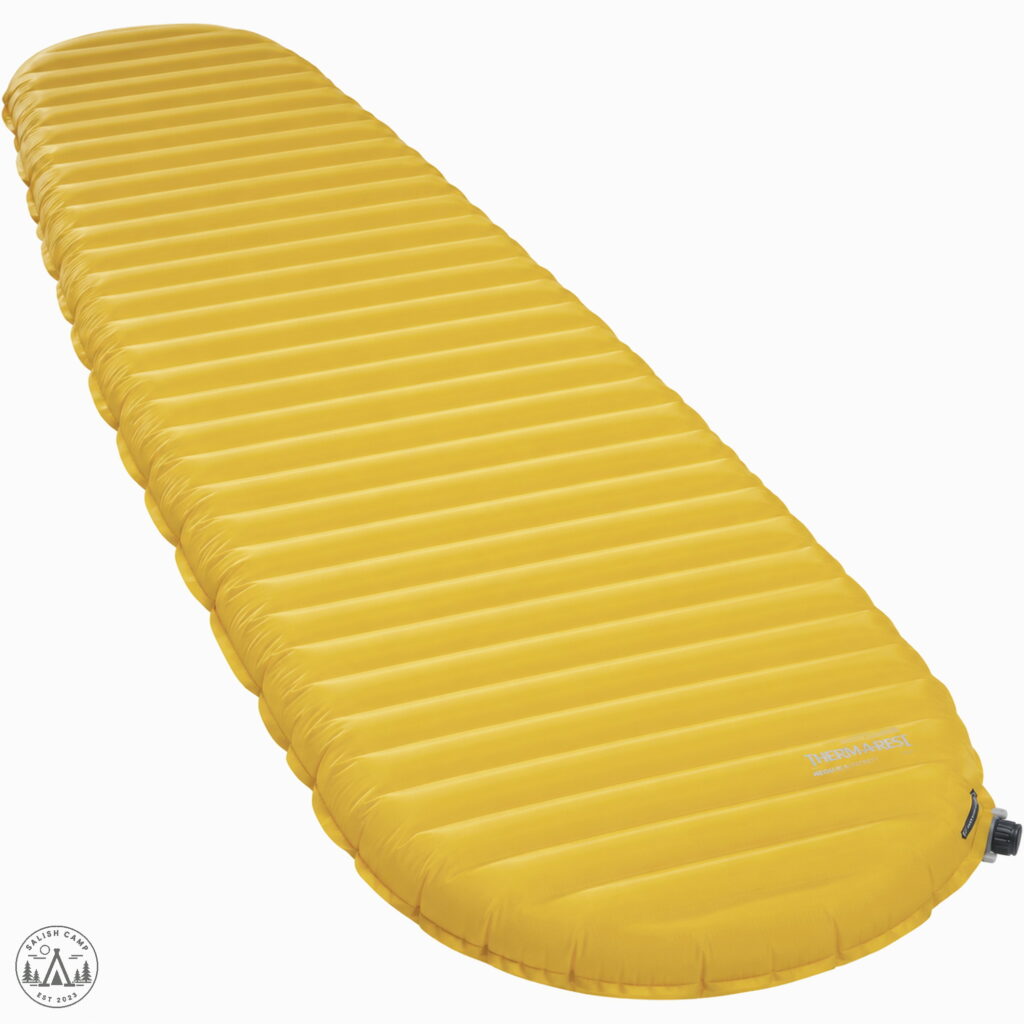
Buy if you want one ultralight sleeping pad to cover most backpacking trips from summer Cascades mileage to colder Olympic shoulder-season camps. In Regular, the NeoAir XLite NXT weighs 13 oz, packs to 9 x 4.1 inches, gives you 3 inches of air-supported loft, and carries a printed 4.5 R-value without pushing into winter-pad weight.
Skip if $209.95 is more than you want tied up in a sleeping pad, you regularly camp in conditions where you want substantially more insulation beneath you, or you would rather accept extra packed bulk and weight for a simpler or more puncture-tolerant sleep system.
What Stands Out
- 4.5 R-value at 13 oz in Regular: That warmth-to-weight combination is the core reason I would choose the XLite NXT as a general-purpose backpacking pad.
- Three full inches of loft: The thicker profile gives me useful room to tune pressure rather than having to run the pad rock-hard just to keep my hips off the ground.
- 83% quieter claim: Therm-a-Rest says its improved internal construction reduces noise by 83% versus the previous model, directly addressing one of the long-running complaints about NeoAir pads.
- Small packed footprint: The Regular packs to 9 x 4.1 inches, roughly the scale of a conventional 1L water bottle.
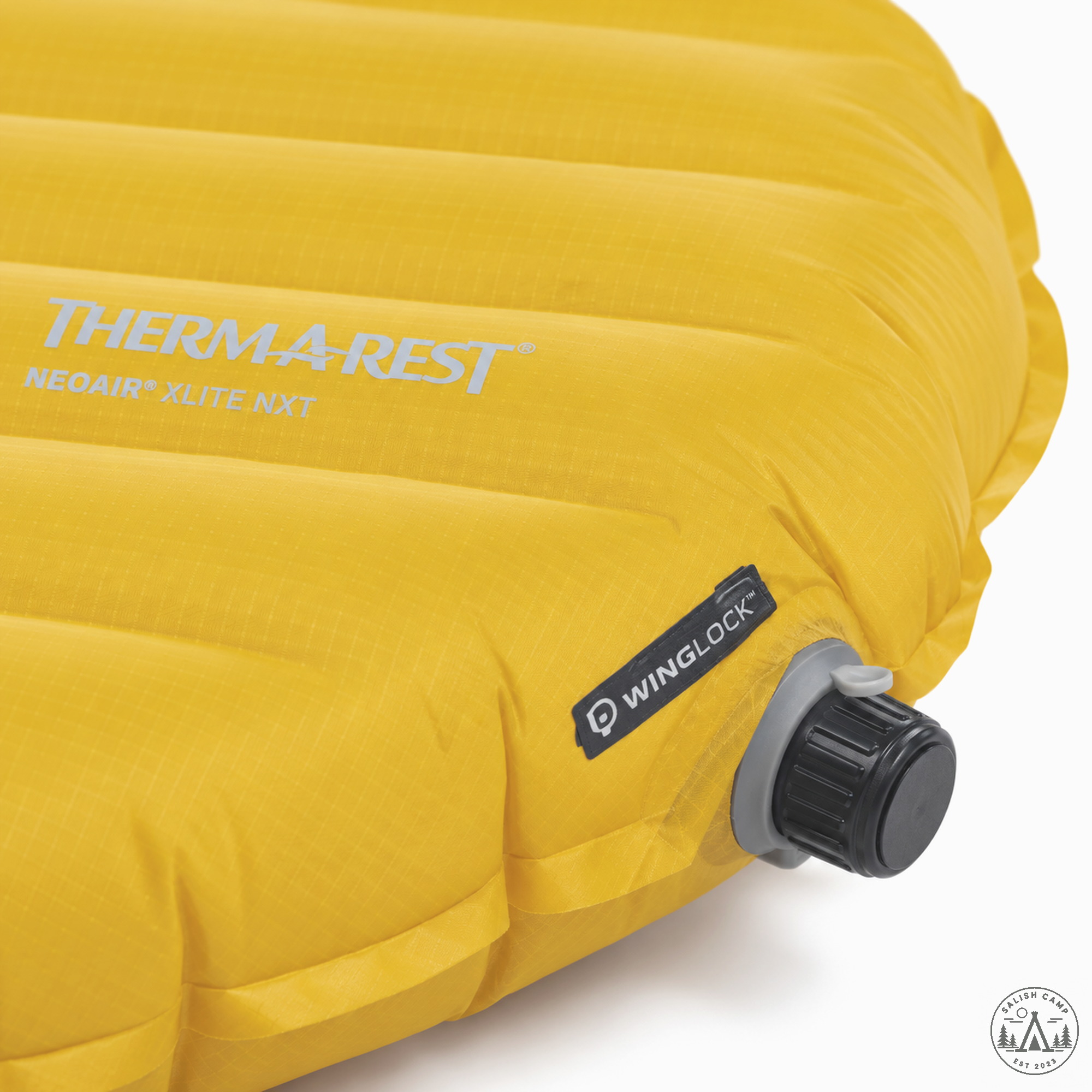
- WingLockâ„¢ valve: One-way inflation makes filling straightforward, while controlled air release lets me soften the pad after I am already lying on it.
- ThermaCaptureâ„¢ and Triangular Core Matrixâ„¢: The internal construction is doing the insulating work without bulky foam, helping the pad reach its printed 4.5 R-value while staying compact.
- Useful size range: Regular Short, Regular, Regular Wide, and Large give you meaningful choices between weight, width, and length instead of forcing everyone onto the same 20-inch-wide rectangle.
In The Field
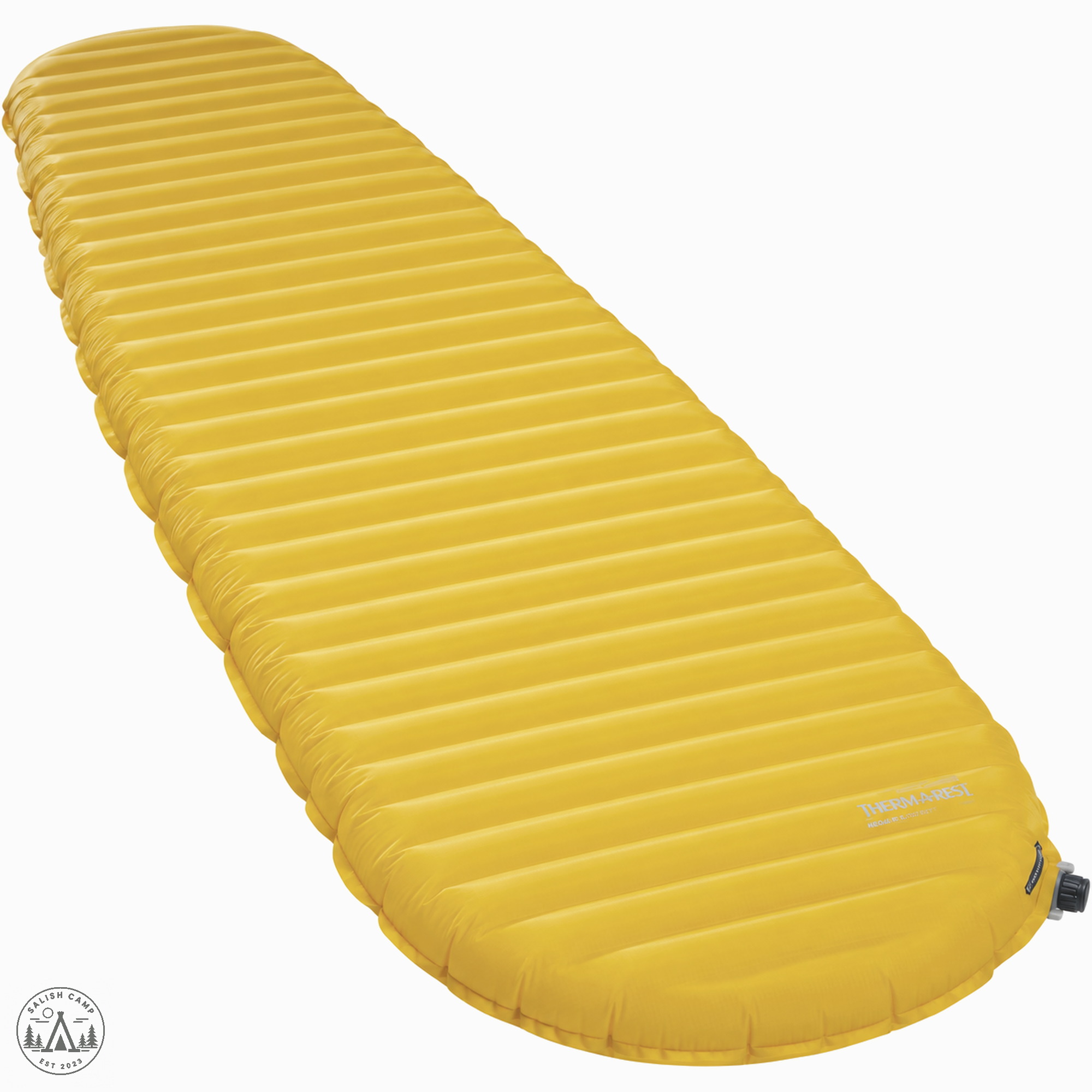
For me, the appeal of the NeoAir XLite NXT starts with a fairly ordinary Pacific Northwest problem: I want enough insulation for nights that turn colder than expected, but I do not want to haul a winter-oriented pad through every mild summer trip just to cover the occasional cold camp.
The XLite NXT's printed 4.5 R-value lands in a useful middle ground for that job. I can look at it as a legitimate do-it-all backpacking pad rather than something optimized only for warm summer weather. That matters in the Cascades and Olympics, where an otherwise comfortable forecast can turn into a cold night once I am sleeping at elevation, beside snowfields, or on damp ground during the shoulder seasons.
I still treat R-value as part of a sleep system rather than a temperature guarantee. A 4.5 R-value tells me about the pad's resistance to heat loss; it does not tell me exactly what nighttime temperature will feel comfortable. My sleeping bag or quilt, base layers, shelter, wind exposure, fatigue, food, and personal cold tolerance all matter. Therm-a-Rest's FAQ identifies ASTM F3340-18 as the industry standard used to explain sleeping-pad R-value ratings, which is useful context when comparing the printed number rather than trying to convert it into a guaranteed minimum temperature.
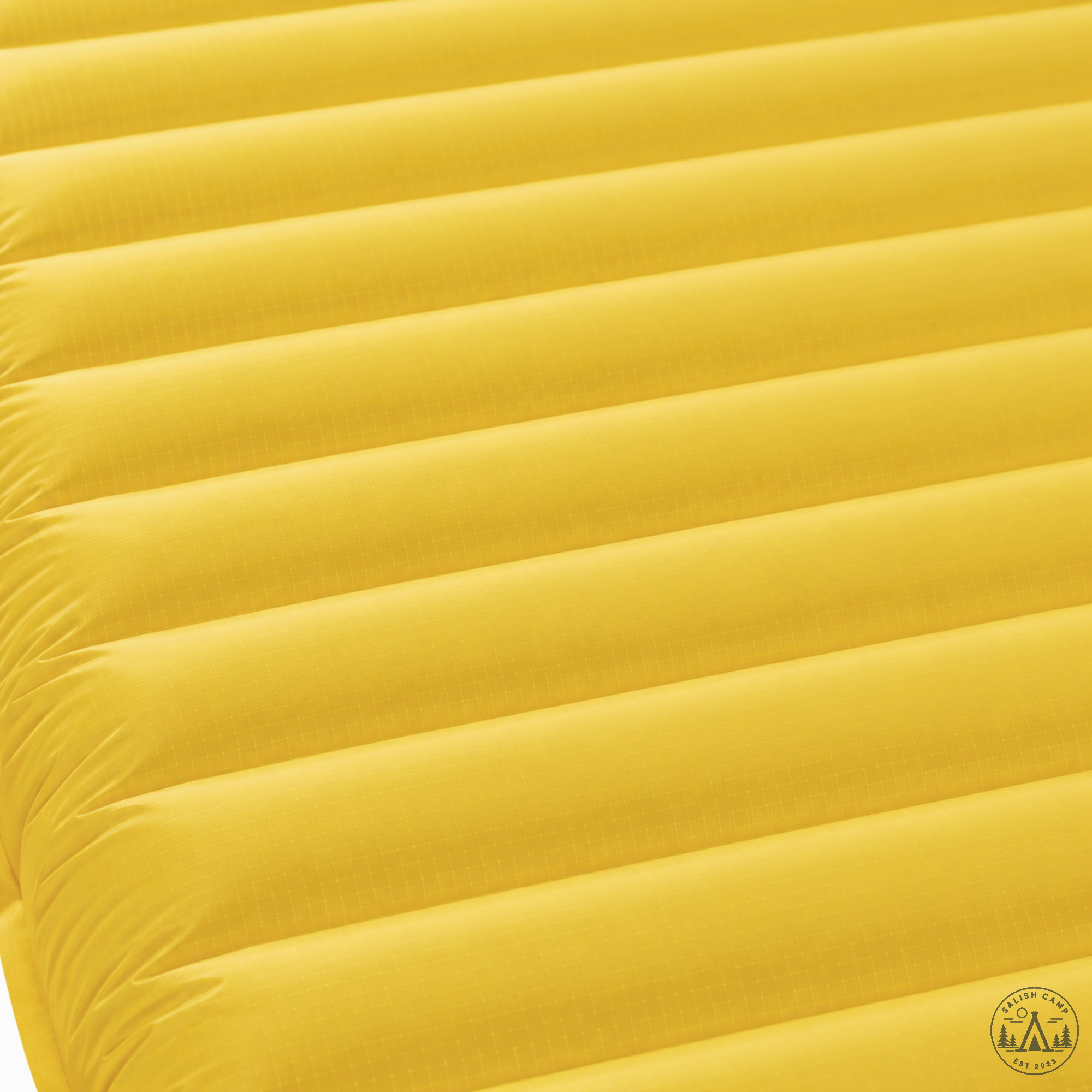
The next thing I care about is thickness. The Regular is 3 inches thick, and that is more important than it sounds when I actually settle in for the night. A thin air pad can force a frustrating choice: inflate it hard enough to prevent my hip from touching the ground, then tolerate a stiff mattress, or soften it and risk bottoming out.
Three inches gives me more adjustment range.
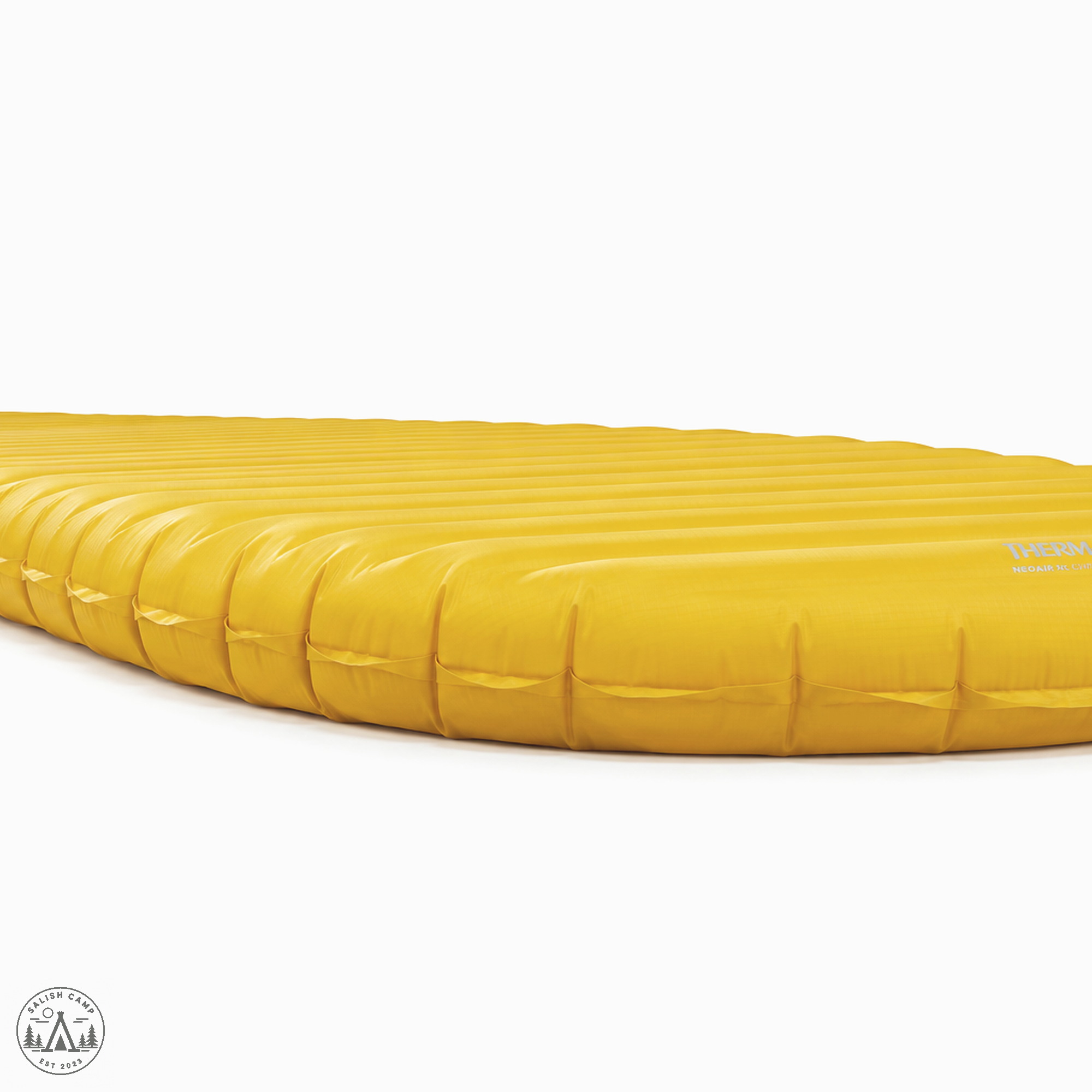
I normally start with an air pad fairly firm, lie down in my actual sleeping position, and then bleed out small amounts of air until my hips and shoulders settle naturally. The WingLock valve is particularly useful here because it is not just about getting the pad inflated. It also lets me purge air while I am lying on the mattress. For a first-time air-pad user, that is the adjustment I would spend time learning. More pressure does not automatically mean more comfort.
At 72 x 20 inches, the Regular is still a relatively narrow backpacking pad. I am fine with 20 inches when I am trying to keep my kit compact, but width is one specification I would think about carefully before buying. Restless sleepers, broader users, or anyone tired of having an arm fall off the side at night may find the 25-inch Regular Wide worth the additional weight and packed volume.
Then there is the NeoAir question everyone eventually asks: how noisy is it?
Therm-a-Rest says the improved internal construction reduces noise by 83% compared with the previous model. I would treat that as a manufacturer comparison rather than translating it into "silent." Air mattresses still make noise when fabric, internal structure, sleeping bags, and tent floors move against one another.
What matters to me is whether the noise remains distracting enough to undermine the weight savings. This NXT generation is much easier for me to accept as an everyday sleeping pad because noise is no longer the first compromise I think about. If old-school NeoAir crinkle is the reason you dismissed this family of pads, the quieter construction is a meaningful reason to reconsider it. I just would not buy it expecting the experience of sleeping on silent foam.
The other major reason the XLite NXT works for mileage-heavy trips is simply how little space it consumes. The Regular's packed dimensions are 9 x 4.1 inches. That is valuable in a 40-ish-liter backpack where volume can become as limiting as scale weight. A compact pad disappears into the pack instead of dictating where everything else has to go.
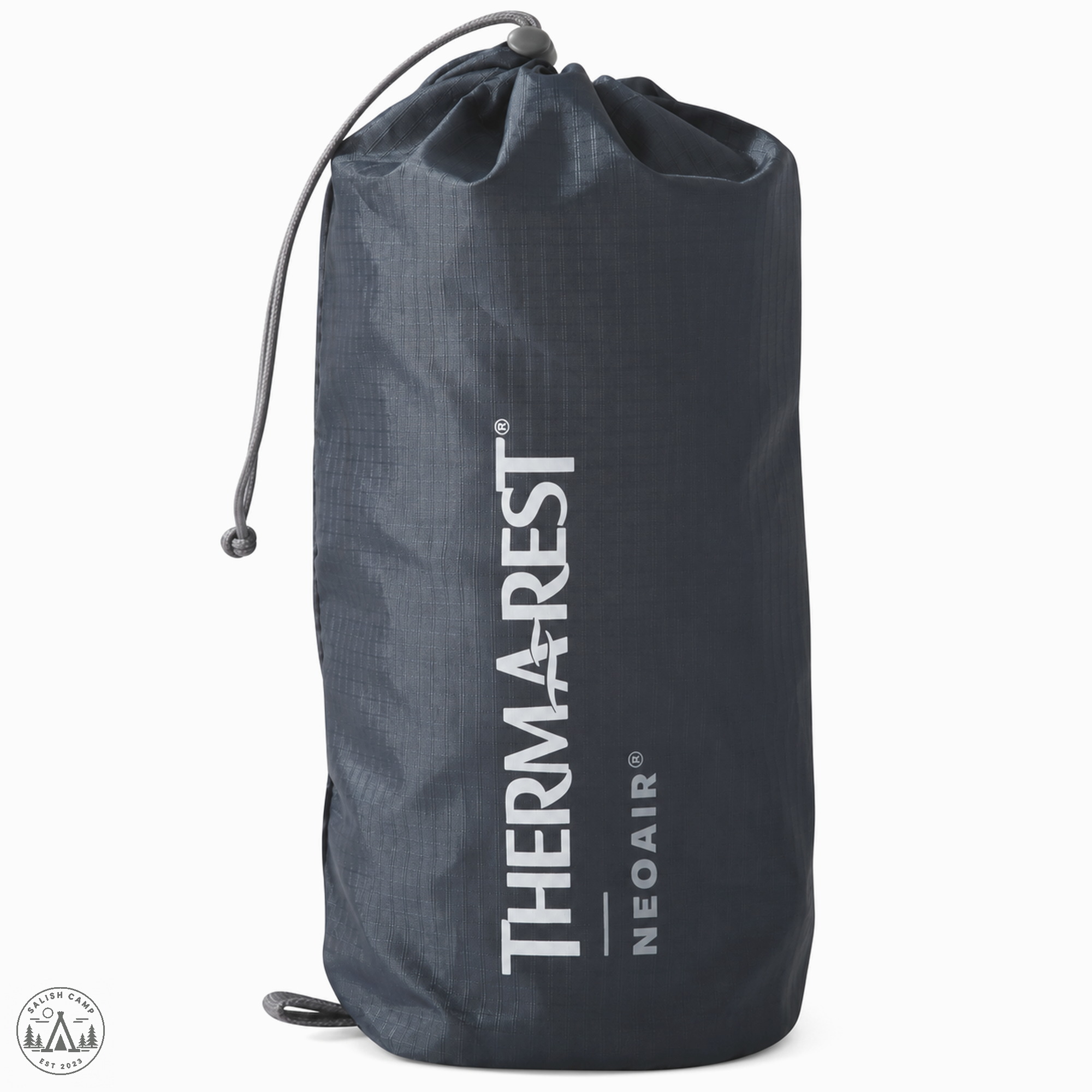
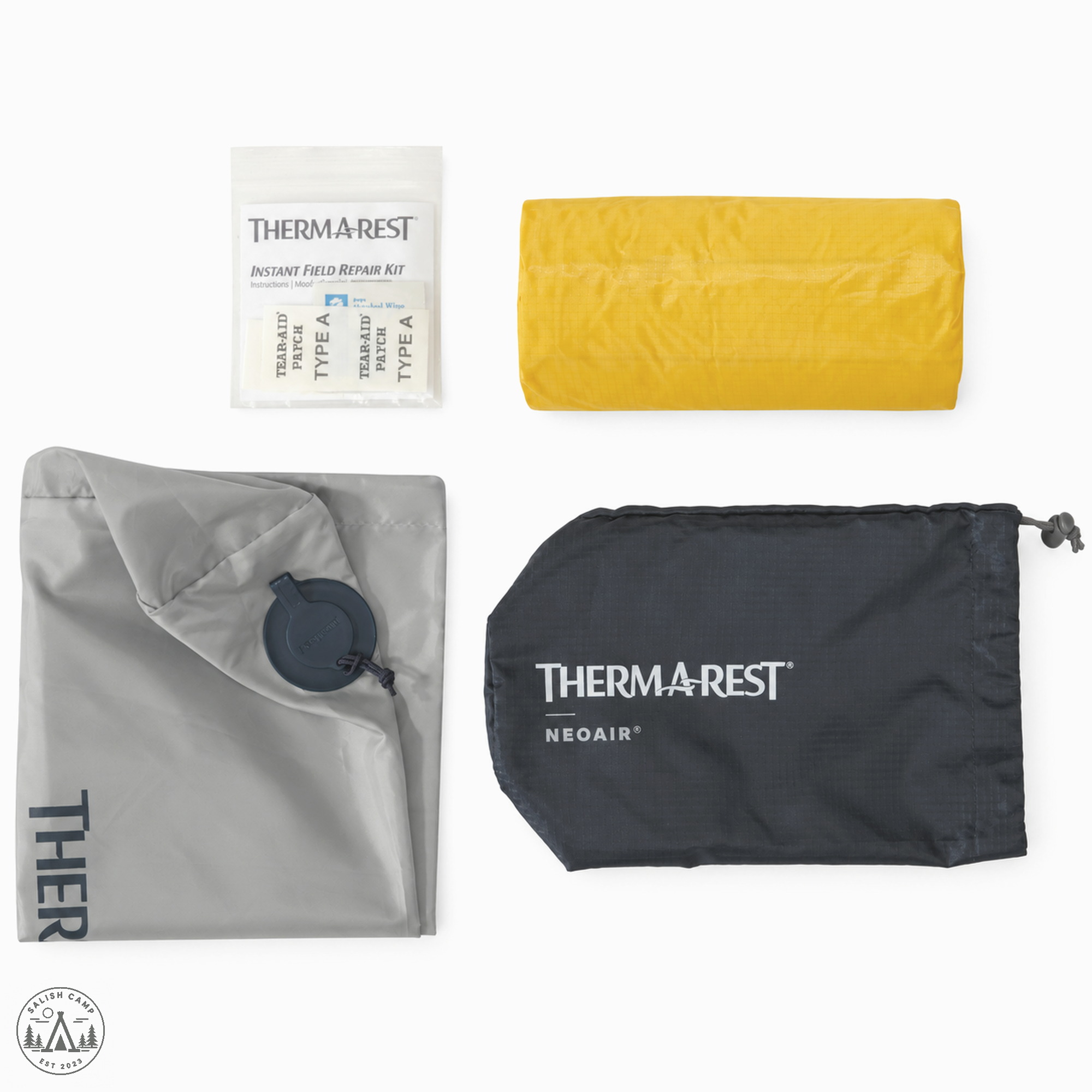
Therm-a-Rest includes a pump sack, and I prefer using it when practical rather than repeatedly blowing into the pad by mouth. The WingLock's one-way behavior makes the process straightforward: mate the pump sack to the valve, move air into the sack, and push that air into the mattress. The included stuff sack then handles normal storage and transport, while the field repair kit is something I keep with the pad rather than leaving at home.
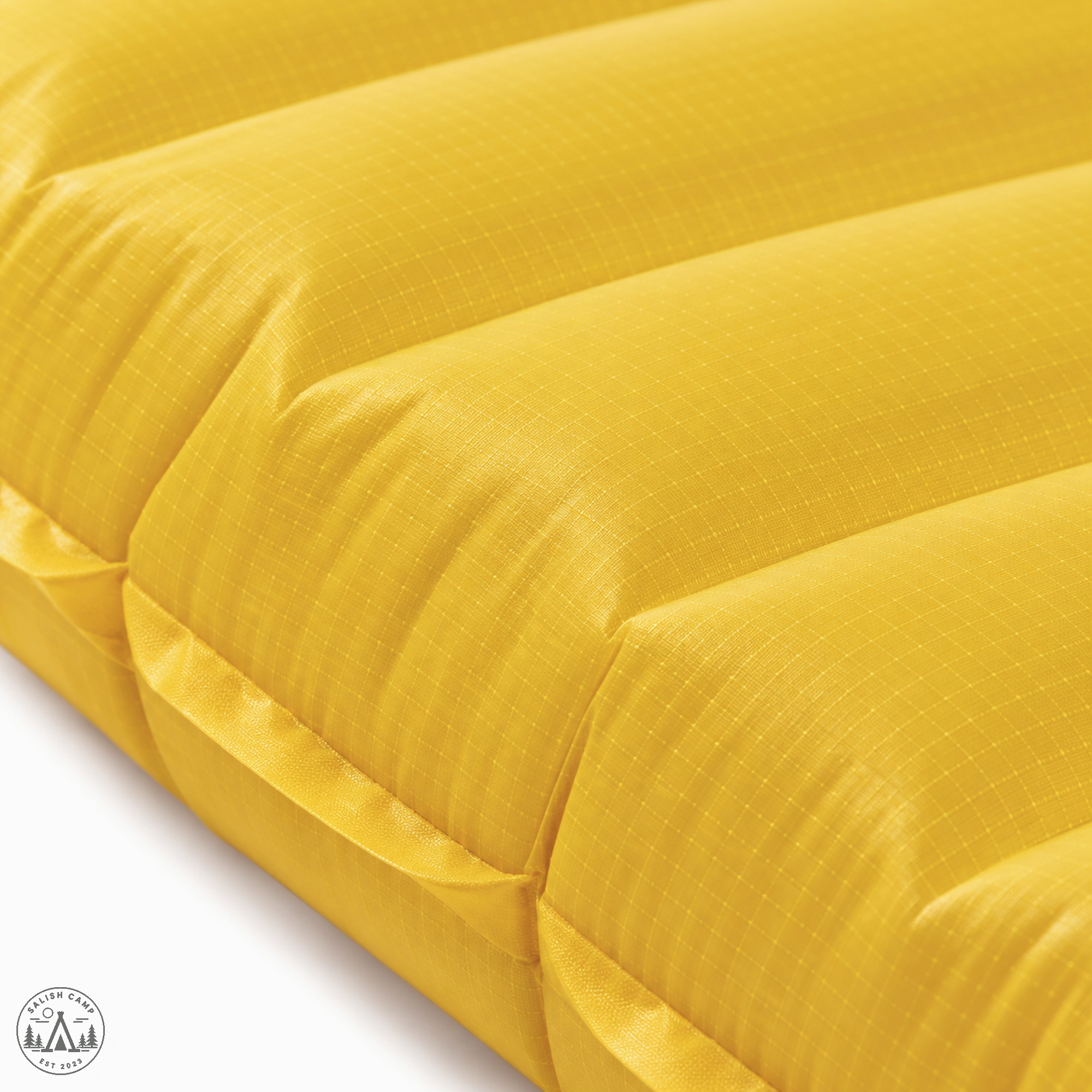
That last item points to the unavoidable air-pad tradeoff. A 13 oz insulated mattress does not achieve its weight and packed size by behaving like a slab of closed-cell foam. The top and bottom are 30D Ripstop HT Nylon, and I still treat the pad as lightweight equipment.
Before setting up, I clear obvious sharp debris from the sleeping area. Inside the tent, I pay attention to grit, thorns, sharp hardware, and anything else that could get trapped underneath the mattress. I also do not drag an inflated pad around camp or use it as an outdoor lounging mat. Those habits are not complicated, but they are part of owning a lightweight inflatable.
If a puncture does happen, the included field repair kit is more useful when it is actually in the backpack. For longer trips, I also want to know how to locate a slow leak before heading deep into the backcountry. The important point for a newer backpacker is that air-pad comfort, insulation, low weight, and tiny packed dimensions come with a maintenance tradeoff. There is no reason to be paranoid about the pad, but there is a reason to treat it deliberately.
The 4.5 R-value also shapes where I see the XLite NXT fitting in my own gear closet. For three-season trips and plenty of colder shoulder-season mileage, this is the pad I would rather carry because I am not paying a large weight penalty every mile for insulation I may not need.
When I know the trip is genuinely winter-focused and I want a warmer pad by design, I would move into a different category rather than pretending one ultralight pad must cover every condition. We go deeper on that warmer option in our Therm-a-Rest NeoAir XTherm review.
The Regular's 13 oz weight is ultimately what makes the rest of this package compelling. A 3-inch mattress is easy to appreciate at camp; the trick is getting that comfort without resenting it during the climb. Here, the PDP Weight row lists 13 oz / 0.37 kg for Regular, while Therm-a-Rest's marketing copy expresses the same Regular weight as 13 oz / 370 g.
For someone deciding between sizes, I would not automatically buy Regular just because it is the default. Regular Short cuts length for smaller users or people deliberately minimizing weight. Regular Wide keeps the 72-inch length but increases width to 25 inches. Large goes to 77 x 25 inches. The best version is the smallest one that still lets you sleep well, because saving a few ounces stops being useful when poor sleep wrecks the following day's mileage.
At $209.95 for the Regular, this is not a casual upgrade. I expect a pad at this price to solve multiple problems at once. The XLite NXT makes its case through the combination: low weight, small packed dimensions, substantial loft, a printed 4.5 R-value, easier firmness adjustment, and a major claimed reduction in noise.
For my kind of PNW backpacking, that combination makes more sense than optimizing around a single perfect summer weekend. I want a pad that I can pack for a mild forest camp, carry up into the Cascades, and keep using when shoulder-season nights start becoming less predictable. The XLite NXT Regular does that without turning the sleep system into one of the bulky parts of my pack.
The caveat is that "do-it-all" still has limits. It does not eliminate puncture risk, it does not make 20 inches feel wide, and a printed 4.5 R-value does not turn it into my automatic choice for every serious winter trip. Within those boundaries, though, the balance is unusually good.
Pros
- 13 oz Regular combines very low carried weight with a printed 4.5 R-value.
- Three inches of loft gives good cushioning and useful firmness adjustment.
- Packs to just 9 x 4.1 inches in Regular.
- Improved construction carries an 83% quieter claim compared with the previous model.
Cons
- $209.95 for the Regular is a substantial investment.
- Regular's 20-inch width can feel restrictive for active or broader sleepers.
- Lightweight inflatable construction still requires sensible campsite care and carries puncture risk.
Technical Specifications
| Specification | Details |
|---|---|
| Product | Therm-a-Rest NeoAir® XLite™ NXT Sleeping Pad |
| Size in photos / primary | Regular, SKU 14010, $209.95 |
| Other sizes | Regular Short 14009 $199.95; Regular Wide 14011 $219.95; Large 14012 $239.95 |
| Color | Solar Flare |
| Price | $209.95 Regular (cascadedesigns.com, 2026-10-06, in stock) |
| R-value | 4.5 (all sizes) |
| Weight (Regular) | 13 oz / 0.37 kg (PDP Weight row; marketing also says 13 oz / 370 g) |
| Packed dimensions (Regular) | 9 in x 4.1 in / 23 cm x 10 cm |
| Pad dimensions (Regular) | 72 x 20 in / 183 x 51 cm |
| Thickness | 3 in / 7.6 cm |
| Top fabric | 30D Ripstop HT Nylon |
| Bottom fabric | 30D Ripstop HT Nylon |
| Construction / warmth tech | ThermaCaptureâ„¢; Triangular Core Matrixâ„¢; horizontal baffles |
| Valve | WingLockâ„¢ |
| Included | Pump sack, stuff sack, field repair kit |
| Origin | Made in USA of US and Imported Materials |
| Sibling weights (context) | Regular Short 11.5 oz / 0.33 kg, 66 x 20 in, packed 9 x 4.1 in; Regular Wide 1 lb / 0.45 kg, 72 x 25 in, packed 11 x 4.6 in; Large 1 lb 1 oz / 0.48 kg, 77 x 25 in, packed 11 x 4.6 in |
Final Thoughts
The NeoAir XLite NXT Regular is the kind of pad I would choose when I want to stop thinking in terms of a dedicated summer mattress and start carrying one lightweight pad across most of my backpacking calendar. The printed 4.5 R-value provides the insulation range I want for varied PNW conditions, while the 13 oz weight and 9 x 4.1-inch packed dimensions keep it firmly in ultralight territory.
The 3-inch profile is just as important. It gives me enough depth to soften the mattress without immediately bottoming out, and the WingLock valve makes that pressure adjustment easy once I am lying down. Therm-a-Rest's 83% quieter claim also addresses the characteristic NeoAir noise that used to be a much bigger part of the buying decision.
I would still choose the size carefully. Regular makes the strongest case when minimizing weight and volume matters and 20 inches of width works for your sleep style. If I routinely wanted more room, I would accept the extra weight of Regular Wide rather than spend $209.95 on a pad I was constantly trying not to roll off.
Most importantly, the XLite NXT does not make me choose between a genuinely light pack and a properly insulated, thick air mattress. There are warmer pads, cheaper pads, wider pads, and simpler pads. But for backpacking where I want one compact mattress to cover a broad range of PNW nights, the Regular hits a particularly useful balance.