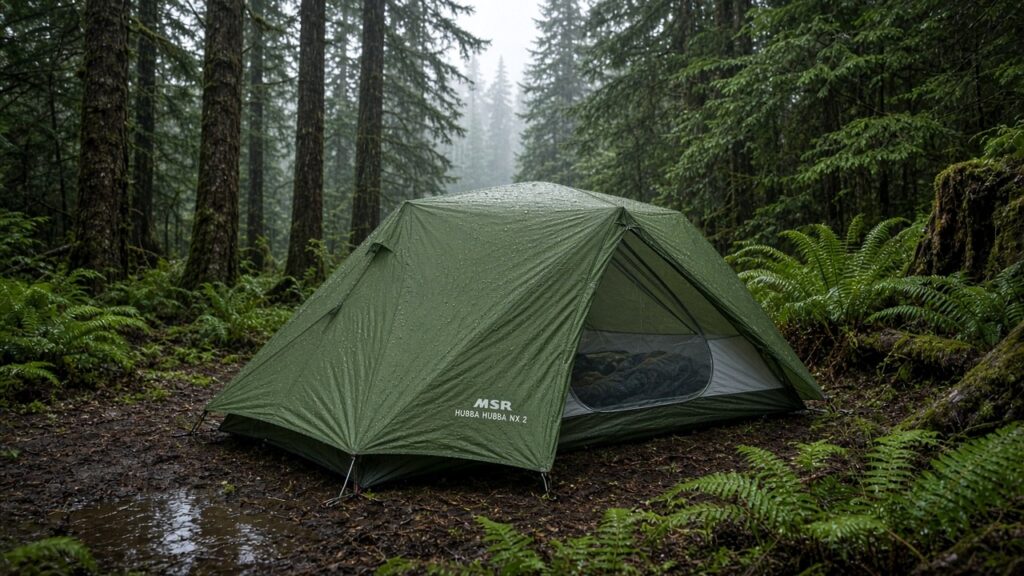
Buy if You want a two-person backpacking tent with a genuinely rectangular floor, two doors, a full 32-square-foot interior, and a minimum weight of 3 pounds. The Hubba Hubba LT is particularly compelling if you use modern rectangular sleeping pads and appreciate a mostly micromesh canopy for airflow and nighttime views. Skip if You prioritize the absolute lowest packed weight or want the additional durability-oriented construction of a heavier shelter. At 3 lb 6 oz packaged, the LT is still a meaningful piece of gear in a backpack, and the $549.95 MSRP puts it firmly in premium-tent territory.
What Stands Out
- The 32-square-foot floor is genuinely rectangular. The Hubba Hubba LT does not taper toward the foot, giving two people a more natural sleeping arrangement and making better use of modern rectangular sleeping pads.
- Three pounds is the official minimum weight. MSR lists the minimum weight at 3 lb / 1.36 kg, while packaged weight is 3 lb 6 oz / 1.54 kg. Those are the numbers I would use when planning a real backpacking kit rather than the legacy NX-era weight that can still appear in older reviews.
- The LT puts a lot of mesh between you and the weather. The canopy uses solution-dyed 20D polyester micromesh and 20D ripstop nylon, giving the shelter a strong emphasis on ventilation while retaining a proper rainfly for wet conditions.
- StayDry doors add useful wet-weather details. Both doors have rain gutters and kickstand vents, so the entry points aren’t simply openings beneath the fly. In a wet Pacific Northwest campsite, those small details matter when you’re repeatedly getting in and out of the tent.
- The DAC NFL system makes the structure symmetrical. One DAC NFL 9.3 mm pole system works with the unified hub-and-pole architecture, producing a symmetrical pitch rather than requiring you to figure out which side of the structure goes where.
- The fabric treatment is unusually specific. The fly is solution-dyed 20D ripstop nylon with a 1200 mm polyether urethane and PFAS-free silicone construction. The floor uses solution-dyed 20D ripstop nylon with 1800 mm polyether urethane and PFAS-free DWR, while the canopy also uses PFAS-free DWR.
- There is more organization than the floor plan suggests. Tech-friendly pockets include cable ports, while overhead gear lofts and clotheslines provide dedicated places for small electronics, headlamps, clothing, and other items that otherwise end up scattered around a two-person tent.
In The Field
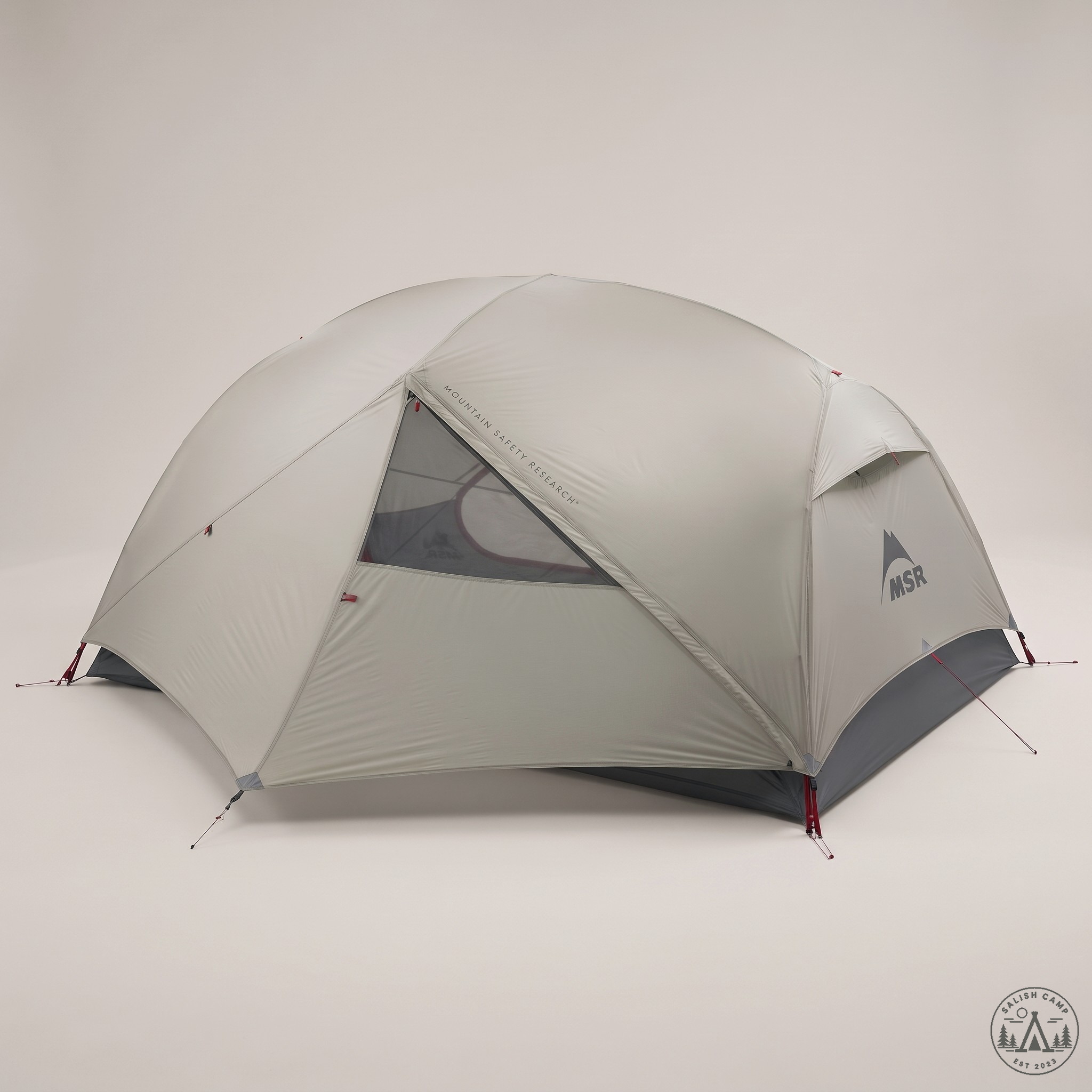
The first thing I notice with a tent like the Hubba Hubba LT isn’t the pole architecture or the fabric treatment. It’s what happens when two people actually climb inside.
A lot of two-person backpacking tents call themselves two-person shelters while quietly narrowing the usable floor toward the foot. That’s a reasonable way to save fabric and reduce packed bulk, but it can make two rectangular sleeping pads feel like they’re fighting for the same piece of real estate. The Hubba Hubba LT takes a different approach: its 32-square-foot floor is rectangular rather than tapered.
That distinction is particularly useful if your sleeping system is built around modern rectangular pads. Instead of arranging yourself around the geometry of the tent, you get a floor that is much closer to the geometry of the pads you’re actually carrying.
For a novice backpacker, this is worth understanding before looking only at the square-foot number. Thirty-two square feet doesn’t tell you how that space is distributed. A rectangular floor can feel substantially more straightforward to live with because the width is useful across the sleeping area rather than narrowing toward one end.
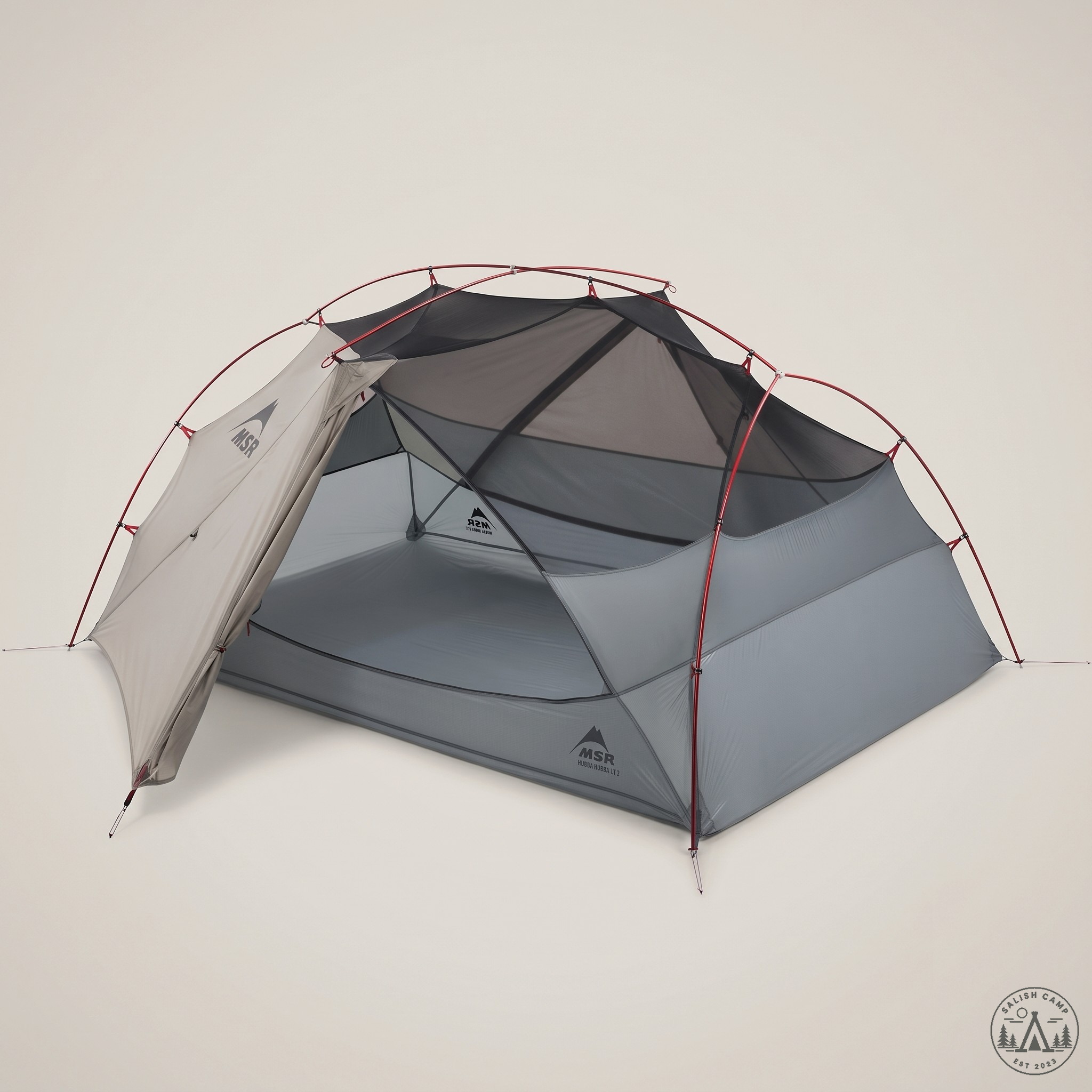
The second thing I’d pay attention to is the canopy. MSR uses solution-dyed 20D polyester micromesh / 20D ripstop nylon for the tent body, and the LT is mostly micromesh. That’s a meaningful design choice for the Cascades and the broader Pacific Northwest.
On a clear night, the mesh makes the tent feel much less enclosed. You can leave the fly arranged for maximum visibility and get a better view of the sky without giving up the basic structure of a conventional double-wall shelter.
More importantly, mesh gives moisture-laden air somewhere to move before it turns into a bigger condensation problem. That doesn’t mean the Hubba Hubba LT is condensation-proof. No tent is. Two people breathing inside a small shelter on a cold, damp night will still introduce moisture into the environment. But a highly ventilated canopy is a useful part of managing that moisture.
The fly adds another layer of control. The kickstand vents give you a deliberate way to open up the upper part of the shelter, while the two StayDry doors incorporate rain gutters and ventilation details around the entrances.
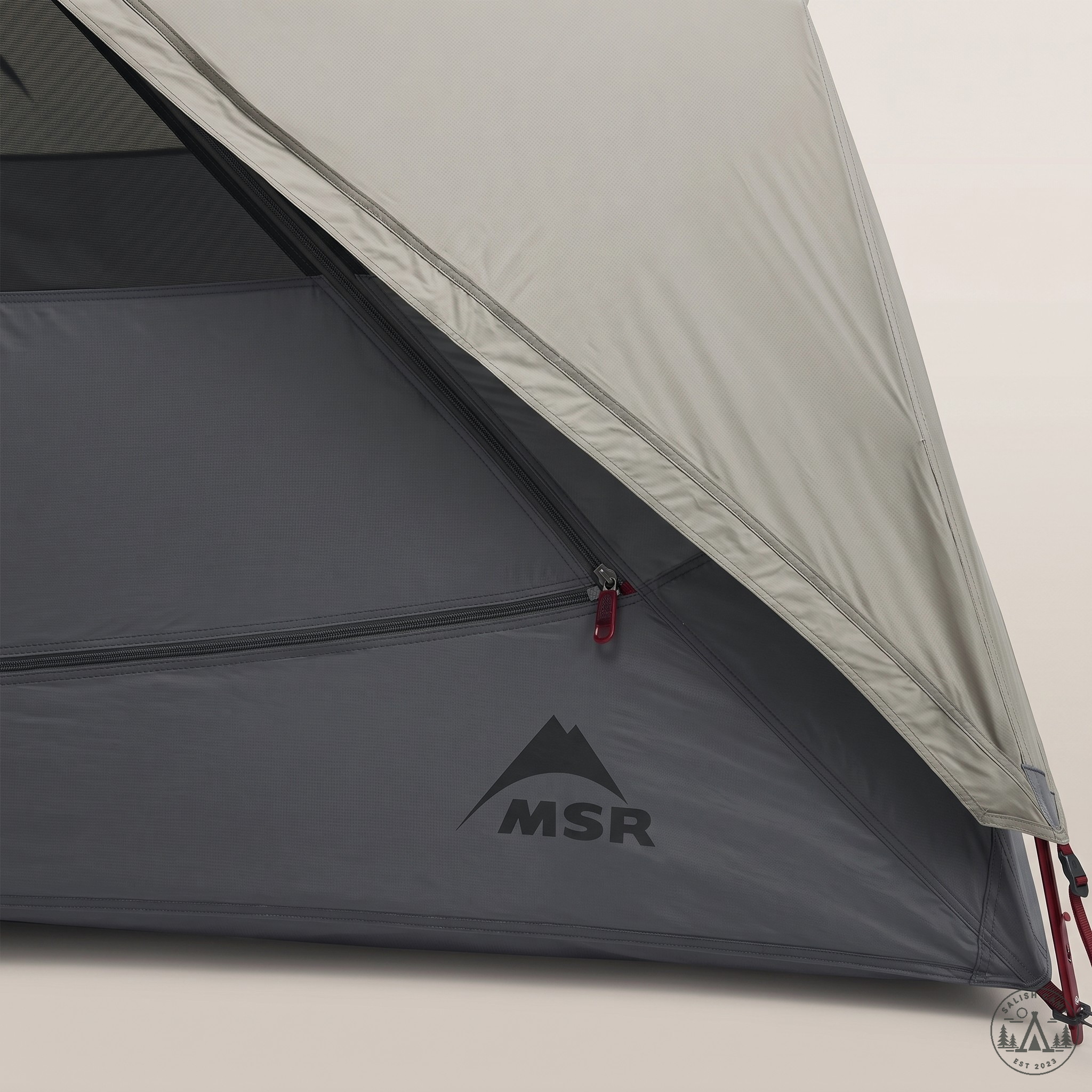
For two people, I consider two doors one of the most practical specifications on the entire tent.
The reason is simple: neither person has to climb over the other to get outside.
That sounds obvious, but it changes the experience of a tent considerably. If one person needs to get up early, answer nature’s call, grab something from a pack, or simply adjust a guy line in the rain, the other person doesn’t have to participate.
The Hubba Hubba LT’s StayDry doors also address a particularly annoying part of wet-weather camping: water coming through the entrance every time the door is opened. The integrated rain gutters are intended to manage that water, while the kickstand vents provide another way to encourage airflow.
In Seattle and the Cascades, where I expect to encounter rain rather than merely plan for it, these are the kinds of details I care about more than marketing language about three-season versatility.
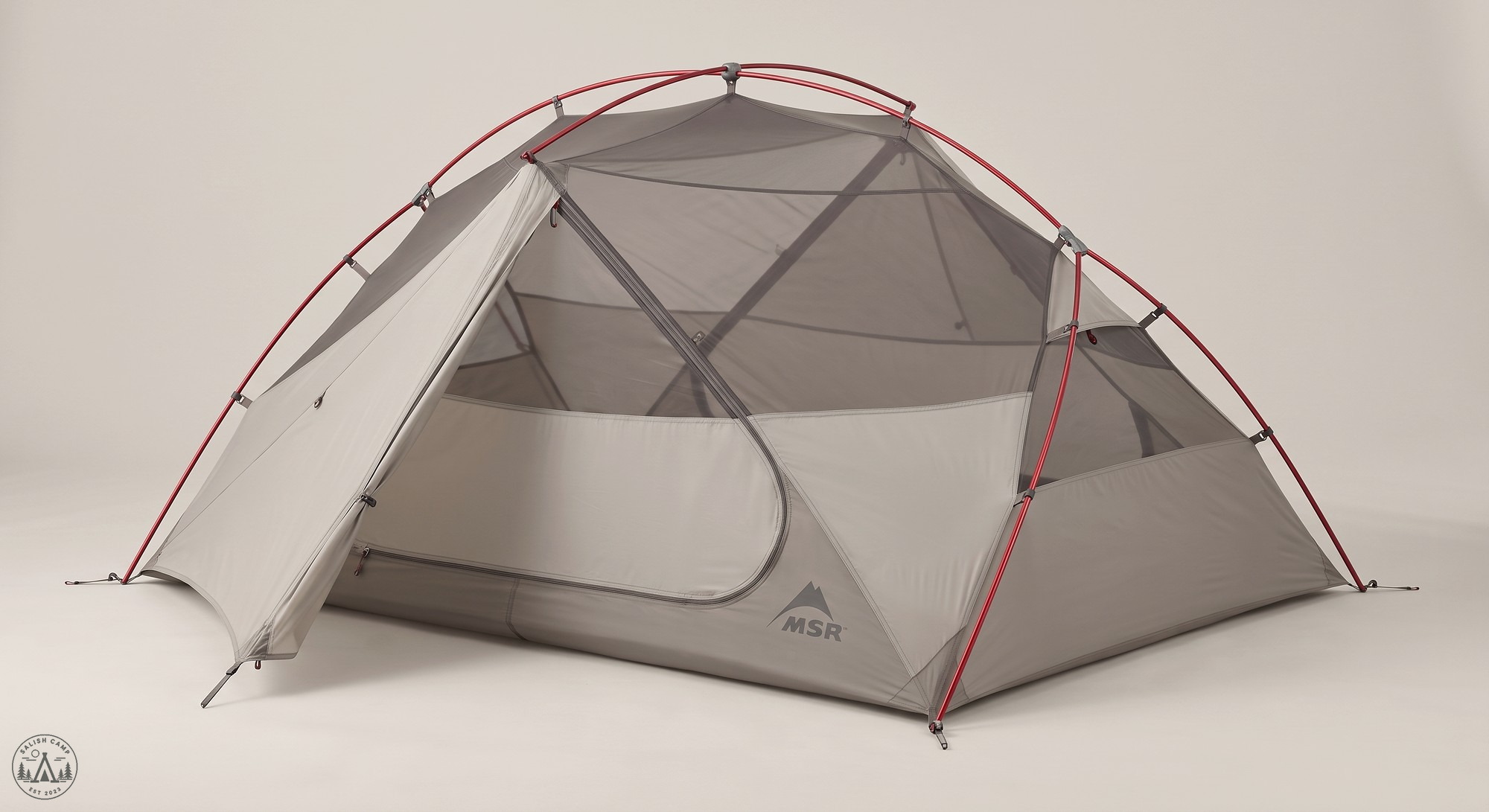
Setup is another area where the LT’s design is easy to understand.
The tent uses one DAC NFL 9.3 mm pole in a unified hub-and-pole system, and MSR specifies a symmetrical pitch. That’s useful when you’re setting up after a long day because there isn’t a complicated asymmetrical pole geometry to decode.
The basic sequence for a new owner is straightforward: spread out the tent body, connect the pole structure to the body, stake the shelter, and add the fly and guy lines as conditions require. The included setup instructions are there for the first few pitches, but I’d still practice at home before taking any new tent into the backcountry.
That last part matters more than it sounds. A tent that feels intuitive in a living room can become considerably less intuitive when you’re standing on wet ground with fading daylight. Practicing once lets you identify the pole connections, fly orientation, and staking points before those details matter.
The included package contains the tent body, rainfly, poles, eight Mini Groundhog stakes, guy lines, stuff sack, and setup instructions, so the basic shelter system doesn’t require a separate stake purchase before you can use it.
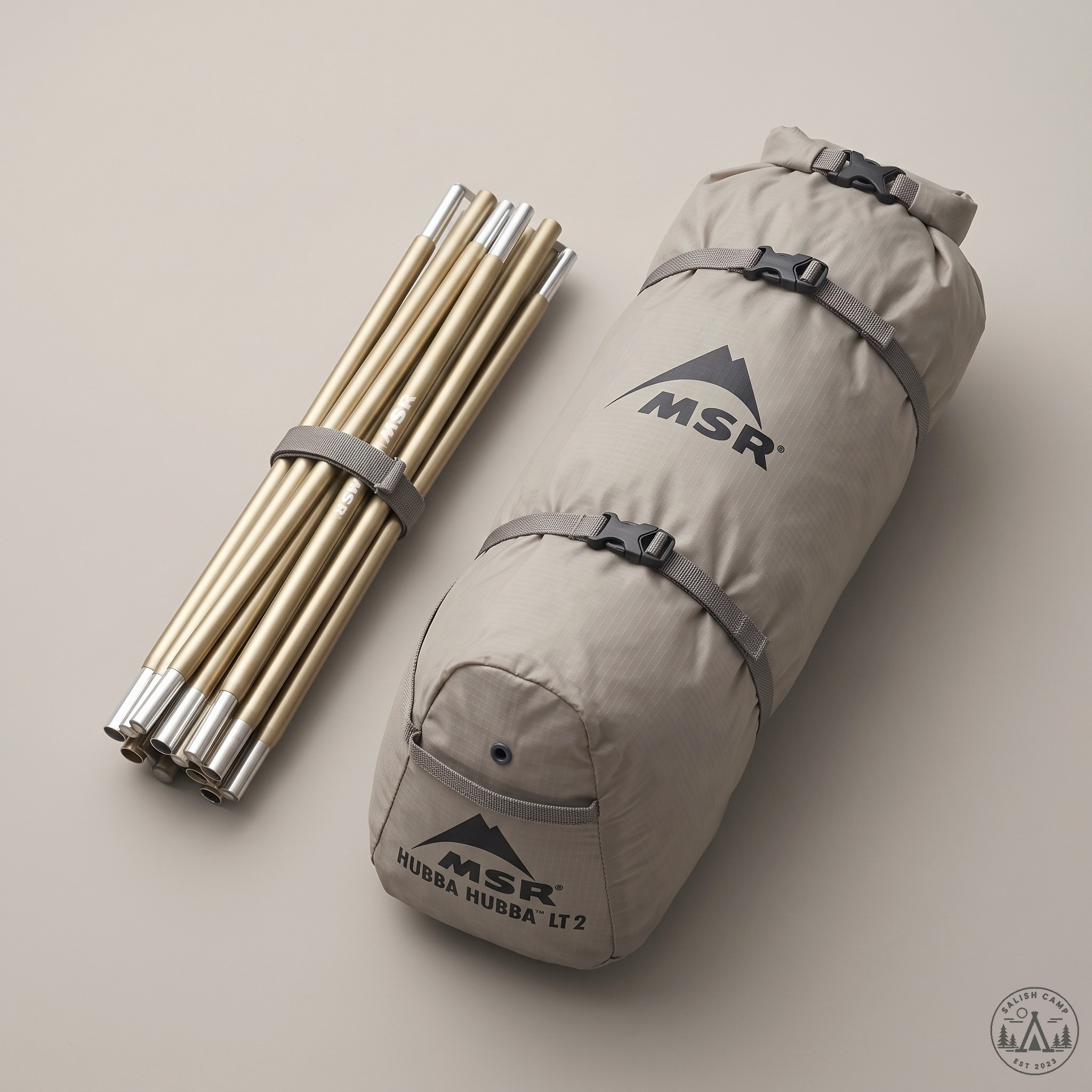
Weight is where I’d make a distinction between the number on the specification sheet and the number I actually put into a backpack.
MSR lists the Hubba Hubba LT at 3 lb / 1.36 kg minimum weight and 3 lb 6 oz / 1.54 kg packaged weight.
For trip planning, the packaged number is the more useful one. That’s the complete listed package rather than an optimistic minimum configuration. If I’m deciding whether a tent fits a weekend loadout, I want to know what I’m likely to carry, not simply the lightest configuration represented by the manufacturer.
At 3 lb 6 oz packaged, this isn’t an ultralight shelter in the narrowest sense. But it also isn’t an especially burdensome two-person shelter for the amount of usable interior space provided. The 32-square-foot floor, two doors, symmetrical structure, and substantial mesh component all contribute to a shelter that is designed around livability rather than chasing one minimum number.
The packed size is 20 × 5.5 inches, so this is also worth considering against your backpack’s internal storage. The cylindrical-ish packed dimensions aren’t tiny, but they’re straightforward enough to plan around.
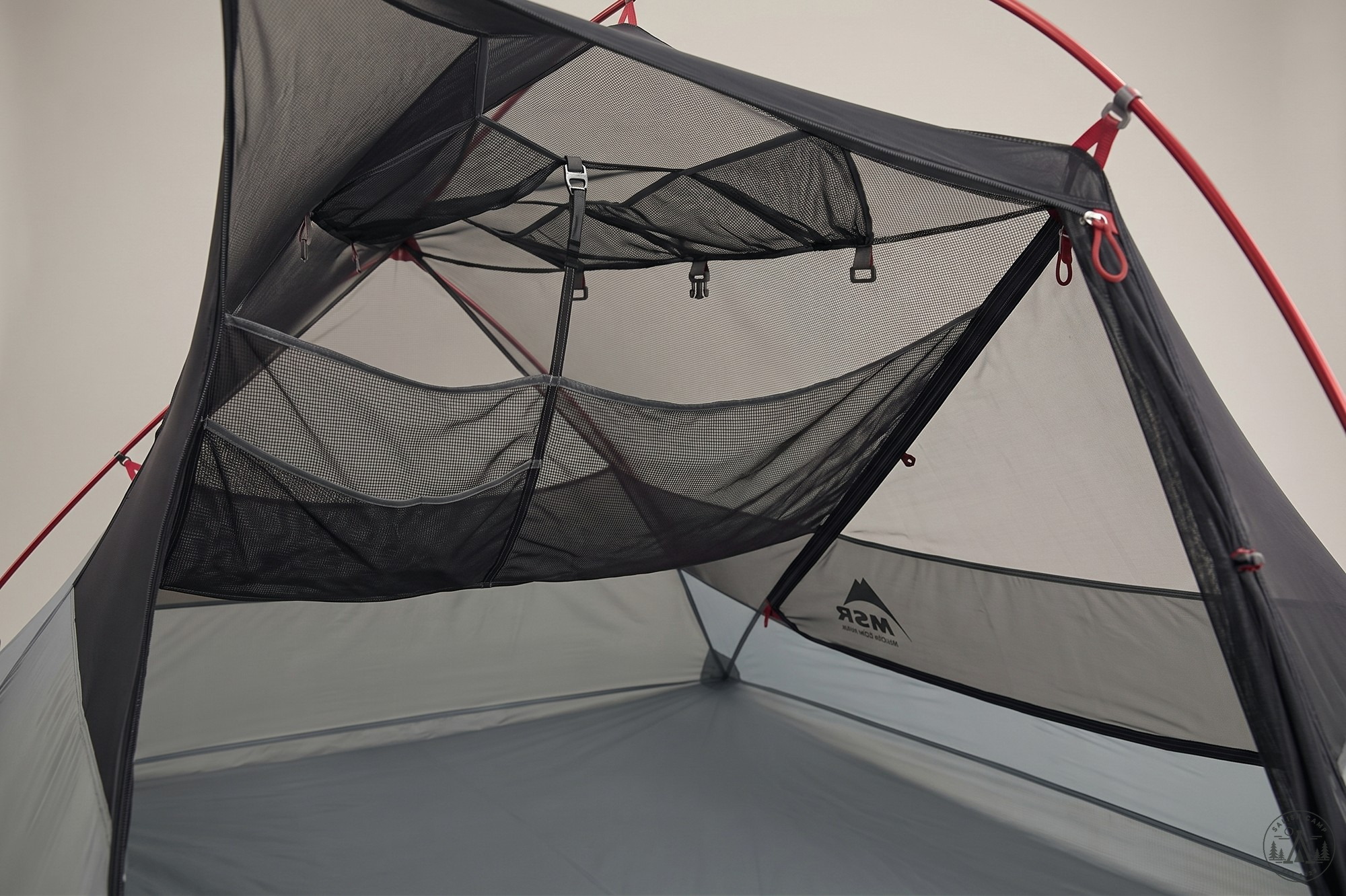
The interior organization is another feature I wouldn’t dismiss as cosmetic.
The Hubba Hubba LT has tech-friendly pockets with cable ports, along with overhead gear lofts and clotheslines. For someone camping with a phone, headlamp, battery pack, watch, or other electronics, cable ports solve a small but persistent problem: keeping a charging cable routed to where you actually want the device.
The lofts are useful for things you want immediately available but don’t necessarily want under your sleeping bag. A headlamp is an obvious example. So are glasses, gloves, or small pieces of clothing.
The clothesline is particularly appropriate for wet-weather camping. It gives you a place to separate damp clothing from the rest of your gear rather than stuffing everything together inside your sleeping system.
These aren’t features that make the tent lighter or more waterproof, but they make the interior easier to manage—which becomes increasingly important when two people are sharing 32 square feet.
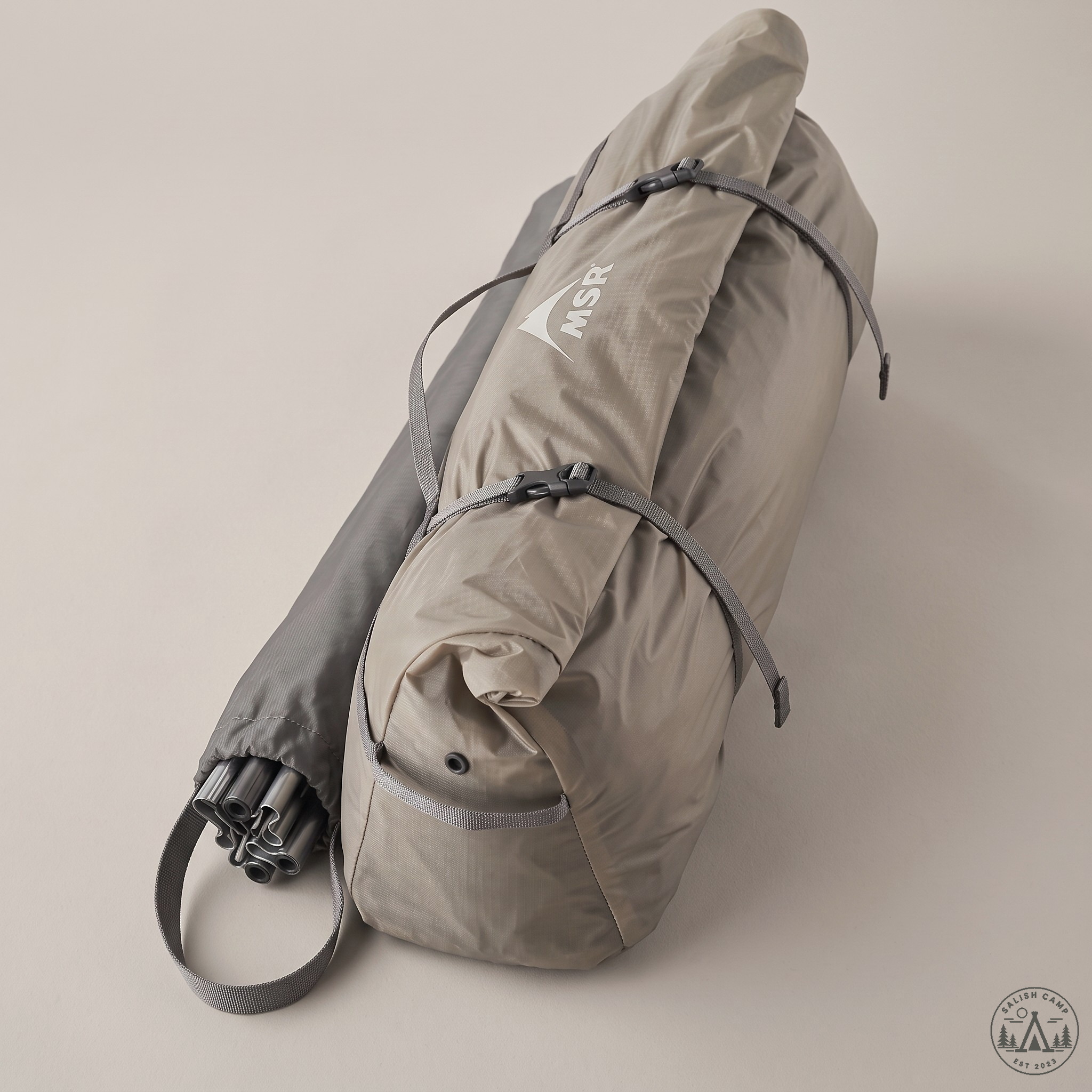
The included roll-top side-loading stuff sack is another practical detail. I like this kind of storage approach because the tent isn’t dependent on being folded into precisely the same dimensions every time.
For backpacking, I generally care more about getting the shelter securely contained and easy to handle than achieving a perfect showroom fold. A roll-top sack accommodates that reality better than a highly structured storage system.
The fabric construction is also worth understanding before heading into the field. The fly uses solution-dyed 20D ripstop nylon with 1200 mm polyether urethane and PFAS-free silicone, while the floor is solution-dyed 20D ripstop nylon with 1800 mm polyether urethane and PFAS-free DWR. The canopy uses solution-dyed 20D polyester micromesh / 20D ripstop nylon with PFAS-free DWR.
That means the floor has a higher stated hydrostatic-head figure than the fly, which makes sense given its direct exposure to ground moisture and pressure from occupants and gear. It doesn’t mean you can ignore campsite selection. Even with a waterproof floor, I still want to pitch on ground that drains well and avoid depressions where water can collect.
If you’re camping in the Cascades, site selection remains part of using the tent correctly. Look for reasonably level ground, avoid obvious drainage channels, clear sharp debris from beneath the floor, and stake the shelter appropriately when weather is expected.
The Universal 2-Person Large Footprint is available separately if you want a dedicated ground layer. It isn’t included with the tent, so that’s something to account for when calculating your complete purchase.
One other distinction matters for buyers comparing Hubba Hubba models: this is the Hubba Hubba LT, SKU 13937, not the older Hubba Hubba NX 2. The LT’s rectangular floor, current fabric construction, StayDry door details, and current published weights should be evaluated on their own rather than carrying specifications forward from the discontinued NX.
And then there’s the price. MSR’s listed MSRP is $549.95. That’s enough money that I wouldn’t buy the LT simply because I need “a tent.” I’d buy it because its particular combination of rectangular floor space, two-door access, mesh-heavy canopy, DAC structure, organization, and 3 lb minimum weight lines up with how I camp.
For me, the rectangular floor is the feature that most changes the everyday experience. The ventilation and two doors are close behind. The weight makes the package reasonable for backpacking, but the LT isn’t pretending to be a sub-two-pound shelter. It’s a livable two-person tent first, with weight kept to a reasonable level rather than minimized at every possible opportunity.
Pros
- True rectangular 32 sq ft floor — Makes better use of modern rectangular sleeping pads than a tapered floor.
- Mostly micromesh canopy — Strong emphasis on airflow, visibility, and ventilation.
- Two StayDry doors — Separate entrances with rain gutters and kickstand vents make wet-weather entry and ventilation more practical.
- 3 lb minimum / 3 lb 6 oz packaged — A useful balance of two-person space and backpacking weight.
Cons
- 3 lb 6 oz packaged weight — Reasonable for the design, but not an ultralight shelter.
- $549.95 MSRP — Premium pricing means the LT needs to fit your camping priorities rather than simply your budget.
- Footprint sold separately — The Universal 2-Person Large Footprint isn’t included in the standard package.
| Product | MSR Hubba Hubba LT 2 |
|---|---|
| SKU | 13937 |
| Brand | MSR |
| Price | ~$550 (MSRP $549.95) |
| Minimum weight | 3 lb / 1.36 kg |
| Packaged weight | 3 lb 6 oz / 1.54 kg |
| Floor area | 32 sq ft / 2.95 sq m (rectangular) |
| Vestibule area | 16 sq ft / 1.48 sq m |
| Peak height | 40 in / 102 cm |
| Packed size | 20 × 5.5 in |
| Doors / vestibules | 2 / 2 |
| Poles | DAC NFL 9.3 mm (unified hub) |
| Fly / floor | 20D solution-dyed nylon 1200 mm / 1800 mm |
| Canopy | 20D polyester micromesh + 20D nylon |
| Best for | Three-season freestanding backpacking |
| Field focus | Wet PNW forest pads |
| Buy | msrgear.com Hubba Hubba LT 2 |
Final Thoughts
The MSR Hubba Hubba LT makes the most sense when you look at the specific way its features interact.
The 32-square-foot rectangular floor is the foundation. It gives two people a more usable sleeping platform than a tapered layout, particularly when both sleepers use rectangular pads. The mostly micromesh canopy then builds ventilation and visibility into that same space, while the StayDry dual doors, rain gutters, and kickstand vents address the practical realities of getting through wet nights.
The weight tells a similarly straightforward story. At 3 lb minimum and 3 lb 6 oz packaged, the LT isn’t trying to disappear from your pack. Instead, it keeps the weight within a reasonable backpacking range while giving you two doors, two-person space, a 40-inch peak height, and a full structural system.
The materials are also current and deliberately specified: solution-dyed fabrics, PFAS-free DWR and coatings, and MSR’s stated reduction in carbon associated with the dyeing process. Those details won’t change how the tent pitches, but they distinguish this LT from simply treating it as another revision of the older NX.
For Pacific Northwest backpacking, I’d focus my decision on space, ventilation, and weight rather than chasing the lightest possible shelter. If those are your priorities, the Hubba Hubba LT’s specification sheet is unusually coherent: rectangular floor, two doors, substantial mesh, a symmetrical DAC NFL structure, and a packaged weight of 3 lb 6 oz.
If you’re comparing it with other shelters in the Salish Camp lineup, I’d make the next comparison around how much interior livability you’re willing to carry for rather than simply comparing tent weights. That’s where the Hubba Hubba LT becomes easier to place: it is a two-person backpacking shelter designed to make the space you carry genuinely useful, especially when two people and two rectangular sleeping pads have to coexist inside it.
Compare high-volume ultralight freestanding options in the Copper Spur UL2 HyperBead and Nemo Dragonfly Osmo 2P reviews, or step up to car-camp space with the Amenity Dome M. For a trekking-pole alternative, see the Durston X-Mid 2.