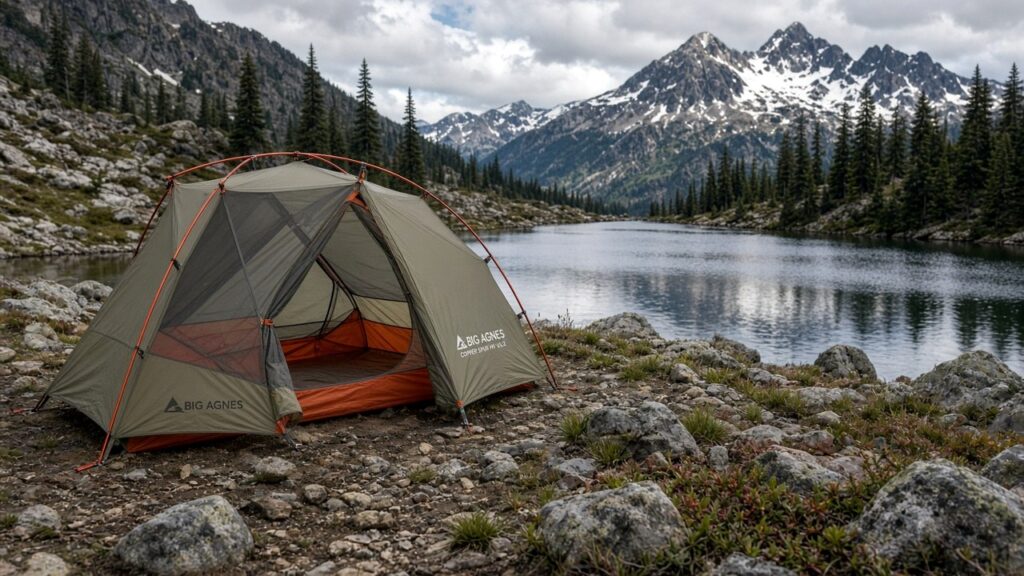
Buy if you want a genuinely roomy two-person ultralight tent, need a freestanding pitch for rocky Cascades camps, and value two large vestibules, awning-style doors, and useful interior storage as much as low weight. Skip if your priority is the absolute lightest shelter possible, you rarely need the extra interior volume, or you want a tent that does not require buying the footprint separately for Fast Fly use.
What Stands Out
- 2 lb 10 oz trail weight: At 2 lb 10 oz / 1.18 kg trail weight, the current HyperBead UL2 is substantially more backpack-friendly than the old packed-weight figure still associated with the live HV UL2 page. Total packed weight is 3 lb / 1.37 kg.
- HyperBead changes the fabric equation: The 15D nylon with 20D solution-dyed ripstop fly/floor uses HyperBead at 1500 mm waterproofing, with no intentionally added PFAS. Big Agnes says HyperBead is 6% lighter, 25% more waterproof, and 50% stronger than its traditional fabric construction.
- High-volume geometry in a two-person UL package: The 40-inch / 102 cm peak height and 88 × 52–42-inch tapered floor give the UL2 a noticeably more usable shape than a minimalist backpacking shelter, particularly when two people are actually spending time inside.
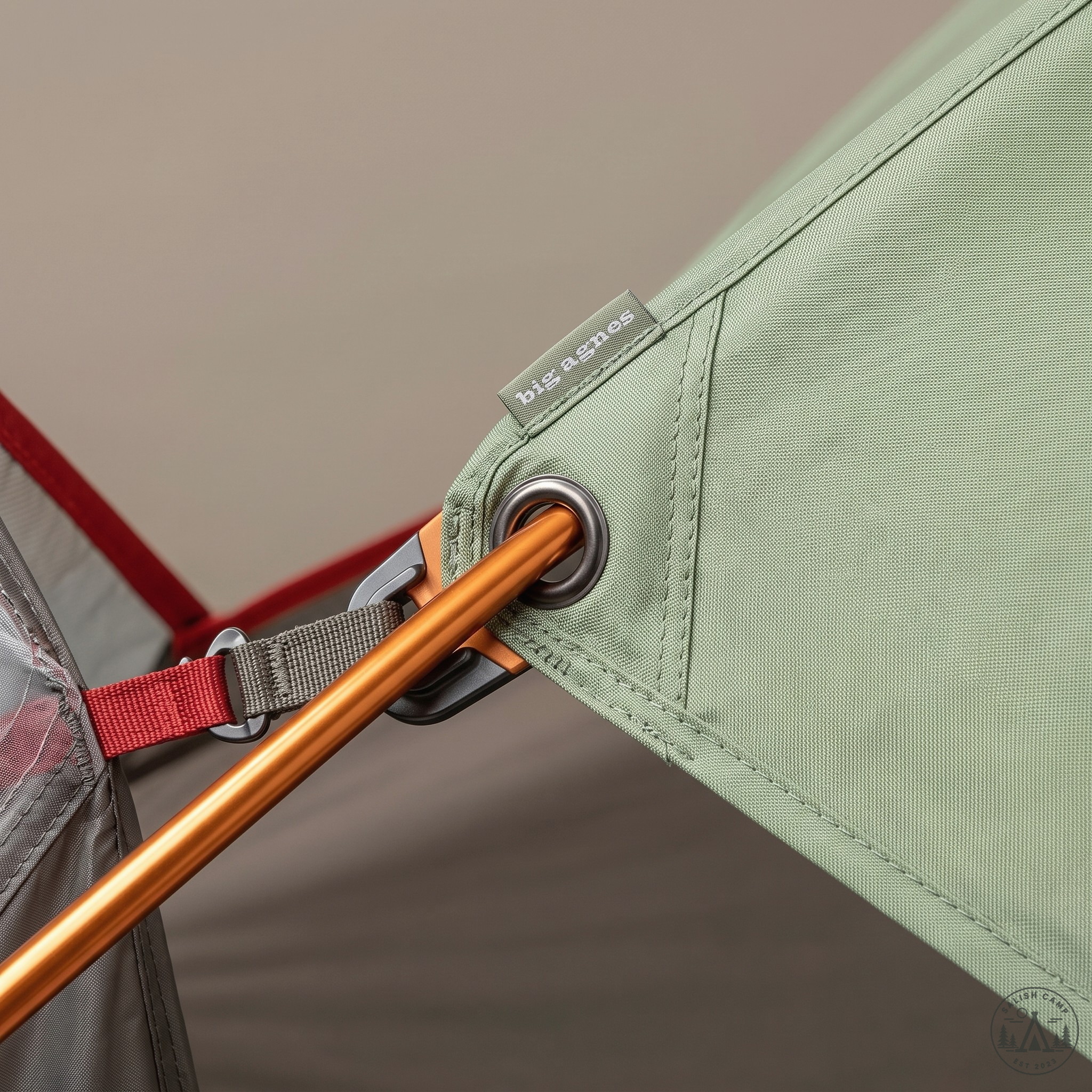
- TipLok™ does several jobs at once: The corner buckle combines pole-tip capture, fly attachment, tensioning, and a stake loop. That matters when setting up in wet weather because there are fewer small connection points to sort out.
- Two awning-style vestibules: Each vestibule can be configured as an awning with trekking poles or the included extra guylines, while Low Vents and a high fly vent provide ways to keep air moving when the doors are closed.
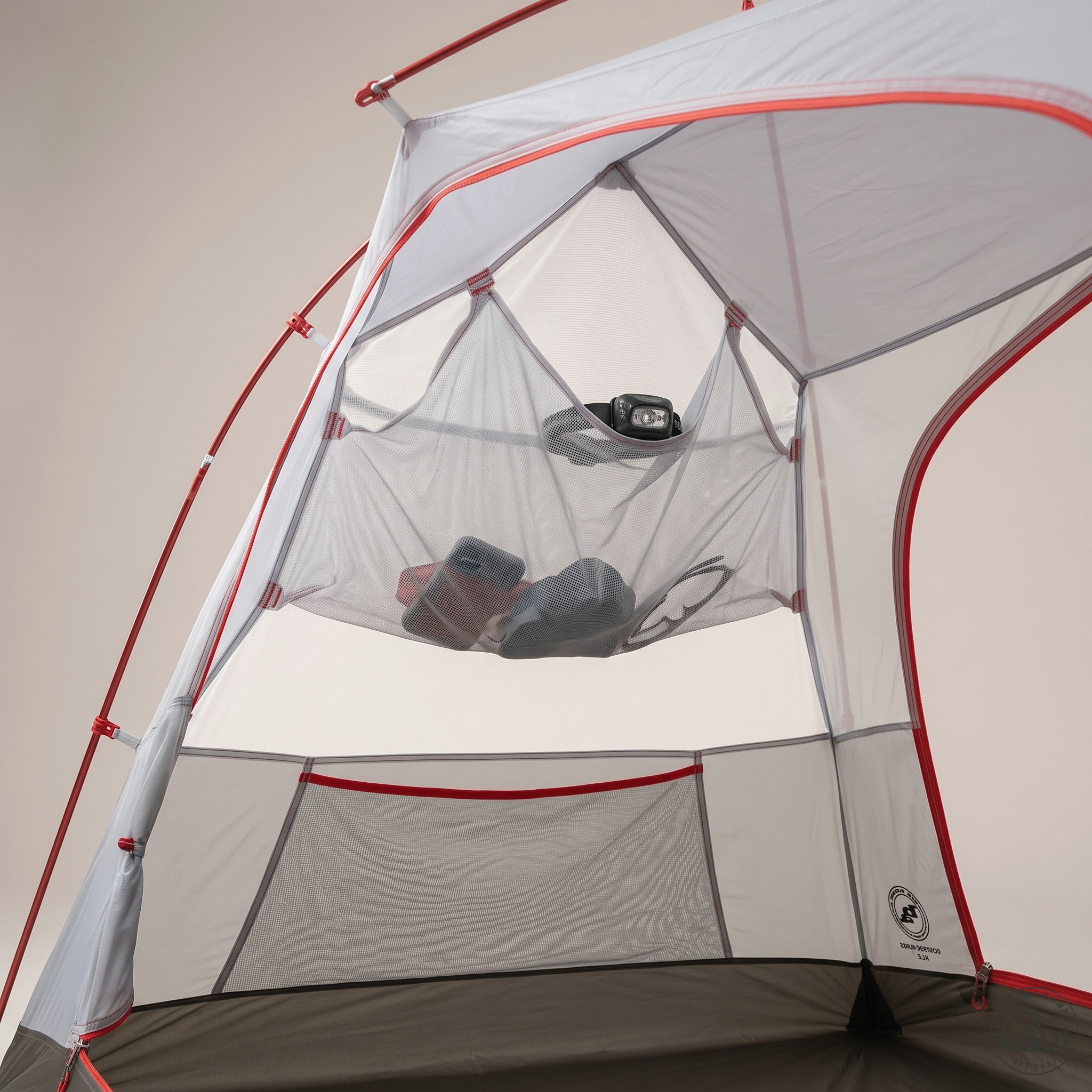
- Livability gets real attention: The oversized 3D bin pocket, ceiling and side pockets, and Quick Stash door keepers make the Copper Spur easier to organize than a stripped-down UL shelter. These are small features, but they are useful every night.
- Freestanding means flexibility on hard ground: The corners do not need to be staked for a full pitch, so I can get the tent standing on rocky Cascades pads and then decide how and where to add stakes for wind and vestibule tension.
In The Field
The first thing I notice with the Copper Spur UL2 HyperBead is that it behaves like an ultralight tent without making me feel like I am camping inside an ultralight tent. That distinction matters. At 2 lb 10 oz trail weight, this is still firmly in the backpacking-weight conversation, but the 29-square-foot floor, 40-inch peak height, and 9-square-foot vestibules on both sides give it a more substantial feel than the scale suggests.
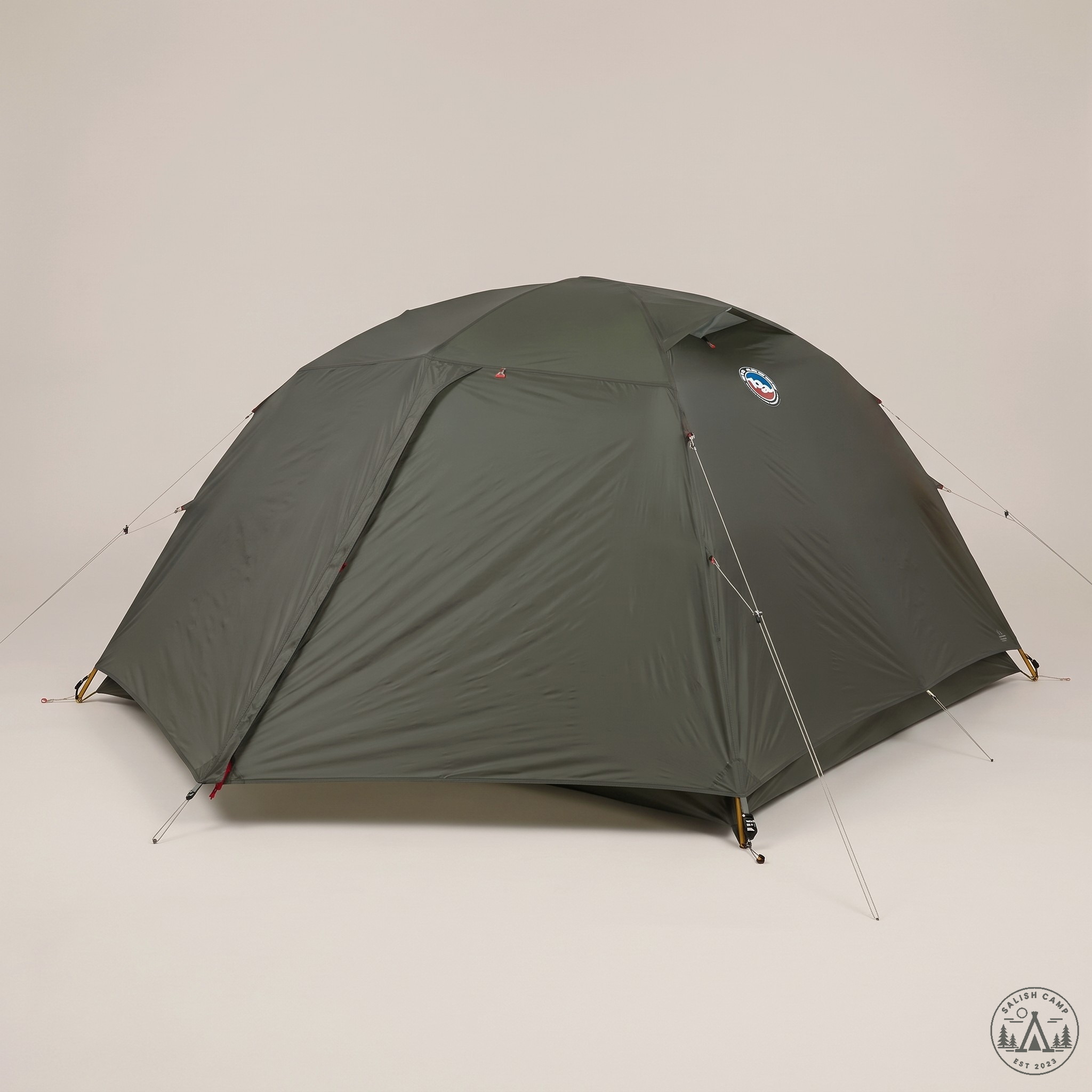
For a two-person tent, I want enough interior height that sitting up does not become an exercise in shoulder positioning. The Copper Spur’s high-volume architecture is designed around that problem. The 40-inch peak is not simply a number on a spec sheet; it changes how usable the tent feels when weather forces both people inside. The floor starts at 52 inches wide and tapers to 42 inches at the foot, with 88 inches of length. That taper saves space and weight where I need less room while keeping the shoulder area broad.
For a novice backpacker, the basic setup is also less intimidating than the number of parts might suggest. This is a freestanding design, so the pole structure gives the shelter its shape before I have completely committed it to the ground. That is particularly useful on rocky Cascades campsites where finding four ideal stake positions can be harder than finding a flat place to sleep.
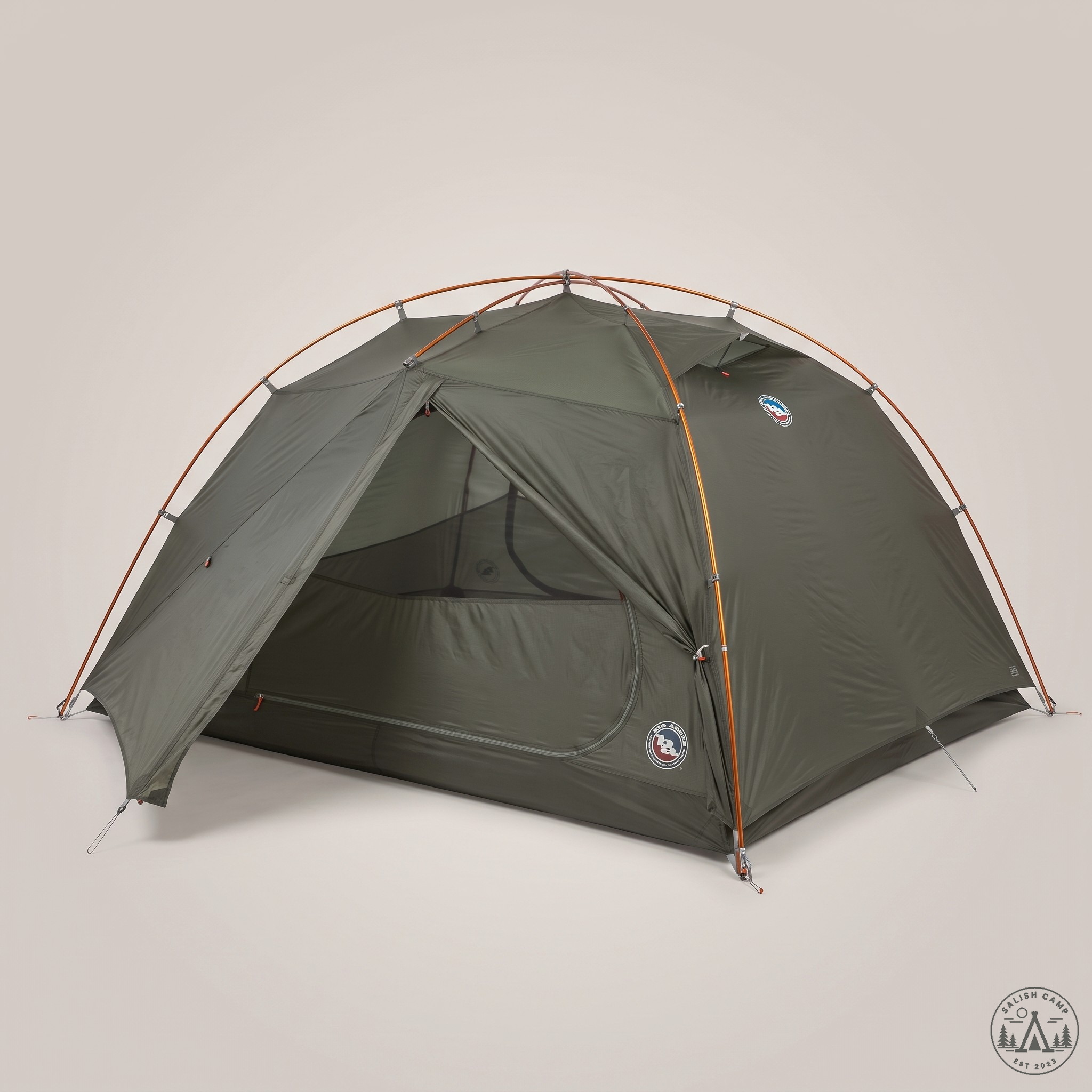
That does not mean I would treat the tent as finished without staking it. Freestanding primarily gives me flexibility during setup. In exposed weather, I still want the corners, vestibules, and appropriate guylines secured. The advantage is that I can first establish the shelter, rotate the doors, check orientation, and then work out the best available anchor points rather than forcing the entire pitch around the first four pieces of ground I can penetrate.
The TipLok™ Tent Buckle is one of those details that becomes more interesting in the rain. It combines pole-tip capture, fly attachment, tensioning, and a stake loop into one corner connection. I appreciate that kind of integration because wet-weather setup is when a collection of tiny buckles, clips, and loops becomes unnecessarily frustrating. The fewer individual pieces I have to identify while standing beside a half-assembled tent, the better.
The vestibules are another reason this is not just a bare-bones UL shelter. There are two of them, each with 9 square feet of space. That gives each occupant a dedicated covered entry and gear zone rather than forcing two people to share one doorway and one pile of wet equipment.
The awning-style vestibule doors are especially useful when conditions are hovering between dry and wet. With trekking poles or the included extra guylines, I can open the vestibule configuration without simply throwing the entire side of the tent open. That creates a more useful intermediate state: some protection from drizzle while keeping the entrance more open.
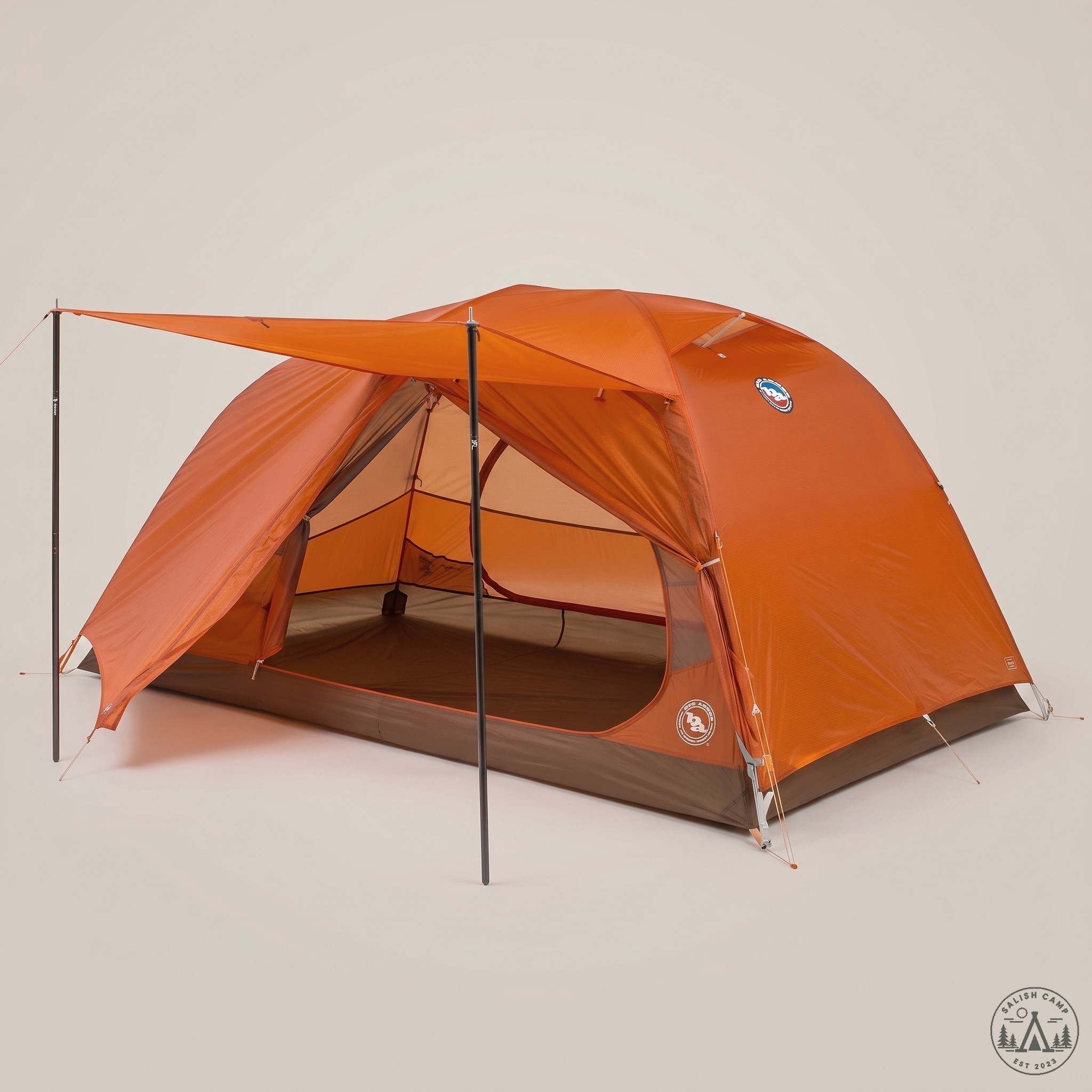
Ventilation is where I would pay attention during Pacific Northwest shoulder-season trips. The UL2 has a Low Vent on the vestibules, a high fly vent, and dual zipper sliders. Those details give me several ways to adjust airflow rather than relying on a single opening. When two people are breathing inside a compact shelter overnight, that matters. I would rather manage airflow proactively than wake up to a wet-feeling interior and assume the fabric itself is the problem.
The dual zipper sliders also make the doors easier to manage incrementally. I can create a smaller opening instead of choosing between completely closed and fully open. That is a mundane feature until the weather is doing exactly what Cascades weather tends to do: changing enough that I am adjusting the tent repeatedly.
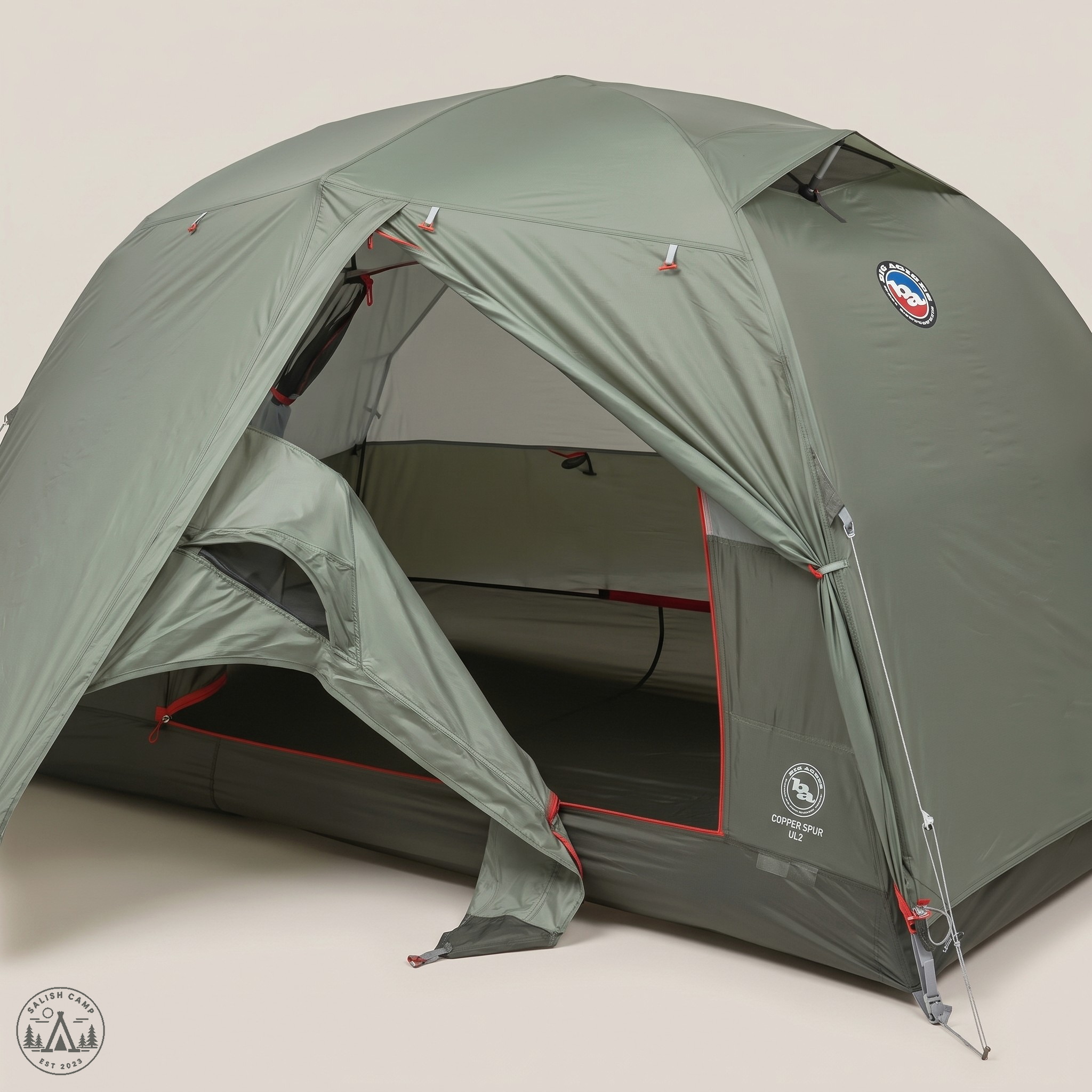
Inside, the Copper Spur earns some of its weight with storage. The oversized 3D bin pocket is useful for the larger things I do not want rolling around the floor, while the ceiling and side pockets give smaller items predictable homes. The Quick Stash door keepers are another good example of a feature that disappears until you need it. Instead of figuring out where to put a rolled-back door, I can secure it out of the way.
For someone new to backpacking, I would not underestimate this. A tent can have a great weight-to-floor-area ratio and still become annoying if headlamps, glasses, phones, maps, and other small items end up scattered across the sleeping area. The Copper Spur gives me more organization than the stripped-down shelters I would choose when absolute minimum weight is the only objective.
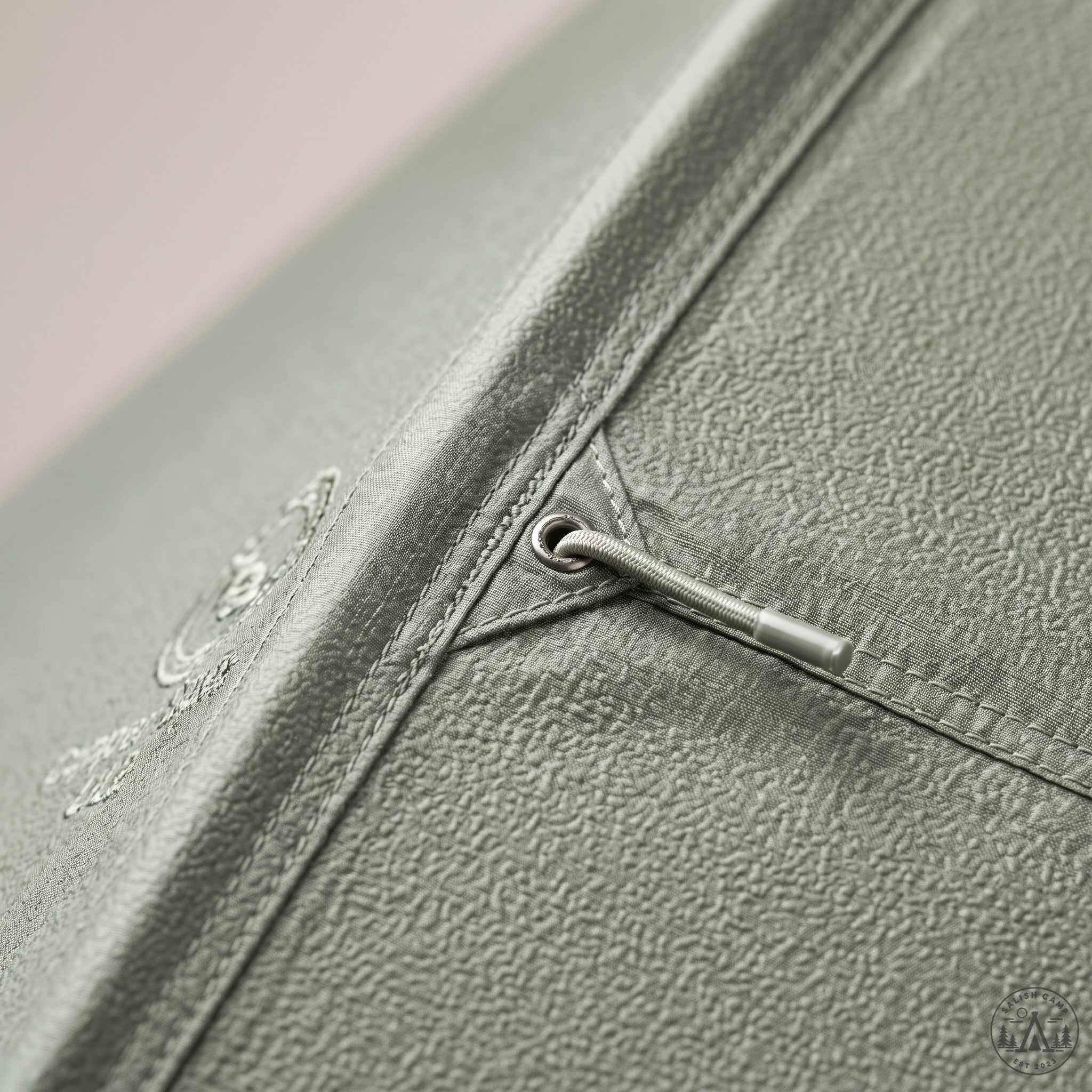
The HyperBead construction is the other major change to understand. The fly and floor use 15D nylon with 20D solution-dyed ripstop construction, with HyperBead providing 1500 mm waterproofing. Big Agnes positions the material as 6% lighter, 25% more waterproof, and 50% stronger than its traditional fabric, while also eliminating intentionally added WR chemicals. That is a more specific proposition than simply calling the tent “ultralight.”
The important field tradeoff is that this is still a lightweight shelter. I treat the fabric accordingly: keep sharp rocks and abrasive debris away from the floor, avoid careless pole handling, and use reasonable care when packing it. The HyperBead story is about getting more performance from lighter fabric, not making a 15D/20D shelter indestructible.
Packing is straightforward, and the EZ Pack Stuff Sack uses a length-wise opening that makes it easier to get the shelter back inside without fighting a narrow tube. The listed packed size is 19.5 × 4 inches, while total packed weight is 3 lb / 1.37 kg. I would use the 2 lb 10 oz trail figure when comparing shelter weight on a gear spreadsheet, but the 3-pound total figure is the one I would budget for when thinking about what the complete packed package contributes to my load.
The Fast Fly option is also worth understanding before buying. The listed Fast Fly weight is 2 lb 2 oz / 955 g for fly, poles, and stakes, but the Copper Spur UL2 footprint is sold separately. That setup is useful for someone who deliberately wants to strip the shelter down for specific trips, but it is not the same configuration as carrying the complete tent.
Overall, I see the Copper Spur UL2 HyperBead as a shelter for the backpacker who wants low weight without giving up the practical advantages of a larger freestanding tent. On alpine-lake trips, ridge camps, and wet-weather Cascades weekends, the combination of two doors, two vestibules, substantial interior volume, integrated ventilation, and a 2-pound-10-ounce trail weight makes sense. The point is not that every feature is necessary; it is that the features work together to make a lightweight shelter easier to live with.
Pros
- Excellent weight-to-livability balance: 2 lb 10 oz trail weight with 29 ft² of floor area, 40-inch peak height, and two 9-ft² vestibules.
- HyperBead fabric is a meaningful current-generation update: 15D/20D construction, 1500 mm waterproofing, and no intentionally added PFAS.
- Very flexible setup: High-volume freestanding architecture plus TipLok™ hardware makes setup adaptable to uneven or rocky campsites.
- Strong wet-weather livability: Two awning-style vestibules, Low Vents, a high fly vent, dual zipper sliders, and substantial interior storage all address real camping annoyances.
Cons
- 3-pound total packed weight is higher than the trail-weight headline: The 2 lb 10 oz trail number does not represent everything in the packed package.
- Footprint is sold separately: The Fast Fly configuration requires the Copper Spur UL2 footprint, adding another purchase if that setup is part of the plan.
- Lightweight fabric still requires care: HyperBead improves the material proposition, but 15D/20D construction is still something I would protect from unnecessary abrasion and rough handling.
| Product | Big Agnes Copper Spur UL2 (HV lineage) |
|---|---|
| SKU | TCSUL2TGO25 / TCSUL2LCN25 |
| Generation | 2025 HyperBead® UL |
| Brand | Big Agnes |
| Price | ~$550–$600 (MSRP up to $599.95) |
| Trail weight | 2 lb 10 oz / 1.18 kg |
| Total / packed weight | 3 lb / 1.37 kg |
| Fast Fly weight | 2 lb 2 oz / 955 g |
| Packed size | 19.5 × 4 in |
| Floor | 29 ft²; 88 × 52–42 in |
| Peak height | 40 in / 102 cm |
| Vestibules | 9 + 9 ft² |
| Doors | 2 |
| Fabrics | HyperBead® 15D/20D fly+floor 1500 mm; 15D mesh body |
| Poles | DAC Featherlite NFL/NSL/pressfit |
| Best for | High-volume ultralight backpacking |
| Field focus | Alpine lakes & ridge camps |
| Buy | bigagnes.com Copper Spur UL2 |
Final Thoughts
The current Copper Spur UL2 HyperBead deserves to be treated as the 2025 HyperBead generation rather than as the older product represented by the live “HV UL2” title. The SKU suffixes TCSUL2TGO25 and TCSUL2LCN25 pin the current version, while the official retail name is simply Copper Spur UL2. The existing HV name is useful for understanding the product’s lineage, but it should not be used as a substitute for the current generation.
The most important correction is the weight. I would not carry forward the old ~3 lb 2 oz figure when evaluating this tent. The current HyperBead UL2 lists 2 lb 10 oz trail weight and 3 lb total packed weight, which puts the shelter in a different conversation for backpackers watching every ounce.
The more interesting decision is what those ounces buy. This is not a minimalist shelter built around reducing everything to the lowest possible number. The 29-square-foot floor, 40-inch peak height, two doors, two 9-square-foot vestibules, storage pockets, Quick Stash door keepers, ventilation options, and awning-style vestibules all make the tent easier to use once camp is established.
That makes the Copper Spur UL2 a particularly useful reference point when comparing it with other lightweight two-person shelters. If you are also weighing something like the MSR Hubba Hubba LT 2, the question is less about whether one tent is “better” and more about how much interior volume, vestibule utility, and freestanding flexibility you want relative to weight. My MSR Hubba Hubba LT 2 review is a useful next comparison if that is the decision you are making.
The same applies when comparing this freestanding UL package versus a trekking-pole-oriented design: the Copper Spur’s appeal is that I can keep the pack weight low without giving up the convenience of a conventional freestanding structure.
For alpine lakes and ridge camps, that combination is the reason I would keep this tent on the shortlist. The current HyperBead construction addresses the material side of the equation, while the high-volume geometry and practical hardware address the part of backpacking that happens after the scale stops mattering—when it is raining, the ground is rocky, two people are inside, and you actually have to live in the tent.
For a rectangular-floor freestanding alternative, see the MSR Hubba Hubba LT 2. Other shelter comparisons: Nemo Dragonfly Osmo 2P, Durston X-Mid 2, and Amenity Dome M for car-camp space.