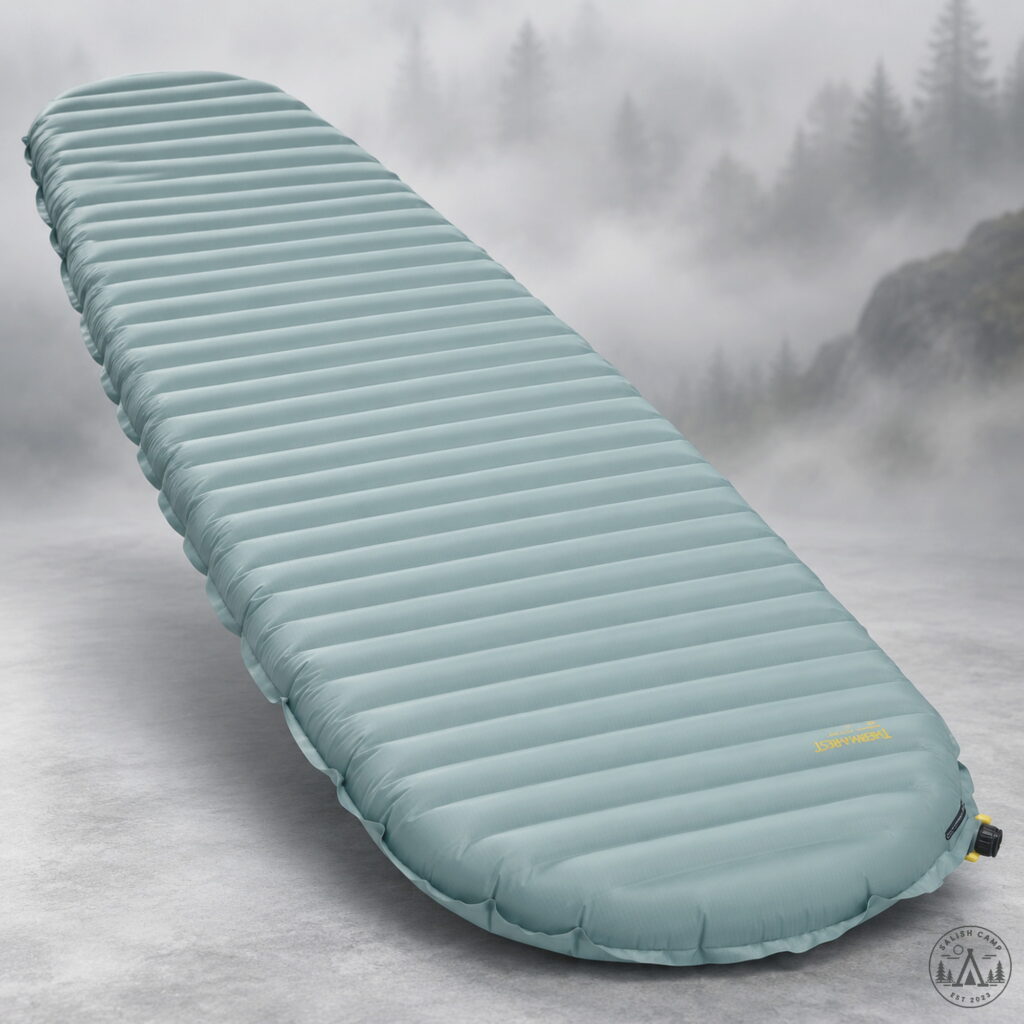
Buy if you want a highly insulated backpacking pad with an R-value of 7.3, a 15.5-ounce weight, and a compact packed size for cold-weather trips.
Skip if most of your backpacking is warm-weather three-season camping and you don’t need the XTherm NXT’s high insulation level.
What Stands Out
- R-7.3 insulation: The XTherm NXT is built around serious ground insulation, making its 7.3 R-value the defining reason to carry it when temperatures drop.
- 15.5 ounces: At 440 g for the Regular, the XTherm NXT keeps its four-season insulation surprisingly manageable in a backpacking kit.
- Triangular Core Matrix™ + ThermaCapture™: These technologies form the pad’s insulation system, combining the Triangular Core Matrix construction with ThermaCapture to retain heat.
- 20 × 72 × 3 inches: The Regular gives me a full 72-inch sleeping surface and 3 inches of thickness without moving into a larger pad category.
- WingLock™ valve: The WingLock valve makes inflation and deflation straightforward and works with the included pump sack.
- 30D ripstop HT nylon top and 70D nylon bottom: The different fabrics give the pad a purpose-built top and bottom rather than using the same material throughout.
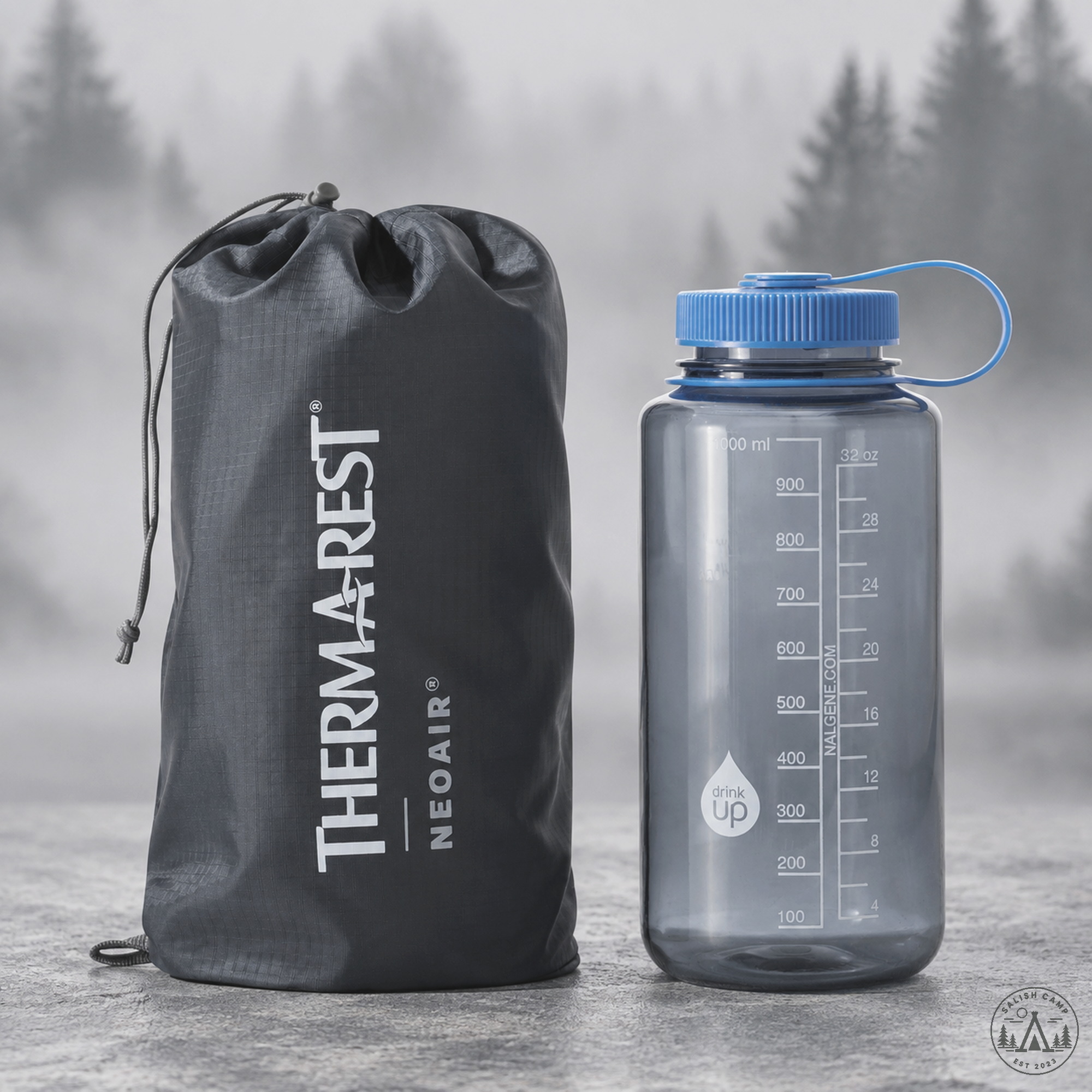
- Small packed footprint: At 9 × 4.5 inches packed, the XTherm NXT takes up little valuable space in a backpack.
In The Field
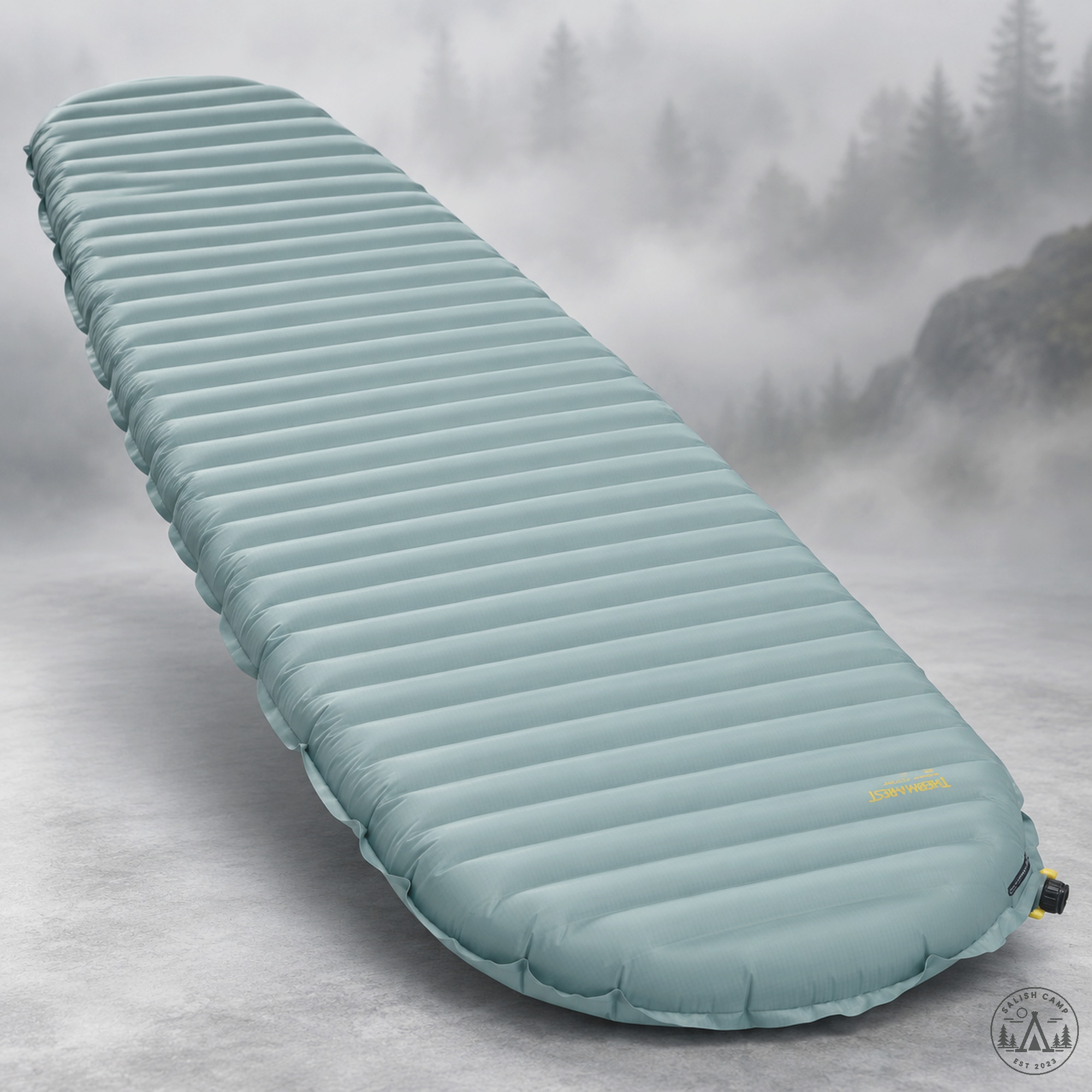
The XTherm NXT makes the most sense to me when I’m heading into the Cascades and the ground temperature starts becoming a bigger concern than the daytime forecast. Around the Pacific Northwest, I’ve learned that a reasonable afternoon forecast doesn’t necessarily tell me much about how the night is going to feel. Once I’m sleeping on cold ground, the insulation underneath me matters just as much as the insulation above me.
That’s where the XTherm NXT’s R-value of 7.3 becomes the reason I would choose this particular pad. I’m not carrying it because I need a luxurious mattress. I’m carrying it because I want substantial insulation between my sleeping bag and the ground.
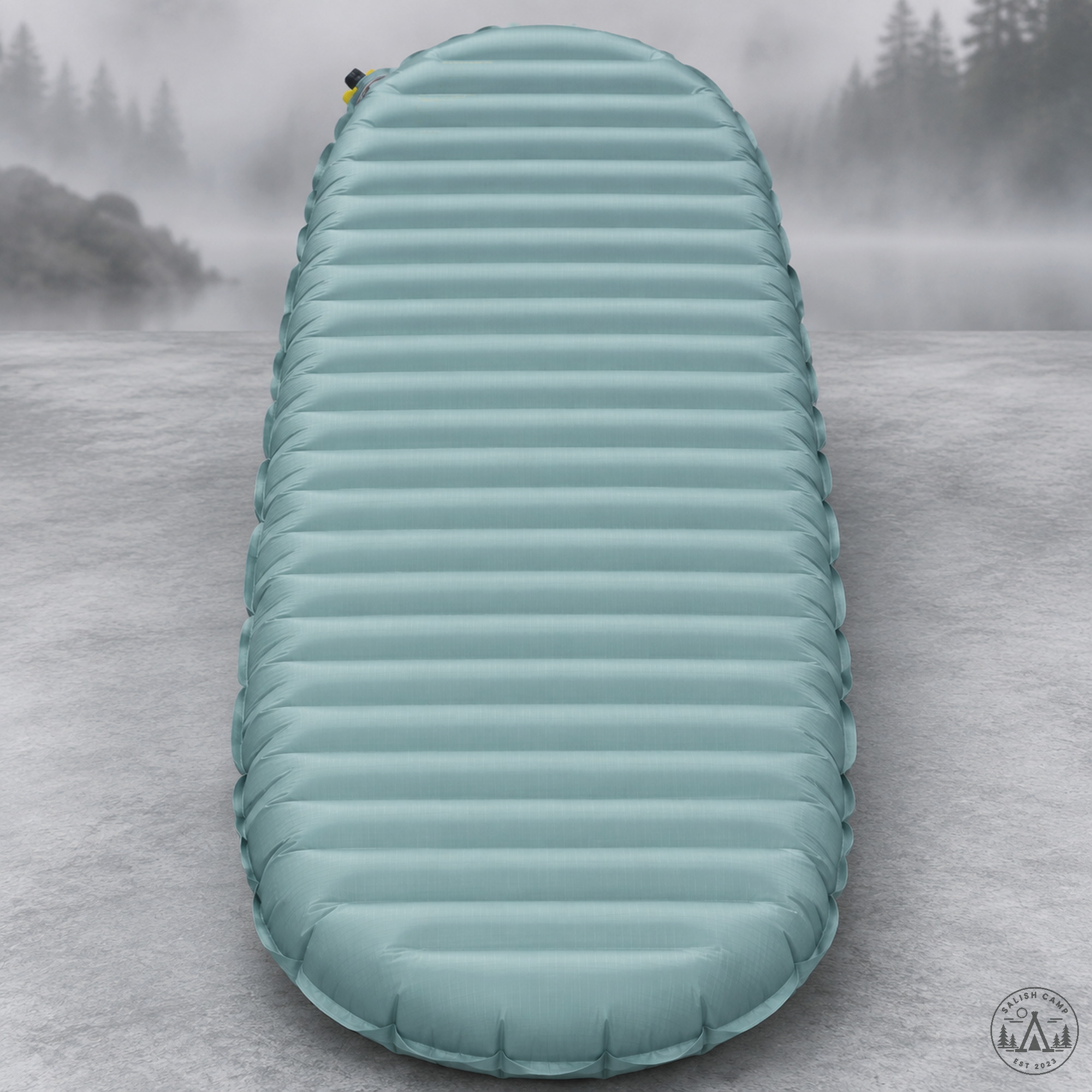
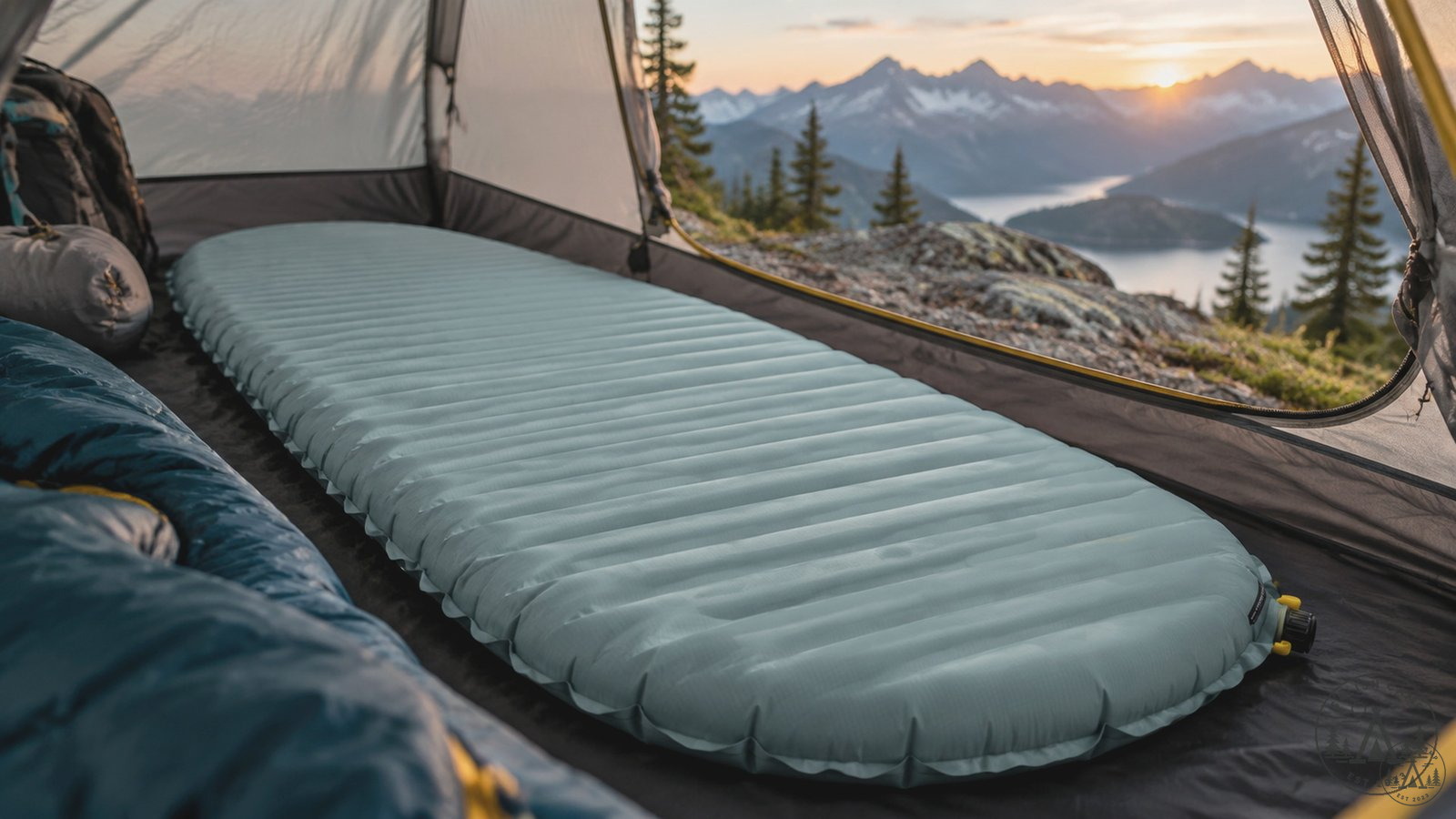
The Regular measures 20 × 72 × 3 inches, which gives me a useful combination of length, width, and thickness for backpacking. Three inches of thickness is enough to create a meaningful cushion between me and uneven ground, while the 72-inch length gives the Regular a full-length sleeping surface.
For the kind of trips I do around the Cascades, that balance is important. I’m always looking at the complete sleep system rather than judging a pad in isolation. The pad has to provide enough cushioning to sleep comfortably, enough insulation to prevent the ground from becoming the problem, and a packed size that doesn’t make me resent bringing it along.
The XTherm NXT checks those boxes without turning into a bulky piece of winter equipment.
At 15.5 ounces, or 440 grams, the Regular is also easy to justify when insulation is the priority. Four-season gear can get heavy quickly, so I pay close attention to the weight penalty of anything I put in my pack. Here, the weight is tied directly to something I can feel the benefit of on a cold night.
The construction is another part of the XTherm NXT that makes sense once I’m actually using it. Therm-a-Rest uses a Triangular Core Matrix™ combined with ThermaCapture™ to create the pad’s insulation system. I’m less interested in the terminology once I’m lying in the tent than I am in what the construction is accomplishing: keeping the pad highly insulated without requiring a huge amount of material or packed volume.
The WingLock™ valve is another practical detail I appreciate in camp. I can use the included pump sack rather than inflating the pad with my own breath, which is particularly useful when I’m setting up after a long day on the trail. The valve also makes getting the pad ready for sleep and then packing it away at the end of the night a straightforward process.
The fabric construction is similarly purposeful. The top uses 30D ripstop HT nylon, while the bottom uses 70D nylon. I still treat an inflatable sleeping pad like an inflatable sleeping pad—I don’t drag it across rocks or ignore what’s underneath the tent—but the two different fabrics make sense for their respective positions on the pad.
That distinction is especially relevant when I’m setting up on typical Cascades terrain. A tent site might look comfortable until I’m kneeling down and finding small rocks, sticks, or rough patches underneath. I still clear the area carefully, but I like knowing the pad isn’t using the same lightweight fabric on both surfaces.
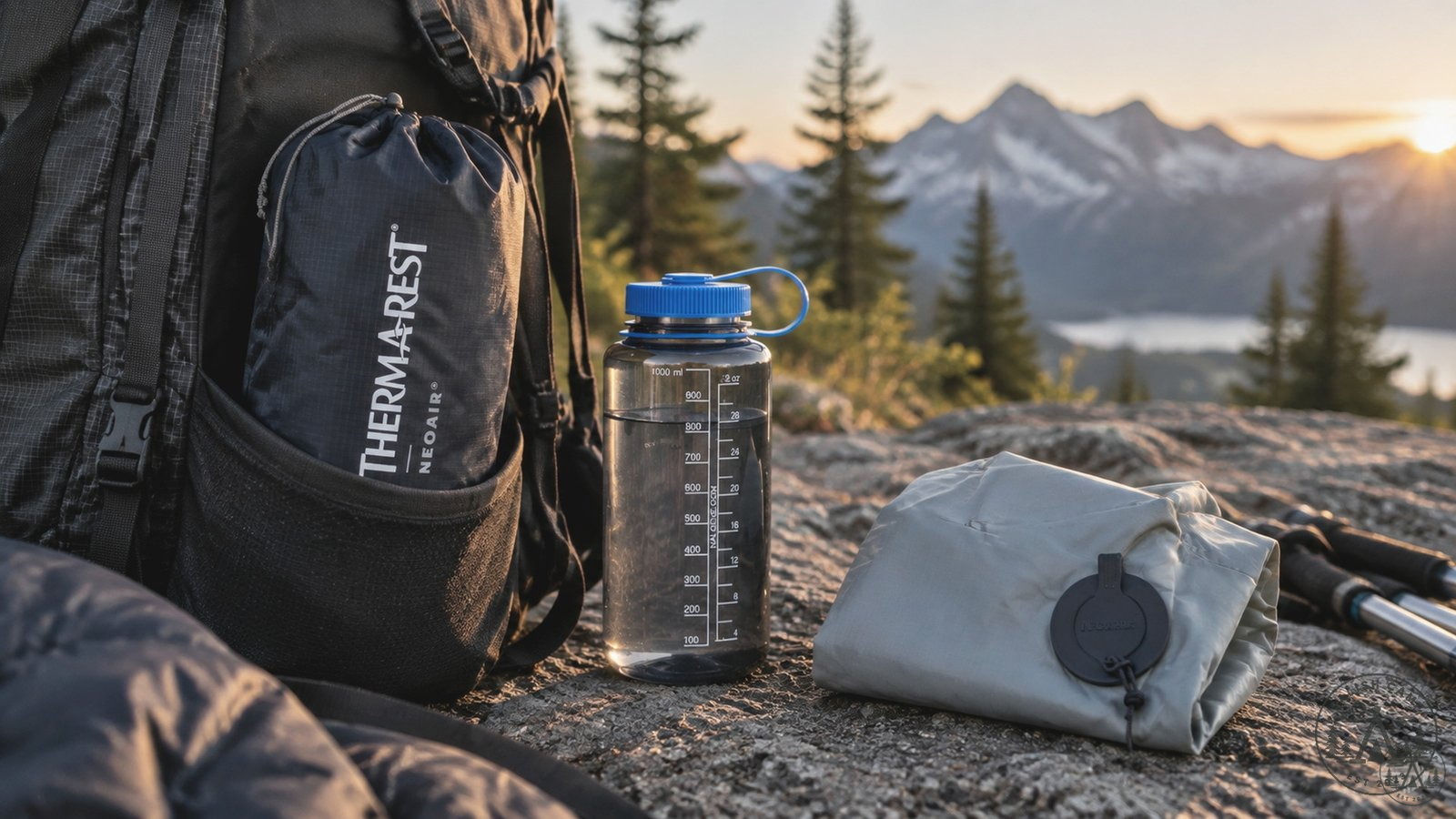
The 9 × 4.5-inch packed size is one of those specifications that becomes more meaningful after a few days on the trail. Backpack space is always at a premium, and sleeping gear is one of the larger categories in my pack. When a pad provides this much insulation but compresses to a relatively compact cylinder, I can put it away without having to reorganize the rest of my load.
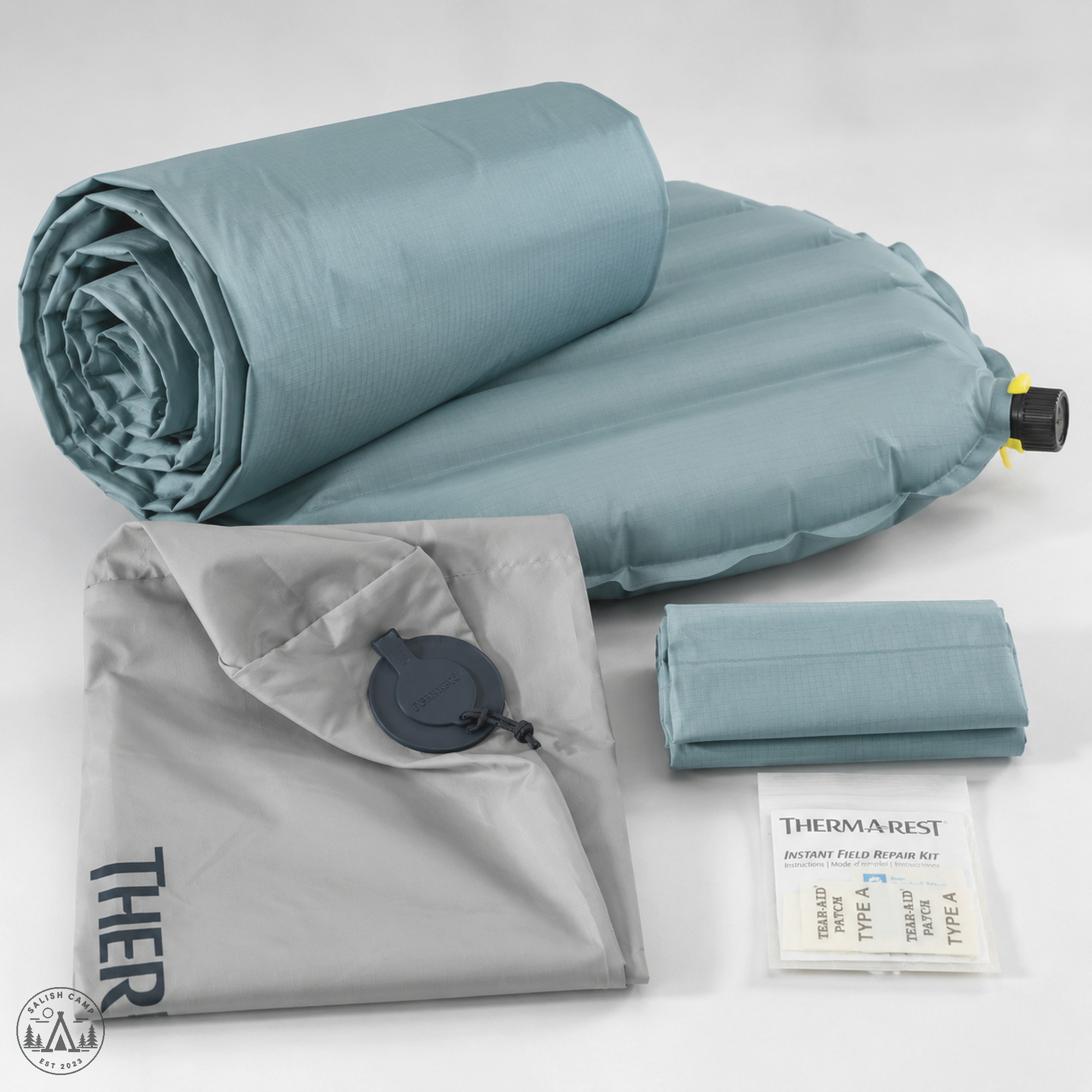
The included accessories also make the XTherm NXT feel like a complete backpacking sleep system rather than a pad that requires several additional purchases before I can use it properly. The package includes a pump sack, stuff sack, and field repair kit.
I particularly like having the field repair kit along because inflatable gear has one obvious vulnerability: it has to hold air. I don’t assume any pad is immune to punctures, so having the repair equipment as part of the package means one less thing I need to remember when putting together a trip kit.
The stuff sack keeps the pad contained when it’s time to pack, while the pump sack handles inflation. Those are small details individually, but they’re exactly the accessories I want included with a backpacking pad.
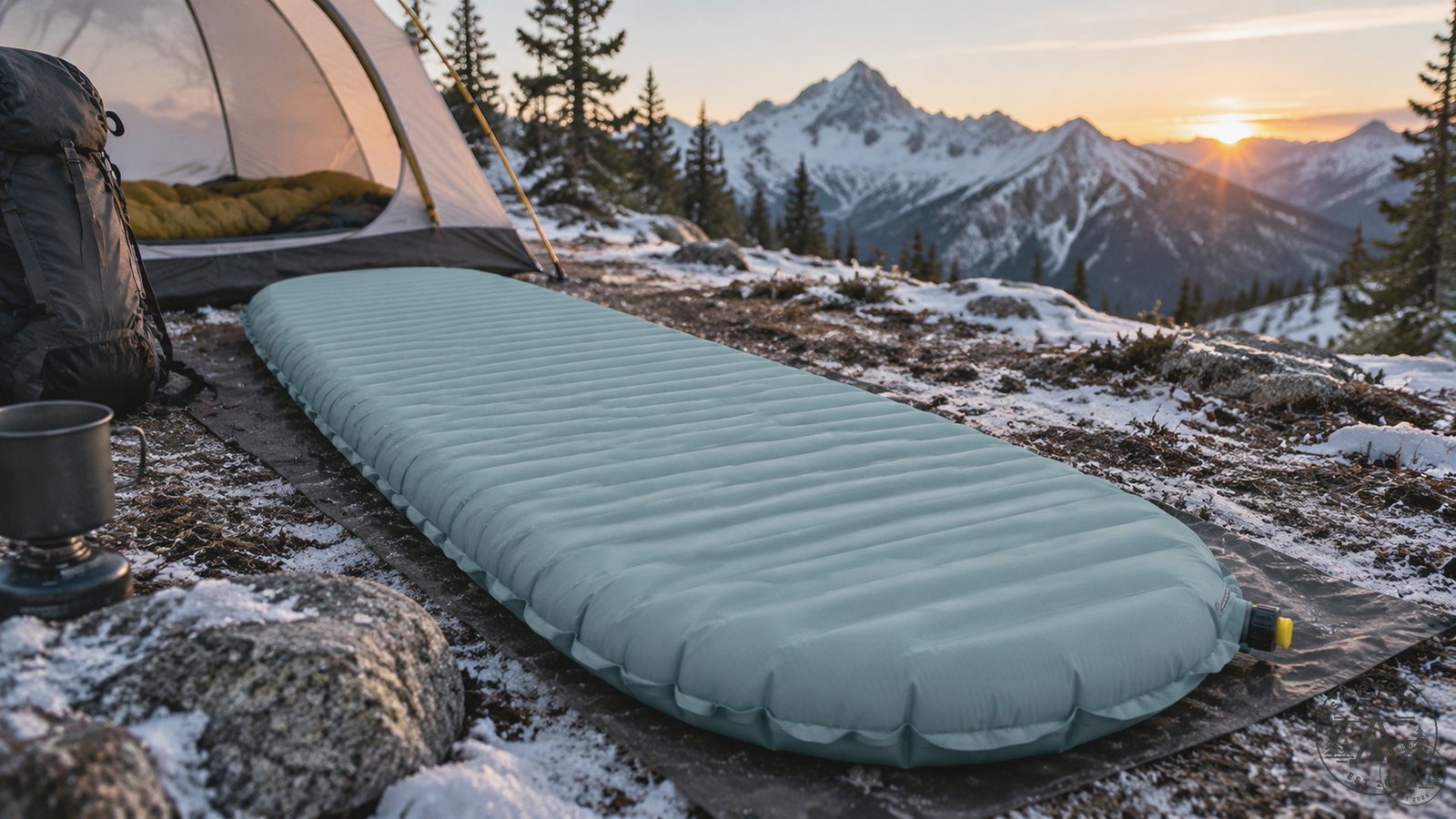
There is also a nice simplicity to the XTherm NXT Regular’s role in my gear closet. Its specifications point toward cold-weather backpacking: R-7.3 insulation, 3-inch thickness, 15.5-ounce weight, and a compact 9 × 4.5-inch packed size. I don’t need to invent a reason to carry it. The reason is straightforward: when the ground is cold, I want a lot of insulation without carrying a huge pad.
That’s also why I wouldn’t automatically choose it for every summer trip. If I’m heading out during a warm stretch and don’t expect cold ground to be an issue, the XTherm NXT’s high insulation level isn’t necessarily something I need to pay for and carry. This is a specialized piece of gear within a backpacking kit, and its specialization is warmth.
The $229.95 MSRP also puts the XTherm NXT firmly in the premium sleeping-pad category. For me, that makes the intended use even clearer. This isn’t a casual upgrade where I’m paying more simply for a slightly nicer sleeping surface. The value proposition is the combination of insulation, weight, dimensions, construction, and packability.
And that’s ultimately how I look at it after using it as part of a PNW-oriented sleep system. The XTherm NXT isn’t trying to be everything to every backpacker. It’s a Regular-sized pad with substantial insulation, a manageable weight, and a compact packed size. When I’m building a kit around colder conditions, those are exactly the characteristics I want.
Pros
- R-7.3 insulation provides the high level of ground insulation that defines the XTherm NXT.
- 15.5-ounce / 440-gram Regular weight keeps the four-season-oriented design backpacking-friendly.
- 9 × 4.5-inch packed size takes up relatively little room in a loaded pack.
- Pump sack, stuff sack, and field repair kit included make the package ready for backcountry use.
Cons
- $229.95 MSRP makes the XTherm NXT a significant investment for a sleeping pad.
- 20-inch width may feel limiting for backpackers who prefer a wider sleeping surface.
- R-7.3 insulation is more than many warm-weather backpackers need.
Technical Specifications
| Product | Therm-a-Rest NeoAir XTherm NXT |
|---|---|
| SKU / size | 14015 Regular |
| Brand | Therm-a-Rest |
| Price | $229.95 |
| Weight | 15.5 oz / 440 g |
| R-value | 7.3 |
| Thickness | 3 in / 7.6 cm |
| Dimensions | 20 × 72 × 3 in |
| Packed size | 9 × 4.5 in |
| Top / bottom fabric | 30D ripstop HT nylon / 70D nylon |
| Valve | WingLock™ |
| Construction | Triangular Core Matrix™ + ThermaCapture™ |
| Includes | Pump sack, stuff sack, field repair kit |
| Best for | Cold-weather warmth-to-weight |
| Field focus | Shoulder-season & freezing Cascades |
| Buy | cascadedesigns.com / thermarest XTherm NXT |
Final Thoughts
The Therm-a-Rest NeoAir XTherm NXT Regular fits the same philosophy I look for across the rest of my backpacking kit: don’t carry more than necessary, but don’t cut weight in the place where it compromises the experience.
At 15.5 ounces, the XTherm NXT gives me a 7.3 R-value, a 3-inch-thick sleeping surface, and a compact 9 × 4.5-inch packed size. That’s a very specific combination, and it makes the most sense when cold-weather performance is part of the brief.
If you’re building a complete Cascades sleep system, I’d pair this review with my NEMO Tensor Trail Ultralight Insulated Sleeping Pad review for a look at a different approach to backpacking insulation. And if you’re evaluating the whole shelter and sleep setup rather than just the pad, my MSR Hubba Hubba LT 2-Person Backpacking Tent and Big Agnes Copper Spur UL2 reviews are natural next stops.
The XTherm NXT Regular isn’t the pad I’d choose simply because it has the highest insulation number on the page. I’d choose it when I know that insulation is going to matter—and when I want that insulation without giving up the weight and packability that make backpacking enjoyable.