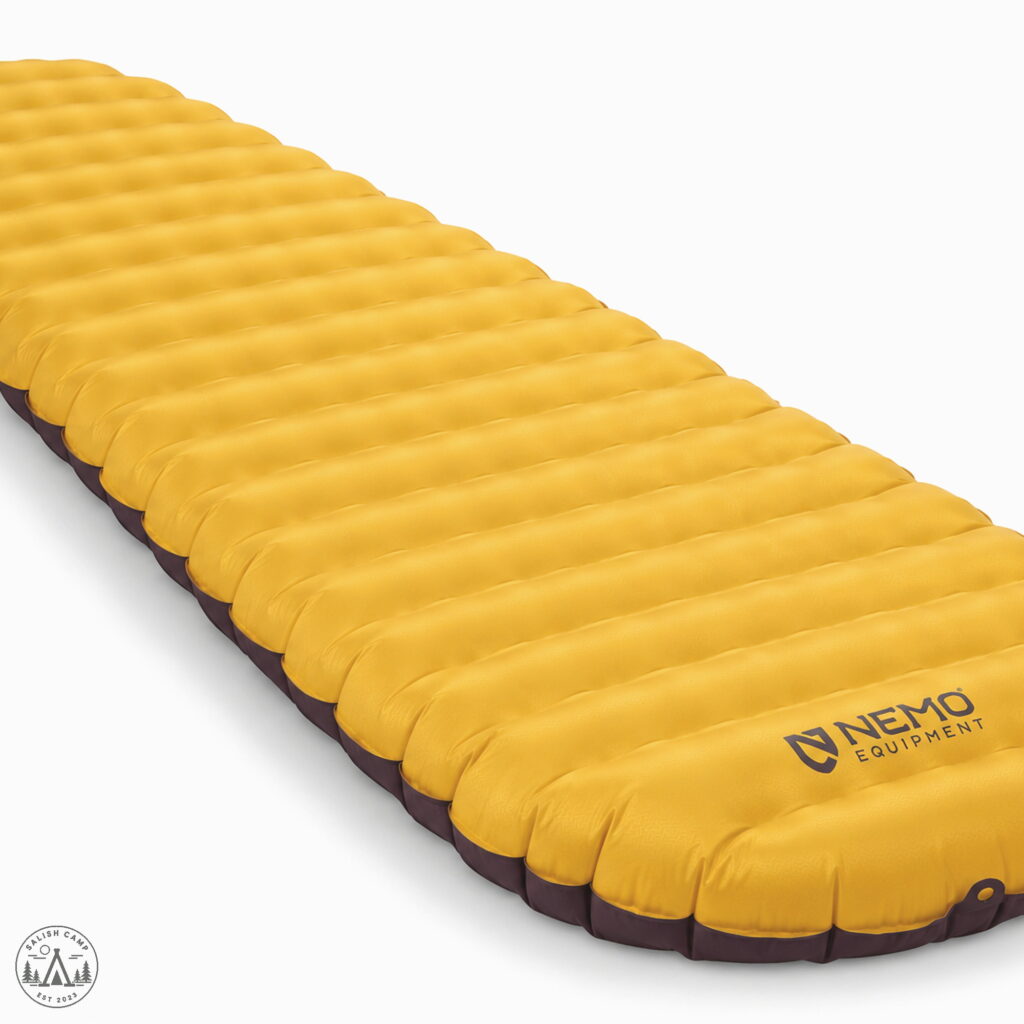
Buy if You want a light three-season mummy pad that prioritizes sleep comfort as much as pack weight. The NEMO Tensor Trail Regular Mummy combines a 13.0 oz / 369 g minimum weight, 1 lb 0 oz / 451 g packed weight, 3.5 inches of thickness, and Spaceframe construction in a 72 x 20-inch mummy shape. For my spring-through-fall Cascades and Olympic trips, that combination makes the most sense when granite, roots, and uneven forest duff are more likely to ruin my sleep than a few extra ounces in the pack.
Skip if You need winter-level insulation, routinely sleep in genuinely cold conditions, or want the extra room of a wide rectangular pad. The R-value is 2.8, and NEMO positions Tensor Trail for spring-through-fall use where low weight is the priority. This specific SKU is also only 20 inches wide and mummy-shaped, so restless sleepers who use every inch of a rectangular pad should look carefully at that tradeoff before buying.
What Stands Out
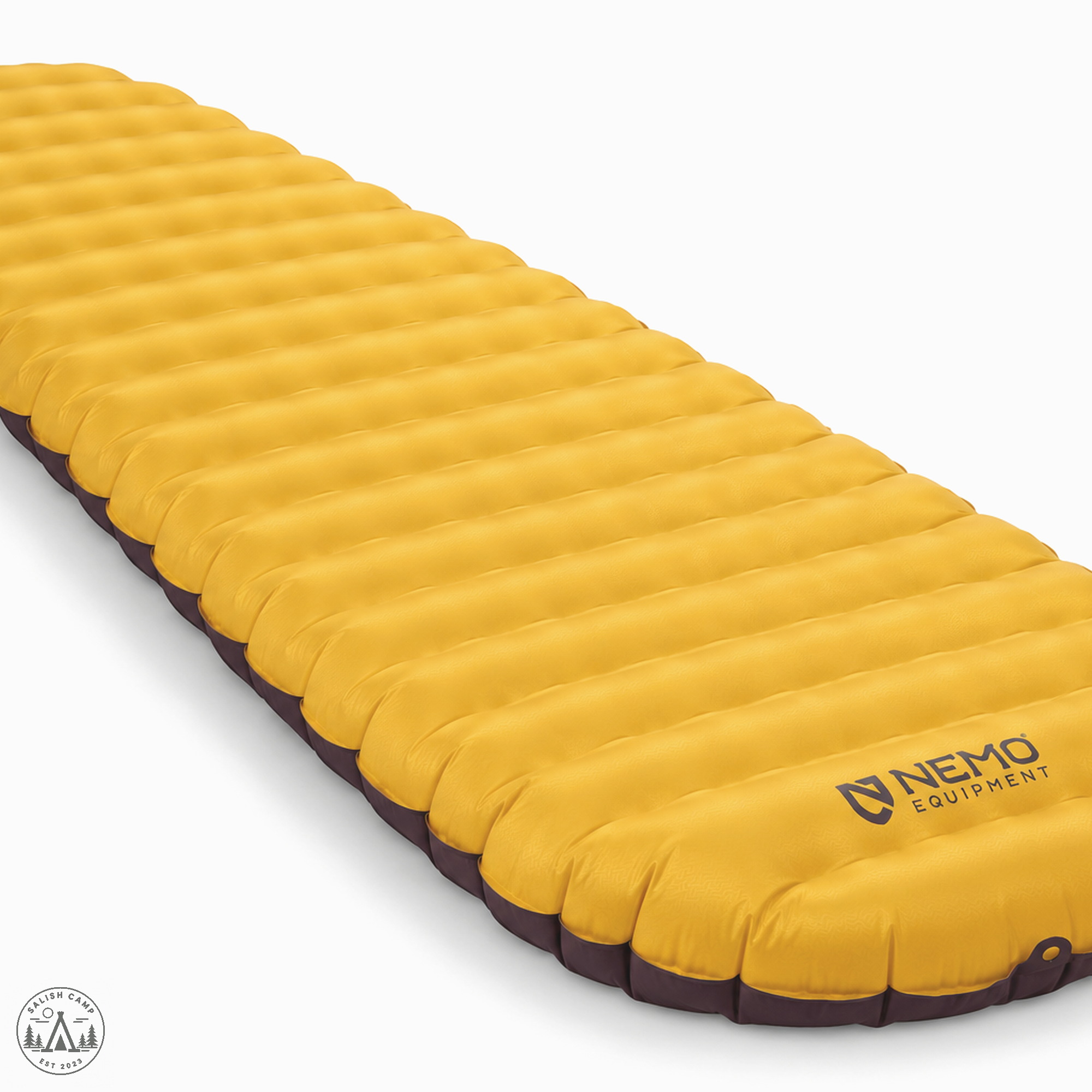
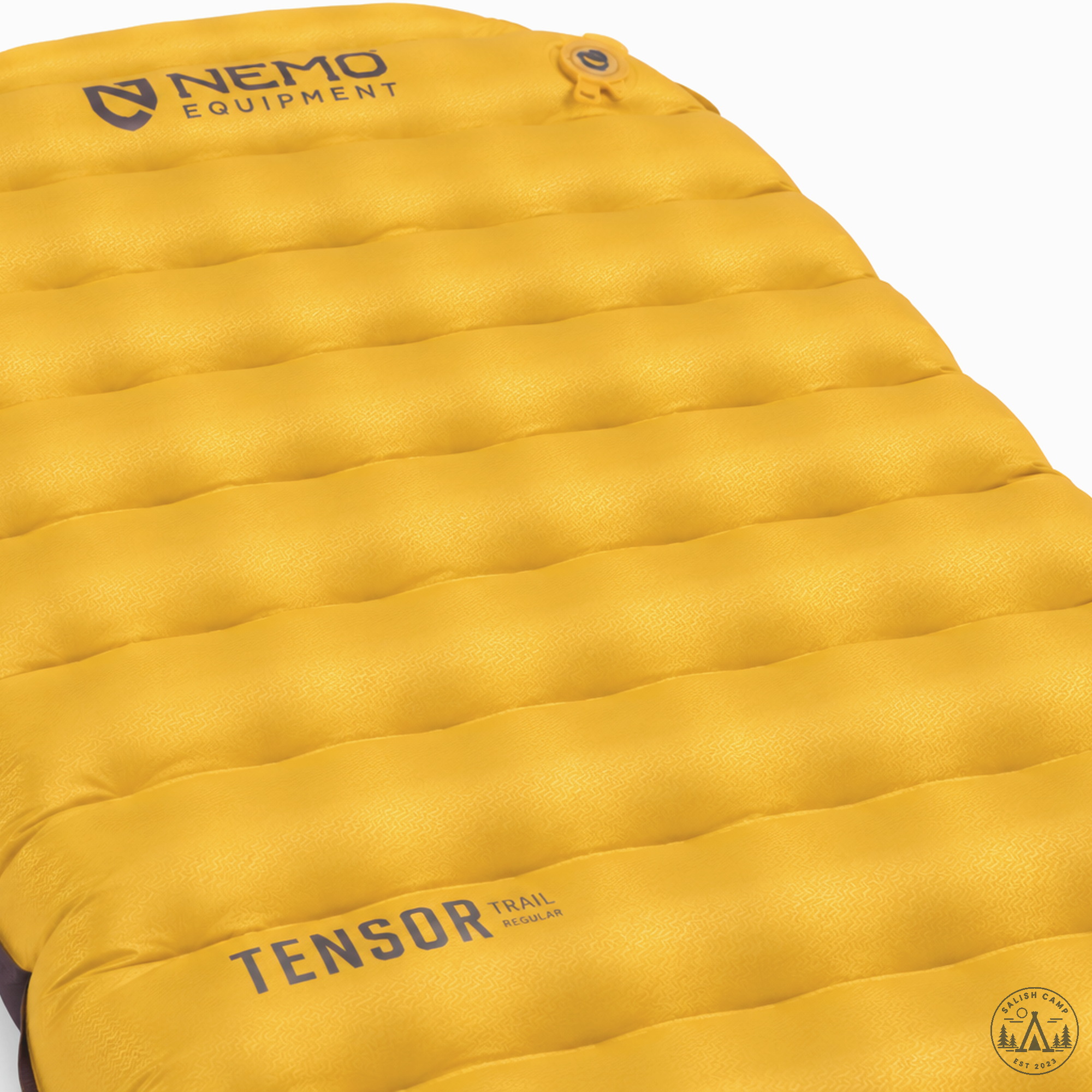
- The 3.5-inch thickness is substantial for a 13.0 oz minimum-weight mummy pad. That depth matters to me as a side sleeper because there is meaningful air volume between my hip and whatever is underneath the tent floor.
- Spaceframe baffles use low-stretch fabric trusses inside the pad. Rather than behaving like one big air chamber, the construction is designed to provide stable support without the waterbed feel NEMO specifically tries to avoid.
- R-2.8 defines the intended season clearly. Tensor Trail is a spring-through-fall, weight-priority pad—not a winter pad disguised by an impressive thickness number.
- The Laylow valve sits flush with the pad and is microadjustable. That gives me a practical way to bleed off small amounts of air after inflation instead of choosing between rock-hard and obviously underinflated.
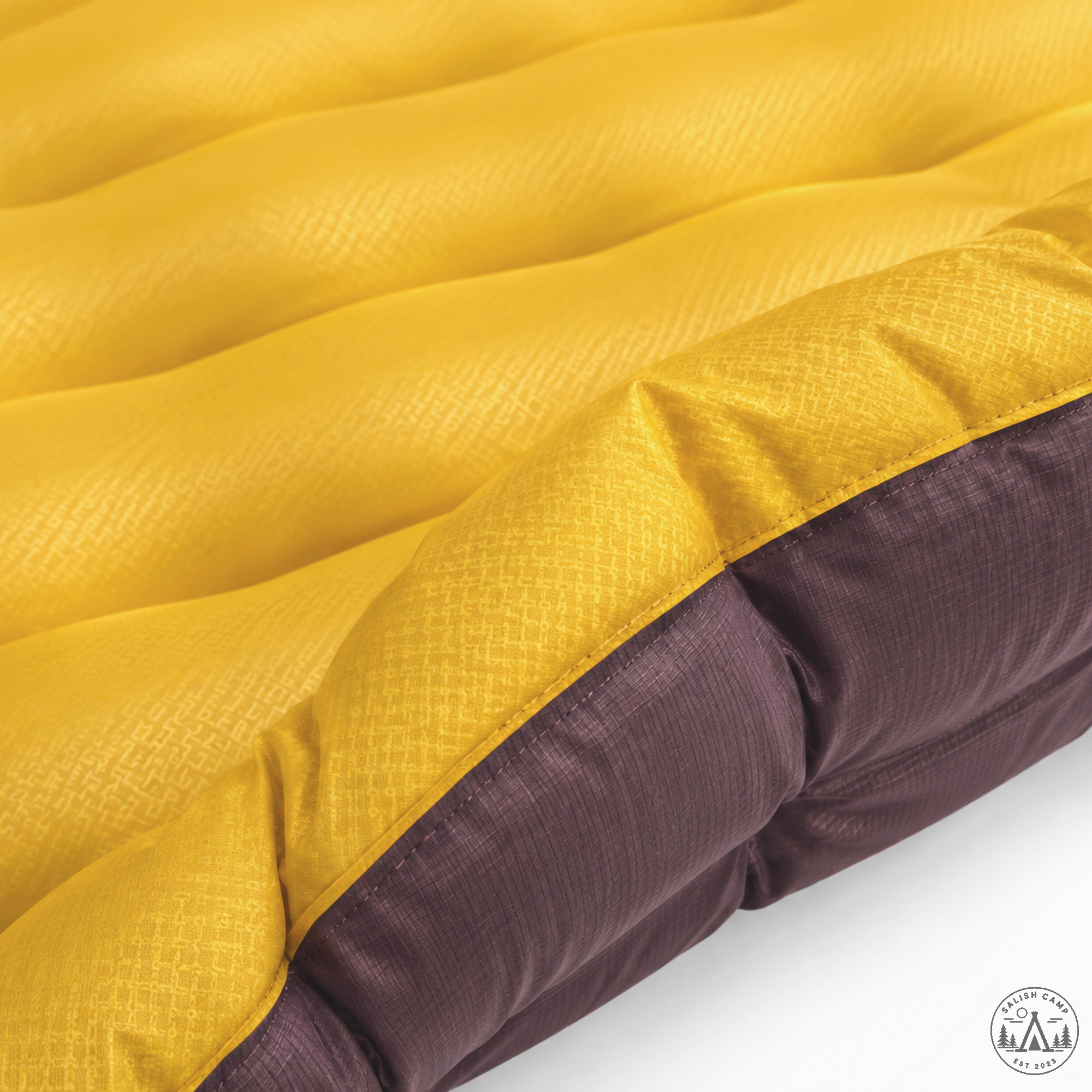
- The Mango / Huckleberry shell uses different fabrics where they matter. The top is bluesign-approved 20D 100% recycled nylon; the bottom steps up to bluesign-approved 40D nylon. NEMO does not describe that bottom fabric as recycled.
- The Regular Mummy keeps minimum and packed weight distinctly different. The pad's minimum weight is 13.0 oz / 369 g, while the complete packed weight is 1 lb 0 oz / 451 g. That distinction matters when comparing what actually goes into a backpack.
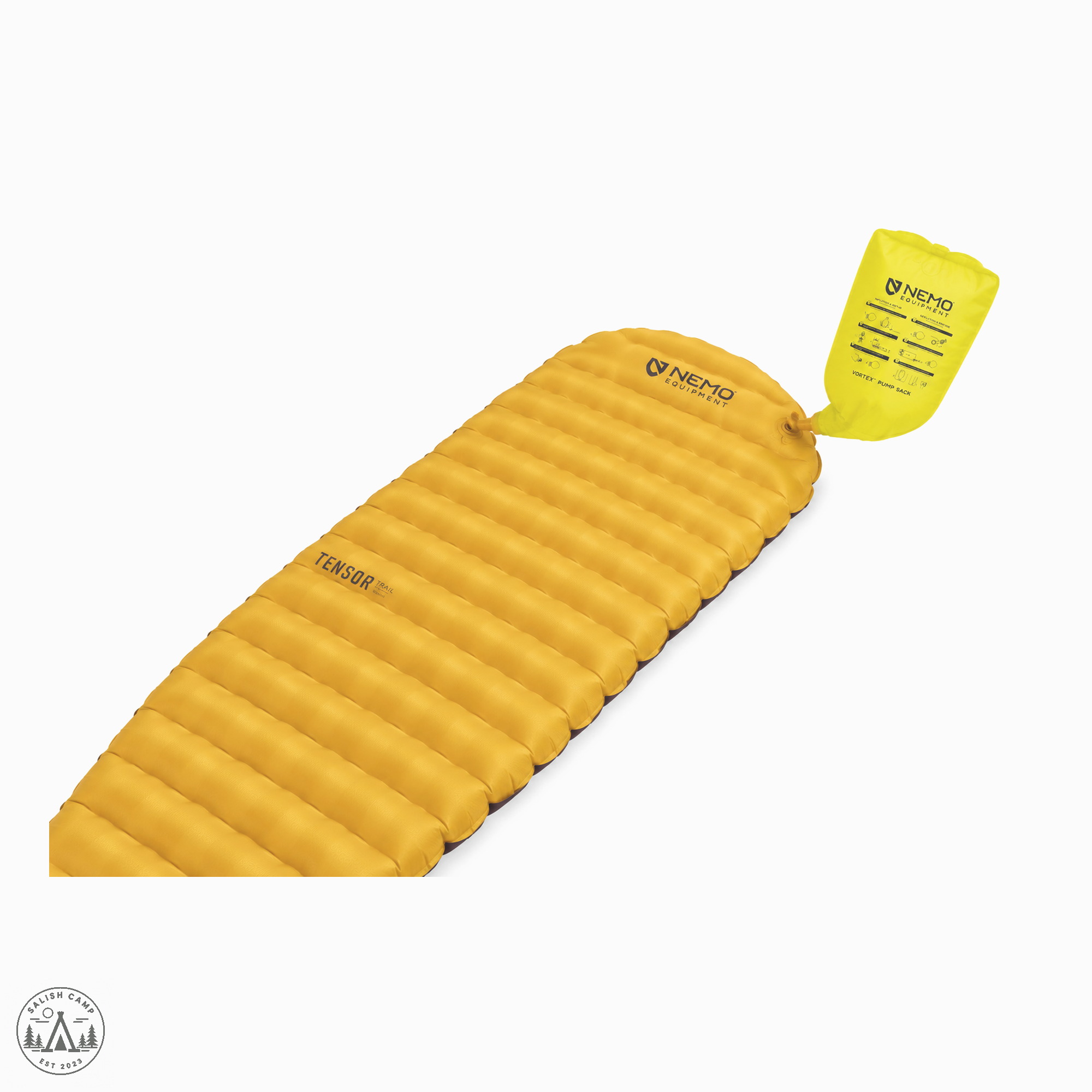
- The Vortex pump sack is part of the supplied inflation system. The box also includes the stuff sack, Velcro strap, and setup instructions, so there is no need to invent a separate pump or repair kit when describing what ships with this SKU.
In The Field
The first number I care about with an ultralight sleeping pad isn't actually weight. It is thickness. If I am going to carry an inflatable pad into the Cascades and then spend eight hours trying not to drive my hip into granite, the difference between a good spreadsheet number and a good sleeping pad becomes obvious around 2 a.m.
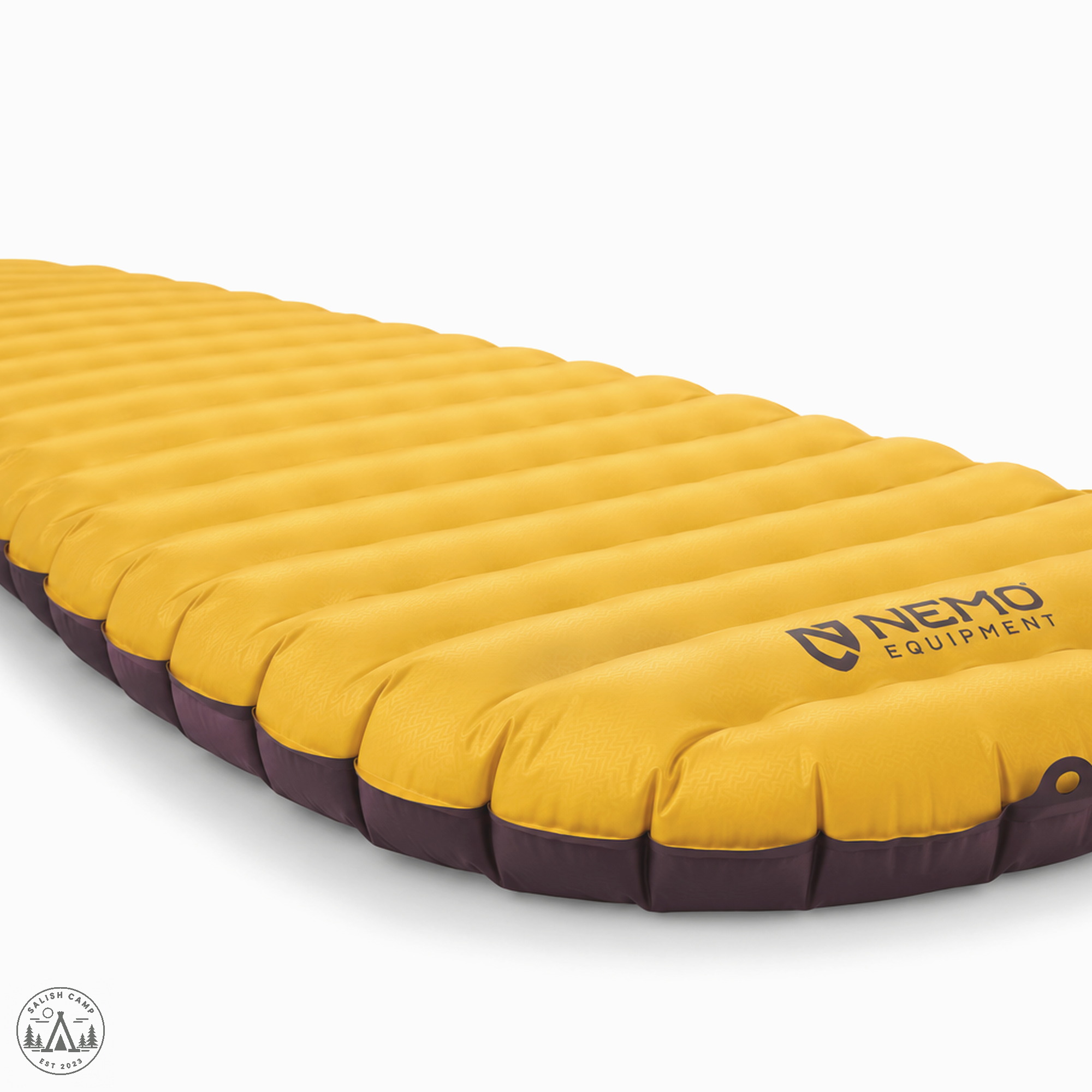
At 3.5 inches thick, the Tensor Trail Regular Mummy gives me a generous cushion of air for a pad with a 13.0 oz / 369 g minimum weight. I'm a side sleeper, so that depth is more useful to me than it might initially sound. My hip and shoulder create concentrated pressure points rather than spreading my weight evenly across the pad. On hard alpine ground, roots under forest duff, or a site where I simply did not get the perfectly flat tent pitch I wanted, maintaining clearance underneath those pressure points is the difference between sleeping and repeatedly repositioning myself.
Thickness alone, however, does not guarantee support. A deep pad can still feel unstable if its internal structure allows too much air movement. Tensor Trail uses NEMO's Spaceframe baffles, with low-stretch fabric trusses creating structure inside the pad. NEMO describes the objective as stable support without a waterbed feel, and that is an important distinction when evaluating this design. The useful part isn't simply that the pad reaches 3.5 inches; it is that the internal construction is intended to control how that air-supported surface behaves underneath you.
That is especially relevant when I roll from my back onto my side. On a poorly controlled air mattress, one part of the pad compresses and another wants to rise. Spaceframe is NEMO's answer to that behavior. It is a product-specific reason I would consider Tensor Trail rather than reducing the decision to ounces and R-value alone.
The 72 x 20-inch / 183 x 51 cm Regular Mummy dimensions are the next important reality check. Twenty inches is not generous. It is the classic weight-conscious backpacking width, and the mummy outline trims material where a rectangular pad would preserve it.
For me, that makes sense when I am intentionally packing light. My sleeping pad stays underneath the parts of my body that need insulation and cushioning, while the tapered shape avoids carrying unnecessary pad area around my legs. But there is no reason to pretend the tradeoff disappears. Someone who moves aggressively during the night or likes sprawling across a wide mattress may find a 20-inch mummy restrictive.
There are other Tensor Trail sizes, including rectangular and wider versions, but I would treat those as different buying decisions rather than muddying the specifications of this Regular Mummy, SKU 811666035073. This is the lean 72 x 20-inch option.
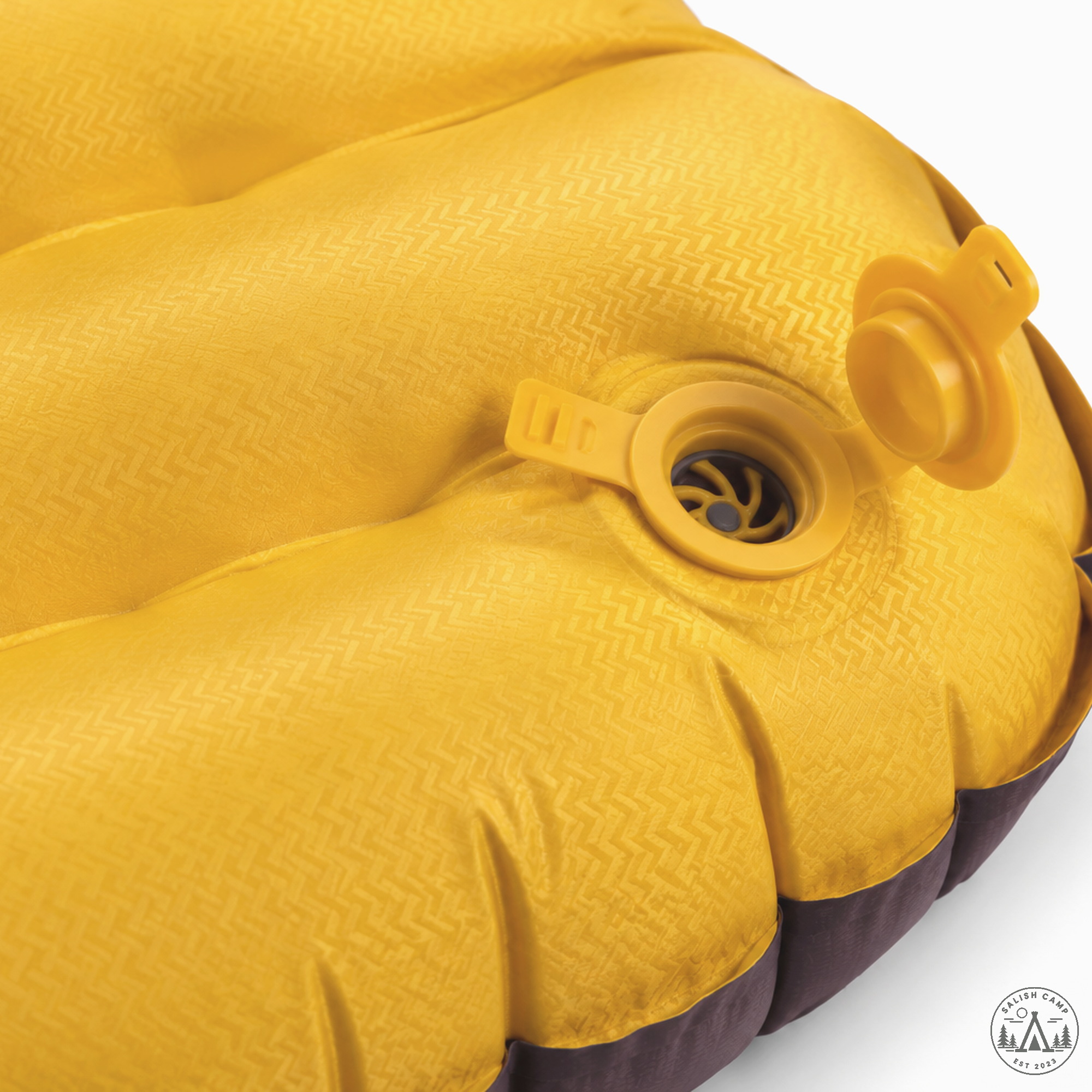
Inflation is handled with the included Vortex pump sack, which mates with the Laylow valve. That matters because I would rather move ambient air into a sleeping pad with the supplied inflation tool than spend camp setup repeatedly blowing into it myself. NEMO does not publish a specific inflation time on this product page, so I would not attach an invented number of minutes or breaths to the process.
The more interesting part for me comes after the pad is full.
The Laylow valve is zero-profile, flush to the pad, and microadjustable. Once I have the Tensor inflated, I can fine-tune pressure rather than treating inflation as a binary full-or-empty decision. As a side sleeper, I generally want enough pressure to keep my hip comfortably suspended above the ground, but not so much that the surface feels unnecessarily rigid. A microadjustable valve is useful because a small pressure change can make a surprisingly large difference in how an air pad feels.
The insulation story is similarly specific. The spec field calls it Aluminized Film, while NEMO describes a suspended ultra-thin metallized Thermal Mirror film inside the Spaceframe baffles. Those are two descriptions of the insulation used here, not two separate insulation layers.
The resulting R-value is 2.8.
That number sets the boundary for how I would use this pad more clearly than the word "insulated." NEMO positions Tensor Trail for spring through fall, particularly when weight is a priority. That fits how I think about it around Seattle and in the Cascades: a three-season backpacking pad for trips where I want insulation beneath me without moving into winter-pad territory.
A 3.5-inch pad can look visually substantial enough to suggest more thermal capability than it actually has. Thickness and R-value answer different questions. The 3.5 inches provide physical cushioning and ground clearance; R-2.8 is the number I use to understand the insulation proposition.
When my plans genuinely move into winter conditions, I want a different tool. Our Therm-a-Rest NeoAir XTherm NXT Regular review covers a pad rated at R-7.3, which illustrates how different that insulation requirement can become. I would not buy Tensor Trail expecting it to cover both jobs.
Fabric construction is another area where the details matter. The sleeping surface is bluesign-approved 20D 100% recycled nylon. Underneath, NEMO uses bluesign-approved 40D nylon. The heavier-denier bottom makes sense on the side facing the tent floor and everything that floor is covering, but only the top is published as 100% recycled nylon.
I still treat a 40D-bottom inflatable like an inflatable. On granite, roots, or rough forest camps, I clear obvious sharp debris before pitching and pay attention to what is underneath the tent. The 40D specification does not make me careless; it simply tells me NEMO has used a more substantial nylon on the ground-facing side than the 20D material on top.
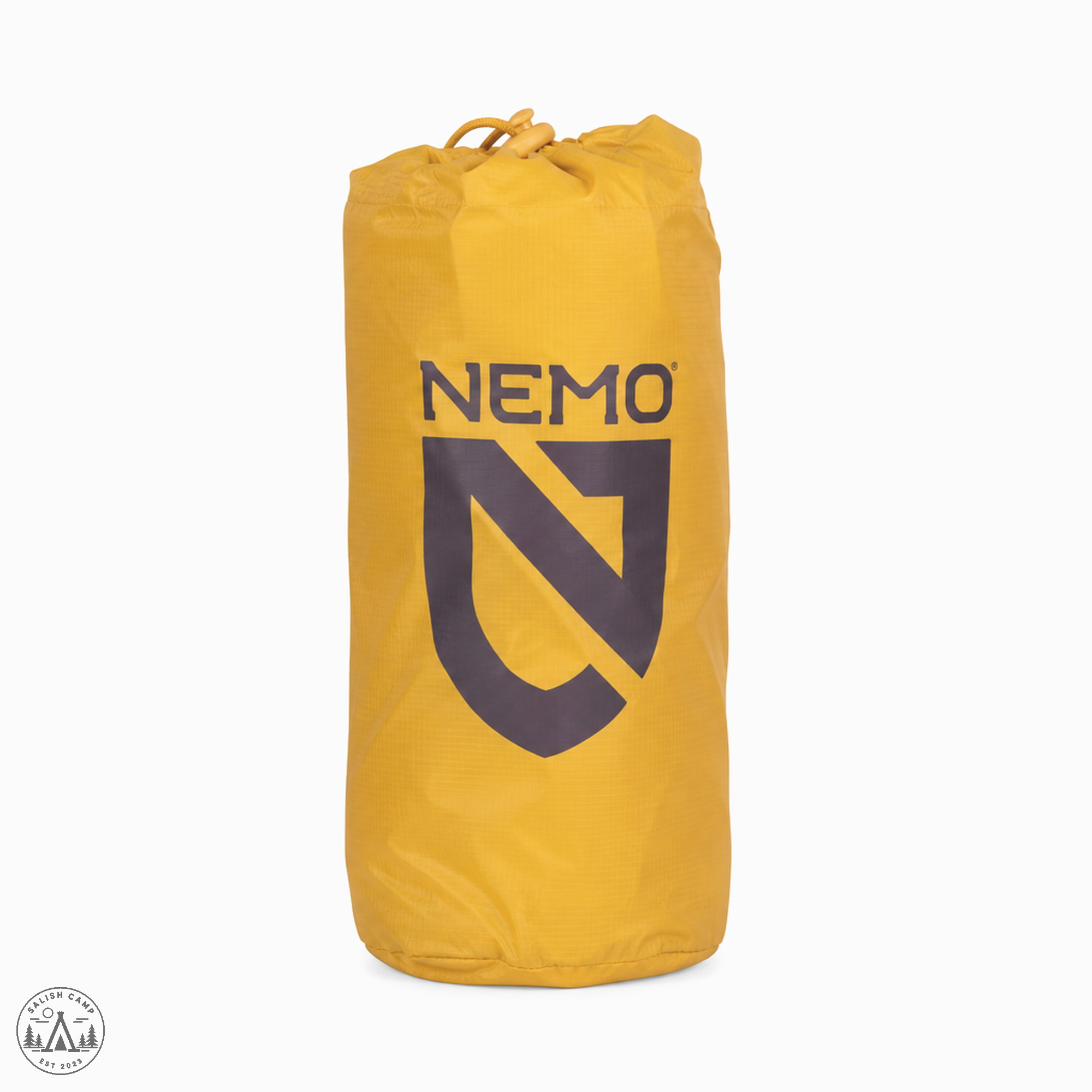
The complete packed kit also deserves attention because ultralight product discussions can make weight confusing very quickly. NEMO lists minimum weight at 13.0 oz / 369 g, defined as the lightest configuration stripped to essential components. The packed weight is 1 lb 0 oz / 451 g.
Those are not interchangeable figures.
If I'm comparing minimum pad weights for an aggressively optimized kit, 13.0 ounces is relevant. If I want to understand what the published complete packed configuration weighs, 1 lb 0 oz / 451 g is the relevant number. The Tensor Trail packs to 10.0 x 4.0 inches in diameter / 25.5 x 9.5 cm in diameter, so it remains a reasonably compact cylinder even when considered as a complete packed system rather than just a stripped pad.
That distinction also makes the separate Tensor Elite Regular Mummy comparison more useful. The verified Elite specification is 8.5 oz / 240 g minimum and 0 lb 11.6 oz / 330 g packed, with a 5.5 x 3.0-inch diameter / 14 x 8 cm packed size, R-2.4, 72 x 20-inch mummy dimensions, and 3.0-inch thickness. Its top and bottom are both 10D Cordura nylon ripstop.
So the Elite is meaningfully lighter and smaller, but the numbers also show what Tensor Trail is buying with its additional mass: 3.5 inches rather than 3.0 inches of thickness, R-2.8 rather than R-2.4, and a 40D bottom rather than 10D fabric on both sides. Those are concrete differences I can make a decision around.
For the kind of backpacking I do, Tensor Trail lands in a useful middle ground. It is light enough that I do not resent carrying it up a Cascade trail, but it hasn't chased the absolute lowest possible number at the expense of every other specification. I get a 3.5-inch sleeping platform, structured Spaceframe support, an R-2.8 three-season insulation target, a 40D nylon underside, and an included pump sack.
At camp, those are the details I actually interact with.
Pros
- 3.5 inches thick at a 13.0 oz / 369 g minimum weight, a strong combination for side sleepers trying to maintain hip and shoulder clearance.
- Spaceframe construction and a microadjustable Laylow valve address both support stability and fine pressure adjustment.
- 20D 100% recycled nylon top paired with a 40D nylon bottom puts the more substantial fabric on the ground-facing side.
- Vortex pump sack is included, along with the stuff sack, Velcro strap, and setup instructions.
Cons
- R-2.8 is deliberately three-season territory, making Tensor Trail the wrong NEMO pad to stretch into a winter role.
- The 72 x 20-inch mummy shape is weight-conscious rather than roomy, particularly for sleepers who move around substantially.
- Packed weight is 1 lb 0 oz / 451 g, notably higher than the attention-grabbing 13.0 oz / 369 g minimum-weight figure.
Technical Specifications
| Product | NEMO Tensor Trail Ultralight Insulated Sleeping Pad |
|---|---|
| SKU / size | Regular Mummy, 811666035073 |
| Color | Mango / Huckleberry |
| Price | $189.95 (nemoequipment.com, 2026-10-04) |
| Minimum weight | 13.0 oz / 369 g |
| Packed weight | 1 lb 0 oz / 451 g |
| Pad dimensions | 72 x 20 in / 183 x 51 cm |
| Packed size | 10.0 x 4.0 in dia / 25.5 x 9.5 cm dia |
| R-value | 2.8 |
| Thickness | 3.5 in |
| Shape | Mummy |
| Top fabric | bluesign-approved 20D 100% recycled nylon |
| Bottom fabric | bluesign-approved 40D nylon |
| Insulation | Aluminized film (PDP spec); page also calls it suspended Thermal Mirror film |
| Baffles | Spaceframe |
| Valve | Laylow, zero-profile, microadjustable |
| Included | Stuff sack, Vortex pump sack, Velcro strap, setup instructions |
Final Thoughts
The NEMO Tensor Trail Regular Mummy makes sense once I stop asking it to be every sleeping pad at once.
At $189.95, I am getting a very specific combination: 13.0 oz / 369 g minimum weight, 1 lb 0 oz / 451 g packed weight, 3.5 inches of thickness, a 72 x 20-inch mummy footprint, Spaceframe support, a Laylow valve, and R-2.8 insulation. For my spring-through-fall backpacking around the Cascades and Olympics, that specification puts the emphasis where I want it—low carried weight without making a side sleeper hover dangerously close to the ground.
The limitations are equally clear. Twenty inches is narrow if you sleep expansively. The mummy shape deliberately gives away surface area to save weight. And R-2.8 is not a number I would try to rationalize into winter use just because the pad itself is thick.
That clarity is part of what I like about the Tensor Trail. It doesn't need to be the lightest Tensor or the warmest pad in the gear closet. The Tensor Elite Regular Mummy cuts substantially more weight, while a winter-oriented pad such as the NeoAir XTherm NXT Regular moves into an entirely different insulation class at R-7.3. Tensor Trail sits between those priorities as the pad I would choose when ordinary three-season backpacking, uneven PNW ground, side-sleeping comfort, and reasonable pack weight all matter at once.