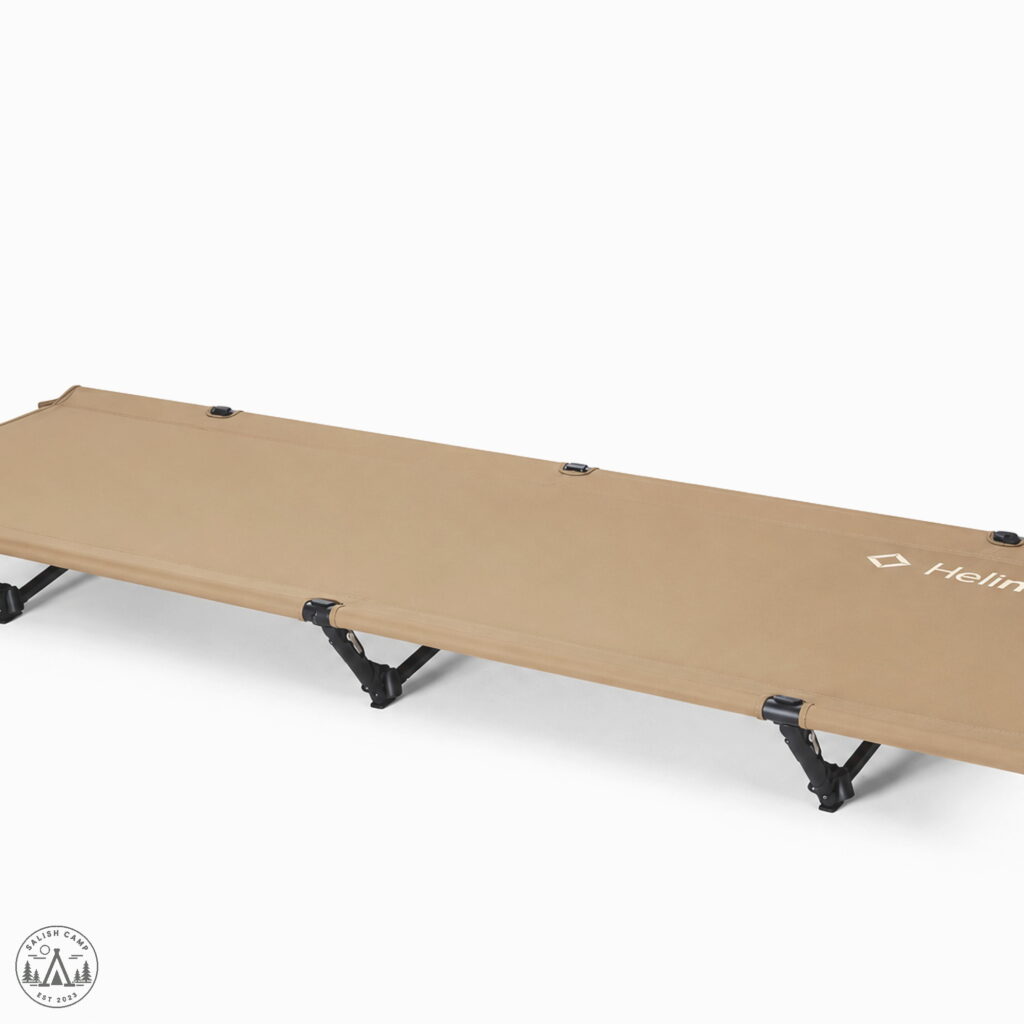
Buy if you want to replace the usual ground-level camp sleep setup with a compact cot that feels firm, stays taut when you roll over, and still packs small enough to live comfortably in a vehicle or gear closet. The Cot One Convertible hits an unusually useful middle ground: the Regular is 75 inches long, supports up to 320 pounds, sits 6.5 inches off the ground, and packs into a 21 x 6 x 5.5 inch cylinder. At $349.95, this is a premium purchase, but the lever-lock tensioning system is the reason I would choose it over a cheaper folding camp cot.
Skip if your priority is minimum weight, effortless assembly, or the lowest-cost way to sleep at camp. The tension that makes this cot feel so solid also means the legs require meaningful force during setup, especially when the cot is new. Taller sleepers should also look closely at the 83-inch Long rather than assuming the 75-inch Regular will be enough.
What Stands Out
- Lever-lock tensioning makes the sleep surface genuinely taut. The defining feature isn't simply getting off the ground; it's how firmly the fabric is tensioned so I don't end up sleeping in the sagging center of a conventional camp cot.
- The Regular packs surprisingly small for a full-size cot. A 21 x 6 x 5.5 inch packed cylinder is easy to fit beside tents, camp furniture, and cooking gear without becoming another bulky car-camping item.
- A 320-pound capacity gives the frame useful headroom. Combined with the DAC TH72M aluminum frame and proprietary nylon resin hubs, it feels designed as actual sleep equipment rather than occasional emergency furniture.
- The 6.5-inch height is a practical compromise. It gets my body clear of uneven, cold, or dirty ground while keeping the cot low enough to work inside many camping shelters and smaller rooms.
- The 300D ripstop surface feels purpose-built for tension. The bluesign-certified recycled polyester fabric is pulled tight across the frame rather than hanging loosely underneath me.
- Regular and Long are meaningfully different choices. Regular is 75 inches long; Long stretches to 83 inches and carries corresponding packed-size and weight increases. Taller sleepers should make that decision before buying rather than treating Long as an incidental variant.
- The six-piece breakdown is much easier to transport than the assembled cot suggests. Shock-corded frame components help turn a substantial sleeping platform into something manageable once it is back in its case.
In The Field
The reason I would buy the Cot One Convertible isn't because I need a cot every night outdoors. It's because there are plenty of Pacific Northwest trips where shaving ounces has absolutely no value once the truck is parked ten feet from camp.
For those trips, sleeping directly on the tent floor can start feeling like an unnecessary compromise.
That distinction matters. This isn't the sleep system I'd carry up a Cascade trail simply because it technically packs down. Regular weighs 4 lb 9.5 oz assembled and 4 lb 14.5 oz packed. Helinox's feature and FAQ copy lead with that latter packed figure, while the specification data distinguishes assembled and packed weights. Either way, this is equipment I want when transport isn't on my back: established campgrounds, wall tents, hunting or fishing basecamps, cabins, and similar setups.
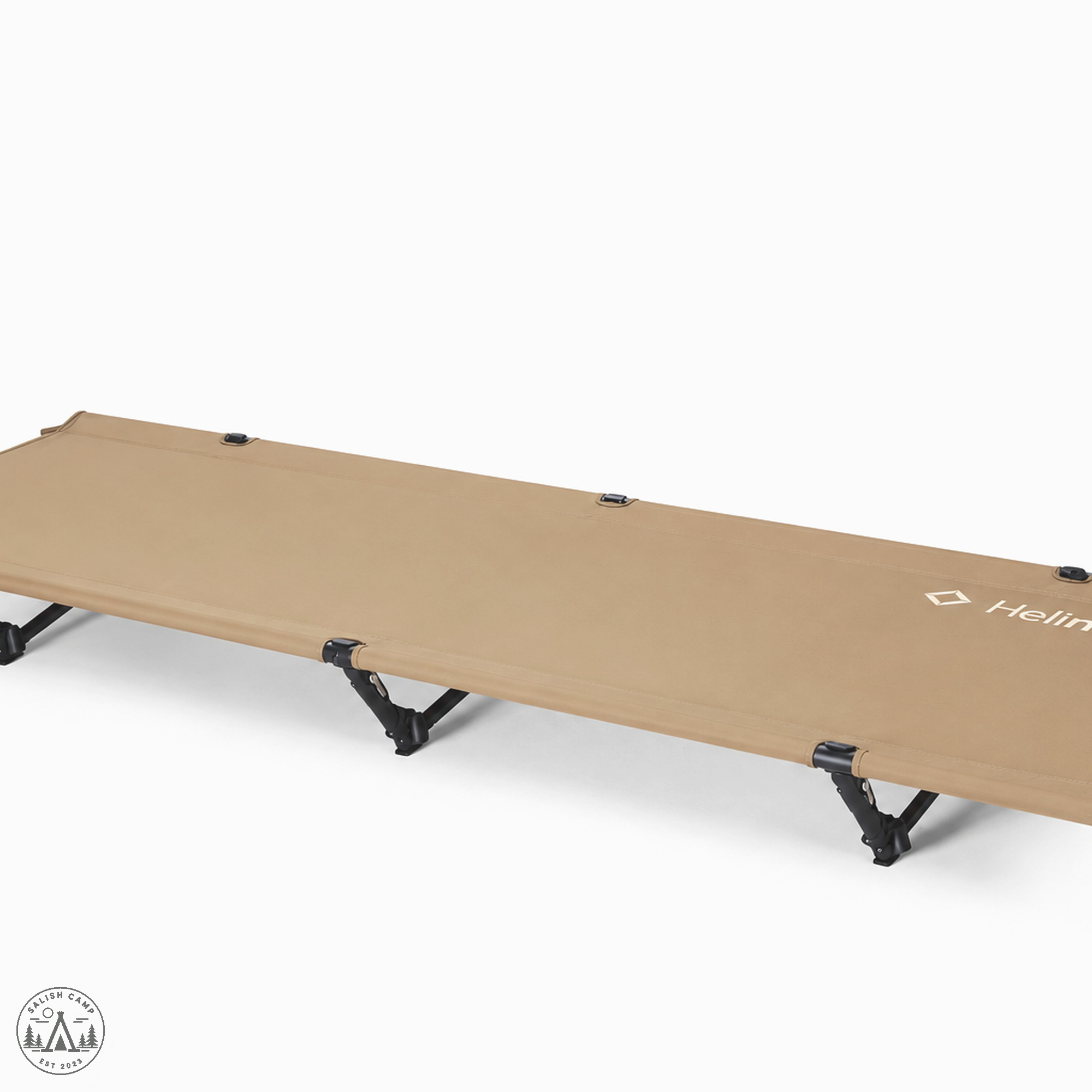
The first thing that separates the Cot One Convertible from basic folding cots is tension. Once assembled correctly, the fabric isn't hanging in a loose trough. The lever-lock system puts substantial tension across the sleeping surface, and that's what makes the cot interesting.
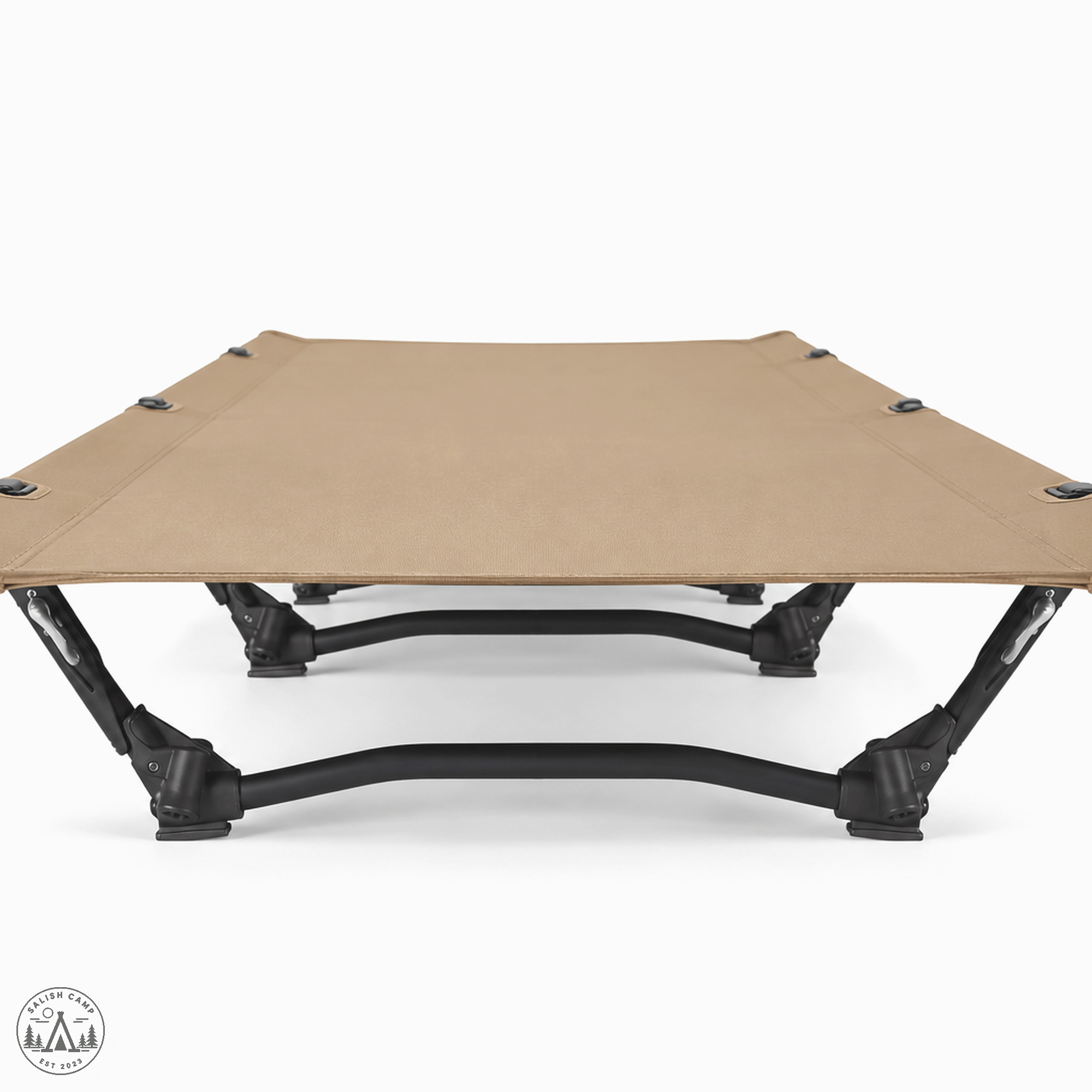
When I lie down, I want support underneath my hips rather than feeling them sink toward the floor while my shoulders and feet remain higher. The Cot One Convertible's taut surface does a good job of avoiding that hammock effect. It feels more like a firm platform suspended above the ground.
That also matters when I turn over. Helinox specifically describes the cot as remaining stable and quiet without sagging or creaking as the sleeper moves. In practical terms, that's exactly the behavior I want from a cot: I don't want every nighttime position change to become an event.
There is a tradeoff. Those legs take force to install.
That's not a defect or a sign that you've assembled the frame incorrectly. Helinox calls it its most-asked cot question because the lever system has to load the fabric under high tension. The useful technique is to attach the middle leg first and then work outward. Helinox also says the process becomes easier as the fabric breaks in.
For a first-time owner, that's worth knowing before arriving at camp after dark. If a component feels much tighter than expected, don't immediately assume you received the wrong part. The mechanical leverage is doing the work that ultimately creates the taut bed.
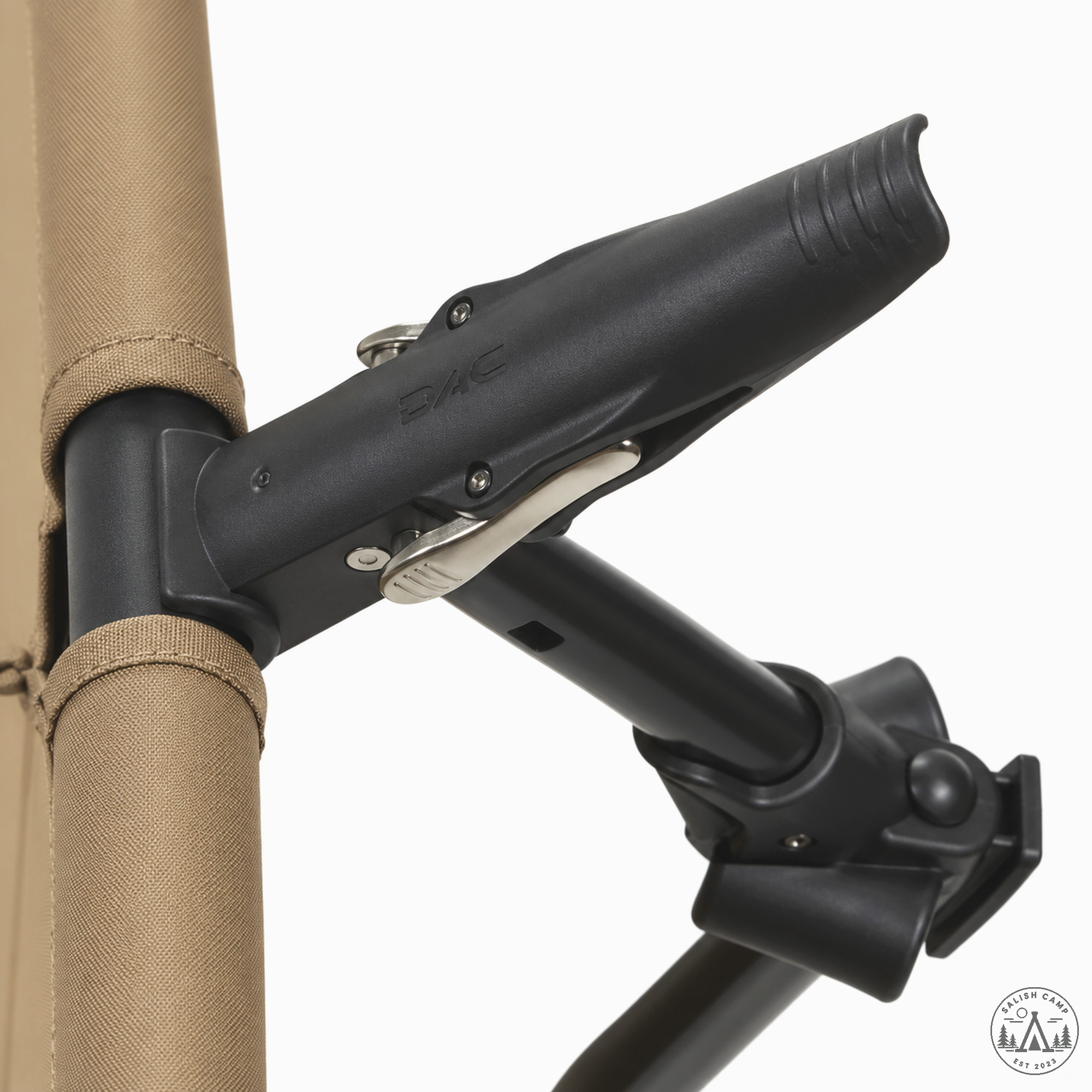
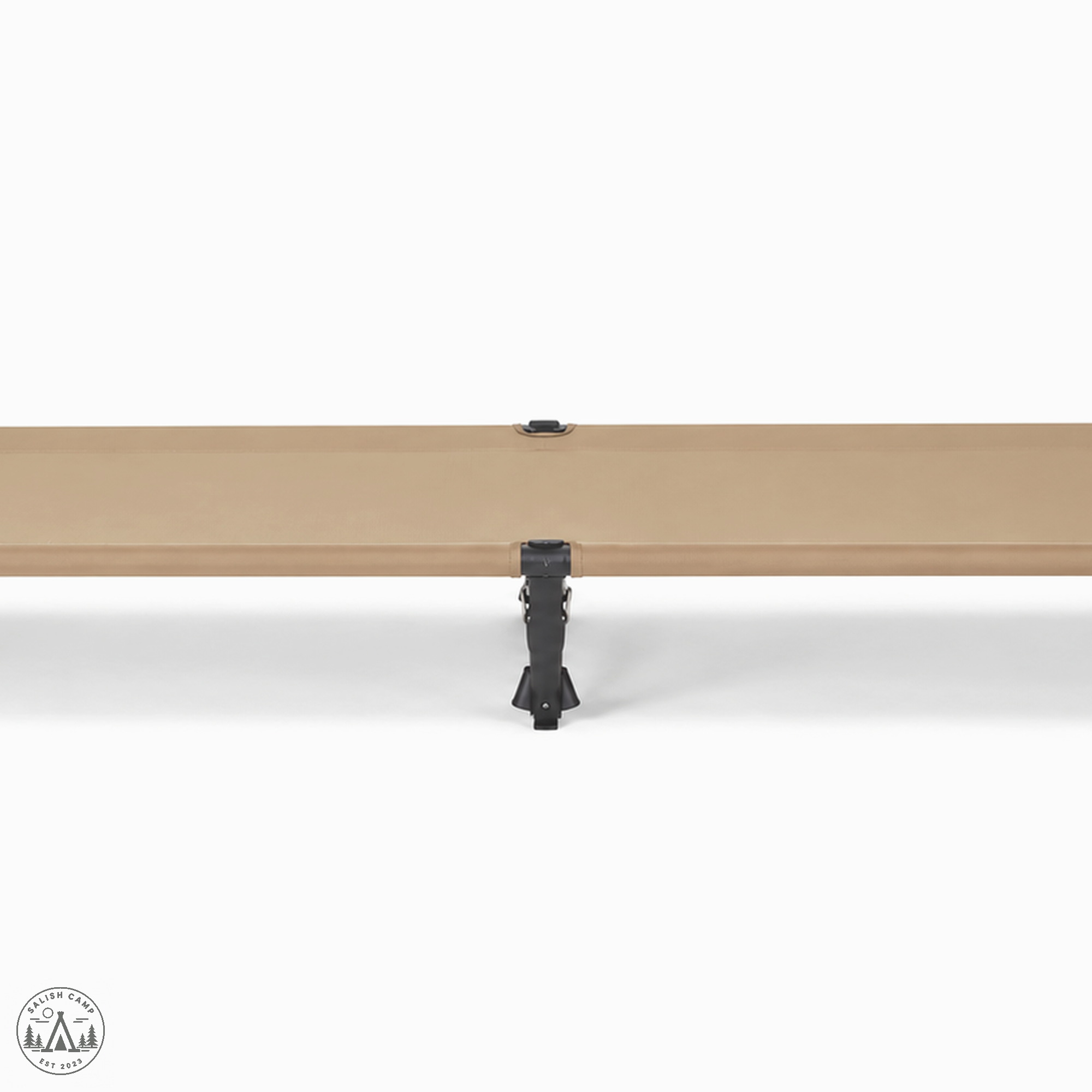
Once it's together, 6.5 inches of ground clearance doesn't sound dramatic, but it changes how I use a tent.
At wet PNW camps, I like having my sleeping surface separated from the tent floor. Dirt tracked through the door, damp gear, uneven ground underneath the floor, and the general clutter of several rainy days at one campsite become less intrusive when I'm lying above them rather than directly among them.
A wall tent makes the argument even stronger. Leave camp established for several nights and the Cot One Convertible starts behaving more like compact furniture than specialized outdoor equipment. I have a defined bed, usable space underneath it, and a sleep surface that stays in the same position night after night.
The same logic applies to a cabin. If bed space runs out during a group weekend, I'd much rather unfold a compact cot than improvise directly on a wood floor. And at home, the packed cylinder is small enough that keeping it around for an overnight guest doesn't require storing a conventional folding guest bed.
There is, however, an important warmth issue.
Getting off cold ground does not automatically mean sleeping warmer. Air circulates underneath a cot, and Helinox acknowledges that the underside can feel cool. In Western Washington shoulder-season conditions, that's something I'd plan around rather than discover at two in the morning.
You don't need anything on top of the cot for it to function, but insulation can still make sense when temperatures drop. Think of the cot primarily as the structural sleep platform: it provides elevation, tension, support, and separation from the ground. Your insulation strategy remains a separate decision based on conditions.
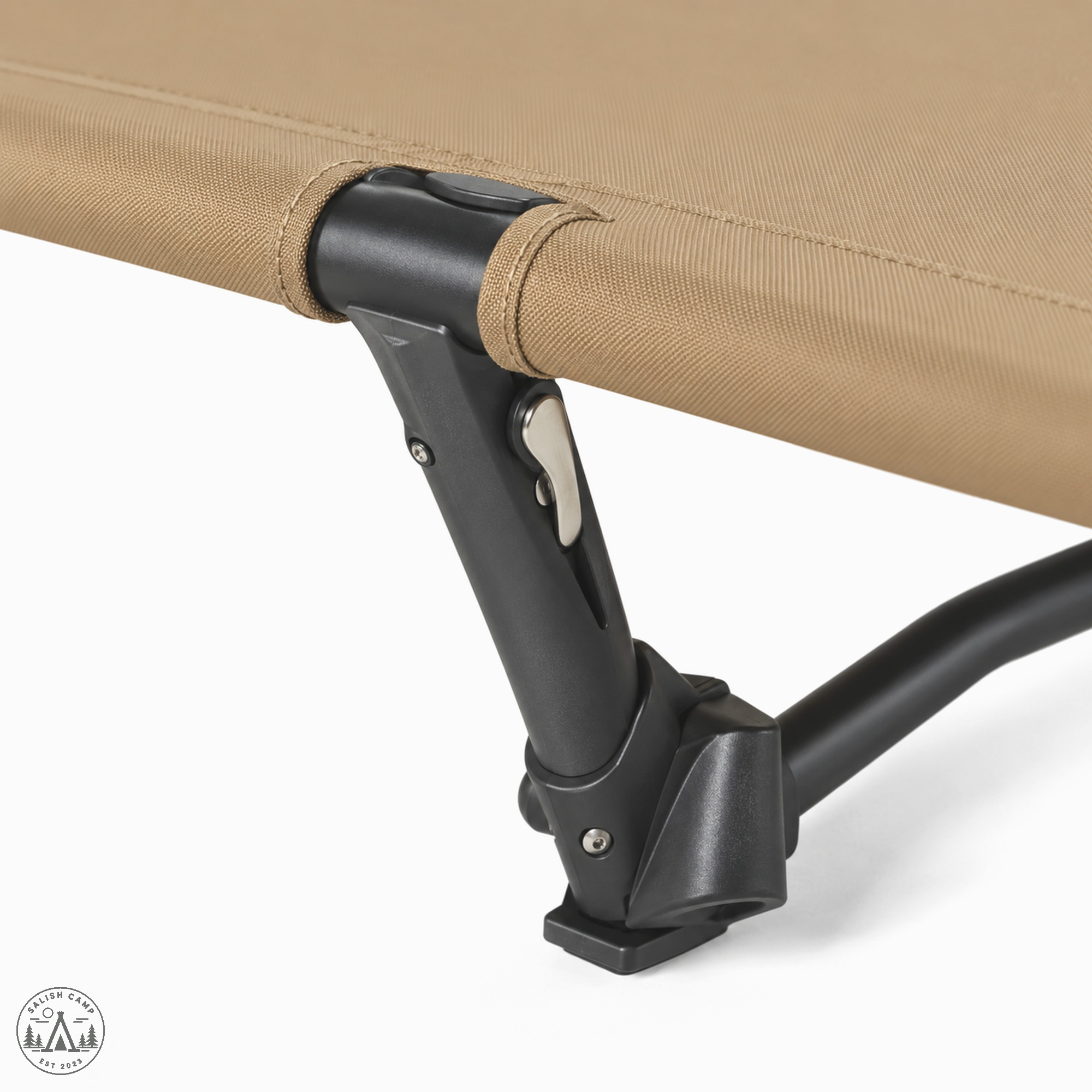
The next buying question is Regular versus Long.
Regular measures 75 inches long and 26 inches wide. For many sleepers, that's enough, and it has the advantage of the smaller 21 x 6 x 5.5 inch packed package. It is also the Coyote Tan version shown throughout these figures.
The Long stretches length to 83 inches. That's an eight-inch difference, which is substantial enough that taller sleepers shouldn't dismiss it. Long weighs 5 lb 14 oz assembled and 6 lb 3 oz packed, and its packed dimensions increase to 23.5 x 6.5 x 6.5 inches. Capacity remains 320 pounds and it uses the same lever-lock concept.
My decision would be straightforward: if the 75-inch Regular gives me comfortable head-to-foot room, I'd take the smaller package. If I'm tall enough that my head and heels are crowding the ends, I'd buy Long and accept its larger packed dimensions. A cot this expensive makes little sense if I choose the more compact size and then spend every night wishing for another few inches.
Width deserves consideration too. Regular is 26 inches wide. That's enough to create a real sleeping platform without turning the cot into enormous camp furniture, but it isn't a sprawling bed. Broad-shouldered sleepers or people who move substantially during sleep should pay attention to that dimension rather than evaluating length alone.
Packing is another area where this design earns its place in a car-camping kit. The cot breaks into six pieces, and the shock-corded poles help organize the frame rather than leaving me with a pile of unrelated tubes. Grab loops at one end help secure the edge poles during assembly.
Everything then goes into the 3/4-zip cylinder case. The 21-inch length is particularly useful because the packed cot doesn't dictate how I load the vehicle. It can sit alongside duffels and other compact camp gear rather than needing a large flat area like many traditional folding cots.
The case also has a daisy chain and D-ring. Those are small details, but they make more sense to me on equipment that may be moved repeatedly between a garage, vehicle, cabin, and campsite.
At $349.95 for the Coyote Tan / Regular shown here, the Cot One Convertible needs to solve a real problem. I wouldn't buy it merely because sleeping above the ground seems novel.
I'd buy it because I repeatedly car camp for several nights, use a wall tent, sleep in cabins with limited beds, or want one piece of equipment capable of serving both camp and occasional guests at home. In those situations, its combination of compact storage and a legitimately taut sleeping surface is much easier to justify.
For one-night camps where I'm already comfortable with a simpler ground setup, the cost and assembly effort are harder to defend. But the longer I stay in one place, the more appealing the cot becomes. After three damp nights at the same PNW campsite, having a dedicated bed that's elevated above the floor starts feeling less like luxury and more like sensible camp organization.
The five-year warranty against manufacturing defects also matters at this price. This isn't an inexpensive cot I'd regard as disposable if a frame component or hub failed.
The strongest case for the Cot One Convertible is therefore not that it's the lightest way to sleep outdoors. It isn't. The appeal is how effectively Helinox compresses a stable 75 x 26 inch sleeping platform into a package that is still reasonable to transport and store.
For backpacking, I'd leave it behind. For a wet Olympic Peninsula basecamp, a multi-night campground stay in the Cascades, a wall tent, cabin overflow, or guests at home, I'd happily take the extra comfort.
Pros
- Taut lever-lock surface resists the sag common to conventional camp cots
- Packs to a compact 21 x 6 x 5.5 inch cylinder in Regular
- 320 lb capacity with DAC TH72M aluminum frame and proprietary nylon resin hubs
- 6.5-inch ground clearance works well for tents, basecamps, cabins, and home use
Cons
- $349.95 is a substantial investment for a camp cot
- High-tension assembly requires real force, particularly when new
- Airflow underneath can feel cold in cool conditions without added insulation
Technical Specifications
| Product | Helinox Cot One Convertible |
|---|---|
| Option in photos | Coyote Tan / Regular, 10645R2 |
| Other options | Black / Regular $349.95; Coyote Tan / Long and Black / Long $399.95; Blackout / Regular $399.95; Cobalt / Long $349.95 out of stock |
| Price | $349.95 Coyote Tan / Regular (helinox.com, 2026-10-06, in stock) |
| Assembled weight | 4 lb 9.5 oz (2089 g), Regular |
| Packed weight | 4 lb 14.5 oz (2229 g), Regular |
| Assembled size | Length 75 in (191 cm), width 26 in (66.5 cm), height 6.5 in (16.5 cm), Regular |
| Packed size | 21 x 6 x 5.5 in (53 x 15 x 14 cm), 3/4-zip cylinder case with daisy chain and D-ring, Regular |
| Long (FAQ + live metafield) | 83 in (211 cm) long; assembled 5 lb 14 oz (2668 g); packed 6 lb 3 oz (2805 g); packed 23.5 x 6.5 x 6.5 in (60 x 17 x 17 cm); same lever-lock and 320 lb capacity |
| Capacity | 320 lb (145 kg) |
| Frame | DAC TH72M aluminum alloy, proprietary nylon resin hubs, shock-corded poles, lever-lock tensioning |
| Surface | bluesign-certified recycled 300D polyester ripstop |
| Height off ground | 6.5 in (16.5 cm). Optional leg extensions, sold separately, raise it to 15 in (38 cm) |
| Included | Cot in six pieces and carry case. Leg extensions and sleeping pad are not included |
| Warranty | 5 years, manufacturing defects |
Final Thoughts
The Helinox Cot One Convertible makes the most sense when I stop judging it as backpacking equipment and start judging it as a portable bed. Regular gives me a 75 x 26 inch taut sleeping surface that supports 320 pounds, yet the whole system packs into a cylinder only 21 inches long.
That combination is what separates it from bulky traditional camp cots. I can bring it to a multi-night PNW car camp without reorganizing the entire vehicle around it, use it inside a wall tent or cabin, and put it back in a closet when I get home.
The lever-lock system is the deciding feature. It demands more effort during assembly precisely because it tensions the surface so firmly. If easy setup and low price matter more than that support, there are simpler ways to sleep at camp. If I'm buying a cot specifically because I want a stable, elevated bed rather than another compromise, the Cot One Convertible makes a convincing case.
I'd choose Regular when 75 inches provides enough length and prioritize its smaller packed dimensions. For a taller sleeper, I'd move directly to the 83-inch Long rather than spend this much and compromise on fit.