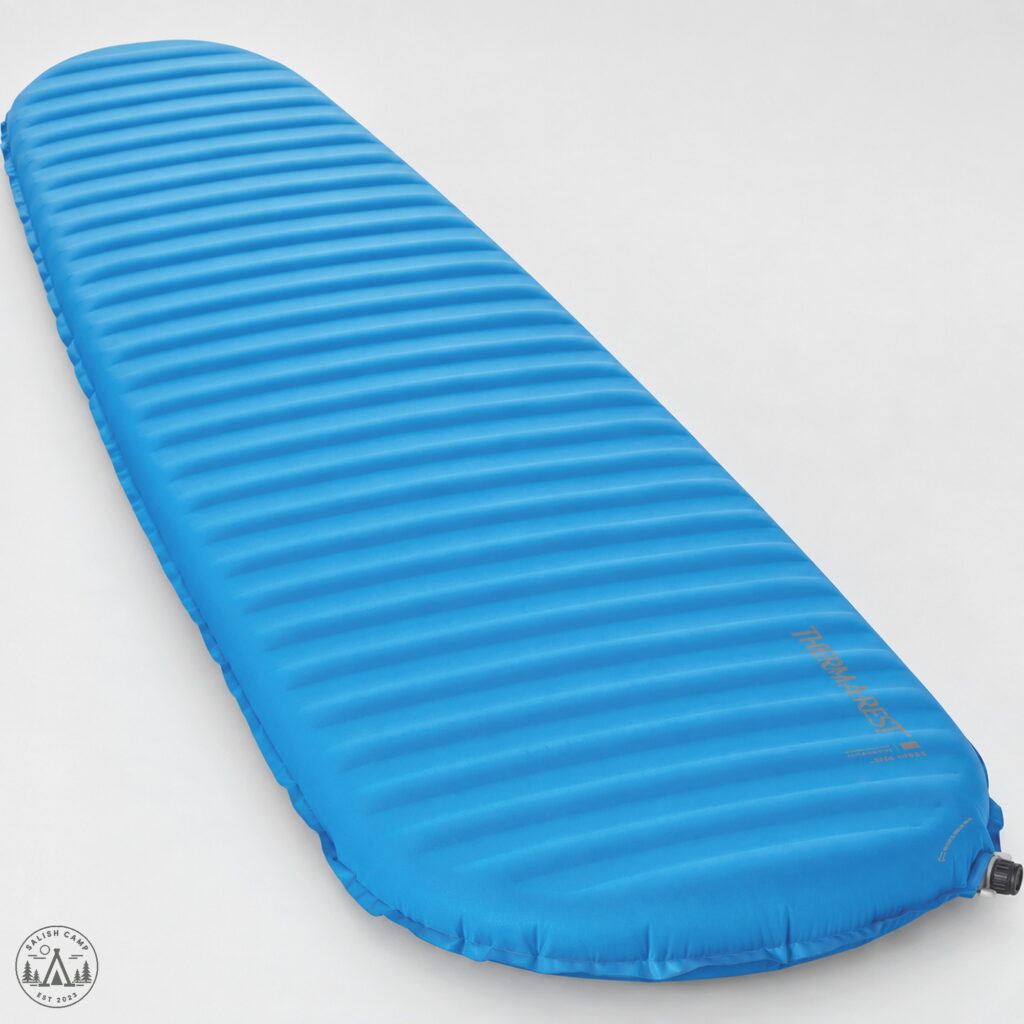
Buy if you sleep poorly on thin air pads, regularly camp on cold or damp ground, and want the supportive feel of a thick foam core beneath your sleeping bag. The Therm-a-Rest Trail Pro Regular in Tide delivers 3 inches of cushioning, an R-value of 4.4, and a self-inflating StrataCore construction that makes sense for Olympic Peninsula weekends, Cascades shoulder-season trips, and short walks into camp. At $159.95, it is particularly appealing when sleeping comfort matters more than shaving every ounce.
Skip if you are building an ultralight backpacking kit, need a generous sleeping width, or regularly carry everything over long mountain days. At 1 lb 14 oz (0.85 kg), with an 11 × 8.8 in packed size, the Regular demands meaningful pack space. Its 20-inch width may also feel restrictive for active side sleepers. A lighter, smaller-packing air pad is the better choice when mileage and pack volume take priority.
What Stands Out
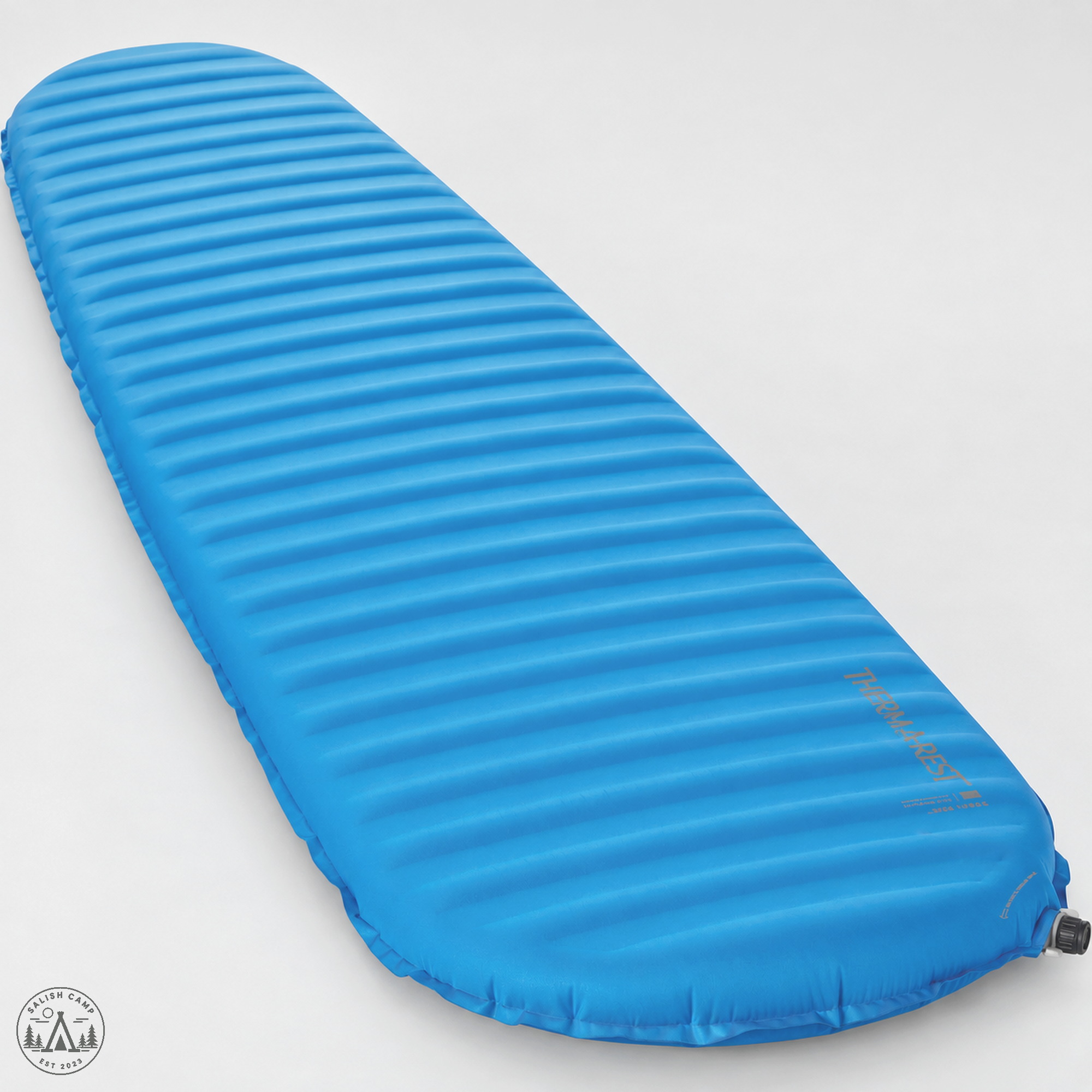
- Three inches of supportive foam. The 3 in (7.6 cm) thick self-inflating construction provides a substantial sleeping surface for hips, shoulders, and knees, especially when compared with thinner traditional foam pads.
- StrataCore construction. A continuous layer of thermal foam sits between alternating ridges of air and foam. Therm-a-Rest describes this as its best warmth-to-weight approach for self-inflating foam construction.
- R-value of 4.4. Insulation suited to many three-season and shoulder-season camping conditions, including cold ground at higher-elevation Cascades campsites.
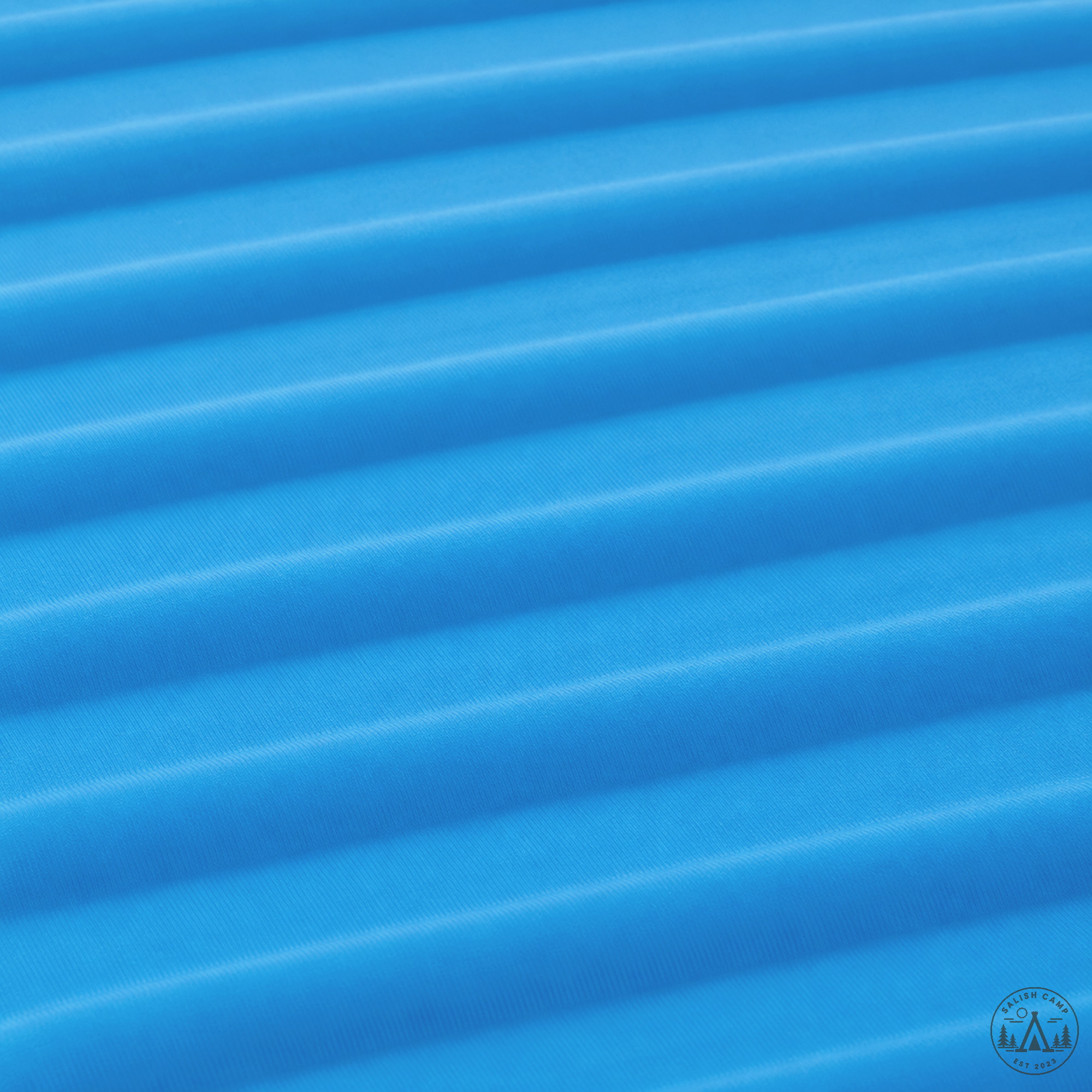
- Stretch-knit sleeping surface. The 50D polyester knit top conforms around pressure points and provides a softer, less slippery feel than the taut surfaces of many lightweight inflatable pads.
- WingLock valve. One-way inflation helps retain incoming air while the foam expands. Opening the wings allows air to escape during deflation. Therm-a-Rest claims three times the airflow rate of its classic valve.
- Durable foam-backed design. The 75D polyester bottom and internal foam provide a more substantial construction than many ultralight air pads, while the foam retains some cushioning if air pressure is lost.
- Improved packing details. The included stuff sack has a flared opening to make loading easier and compression straps to help control the rolled pad’s considerable bulk.
In The Field
The first thing I want from a sleeping pad in the Pacific Northwest is a decent night’s sleep. Weight matters on Cascades climbs, but there is a point where saving ounces starts costing me rest. I’ve had enough nights shifting between hip and shoulder on thin air pads, trying to find a position that doesn’t ache by morning.
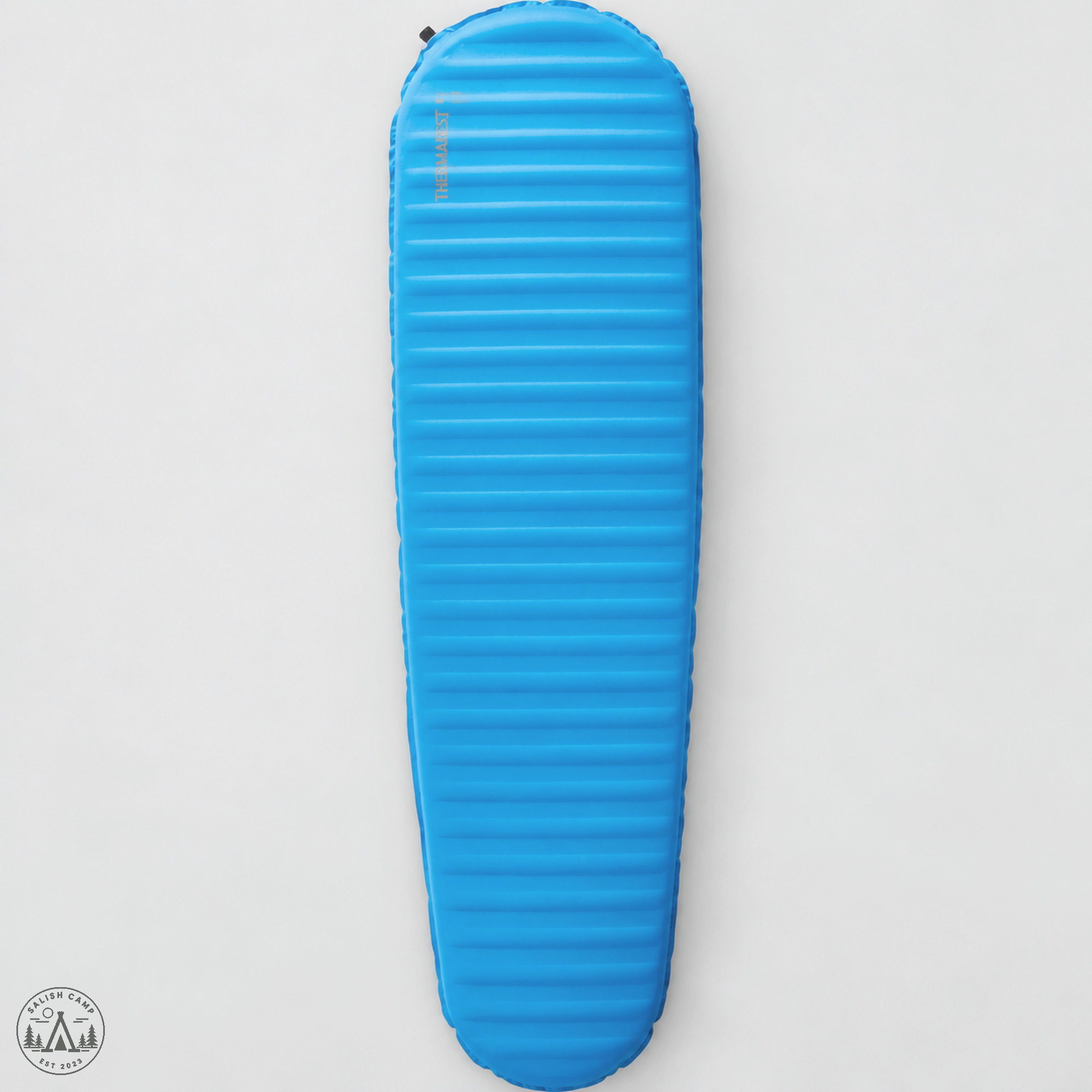
The Trail Pro uses a self-inflating foam core instead of relying almost entirely on an air chamber. That distinction matters on the Olympic coast, where a campsite can mix packed sand, gravel, roots, and persistent moisture. Three inches of thickness gives pressure points room to settle without depending only on high internal air pressure, and the stretch-knit top contours around the body instead of feeling like a taut, slightly slippery inflated surface. For side sleeping, my hips tend to find the ground first on thinner pads; here the foam supports the body while air pressure fine-tunes the feel. It isn’t a mattress, and the narrow Regular still imposes limits, but the combination makes sense when cushioning comes first.
Setup is straightforward. Unroll the pad, open the WingLock valve for inflation, and let the open-cell foam expand. Self-inflating pads generally take 5–15 minutes to fill themselves, depending on storage and how compressed the foam has been. The pad may not reach your preferred firmness on its own — that is normal. I start by letting the foam expand, then add a few breaths for the support I want. There is no need to blow until the surface is drum-tight; overinflating a comfort-oriented foam pad can work against why you carried it. Lie down in your normal sleeping position and make small adjustments: release a little air if it feels too firm, or add a little if a hip or shoulder needs more support.
The R-value of 4.4 is one of the strongest reasons to consider this pad here. An R-value measures resistance to heat transfer — a higher number means better insulation between your body and the ground — and it is not a temperature rating. Around Mount Rainier, Cascades lakes, and Olympic rainforest valleys, the ground can stay cold even when the air feels mild. For many spring and autumn Cascades trips, I consider R 4.4 a sensible level without needing a specialized winter system. Snow-covered ground, prolonged freezing, and especially cold sleepers may still need more insulation underneath. In freezing conditions, Therm-a-Rest advises against inflating by breath because moisture can freeze inside the pad; a compatible pump sack is an alternative, but it is not included — only a stuff sack with compression straps ships with the pad.
Quiet sleep is another reason I reach for foam. Some lightweight air pads crinkle or squeak as internal structures shift; inside a small tent that noise gets old. The Trail Pro’s foam core and stretch-knit fabric should produce less of that hollow, taut-surface character. I would not promise silence — fabric against a tent floor or sleeping bag can still make noise — but the construction suits someone who dislikes crinkly pads. The foam also leaves a more settled surface: you rest on foam plus controlled air pressure rather than feeling suspended over an empty chamber.
A self-inflating pad can still be punctured by thorns, sharp gravel, or careless camp handling. The difference is what happens afterward. Lose air in a conventional air pad and you may have very little cushioning left; with the Trail Pro the foam core remains in place. It will not keep its full inflated thickness, but it should offer more residual cushioning than an empty air-only pad — reassuring on rocky coastal campsites and forest floors. The 75D polyester bottom is relatively substantial; I still clear sharp debris before laying it down. Cascade Designs’ description says the pad is "made in market," while the Tech Specs row reads Made in USA of US and imported materials — I use the spec table. The product page can also show an Out of Stock / waitlist banner even when the Regular’s product data lists it in stock; on capture the Regular was available.
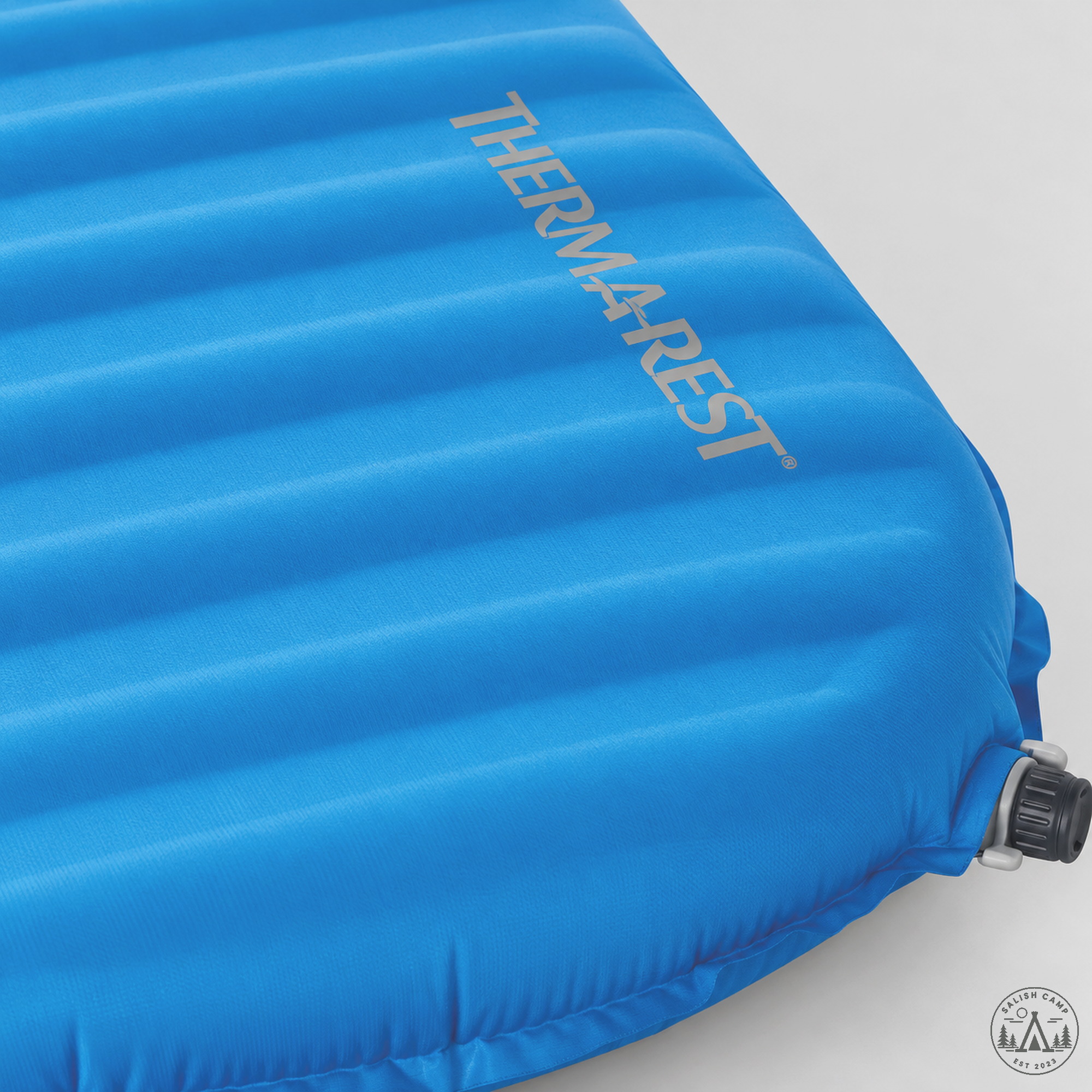
The Regular is 20 × 72 inches — a familiar backpacking footprint, but not generous. Back sleepers with arms close in may be fine; side sleepers who roll a lot can find 20 inches restrictive. Width matters almost as much as thickness when an elbow or knee keeps sliding off the edge. The Regular Wide stays at 72 inches and R 4.4 but goes to 25 inches wide, at $179.95, 2 lb 6 oz (1.08 kg), and a 13 × 9.3 in pack. For short walks into camp or vehicle-supported weekends, the wider version has a real argument. When I am already accepting the Trail Pro’s bulk on a backpacking trip, the Regular is the more manageable choice. If your biggest problem is cushioning, start with the Regular; if arms and legs constantly leave a narrow pad, take the Wide seriously.
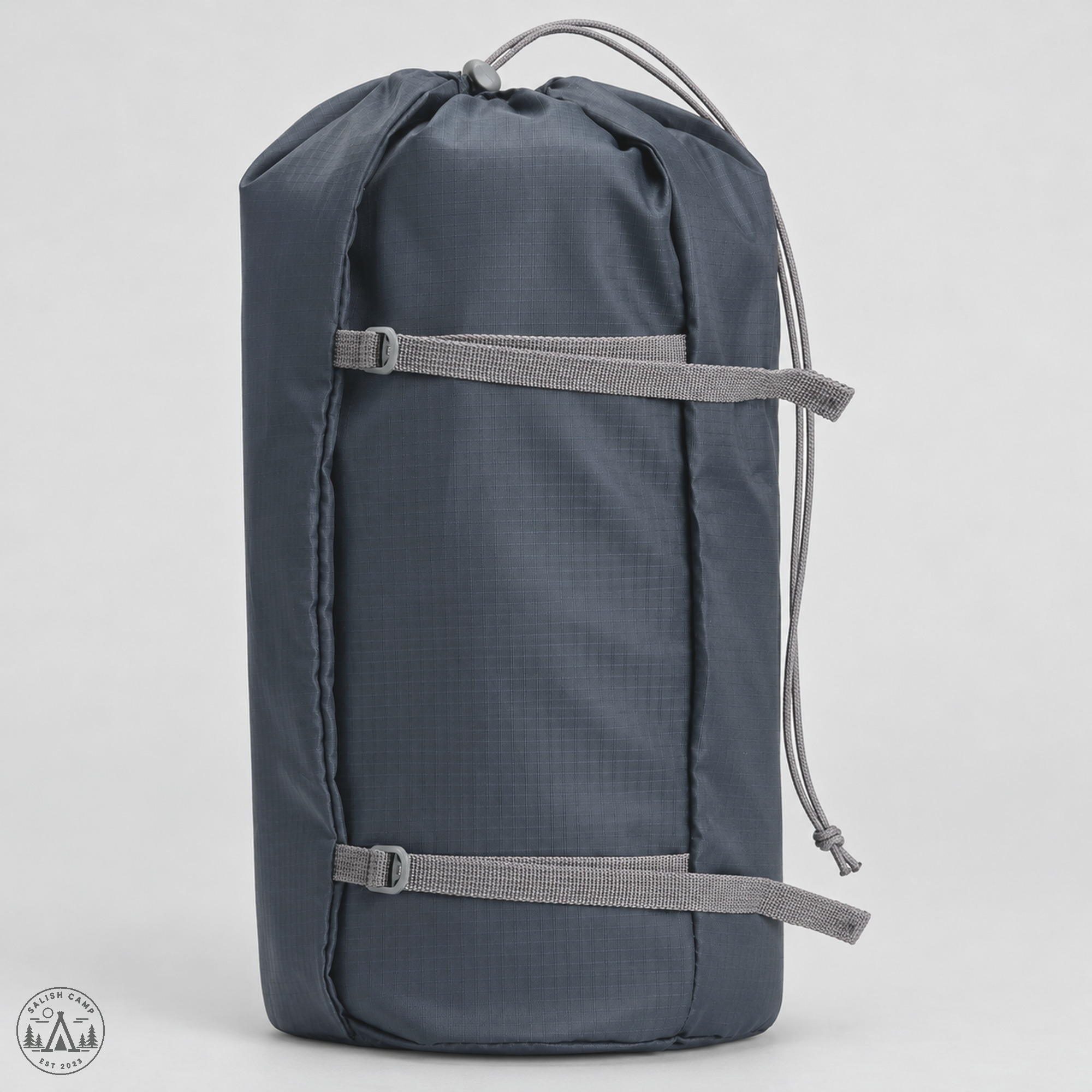
At 1 lb 14 oz (0.85 kg), the Regular is not outrageous for a thick self-inflating foam pad, but it is heavy next to many modern air pads, and the 11 × 8.8 in packed size takes real backpack space. Open the WingLock wings to deflate, roll steadily while expelling air, then close the valve so the foam cannot draw air back in; repeat if you need a tighter roll. The flared stuff sack and compression straps help, but foam still occupies space. For a short overnight near Mount Rainier or a modest walk into an Olympic campsite, I can accept that tradeoff. On a longer route with substantial elevation gain, I would rather recover the weight and volume. Between trips, store the pad unrolled with the valve open so the foam can stay expanded.
The Trail Pro is not automatic for every trip. Several steep climbing days, long approaches, or a route where every liter of pack volume matters push me toward a compact insulated air pad — smaller, often lighter, and fully dependent on holding air pressure. For a comfort-first overnight, a rainy forest campsite, or a weekend where rest matters more than mileage, the Trail Pro’s foam support, insulation, and reduced dependence on air pressure are what I want. It is not trying to win an ultralight contest; it is built for people willing to carry a little more so sleeping outdoors feels less like enduring the ground.
Pros
- Excellent cushioning: Three inches of self-inflating StrataCore foam and a stretch-knit top create a supportive, pressure-relieving sleeping surface.
- Useful shoulder-season insulation: R 4.4 is well suited to many cold-ground camping conditions in the Cascades and Olympics.
- More forgiving construction: The foam core retains some cushioning if air pressure is lost, unlike an air-only sleeping pad.
- Practical inflation and packing features: WingLock one-way inflation and the flared stuff sack with compression straps make setup and storage more manageable.
Cons
- Heavy for longer backpacking routes: At 1 lb 14 oz (0.85 kg), the Regular is a substantial commitment compared with lightweight inflatable alternatives.
- Bulky packed dimensions: The 11 × 8.8 in roll occupies considerable backpack space, even with the compression straps.
- Narrow Regular sleeping area: The 20-inch width can feel restrictive for side sleepers and people who move frequently during the night.
Technical Specifications
| Specification | Details |
|---|---|
| Product | Therm-a-Rest Trail Pro Sleeping Pad |
| Config in photos / primary | Regular, Tide, SKU 14160 |
| Price (primary) | $159.95 USD (cascadedesigns.com, 2026-10-09, in stock) |
| Type | Self-inflating foam pad, StrataCore construction |
| R-value | 4.4 |
| Weight | 1 lb 14 oz (0.85 kg) |
| Size | 20 × 72 in (51 × 183 cm) |
| Thickness | 3 in (7.6 cm) |
| Packed size | 11 × 8.8 in (28 × 22 cm) |
| Valve | WingLock, one-way inflation |
| Materials | 50D polyester knit top, 75D solution-dyed polyester bottom, polyurethane, urethane foam |
| Included | Stuff sack with compression straps |
| Other size | Regular Wide, SKU 14161: 25 × 72 in, 2 lb 6 oz (1.08 kg), packed 13 × 9.3 in, $179.95 |
| Made in | USA of US and imported materials |
| Warranty | Limited Lifetime |
Final Thoughts
The Therm-a-Rest Trail Pro is the kind of sleeping pad I appreciate more as my priorities shift toward actually getting a good night’s rest outdoors.
There are lighter pads, smaller-packing pads, and options better suited to ambitious multi-day routes. The Trail Pro does not try to compete with all of them.
Instead, it combines thick self-inflating foam, a comfortable stretch-knit surface, and useful insulation into a sleeping system that makes sense for damp Pacific Northwest conditions.
The StrataCore construction is particularly appealing because it offers something an air-only pad cannot: meaningful underlying foam support. For someone who worries about punctures or dislikes the feel of sleeping entirely on pressurized air, that distinction is valuable.
I also like the R-value of 4.4 for the way I approach shoulder-season camping. It provides a solid insulation foundation for many Cascades and Olympic Peninsula trips without turning the pad into a dedicated winter product.
The limitations are equally clear. A 20-inch sleeping width is not generous, and the weight and packed volume are difficult to ignore when building a compact backpacking kit.
For a long mountain traverse, I would take a lighter inflatable pad. For a relaxed overnight, a rainy forest campsite, or a weekend where comfort matters more than mileage, the Trail Pro would be high on my list.
At $159.95, it is a sensible choice for campers who value a supportive, quiet-feeling sleeping surface and are willing to give up some pack efficiency to get it.