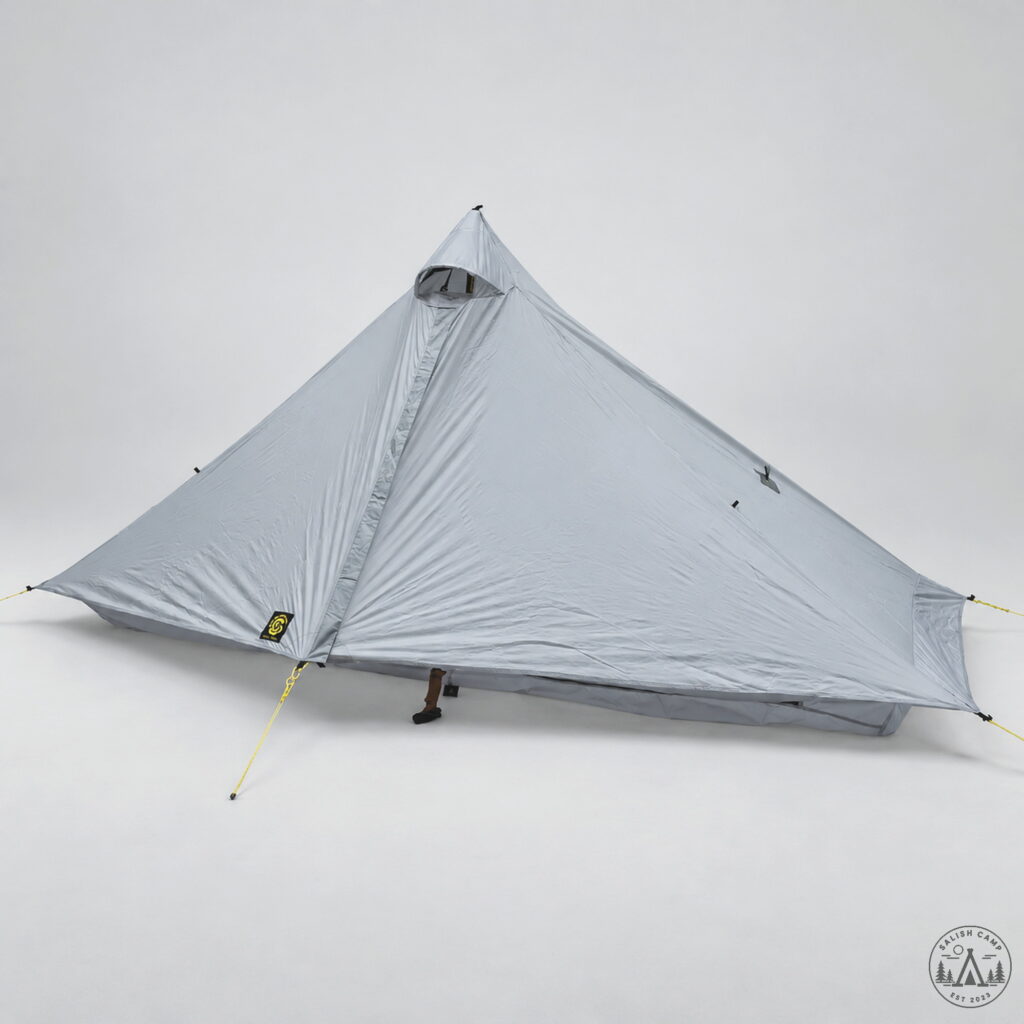
Buy if you already carry trekking poles, want a lightweight solo shelter with enough room for your sleeping pad, backpack, and possibly a dog, and appreciate the simplicity of a single-pole design. The Six Moon Designs Lunar Solo (Gray, SKU 20021) is $260.00 and weighs 26 oz / 740 g tent only — no stakes or pole. It offers 26.25 sq ft of floor space, an 8.5 sq ft vestibule, and 49 in of peak height without a conventional tent-pole structure. That combination is especially appealing for Cascades and Olympic Peninsula backpackers who want to cut pack weight without squeezing into a narrow sleeping compartment.
Skip if you expect a completely weather-ready tent straight from the package, prefer a freestanding structure, or don’t want to spend time learning how to tension a shelter properly. The Lunar Solo requires seam sealing before rainy use, six separately purchased stakes, and a separately supplied 49 in pole or adjustable trekking pole. Its floating canopy and floor also reward careful setup, especially when the campsite is uneven or the forecast calls for prolonged rain.
What Stands Out
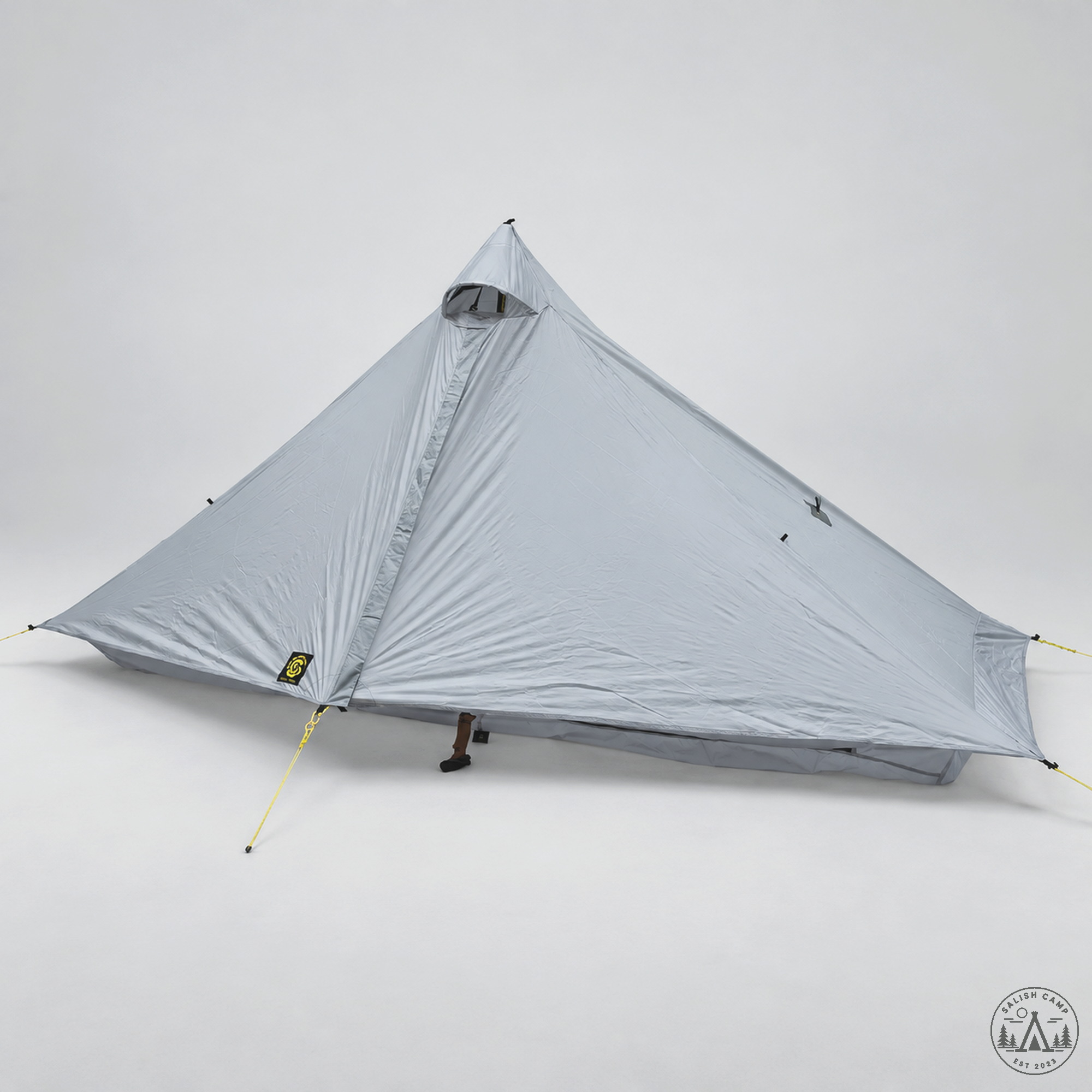
- 26 oz / 740 g tent-only weight. The single-pole hexagonal structure skips a conventional pole set while retaining a full enclosed sleeping area, bathtub floor, and vestibule.
- Unusually generous solo floor plan. The 90 × 48 in floor provides useful space for a sleeping pad and gear, although it narrows to 32 in at both ends.
- 49-inch peak height. Enough vertical clearance to sit up, change clothes, and organize equipment more comfortably than in a low-profile shelter.
- Floating canopy and floor. Adjustable canopy height helps manage ventilation at setup, while the floating floor reduces stress on the floor fabric when the shelter is tensioned.
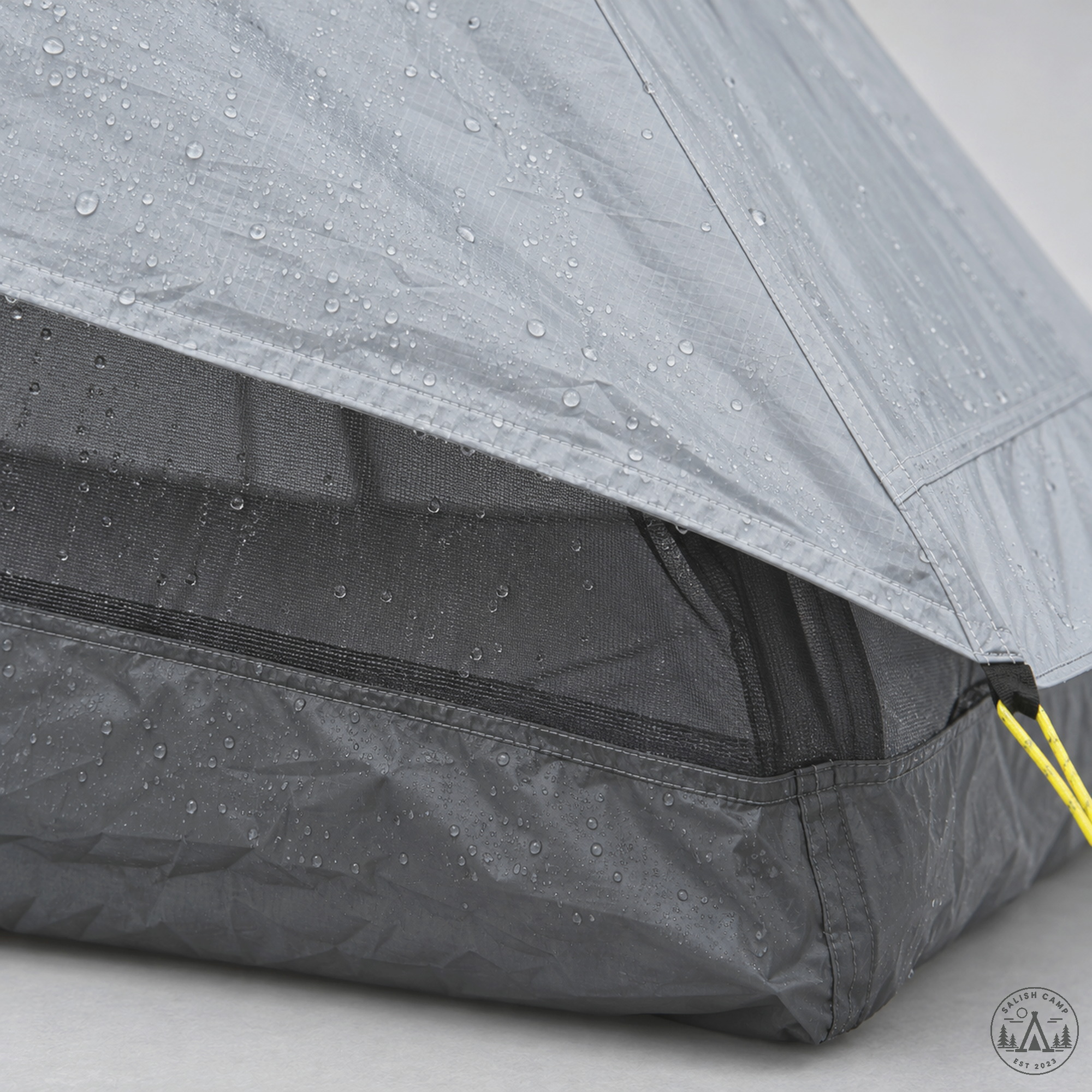
- Thoughtful wet-ground construction. A 20D silicone-coated polyester canopy, 40D floor, 6 in bathtub walls, and 6 in mesh band balance weight, durability, and separation from wet ground.
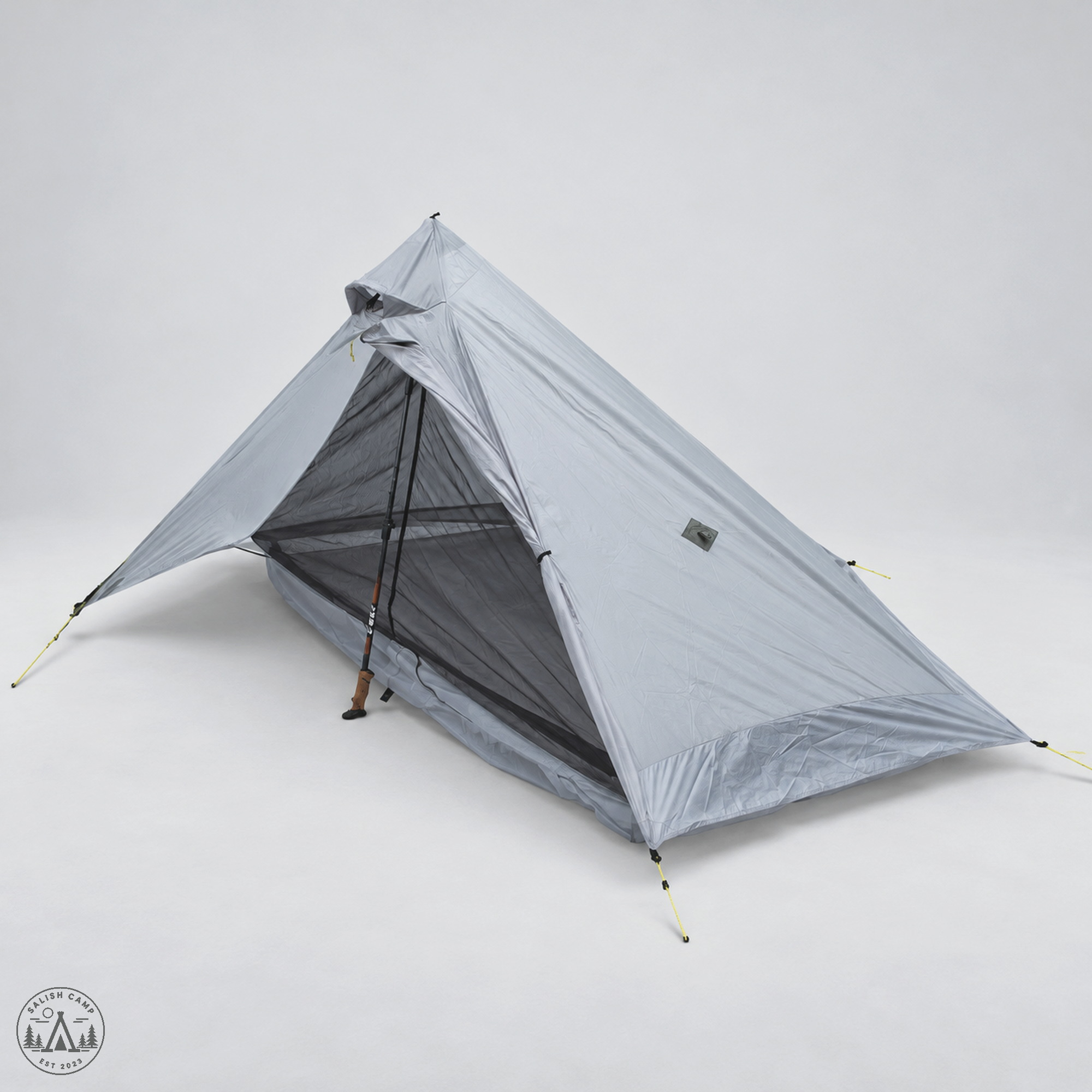
- Full side-entry vestibule. An additional 8.5 sq ft of covered space, zipper closure, high vent, and oversized screen door make entering, exiting, and staging wet gear more manageable.
- One-pole pitch with adjustable tension. A 49 in pole supports the apex, while adjustable tie-outs let you refine the pitch without rebuilding the whole shelter.
In The Field
I’ve always found solo shelters to be a compromise between the weight I’m willing to carry and the space I want when the weather turns. On a clear Cascades night almost any reasonable shelter feels adequate. After several hours of rain on an Olympic Peninsula trail, sitting upright, organizing dry clothing, and keeping muddy gear out of the sleeping area matter much more. The Six Moon Designs Lunar Solo addresses those problems without a complicated pole structure.
The Gray version weighs 26 oz / 740 g before stakes or a support pole — the number I use when comparing the shelter itself. Carried weight rises once pitching equipment is included. If you already hike with adjustable trekking poles, one becomes the tent’s main support at camp; otherwise you’ll need a separate 49 in pole. That flexibility is appealing, but it isn’t a complete tent for $260. Factor in stakes, the pole, and seam sealing before deciding whether the Lunar Solo fits your budget.
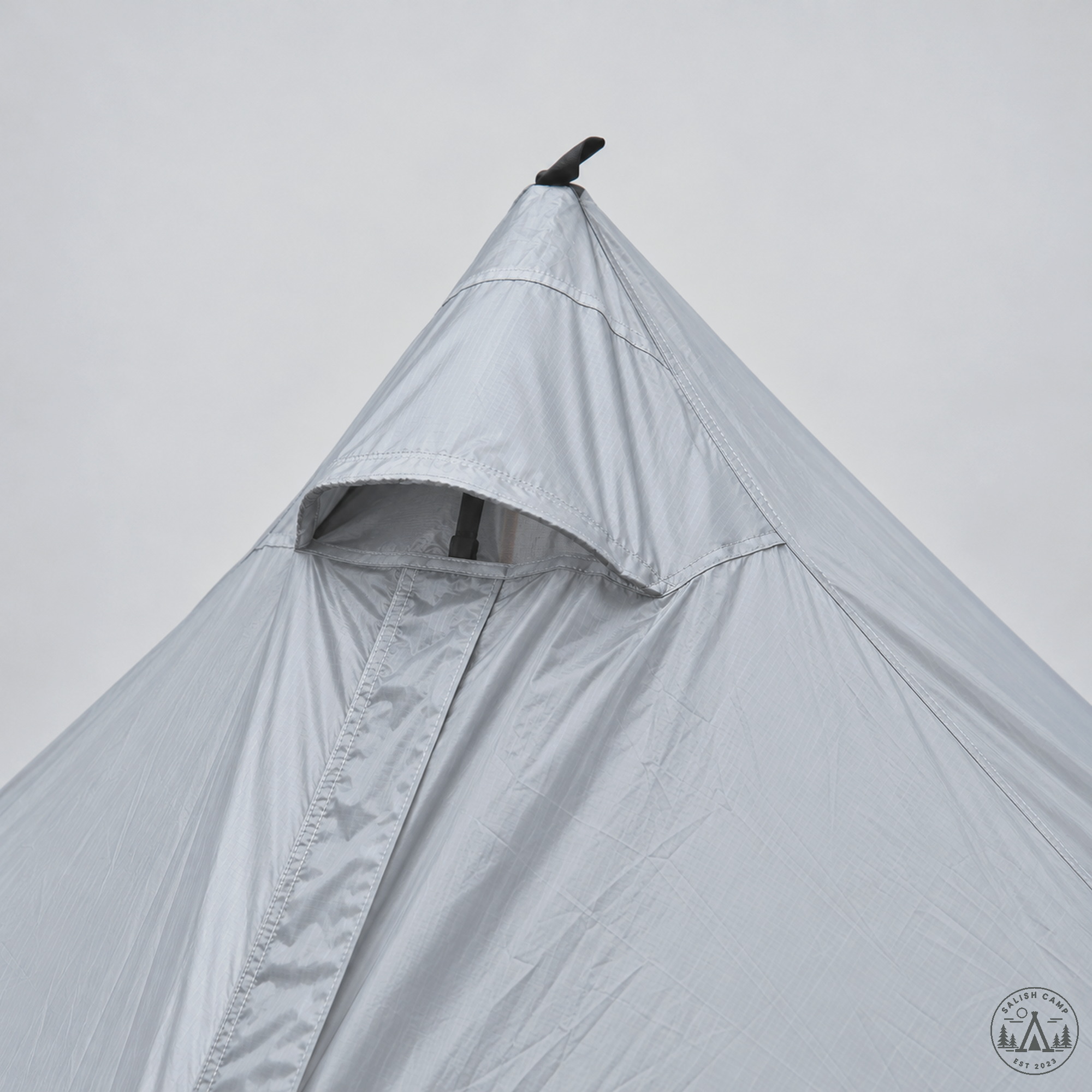
The hexagonal shape is central to how it works: a central apex support and six stake points instead of several arched poles. Set the pole to 49 in / 124 cm and install it tip-up into the Hypalon sleeve at the apex — Six Moon Designs warns that handle-up stresses the vents, apex seams, and vestibule zipper. I’d rather learn that in the backyard than in a wet campground near Mount Hood. The brand describes setup in less than two minutes; I treat that as an experienced-user claim. The floating canopy and floating floor take patience. Spread the shelter, stake the six corners in the recommended sequence, install the pole, then work the perimeter until the walls look balanced and the floor sits naturally. Extend guy-line webbing fully to the ground, keep the front of the canopy raised for ventilation, and use the tie-out straps to refine tension afterward. Useful on uneven ground — still not a freestanding throw-down on bare rock.
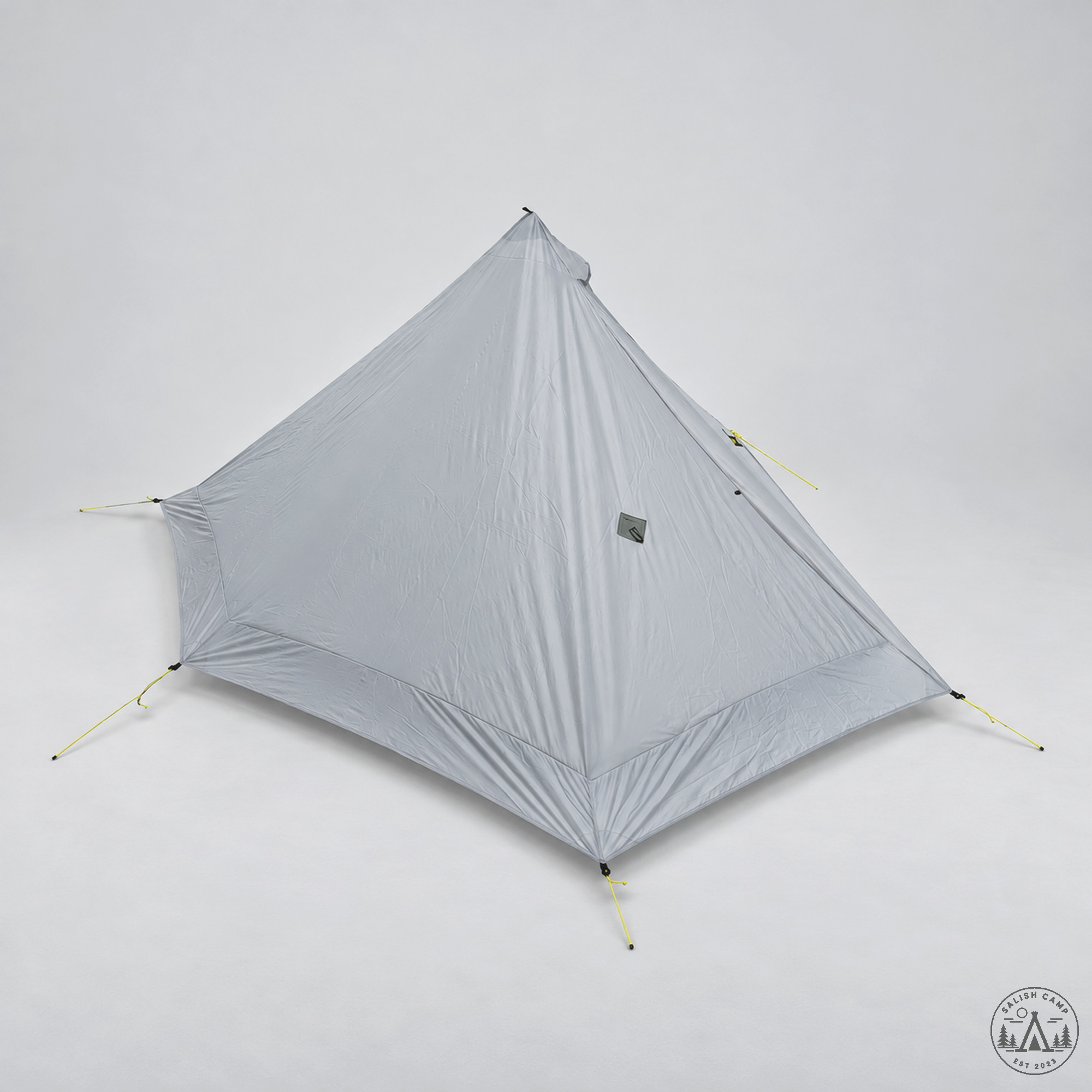
The floating floor accommodates pitch variations without being pulled tightly against every anchor, reducing stress that can contribute to punctures. It shouldn’t be loose or suspended; you still want a smooth sleeping surface with the shelter properly tensioned. That tolerance helps on uneven Cascades campsites, but it doesn’t replace site selection — clear sharp debris, avoid runoff depressions, and keep rainwater from draining under the shelter.
The floor measures 90 × 48 in and narrows to 32 in at either end. Specified floor area is 26.25 sq ft / 2.4 m²; the manufacturer’s descriptive copy rounds that to 26 sq ft. You don’t get a rectangular 48-inch-wide floor head to foot — the widest section is where a sleeping pad and gear fit best. For one person that’s a reasonable trade-off: a full-length pad in the center, smaller items around it, and the internal gear area plus mesh cargo pocket keeping essentials from disappearing under a bag. The 49 in peak is another real advantage. I’m not expecting to stand, but sitting upright without brushing the canopy makes changing into dry layers much less awkward. Headroom falls away from the apex. For a backpacker with a dog, the extra floor area is attractive — a small or medium dog could share the compartment depending on sizes — but I’d check the geometry before assuming a large dog and a wide pad fit together.
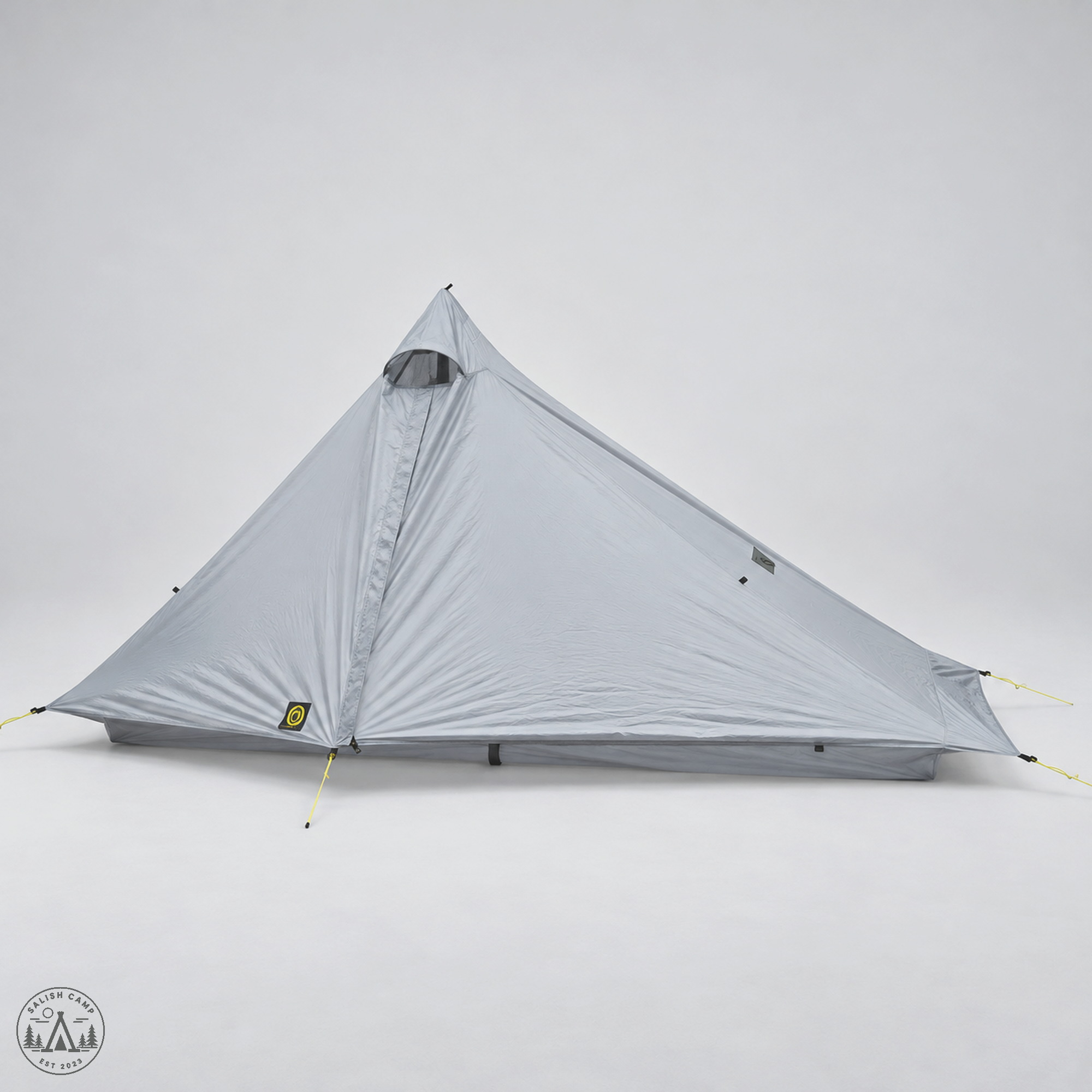
Wet ground is routine in western Washington and Oregon. The Lunar Solo uses a 6 in deep bathtub floor with a 6 in mesh band above it, raising a barrier around the sleeping area, keeping you farther from the canopy walls, and aiding ventilation — especially relevant in a single-wall shelter. Silicone-coated polyester resists stretching and can help preserve shape, but that isn’t a condensation guarantee. I’d pitch the front for airflow, use the high vent, and keep bag and clothing off the walls.
The 8.5 sq ft vestibule is a meaningful feature, not an afterthought. I prefer wet boots and a muddy pack outside the sleeping compartment; in the Olympics, gear can be damp even without heavy rain. Side entry, the oversized screen door, and the zipper closure make moving in and out practical and let you cover the entry when weather deteriorates. The vestibule also stages gear that shouldn’t share the floor with a sleeping system. I wouldn’t cook carelessly next to the tent — a stove still needs safe placement and clearance from fabric — but the main win is simpler: wet and dry stay separated.
The biggest preparation requirement for a first-time buyer: the Lunar Solo is not fully rain-ready until its seams are sealed. Silicone-coated polyester sheds water, but needle holes along seams can leak in sustained rain, and conventional seam tape doesn’t stick to silicone. Seams need a silicone-based sealant. Six Moon Designs offers factory sealing for +$35 (about one to two extra business days), a $10 Seam Grip + Sil kit, or you can use your own compatible sealer. DIY guidance is about an hour of work plus eight to twelve hours to cure. I’d finish that well before a wet weekend and test under controlled conditions — postponing sealing because the forecast looks clear is a gamble I wouldn’t take on a shoulder-season Cascades trip. It isn’t a deal-breaker; it belongs in the budget and prep time.
The hexagonal shape and steep walls are meant to shed wind and snow, with the center pole carrying structural load. That’s sensible for a lightweight shelter, but this remains a three-season design, not a winter mountaineering tent. On an exposed Timberline-style bench I’d orient carefully, anchor all six points, and keep tension even — wind and wet ground affect stake hold. For prolonged rain, sealed seams, a proper canopy pitch, the bathtub floor, and drainage matter more than any single fabric number. The listed 3,000 mm hydrostatic head is useful context, not the whole weather story.
At $260, the Gray Lunar Solo sits in an appealing spot for cutting pack weight without jumping into much more expensive shelter territory. The balance of usable floor area and tent-only weight is the draw, especially if trekking poles are already in the kit, and the 11 × 4.5 in packed size helps when a pack is already full. The compromises are clear: supply six stakes and a pole, seal the seams, practice the floating-canopy pitch, and choose sites that can take a hexagonal footprint. I’d practice the pitch at home, verify the seams, and confirm my pole adjusts correctly before the first mountain night — that preparation is what makes the Lunar Solo a trail shelter rather than a first-night experiment.
Pros
- Excellent space-to-weight balance: 26 oz / 740 g tent-only weight with a generous solo floor and 49 in peak.
- Accessible $260 price: Competitive value for a lightweight enclosed shelter with a full vestibule.
- Practical wet-weather layout: 6 in bathtub floor, mesh perimeter, high vent, and separate vestibule for damp gear.
- Flexible one-pole structure: Works with an adjustable trekking pole and offers adjustable tie-outs for refining the pitch.
Cons
- Seam sealing required: Additional expense or DIY preparation is necessary before taking the shelter into sustained rain.
- Incomplete pitching equipment at the base price: Six stakes and a 49 in support pole or suitable trekking pole must be supplied separately.
- Pitching takes practice: The floating canopy and floor require careful staking and tensioning, particularly on uneven ground.
Technical Specifications
| Specification | Details |
|---|---|
| Product | Six Moon Designs Lunar Solo |
| Config in photos / primary | Gray, SKU 20021 |
| Price (primary) | $260.00 USD tent only (sixmoondesigns.com, 2026-10-08, in stock) |
| Seam sealing | Required; factory sealing +$35.00 or self-seal kit +$10.00 |
| Weight (primary) | 26 oz / 740 g (no stakes or pole) |
| Seasons / sleeps | 3 / 1+ |
| Type / entry | One-pole hexagonal tent; side entry |
| Pole | Single 49 in pole or adjustable trekking pole (not included) |
| Stakes | 6 required (sold separately) |
| Floor | 90 × 48 in (228 × 121 cm); 48 in at widest, 32 in at each end |
| Floor area | 26.25 sq ft / 2.4 m² |
| Vestibule area | 8.5 sq ft / 0.8 m² |
| Peak height | 49 in |
| Bathtub floor / mesh band | 6 in deep / 6 in mesh lining |
| Canopy | 20D silicone-coated polyester |
| Floor fabric | 40D silicone-coated polyester |
| Hydrostatic head | 3,000 mm |
| Zipper | #3 YKK |
| Pack size | 11 × 4.5 in |
| Ships with | Tent, stuff sacks, guy lines |
| Colors | Gray (primary); Green |
Final Thoughts
The Six Moon Designs Lunar Solo is the kind of shelter that makes sense when you know what you want from a solo backpacking setup: less weight, enough room to live comfortably, and a price that doesn’t require stepping into premium ultralight territory.
What appeals to me most is the practical space. The 49 in peak makes sitting up and changing clothes easier, the floor accommodates more than just a narrow sleeping pad, and the vestibule provides a useful place for wet boots and equipment. For backpacking in the Cascades, Olympics, and around Mount Hood, those details matter when conditions keep you inside longer than expected.
The Gray Lunar Solo also has a straightforward aesthetic and a compact packed form that fit well with a minimalist backpacking kit. The one-pole structure is particularly attractive if trekking poles are already part of your hiking routine.
But this is a shelter that asks something of its owner. Seam sealing is a necessary step, stakes and the support pole aren’t included, and the floating-canopy design takes practice to pitch correctly. Those aren’t reasons to dismiss it, but they are reasons to prepare properly.
I’d recommend the Lunar Solo to a solo backpacker who values usable space, is comfortable with a little setup work, and wants to keep shelter weight and cost under control. I would be less enthusiastic about recommending it to someone looking for an effortless, fully equipped first tent.
For a prepared backpacker, it’s a compelling combination of room, simplicity, and value.