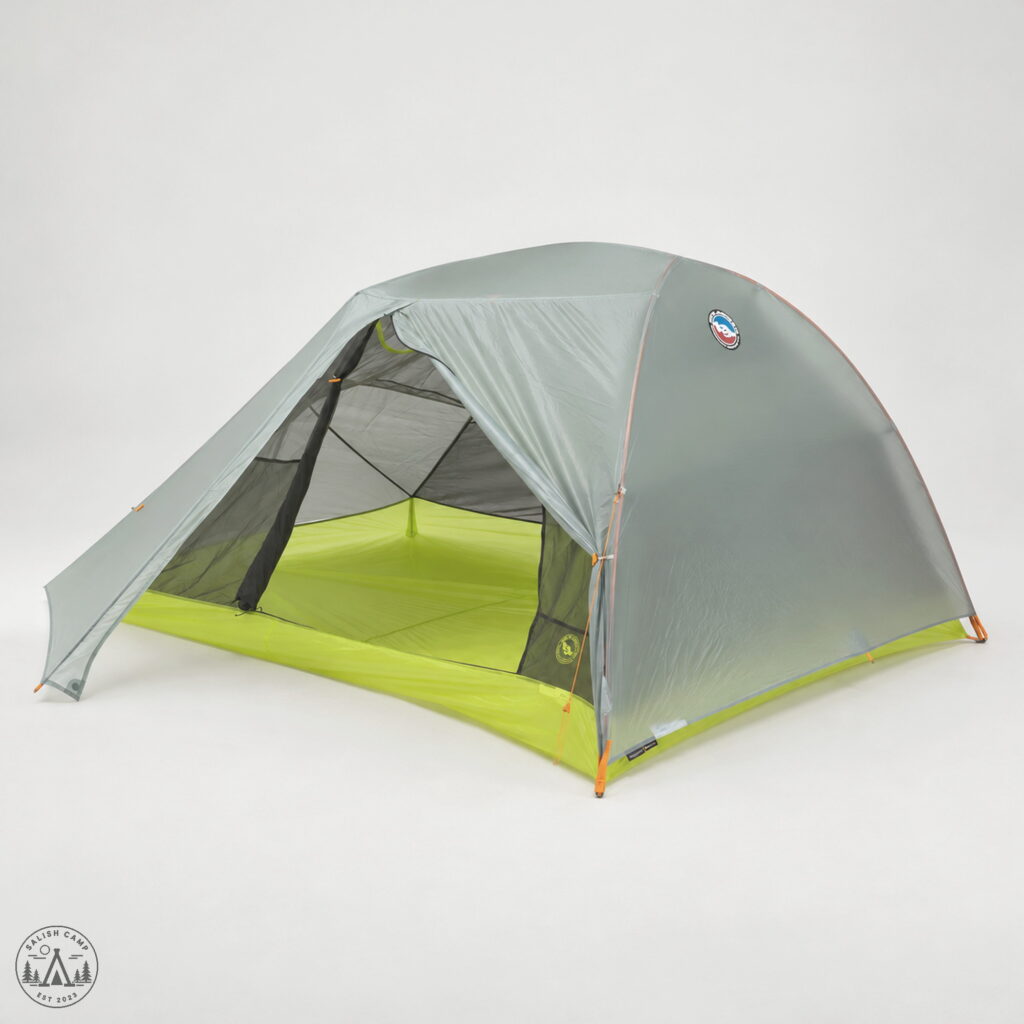
Buy if you want a lightweight two-person backpacking tent for Cascade overnights, Olympic Peninsula trails, or multi-day trips where every ounce matters. The Big Agnes Tiger Wall UL2 (single listing, SKU TTWUL225) is $499.95, with a trail weight of 2 lb 3 oz / 992 g and a total weight of 2 lb 8 oz / 1.13 kg. It gives you two side-entry doors, two vestibules, and a straightforward DAC Featherlite pole structure. Its HyperBead fabric, organized interior storage, and compact packed size make it especially appealing if you want to cut shelter weight without moving to a trekking-pole tent.
Skip if you prioritize generous sleeping space, a fully freestanding pitch, or a heavy-duty floor that tolerates rough campsites without much attention. The floor narrows from 52 inches at the head to 42 inches at the foot, and the 39-inch peak height limits sitting room. The 15D floor also calls for careful site selection, and Big Agnes recommends a separately sold footprint. At $499.95, this is a specialized lightweight shelter, not a roomy, all-purpose camping tent.
What Stands Out
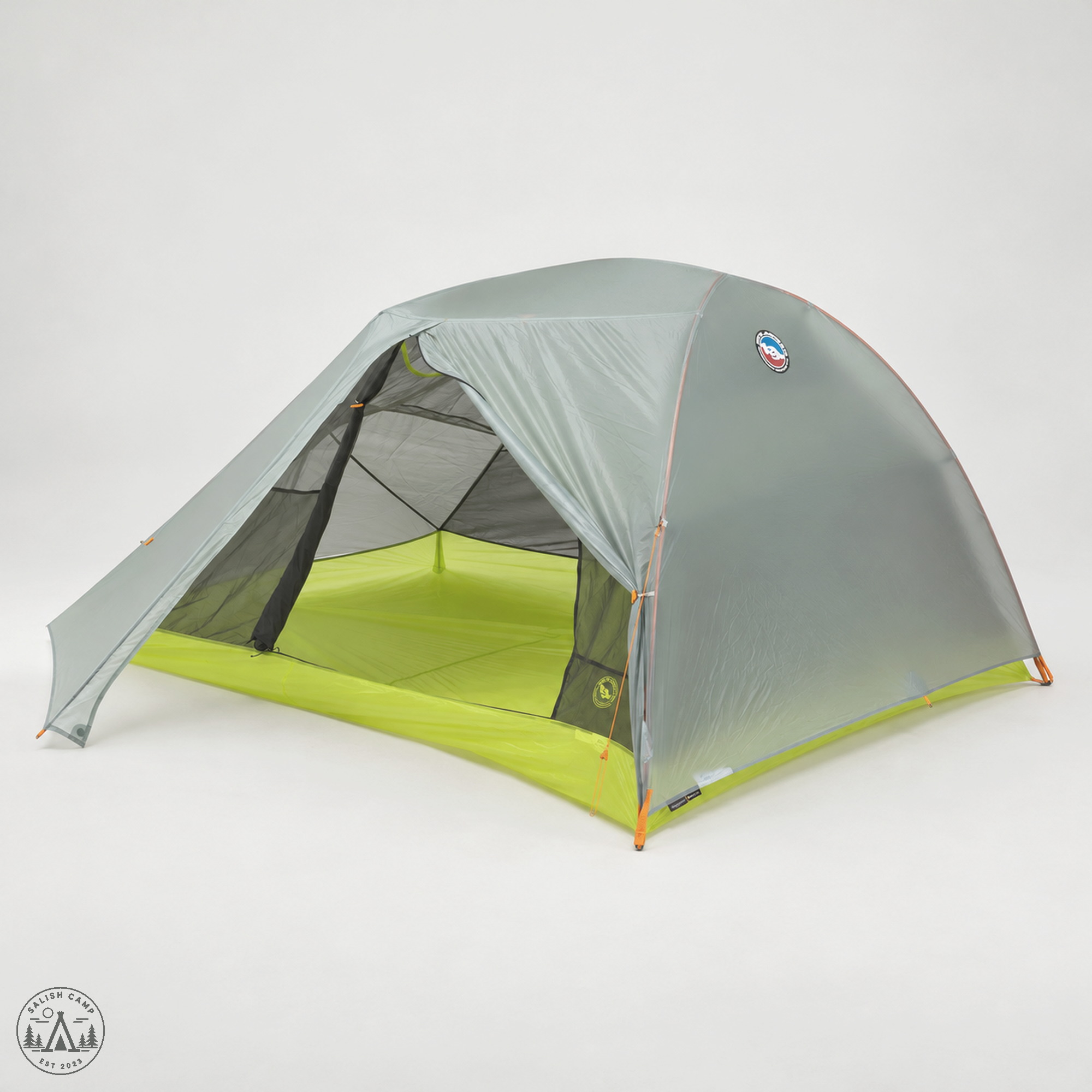
- Two doors and two vestibules at a 2 lb 3 oz trail weight. Each sleeper gets a separate entrance and 8 sq ft of vestibule space, which pays off when boots, packs, and rain gear are wet.
- Semi-freestanding single-hub architecture. The DAC Featherlite NFL pole system sets up the main structure quickly, while stake-supported foot corners give the floor its full shape.
- HyperBead fabric. Big Agnes claims its proprietary fabric is 6% lighter, 25% more waterproof, and 65% stronger than traditional fabrics. Those are manufacturer comparisons, not Salish Camp test results.
- Thoughtful ventilation controls. Low vents and double sliders on the vestibule zippers let you vent from the top or bottom without opening the vestibule doors all the way.
- Integrated setup hardware. TipLok Tent Buckles combine pole-tip capture, fly attachment, tensioning, and a stake-out loop, and an injection-molded socket secures the cross pole.
- Storage built for a small space. An oversized 3D ceiling pocket, more ceiling and side pockets, interior loops, and Quick Stash door keepers help manage gear inside the narrow shelter.
- Practical packing details. The EZ Pack Stuff Sack opens lengthwise and has a compression closure, which makes a damp tent easier to pack into a crowded backpack.
In The Field
When I’m choosing a shelter for a few days in the Cascades, I start with two questions: how much weight am I willing to carry, and how much inconvenience am I willing to accept once camp is set up? On Pacific Northwest trips, those questions matter more than usual. A tent spends most of the day stuffed in a pack, but once the rain arrives, it’s where I’m changing clothes, organizing gear, and trying to keep a sleeping bag dry. The Tiger Wall UL2 is an appealing compromise because it cuts shelter weight without giving up the familiar conveniences of a double-wall tent with dedicated doors and vestibules.
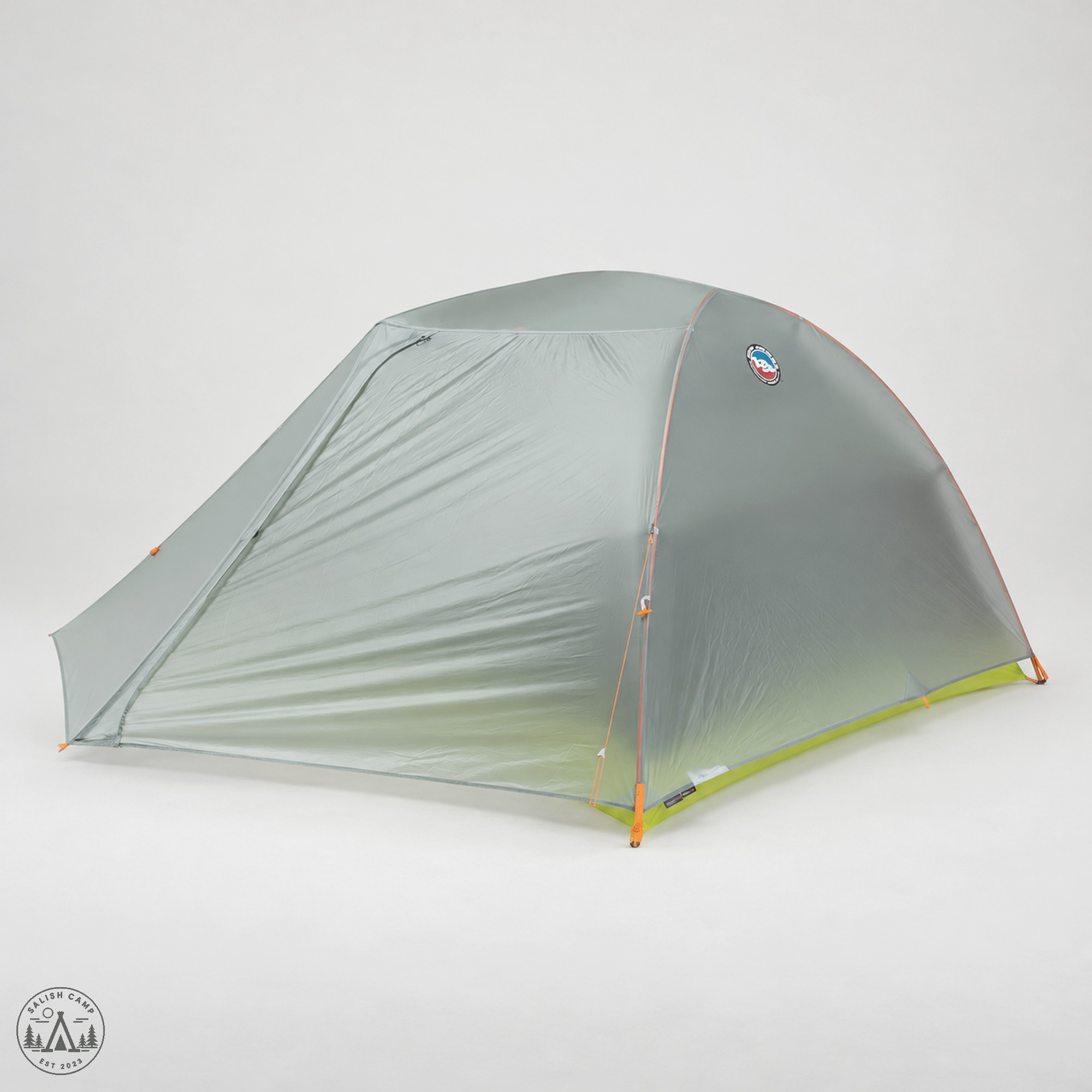
At 2 lb 3 oz / 992 g trail weight, it’s light enough for trips where I’m watching pack weight closely. The total weight of 2 lb 8 oz / 1.13 kg is the better reference for everything that goes in the pack. Two backpackers can also split the body, fly, and poles between them. What keeps it interesting is the two-door layout. I’ve used enough compact shelters to know how frustrating it is when one person has to climb over the other at night. With the Tiger Wall, each person has a dedicated side entrance.
Each vestibule gives 8 sq ft of covered space. In the Olympics, wet boots are almost inevitable on shoulder-season trips, and even without rain, soaked vegetation and muddy trail can leave gear damp by the time I reach camp. I keep boots outside the sleeping compartment, with my pack where I can reach essentials without dragging wet gear across the floor. With two vestibules, each sleeper organizes their own side instead of negotiating one shared doorway. Eight square feet isn’t a huge porch, though. A large pack, boots, and cooking gear still need careful arranging.
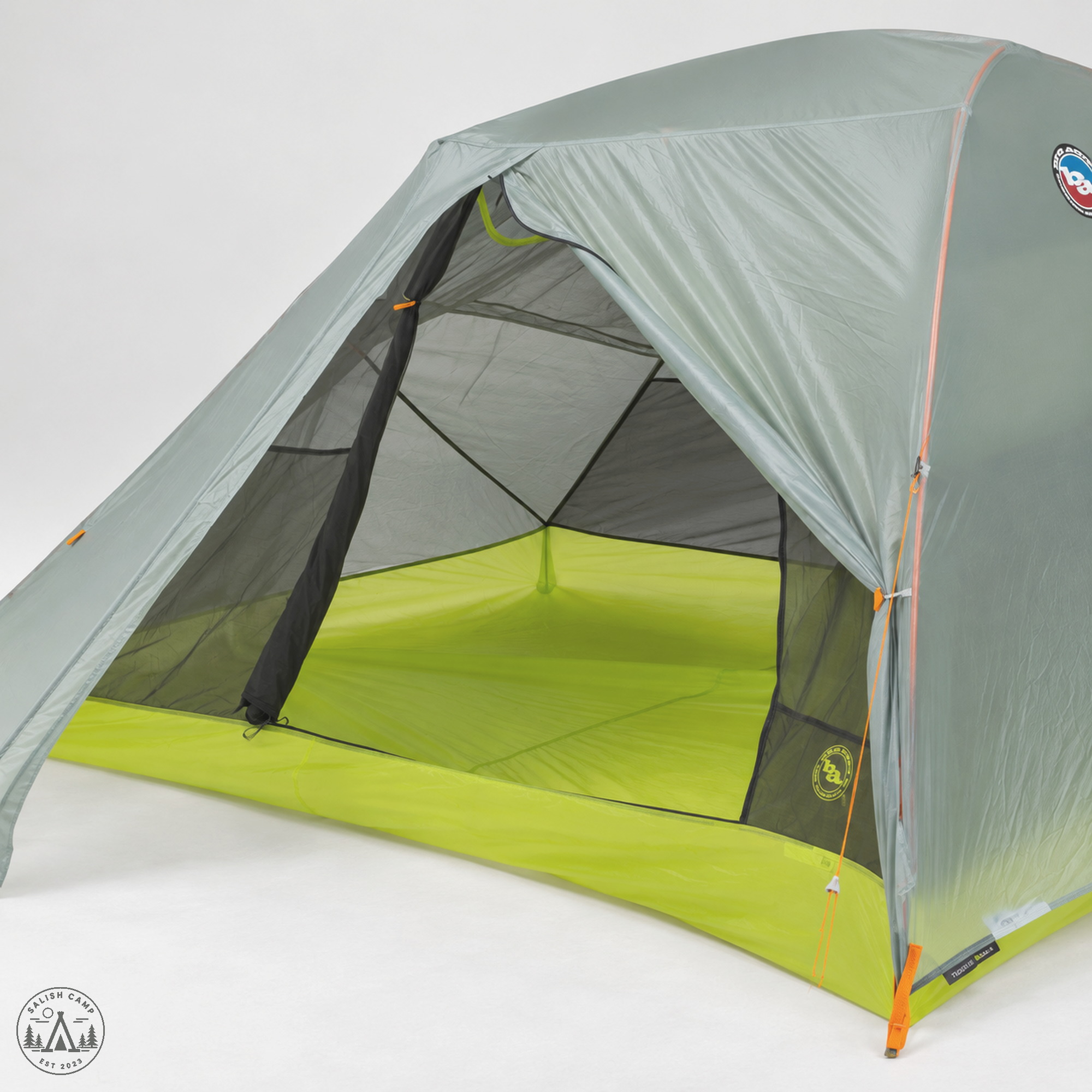
On damp PNW nights, ventilation matters as much as waterproofing. A fly keeps rain out, but moisture from breathing and wet clothes still condenses inside. The low vents and double-slider zippers let me vent from the top or bottom of the vestibule opening, and I’d use them whenever conditions allow, knowing that no lightweight double-wall tent eliminates condensation in every combination of humidity, temperature, and wind.
Before buying, understand that the Tiger Wall UL2 is not fully freestanding. The single-hub DAC Featherlite NFL pole structure sets the main shape, but the foot-end corners depend on stakes. On ordinary forest soil, that’s simple: set up the poles, position the foot corners, and stake them. On rocky alpine ground or a compacted gravel pad, those foot anchors take more attention, and without them the foot section won’t hold its full shape. The injection-molded cross pole socket gives the upper pole a defined connection point, and the TipLok Tent Buckle reduces the number of separate connections to manage. If you’re new to semi-freestanding tents, practice the pitch at home, and even when the body takes shape quickly, secure the fly and guylines before a windy or rainy night.
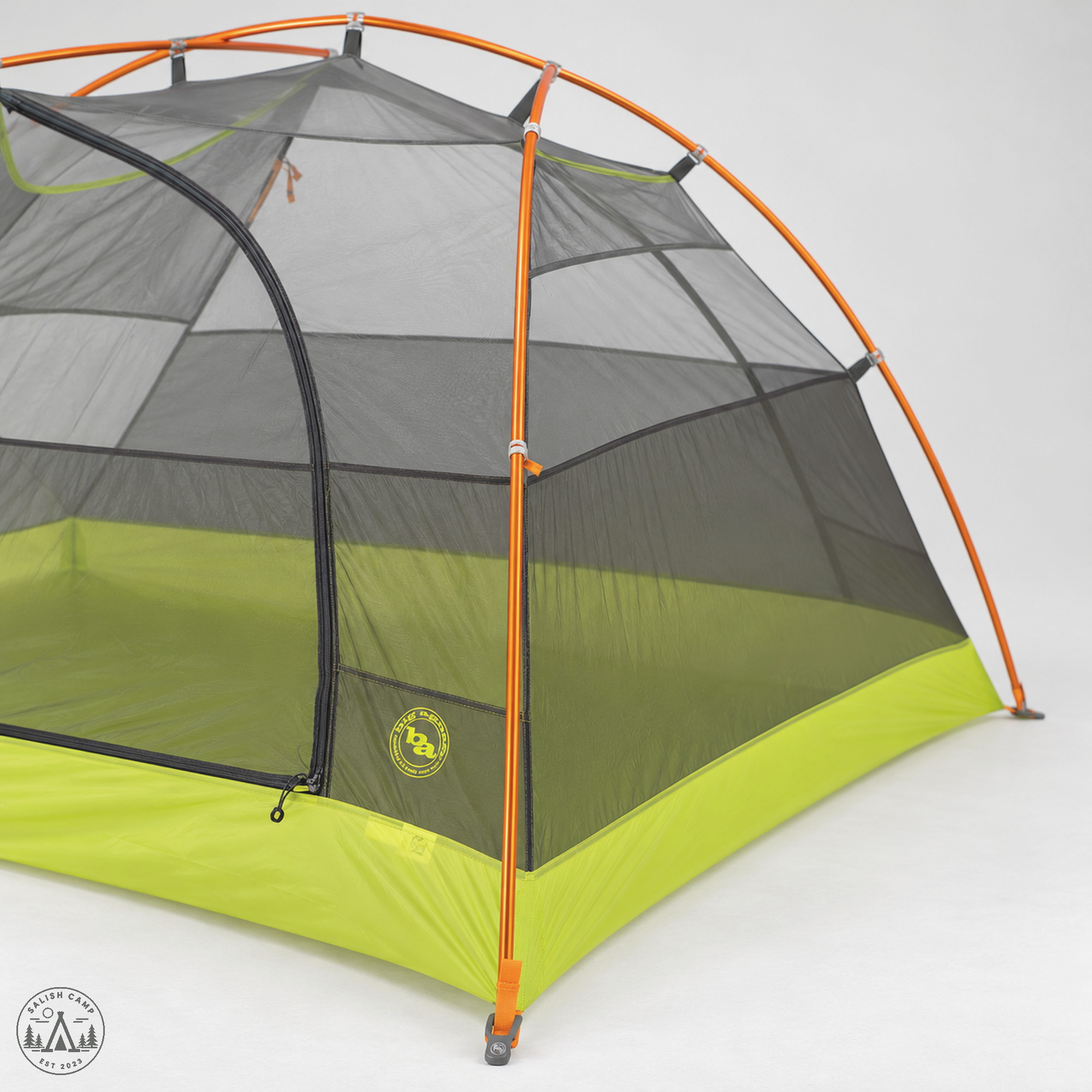
The floor is where the weight savings show. It measures 86 inches long, 52 inches wide at the head, and 42 inches at the foot, and those numbers say more about two-person suitability than the UL2 name. The 52-inch head end is fairly accommodating for a lightweight tent, but the narrowing foot changes how two pads fit. Two wide rectangular pads may overlap or press against the walls, so I’d check the actual widths and shapes of my pads before buying. The floor area is 28 sq ft, reasonable for a weight-conscious two-person shelter but not spacious, and the 39-inch head height makes sitting up to change clothes workable without inviting long upright lounging. For two adults with compact gear, bulky items belong in the vestibules. For a solo backpacker, the same interior feels roomy.
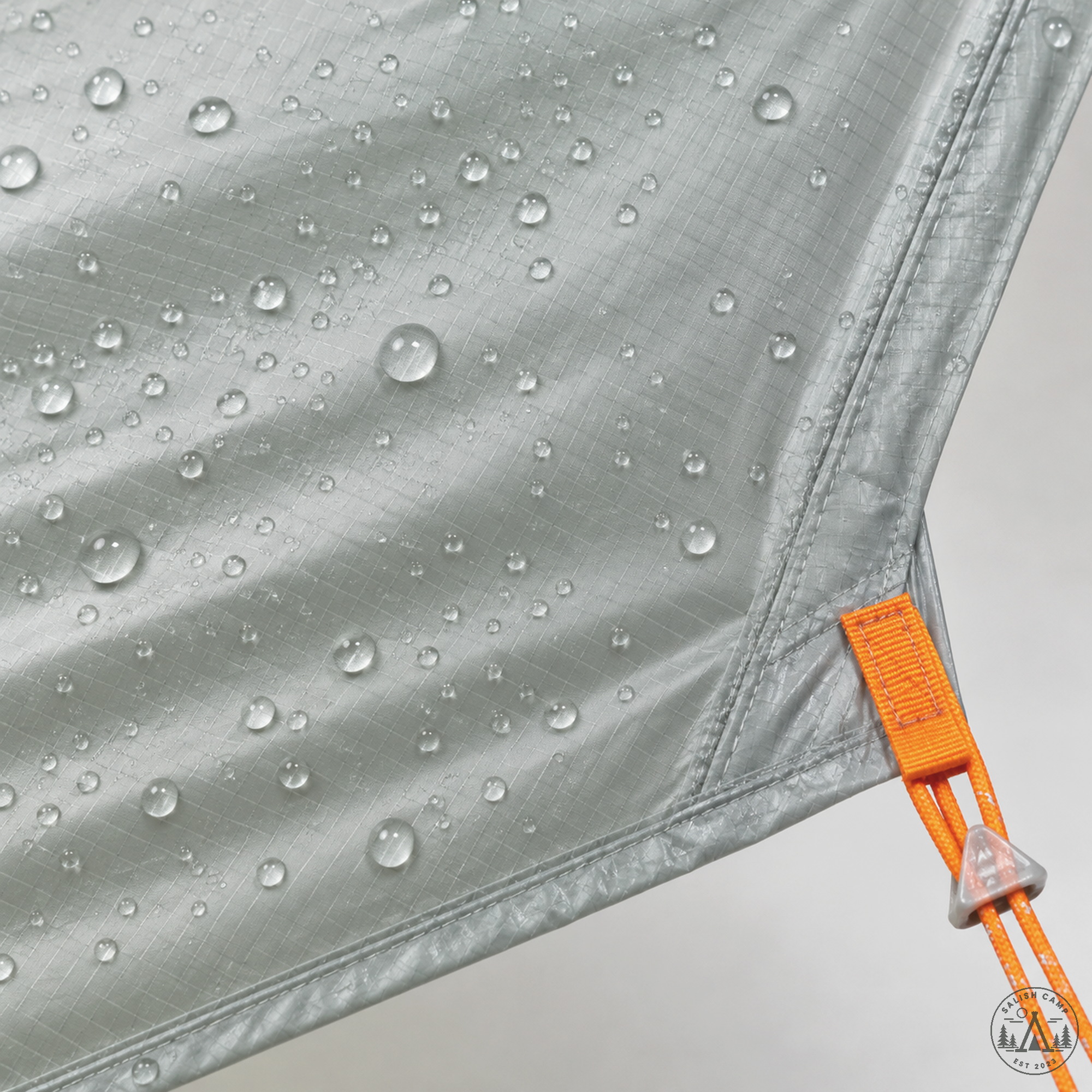
The rainfly and floor are recycled 15D nylon ripstop with Big Agnes HyperBead construction and a listed 1500 mm waterproof rating. The body pairs breathable recycled 15D nylon ripstop with polyester mesh. Those materials are central to the low weight, and they shape how I use it. On established Cascades sites, I check for sharp stones, broken branches, and exposed roots before laying the tent down. Big Agnes recommends a footprint to extend floor life; the Tiger Wall UL2 Footprint starts at $80.00, sold separately, which brings the starting combined cost to $579.95. A footprint doesn’t replace careful site selection, but it adds a sacrificial layer on abrasive ground, and if I camped often on gravel or rock, I’d strongly favor it. The footprint also enables the Fast Fly setup, listed at 1 lb 7 oz / 657 g.
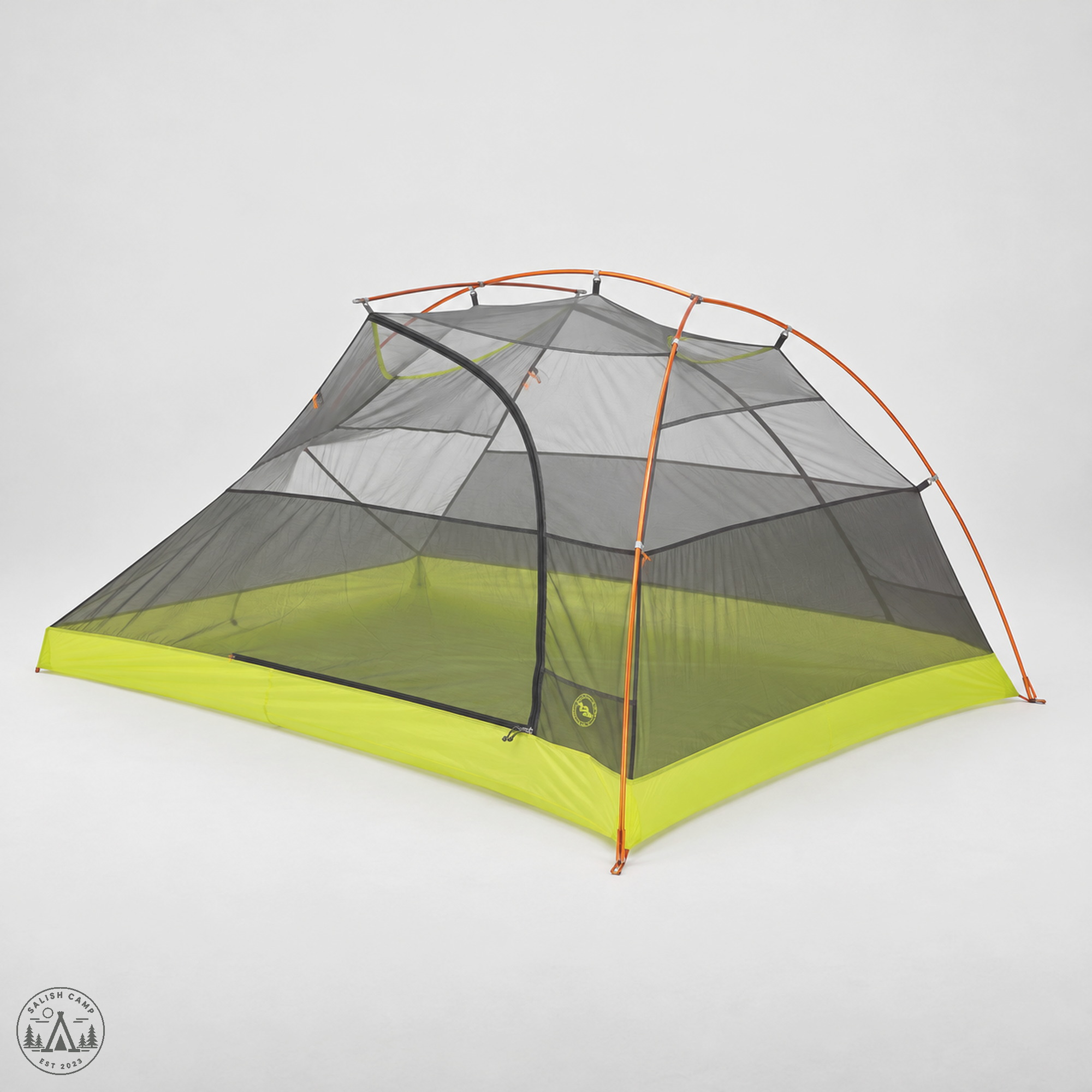
Inside, the oversized 3D ceiling pocket, extra ceiling and side pockets, and interior loops give a headlamp, phone, and glasses a predictable home instead of losing them under a pad. Quick Stash door keepers hold an open door out of the way. Outside, the pre-cut reflective guylines and reflective webbing help on dark, rainy evenings, when tent lines become tripping hazards. Nine Dirt Dagger UL stakes come in the box, but I’d still check whether the ground allows secure placement.
For the Cascades and Olympics, I see the Tiger Wall UL2 as what Big Agnes calls it: a three-season shelter for people who value lower carried weight. The semi-freestanding design, tapered floor, and light fabrics are sensible compromises for ordinary backpacking conditions, but they don’t make it a severe-weather tent. On exposed alpine benches, I’d look for natural wind protection and take time to tension the fly and guylines. The seams are factory taped with waterproof, solvent-free polyurethane tape, so those taped areas don’t need liquid sealer. I’d treat the HyperBead percentages as Big Agnes claims, not a guarantee. What matters is proper staking, good ventilation, careful packing, and sensible weather decisions.
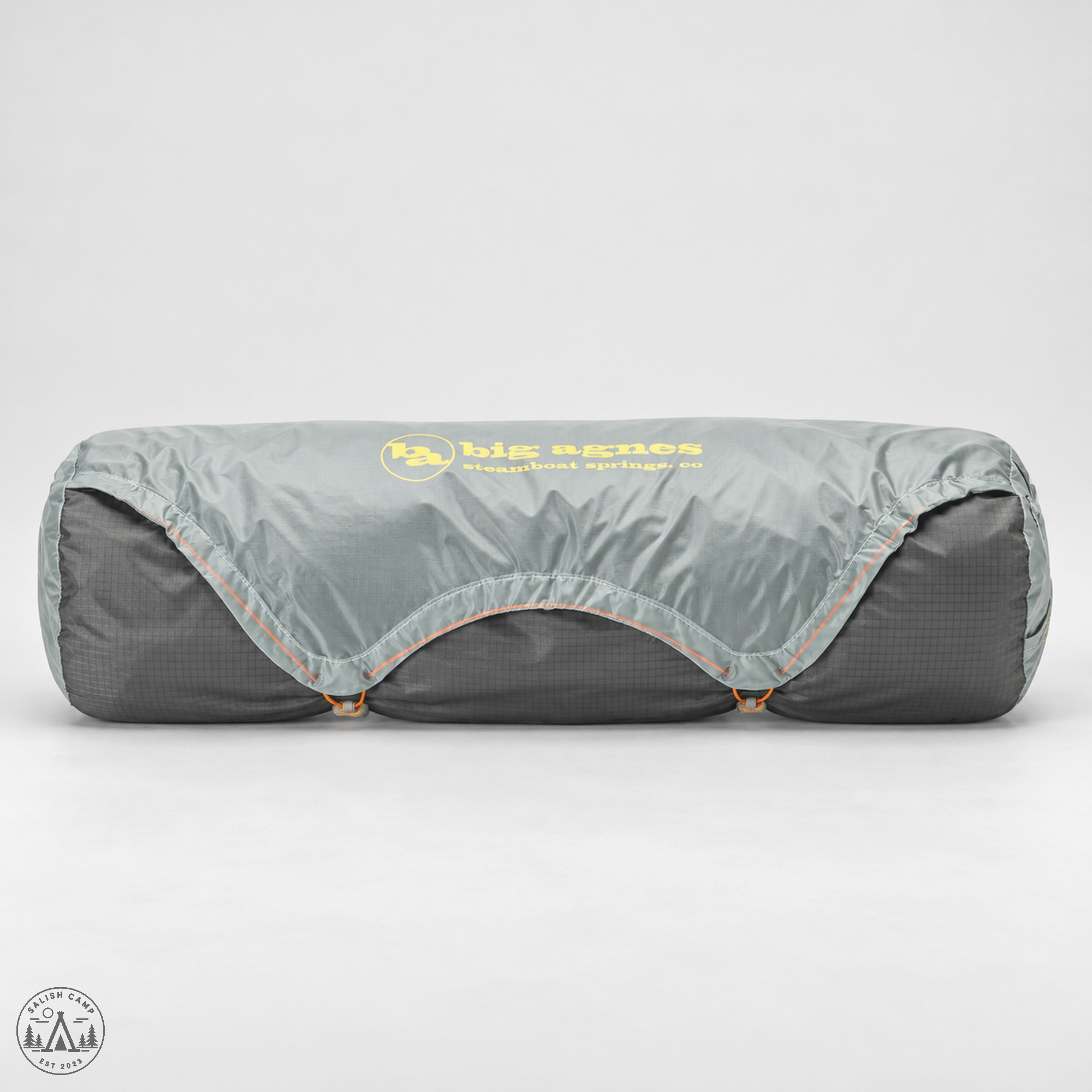
The Tiger Wall UL2 packs to 18 x 5 inches, and the EZ Pack Stuff Sack’s lengthwise opening and compression closure make a damp tent and its poles much easier to pack than a narrow end-opening sack. After a wet night, I keep wet shelter fabric away from dry insulation and dry the tent thoroughly at home.
This isn’t the tent I’d choose for extended basecamp living or for two people who want generous elbow room. But for a few nights moving between mountain camps, the balance of low weight, separate doors, usable vestibules, and straightforward pole architecture is compelling. The compromises are clear: less room at the foot, limited headroom, and a floor that deserves deliberate care. I can work with them when cutting carried weight is the priority.
Pros
- Excellent weight-to-function balance: A 2 lb 3 oz trail weight with two doors and two vestibules is attractive for two-person backpacking.
- Convenient side-entry layout: Separate entrances cut down on disturbing your tentmate and give each person covered storage.
- Efficient pole and attachment system: The single-hub DAC Featherlite architecture, cross pole socket, and TipLok buckles simplify basic setup.
- Useful backpacking details: Interior pockets, adjustable vestibule venting, reflective guylines, and the EZ Pack Stuff Sack help day to day.
Cons
- Snug tapered sleeping area: The floor narrows to 42 inches at the foot, and the 39-inch peak height limits comfort for two adults.
- Stake-dependent foot corners: The semi-freestanding design needs secure foot-end anchoring, which complicates pitching on rocky or hard-packed ground.
- Thin floor and extra protection cost: The 15D floor calls for careful site selection, and the recommended footprint starts at another $80.00.
Technical Specifications
| Specification | Details |
|---|---|
| Product | Big Agnes Tiger Wall UL2 |
| Config in photos / primary | Single listing, SKU TTWUL225 |
| Price (primary) | $499.95 USD (bigagnes.com, 2026-10-08, available) |
| Trail weight (primary) | 2 lb 3 oz / 992 g |
| Total weight | 2 lb 8 oz / 1.13 kg |
| Fast fly / shelter mode weight | 1 lb 7 oz / 657 g (with compatible footprint, sold separately) |
| Type | Three-season, semi-freestanding, side-entry, two doors / two vestibules |
| Floor dimensions | 86 x 52 / 42 in (218 x 132 / 107 cm) |
| Floor area | 28 sq ft / 2.6 sq m |
| Vestibule area | 8 sq ft + 8 sq ft (0.7 + 0.7 sq m) |
| Head height | 39 in / 99 cm |
| Packed size | 18 x 5 in / 46 x 13 cm |
| Rainfly / floor | HyperBead® recycled 15D nylon ripstop, 1500 mm waterproof rating, no intentionally added PFAS |
| Tent body | Breathable recycled 15D nylon ripstop and polyester mesh |
| Poles | DAC Featherlite NFL, single hub architecture |
| Seams | Waterproof, solvent-free polyurethane taped seams |
| Stakes | 9 x 6 in Dirt Dagger™ UL stakes included |
| Footprint | Sold separately (from $80.00) |
| Warranty | Limited Warranty against manufacturing or material defect |
Final Thoughts
The Big Agnes Tiger Wall UL2 is the kind of shelter I’d consider when cutting pack weight matters more than maximizing interior space.
Its strongest feature isn’t any single fabric technology or pole connection. It’s the combination of two separate doors, two usable vestibules, and a 2 lb 3 oz trail weight. That combination solves several practical frustrations of ultralight two-person backpacking without requiring a trekking-pole shelter.
On Pacific Northwest trips, the vestibules are especially valuable. Keeping muddy boots and wet packs outside the sleeping compartment makes a noticeable difference in how comfortably two people share a compact tent.
The semi-freestanding design is a reasonable trade-off, as long as you understand that the foot corners must be staked. The tapered floor is the bigger consideration. Two people with wide sleeping pads should measure their setup carefully before committing.
I’d also budget for the footprint rather than treating it as an afterthought. A 15D floor can be the right call for lightweight backpacking, but it deserves protection and careful site selection.
For someone choosing a dedicated lightweight shelter for Cascades overnights, Olympic Peninsula backpacking, and multi-day mountain routes, the Tiger Wall UL2 strikes a convincing balance of weight and function, as long as its space and durability compromises fit how you’ll use it.