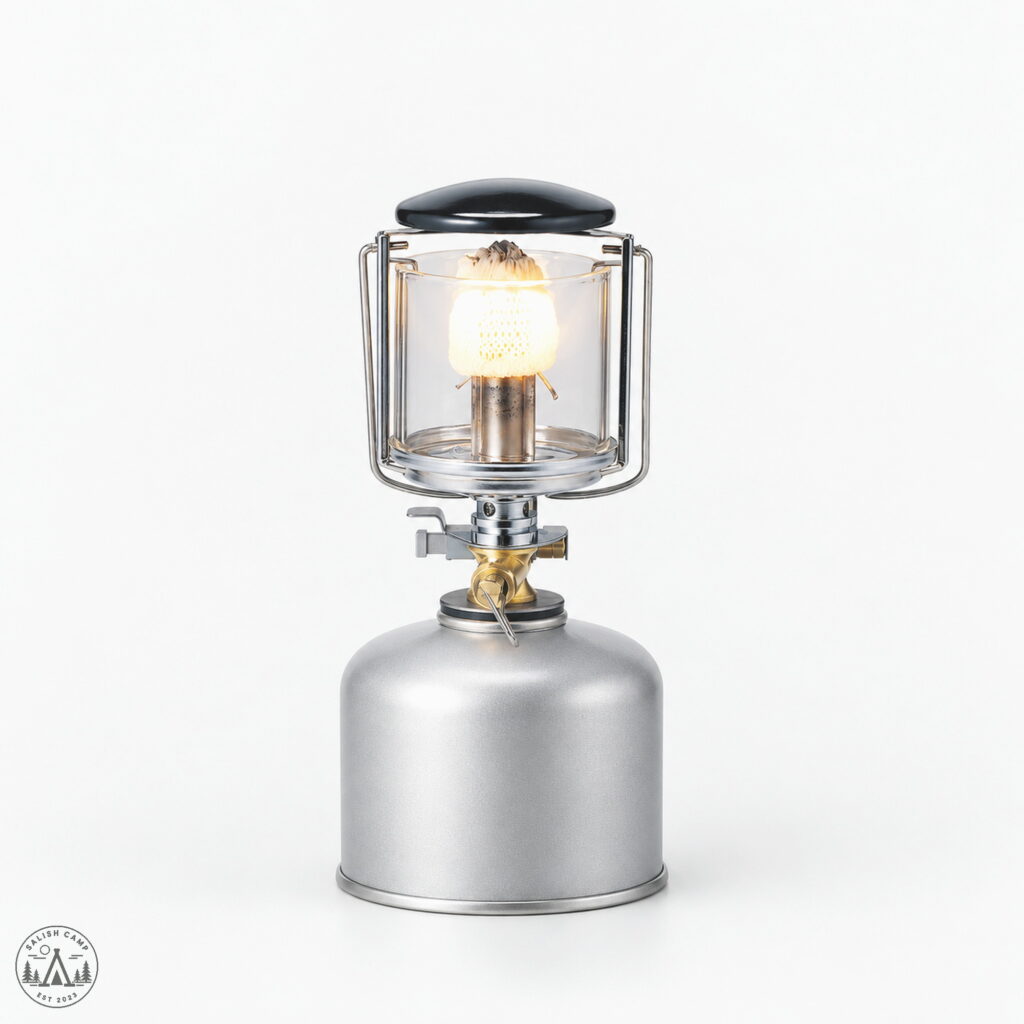
Buy if you want a small, traditional gas lantern for car camping, shoulder-season evenings or a quiet camp where warm ambient light matters more than convenience. The Kovea Observer KL-103 runs on standard screw-thread iso-butane canisters, lights with a piezo igniter and weighs about 168 g. Its mantle glow has a character most compact LED lanterns can’t quite match.
Skip if you need a light for inside a tent, want maintenance-free lighting, or camp where open flames are restricted. The mantle needs careful handling, the lantern gets hot, and cold canisters complicate things. A rechargeable LED is still the easier choice for everyday tasks.
What Stands Out
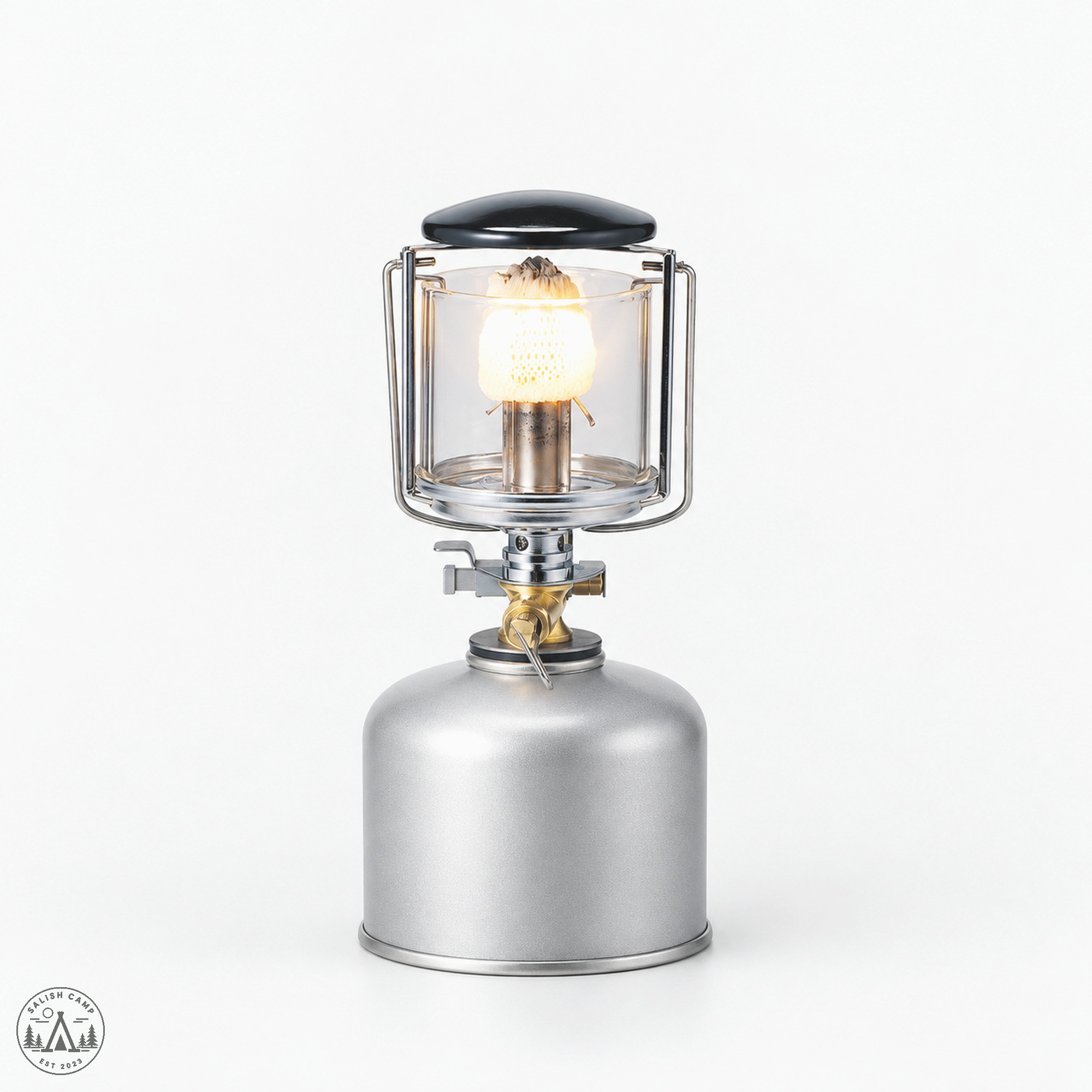
- Compact mantle design: At 60 x 60 x 110 mm, it slips into a car-camp lighting kit without the bulk of a full-size gas lantern.
- Piezo ignition: A built-in igniter means no separate lighter for normal startup.
- Standard screw-canister fuel: It threads onto the same style of iso-butane canister many backpacking stoves use.
- Warm mantle light: A gas-heated mantle gives the familiar warm look of traditional camp lighting instead of an LED’s cold glare.
- Light main unit: About 168 g for the lantern in aluminum, steel and plastic, though the canister and protective packing add to the kit.
- Old-school ritual: Visible combustion and mantle care give it a classic feel, with more responsibility than a battery lantern.
In The Field
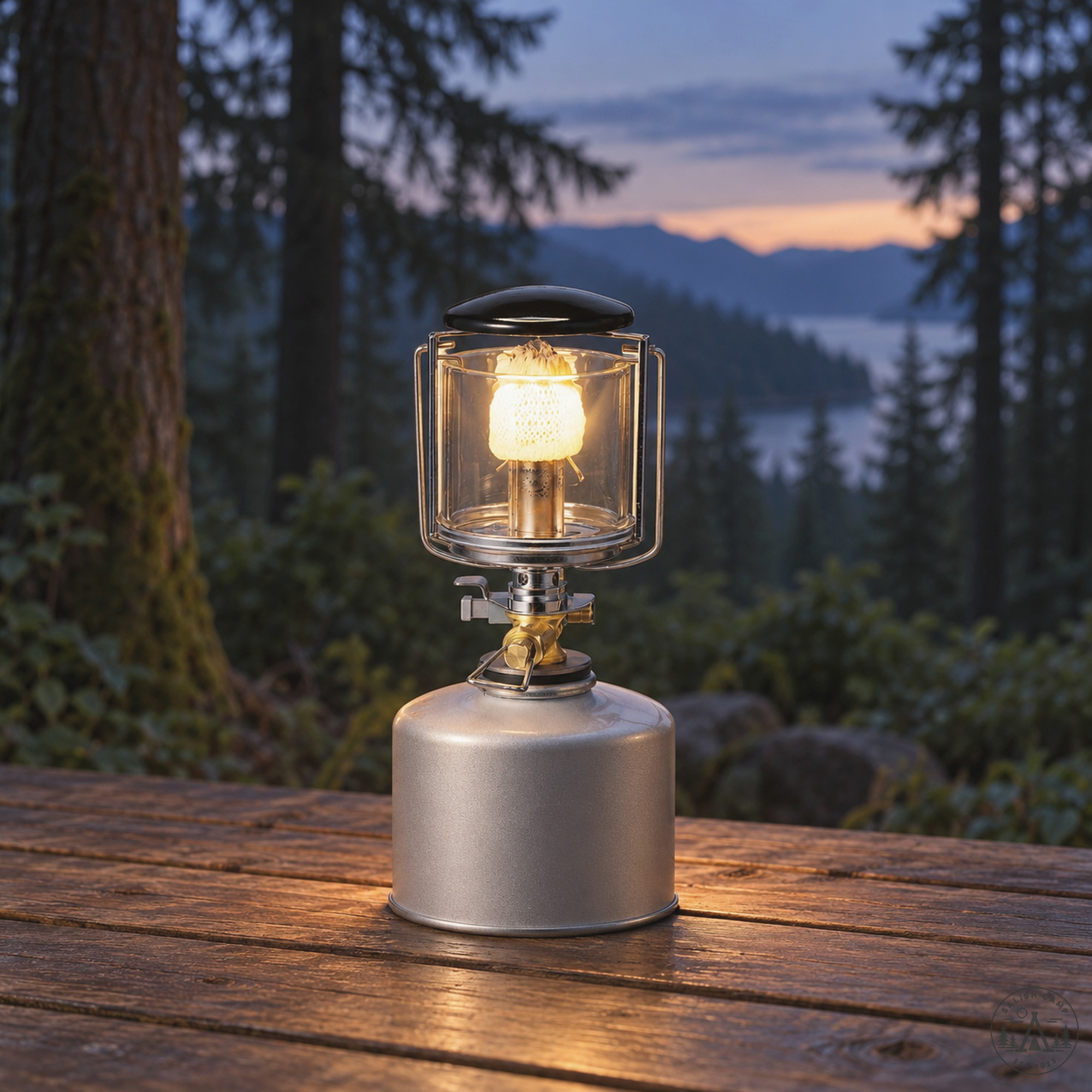
Gas lanterns still make sense to me, even after years of rechargeable LEDs. On a damp Olympic Peninsula evening, with dinner done and everyone settled at the table, I don’t always want a headlamp’s sharp beam or a big LED lantern’s broad wash. Sometimes I want a small pool of warm light that makes camp feel settled. That’s where the Kovea Observer KL-103 fits. It isn’t the lantern I’d take on every trip, and it’s never my only light, but its appeal is easy to understand once you know what it does and what it asks of you.
The first thing to understand is that it isn’t a gas-powered LED. It burns fuel to heat a delicate mantle, and the glowing mantle is your light. That mantle is the heart of the experience and the part that needs the most patience. For a first-time buyer, that distinction matters.
A new mantle starts as a small fabric-like mesh that you install and burn in following the lantern’s instructions. During that first burn, it turns into a delicate ash-like structure, and that structure is what glows during normal use. Once burned in, it’s far more fragile than it looks. A knock, rough packing or a careless touch can break it, so I keep spare mantles in my lighting kit rather than trust the installed one to survive every trip. Whether any come in the box varies by seller, so don’t count on it.
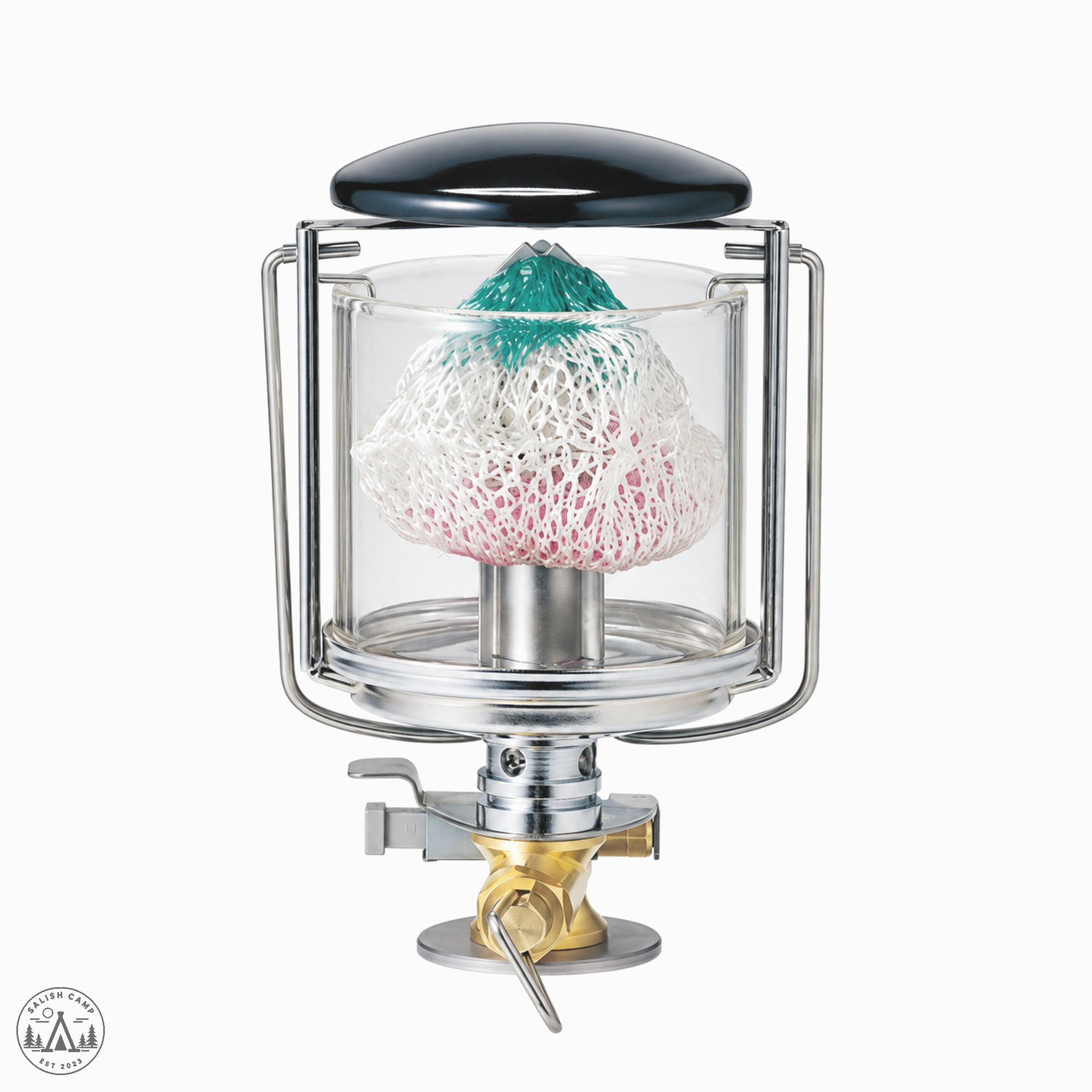
That’s where the Observer immediately separates itself from an LED lantern. An LED comes out of the drawer, gets charged and works. With a mantle lantern, setup and careful handling are part of the routine.
Fuel is the next consideration. The Observer uses standard screw-thread iso-butane canisters, the same general format as many compact backpacking stoves. On a Cascades car-camp where I’m already carrying a compatible canister for cooking, that means no separate fuel system to manage.
Attaching it still deserves attention. I inspect the connection, thread the lantern on straight without forcing or overtightening it, and follow Kovea’s instructions. If anything leaks, I stop and fix it outdoors before ever trying to light it. Then the whole thing sits upright on a stable surface. A broad, level camp table beats loose gravel or an uneven rock, because the canister is the base. On a gravel bar beside the Skagit, I worry more about that canister tipping than about the lantern’s small size; a light lantern doesn’t make a tall canister-and-lantern stack hard to knock over. I also keep it well away from jackets, dry leaves, tent fabric and anything else that could touch the hot lantern.
The piezo ignition is a real help for beginners, since it removes some of the awkwardness of lighting a gas lantern. Treat it as a convenience, not a guarantee, though. Spark igniters can get unreliable over time, and if it fails I follow the manufacturer’s lighting procedure rather than improvise.
Once it’s running, think of it as ambient light for a stationary camp. I wouldn’t expect it to replace a headlamp for finding gear in the dark, checking a stove connection or walking a trail.
Cold weather is where I manage expectations. The Northwest has plenty of evenings when the temperature drops fast after sunset, especially in the Cascades and on late-season coastal trips, and a warm gas lantern feels right in those conditions. But cold canisters are a real issue. Iso-butane loses vapor pressure as it gets cold, which can make the lantern harder to run consistently, especially as the canister cools further during use.
That doesn’t rule it out for shoulder-season camping. It just means paying attention to fuel and never depending on it as the only light. I’d never try to boost a cold canister by setting it near a fire, using direct heat or rigging a warmer. Use the right fuel, follow the instructions, and carry a reliable backup. An LED headlamp handles the task lighting while the Observer covers the relaxed, stationary part of the evening.
Where it belongs at camp is simple: outdoors, in a stable spot, with good ventilation and plenty of clearance from anything that burns. I never use it inside a sleeping tent, vehicle or enclosed shelter. Like any fuel-burning gear, it brings combustion gases, carbon monoxide risk, an open flame and hot surfaces, and being compact doesn’t change that. I also check local fire restrictions before packing it, since a fuel-burning lantern can be treated differently from an LED.
Packing takes more care than usual. At about 168 g the lantern itself is no burden; the real job is protecting the mantle from vibration, pressure and impacts. In a car-camp bin, I give it protective storage and keep pots, stove stands, table hardware and canisters from shifting against it on rough access roads. It has to be completely cool and disconnected from the canister before I pack it, and after a wet coastal trip I make sure it’s dry before it goes away.
There’s ongoing maintenance, too: keeping track of mantles, checking the burner area and watching the fuel connection. None of it is complicated, but it’s more involved than charging an LED. If you already run gas stoves and like traditional gear, those steps will feel natural. If you just want to light the table while you cook, the Observer may be more responsibility than you need, small as it is.
What I keep coming back to is purpose. I’d bring the Observer to a settled campsite where the evening is about cooking, conversation and staying put. I wouldn’t bring it as my main light on a wet backpacking overnight or a quick roadside stop. Its appeal is warm light and the quiet ritual of a traditional lantern, a perfectly good reason to choose it, as long as you accept that the ritual includes mantle care, gas management and fire safety.
Pros
- Compact and light: About 168 g, with a 60 x 60 x 110 mm body that suits a small lighting kit.
- Convenient ignition: Built-in piezo ignition simplifies normal startup.
- Warm mantle light: A traditional mantle gives pleasant, warm ambient light.
- Common fuel format: Runs on screw-thread iso-butane canisters you may already carry for a stove.
Cons
- Fragile mantle: Burn-in, replacement and careful storage take more attention than LED lighting.
- Cold-weather sensitivity: Canister performance drops as temperatures fall.
- Open-flame limits: Needs outdoor ventilation, stable placement and attention to fire rules.
Technical Specifications
| Specification | Details |
|---|---|
| Product | Kovea Observer KL-103 |
| Config | Observer KL-103 |
| Type | Gas mantle lantern |
| Fuel | Screw-thread iso-butane canister |
| Ignition | Piezo |
| Size | 60 x 60 x 110 mm |
| Weight | About 168 g |
| Materials | Aluminum, steel, plastic |
Final Thoughts
I appreciate the Kovea Observer KL-103 for what it is rather than what it’s competing against. It’s a compact gas lantern with warm mantle light, convenient piezo ignition and a familiar fuel format, useful qualities in an organized car-camp where the lantern stays put for the evening.
Its strengths come with clear tradeoffs. A fragile mantle, cold-sensitive fuel, hot surfaces and an open flame make it less forgiving than rechargeable lighting, which matters around kids, under wet tarps or in high fire danger. I also couldn’t confirm US availability for this exact model, so I’d line up a dependable source for the lantern and replacement mantles before making it a regular part of my kit.
If you want efficient, low-maintenance gear above all, a compact rechargeable lantern is the sensible pick. If you enjoy traditional camp equipment and want a small, warm light for stationary evenings, the Observer has a distinctive role. I’d pair it with an LED headlamp rather than use it instead of one: the headlamp for everything practical, the Observer for the atmosphere after the work is done.