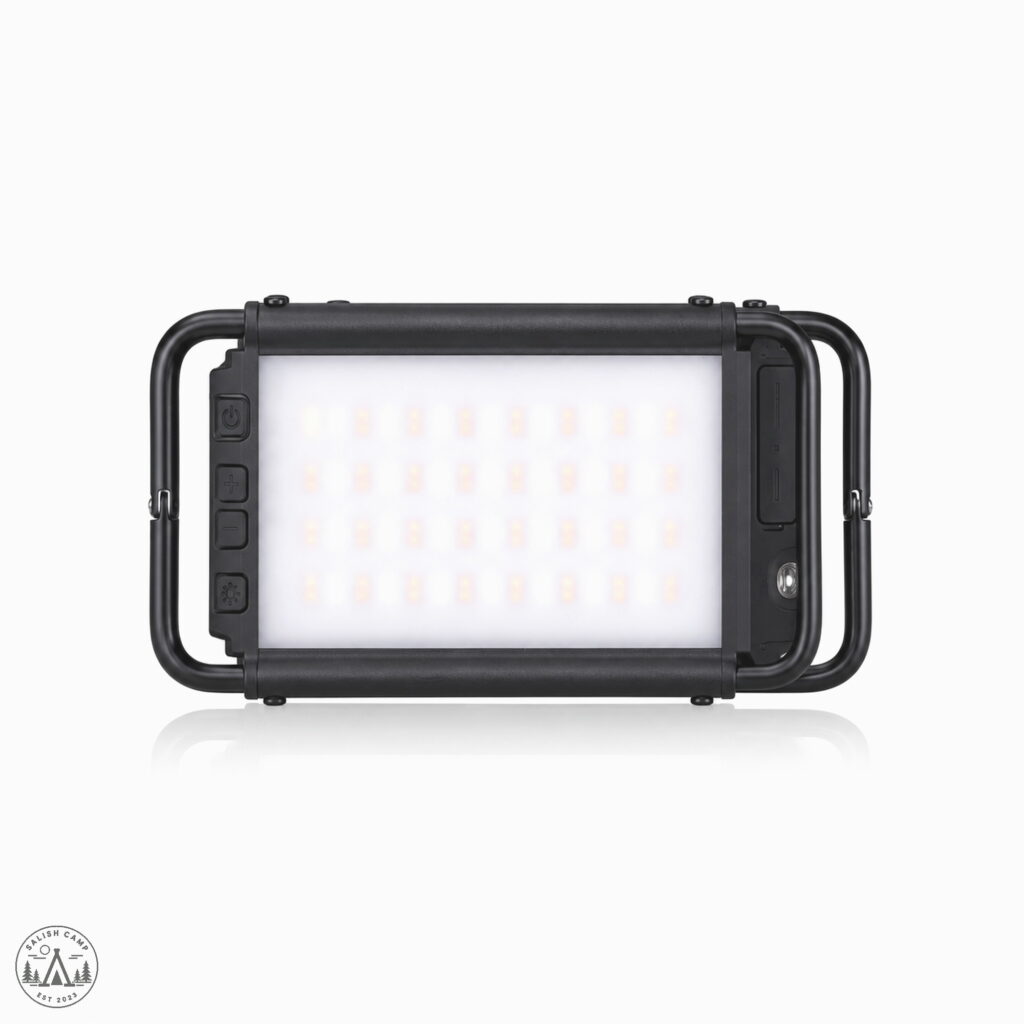
Buy if you want a powerful, rechargeable area light for a group camp kitchen, especially through the long, dark evenings of a Pacific Northwest autumn. The Claymore Ultra 3.0 M pairs 1,100 lumens of standard brightness and a 2,200-lumen turbo ceiling with three colour temperatures and a 48.24 Wh battery, and its USB-A output can top up a phone away from the vehicle.
Skip if you need a light backpacking lantern, prefer very warm light most of the time, or plan to leave a light out in heavy rain. At 405 g it is no minimalist lantern, and IP54 protection suits splashes and damp air rather than a sustained coastal downpour.
What Stands Out
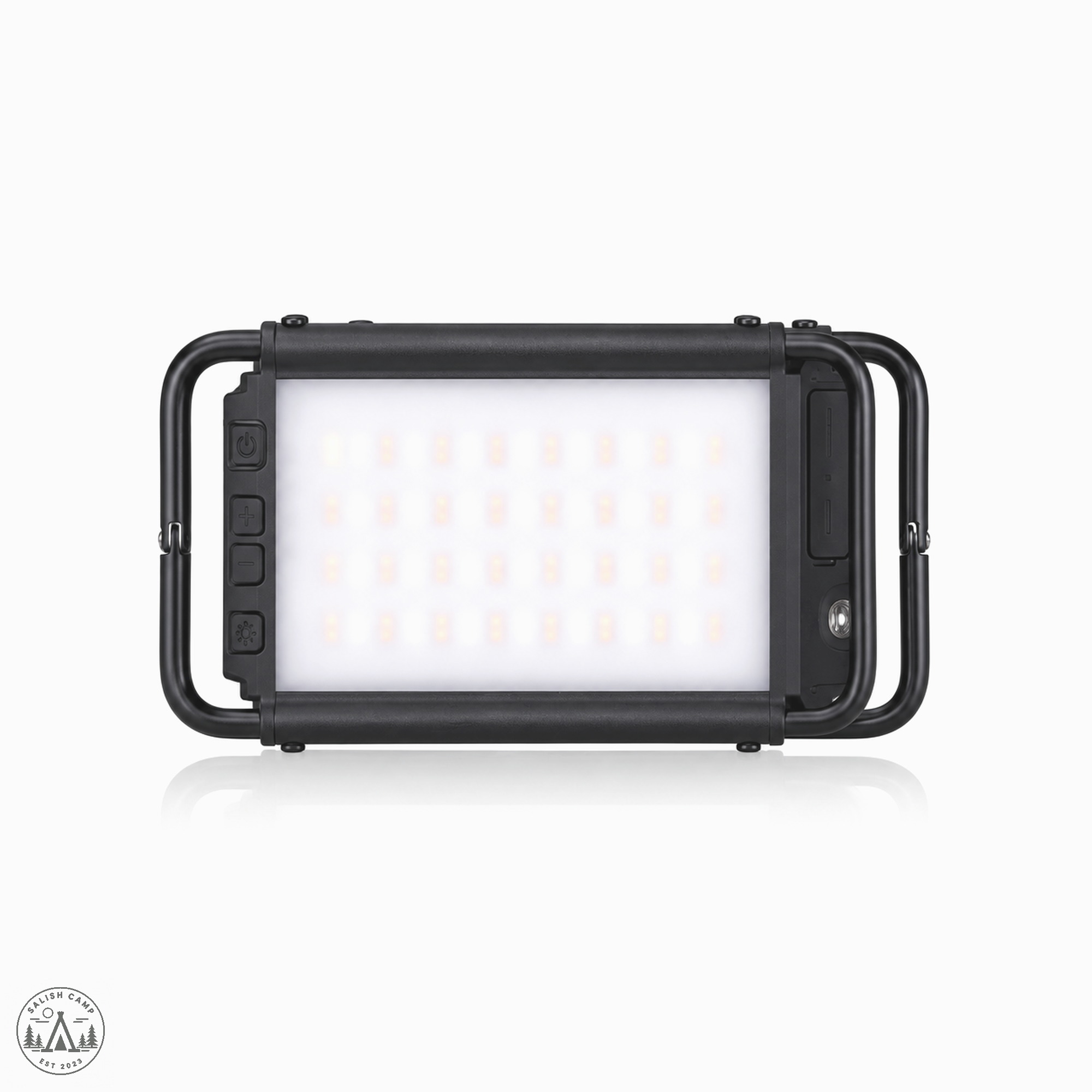
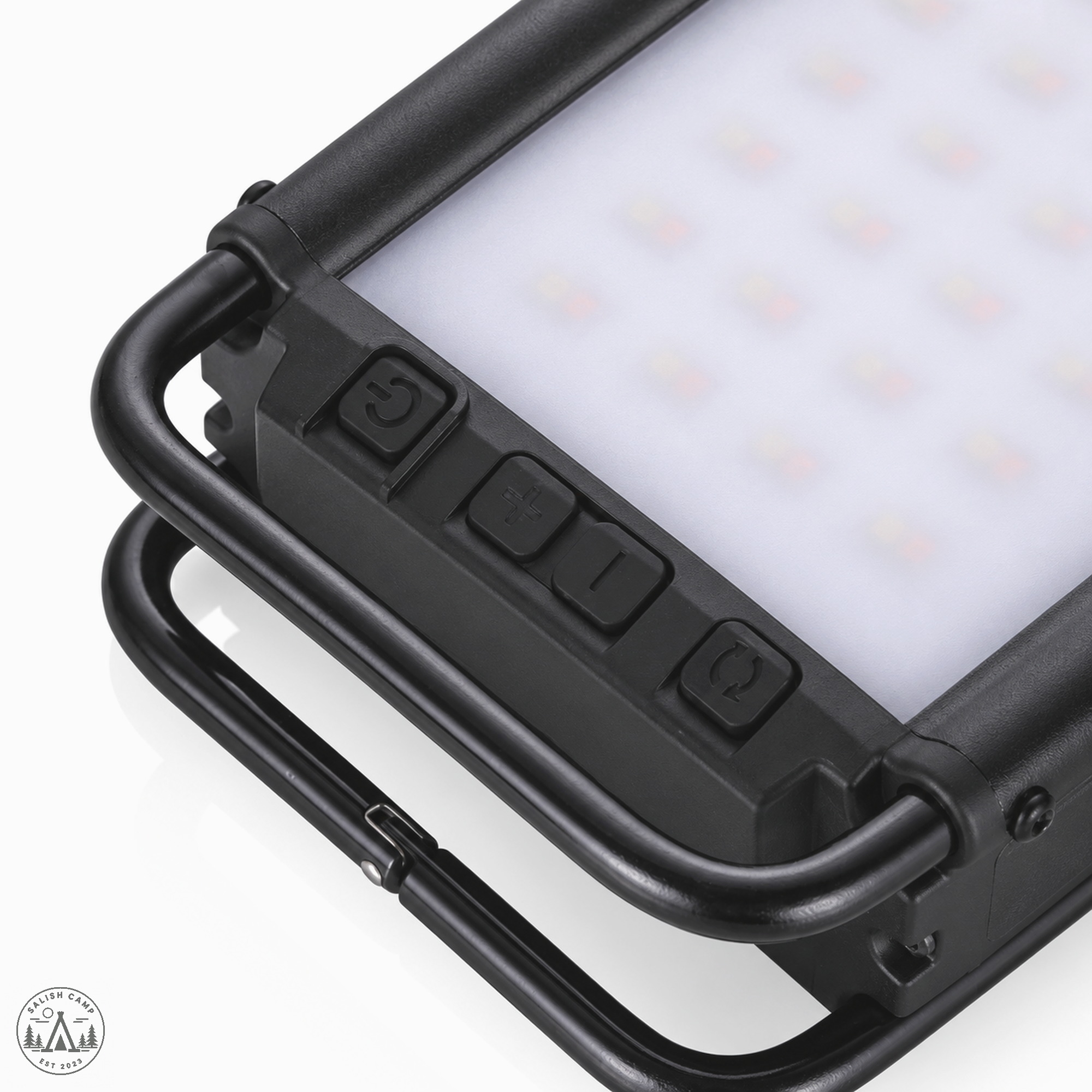
- Serious area-light output: Standard brightness runs 40–1,100 lumens, with turbo rated at 80–2,200 lumens, enough range to go from subdued campsite light to demanding kitchen work.
- Three colour temperatures: 6,500K cool, 4,200K natural and 3,000K warm let one light handle cooking, cleanup and evening downtime.
- Big rechargeable battery: The Samsung Li-ion cell stores 48.24 Wh, with a rated run time of 8–80 hours, or 4–40 hours in turbo.
- Phone charging built in: A USB-A power-bank output delivers up to 18 W, giving the light a second job as a backup charger.
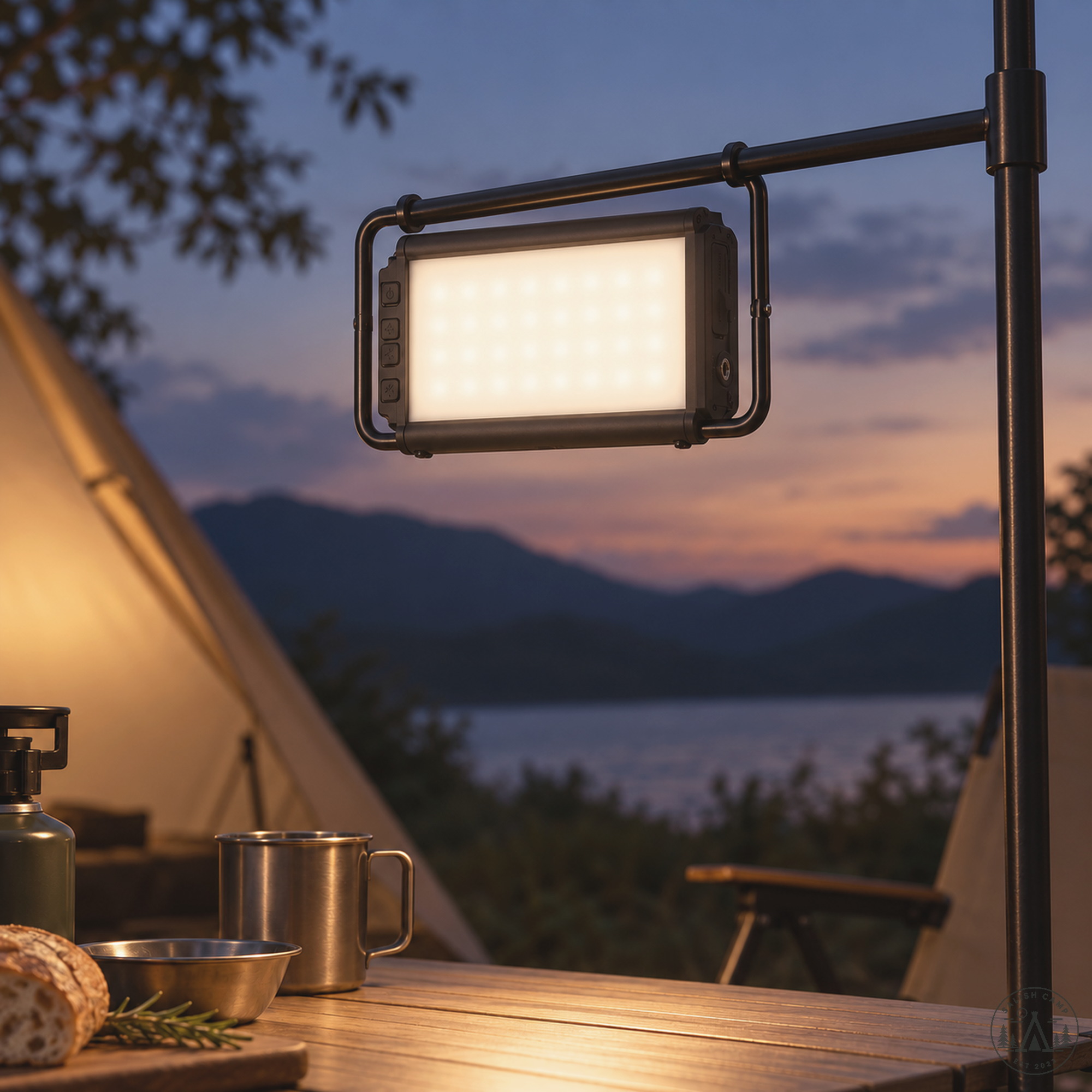
- Flexible mounting: The fold-out handle doubles as a stand, the included lantern hook handles hanging, and a 1/4-inch tripod socket takes compatible mounts.
- USB-C charging and a hardshell case: USB-C input is rated at 6 hours at 18 W, and the supplied hardshell case keeps the light and its hook and cable together.
- Compact but not ultralight: The 160 x 90 x 34 mm body packs a lot of light into a manageable shape, though 405 g is noticeable in a backpacking load.
In The Field
October is when I get particular about campsite lighting. On the Olympic Peninsula, daylight disappears quickly behind the trees, and by the time dinner prep starts, the kitchen can already feel like midnight. Add persistent drizzle, wet cookware and a tarp that blocks what little evening light remains, and a small decorative lantern stops being useful.
I want a light that shows me the whole cooking surface without aiming a headlamp at every pot, knife and cutting board. That’s where the Claymore Ultra 3.0 M makes sense. Its appeal isn’t just that it gets bright. It combines a wide output range, multiple colour temperatures and its own rechargeable power in a unit I can position over a group cooking area.
Placement comes first. At a wet Olympic Peninsula site, I hang the Ultra under the kitchen tarp with the supplied hook, above the main work surface and out of direct rain. Overhead light uses an area light far better than setting it at the end of a picnic table, and it leaves room for food prep without repositioning the light every time someone steps in.
At a Cascades car-camp, the fold-out handle gives another option. A light doesn’t always need to hang, and standing it on a stable table or shelf is easier when I’m reorganizing cookware or checking gear after dark. The tripod socket helps when the available hanging points are in the wrong place. I pick the mount based on where the light needs to fall, not wherever there’s room.
The 1,100-lumen standard maximum is a lot for a portable area light, and it’s useful when several people are cooking, sorting gear or cleaning up at once. But lumens describe total output, not how comfortable the light feels or whether it lands where it’s needed. A powerful light hanging at eye level can be more irritating than a dimmer one placed well, so I mount the Ultra above the kitchen and angle it toward the work surface rather than blasting the whole site from table height.
Colour temperature matters as much as brightness. The 6,500K cool setting is utility light: crisp and white for checking cookware, cleaning utensils and finding small items in a crowded kitchen. It works, but it isn’t what I want over the dining area all evening. The 4,200K natural setting is the most versatile for everyday camp use, a sensible middle ground for cooking, reading labels and moving around the site. The 3,000K warm setting is for after dinner, when everyone has settled in and the woods around camp are completely dark.
Turbo is best treated as an occasional tool. The 2,200-lumen ceiling is handy for reorganizing a large cooking area or sweeping camp for stray gear before leaving, but I wouldn’t run it through dinner. The turbo run-time range, 4–40 hours against 8–80 hours in standard modes, makes the tradeoff plain.
The battery is one of the Ultra’s strongest features. At 48.24 Wh, it carries a meaningful energy budget for a self-contained camp light, and watt-hours are a fairer way to compare capacity across devices than a big milliamp-hour number alone. For novices, the basic run-time math is battery watt-hours divided by the light’s draw in watts. Claymore doesn’t publish the draw for each brightness and colour setting, so I can’t calculate exact hours at 1,100 lumens. I treat the rated ranges as a guide, not a promise that maximum brightness lasts for the longest listed time.
On a late-season trip to the coast, I start with a full charge, use moderate output for general cooking and turn it up only when a task calls for it. Until I have my own run-time numbers for the settings I actually use, I leave a generous margin rather than planning around the top of the range.
Backup charging is what makes the Ultra especially attractive for a car-camping kitchen kit. Phones get used for navigation, weather checks, photos and staying in touch, and it’s easy to find the one you’ve carried all day needs power just as the temperature drops. The USB-A output is rated up to 18 W, though the actual charging speed depends on the phone, cable and charging protocol. Conversion losses also mean a phone gets less than the battery’s full stored capacity.
There’s a tradeoff worth explaining to anyone new to rechargeable camp lights: power used to charge a phone isn’t available for light later. On a long October night, I keep the kitchen lit first and treat phone charging as a backup job.
The USB-C input simplifies packing a rechargeable kit. Claymore rates charging at 6 hours at 18 W, so I recharge before leaving home rather than counting on time at camp while packing the vehicle at the last minute.
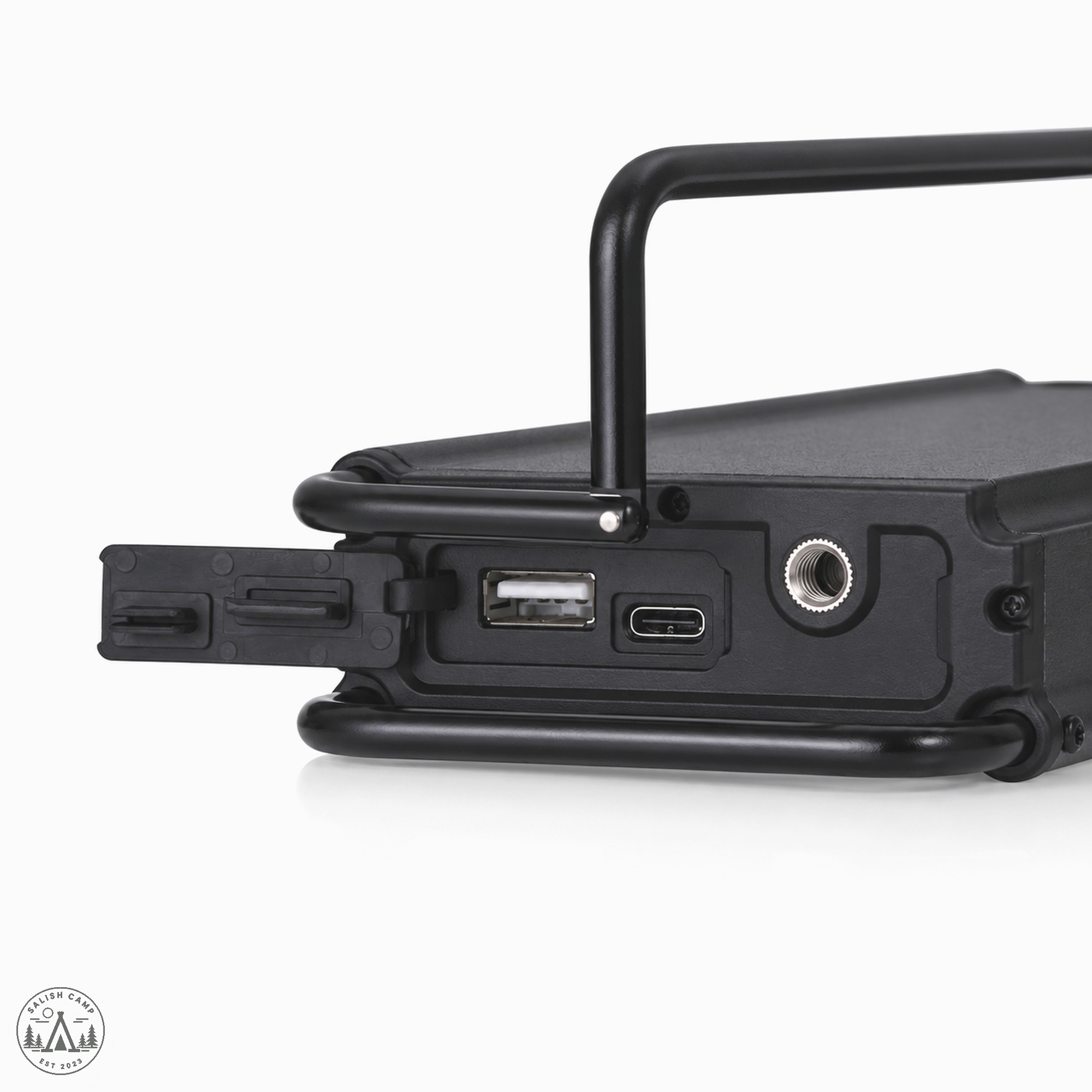
IP54 covers a lot of the damp conditions I see in the Pacific Northwest, but it isn’t a waterproof rating. The first digit means protection against harmful dust, and the second means resistance to splashing water from any direction. It doesn’t cover immersion or sustained heavy rain, so on the Olympic Peninsula I keep it under the tarp and never leave it hanging outside overnight. Wind-driven rain finds gear that looked protected when camp went up.
The same goes for a gravel bar on the Skagit. Damp air, spray and wet hands are normal there, so I keep the charging ports covered, avoid plugging in cables in the rain, and dry the housing before it goes into the hardshell case. A case is great for transport, but trapping moisture inside is never a good habit.
At 405 g, the Ultra sits firmly in my car-camping kit. It fits easily in a kitchen tote, but I wouldn’t automatically add it to a light overnight backpacking load. At a Cascades basecamp, the weight buys a dedicated kitchen light that can stand, hang or sit on a tripod, and the case, hook and cable keep the lighting kit in one place instead of scattered across bags after dark.
I like having one deliberate overhead work light and keeping softer light for the eating area. One strong area light sets up a good working zone, though it won’t erase every shadow or replace a headlamp for walking around camp after dark. Bright light for tasks, warm light for evenings, a big rechargeable battery and backup phone charging all belong to the same job, and I’d choose the Ultra 3.0 M as a sheltered camp-kitchen light first.
Pros
- Strong, adjustable output: Wide standard and turbo brightness ranges cover cooking, cleanup and other after-dark tasks.
- Useful colour choices: Cool, natural and warm settings suit both practical work and relaxed evenings.
- Big battery that charges a phone: The 48.24 Wh battery and USB-A output make it useful beyond lighting.
- Versatile mounting and storage: The stand, lantern hook, tripod socket and hardshell case fit a range of car-camping setups.
Cons
- Heavy for backpacking: At 405 g, it makes more sense as a group camp light than a trail lantern.
- Limited weather protection: IP54 handles splashes but not direct, sustained PNW rain.
- Cool top modes and vague run times: The coolest setting can feel clinical, turbo drains the battery faster, and Claymore publishes run times only as broad ranges.
Technical Specifications
| Specification | Detail |
|---|---|
| Product | Claymore Ultra 3.0 M |
| Config | Black (CLC-GL-1400BK) |
| Price | $99.95 USD (claymoreoutdoor.com, 2026-10-10) |
| Brightness | 40–1,100 lm; Turbo 80–2,200 lm |
| Colour temps | 6,500K cool, 4,200K natural, 3,000K warm |
| Battery | 48.24 Wh (13,400 mAh @3.6V), Samsung Li-ion |
| Run time | 8–80 h (Turbo 4–40 h) |
| Charging | USB-C in, 6 h at 18 W |
| Power bank | USB-A out, up to 18 W |
| Water resistance | IP54 |
| Size | 160 x 90 x 34 mm |
| Weight | 405 g |
| Mounting | Fold-out handle stand, lantern hook, 1/4-in tripod socket |
| In the box | Light, hardshell case, hook, USB-C cable |
Final Thoughts
The Claymore Ultra 3.0 M makes the most sense as a dedicated group camp-kitchen light. It has the brightness for real work after sunset, enough colour-temperature range to keep every activity from feeling like cold-white task lighting, and a rechargeable battery that carries longer trips without disposable cells.
I especially like the mix of overhead hanging, tabletop standing and USB-A phone charging. Each piece of my kit should have a clear main job, and useful second jobs make it easier to justify bringing along.
Its limits are straightforward. The 405 g weight keeps it out of my lightweight backpacking kit, IP54 calls for shelter rather than open rain, and I’d want my own run-time testing before trusting the top of its rated range.
For a wet October weekend on the Olympic Peninsula or an established Cascades basecamp, though, this is the light I’d make room for. I’d hang it under the tarp, use the natural setting for dinner prep, switch to warm afterward and save the brightest modes for when they’re genuinely needed.