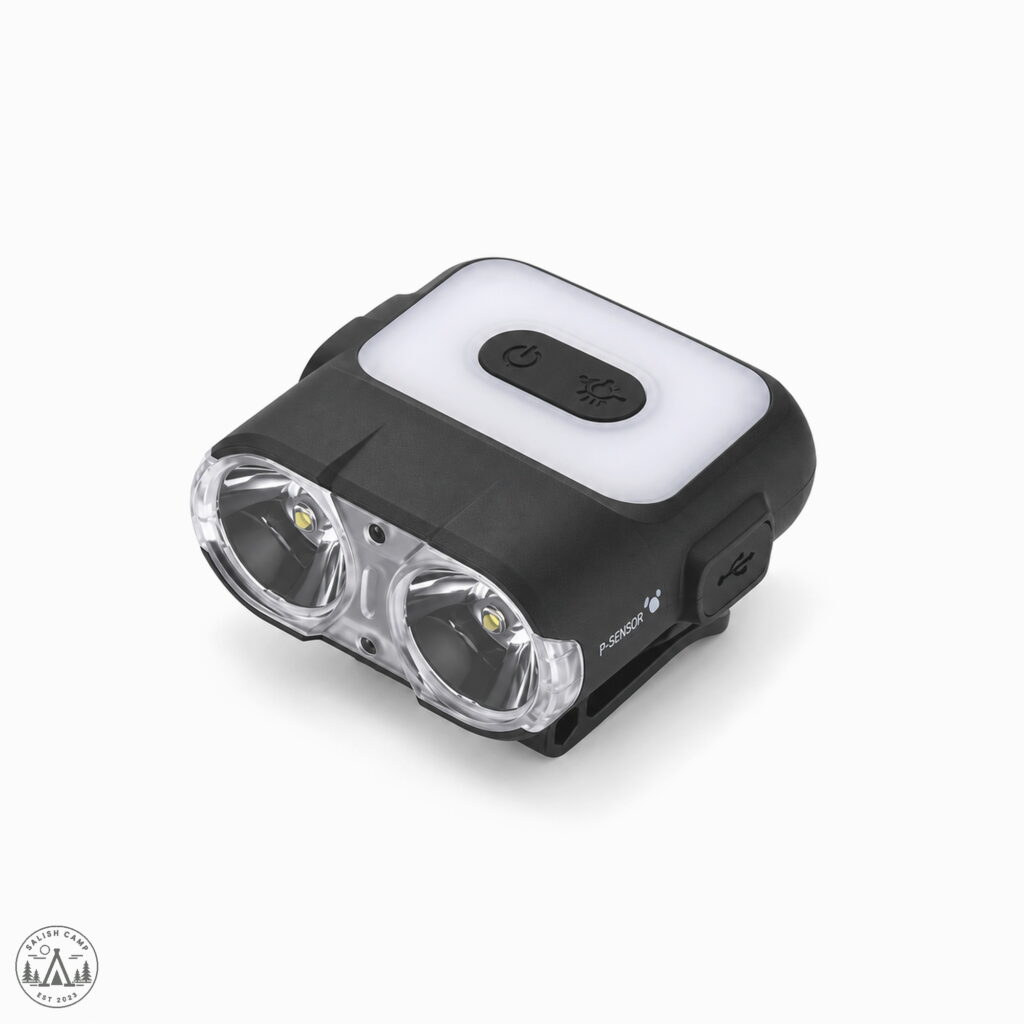
Buy if you usually wear a ball cap while fishing, setting up camp or working around the site after dark. The Claymore Capon 120H puts up to 500 lumens in a 59 g clip-on light with a tilting head, a motion-sensor switch and USB-C charging, which makes it handy for pre-dawn launches, cooking under a tarp and sorting gear with both hands free.
Skip if you want a headlamp that works without a hat, need sustained high output through a long night, or expect it to shrug off prolonged heavy rain. The small battery and IP54 rating suit intermittent work and managed weather, not continuous high output in a storm.
What Stands Out
- 500-lumen maximum: Far more output than a basic close-range cap light, with headroom for checking a shoreline, a boat ramp or a dark corner of camp.
- Built-in cap clip: It clips straight onto a hat brim instead of using an elastic headband, so it slots into a routine if you already wear a ball cap.
- Motion-sensor switching: The on/off sensor saves hunting for a small button with gloves on, as long as there’s room for a deliberate gesture.
- Tilts up to 180°: The head aims down at your hands, the ground or a work surface without craning your neck.
- Four modes: Focused, Flood, Diffused red and SOS strobe cover close work, wider light and signaling.
- USB-C rechargeable: A 4.44 Wh battery with a rated 2–90 hour run time; mode and brightness make a big difference to how long a charge lasts.
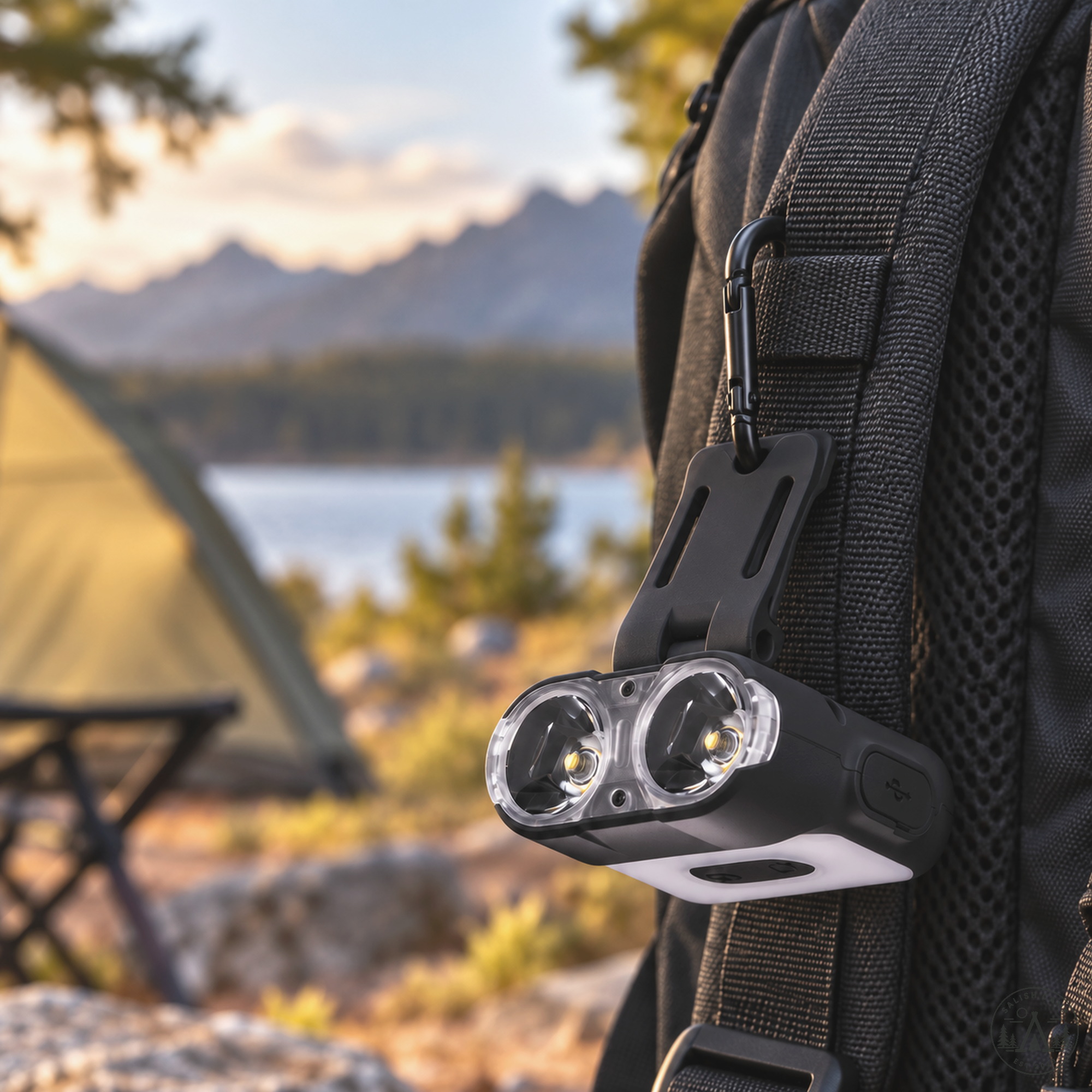
- Carabiner included: You can hang it when a cap isn’t handy, though it stays a directional light rather than a lantern.
In The Field
I like the idea of a cap light because of how my early fishing mornings in the Pacific Northwest actually go. I’m already wearing a ball cap, whether I’m getting a boat ready at a dark ramp, sorting tackle by the truck or checking a line before heading out. A headlamp over the cap works, but it’s one more strap and one more thing to adjust.
The Capon 120H clips onto the hat instead. At 59 g it’s light for what it does, though I still expect to notice some weight on the brim, and a floppy cap won’t hold it as steadily as a structured one. That’s worth knowing before assuming a brim light beats a headlamp.
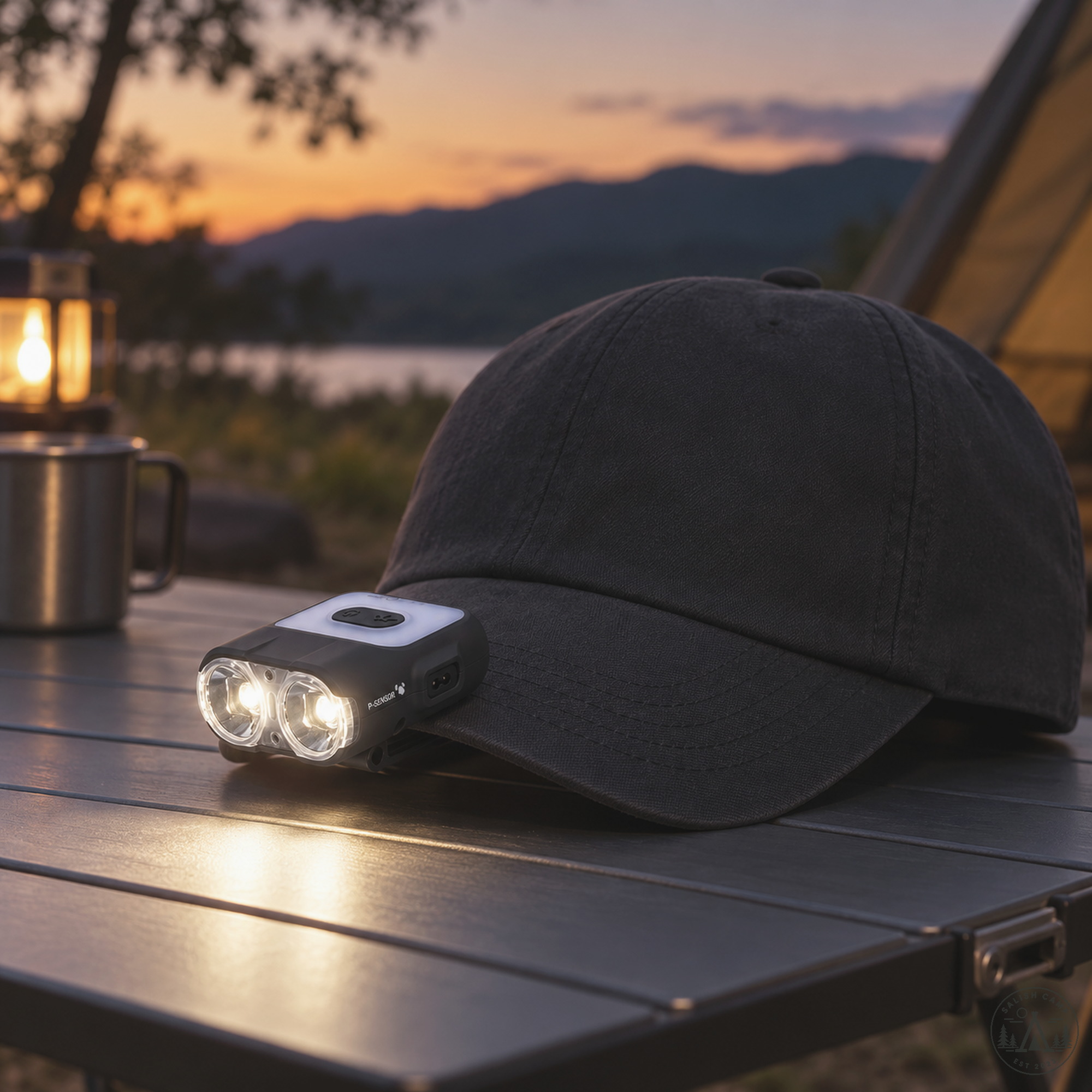
On a pre-dawn launch on the Skagit, I want light exactly where I’m working: finding the right tackle box, checking a knot, spotting dropped hardware, getting gear organized before the boat moves. I don’t need full brightness for any of that. I need a predictable beam on my hands so I’m not hunting for a flashlight every time I set something down.
That’s where the 180° tilt earns its keep. I can angle the beam down at a knot instead of dropping my head, which matters because a cap brim can block part of the downward view. Over dozens of small tasks, that adds up. Flood suits spreading gear across a camp table or digging through a bin; Focused is for picking out something farther away. Up to 500 lumens is a lot, but more isn’t always better close to your face. Too much glare bounces off shiny tackle, wet surfaces and light-colored gear, so I run it lower for close work and save the top end for checking the ramp or the water’s edge.
Claymore rates the beam distance at 8–105 m depending on mode and output. For novices, that upper figure is about picking out a ramp marker or a trailhead post, not about how much light lands on your hands. The white LED is a cool 5,700K, which shows tackle colors and knot detail clearly but can feel harsh at camp at full power.
Back at camp, the job shifts to after-dinner chores: packing gear away, cleaning the stove and organizing food storage before bed. Under a tarp, I prefer targeted light to flooding the whole site, and a cap light follows wherever I’m looking while my hands handle cookware, zippers and straps. The red mode helps here. It’s easier on night vision than bright white and less intrusive when others are settling into their tents, though for detailed work where color and contrast matter, I switch back to white.
The motion sensor could be genuinely useful on cold trips. Gloves make small buttons awkward, especially with stiff fingers, so switching the light on or off with a wave is appealing. I’d still learn the manual control first. In a crowded camp kitchen, my hands pass near the light constantly as I reach for shelves, lift a mug or adjust my cap, and I wouldn’t assume the sensor ignores all of that until I’d seen how it behaves. I’d use the sensor for repetitive chores and switch manually when an accidental change would be annoying.
Battery management is where I’d be most disciplined. The 4.44 Wh cell is small, and the rated run time spans 2–90 hours. That doesn’t mean near-endless high output. Brighter settings drain it faster, and the 2-hour end of the range is the real warning for anyone planning to run it at full power. I treat it as an intermittent task light: use only the brightness I need, turn it off between jobs, and don’t leave it running just because it’s clipped to my hat.
At a Cascades car-camp, recharging is easy. USB-C at 5V 1A takes about 2 hours, and the included cable means one less dedicated charger to pack. I still top it up at home before a trip rather than counting on a power bank or the vehicle. And for anyone new to rechargeable lights, don’t plan around the top of the run-time range. Mode choice is part of using it, and a backup light is sensible whenever darkness could become a safety issue.
IP54 means protection against dust and splashing water, not waterproofing. At a late-season coastal site, I’m comfortable with spray and light rain but keep the light out of sustained downpours. If heavy rain is unavoidable, I’d choose something with a stronger documented rating.
The carabiner adds flexibility when I don’t want it on my cap. I can hang it near a sheltered work area while sorting gear, but it stays directional. Hanging it doesn’t turn it into a lantern, and a loose hanging light can swing or point somewhere unhelpful. I see that as a bonus, not the reason to buy it.
A conventional headlamp is still the better primary light when I’m not wearing a hat, when I’m moving for long stretches, or when I need a secure head-mounted fit. The Capon 120H is more specialized. I like clipping a small light to something I already have on, especially for short work sessions where a full headlamp feels like overkill.
For this kind of work, 500 lumens is plenty. What decides whether it becomes a regular part of my fishing and camping kit is whether the clip stays comfortable on my usual cap, whether I can control it easily with gloves, and how well I manage the battery over a long evening.
Pros
- Strong maximum brightness: Up to 500 lumens from a compact cap light, with range for close tasks and farther objects.
- Hands-free design: The brim clip, tilting head and motion-sensor switch suit fishing prep and camp chores.
- Versatile modes: Focused, Flood, red Diffused and SOS strobe cover different situations.
- Easy charging and packing: Light housing, USB-C charging and included pouch and carabiner keep it simple.
Cons
- Needs a cap: The brim clip isn’t a true headband, which limits mounting options without a hat.
- Small battery on high: The 4.44 Wh cell calls for realistic expectations at brighter settings.
- Moderate weather protection: IP54 handles splashes, not immersion or prolonged heavy rain.
Technical Specifications
| Specification | Details |
|---|---|
| Product | Claymore Capon 120H |
| Config | Black (CLP-GL-135BK) |
| Price | $39.95 USD (claymoreoutdoor.com, 2026-10-10) |
| Brightness | 1–500 lm |
| LED | Cool white 5,700K; red |
| Modes | Focused, Diffused (red), Flood, SOS strobe |
| Beam distance | 8–105 m |
| Battery | 4.44 Wh (1,200 mAh @3.7V) |
| Run time | 2–90 h |
| Charging | USB-C 5V 1A, 2 h |
| Water resistance | IP54 |
| Size | 57 x 55 x 35 mm |
| Weight | 59 g |
| Features | Motion-sensor on/off, tilt up to 180°, built-in clip |
| In the box | Light, pouch, carabiner, USB-C cable |
Final Thoughts
The Claymore Capon 120H makes the most sense once you know exactly what it is. It isn’t the headlamp I’d grab for an exposed overnight hike or a long stretch of heavy coastal rain. It’s a compact, directional task light built around the convenience of a ball cap.
For fishing, that’s especially appealing: light on tackle, knots, launch gear and shoreline prep without anything in the way. Around camp, it handles cooking, organizing and the small chores that always turn up after dark. A 500-lumen ceiling, tilting head, red mode, motion-sensor control and USB-C charging add up to a useful package without complicating its basic job.
The compromises are just as clear. It needs a cap or another attachment point, the battery calls for restraint on high, and the weather rating asks for some care. I still keep a regular headlamp for longer trips, but for early launches, short walks around camp and the routine work before sunrise or after dinner, the Capon 120H earns its place by making ordinary tasks easier.