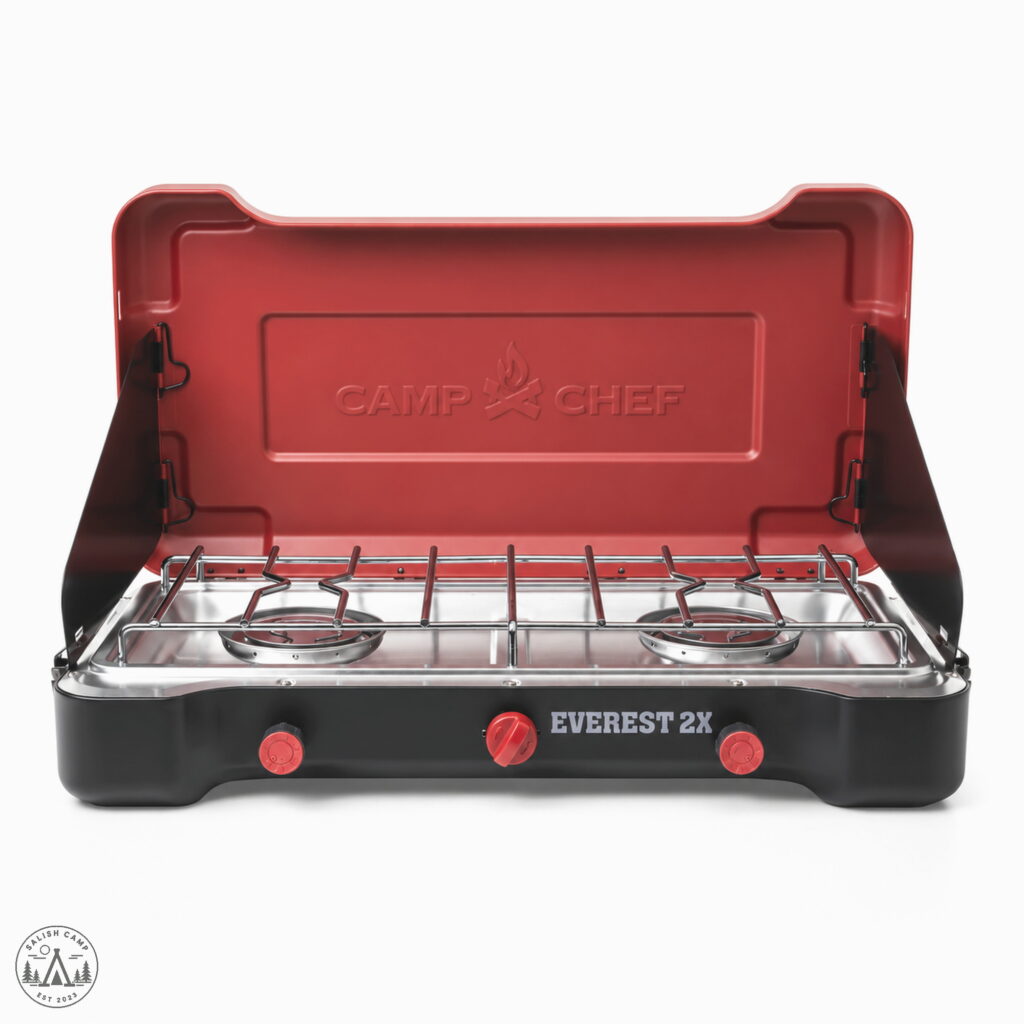
Buy if you cook real breakfasts and dinners for a family or small crew, spend time at windy Pacific Northwest campgrounds, and want a two-burner stove that can handle large pots, skillets, and low-heat cooking without constantly fighting the weather. At $229.99, the Camp Chef Everest 2X delivers two 20,000 BTU burners, a three-sided windscreen, and straightforward controls in a sturdy car-camping package.
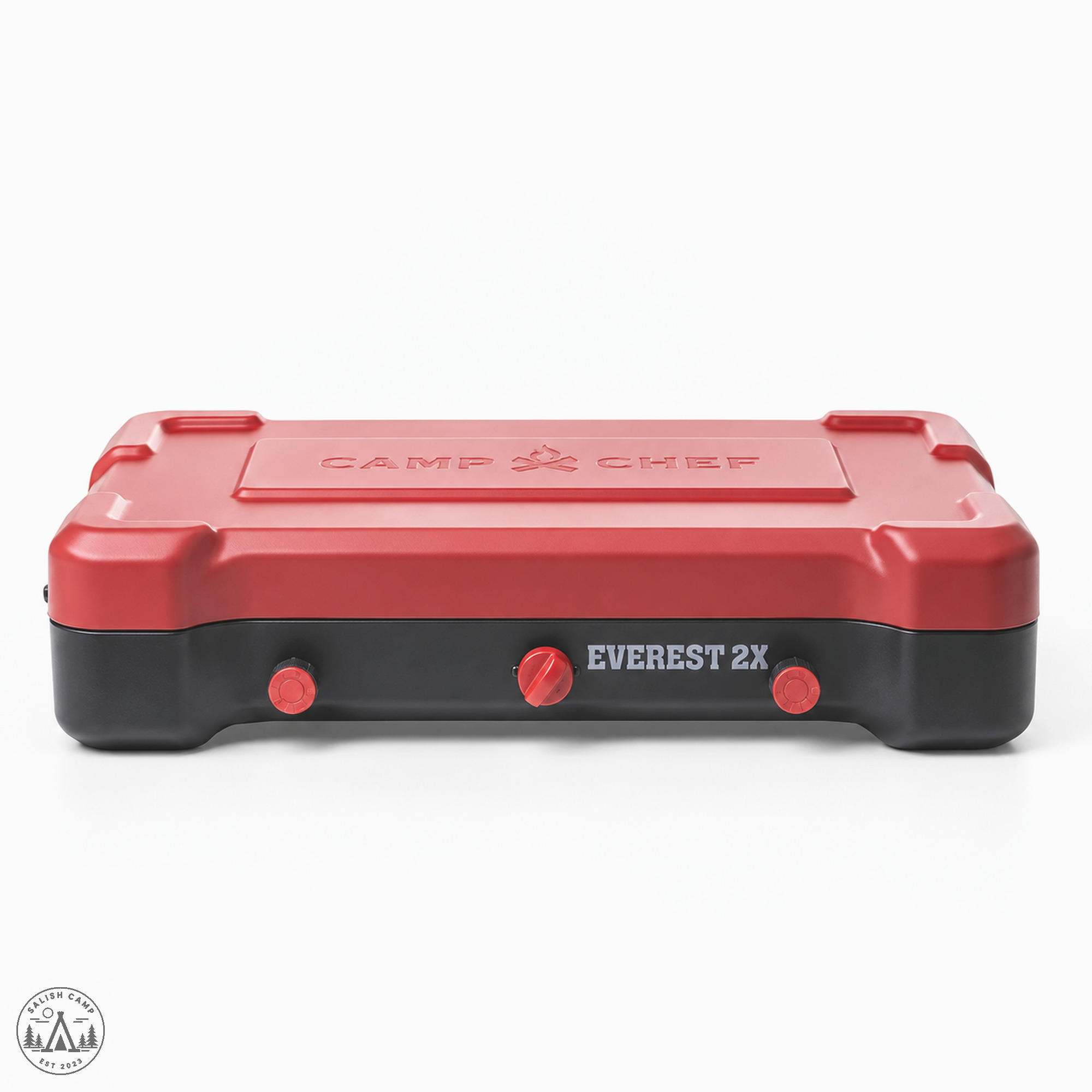
Skip if your camp meals rarely go beyond coffee, oatmeal, and reheated food, or you prioritize compact storage, lower fuel consumption, and a smaller purchase price. At 12 lb, the Everest 2X is built for picnic tables, tailgates, and vehicle-based camps rather than carrying down a trail.
What Stands Out
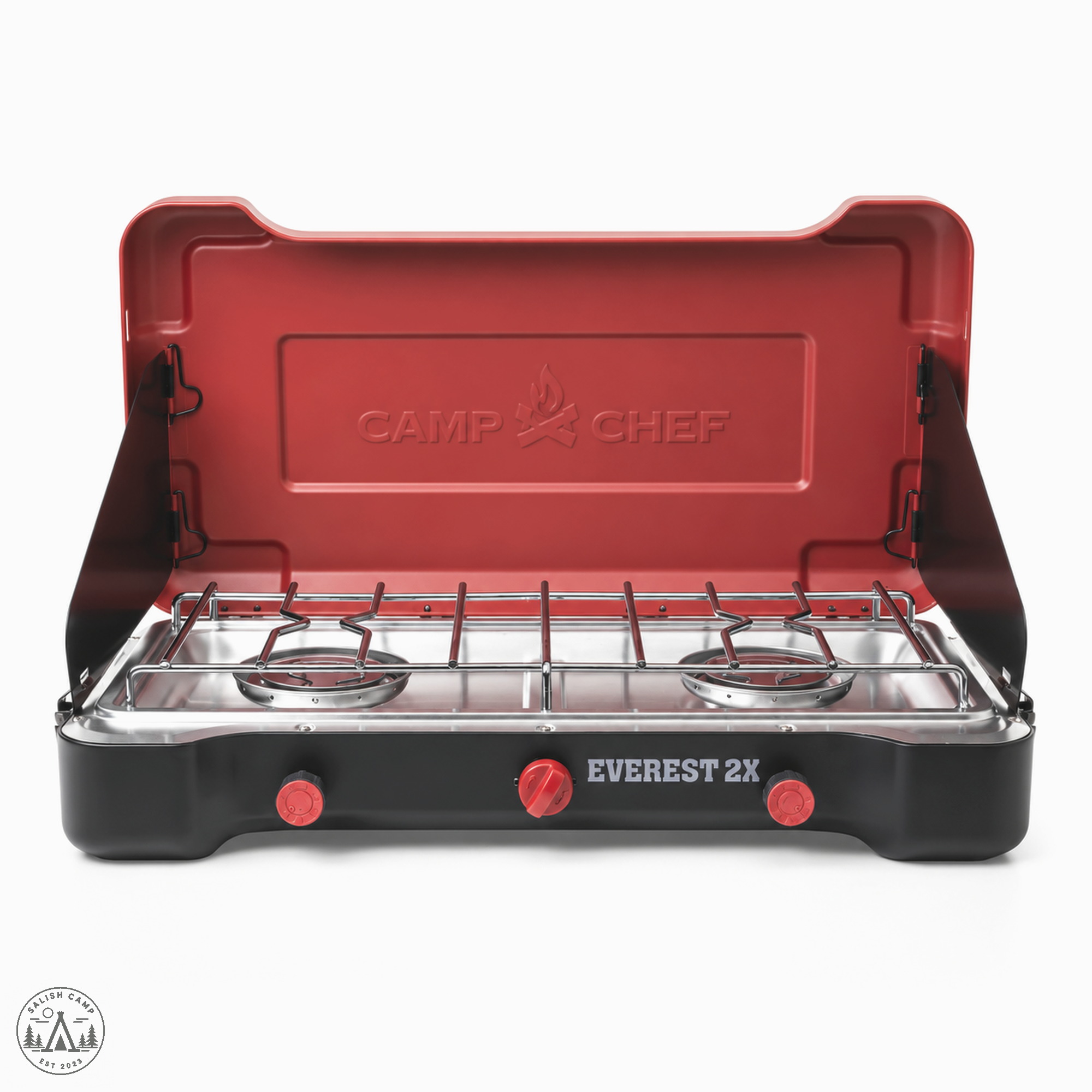
- 40,000 BTU of combined output. Two independently controlled 20,000 BTU/hr cast aluminum burners provide substantial cooking power for large pots, skillets, and meals prepared in exposed campgrounds.
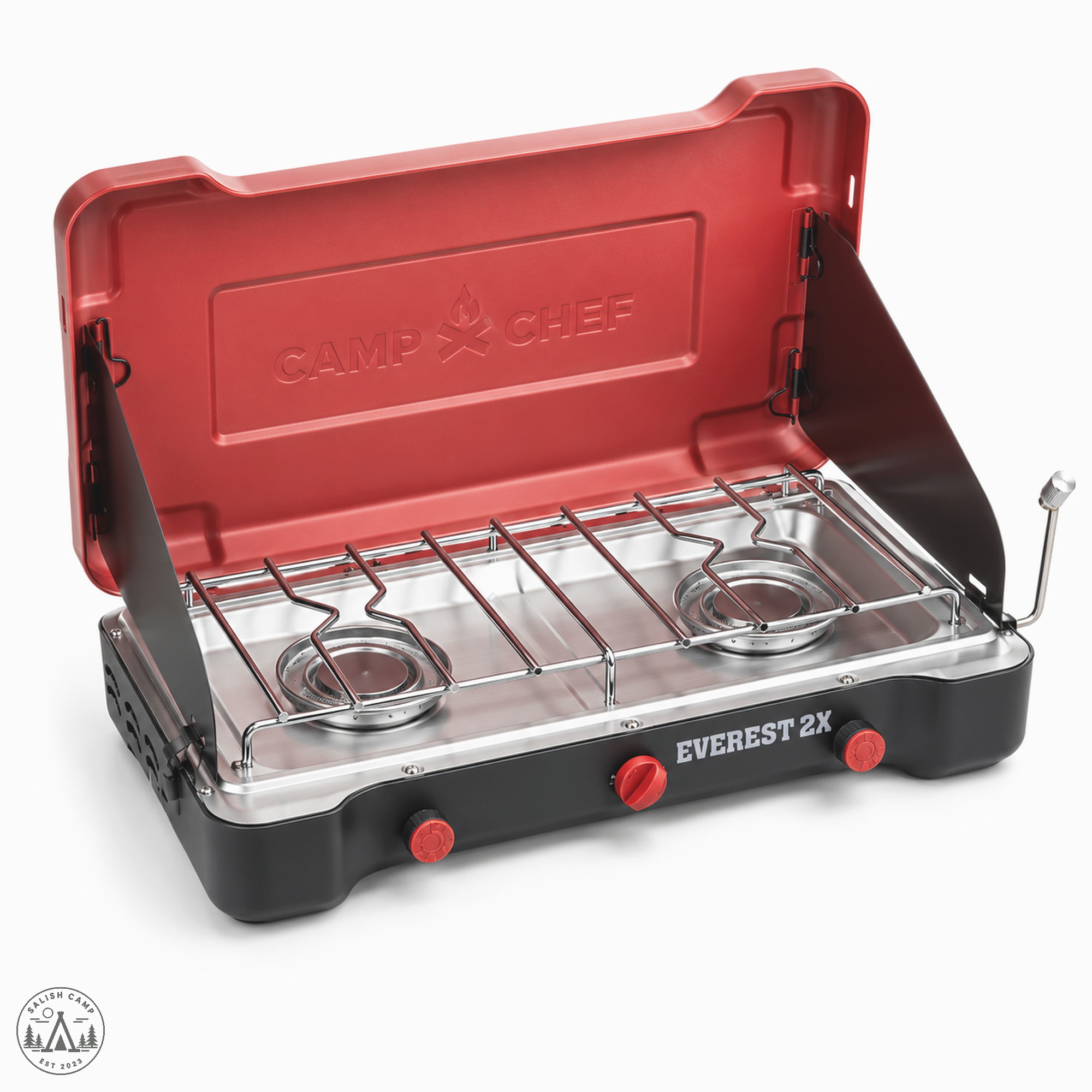
- A genuine three-sided windscreen. The folding red lid and side panels surround the cooking area on three sides, helping shield the burners from gusts across coastal picnic tables and mountain campsites.
- 215 square inches of cooking space. The broad cooking surface accommodates practical two-burner meal preparation, making it easier to manage breakfast or dinner for several people.
- Useful low-heat control. Appliance-style temperature controls allow the burners to be turned down for gentler cooking, rather than forcing every meal to happen at full output.
- Matchless ignition from the front panel. The stove provides matchless ignition alongside its two burner controls, keeping the basic cooking interface accessible from the front.
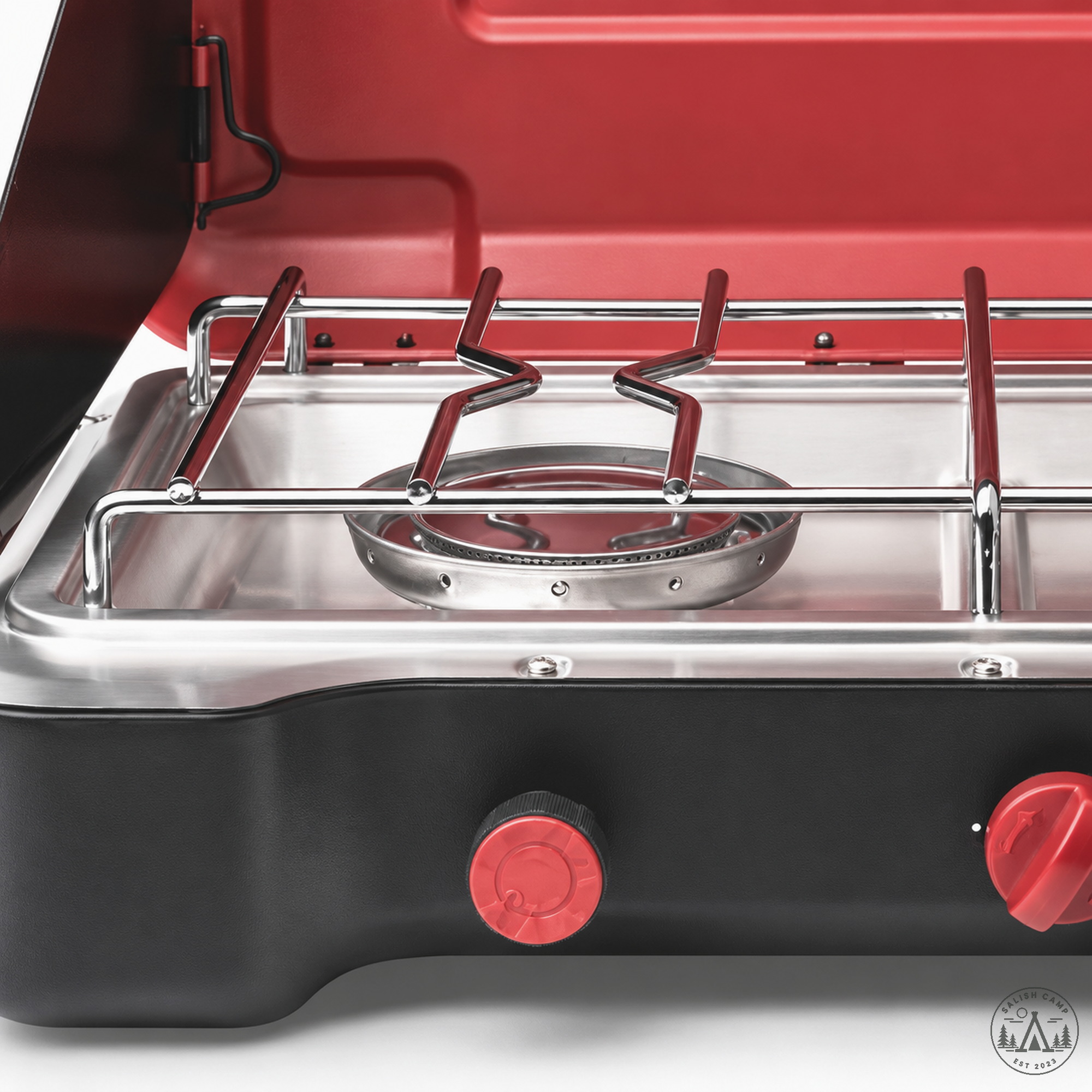
- Stainless steel drip tray. An accessible drip-tray area makes cleaning up spilled food and cooking grease more manageable after a full meal.
- Packable steel construction. The folding lid, front latch, and integrated carry handle create a self-contained stove for moving between the vehicle and campsite. The optional Mountain Series Steel Griddle FG20 can be stored upside down inside the closed stove when purchased separately.
In The Field
The reason I would bring the Everest 2X camping is simple: I want to cook an actual meal without making the weather the main event. On a damp Olympic Peninsula morning, that means coffee on one burner while a skillet handles eggs or potatoes. On a cold Cascades evening, it means pasta water boiling while another pan works through vegetables or a sauce. I don’t want to take turns cooking every component because the stove only has enough useful heat for one thing at a time. It is not the smallest or most economical way to heat food outdoors — it is a deliberate choice to give a vehicle-based camp kitchen enough output and cooking space to work more like a basic home setup. Camp Chef’s own description even calls this 12 lb stove “lightweight”; for Pacific Northwest car camping that label means it moves from the vehicle to a picnic table without drama, not that it belongs in a backpack.
Two 20,000 BTU burners sound excessive next to smaller two-burner camp stoves. For coffee and canned soup, they probably are. They become more meaningful when a family dinner after a rainy North Cascades day needs a large pot of stew on one side and a skillet on the other — both with useful heat, neither waiting for the other. The Everest 2X gives each burner substantial output for larger cookware, bringing a pot up to temperature, or compensating for wind. That does not mean every meal should run at full throttle. For breakfast I want a controlled skillet; for pasta I want a boil, then a reduced flame; for a sauce I want the opposite of maximum heat. The output is useful because it gives me headroom, not because every meal needs all of it.
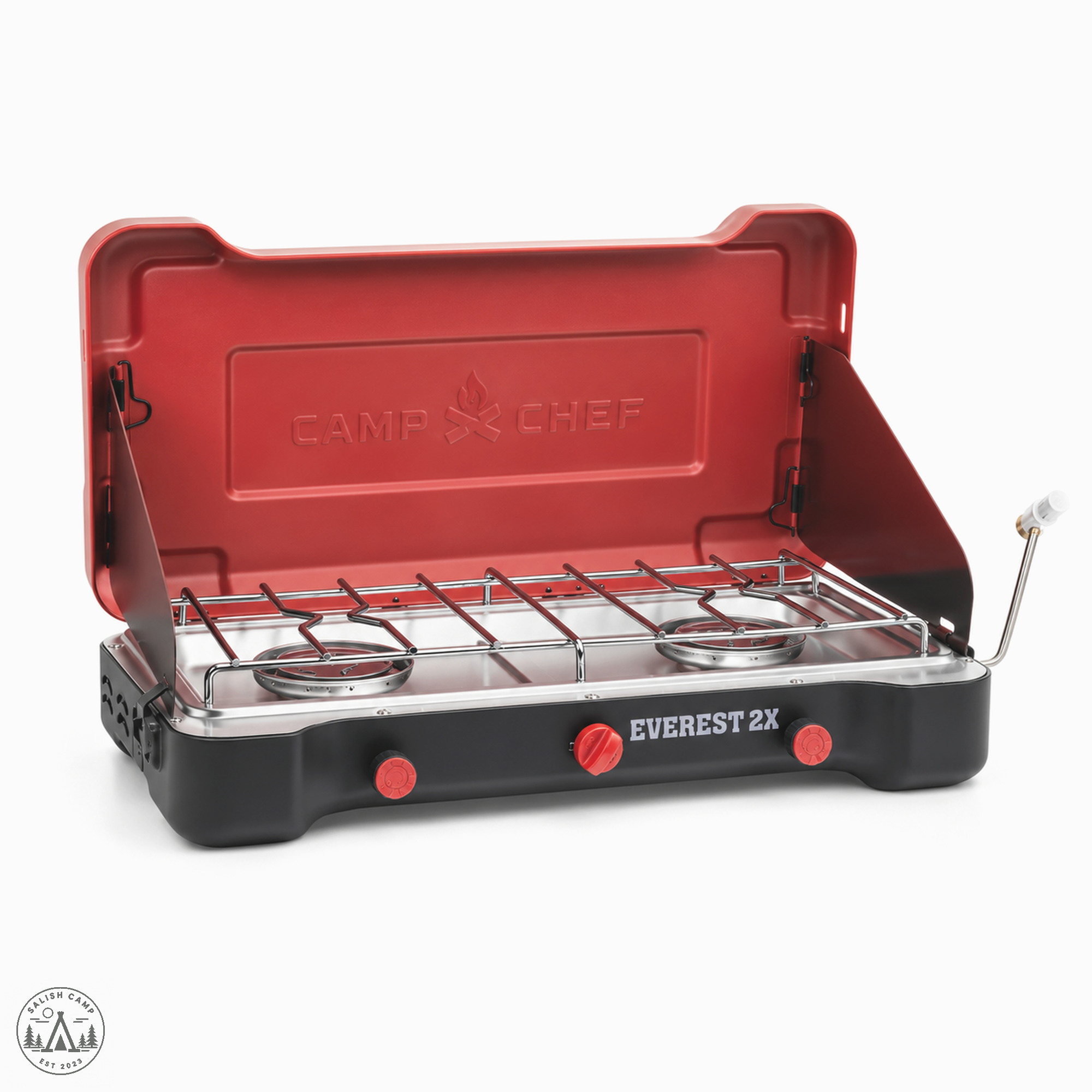
A strong burner exposed to crosswind is still frustrating. At Washington coast campgrounds or along the Oregon dunes, wind often arrives in irregular gusts, and even a sheltered campsite can have air moving across a picnic table. The Everest 2X answers with a folding lid that forms a three-sided windscreen: the lid becomes the rear barrier while the side panels protect the cooking grate. That helps under a properly ventilated tarp or open-sided picnic shelter, but it does not seal the stove. The front stays open, so wind direction still matters. I would face the protected sides into the strongest gusts and keep clearance from tarps, shelter walls, and anything heat can damage.
High-output camp stoves sometimes boil well and cook poorly. Appliance-style temperature controls give the Everest 2X a more useful range than a high-or-off burner, which matters for pancakes that need a manageable pan temperature, a sauce that should not scorch, or rice that needs a reduced flame after the boil. Being able to turn it down for simmering is one of its strongest practical advantages. I would still use a heavier-bottomed pan for temperature-sensitive meals — cookware spreads heat as much as the burner does — and the knobs are not a substitute for watching the food.
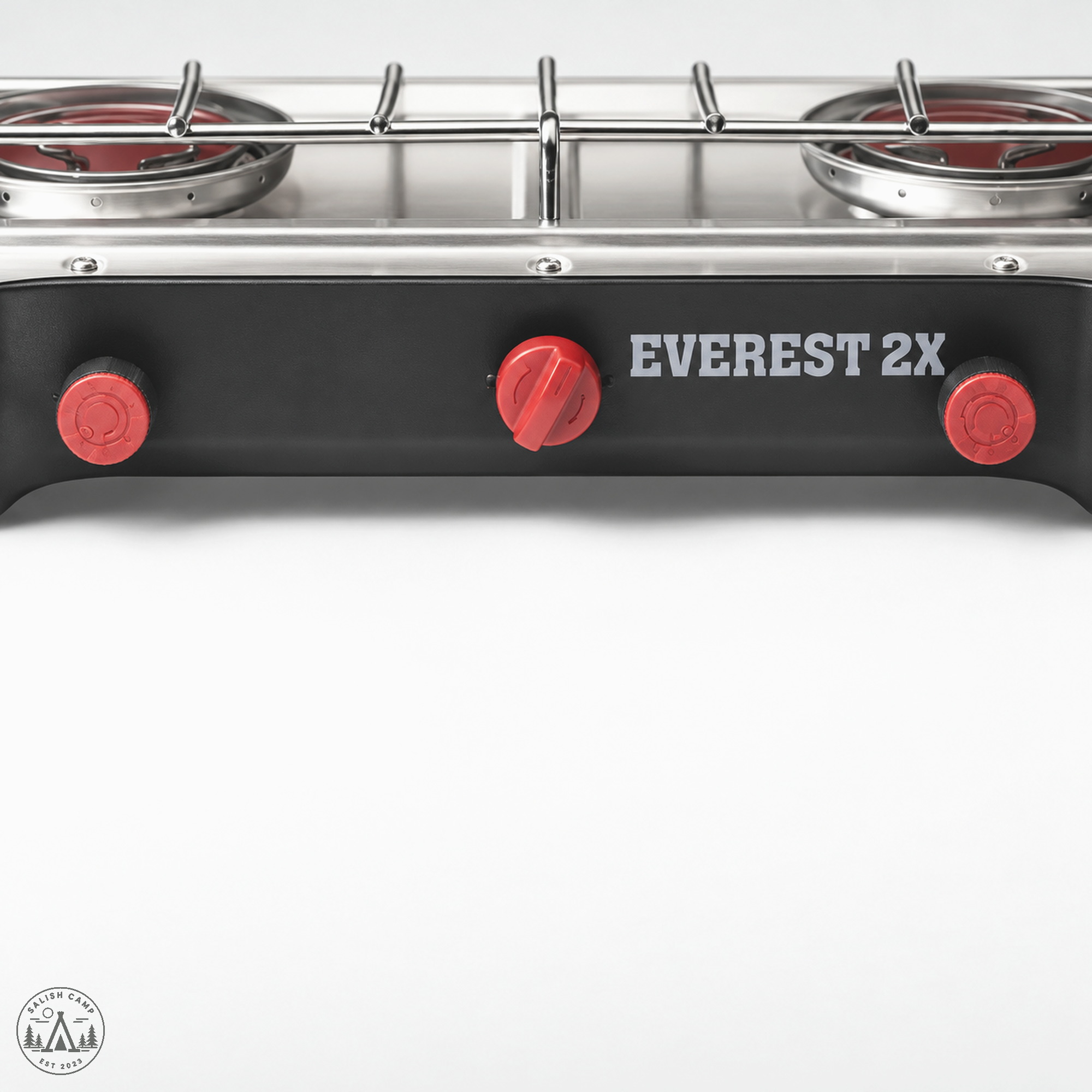
With 215 square inches of cooking area, the Everest 2X offers two cooking zones that can run at different heat levels. At a Methow trailhead tailgate, coffee can sit on one side while breakfast cooks on the other. At a forest-service campground near Wenatchee, chili can share the grate with a skillet of vegetables. Large skillets with long handles can still interfere with neighboring cookware, so pot and pan choices matter. The optional Mountain Series Steel Griddle FG20 is a separate purchase that stores upside down inside the closed stove — useful for pancakes or bacon, not essential. Two ordinary pans cover most of the meals I want to make.
The stove includes a regulator adaptor for a 1 lb propane cylinder; the cylinder itself is purchased separately. Occasional weekend trips stay simple on those smaller cylinders. Longer trips or repeated family meals may justify a refillable bulk tank, which needs a compatible adapter hose purchased separately — I would verify the connection rather than assume another appliance’s hose will work. High-output burners use more propane than smaller two-burners, especially at higher settings, so a short trip with simple meals is another reason to choose something modest. The stove measures 24 inches wide, 13 inches deep, and 6 inches high, but the regulator attaches on the right and needs extra room for a cylinder or hose. I would pick a stable, level picnic table or camp-kitchen surface with clearance to the right, and keep the fuel connection away from traffic, heat, and bumps.
Pacific Northwest moisture tends to follow everything home. After a wet October weekend, the temptation is to latch the lid, load the stove, and leave it in the garage until the next trip — a poor habit for steel. I would clean the grate and stainless steel drip tray, wipe the cooking surfaces, and dry the stove completely before storage, paying attention to the lid, hinges, and corners. Camp Chef’s maintenance guidance also calls for periodic burner-tube cleaning: with fuel disconnected, check the venturi for spider webs or debris, wash with mild soap, clear clogged ports carefully with an unfolded paper clip, rinse, drain upside down for at least an hour, and dry thoroughly. Touch up chipped finish with high-heat paint to discourage rust. Owner reports on Camp Chef’s own site and retailer pages describe burner knobs that pull off and get lost, regulator or fuel-arm problems after several seasons, and rust on grates and hinges when stored damp. Those reports do not mean every stove will fail, but they are worth considering. I would protect the knobs in transit, avoid stressing the regulator connection, dry the stove before storage, and carry a spare lighter.
More power is not automatically the right choice. A couple who mainly make coffee, boil water, and cook the occasional one-pan breakfast may be better served by a smaller, cheaper two-burner — as may campers who move every night, have limited vehicle storage, or prefer a minimal kitchen. At 12 lb, plus cookware, food, and propane, the Everest 2X becomes a deliberate packing decision. That tradeoff is reasonable when cooking is part of the trip’s enjoyment, and harder to justify when meals are only a quick interruption between hikes. I would rather haul it for a family weekend at a rainy Olympic Peninsula campground than fight an undersized stove through multiple meals; for a solo overnight or a roadside coffee stop, I would use something smaller. At the October 9, 2026 listing capture, Camp Chef showed the Everest 2X as sold out with pre-order messaging. That affects immediate purchasing plans, but not the underlying decision about whether its cooking capacity suits the way you camp.
Pros
- Excellent cooking output. Two 20,000 BTU burners provide substantial power for large pots, skillets, and multi-component family meals.
- Effective wind protection. The folding lid and integrated side panels form a practical three-sided windscreen for exposed campsites.
- Versatile heat control. Appliance-style controls support both high-output cooking and lower-heat simmering.
- Practical camp-kitchen layout. A 215 sq in cooking area, stainless steel drip tray, folding construction, and carry handle make it useful for regular vehicle-based camping.
Cons
- Substantial weight and footprint. At 12 lb, the stove occupies meaningful space in a packed vehicle and needs a generously sized cooking surface.
- Higher operating costs. The powerful burners can consume propane more quickly than smaller two-burner alternatives, especially during high-output cooking.
- Premium purchase price. At $229.99, it is difficult to justify for campers who primarily heat water or prepare simple one-pot meals.
Technical Specifications
| Specification | Details |
|---|---|
| Product | Camp Chef Everest 2X |
| Config in photos / primary | Single version, red lid and black base, model MSHPX |
| Price (primary) | $229.99 USD (campchef.com, 2026-10-09, sold out on capture) |
| Type | Two-burner propane camp stove with folding lid |
| Burners | Two 20,000 BTU/hr cast aluminum burners (40,000 BTU total) |
| Cooking area | 215 sq in |
| Weight | 12 lb |
| Dimensions | 24 in wide × 13 in deep × 6 in high |
| Ignition | Matchless ignition |
| Controls | Appliance-style temperature controls |
| Wind protection | Folding lid forms a 3-sided windscreen |
| Clean-up | Stainless steel drip tray |
| Fuel | Propane; regulator adaptor for a 1 lb cylinder included; propane not included |
| Optional | Mountain Series Steel Griddle (FG20), sold separately; stores inside with the lid closed |
Final Thoughts
The Camp Chef Everest 2X appeals to the kind of camper who considers cooking a meaningful part of the trip.
I am not looking for restaurant equipment at a campground. I just want to make a proper breakfast without fighting the wind, prepare dinner in two pans at once, and have enough burner control to cook something more interesting than boiling water.
The Everest 2X delivers that combination through two powerful burners, a generous cooking surface, and a windscreen that addresses a genuine Pacific Northwest problem.
Its biggest strengths are also responsible for some of its compromises. The substantial cooking capacity comes with a larger steel body, greater fuel demand, and a price that places it beyond the needs of occasional campers.
For a family that spends weekends at established campgrounds, those tradeoffs can be worthwhile. I would especially appreciate the stove during shoulder-season trips when cold mornings, long dinners, and persistent coastal wind make a dependable cooking setup more valuable.
For a solo camper or someone who mostly heats prepared food, I would spend less and pack smaller.
The Everest 2X makes the most sense when the stove is not just a way to heat dinner, but the center of a practical camp kitchen.