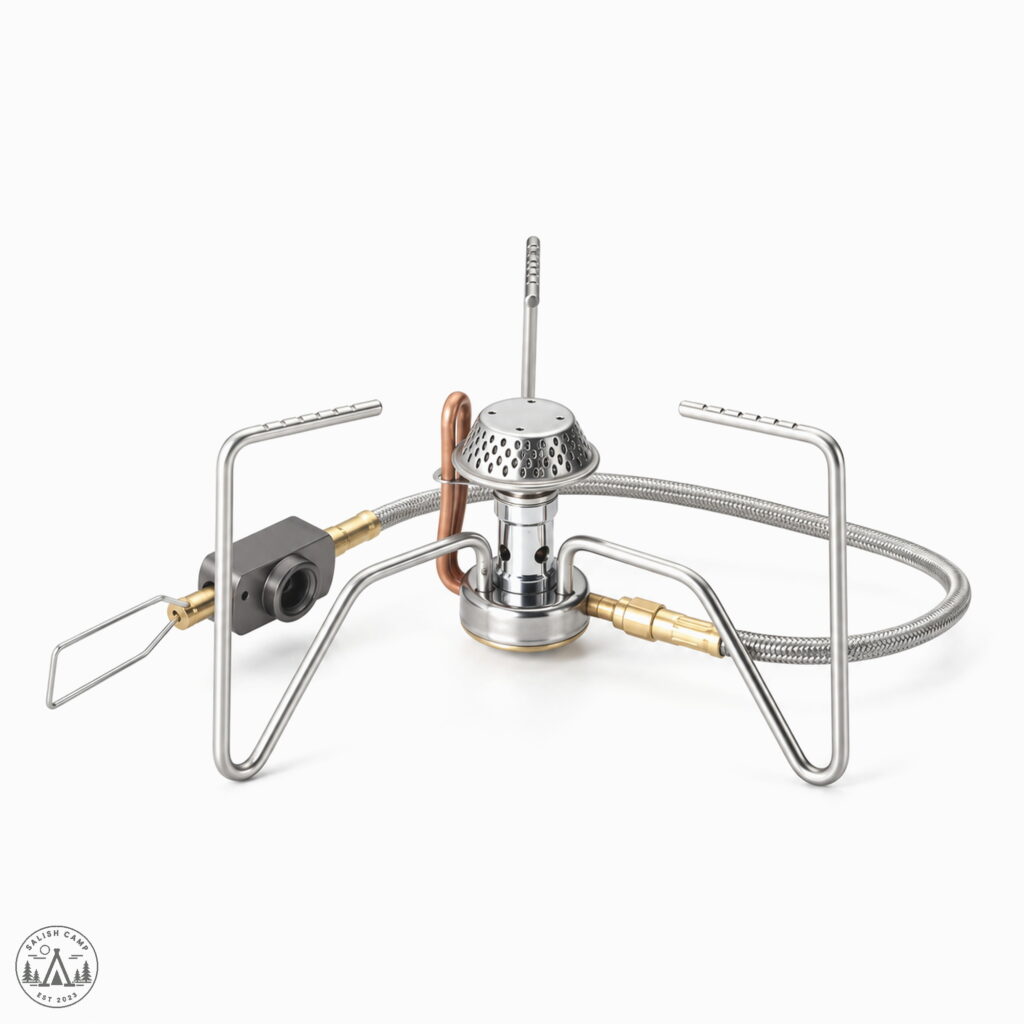
Buy if you want a light remote-canister stove that feels more planted under wider cookware than a typical upright canister stove. The Kovea Spider KB-1109 suits backpackers and car campers who value a low cooking position, compact packing, and a fuel canister that sits beside the burner instead of under it.
Skip if you want the fewest possible parts, prefer the simplicity of an upright stove, or need easy US availability and clearly documented performance specs. The hose and folding legs add setup steps, and the low stance still needs careful ground selection.
What Stands Out
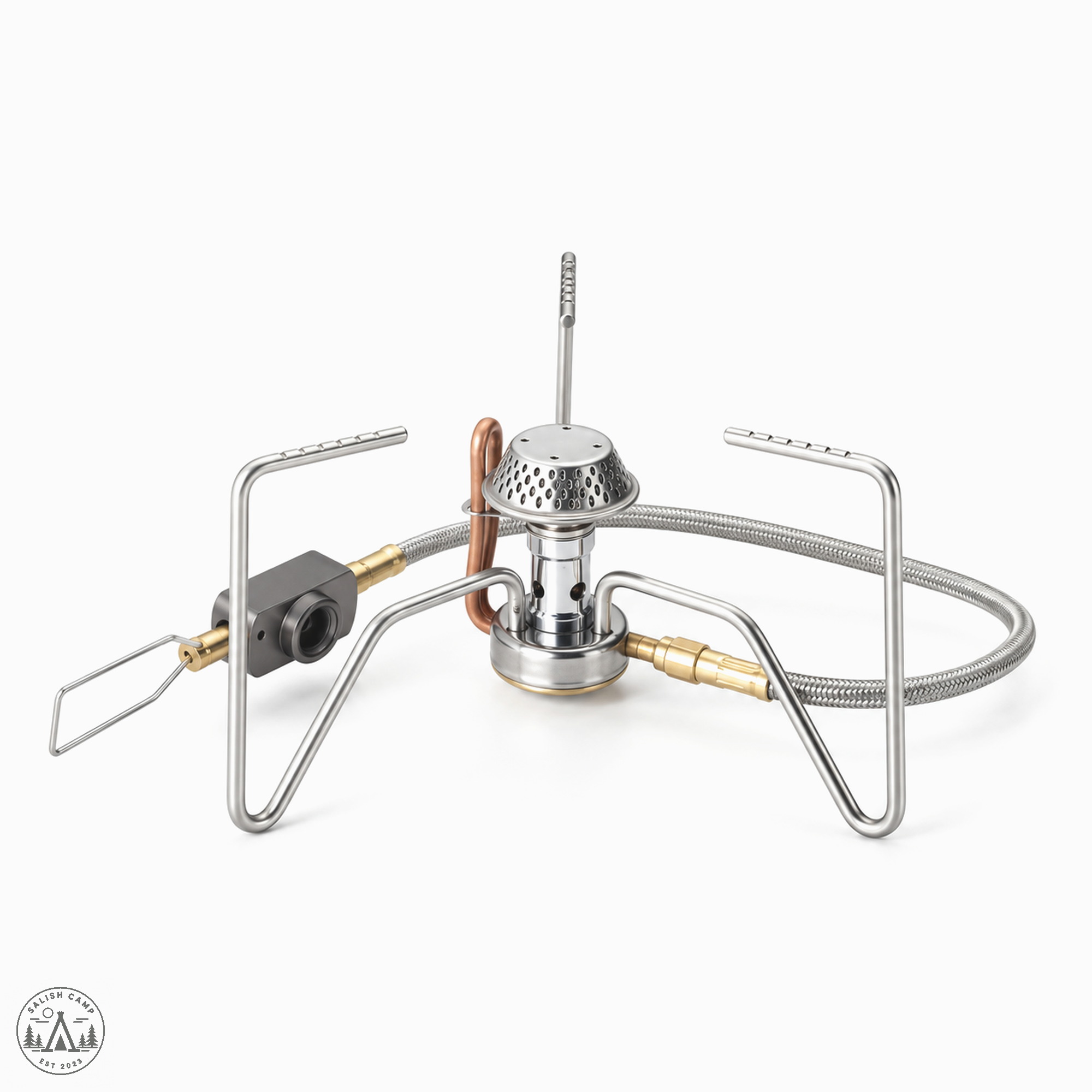
- Low-profile cooking platform: The burner sits close to the ground on its own legs instead of on top of a canister, avoiding the tall, top-heavy stack of upright stoves.
- Remote-canister layout: A flexible hose connects the burner to a separate screw-thread iso-butane canister, so burner and fuel can sit in different spots.
- Folding support structure: The legs and pot supports fold inward, turning a broad cooking platform into a small package.
- About 170 g: The Spider keeps the remote-canister layout light enough to consider beyond car camping.
- Piezo ignition: Built-in ignition is convenient with cold fingers, though a backup lighter is still sensible.
- Compact packed size: At 106 x 94 x 46 mm folded, it takes little room in a cook kit, and a soft drawstring sack is included.
- 130 mm burner: The burner head is sized for a cook pot rather than just a mug, which fits the stove’s wider-pot purpose.
In The Field
The first thing I think about when choosing a camp stove for the Pacific Northwest is where the pot will actually sit. At an Olympic Peninsula site after a day of rain, the cooking area is rarely clean and level. There might be damp gravel, a slight slope, or a narrow dry patch under the tarp. An upright canister stove is convenient, but perching a wider pot high above the canister feels awkward when I’m stirring dinner or reaching across the table. That’s the problem that makes the Kovea Spider KB-1109 interesting.
The Spider separates the burner from the fuel with a flexible hose. Instead of stacking cookware on top of the canister, the burner stands on its own folding legs. It’s a simple change, but it reshapes the whole setup: the burner sits low, the canister sits alongside it, and my job becomes finding a level spot for the pot. That’s especially welcome when I’m cooking something more involved than boiling water.
I like this layout on a gravel bar on the Skagit, where a stable cooking surface takes some work to find. The low stance helps, but it isn’t permission to set the stove on uneven stones and start cooking. I still look for a flat, firm, noncombustible surface, clear loose material from around the legs, and check that every foot sits securely. Before lighting, I set the empty pot on the supports and press lightly to see whether it rocks.
That balance check matters more with wider cookware. A low remote-canister stove feels less precarious than an upright, but low height doesn’t guarantee stability under every pot. The pot needs to sit squarely on the supports with its weight centered over the burner, and a long-handled pan full of food can pull the balance sideways. I turn the handle where it won’t catch a sleeve or get bumped as people move around the kitchen.
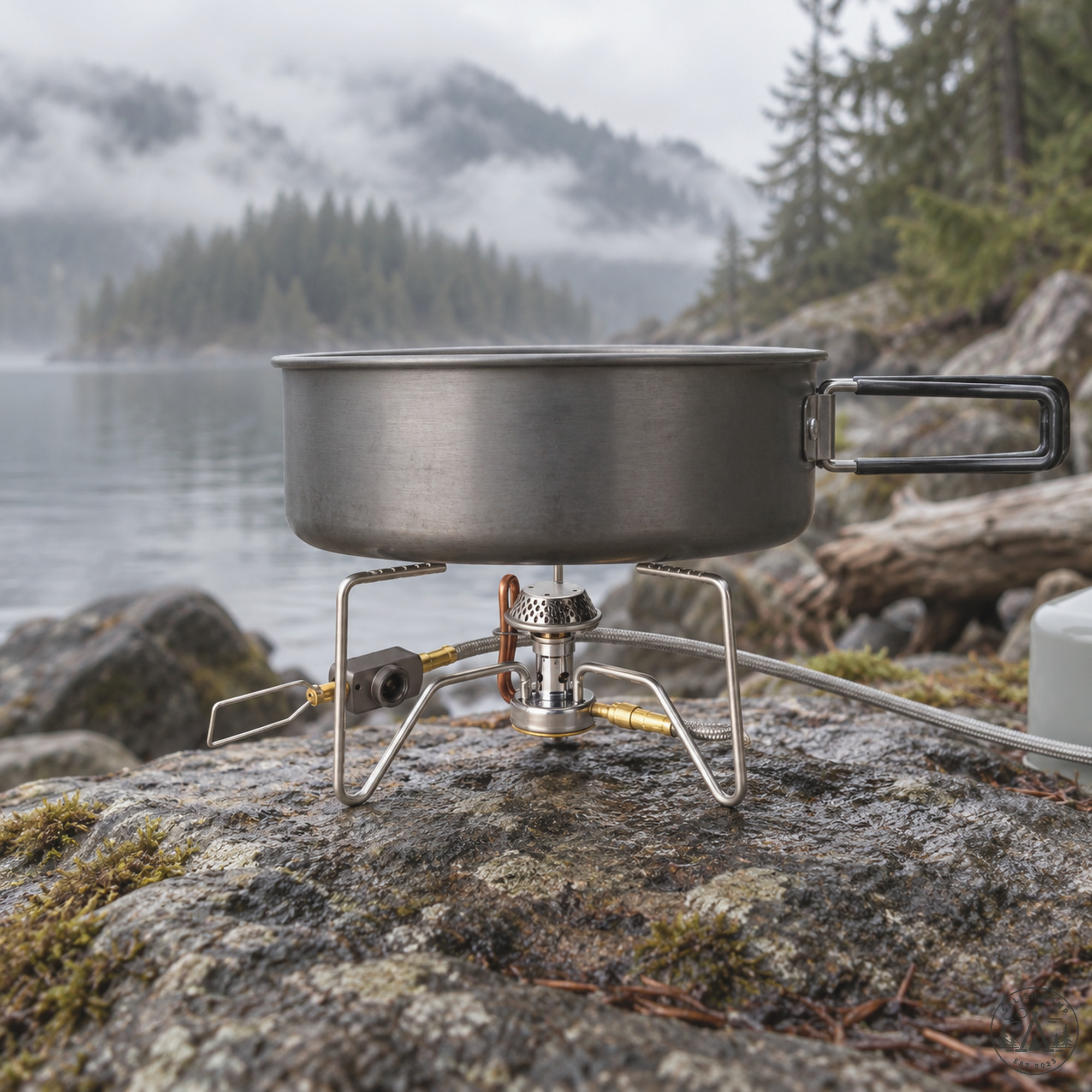
The hose is the other defining feature. Coming from an upright stove, the extra connection can look like needless complexity. I see it as a tradeoff. The hose lets me put the canister where it’s out of the way and organize the cooking area around the pot, but it also means checking the hose routing, the threaded connection and the canister position every time. I don’t want the hose kinked, stretched across a walking path, or near hot cookware.
Setup should be deliberate. With the valve closed, I unfold the legs, set the stove on a stable surface, and thread on a compatible screw-thread iso-butane canister following Kovea’s instructions. The connection should seat without force. If I suspect a leak, the stove stays unlit until it’s sorted. I also keep the canister upright, since nothing I could verify for this model covers running it inverted.
The piezo ignition is handy when I’m trying to start breakfast with cold fingers, but I never rely on it alone. Moisture, dirt or wear can make any piezo less dependable over time, so a separate lighter lives in my kitchen kit anyway. It’s cheap redundancy when I’m camped well away from town.
At a Cascades car-camp, I might heat water early in the morning and cook a slower meal after a day out. I want a stove that lets me watch the food instead of worrying about the pot’s position, and the Spider’s low stance and separate canister support that style of cooking. Stability and flame control aren’t the same thing, though, and I wouldn’t claim great simmering without model-specific testing.
Wind matters on exposed coastal sites. A low burner is easier to tuck behind shelter, but low doesn’t mean windproof. I pick a protected outdoor spot and watch how the flame behaves under the pot. If I use a windscreen, I follow the stove’s clearance guidance and never wrap or heat the canister. Under a rain tarp, I want generous ventilation and plenty of distance from the fabric, and I’d never run the Spider inside a tent or enclosed shelter.
Cold weather calls for the same realism. The Spider’s layout appeals for shoulder-season trips, but a hose alone doesn’t fix the limits of canister fuel. Iso-butane performance depends on the fuel blend, canister temperature and conditions, and as temperatures drop, the flame can weaken. I don’t assume a remote-canister design guarantees freezing-weather performance. On late-season trips to the coast, I plan around the forecast, keep fuel within its rated limits, and skip improvised canister-warming tricks.
Packing is where the Spider beats what its wide stance might suggest. The legs fold in, the hose wraps around the body without sharp bends, and the whole thing goes into its drawstring sack. For an overnight trip, the cook hardware doesn’t eat a big section of my pack. I still keep the hose and connector away from heavy items, because compact packing only helps if nothing gets crushed.
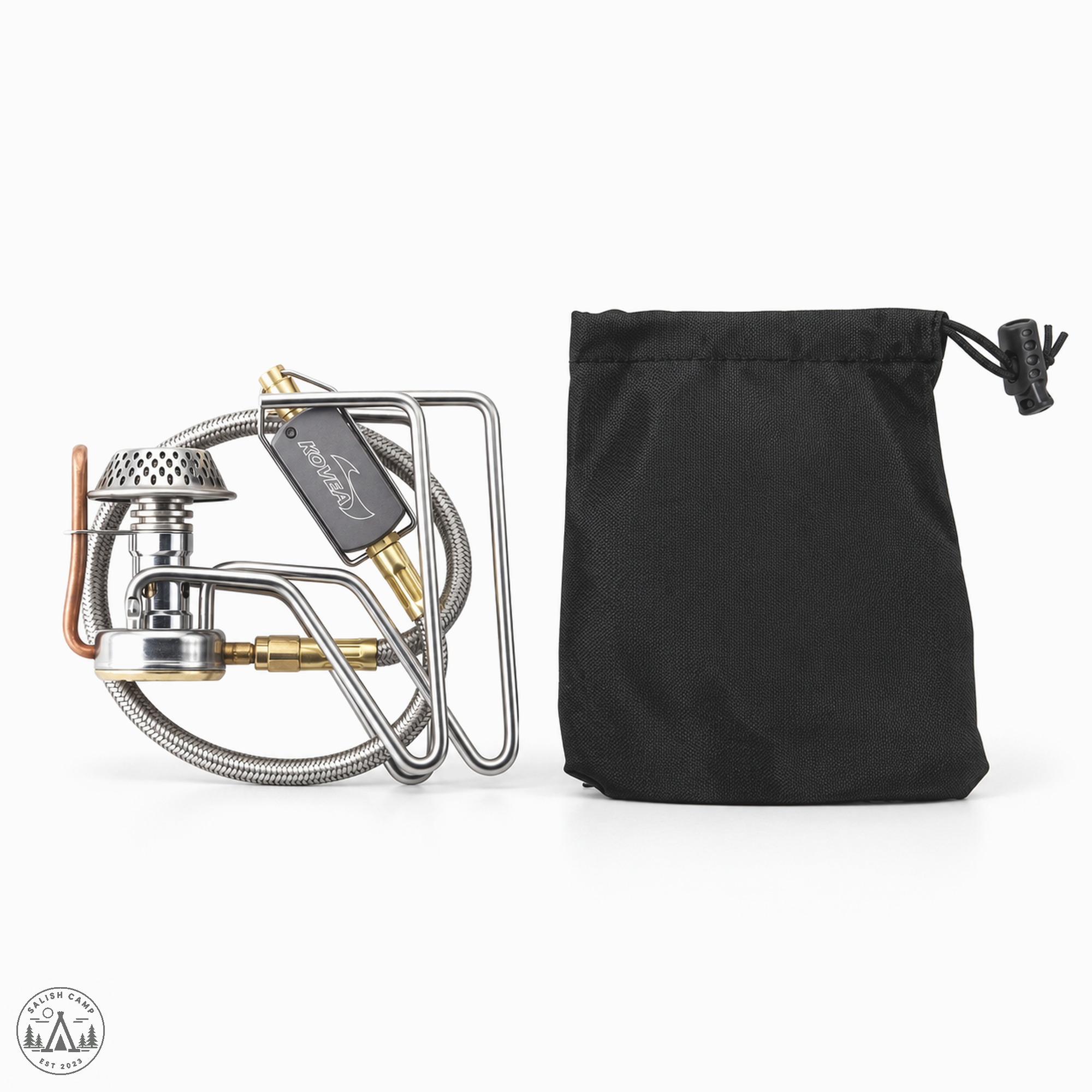
After a wet trip, I dry my cook gear before storing it. River sand and fine coastal grit work into folding joints, and moisture can stay trapped in a packed case. With the stove cool and disconnected, I check the legs, pot supports, hose, connector and burner, and brush out grit gently instead of forcing stiff hinges.
For me, the Spider sits between minimalist backpacking gear and a bigger car-camping kitchen. It’s small enough to carry on foot, yet its layout favors someone who wants a steadier pot and a little more room to work. For a short trip of hot drinks only, an upright stove may be simpler. On a damp weekend when I want a proper meal in a wider pot, the Spider makes a stronger case.
I wouldn’t buy it for a headline performance number. Published output figures for this model are inconsistent, so I don’t treat them as a deciding factor, and US buying options are murky. I’d choose it for the physical design: folding legs, a low burner, an external canister connection and a compact packed form.
Pros
- Stable cooking geometry: A low burner makes wider cookware feel less top-heavy than an upright canister setup.
- Light remote-canister design: About 170 g is a manageable weight when pack space matters.
- Compact folding construction: Legs and supports fold down, and a soft drawstring sack is included.
- Practical ignition and fuel layout: Piezo ignition and a separate screw-thread canister keep the cooking area organized.
Cons
- More setup than an upright: The hose, canister connection and folding legs add parts to check and position.
- Unclear US availability: Finding the exact KB-1109 through a dependable US channel may take some digging.
- Inconsistent published output figures: Conflicting specs make direct performance comparisons hard to support.
Technical Specifications
| Specification | Details |
|---|---|
| Product | Kovea Spider KB-1109 |
| Config | Spider KB-1109 |
| Type | Remote-canister gas stove, folding legs |
| Fuel | Screw-thread iso-butane canister |
| Ignition | Piezo |
| Burner diameter | 130 mm |
| Packed size | 106 x 94 x 46 mm |
| Weight | About 170 g |
| Materials | Aluminum, steel |
| Includes | Black drawstring sack |
Final Thoughts
The Kovea Spider KB-1109 earns its place by solving an everyday camping problem rather than piling on features. It lowers the cooking platform, moves the canister off to the side, and folds into a package that suits a small kit.
On Pacific Northwest trips, that combination has real appeal. Whether I’m under a tarp in the Cascades or working around wet gravel near the coast, I want a steady place for a pot without hauling a full-size camp stove.
Keep expectations grounded. The hose doesn’t remove cold-weather fuel limits, the low profile doesn’t excuse poor ground selection, and piezo ignition doesn’t replace a backup lighter. The remaining doubts are about buying it in the US and the inconsistent published specs, not the basic design.
For campers who want a compact remote-canister stove mainly for its low cooking position, the Spider is an easy choice to like, especially if you cook real meals outdoors and value a steady, organized burner over the absolute simplicity of an upright.