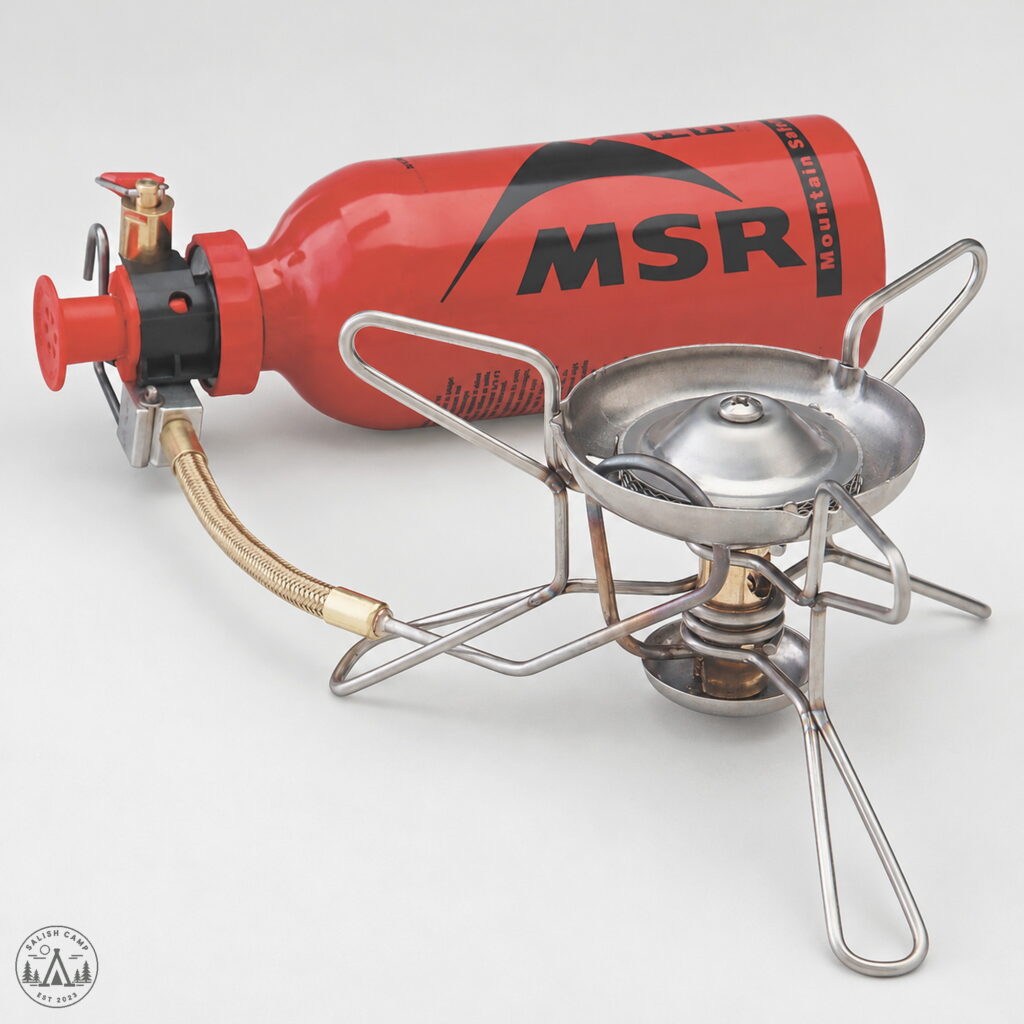
Buy if you’re moving beyond canister-only cooking and want a proven white-gas stove for cold shoulder-season backpacking, winter camps, or group cooking. The MSR WhisperLite (SKU 14098) is $139.95 and has a minimum weight of 11.5 oz (326 g), or 15.2 oz (431 g) packaged with its included items. It runs on white gas and combines reliable boiling performance, stainless steel and brass construction, and field-serviceable parts. It isn’t an ultralight burner, but its Shaker Jet cleaning and dependable liquid-fuel operation make sense when temperatures drop and stove reliability matters more than shaving ounces.
Skip if most of your trips are quick summer overnights, solo coffee stops, or meals that need careful low-heat control. At $139.95, the WhisperLite still needs a separately purchased fuel bottle, and its priming routine adds complexity compared with a screw-on canister stove. It’s a capable tool, but not the simplest choice for someone who only needs to boil water in mild weather.
What Stands Out
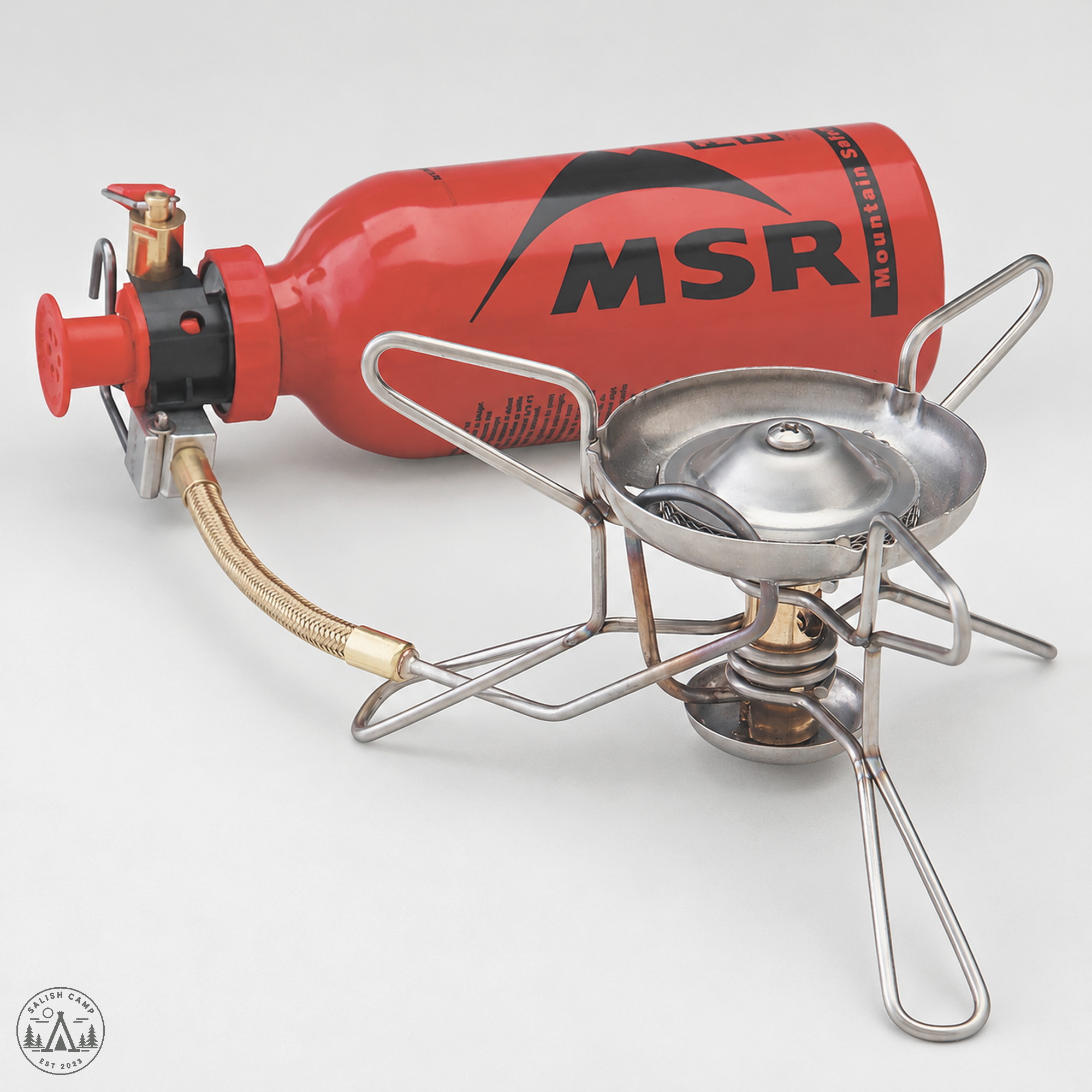
- Minimum weight of 11.5 oz (326 g). That’s manageable for a full-size white-gas backpacking stove, especially when reliable cold-weather operation and serviceability are priorities.
- White-gas boiling performance. MSR rates the stove at 3.9 minutes to boil 1 liter of water, with a burn time of 136 minutes per 600 ml of white gas.
- Shaker Jetâ„¢ cleaning. Shaking the stove clears the jet, so a clog doesn’t have to mean immediate disassembly.
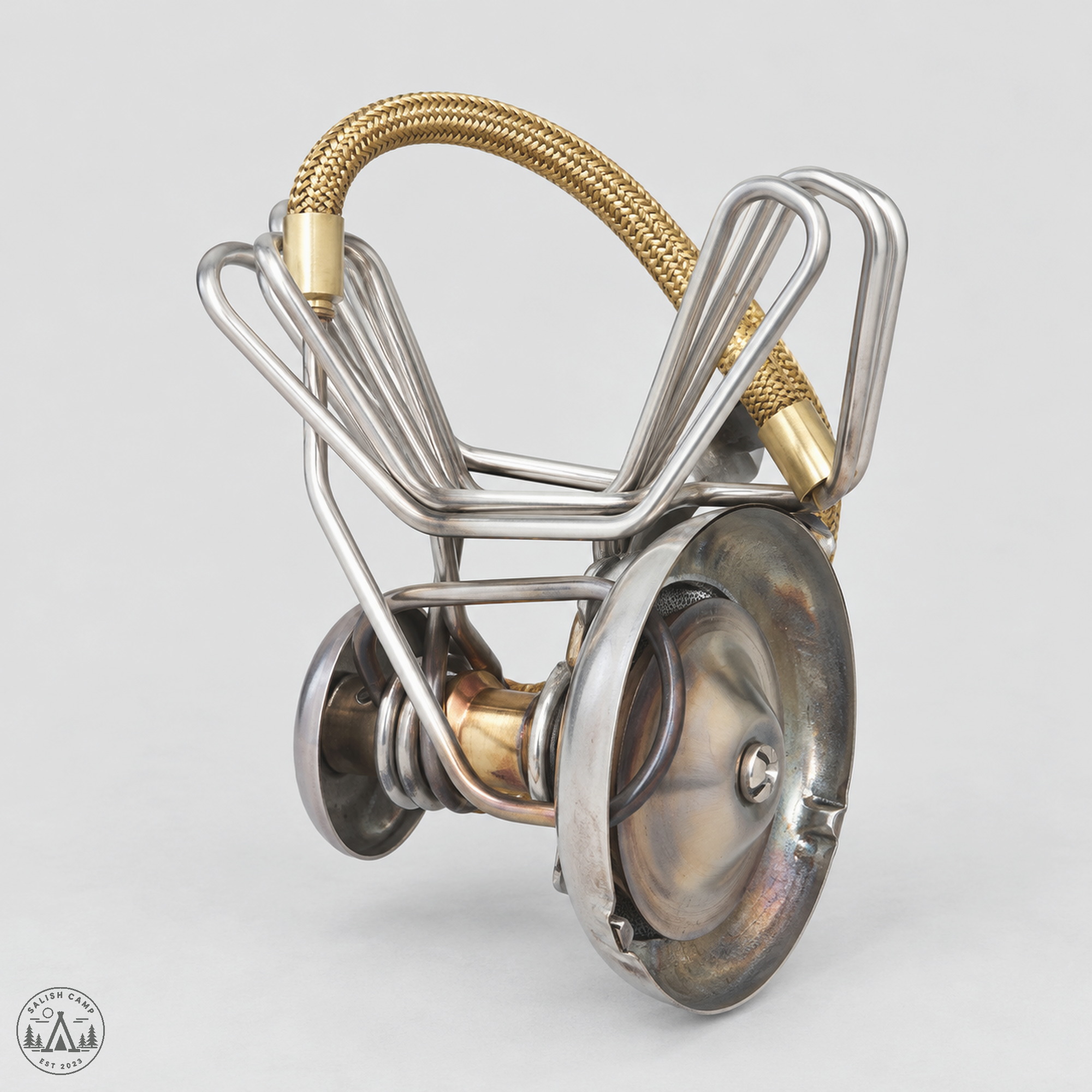
- A flexible fuel line. The line folds small for packing, and the stove fits in most MSR pots.
- Stainless steel and brass construction. Straightforward metal parts and a serviceable design suit repeated trips and long-term ownership.
- Windscreen and heat reflector included. They shield the burner and direct heat toward the pot, which helps at exposed Cascades campsites where wind disrupts cooking.
- Emergency-ready. Because you can clean and maintain it in the field, it’s useful beyond backpacking, including as part of an emergency cooking kit.
In The Field
There’s a point in backpacking when the convenience of a canister stove stops being the only thing that matters. For much of the year in the Pacific Northwest, a compact upright burner is hard to beat. It screws onto a canister, lights quickly, and makes coffee without much thought.
Cold weather changes the equation. A late-season camp in the Cascades can mean freezing mornings, wind moving through an exposed clearing, and water that needs heating before anyone wants to leave their sleeping bag. Snow camping adds another demand: melting enough snow for drinking and cooking. That’s where the MSR WhisperLite earns its place. It’s a white-gas stove built around a separate fuel bottle, a pump, a flexible fuel line, and a burner you can service in the field. It asks for more involvement than a canister stove, but the trade-off is meaningful in the cold, and MSR says the design has been field-proven for over 25 years.
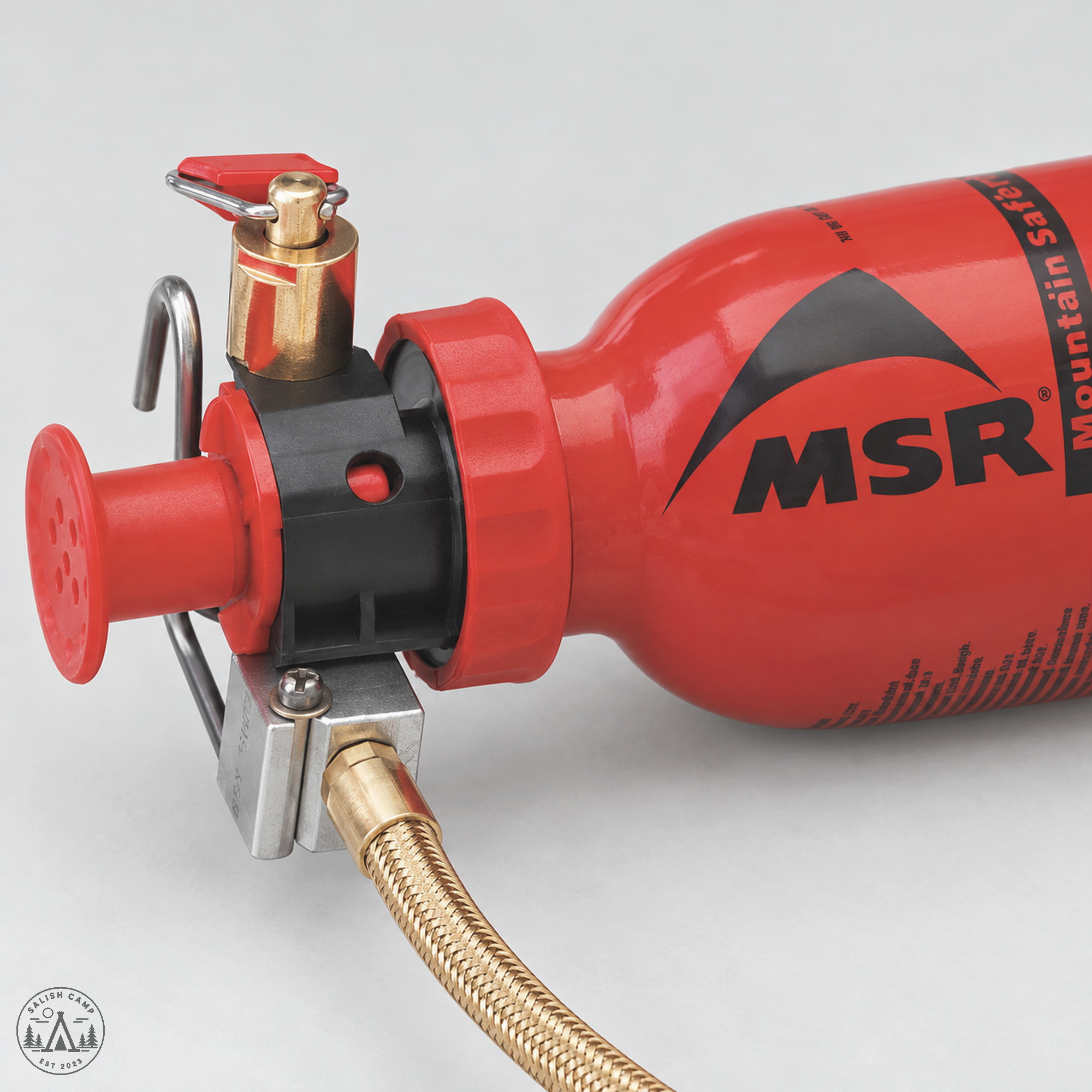
The biggest adjustment for a first-time owner is learning how to start it. With a canister stove, the canister supplies the pressure. With the WhisperLite, you pressurize the white-gas bottle with the included pump. Before lighting, I want the stove on a stable, level surface, the fuel line properly connected, and the bottle positioned according to MSR’s instructions. Remember that the bottle is sold separately when you budget for a complete setup.
Once the bottle is pressurized, a small amount of fuel is released into the priming cup and lit. That first flame heats the stove so it can switch over to normal operation. This is the part that can feel intimidating. Priming flames can flare larger than the normal operating flame and leave black soot on the burner and cookware, and too much priming fuel makes the process messier. I treat priming as a deliberate setup step, not something to rush while I’m distracted by dinner. I keep combustible gear well away, follow MSR’s lighting sequence, and never prime inside a tent or vestibule. MSR notes that alcohol or priming paste can be used for priming to avoid black soot with white gas. That doesn’t make alcohol a fuel: MSR stoves won’t burn it, and it damages MSR fuel bottles. After a little practice the sequence becomes familiar, but it never becomes as effortless as turning the valve on a canister burner.
Cold-weather performance is the main reason I’d choose the WhisperLite over a small upright canister stove. Standard canister stoves depend on vapor pressure, which drops as temperatures fall. With white gas, you supply the pressure yourself with the pump. On a cold morning in the Olympics or at a snow-covered Cascades campsite, I appreciate a stove that doesn’t depend on a nearly frozen canister.
MSR lists a 3.9-minute boil time for 1 liter of water on white gas. That’s a useful reference, but cold starting water, wind, cookware, and technique all change real results. On group trips, a dependable burner becomes part of camp logistics when several people need hot water for breakfast, drinks, and rehydrated meals. Melting snow takes patience on any stove. I start with some liquid water in the pot and add snow gradually rather than heating a dry pot full of snow. Footing matters too. Snow and uneven ground are poor places to improvise a cooking platform.
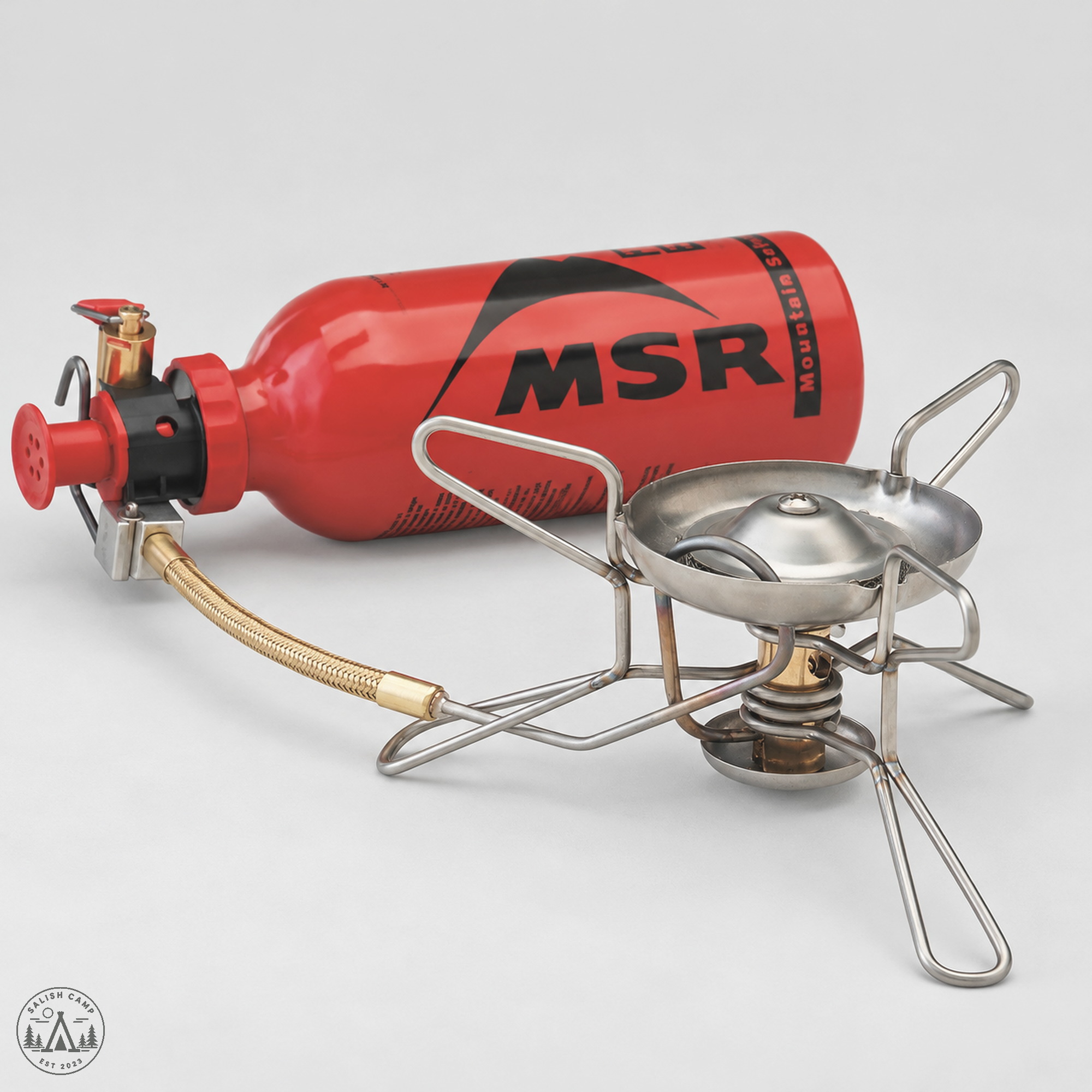
The included windscreen and heat reflector are easy to overlook, but they matter. On exposed ridgelines and open campsites, wind robs heat from the pot. Because the fuel bottle is separate, the windscreen can wrap around the burner while the bottle stays outside it, and the heat reflector sits beneath the stove. I like that both are in the box rather than being accessories I have to buy later. The catch is more pieces to pack and arrange than with a minimalist canister burner.
Can it simmer? Low-heat cooking is possible, but it isn’t the WhisperLite’s strength. The stove is naturally suited to boiling water and cooking at relatively high output. MSR’s guidance for simmering on its liquid-fuel stoves (other than the DragonFly) is to run extremely low bottle pressure, about a couple of pump strokes in a half-full bottle. That lowers the flame, but it doesn’t make the WhisperLite a precision simmer burner. If my meal plan is mostly dehydrated dinners, pasta water, coffee, and snow melting, that doesn’t bother me. If I’m making sauces, cooking eggs slowly, or trying not to scorch food in a thin titanium pot, I’d rather use a stove with more predictable low-flame control.
Field maintainability is one of the biggest reasons I find this stove compelling. If the flame gets weak or the stove won’t prime, MSR says the most common cause is a clogged jet. With the stove cool and shut down, shaking it vigorously up and down works the Shaker Jet needle to clear the jet. If that doesn’t fix it, cleaning the fuel line is the next step. Old, degraded white gas clogs fuel lines, so I’d rather start a significant trip with fresh fuel than find an avoidable blockage miles from the trailhead.
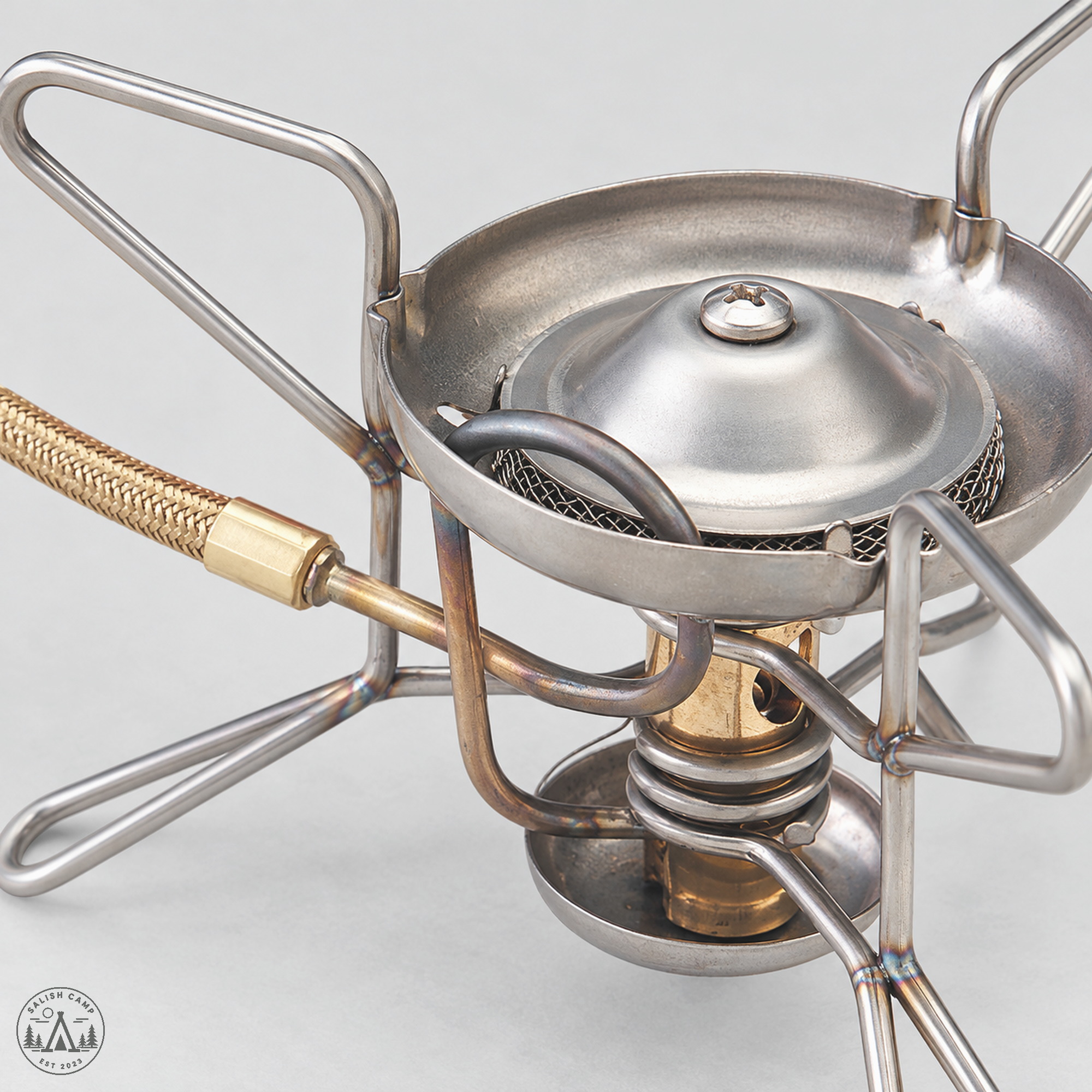
The construction is easy to understand, and the included small-parts kit supports maintenance. I’d still learn the components at home before winter rather than for the first time in a snowstorm. For the pump, MSR recommends lubricating the fuel line with MSR Pump Cup Oil, which is mineral oil, before inserting it.
On weight, I compare the stove using its minimum weight of 11.5 oz (326 g). MSR also lists a packaged weight of 15.2 oz (431 g), which is the boxed package with its included items, not a trail-ready fuel system. A fuel bottle, the fuel itself, and cookware all add to what I actually carry. That’s why the WhisperLite looks lighter on paper than the complete system feels next to a small canister burner.
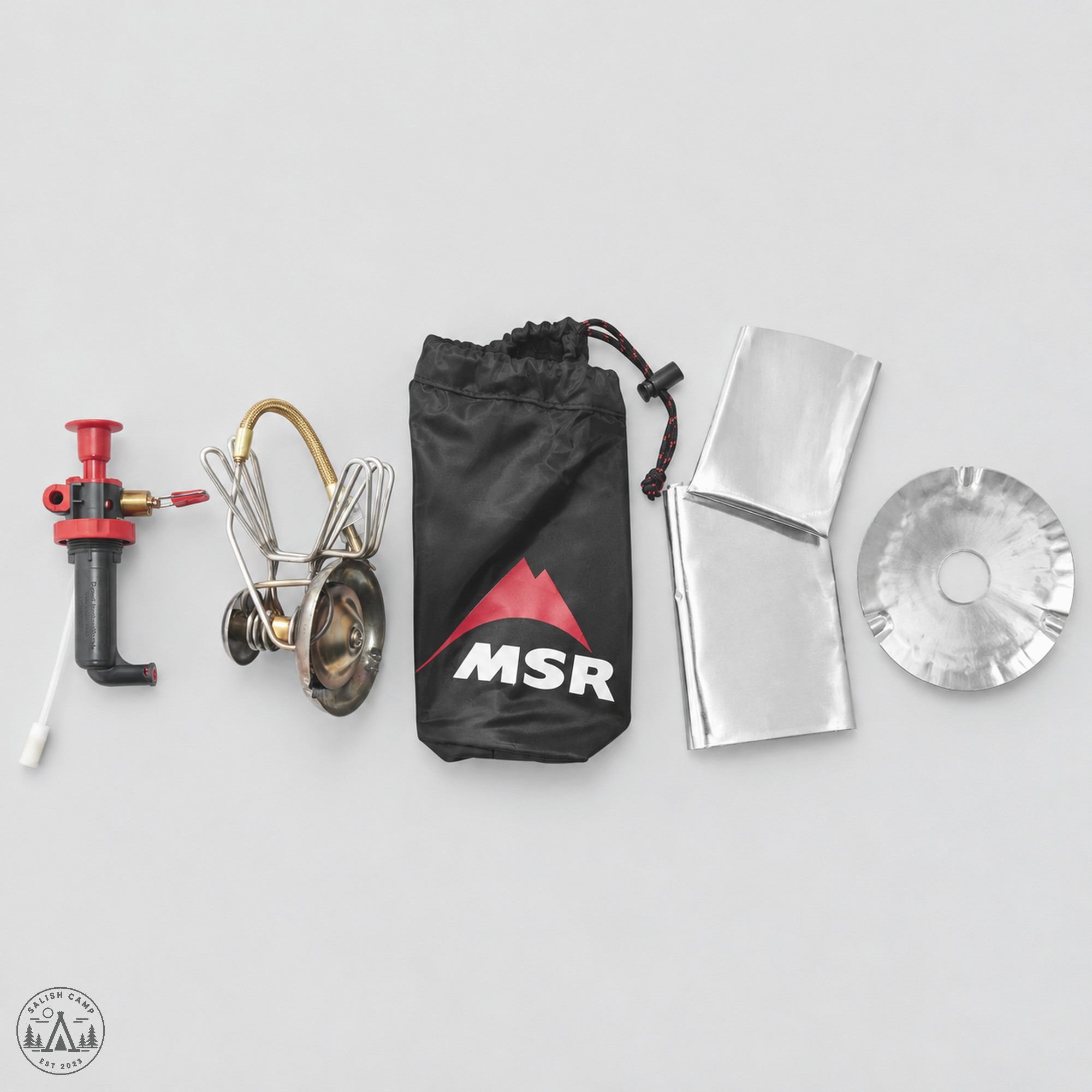
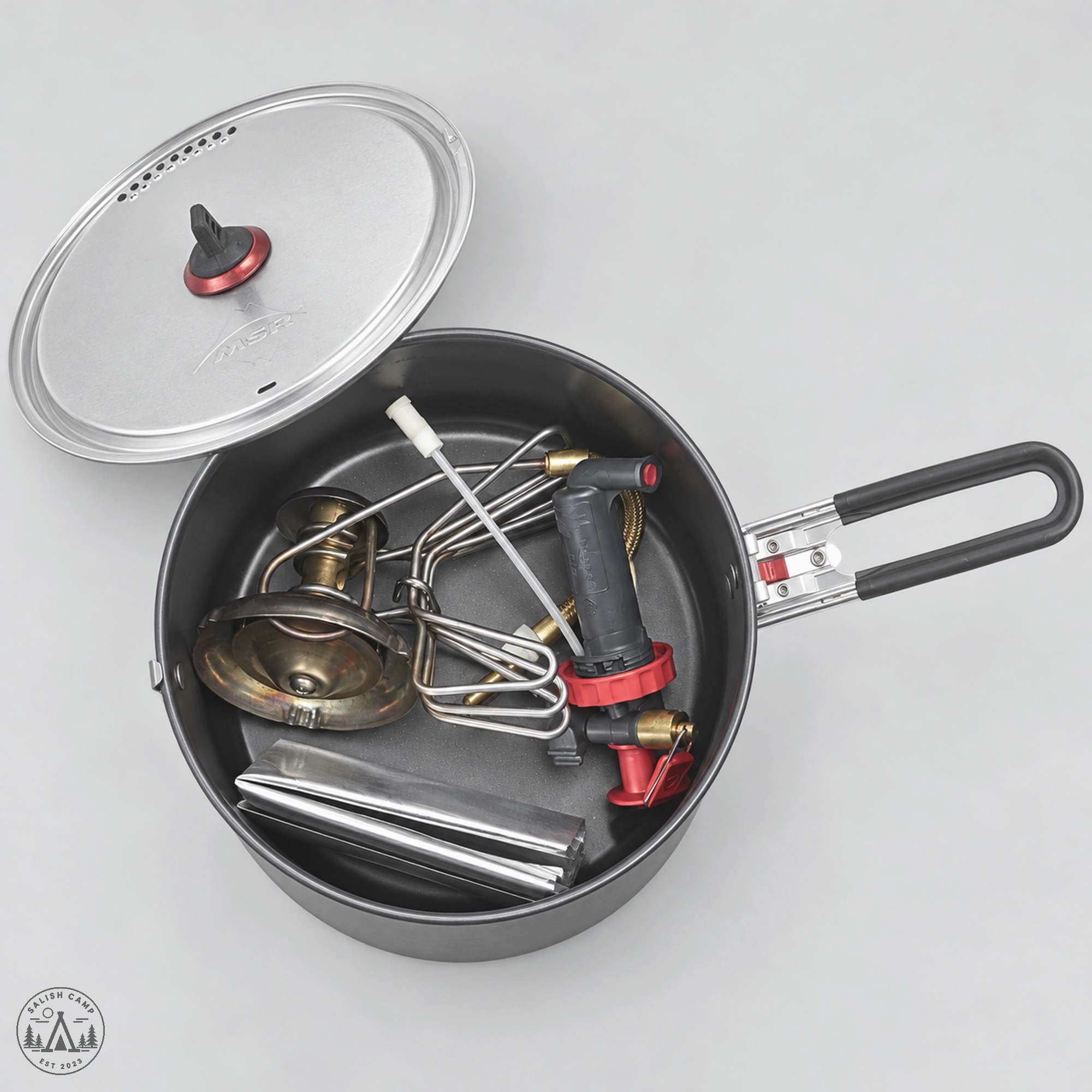
The flexible fuel line helps with packing. It folds small, and the stove fits in most MSR pots, although no pot is included. The supplied stuff sack keeps the components together. For an overnight trip in July, the extra equipment might be hard to justify. For several cold days with lots of boiling, the balance tips the other way.
I wouldn’t replace every canister stove with a WhisperLite. For quick summer trips, light solo backpacking, and simple meals in moderate temperatures, a compact canister stove is often the better tool. It’s easier to start and doesn’t involve priming or managing a pump and bottle, which matters when I’m tired and only want hot water before bed. The WhisperLite makes more sense when cold-weather reliability, repeated boiling, and field serviceability are the priorities.
It’s also a sensible emergency-preparedness stove. For long-term storage, I’d periodically check the pump and the fuel’s condition and confirm the stove runs before relying on it. When the system isn’t in use, I’d release the bottle pressure by slowly unscrewing the pump with the bottle upright and away from flames, as MSR directs.
Pros
- Reliable cold-weather white-gas operation: Well suited to freezing mornings, snow camps, and repeated group water boils.
- Field-maintainable construction: Shaker Jet technology and accessible components make basic cleaning and troubleshooting practical away from home.
- Strong boiling performance: Rated to boil 1 liter in 3.9 minutes on white gas, with a windscreen and heat reflector included.
- Durable, compact design: Stainless steel and brass construction and a flexible fuel line balance longevity and packability.
Cons
- Priming takes practice: Pumping, preheating, soot, and potential flare-ups demand more attention than starting a canister stove.
- Limited fine simmer control: Best suited to boiling and straightforward camp meals rather than delicate low-heat cooking.
- Extra fuel-system cost and bulk: The $139.95 stove needs a separate fuel bottle, and the complete system is heavier and more involved than its minimum weight suggests.
Technical Specifications
| Specification | Details |
|---|---|
| Product | MSR WhisperLiteâ„¢ Stove |
| Config in photos / primary | WhisperLite Stove, SKU 14098 |
| Price | $139.95 USD (cascadedesigns.com, 2026-10-08, in stock) |
| Minimum weight | 11.5 oz (326 g) |
| Packaged weight | 15.2 oz (431 g) |
| Dimensions | 6 x 4 x 4 in (15 x 10 x 10 cm) |
| Fuel (as rated) | White gas (liquid fuel) |
| Boil time, 1 L (white gas) | 3.9 minutes |
| Burn time (white gas) | 136 minutes per 600 ml / 20 oz of fuel |
| Water boiled (white gas) | 5.1 L per 100 ml of fuel; 1.5 L per 1 oz of fuel |
| Construction | Stainless steel and brass; flexible fuel line |
| Maintenance | Shaker Jetâ„¢ technology; field maintainable |
| Included | Fuel pump, windscreen, heat reflector, small-parts kit, instructions, stuff sack. Fuel bottle and pot are not included |
| Country of origin | Made in USA of US and imported materials |
Final Thoughts
The MSR WhisperLite remains a compelling stove because it solves a particular problem extremely well: dependable white-gas cooking in conditions where convenience-focused canister systems become less attractive.
In the Pacific Northwest, that means cold shoulder-season mornings, snow camps, exposed basecamps, and trips where boiling a lot of water is part of the routine.
I appreciate its straightforward stainless steel and brass construction, the folding fuel line, and especially the Shaker Jet cleaning. Those details make the WhisperLite feel like equipment designed to be understood and maintained rather than simply used until something goes wrong.
There are real compromises. Priming takes practice, simmer control is relatively coarse, and the separate fuel bottle adds cost and bulk. Someone who only backpacks in summer may never need the capabilities that make this stove worthwhile.
For a backpacker building a more capable cold-weather kit, though, the WhisperLite fills a useful role. It isn’t the stove I’d reach for on every trip. It’s the stove I’d want when temperatures fall, the group needs hot water, and being able to troubleshoot my gear matters more than saving a few minutes at setup.
At $139.95, it’s a purposeful purchase rather than a universal replacement for a canister burner.