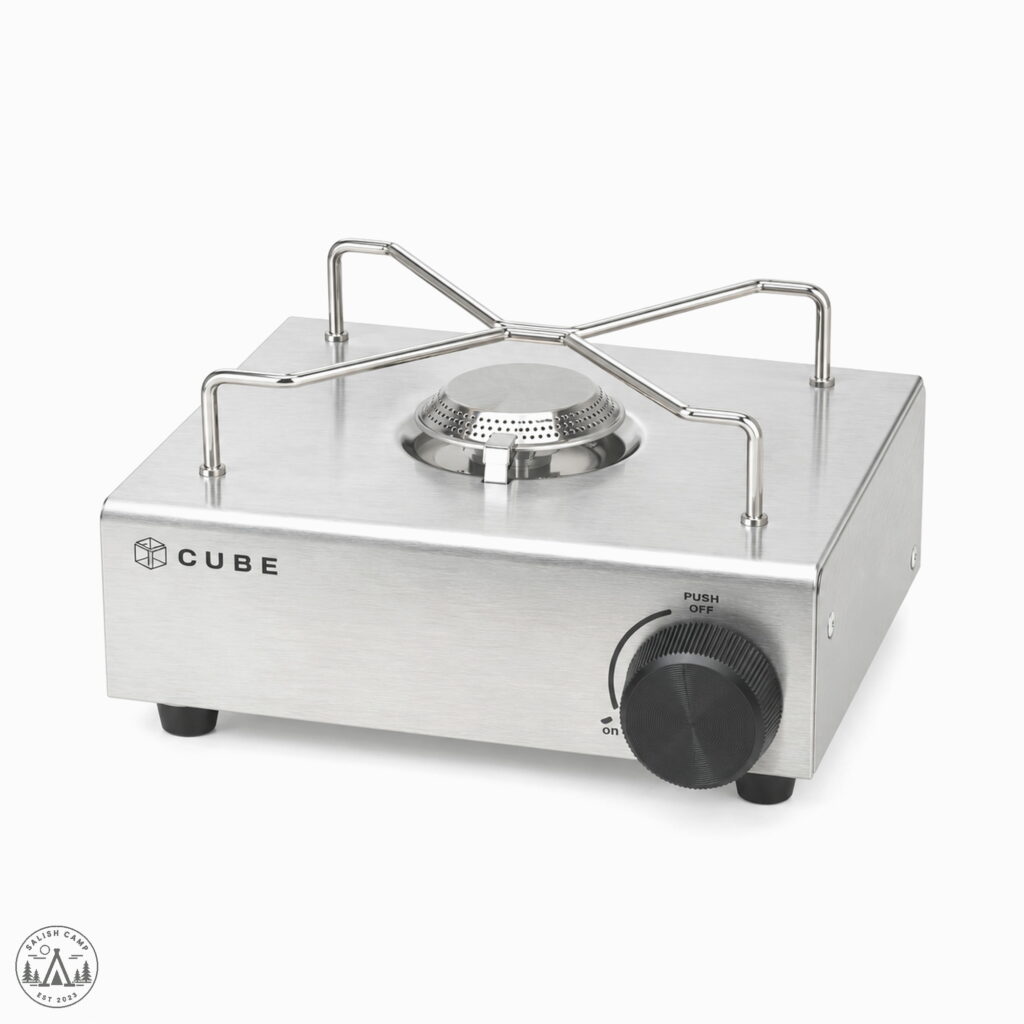
Buy if you want a compact, good-looking cassette stove for car camping, picnic tables or a simple outdoor coffee setup. The Kovea Cube KGR-1503R1 combines a stainless body, removable pot support, and piezo ignition in a tidy package of about 750 g that runs on a standard butane cassette canister.
Skip if you often camp near freezing, need to run big cookware, or want a stove for demanding group meals. The 18 cm pot limit narrows your cookware, butane cassette fuel is less dependable in the cold than an isobutane-propane canister stove, and murky US availability makes buying the right model and fuel harder.
What Stands Out
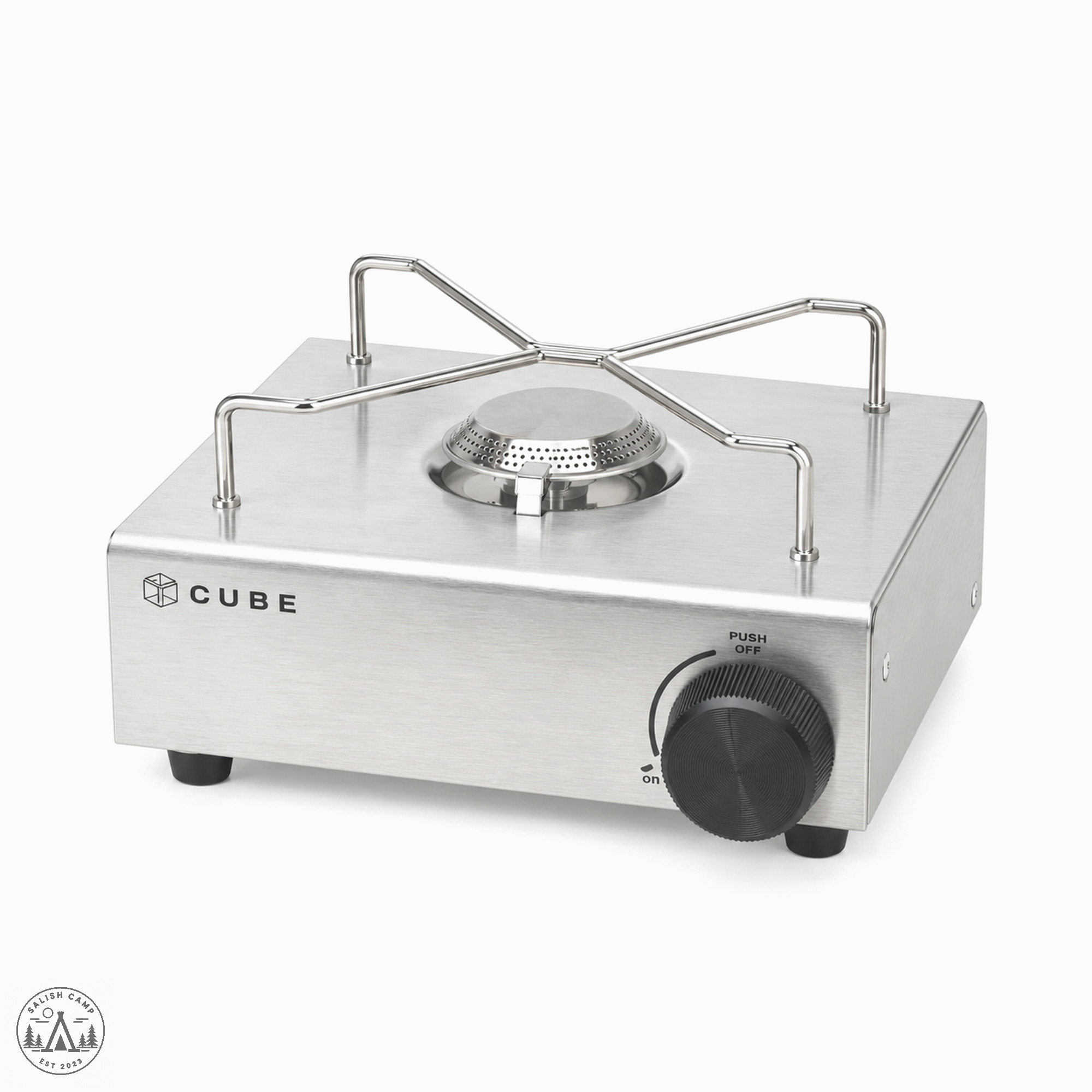
- Compact stainless body: A simple rectangular stainless body, about 21 x 20 x 11 cm closed, sits neatly on a table without the bulk of a full cassette range.
- Standard cassette fuel: It runs on a butane cassette (CB) canister, the same tall, slim can used by tabletop burners.
- Removable pot support: The support lifts off, which makes the area around the burner easier to clean.
- Built-in piezo ignition: No separate lighter needed for normal startup.
- Over-pressure protection: An auto shut-off and canister-eject mechanism acts if canister pressure gets too high.
- Sized for small cookware: The 18 cm pot limit suits compact kettles and small saucepans rather than family-size pots.
- Made in Korea: Stainless steel and aluminum alloy construction from Kovea’s home market.
In The Field
My car-camp cooking philosophy is simple: the best stove is often the one that makes breakfast effortless. After a wet night on the Olympic Peninsula, I don’t always want to unpack a whole kitchen just for coffee and something warm. Sometimes I want to open the camp box, set a burner on the picnic table and get breakfast going before the rest of camp wakes up. That’s exactly where the Kovea Cube fits.
It isn’t trying to replace a full kitchen. It’s a compact cassette burner with a stainless body, a removable pot support and a standard butane cassette, which makes it good at the unglamorous jobs: heating water, a quick breakfast, a small side dish while the big stove stays packed.
The footprint is the first thing I like. At about 21 x 20 x 11 cm closed, it’s easy to fit in a car-camping kitchen box. I pack the cassette separately and don’t leave it connected. After cooking, I let the stove cool, remove the canister following the instructions, and pack everything securely. A cassette stove is convenient, but it’s still a pressurized fuel appliance.
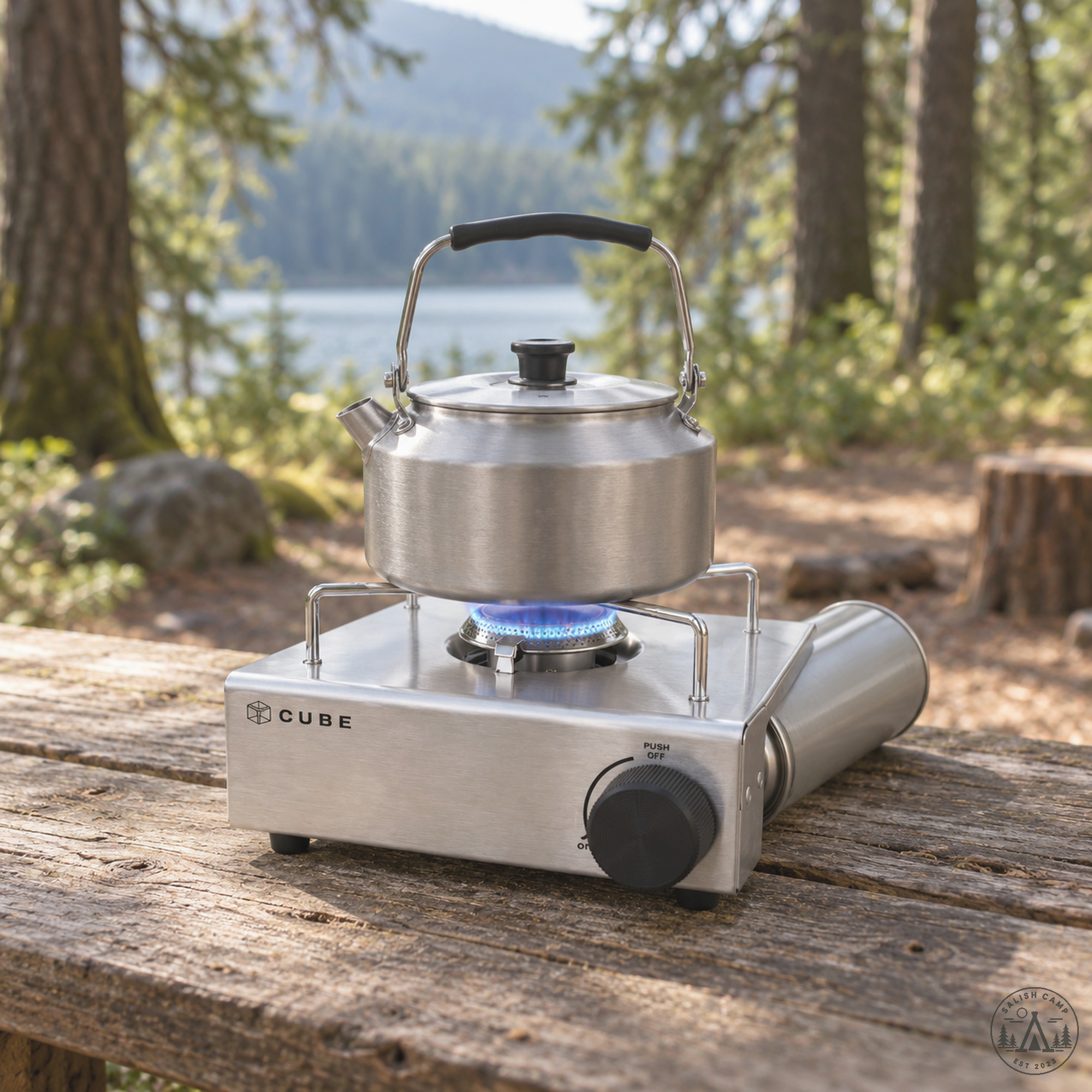
For a Cascades weekend, I’d treat the Cube as a breakfast-and-drinks burner rather than the main stove for every meal. A small kettle or saucepan is the natural match. I picture it beside a cutting board with the rest of the table clear for prep, cooking gear in its own zone away from food packaging and loose towels.
The removable pot support is a practical touch. Small burners collect spills when coffee boils over or a pan gets crowded, and lifting the support makes the surface easier to clean once everything is cool. Stainless suits a stove that sees damp mornings, greasy fingers and food residue, but I still dry it carefully before packing, especially after a trip to the coast.
The most important cookware rule is the 18 cm maximum pot size given in dealer listings. I treat it as a hard limit. A pot that physically fits on the supports isn’t automatically safe. Oversized cookware can push heat back toward the stove body and the canister, and on a cassette stove, keeping heat away from the canister matters most. So I pack a modest kettle or small pot for coffee and a properly sized pan for frying, and I never bridge the top with a broad skillet or griddle. For a group breakfast with several dishes, I bring a bigger stove built for the job.
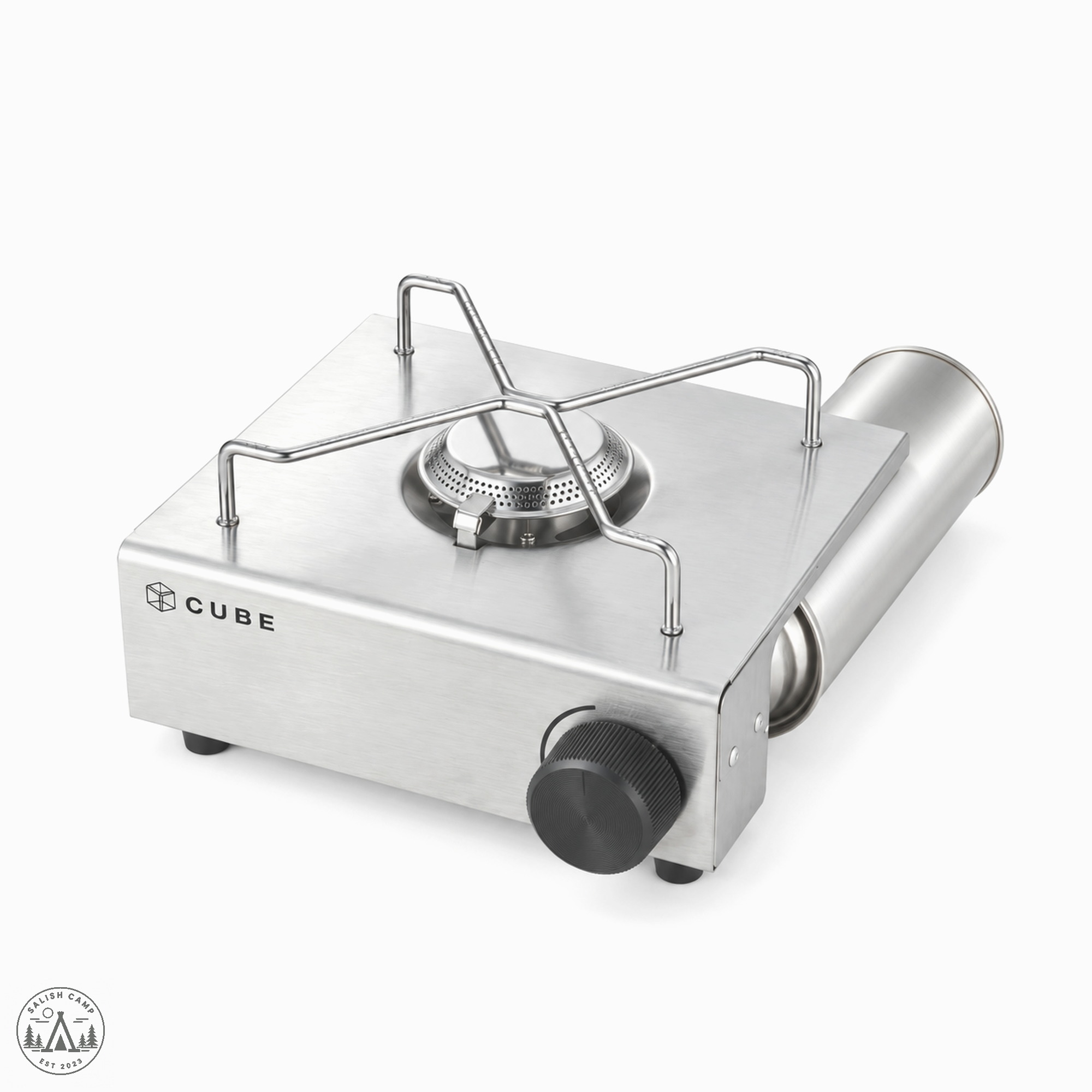
Fuel is the other big limitation in the Pacific Northwest. The Cube runs on a butane cassette, sometimes called a CB canister. That’s different from the threaded canisters used by backpacking stoves, which often hold isobutane-propane blends that keep better pressure in cool weather. The Cube takes its specified cassette fuel only.
For anyone new to cassette stoves, the canisters are the tall, slim cans sold for tabletop burners, not the squat threaded cans in the backpacking aisle. I check the stove’s instructions for the exact cassette type, store spare cans upright and away from heat, and carry them in a ventilated part of the car rather than a hot, closed trunk.
On mild summer mornings, butane is fine for simple cooking. In late autumn, it’s a different story. As temperatures drop, ordinary butane produces less vapor pressure, so the flame weakens, cooking slows, and the canister can chill further as it runs. I keep warm-weather convenience separate from cold-weather reliability. At a sheltered summer picnic site, I’m happy to plan around the Cube. At a frosty Cascades site, I’d bring a stove and fuel suited to the cold. I’d never try to fix weak butane by warming the canister, setting it near a fire or rigging an adapter.
Wind matters too. An exposed coastal picnic table looks perfect until gusts sweep across the burner. The Cube’s compact shape doesn’t make it wind-immune, so I pick a naturally sheltered outdoor spot rather than boxing it in with improvised panels. A windscreen that traps heat around the canister can create a serious hazard.
The over-pressure protection is reassuring, but it’s a backup, not a license to get casual. The auto shut-off and canister eject respond to excessive canister pressure. They don’t prevent overheating, leaks, carbon monoxide or unsafe cookware. Correct canister installation, the right cookware, good ventilation and following Kovea’s instructions still matter, and I never run it inside a tent, vehicle or closed shelter. On a rainy Olympic Peninsula morning, the urge to drag the stove under any cover is strong, but I find a properly ventilated outdoor spot instead.
Piezo ignition helps with the daily routine, especially with cold, wet hands. I don’t treat it as a guarantee, though. Moisture, wear and dirt can all affect ignition, so a separate lighter stays in my camp kit.
At about 750 g, the Cube belongs in a vehicle kit, not on a long hike. The cassette format and tabletop build are about convenient cooking in one spot. On a gravel-bar stop along the Skagit, that tradeoff makes sense: I care more about a stable burner, a hot small pot and easy cleanup than saving grams on gear that never strays far from the car, as long as the surface is firm, level and noncombustible.
The last complication is availability. R1 is the current version of the KGR-1503, and it shows up in Korean and other overseas listings, but the US distribution picture is unclear. I’d confirm the exact model code, compatible cassette fuel and instructions before buying or importing one. A compact stove loses its convenience if fuel and service become a recurring headache.
Pros
- Compact, organized design: The small rectangular stainless body packs easily in a car-camp kit.
- Simple operation: Built-in piezo ignition and a dedicated tabletop burner keep everyday cooking easy.
- Easy cleaning: The removable pot support opens up the cooking surface for cleanup.
- Extra safety layer: Auto shut-off and canister eject respond to excessive canister pressure.
Cons
- Cold-weather fuel limits: Butane cassette fuel loses pressure on chilly PNW mornings.
- Small cookware only: The 18 cm pot limit rules out larger pans and griddles.
- Unclear US availability: Finding the exact model, compatible fuel and service support takes extra checking.
Technical Specifications
| Specification | Details |
|---|---|
| Product | Kovea Cube KGR-1503R1 |
| Config | Cube KGR-1503R1 |
| Type | Tabletop single-burner cassette stove |
| Fuel | Butane cassette (CB) canister |
| Ignition | Piezo |
| Max pot | 18 cm |
| Size | About 21 x 20 x 11 cm closed |
| Weight | About 750 g |
| Safety | Auto shut-off / canister eject on over-pressure |
| Materials | Stainless steel, aluminum alloy |
| Made in | Korea |
Final Thoughts
The Kovea Cube KGR-1503R1 works as a focused piece of car-camping gear. Its stainless body, removable pot support, built-in ignition and compact cassette layout suit campers who want a simple burner without hauling out a full kitchen.
I like the idea of keeping it in a dedicated coffee-and-breakfast box. For a summer trip on the Olympic Peninsula or a casual stop by the Skagit, it’s compact, familiar and easy to organize around small cookware.
I wouldn’t make it my only stove for year-round Pacific Northwest camping, though. Butane is a real handicap on cold mornings, the cookware limit has to be respected, and unclear US availability adds friction. For someone who understands those limits and wants a clean tabletop cassette stove, it’s an appealing specialty burner for a vehicle-based kitchen.