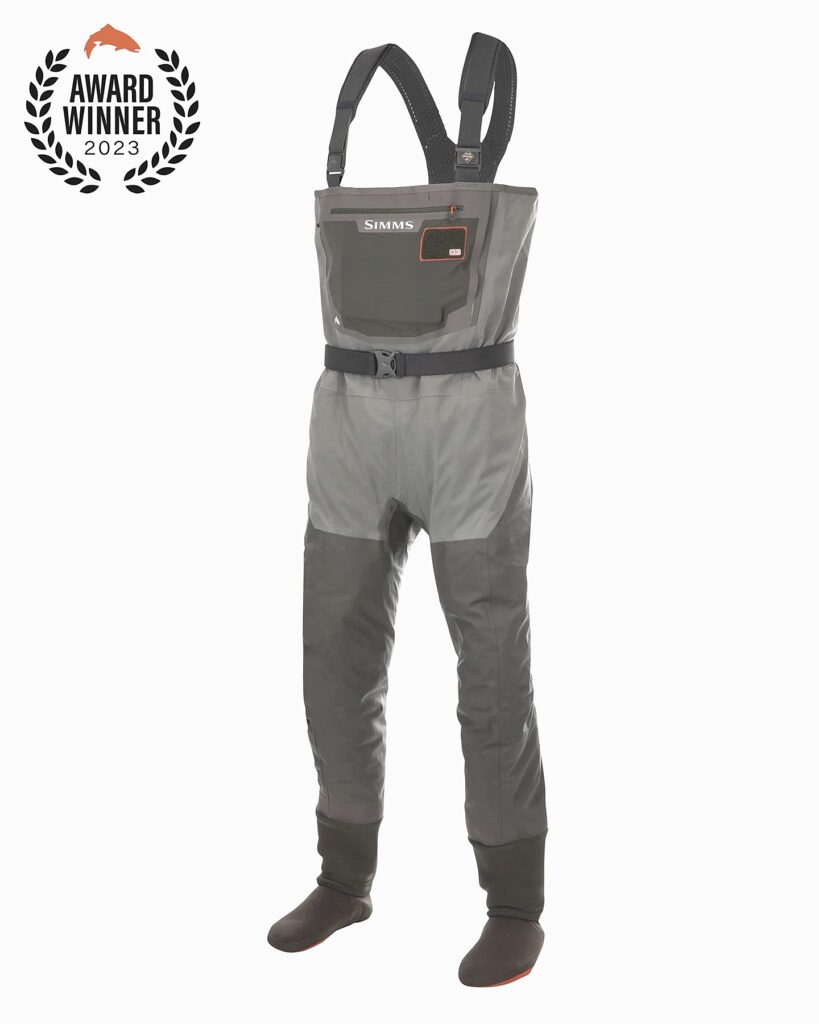
Buy if you wade often, need durable coverage and storage, and will take the time to get the fit and layering right. Skip if you only fish warm, shallow water, dislike chest waders, or want the lowest possible weight and price.
Some links on this page may be affiliate links. If you buy through them, Salish Camp may earn a commission at no extra cost to you. That does not change what we review or how we evaluate gear. Full details: /affiliate-disclosure/
What Stands Out
- Full chest-high coverage for cold rain, spray, and shoulder-season water.
- Stockingfoot format lets you choose wading boots instead of locking into an integrated sole.
- Gravel guards and seam construction address the small damage sources that add up in rocky rivers.
- Chest pocket and zippered handwarmers make long, wet sessions more manageable.
- Suspender and buckle hardware are central to comfort, not just adjustment details.
- Durable fabric makes sense for guides and frequent waders, but it is not ultralight.
- Fit, layering, and care determine success as much as the shell itself.
In The Field
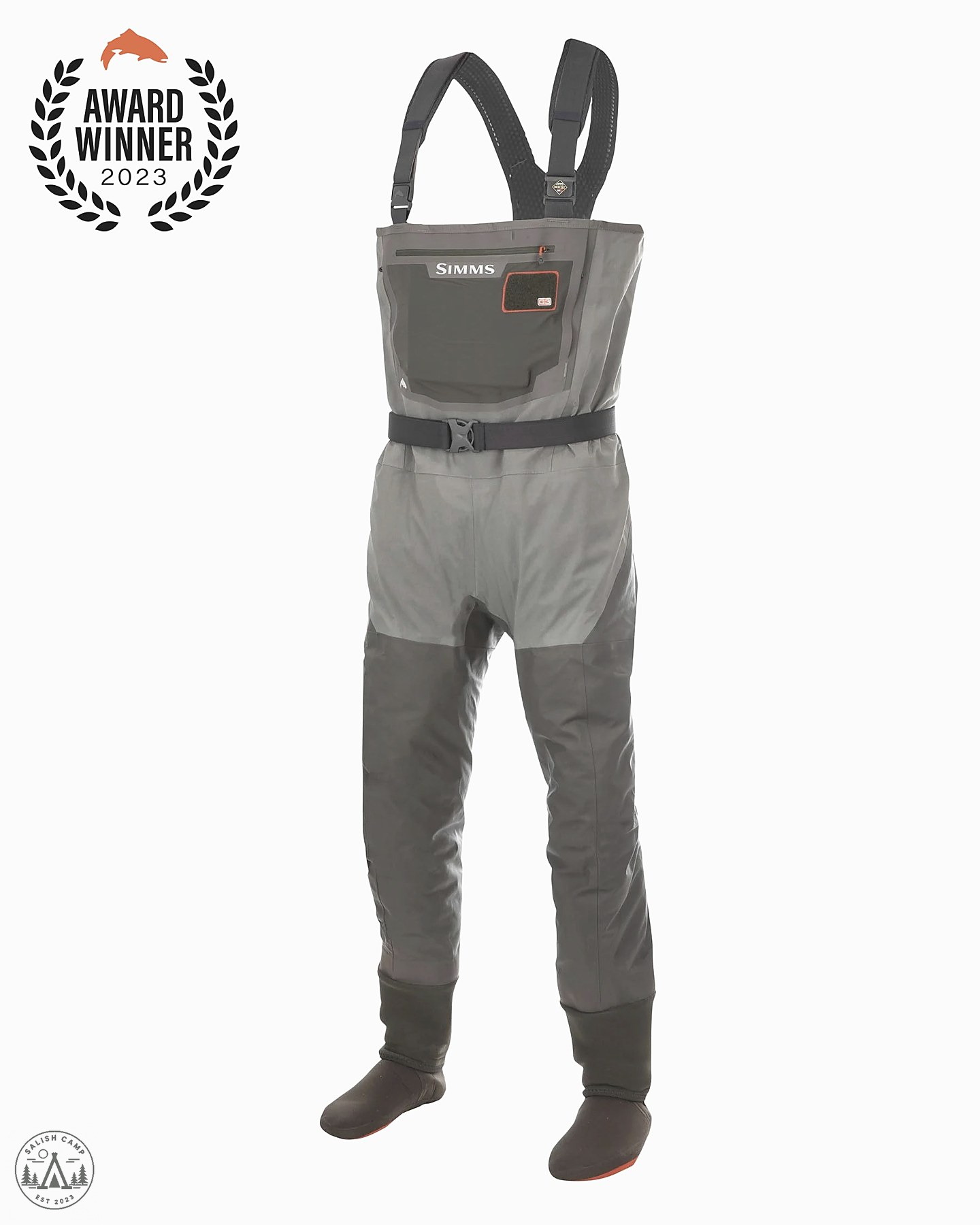
In western Washington, waders are less about looking like a serious angler and more about buying time in bad weather. I put on chest waders when the water is cold, the rain is horizontal, or the best lie requires a careful step beyond the bank. The Simms G3 Guide Stockingfoot is built for that repeated use: a protective shell, usable storage, and enough structure to survive contact with real river access.
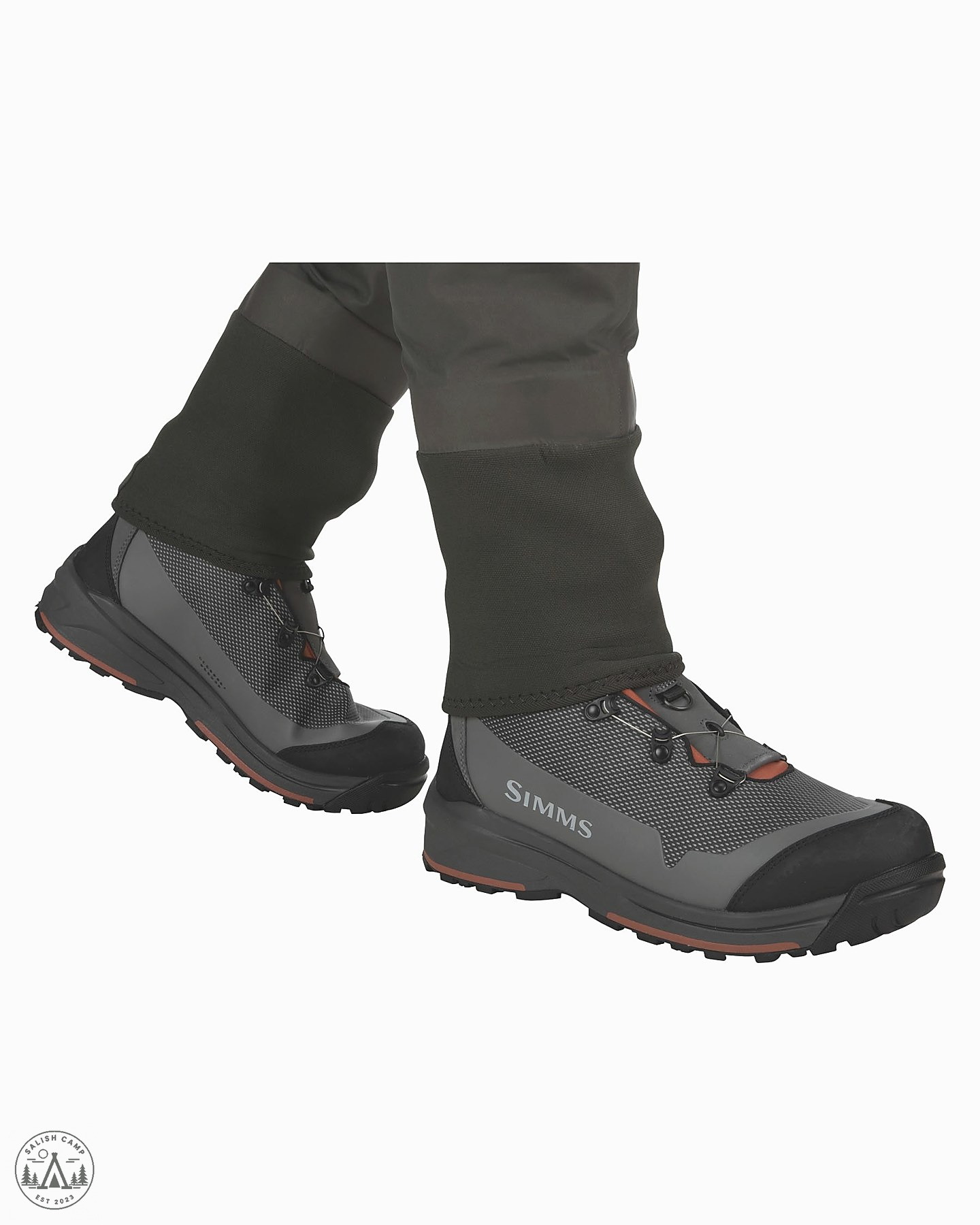
Novice question: what does stockingfoot mean? The waders end in neoprene booties, and you wear separate wading boots over them. That lets you choose felt-free rubber or studded boots for the riverbed and replace boots independently. It also means the boot fit is part of the wader fit. Too-small boots crush the neoprene; too-large boots let your feet move and make every step less secure.
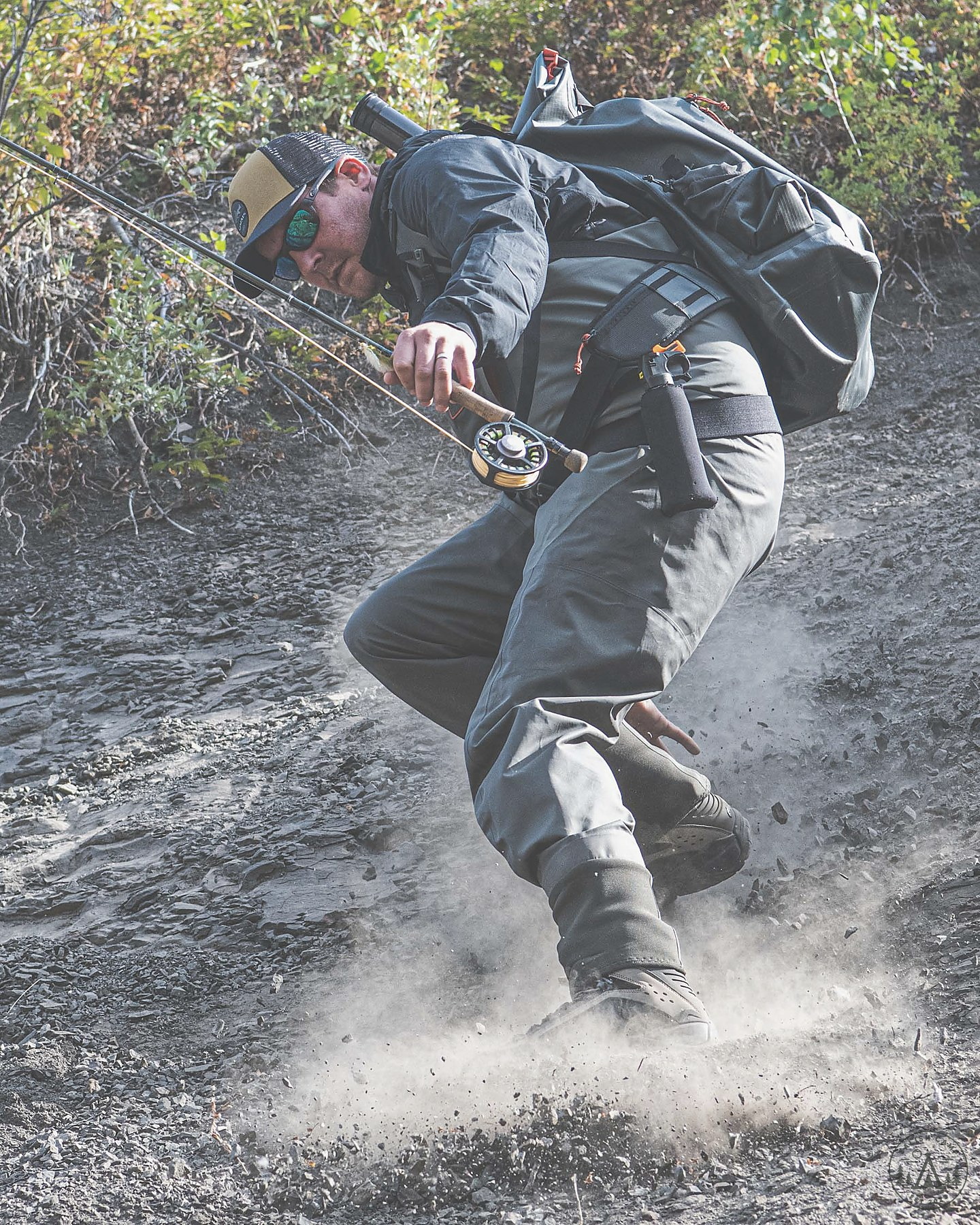
I start every trip by checking the gravel guards and seams. Sand works like fine sandpaper, especially when it gets trapped between a guard and boot. Pull the guard cleanly over the boot, keep the hook-and-loop closure flat, and rinse the lower legs after a gritty day. A durable wader still loses if its wearer treats gravel as harmless.
The first fit session should happen with the layers you actually fish in. Try the waders over a base layer and insulation, squat, lift one knee, and reach for a fly box. The chest should not pull when you bend, and the crotch should not feel like a suspension point. If you buy at the edge of a size chart, do not assume a belt can fix a fundamentally wrong length.
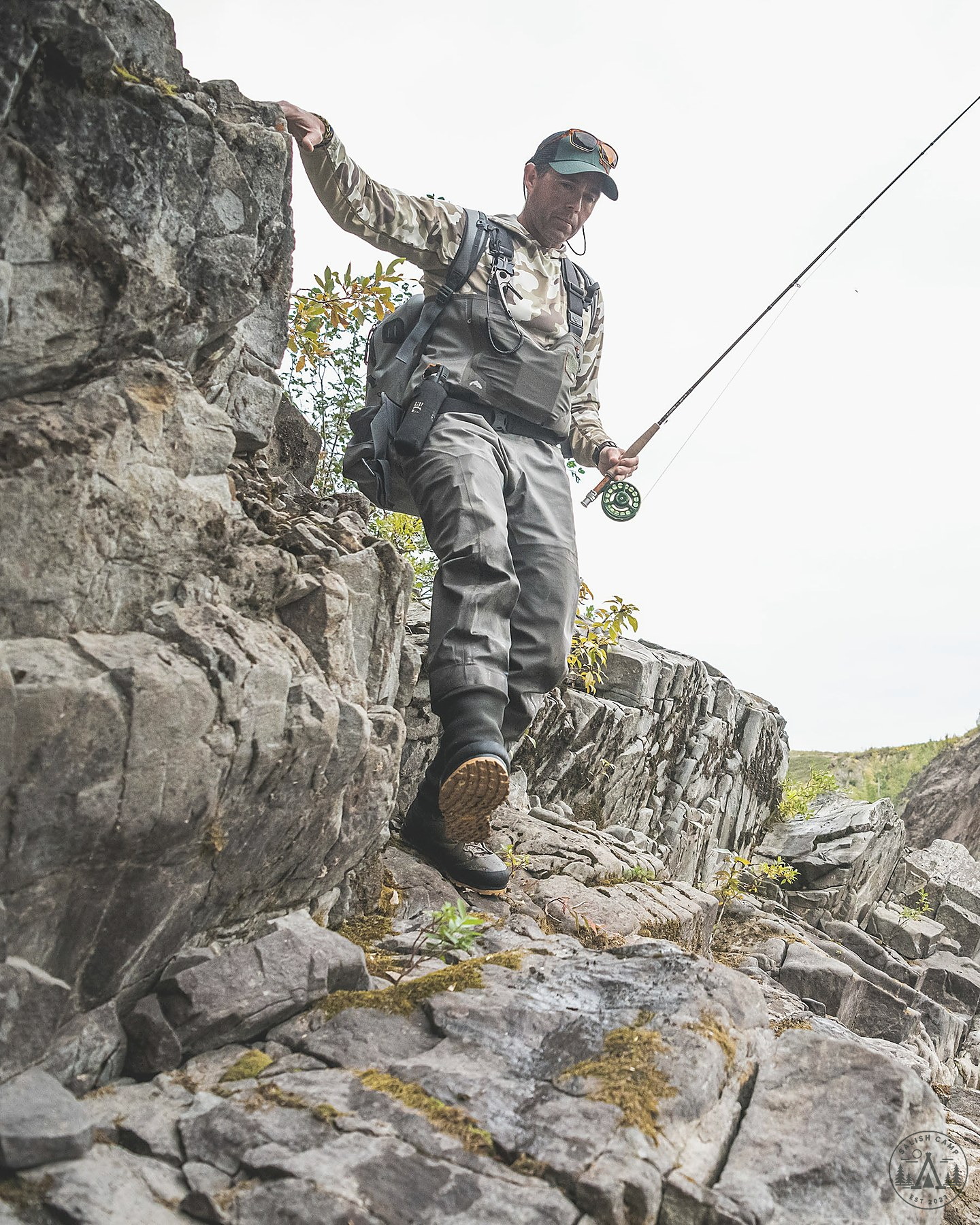
The chest storage is one of the features I appreciate most in weather. A pocket that closes securely keeps leaders, floatant, and a phone more accessible than a pack, while zippered handwarmers give cold hands a place to reset. Keep the pocket load modest. A heavy box swinging against the chest is annoying on the walk and can create avoidable strain at the zipper.
Do not mistake a handwarmer pocket for a dry bag. I use a phone case and small waterproof pouches for anything that cannot get wet. Waders are waterproof clothing, not a guarantee that every closure stays dry under a full day of rain.
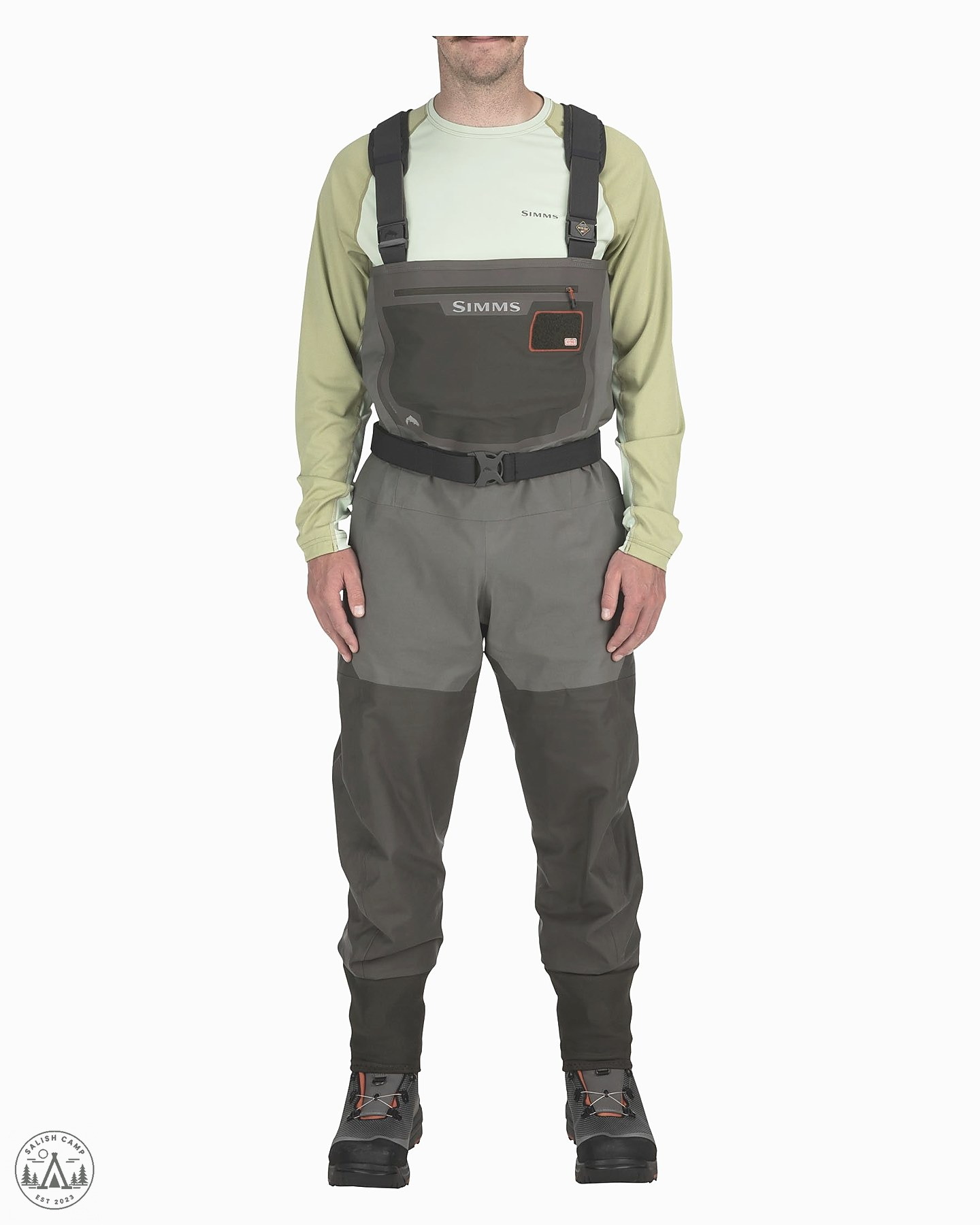
Suspender adjustment is where comfort is won. I set the straps so the waders stay up without pulling hard across my shoulders, then use the belt to keep the lower half close to my body. Before crossing, I check buckles, belt tension, and pocket closures. That two-minute ritual is cheaper than discovering a loose strap halfway across a river.
On the water, the G3 feels protective rather than delicate. That is reassuring around blackberry edges, alder branches, and rough access trails. It also means I notice the weight compared with minimalist waders. For a short warm-weather session I would rather wear less; for cold all-day fishing, the durability and coverage are worth carrying.
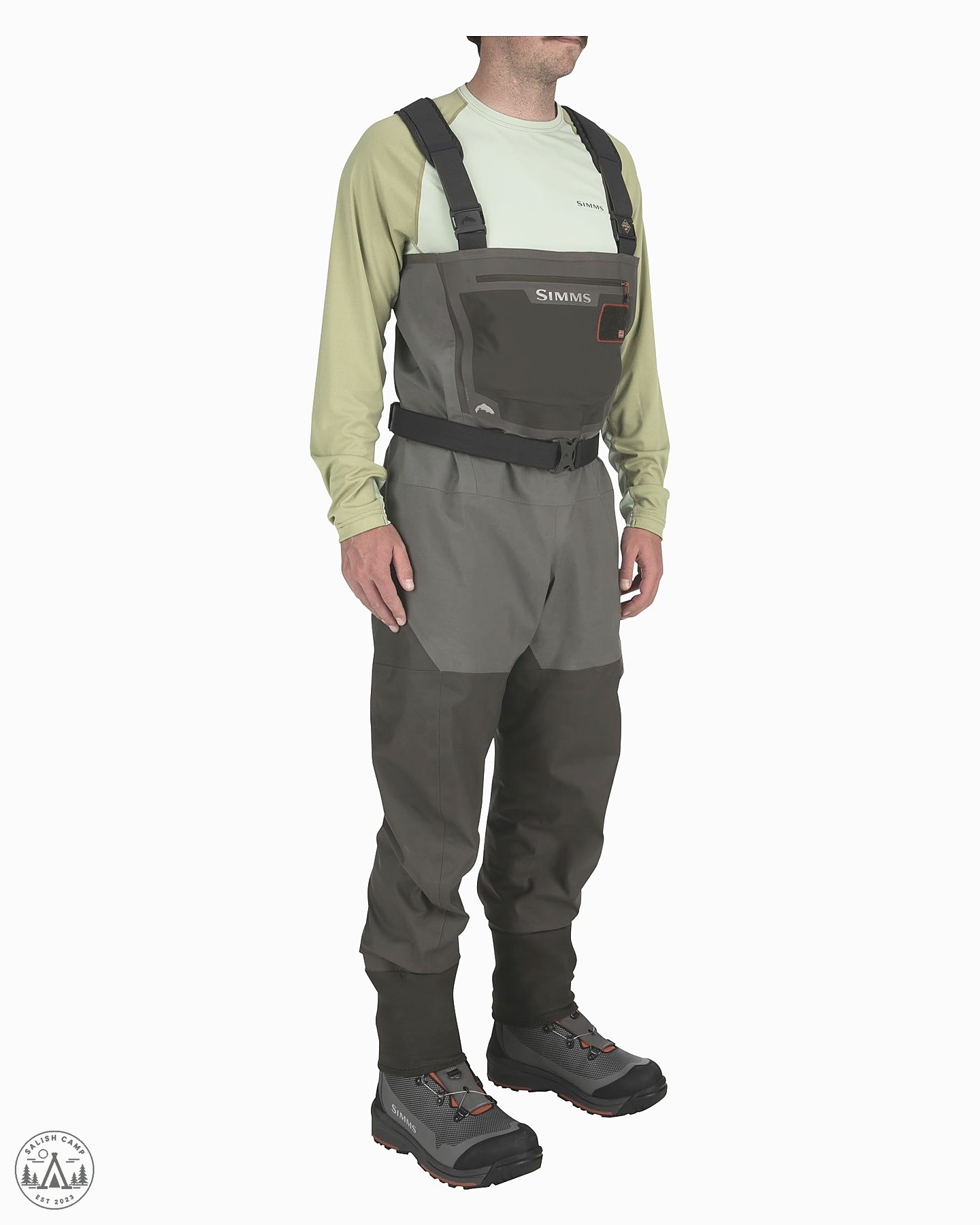
Seam care is not optional. I hang the waders fully open to dry, away from direct heat, and inspect the inside and outside of high-flex areas. Do not stuff wet waders into a trunk for a week. If a leak appears, mark it when the waders are dry and use the manufacturer’s repair guidance or a qualified repair shop. Early repairs are less frustrating than a pinhole found in November.
Wading safety remains separate from wader quality. The G3 can keep me dry, but it cannot make fast water safe. I use a wading staff when the bottom is uncertain, unclip anything that should not be attached during a fall, and turn around when the crossing is wrong. The right clothing should extend judgment, not replace it.
The G3 is a good match for a dedicated kit that includes the Echo Trout 9′ #5 or Sage R8 Core. The rod choice changes the casting experience; the wader choice changes whether I am willing to stay in the river long enough to use it. I would not buy the waders merely to complete a look.
Who should skip them? Fair-weather anglers, people who fish from shore, and anyone who cannot store and dry a full wader properly. Chest waders need space, routine, and respect. If you cannot provide those, simpler rain pants may be the more responsible choice.
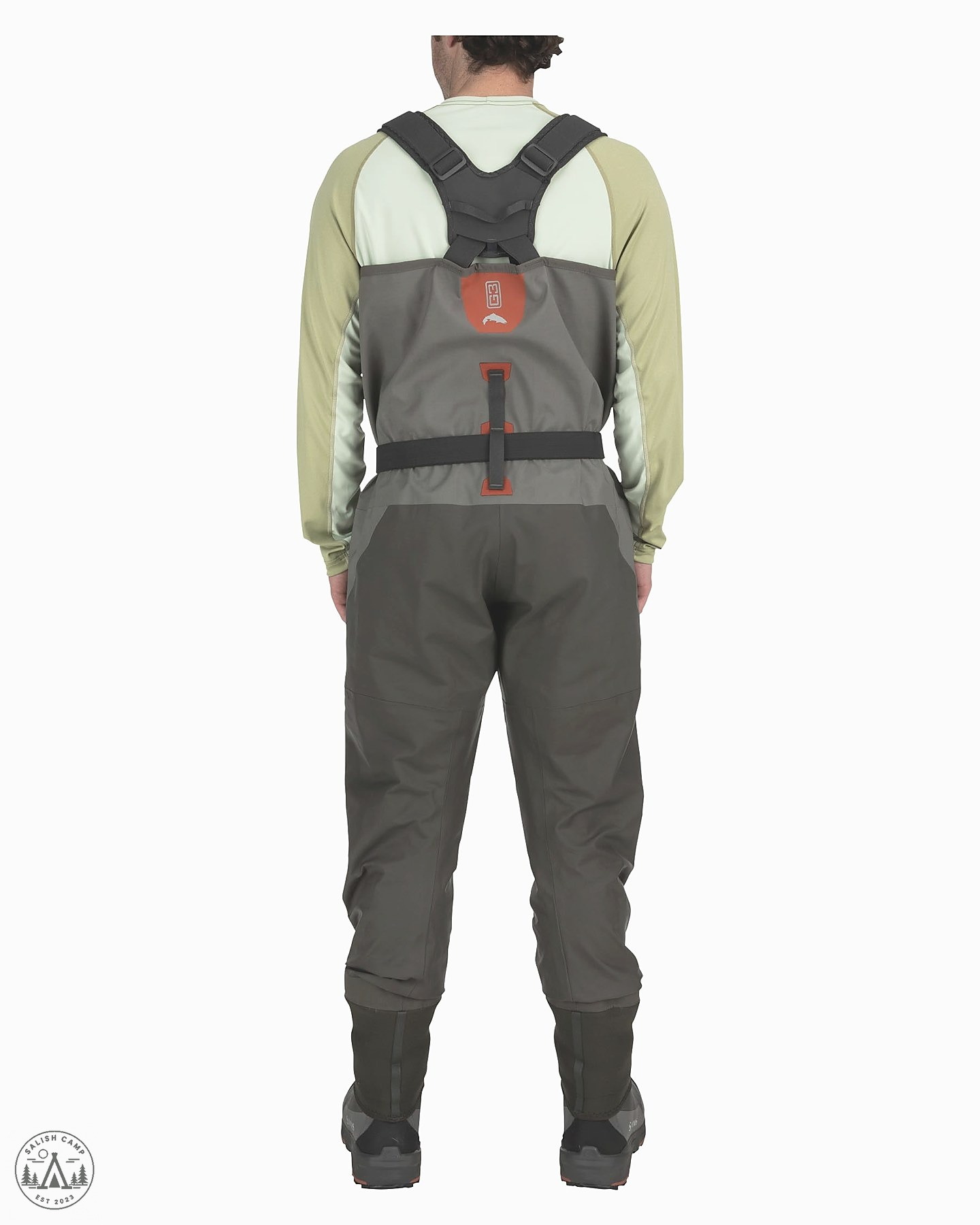
After repeated wet Northwest days, my preference is clear: a serious wader should make movement boring. The G3’s job is to keep fabric, hardware, and storage from becoming the story while I focus on footing and presentation.
Pros & Cons
Pros
- Protective chest-high coverage
- Useful pocket and handwarmer layout
- Replaceable boot choice with stockingfeet
- Gravel guards suit rocky access
- Durable daily-use construction
Cons
- Heavier and pricier than minimal waders
- Fit depends on layers and boot choice
- Needs careful drying and seam care
- Not necessary for casual warm-water fishing
Technical Specifications
| Product | Men’s G3 Guide Waders – Stockingfoot |
|---|---|
| Category | Fly Fishing |
| Construction | Chest-high waterproof/breathable stockingfoot wader |
| Features | Gravel guard, chest pocket, zippered handwarmers, suspenders |
| Best for | Frequent cold-water and wet-weather wading |
| Fit note | Size over actual fishing layers and chosen boots |
| Care | Rinse grit, hang fully open, repair early |
| Buy | View at Simms |
Final Thoughts
The Simms G3 Guide Stockingfoot Waders are for anglers who will actually use chest waders hard enough to value protection, pockets, and repairable habits. They are not the lightest answer, but a wet PNW day is a poor place to discover that “light” meant giving up the features that keep you fishing. Buy them for frequent wading, then give them the fit and drying routine they require.