
Buy if you want one sensible 5-weight for dry flies, nymphs, and small streamers without spending four figures. Skip if you need a fast-action cannon for oversized flies, extreme distance, or the lightest tip recovery in a lineup.
Some links on this page may be affiliate links. If you buy through them, Salish Camp may earn a commission at no extra cost to you. That does not change what we review or how we evaluate gear. Full details: /affiliate-disclosure/
What Stands Out
- 9-foot, 5-weight, four-piece Trout 590-4 configuration fits the PNW default use case.
- Friendly flex that gives a novice feedback without making a practiced caster feel punished.
- Useful range from dry flies and soft hackles to ordinary nymph rigs and small streamers.
- Distinctive blue sliding hood and clean guide wraps make the build easy to inspect.
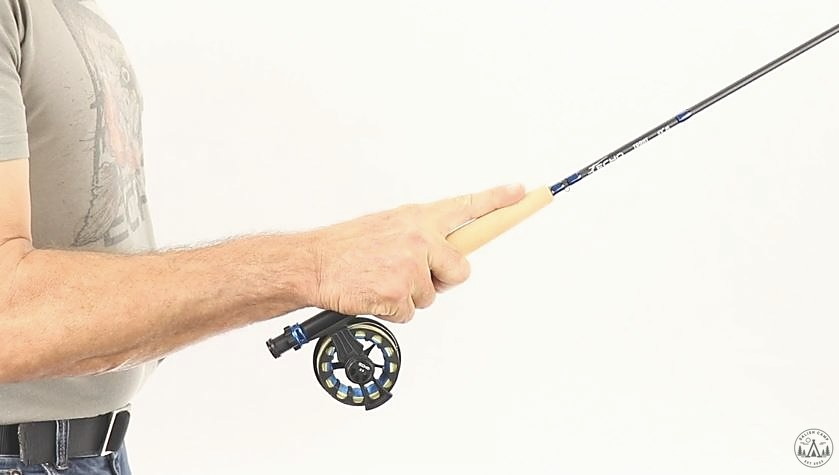
- Custom-shaped cork grip supports both thumb-on-top and finger-on-top casting.
- Anodized aluminum reel seat keeps the package practical rather than precious.
- About $350 leaves room in the budget for line, backing, and a decent case of flies.

In The Field
I think of the Echo Trout 590-4 as the rod I would hand to someone building a first serious trout kit in Seattle. A 9-foot 5-weight is not exotic, and that is the point. It has enough reach to mend on a bigger river, enough line control for a lake edge, and enough backbone for the small streamers that show up when a hatch is not happening. It also does not demand perfect timing from a new caster.
Novice question: what does 5-weight mean? It is the line size the rod is designed around, not a promise about fish weight. Pair it with a true 5-weight floating line and the rod loads as intended. The four-piece format is easier to transport than a two-piece rod, and assembly is simple: line up the dots or markings, seat each ferrule firmly, then check them again after a few casts.
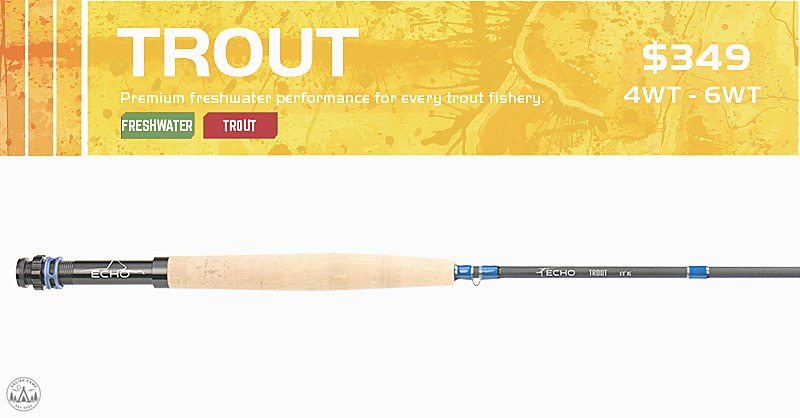
On a tight western Washington creek, the 9-foot length is workable but not magical. I shorten the leader and change my angles rather than pretending the rod is a dedicated small-stream wand. On open water, that extra length becomes an advantage: mends are cleaner, and I can keep more line off the chop. The action feels approachable rather than frantic, which is valuable when a beginner is learning to stop the rod instead of muscling it.
Dry-fly work is where the Trout earns its name. It presents ordinary size 12–18 patterns without drama and makes short roll casts feel predictable. With a nymph indicator, I would call it capable rather than specialized. Heavy split shot and bulky rigs eventually make the tip feel outmatched; that is my cue to simplify the rig or move to a stronger rod, not to blame this one.
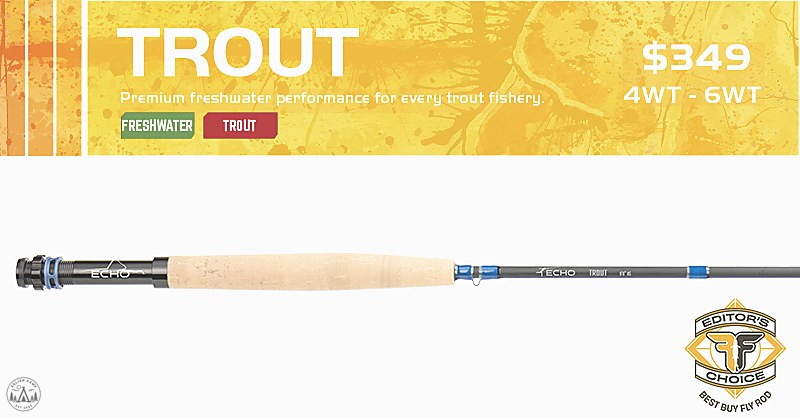
The grip matters more than product copy suggests. My hand settles into it quickly, and the cork shape does not force one casting style. If you are shopping online, look closely at the grip photo and ask whether the diameter suits your hand. A comfortable grip lets a new angler practice longer before forearm fatigue turns every loop into a wind knot.
Recovery is not as abrupt as an expensive fast-action rod. That is a benefit for learning, close work, and the imperfect timing that comes with cold fingers. The tradeoff appears when I need to throw a long line into a headwind: I have to make a cleaner, more deliberate stroke and let the rod do its loading. It will get there, but it does not erase bad technique.
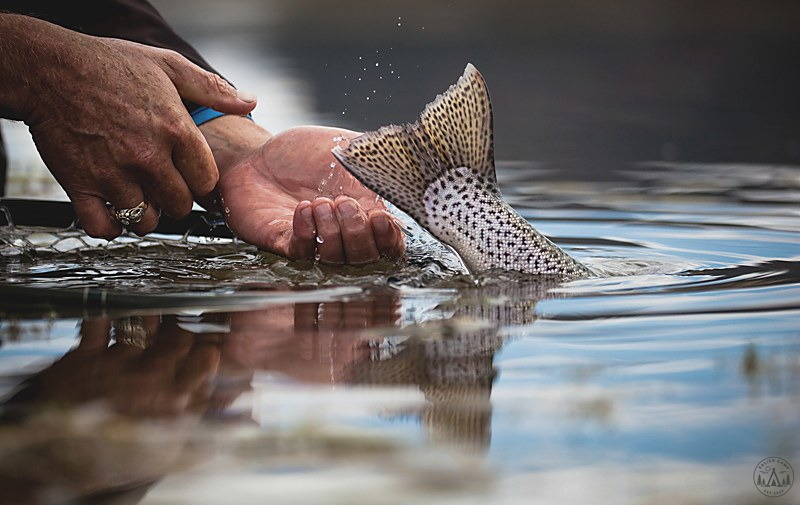
Reel-seat fit is a detail I check before a trip. Mount the reel, tighten the hood without forcing it, and give the reel a shake. The Echo’s anodized aluminum seat feels appropriately utilitarian. It is not pretending to be a piece of jewelry, and I would rather have simple hardware I can rinse and inspect after a salty Puget Sound outing than decorative complexity.
For line choice, start with a standard weight-forward floating 5-weight. A heavier specialty line may load the rod faster at short range, but beginners can mistake that feeling for a better match and then struggle at distance. I would add a nine-foot 5X or 4X leader, adjust tippet to the fly, and only experiment after the basic setup casts cleanly.
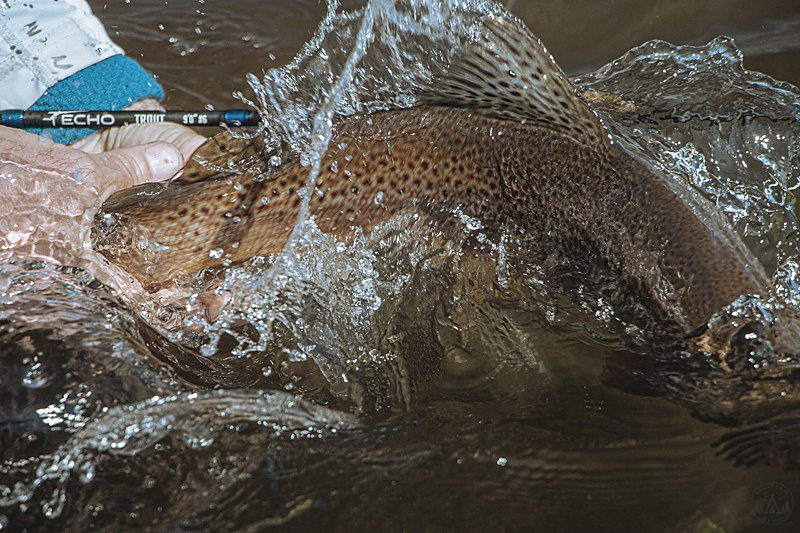
Durability is mostly a matter of ferrule habits. Keep grit out of the joints, wipe the sections before storage, and do not twist a stuck ferrule harder when cold water has tightened it. Break the rod down at the end of the day instead of leaving it assembled in a car. That routine matters more than whether a rod costs $350 or $1,100.
Compared with the Sage R8 Core 9′ #5, the Echo gives up speed, refinement, and some reserve power while costing dramatically less. That comparison is fair only if your fishing benefits from those upgrades. For a first all-round trout rod, the money may be better spent on line and instruction.
The fabric hard case is useful for keeping sections together in a vehicle or closet, though it is not a substitute for a careful rod tube on a rough trip. I label each section and keep the case dry. The four-piece format is forgiving of travel, but a ferrule packed with sand is still a ferrule waiting to fail.
Who should skip it? An experienced caster chasing maximum line speed, someone throwing very large articulated streamers, or a steelhead angler who really needs a different rod class. This is a trout all-rounder. Asking it to be a saltwater or salmon tool is how a good purchase becomes the wrong purchase.
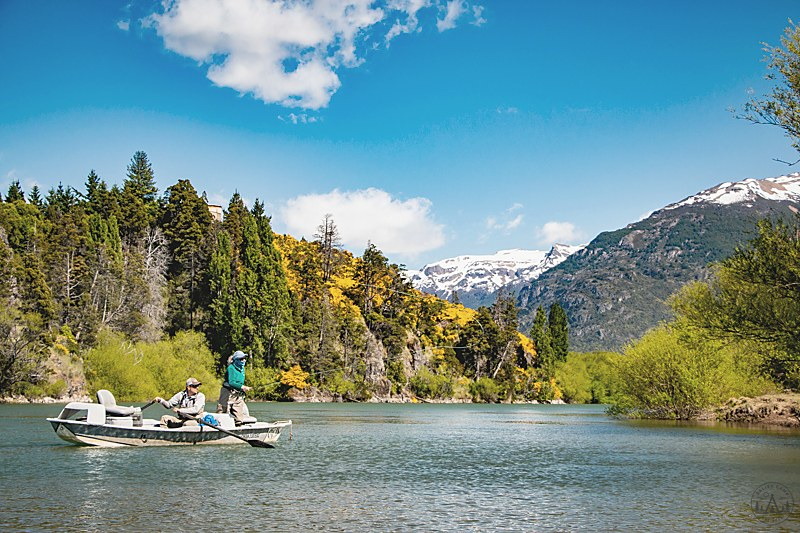
After a season of ordinary PNW trout days, my verdict stays simple: the Echo Trout makes the common cast easy enough to learn and versatile enough to keep using. It is not a bargain-bin toy, and it is not a luxury upgrade. It is the sensible middle.
Pros & Cons
Pros
- Approachable all-round 5wt action
- Useful 9-foot reach and four-piece travel format
- Comfortable, adaptable cork grip
- Practical aluminum reel seat
- Leaves budget for line and lessons
Cons
- Not the fastest long-distance caster
- Heavy or bulky rigs expose its limits
- Hardcore specialists will want a more focused rod
- Case is storage, not expedition armor
Technical Specifications
| Product | Echo Trout 590-4 / TRT-590 |
|---|---|
| Category | Fly Fishing |
| Configuration | 9′ 0″, 5wt, 4-piece |
| Price | ~$350 |
| Grip | Custom-shaped cork |
| Reel seat | Anodized aluminum |
| Best for | Everyday trout and learning casters |
| Buy | View at Echo |
Final Thoughts
The Echo Trout 9′ #5 is the rod I would recommend when the brief is simply “one trout rod for Washington.” It covers the most common water and leaves enough budget for a good line. Step up to the Sage R8 Core when casting refinement and reserve power are worth the premium; choose the Echo when repeatable, forgiving fishing matters more.