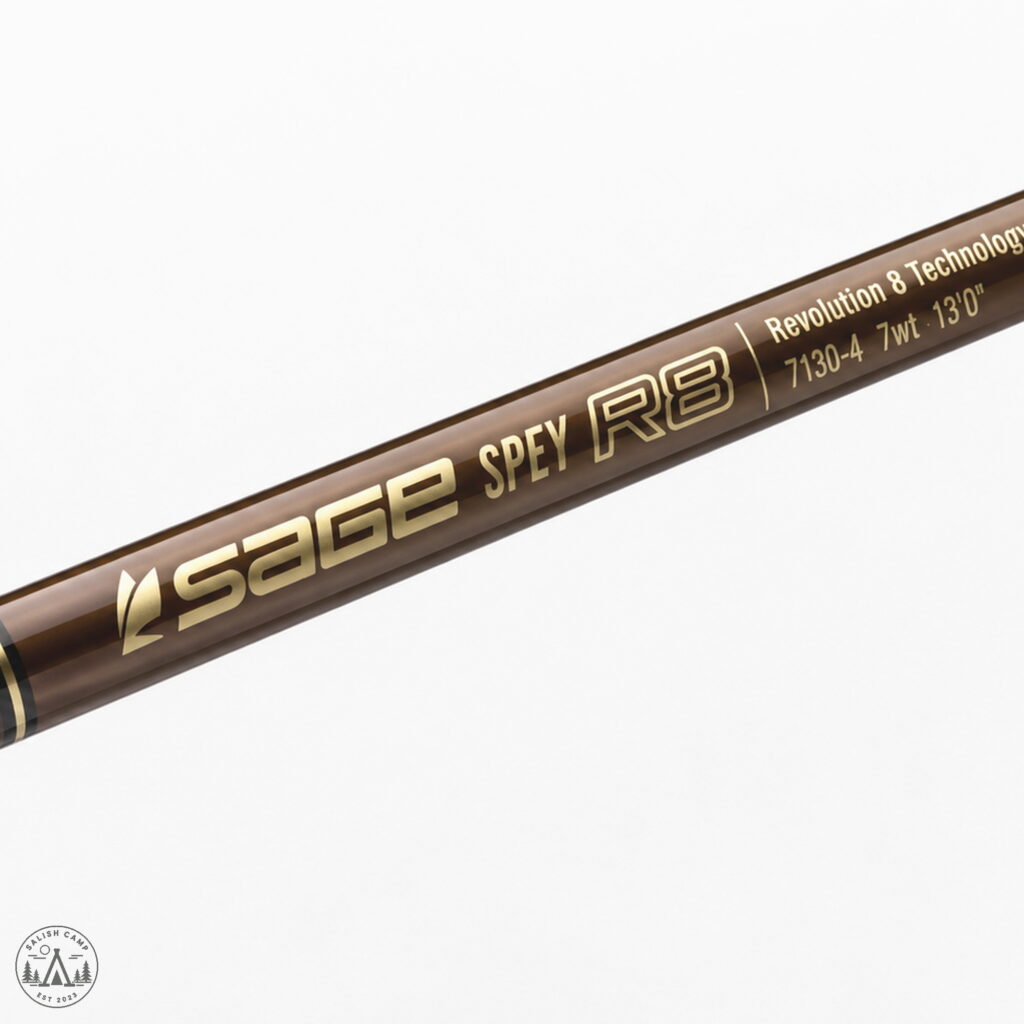
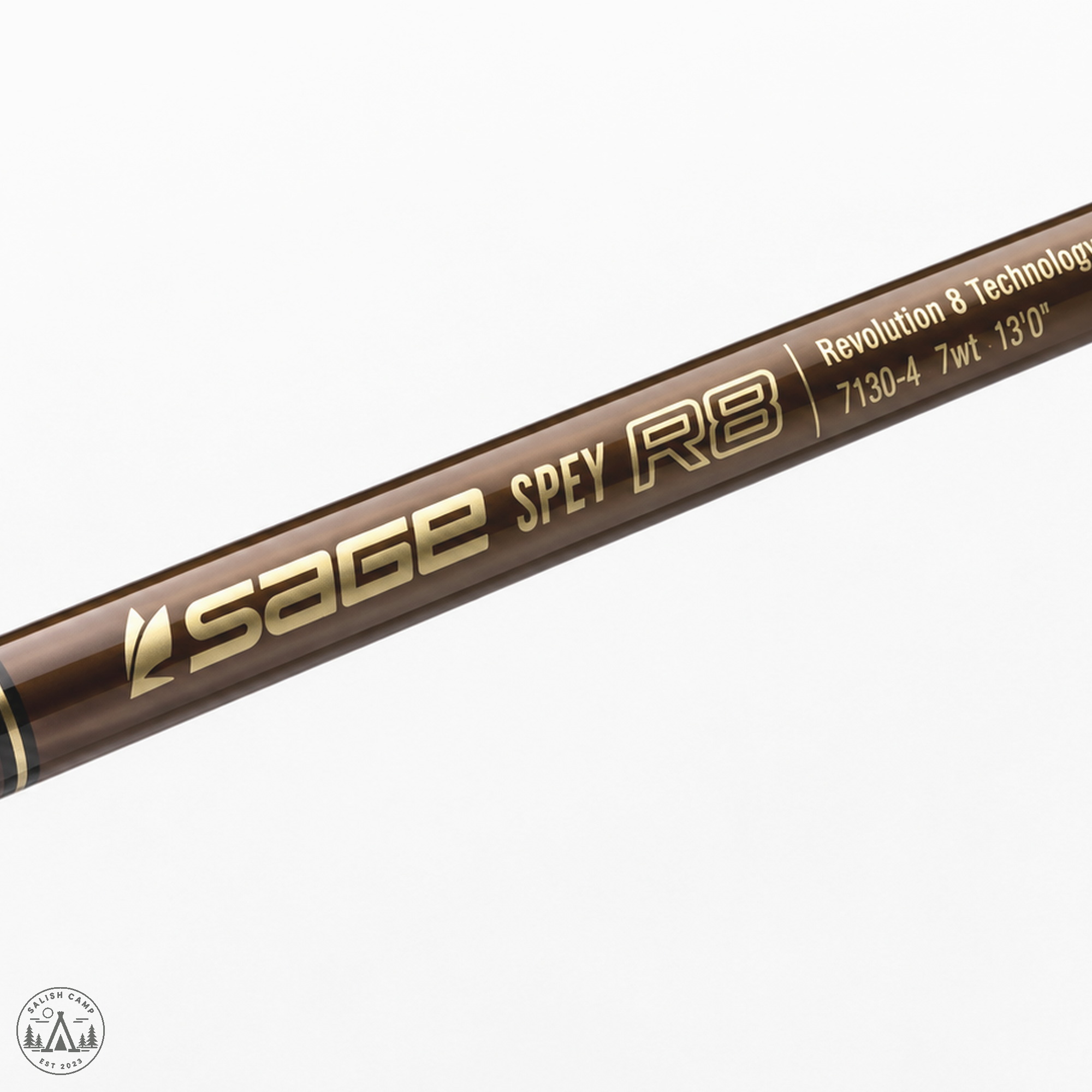
Buy if you already swing flies for steelhead or salmon and want one premium two-handed rod to cover a broad range of PNW water. The SPEY R8 7130-4 is specifically a 13'0", 7wt, four-piece rod with Sage's Max Versatility action and Mid-Length All-Around Spey application. Its published line windows—Skagit 500–550 grains and Scandi 450–500 grains—give you concrete starting points rather than leaving the most important setup decision to guesswork. At $1,400.00, this makes the most sense for an angler who knows why a 13-foot spey belongs in the quiver.
Skip if you are shopping for your first general-purpose fly rod, mostly fish trout creeks, or do not actually need two-handed line control and swing presentation. This is a purpose-built spey rod for summer and winter steelhead, Pacific salmon, and light Atlantic salmon. It is also a $1,400.00 commitment before adding a reel and line, neither of which Sage lists as included.
What Stands Out
- The 13'0" 7wt configuration occupies Sage's versatility slot. Sage labels the 7130-4 Max Versatility and its application Mid-Length All-Around Spey, naming summer and winter steelhead plus Pacific and light Atlantic salmon.
- The line windows are unusually useful buying information. Sage specifies Skagit 500–550 and Scandi 450–500, with a 525 Skagit Max Launch and 470 Scandi Launch as its recommended pairings.
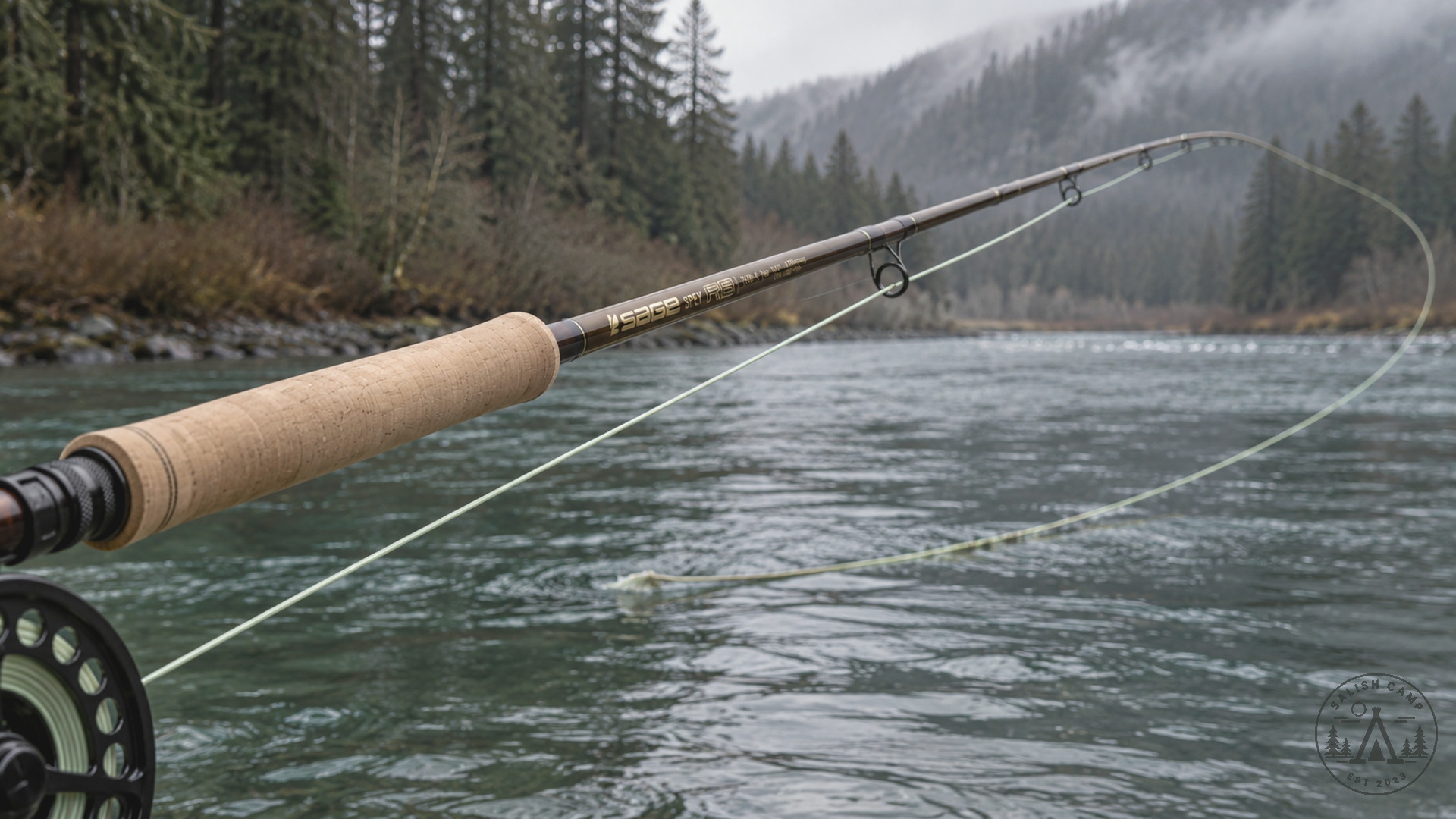
- Thirteen feet gives this model real spey reach without making it a longer-than-13-foot rod. Sage describes the 7130-4 as long enough for big casts and line control while remaining manageable where D-loop room is limited.
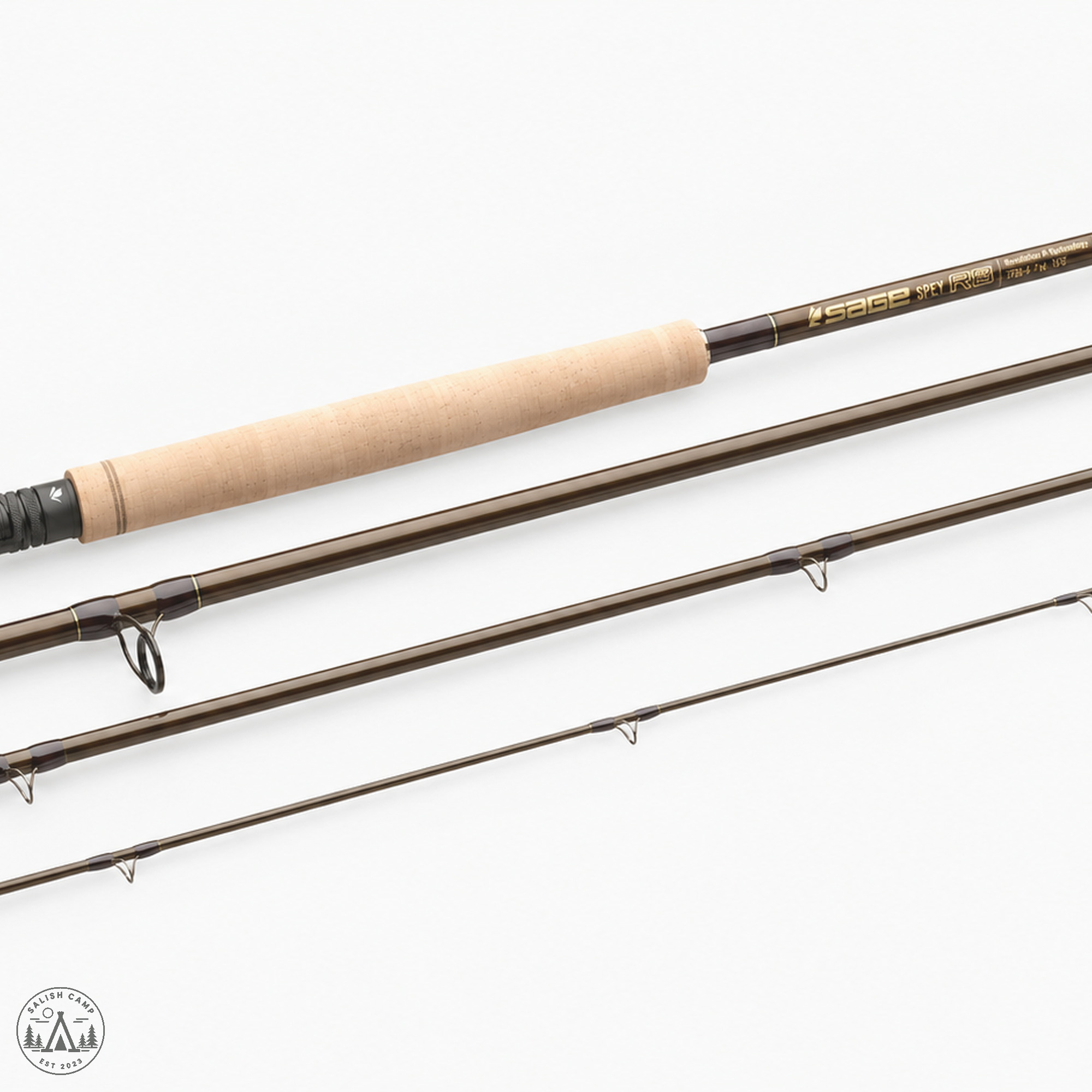
- The grip dimensions are specific. You get a 13-inch fore grip and 5-inch rear grip, using Super-Plus grade cork with composite cork trim rings.
- The 7130-4 uses a down-locking reel seat. It is aluminum with a walnut insert and a laser-etched Sage logo on the slide band.
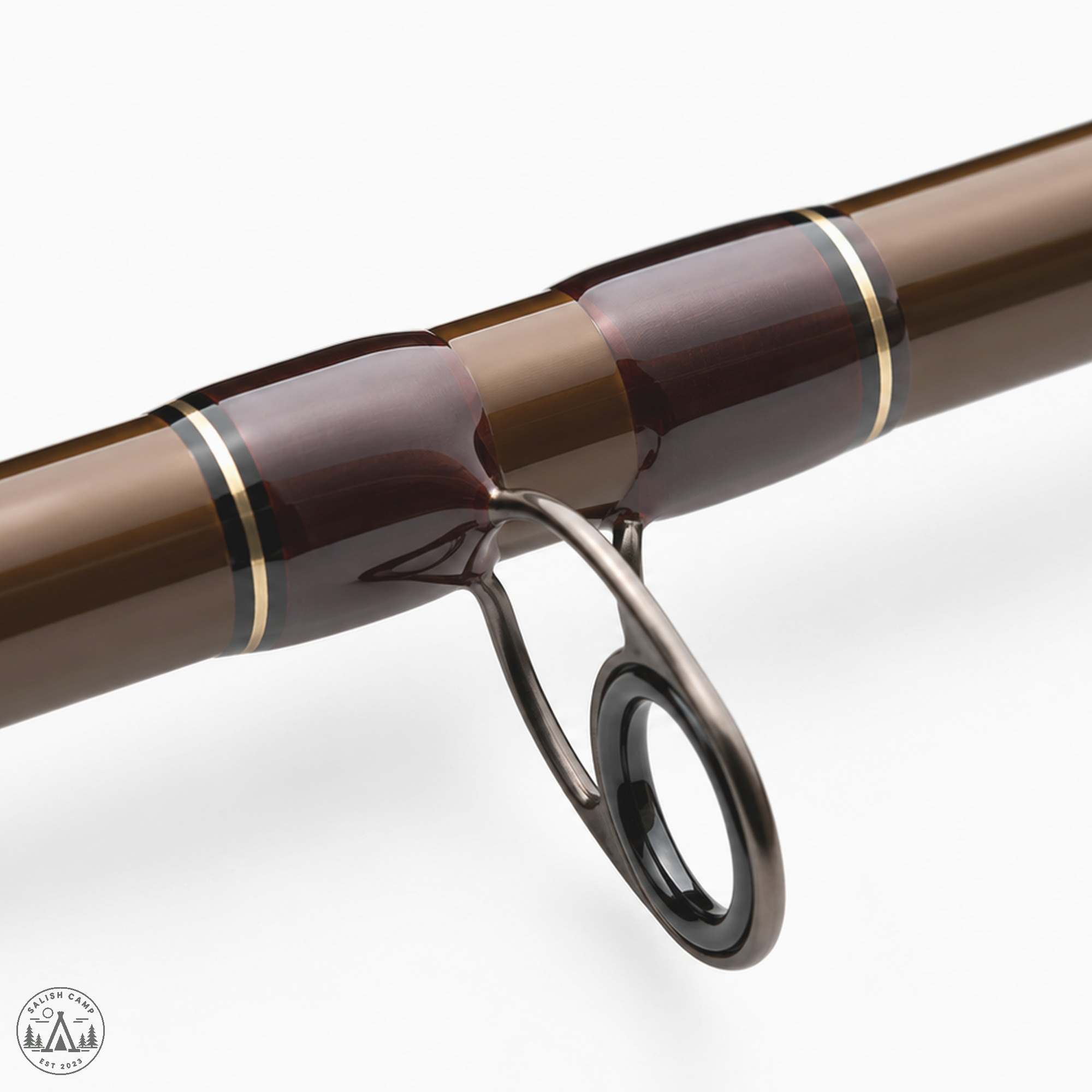
- The guide train is clearly specified. Sage uses Fuji K-Series "tangle free" stripping guides followed by hard-chrome snake guides and tip top.
- The storage package is part of the premium build. Sage lists a black rod bag with an Ale-colored model tag and a low-light bronze aluminum tube with granite tube cap; a reel and line are not listed as included.
In The Field
A 13-foot 7-weight makes sense to me when I picture the water where I actually reach for two hands. Not a little Cascade trout creek and not an afternoon throwing dries with a single-hand rod. I mean broad Puget Sound tributary runs, Olympic Peninsula water, or Deschutes-class stretches where I step in, establish an angle, work down through the run, and want the rod helping me control the swing after the cast lands.
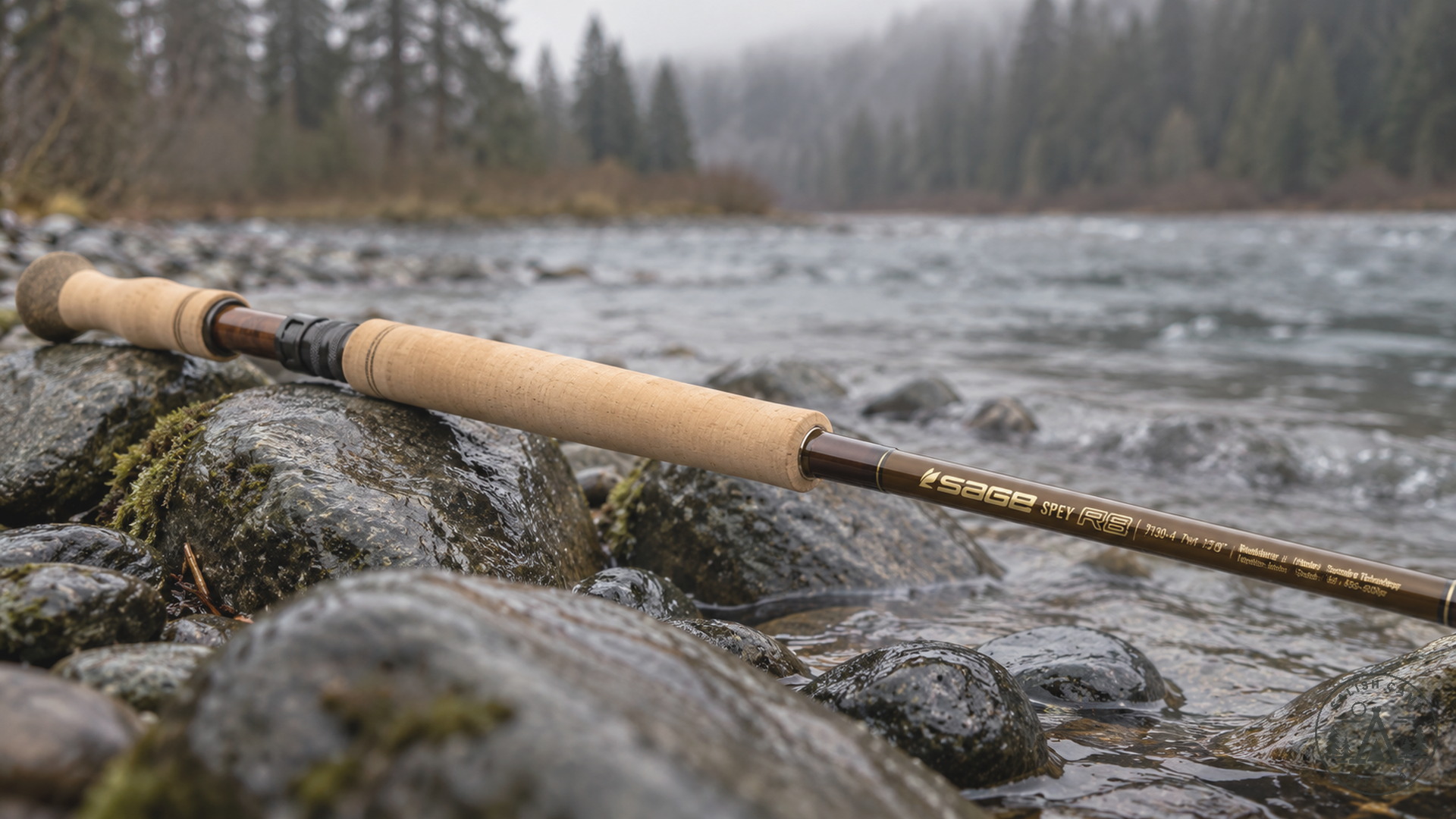
That distinction matters because $1,400.00 is a lot to spend on the wrong category of fly rod. Sage calls this exact 7130-4 Mid-Length All-Around Spey with a Max Versatility action. Its stated applications are summer and winter steelhead, Pacific salmon, and light Atlantic salmon, and Sage specifically names the Deschutes, Olympic Peninsula, and Klickitat. That is the job.
On those bigger runs, thirteen feet is useful for more than distance. Once my head turns over and the fly begins fishing, I still have to manage line. The rod gives me reach for controlling the belly, making a mend when the current demands it, and staying connected to the swing across changing seams. That is something I would emphasize to anyone coming from a single-hand trout rod: the cast is only the delivery. With a spey setup, line control after the cast is a major part of why I brought the longer rod.
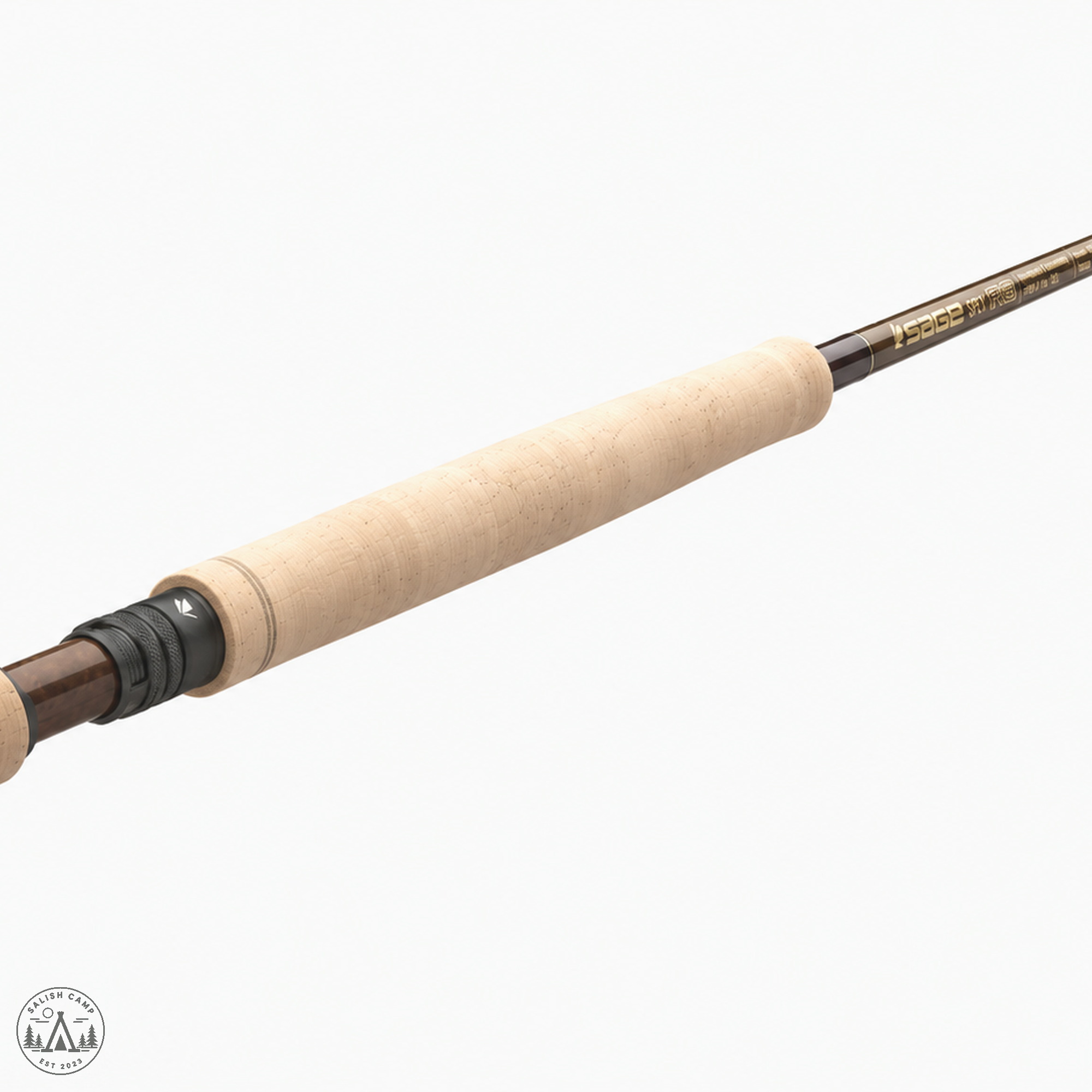
The other practical question is how much room I need behind me. Sage describes the 7130-4 as long enough for big casts and line control while remaining manageable with limited D-loop room. I would not interpret that as permission to ignore a wall of alder behind my shoulder. Spey casting still requires room to establish an anchor and form the D-loop. But PNW banks are rarely perfect casting platforms, and I appreciate that this model is explicitly intended to balance reach with constrained casting space rather than simply being longer for the sake of being longer.
The grip layout supports that two-handed job. Sage specifies a 13-inch fore grip and 5-inch rear grip, using Super-Plus grade cork with composite cork trim rings. Sage also describes smaller-diameter handle profiles and an upper handle that accommodates different grip positions.
That matters because my hands move. My grip changes with the cast, stance, river position, and how I am controlling the rod. A 13-inch fore grip gives me room to make those adjustments rather than dictating one hand position.
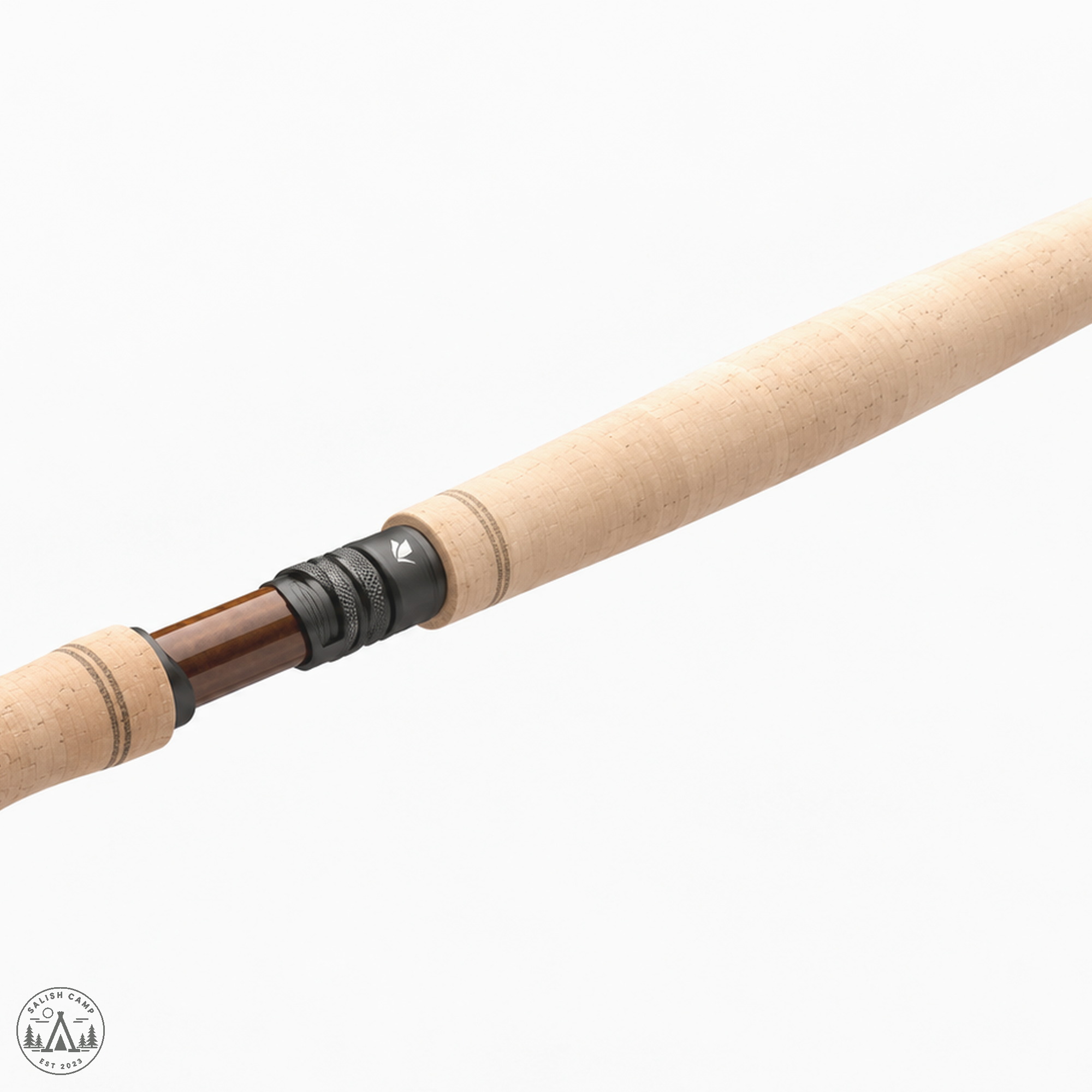
The reel seat is aluminum and down-locking with a walnut insert. That detail is worth being precise about because Sage's family copy separately discusses up-locking hardware on Switch rods. The 7130-4 is not a Switch rod. This 13-foot spey gets the down-locking configuration.
A novice assembling a first two-handed outfit should also know that buying the rod does not complete the system. Sage lists the rod bag and aluminum tube, but does not list a reel or line as included. At $1,400.00, you still need to budget for and match the remaining pieces.
That brings me to the most useful setup information on the PDP: the line windows.
Sage specifies Skagit 500–550 grains, recommending a 525 Skagit Max Launch, and Scandi 450–500 grains, recommending a 470 Scandi Launch.
Those ranges give me an actual starting point instead of forcing me to guess. If I am setting up the 7130-4 around Skagit, Sage puts me between 500 and 550 grains and identifies 525 as its recommended head. If I am building around Scandi, I have a separate 450–500 range with 470 as the recommendation.
That does not mean every caster will prefer exactly the same feel. Timing and personal preference still matter. But I would rather fine-tune within Sage's published window than import somebody else's line choice from another SPEY R8. The numbers for this rod are Skagit 500–550 and Scandi 450–500. I would keep those boundaries attached to the 7130-4 rather than mixing in another length's grain window.
The blank uses what Sage calls Revolution 8 graphite, finished in Ale with grey primary wraps and gold and black trim wraps. I would not read more into that material name than Sage publishes. There is no reason to invent a graphite modulus or construction specification that is not on the product page.
The hardware is equally concrete. Sage uses Fuji K-Series "tangle free" stripping guides followed by hard-chrome snake guides and tip top. On a rod that spends its day repeatedly casting, shooting, retrieving, and managing line, those are more useful facts to me than generic claims about premium components.
One number Sage does not provide on this PDP is physical rod weight in ounces. I would rather leave that blank than turn the 13'0", 7wt, four-piece configuration into a fake weight. If physical weight is central to your comparison between spey rods, the manufacturer's page does not give you that figure.
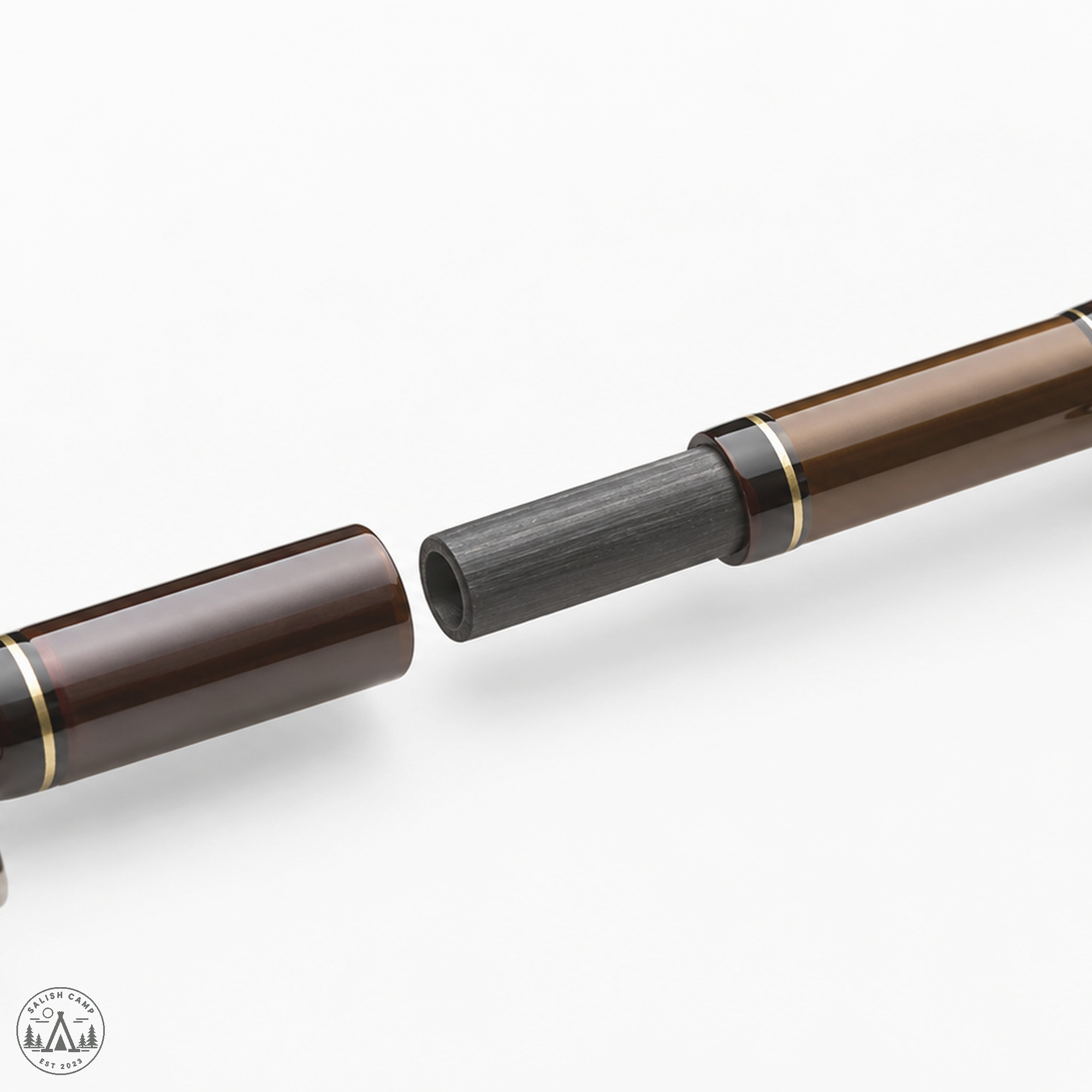
The four-piece construction does make a 13-foot rod easier to transport. Sage includes a black rod bag with gold Sage logo and Ale-colored model tag and a low-light bronze aluminum tube with granite tube cap and gold matte-black Sage medallion. At this price, I consider proper storage and protection expected rather than a reason by itself to buy the rod.
What keeps the 7130-4 interesting is how coherent the specification is. Its versatility stays inside the world of two-handed steelhead and salmon fishing. If I wanted a longer, more powerful spey, I would look at a rod longer than 13 feet. If I mostly fished trout creeks, I would buy a different tool entirely.
But I can picture carrying this down an Olympic Peninsula bank, assembling the four sections, starting with Sage's published line recommendations, and fishing methodically through a run. I get the 13-foot reach for the cast, then continue using that length to manage the line once the fly is actually fishing.
If a fish comes to hand, the practical routine is simple: keep it in the water, take a short photo if I want one, and get back to fishing.
The harder decision is whether that focused capability is worth $1,400.00. For someone still deciding whether two-handed fishing is even for them, I think that is difficult to justify. For an angler who already swings flies and specifically wants a 13-foot 7-weight, the argument is much clearer: defined Skagit and Scandi windows, purposeful two-handed ergonomics, useful line-control length, and an application Sage clearly positions around steelhead and salmon water.
Pros
- Excellent all-around PNW configuration: The 13'0" 7wt is explicitly positioned by Sage for summer and winter steelhead plus Pacific salmon.
- Clear line-matching guidance: Skagit 500–550 and Scandi 450–500 provide useful setup boundaries, with 525 and 470 recommendations respectively.
- Purposeful two-handed ergonomics: The 13-inch fore grip, 5-inch rear grip, smaller-diameter handle concept, and down-locking reel seat are specific to how this rod is meant to be used.
- Premium component package: Revolution 8 graphite, Fuji K-Series stripping guides, hard-chrome snakes, walnut reel-seat insert, rod bag, and aluminum tube make the specification appropriately complete for the tier.
Cons
- $1,400.00 before the fishing system is complete: Sage does not list a reel or line as included.
- No physical rod weight on Sage's PDP: Buyers who compare spey rods by ounce weight do not get that figure from the manufacturer's product page.
- Specialized despite the "Max Versatility" designation: Its versatility exists within two-handed steelhead and salmon fishing; a 13-foot 7wt is still the wrong tool for ordinary trout-creek work.
Technical Specifications
| Product | Sage SPEY R8 7130-4 |
|---|---|
| SKU | 2058-7130-4 |
| Price | $1,400.00 (farbank.com, 2026-10-04) |
| Length | 13'0" |
| Line | 7wt |
| Pieces | 4 |
| Action | Max Versatility; mid-length all-around spey |
| Handle | 13" fore grip / 5" rear grip, Super-Plus grade cork |
| Color | Ale |
| Reel seat | Aluminum down-locking, walnut insert |
| Guides | Fuji K-Series stripping guides; hard chrome snake guides and tip top |
| Target lines | Skagit 500–550 (rec. 525 Skagit Max Launch); Scandi 450–500 (rec. 470 Scandi Launch) |
| Blank | Revolution 8 graphite |
| Included | Black rod bag; low-light bronze aluminum tube. Reel and line not listed |
| Weight | Not on the Sage PDP |
Final Thoughts
The SPEY R8 7130-4 makes the strongest case for itself when I ignore broader family language and look strictly at this configuration. It is 13'0", 7wt, four-piece, and Sage labels it Max Versatility and Mid-Length All-Around Spey. The company specifically puts summer and winter steelhead, Pacific salmon, and light Atlantic salmon inside its intended application.
More importantly, Sage gives me the setup numbers I actually need: Skagit 500–550 and Scandi 450–500, with 525 and 470 recommended heads. That is actionable information, particularly for an angler trying to avoid matching this rod with a line recommendation borrowed from another model.
The tradeoff is straightforward. At $1,400.00, this is not an exploratory purchase I would recommend to someone looking for a first fly rod. A reel and line are still separate, and Sage's PDP does not publish the rod's physical ounce weight. Its "Max Versatility" designation also needs context: this is versatility within a 13-foot 7-weight spey application, not across fly fishing generally.
For PNW anglers already committed to swinging flies, that focus is the appeal. On the kind of water Sage itself names—the Olympic Peninsula, Klickitat, and Deschutes—the 7130-4 occupies a useful middle ground: enough length for serious casting and line control while remaining the 13-foot all-around 7-weight rather than asking you to step into a longer spey.