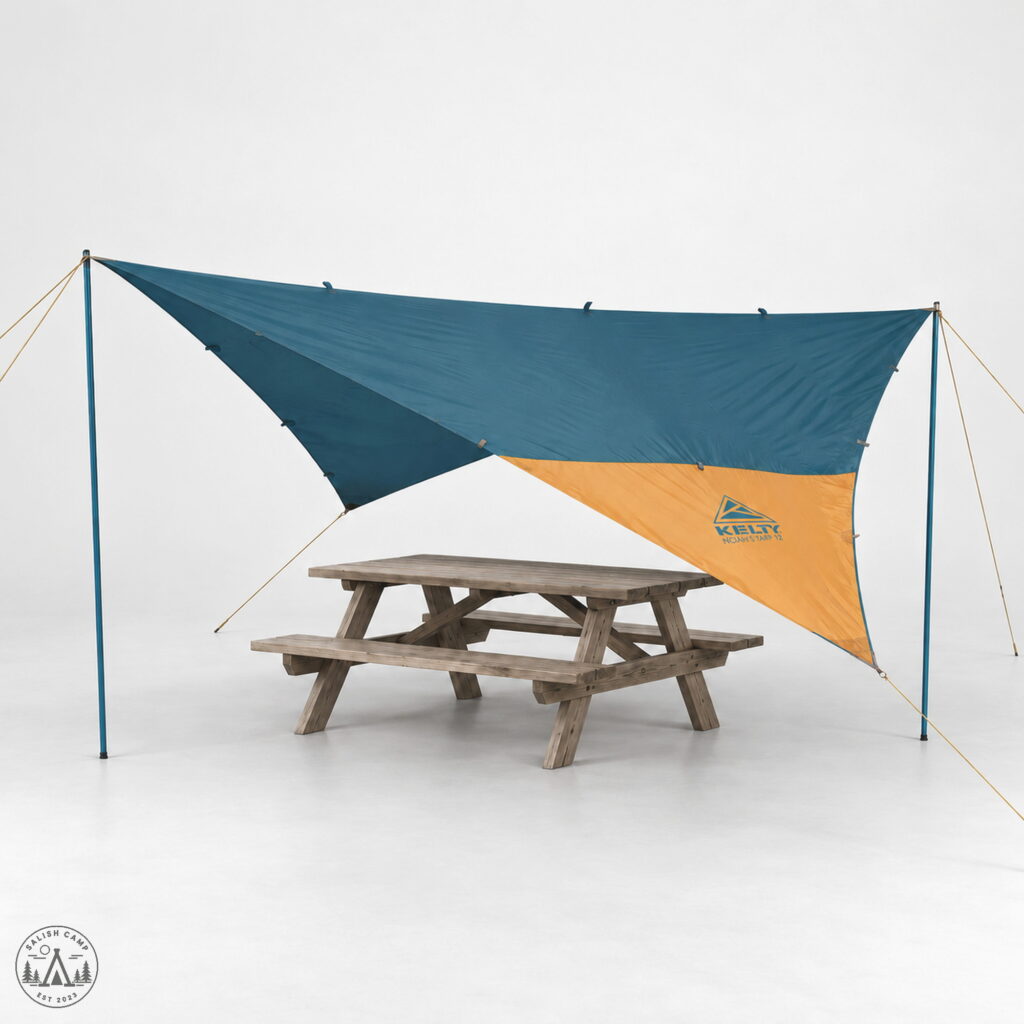
Buy if you want a flexible, $89.95 rain and shade shelter for car camping, especially over a picnic table, camp kitchen, or gathering spot. The Kelty Noah’s Tarp 12 in Lyons Blue / Golden Oak gives you 144 square feet of fabric, taped seams, and useful attachment points without committing to a bulky freestanding canopy.
Skip if you want a shelter that stands up immediately, has rigid framing, or requires almost no adjustment when the weather changes. Noah’s Tarp 12 rewards a careful pitch, and its performance depends heavily on your anchors, tension, and the terrain around camp.
What Stands Out
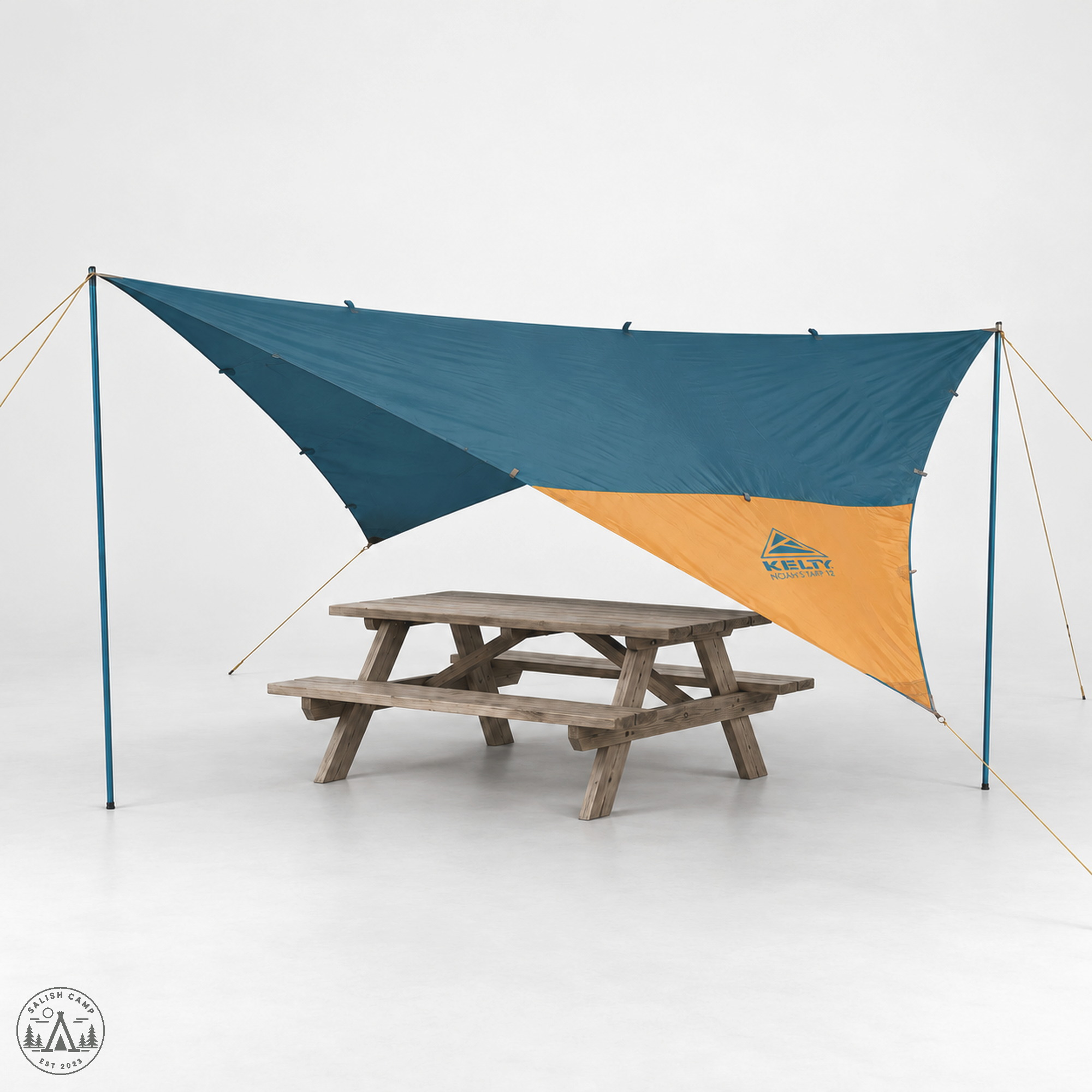
- A useful 12-by-12-foot footprint: The 144-square-foot panel provides enough material to cover a typical campground picnic table with additional space for a modest cooking or gear-preparation area, depending on the pitch.
- Fully taped seam construction: Kelty’s seam treatment helps address the stitched areas where water could otherwise work through the fabric, an important detail for a tarp intended to stay overhead during rain.
- 68D polyester with an 800 mm coating: This is a practical coated camp fabric rather than an ultralight shelter material. Its rain performance depends on how well the tarp is pitched and how efficiently water drains.
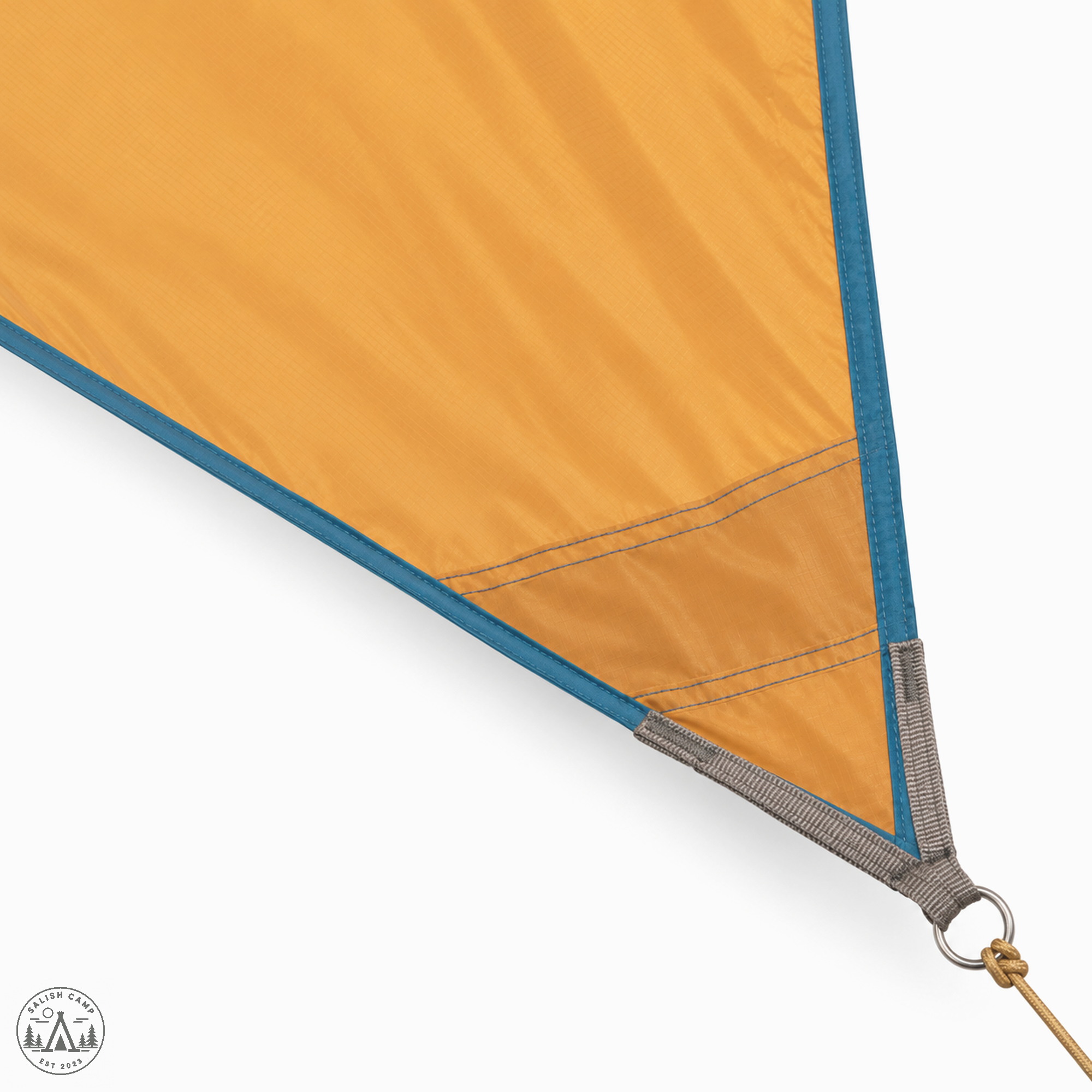
- Attached corner guyline with storage pocket: Keeping the corner line with the tarp reduces loose-cord clutter during packing and makes it easier to begin setting up camp.
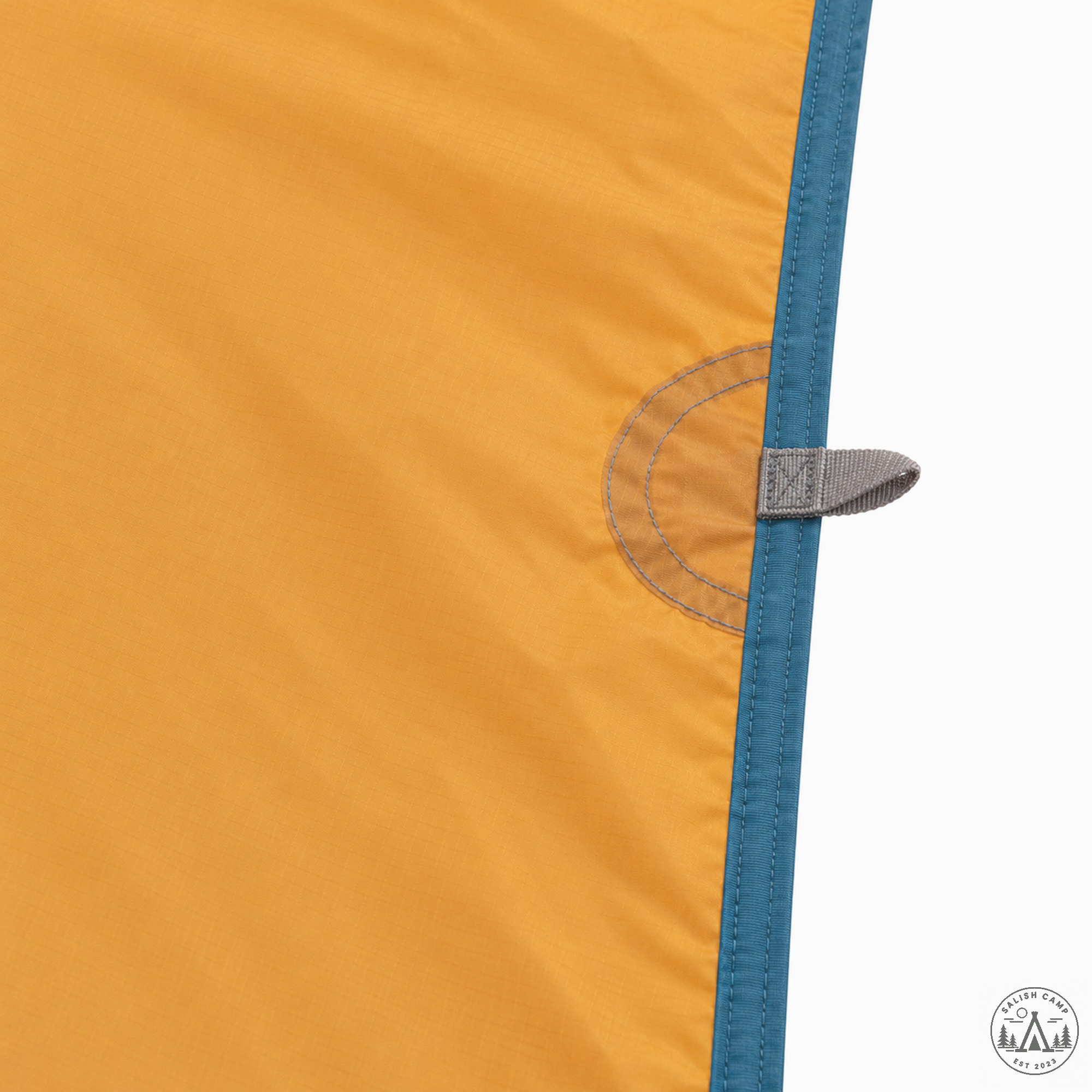
- Multiple reinforced guyout points: The reinforced attachment locations give you flexibility to establish ridgelines, pull out edges, and adapt the shelter to trees, poles, or other secure anchors.
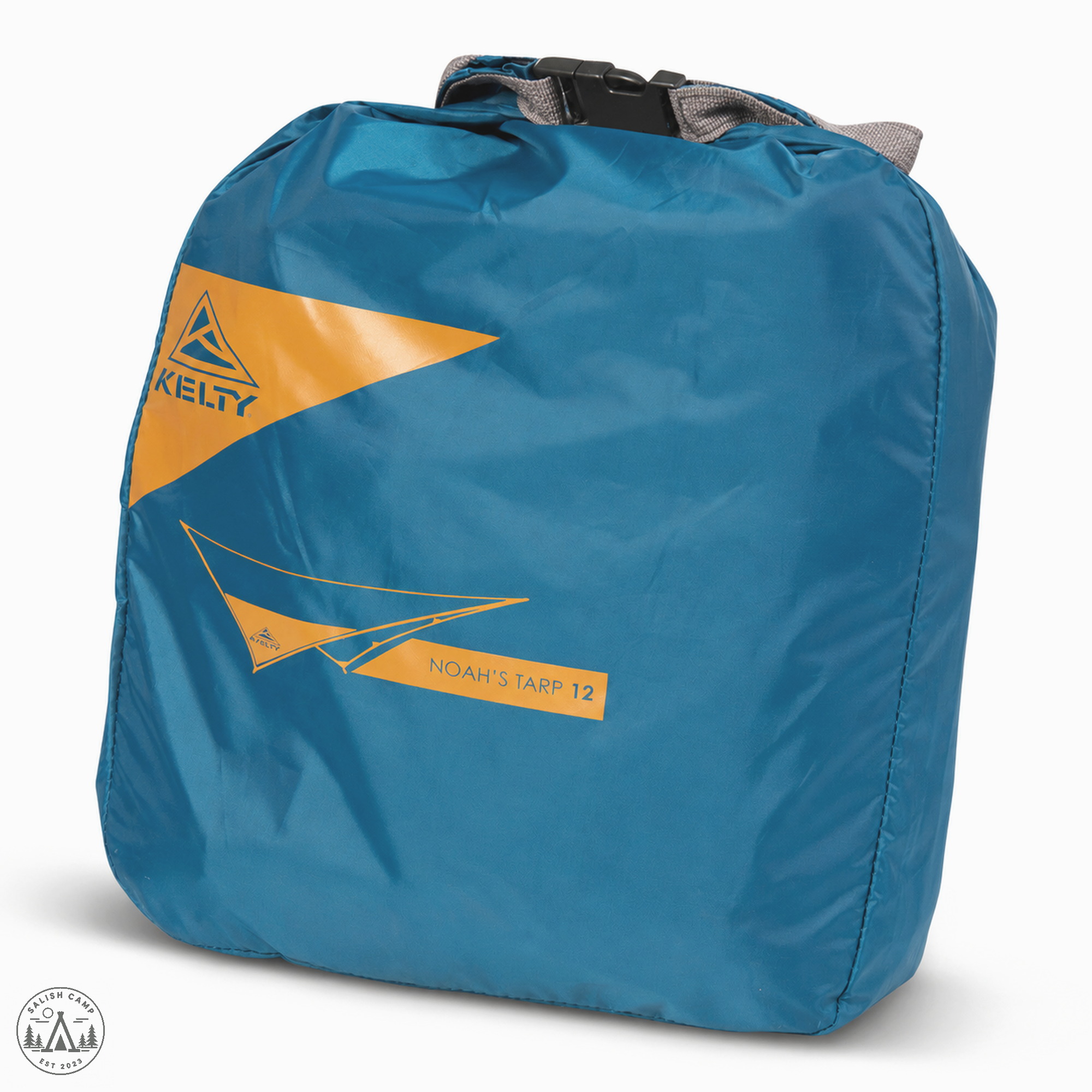
- Roll-top carry bag: The packed shelter measures 12 x 10 x 3 inches, making it convenient to place alongside a camp table, stove, and other car-camping equipment.
- A lightweight alternative to a framed canopy: At 2 lb 9 oz packaged, it is an appealing option for campers who would rather build a simple overhead shelter than transport a large rigid canopy frame.
In The Field
The reason I carry a tarp on Pacific Northwest camping trips is simple: the picnic table is usually the first place I want to sit and the first place that gets soaked. A June drizzle weekend can be beautiful, but the mist comes and goes without much warning. You can wake up to dry ground, start making coffee, and find everything covered in drizzle before breakfast is finished.
That is where the Kelty Noah’s Tarp 12 makes sense to me. It is not trying to become another tent or a full outdoor room. It is a straightforward overhead layer that makes the campsite more usable. Spread over a picnic table, it keeps the seating and work surface out of direct rainfall while leaving the sides open.
The first thing worth understanding is what 12 x 12 feet actually means once the tarp is in the air. On the ground, it represents 144 square feet of fabric. Over a picnic table, however, those dimensions are not the same as the dry footprint underneath. Raise a ridge, lower an edge or angle the panel against blowing rain and the usable coverage shrinks. A campground picnic table fits comfortably beneath it with room for a cooking station near an open edge, but it will not cover every chair, cooler and bin around camp.
I give the table priority: food prep, dry plates and somewhere to sit matter more than covering the whole site. The stove goes where it has ventilation and the manufacturer’s clearance from the fabric, away from any low-hanging panel. A tarp should never sit close to burner heat or become an enclosed cooking space.
Kelty markets Noah’s Tarp as a set-up-anywhere shelter, but the poles used to support it are a separate purchase. For an open campground with no convenient trees, I would budget for a pair of suitable adjustable tarp poles, proper guylines, tensioners, and ground stakes. At a wooded site, a securely positioned ridgeline between appropriate trees may be all the support needed. A vehicle roof rack can also serve as an anchor when its attachment points are suitable, the load is managed correctly, and the lines do not interfere with the vehicle.
A framed canopy has an obvious shape. A flat tarp makes you choose the shape, find strong anchors and think about where rainwater will go, so practice a pitch in the yard before a wet weekend depends on it.
My starting point for steady rain would be an A-frame pitch. Raise a central ridgeline using trees or appropriate supports, then bring the side edges down toward the ground and tension them evenly. The peaked roof sends water toward both sides instead of allowing it to gather in the middle. I would keep the ridge straight, use firm anchors, and avoid letting the fabric sag between tension points. The result is a sheltered corridor that works well over a table when the height and side clearances are planned around the furniture.
An A-frame does have a tradeoff. The lower side edges reduce the feeling of open space, especially when several people are seated. If I were setting up at a campground with a good view or wanted more room to move around, I might use a flying lean-to instead. Raising one side while keeping the opposite side lower creates a more open front, almost like an awning. The higher opening is comfortable for sitting and cooking preparation, while the sloped back directs runoff away from the occupied area.
I would choose between those pitches based on the wind and the direction of the rain. An open-front lean-to is pleasant in calm weather, but sideways rain can travel straight beneath the elevated edge. At an exposed Olympic coast campsite, I would orient the lower edge toward the incoming weather, reduce unnecessary height, and favor a tighter, more sheltered shape. When the wind shifts or strengthens, the best-looking pitch is not always the most practical one.
Water pooling is the next issue a new tarp owner needs to understand. Any broad fabric surface can develop a low spot if its corners are unevenly tensioned or the supports move. Once water gathers, the added load deepens the sag and encourages more water to collect. I would establish a definite high point and a continuous downhill path for runoff before fine-tuning the side edges. During extended rain, I would periodically check the pitch and correct any slack before it creates a basin.
Kelty’s fabric specification also deserves a plain-English explanation. The 68D figure refers to the denier of the polyester yarn, not a guaranteed measurement of tear strength or lifespan. The 800 mm coating figure is a hydrostatic-head specification describing resistance to water pressure. For an overhead rain shelter, surface slope and runoff are especially important. Water that slides off promptly creates a different situation from water sitting in a sagging pocket or being pressed against the coated fabric.
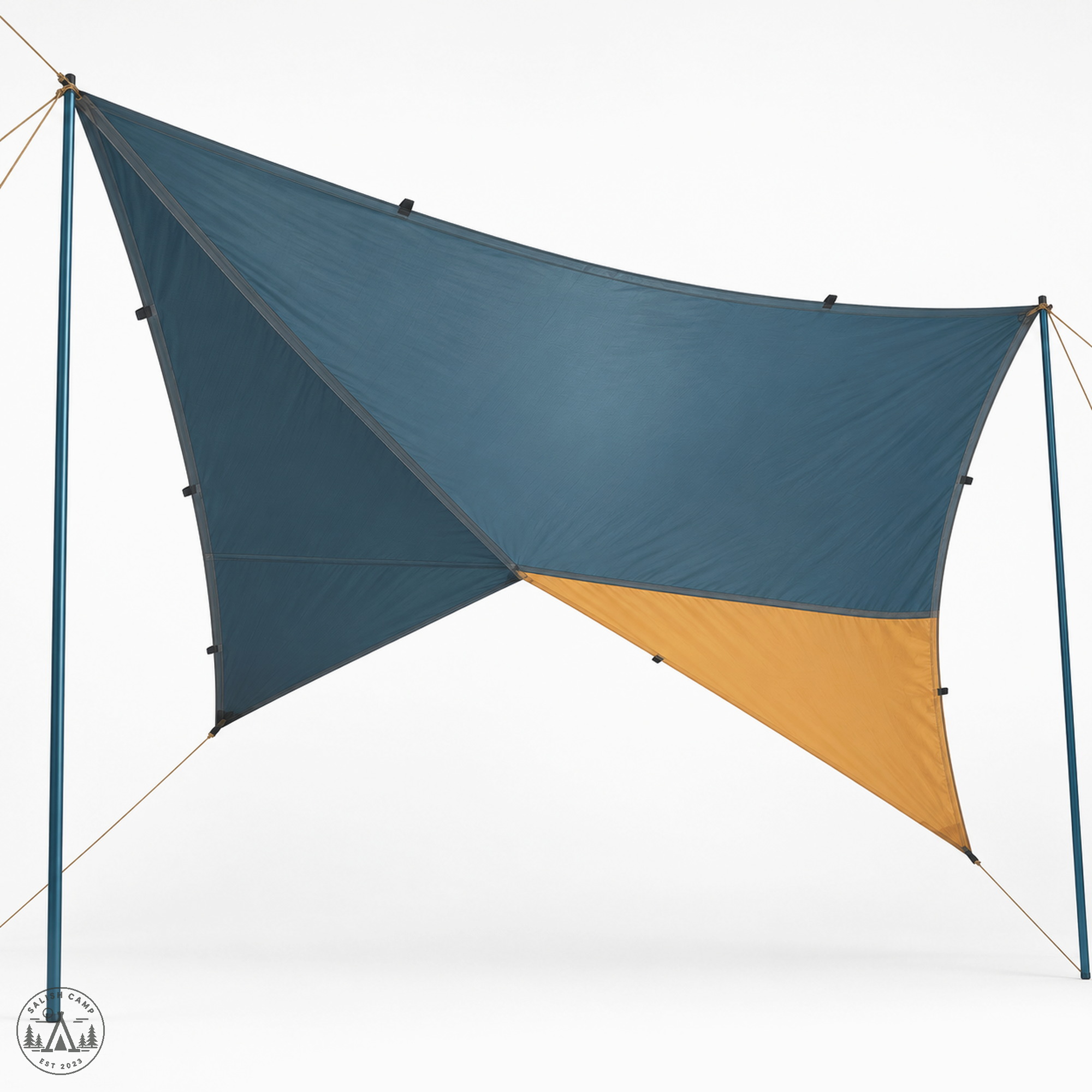
At an October steelhead camp along the Sol Duc, I would use the tarp as the central dry working area. Rain gear can hang nearby, breakfast supplies can stay on the table, and the stove can be positioned under a sufficiently high, open portion of the shelter with safe burner clearance. In cold drizzle, a dry work surface means no wiping utensils or ferrying food to the vehicle between showers.
Wind requires more care. The fabric should be tensioned enough to limit loose, flapping sections, but not pulled so aggressively that the attachment points are overstressed. I would use stakes suited to the ground, keep the guylines free of trip hazards, and check the anchors after gusts. Some owner reports are mixed on long-term durability, and flat tarps need a low, tight pitch in hard wind. In severe conditions, I would lower or take down the shelter rather than expect a wide fabric panel to handle sustained gusts like a rigid structure.
That leaves the choice between Noah’s Tarp 12 and a larger canopy shelter. A canopy is more convenient when you want predictable standing room, a defined overhead footprint, and fast access to a covered space. The Kelty takes more setup decisions, especially at open campsites without natural anchors. But a canopy occupies more room in the vehicle and commits you to its frame geometry. The tarp is easier to pack around other equipment, and I appreciate being able to adjust the shelter to a particular campsite instead of forcing the campsite to accommodate a fixed structure.
After a wet trip, I would not leave Noah’s Tarp bundled in its bag. Polyester does not demand the same treatment as a cotton canvas shelter, but storing damp fabric can still lead to odor, mildew, and deterioration of coatings or seam materials. At home, I would drape it over the garage rail, spread the folds apart, and let both faces dry completely. I would also wipe dirt from the reinforced attachment areas and make sure the cords are dry before packing everything away.
Pros
- Generous overhead coverage: The 12 x 12 ft panel is well suited to protecting a campground picnic table and creating a shared cooking-preparation area.
- Adaptable pitching options: Works in A-frame, lean-to, and other practical configurations depending on available anchors and site conditions.
- Good value at $89.95: Provides a substantial coated fabric shelter with reinforced attachment areas without requiring a full canopy structure.
- Compact for vehicle storage: The packed dimensions make it convenient to carry alongside standard car-camping equipment.
Cons
- Additional setup equipment costs money: Poles, stakes, and any extra rigging need to be accounted for when comparing the total shelter cost against a complete canopy.
- Requires careful tension and drainage: A loose pitch can develop standing-water pockets, and keeping the fabric stable takes additional attention when conditions change.
- Limited protection from sideways rain: Without enclosed walls, the amount of dry space underneath varies considerably with the pitch and wind direction.
Technical Specifications
| Specification | Detail |
|---|---|
| Product | Kelty Noah’s Tarp 12 |
| Config | Lyons Blue / Golden Oak (SKU 4082022012) |
| Price | $89.95 USD (kelty.com, 2026-10-09) |
| Type | Flat camp tarp |
| Size | 144 x 144 in (365 x 365 cm) |
| Area | 144 sq ft (13.38 m²) |
| Fabric | 68D polyester, 800 mm coating |
| Seams | Fully taped |
| Packaged weight | 2 lb 9 oz (1.16 kg) |
| Packed size | 12 x 10 x 3 in |
| Guylines | Attached corner guylines with storage pockets |
| Poles | Sold separately |
Final Thoughts
The Kelty Noah’s Tarp 12 fits a specific kind of camping well: a few nights at a state park, a wet weekend in the Olympics, or a vehicle-based fishing trip where the priority is keeping a table and cooking supplies out of the rain. It is a useful piece of shelter equipment for people who do not need a large freestanding canopy at every campsite.
I like its straightforward construction and flexible setup. The 12-foot square panel gives me options, from a relatively enclosed A-frame to a more open awning-style pitch. In the right conditions, that adaptability is more useful than a fixed canopy roof.
The main consideration is total cost and setup effort. At $89.95, the fabric shelter is appealing, but the supporting equipment needs to be part of the purchase decision. I would rather spend a little time selecting dependable poles and anchors than arrive at camp with a tarp I cannot position properly.
As of the October 9, 2026 listing check, Noah’s Tarp 12 is sold out on kelty.com but remains available from other retailers.
For my camping style, Noah’s Tarp 12 is a strong option when I want to build a simple, adaptable kitchen shelter without filling the back of the vehicle with a large canopy frame. I would choose it for ordinary wet-weather car camping, learn a few dependable pitches, and pack it away only after it is completely dry.