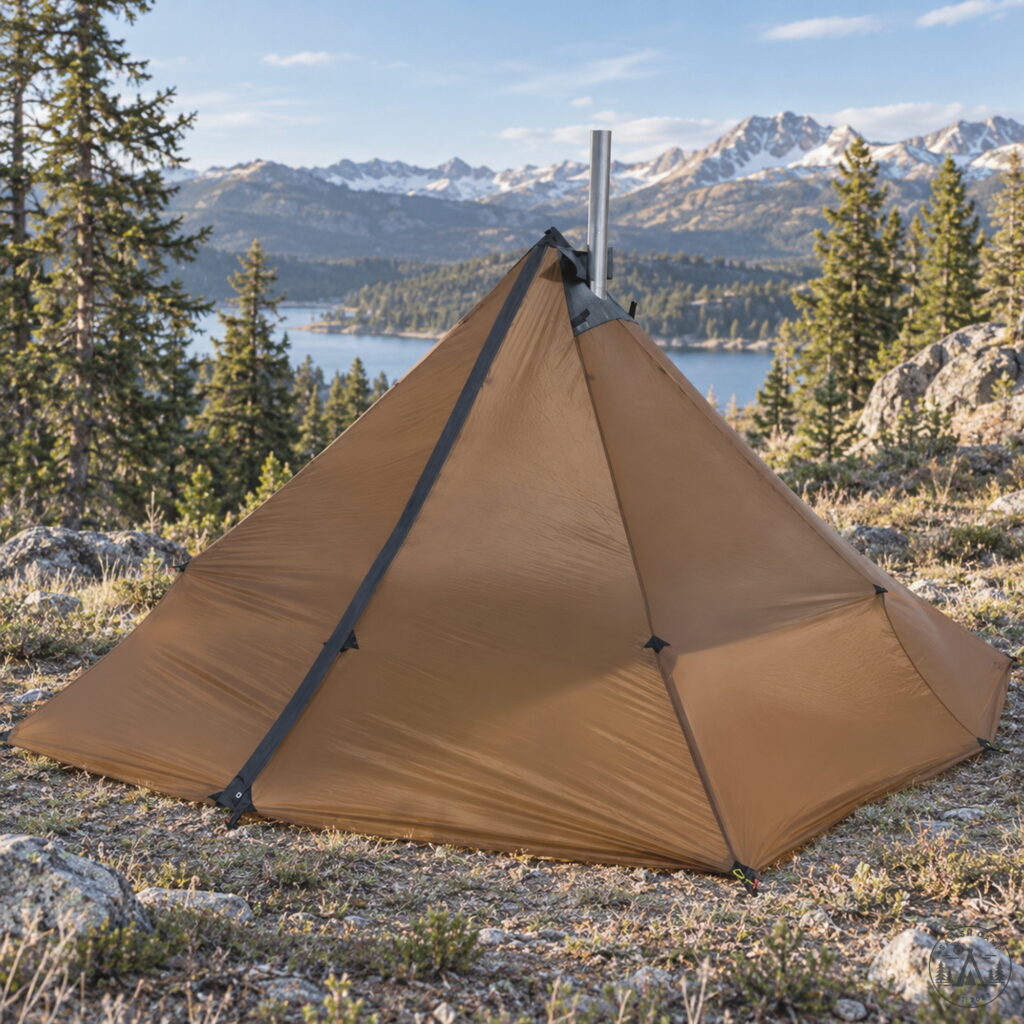
Buy if you’re tired of spending long, rainy evenings hunched inside a two-person backpacking tent and want a taller, lighter shelter for shoulder-season trips, snow camps, and small-group adventures. The Seek Outside Cimarron 4P 2.0 delivers a 39 oz (2 lb 7 oz) canopy, a 6-foot peak, 94 square feet of floor area, and a built-in stove jack. At $485 for the Brown, no-door-screens configuration, it’s an appealing way to build a versatile PNW shelter around two people and their gear.
Skip if you want a freestanding tent, a sealed floor, built-in insect protection, or a shelter that requires little attention after pitching. The Cimarron demands good site selection, deliberate staking, and occasional adjustment in prolonged rain. It’s also less appealing for warm-weather trips where mosquitoes, wet ground, and the convenience of a double-wall tent matter more than interior height or stove compatibility.
What Stands Out
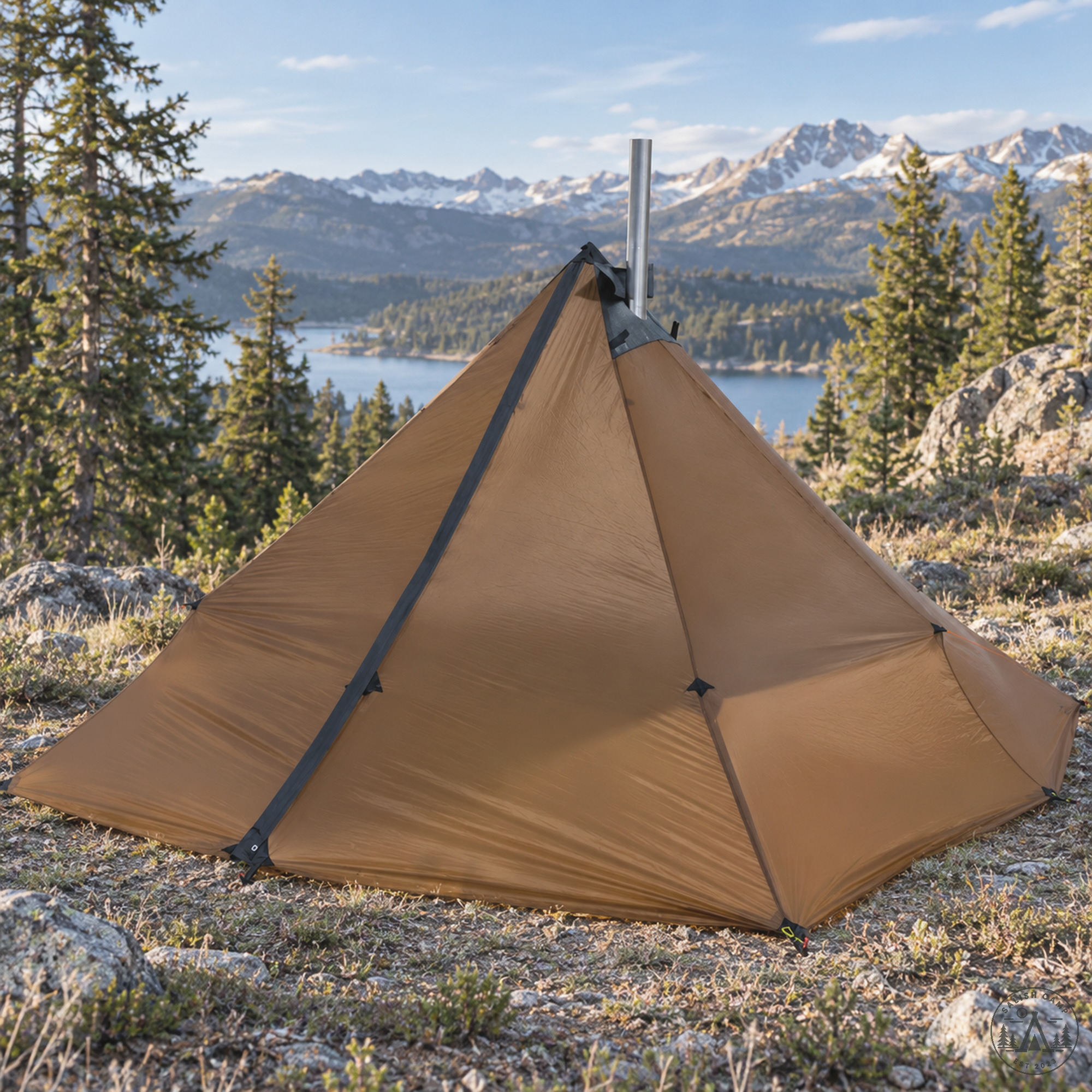
- 39 oz canopy with genuine living space. The 39 oz (2 lb 7 oz) canopy opens into a shelter with a 6-foot peak and 94 square feet of floor area. That changes how a rainy evening feels compared with sitting shoulder-to-shoulder in a compact backpacking tent.
- A stove jack comes standard. The Brown configuration includes a silicone-coated fiberglass stove jack with a rain flap. It provides a purpose-built location for a compatible wood-stove pipe, without requiring a separate canopy modification.
- Refined 2.0 geometry. Updated panel patterns are intended to reduce sag and produce a tighter pitch. Reinforced guy-out locations provide additional ways to manage canopy shape and usable headroom.
- Two doors and a peak vent. Dual zippered doors with rain flaps offer flexible access, while the peak vent provides a route for warm, moist air to escape. Both are particularly useful when camping through extended PNW drizzle.
- Floorless versatility. The sod skirt helps reduce windblown dirt, debris, and insect entry, while the open ground makes it easier to manage muddy footwear and establish a separate sleeping area.
- A rectangular footprint with ten guy-out points. The base is easier to organize than many circular tipi layouts, and the additional guy-out locations help refine the pitch on uneven terrain.
- Multiple pole strategies. An optional carbon center pole provides a straightforward setup, while a trekking-pole hitch offers another approach for backpackers who already carry suitable trekking poles.
In The Field
I’ve spent enough cold nights in two-person backpacking tents around the Olympics and Cascades to appreciate how quickly a small shelter stops feeling comfortable. One wet jacket, two sleeping pads, a couple of packs, and an evening of steady rain can turn a perfectly good lightweight tent into a cramped place to wait for morning.
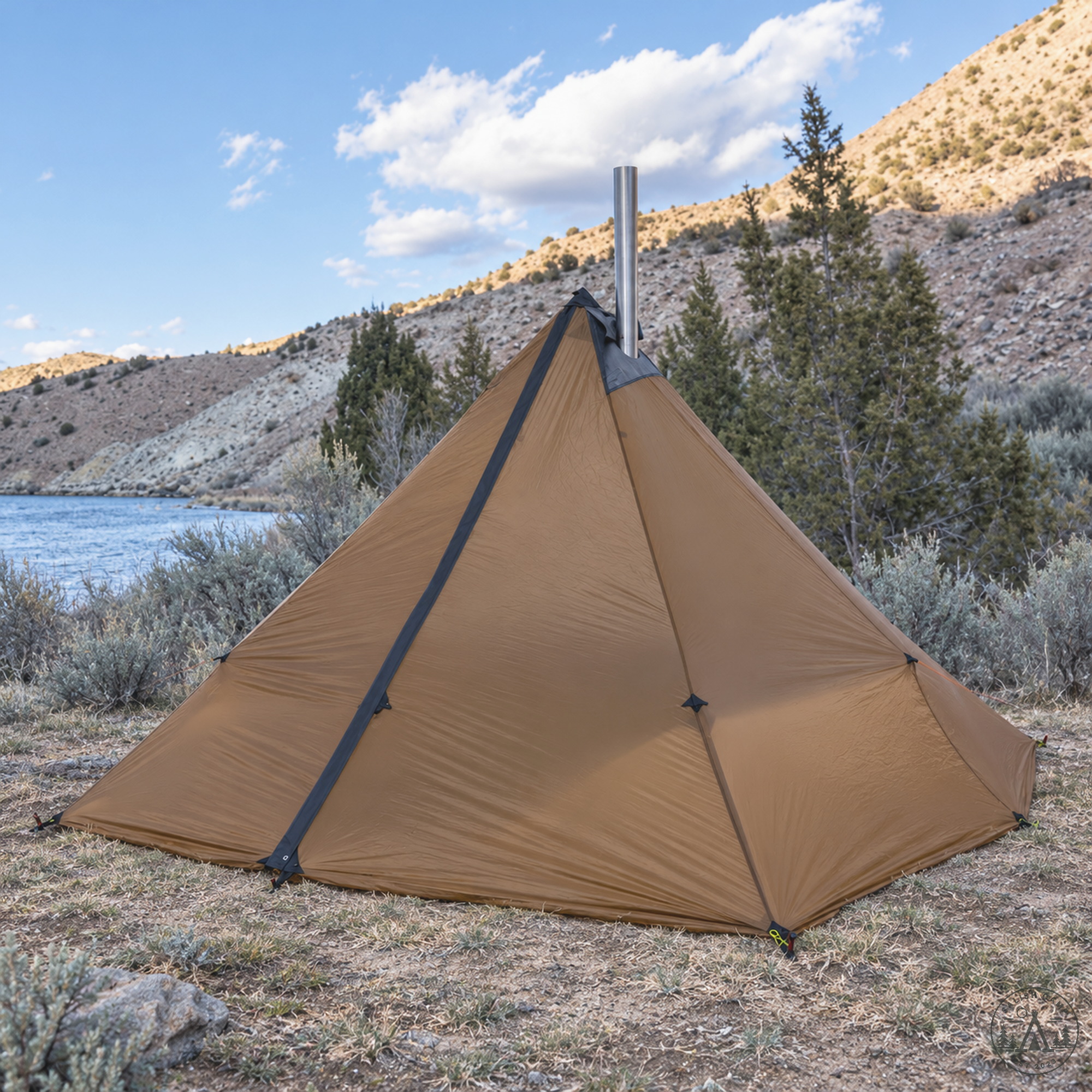
That’s the problem the Cimarron 4P 2.0 addresses. It isn’t trying to be a conventional backpacking tent with more sleeping positions. It’s a tall, single-wall pyramid shelter designed around flexible interior space, low carried weight, and the option of adding a wood stove.
Starting with a 39 oz (2 lb 7 oz) canopy, the Cimarron provides a 6-foot center height, an 8-foot-6-inch width that expands to 9 feet 6 inches at the center, and a 9-foot-6-inch length that reaches 11 feet 8 inches at the center. Those dimensions sound generous, but usable height drops toward the edges — only 23 square feet has more than 36 inches of height. For a couple on an October Olympic Peninsula weekend, I’d rather have that central height than another compact dome with barely enough room to change clothes.
Seek Outside’s size guide specifies sleeping capacity for four without a stove and two with a stove. My practical preference is two people with a stove, or two to three without one. Four means careful pad placement, limited indoor gear storage, and a willingness to keep some equipment outside. The Cimarron feels like a roomy shelter for a small party rather than a comfortable four-person cabin.
One of the most important decisions comes before leaving home: choosing how to support the shelter. The $485 configuration includes the canopy with stove jack, ten stakes, Silnet seam sealer, and a stuff sack — no pole. You’ll need the optional carbon pole or a trekking-pole hitch to pitch it, and a stove is a separate purchase. Seek Outside’s 55 oz (3 lb 7 oz) "complete" weight includes the stakes and that optional carbon pole, even though the pole is not part of the $485 price.
For snow camping around Rainier or the North Cascades, I’d favor the dedicated carbon pole — simple to position when my hands are cold. A trekking-pole hitch makes more sense when I’m already carrying trekking poles, such as a late-season Methow trip. Either way, the perimeter must be laid out correctly before the shelter takes its final shape.
On lumpy ground, I’d begin by finding the flattest usable rectangle rather than immediately driving all the stakes. I’d identify the corners, check the diagonals to keep the base square, and use the natural slope to decide where water should drain. Once the corners are anchored, I’d raise the center support gradually and work around the remaining stake positions until the doors close smoothly and the canopy panels look even. The ten guy-out points refine the shelter after the basic shape is established — they aren’t a substitute for getting the base geometry right. On gravel or snow, I’d use anchors appropriate to the conditions rather than assume the supplied stakes are sufficient.
I’d also make time to seam-seal the shelter before its first wet trip. Seek Outside recommends seam sealing and includes Silnet for the job, with optional factory sealing available. That’s a straightforward preparation chore I’d handle at home. The product description mentions a lifetime warranty; the warranty field covers manufacturing and material defects for the practical lifetime of the product, with wear-and-tear repairs available for a reasonable charge. I use the warranty-field wording.
The floorless construction is the next major adjustment. There’s no sewn-in barrier between the ground and your sleeping setup — useful when boots are muddy or when you want a distinct stove area, but it also means the campsite becomes part of the shelter. On the Olympic coast, I’d avoid depressions where water can collect, select ground that drains naturally, and place a separate groundsheet beneath my sleeping pad with its edges inside the canopy. The sod skirt helps close the gap near the ground, but it doesn’t turn the Cimarron into a sealed shelter. Small insects can still find their way inside, and the no-door-screens configuration isn’t something I’d choose for a buggy summer trip. A floorless shelter can work very well on snow; on saturated soil, the margin for poor site selection is much smaller.
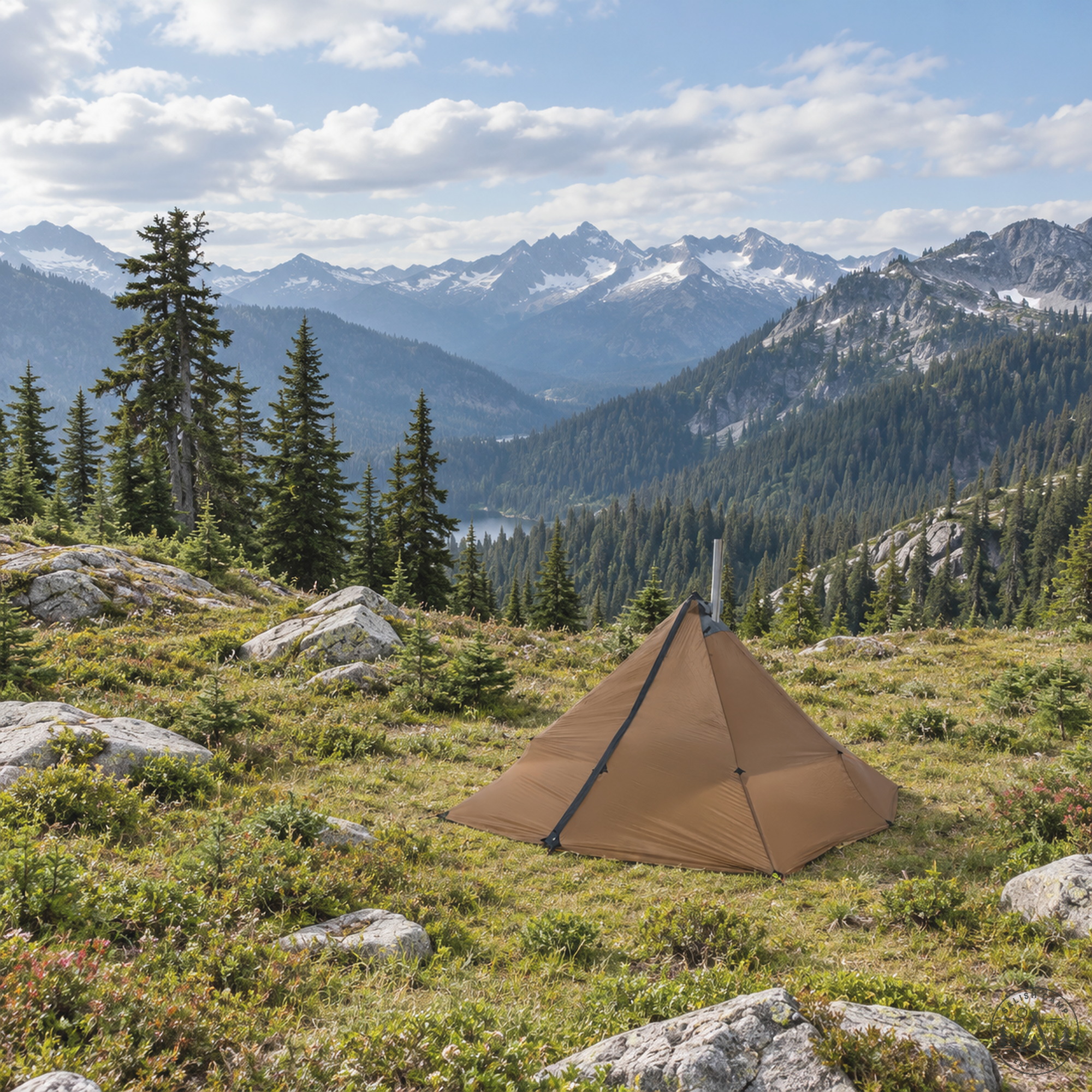
Condensation is another PNW consideration. A single-wall canopy doesn’t have an inner tent to separate occupants from moisture on the underside of the fabric. The peak vent helps, but it isn’t a guarantee of a dry interior. I’d keep the vent operating when conditions allow, avoid pressing sleeping bags against the sloping walls, leave perimeter space for airflow, and use the doors to increase ventilation without exposing the sleeping area to rain. On a cold, windless Olympic rainforest night, I’d still expect some interior moisture — I’d carry a small cloth for wiping the canopy and avoid storing sensitive gear against the fabric.
The Cimarron uses silicone-coated 30D nylon 6.6 ripstop, and nylon tension changes as the material absorbs moisture. The refined 2.0 pattern is intended to reduce sag, but it doesn’t eliminate the need to check tension. During a sustained overnight rain, I’d expect to revisit the perimeter and guy-out adjustments rather than assume the pitch will remain exactly as it was at sunset.
The stove-ready design is what makes this shelter particularly interesting for colder trips. On a two-person late-season camp in the Blues, or a wet shoulder-season trip where rain keeps everyone under cover, a compatible wood stove changes the way the space can be used — sit upright, manage damp clothing, and enjoy some warmth before turning in. The built-in stove jack uses high-temperature silicone-coated fiberglass so the canopy fabric never touches the hot pipe, and a rain flap covers the opening when the jack isn’t in use. I’d be careful not to improvise: a compatible stove and pipe, appropriate clearances, secure pipe support, ventilation, and a carbon monoxide alarm all matter. A stove also takes up meaningful space, which is why I see the Cimarron primarily as a two-person hot-tent shelter rather than a four-person shelter that happens to accommodate a stove.
There are trips where I’d leave it at home. For a warm July weekend in the Enchantments, I’d rather have the sealed sleeping compartment and insect protection of a lightweight double-wall tent. For a cramped, rocky site where I can’t establish a proper rectangular perimeter, a conventional tent with a smaller footprint may be easier. And if the forecast calls for several days of rain with little chance to dry gear, I’d consider whether a double-wall design would make moisture management easier.
But for the right trip — a snow camp below Rainier, a cold North Cascades weekend, or a two-person shoulder-season outing — the Cimarron offers a compelling alternative. It rewards preparation and thoughtful site selection rather than simply zipping the doors and forgetting about it.
Pros
- Excellent space-to-weight relationship. The tall pyramid design provides substantial floor area without the weight of a conventional large tent.
- Stove-ready canopy. The integrated stove jack creates a practical foundation for cold-weather shelter use.
- Flexible interior organization. Floorless construction accommodates varied sleeping arrangements, muddy footwear, and a dedicated stove area.
- Improved 2.0 pitching features. Refined patterns, reinforced guy-outs, two doors, and a peak vent make the design more adaptable to changing conditions.
Cons
- Requires deliberate pitching. Secure stakes, careful perimeter geometry, and suitable terrain are essential.
- Floorless, single-wall construction. Ground moisture, condensation, and insects require more management than in a conventional double-wall tent.
- Limited practical group comfort. Sloping walls reduce usable headroom, particularly when multiple occupants and gear share the interior.
Technical Specifications
| Specification | Details |
|---|---|
| Product | Seek Outside Cimarron 4P 2.0 |
| Config in photos / primary | Brown, no door screens, with stove jack, SKU PASS-cim |
| Price (primary) | $485 USD (seekoutside.com, 2026-10-09, in stock) |
| Type | Floorless single-pole pyramid shelter with stove jack |
| Capacity | Sleeps 4 without stove; 2 with stove |
| Canopy weight | 39 oz (2 lb 7 oz) |
| Complete weight | 55 oz (3 lb 7 oz) with stakes and optional carbon pole |
| Height | 6 ft |
| Width | 8 ft 6 in (max 9 ft 6 in at center) |
| Length | 9 ft 6 in (max 11 ft 8 in at center) |
| Floor area | 94 sq ft |
| Sitting area (over 36 in tall) | 23 sq ft |
| Canopy fabric | 30D nylon 6.6 ripstop, silicone coated, 3,000 mm HH |
| Stove jack | Silicone-coated fiberglass |
| Peak cone | VX42 X-Pac and Dyneema |
| Doors / vent | 2 zippered doors with rain flaps; peak vent |
| Guy-out points | 10 |
| Included | 10 stakes, Silnet seam sealer, stuff sack |
| Other options | Olive Green with door screens (screens add 7 oz); carbon pole |
| Warranty | Manufacturing and material defects for the practical lifetime of the product |
| Made in | Grand Junction, Colorado |
Final Thoughts
The Seek Outside Cimarron 4P 2.0 is the kind of shelter I’d choose when the trip is less about covering miles as quickly as possible and more about having a comfortable place to spend a cold, wet evening.
Its appeal isn’t just the weight or the impressive floor area. It’s the combination of a tall center, adaptable floorless layout, and built-in stove jack in a shelter that remains reasonable to carry into the backcountry.
The Brown configuration is especially appealing for a couple planning fall and winter trips around the Cascades and Olympics. With a suitable pole arrangement and a carefully chosen campsite, it provides far more flexibility than a conventional compact two-person tent.
It also demands more from its owner. The ground becomes part of the sleeping environment, condensation needs attention, and maintaining a good pitch is an ongoing responsibility in prolonged rain. The lack of integrated insect protection further narrows its ideal season.
I wouldn’t choose it as my only backpacking shelter. I’d choose it specifically for the trips where a little more setup work is worth the extra space, and where the ability to add a wood stove makes a meaningful difference to camp life.
For two people heading into cold PNW conditions, that’s a trade I’d be willing to make.