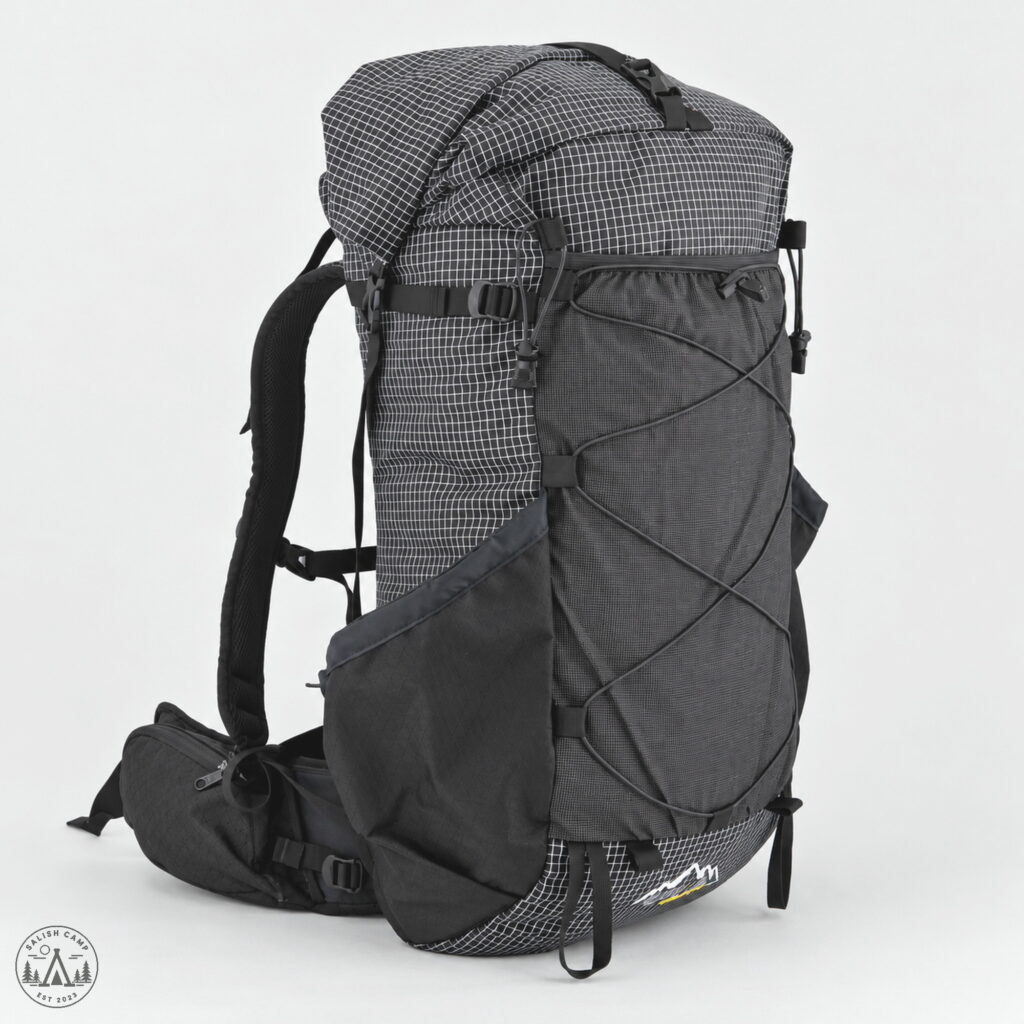
Buy if you want one dependable pack for everything from an Olympic Peninsula weekend to a long Cascades section hike, and your total carried weight stays below 35 lb. The ULA Circuit balances 68 L of storage, a supportive internal frame, tough 400 Robic fabric, and a manageable 38.5 oz (1,092 g) listed weight. At $299.99, it offers a compelling middle ground between minimalist ultralight packs and heavier traditional backpacking designs.
Skip if you routinely carry more than 35 lb, want a genuinely waterproof pack without using a liner, or prioritize the absolute lightest Dyneema construction over abrasion resistance and a more conventional suspension system. The Circuit works best when you’ve already reduced your base weight but aren’t ready to sacrifice carrying comfort or practical storage.
What Stands Out
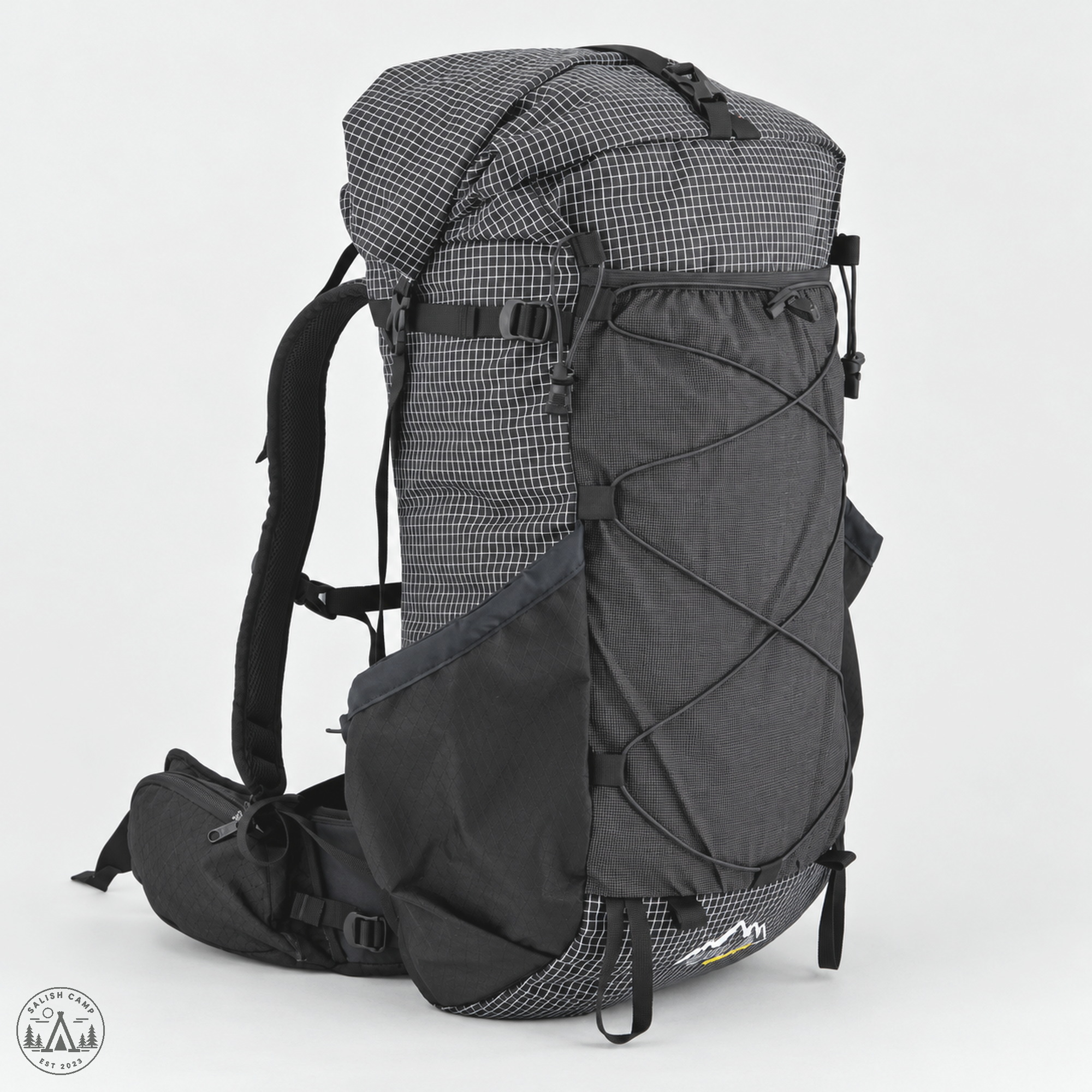
- A practical 68 L capacity. The main compartment, extension collar, and exterior pockets provide space for multi-day food carries, bulky insulation, and wet-weather gear without requiring a massive traditional backpack.
- A hybrid suspension that earns its weight. A 1.2 oz carbon fiber and Delrin hoop works with a dense internal foam frame and single aluminum stay to stabilize the load and transfer weight toward the hips.
- Tough 400 Robic construction. The nylon ripstop fabric handles repeated contact with brush, rough campsites, and damp trail conditions while remaining highly water resistant rather than waterproof.
- A genuinely useful front pocket. Four-way-stretch UltraStretch mesh gives wet rainwear, a water filter, or other frequently accessed items their own space outside the main compartment.
- Adjustable side-pocket storage. Two 400 Robic adjustable side pockets each accommodate two 1-liter Big Slam-style bottles, providing substantial external capacity for water and trail essentials.
- Fit options that matter. Separate torso and hipbelt sizing, a removable height-adjustable hipbelt, and a choice of J-Strap or S-Strap shoulder harnesses help accommodate different body shapes.
- A straightforward rolltop system. The collar rolls down as loads shrink, with buckles that connect to the pack sides or to each other. The standard top strap and side compression straps help control the remaining volume.
In The Field
The ULA Circuit sits in a particularly useful category for the way I backpack in the Pacific Northwest. I’ve worked toward a lighter base weight, but I’m not interested in pretending every trip is a perfect-weather summer overnight. A weekend in the Goat Rocks Wilderness can require an insulated jacket, rain shell, extra food, and a sleep system that handles cold ground. An Olympic coast trip adds the awkward shape of a bear canister. A long section of the Pacific Crest Trail brings repeated food carries and changing conditions. That is where the Circuit makes sense: light enough to feel like a deliberate reduction from a traditional backpack, yet framed and roomy enough for the gear I actually want to carry.
The first concern with a 68 L backpack is whether it’s simply too large for ordinary weekend trips. For a compact summer kit it can be more volume than necessary, but the rolltop makes that capacity easier to manage. For a two-night Enchantments-area trip, I would load heavier equipment close to my back, put the sleep system toward the bottom, and keep food and frequently needed layers accessible. With the extension collar rolled down and the side compression straps tightened, the pack becomes a tidy load rather than a tall, half-empty tube. On a longer Cascades section hike that unused space becomes valuable — a larger food carry or extra insulation doesn’t automatically require another backpack. The main compartment is deliberately simple; camp-only equipment stays deep inside, and exterior storage handles things I need while walking.
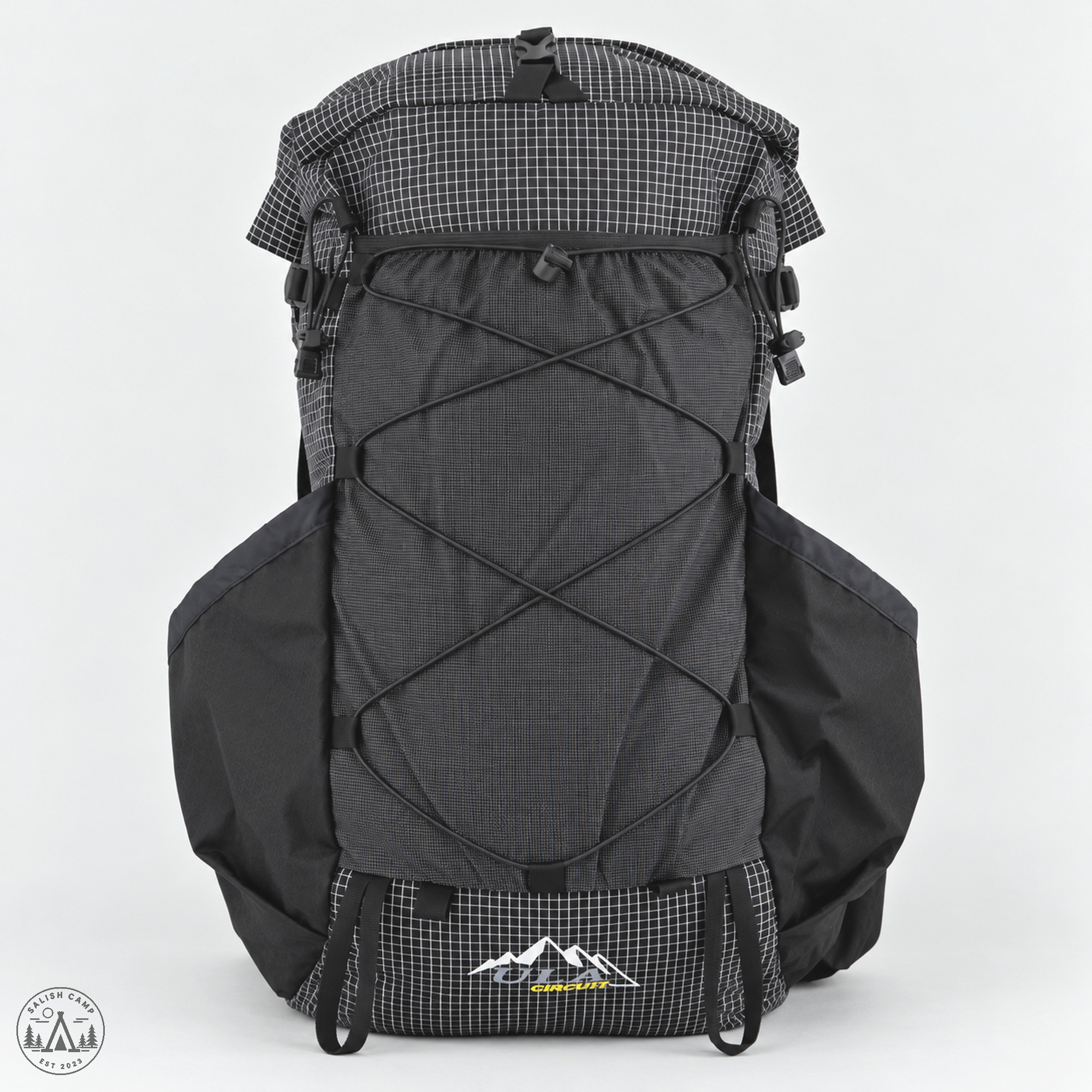
ULA’s pocket breakdown adds up to about 70 L, but the printed total is 68 L (4,200 cu in). I use the printed 68 L. The front UltraStretch mesh pocket is particularly useful in the North Cascades, where drizzle can continue for an entire day — a damp rain shell goes outside instead of against dry insulation. The four-way-stretch material is forgiving with irregularly shaped items, though I still wouldn’t overload the mesh with sharp or heavy equipment. Each adjustable side pocket can hold two 1-liter Big Slam-style bottles. Two hipbelt pockets cover snacks, sunscreen, or a small camera. The front shock cord and the ice-axe / trekking-pole loops handle suitable lightweight gear when the route calls for it.
The Circuit’s defining feature isn’t simply its listed 38.5 oz (1,092 g) weight. It’s the suspension supporting that weight. A carbon fiber and Delrin hoop, dense internal foam, and a single aluminum stay give the back panel structure and help move load from the shoulders toward the hipbelt — most useful when a trip starts with several days of food or when water availability forces a heavier carry. The product description says "just over two pounds," while the At a Glance spec prints 38.5 oz (2 lb 6.5 oz); I use 38.5 oz. The recommended maximum is 35 lb (16 kg). I would treat that as a firm planning limit, not a challenge to exceed. Comfort falls off above it, and the pack’s relatively light suspension isn’t designed to compensate for consistently overloaded gear. The hoop and stay are removable, but I would keep them installed for the trips that make the Circuit attractive in the first place.
Pack fit deserves more attention than color or accessory choices. The photographed configuration uses a Medium torso (18–21 in), a Medium 34–38 in hipbelt, and S-Strap shoulder harnesses. Torso length isn’t overall height — it’s measured from the prominent vertebra at the base of the neck down to the iliac crest. If your measurement falls between torso sizes, ULA recommends sizing down on a framed pack. The hipbelt is selected separately, which matters because two hikers with identical torso lengths can have very different waist and hip measurements; measure where the padded belt will actually sit. The removable, height-adjustable pass-through hipbelt also gives some room to fine-tune carrying position. J-Straps follow a more conventional curve and often suit straighter upper-body profiles; S-Straps have a more pronounced contour that can fit better around the chest and underarms for some body shapes. Neither is universally better — decide based on loaded fit, not appearance. Ideally the hipbelt takes much of the load while the shoulder straps stabilize without creating concentrated pressure.
On Olympic coast trips, bear-canister compatibility is one of the first things I consider. ULA’s FAQ says every bear canister on the market fits vertically, while smaller models may fit horizontally, and recommends placing something between the canister and the bottom of the pack. That last point matters — I don’t want a hard cylinder pressing directly into the lower pack structure. Soft equipment establishes a stable base, the canister sits carefully, and surrounding gaps get filled so it can’t shift on a long day. A vertical canister occupies a meaningful amount of the main compartment; that’s where the Circuit’s capacity becomes useful. The key is not simply whether the canister fits, but whether the resulting load stays balanced and below the recommended maximum.
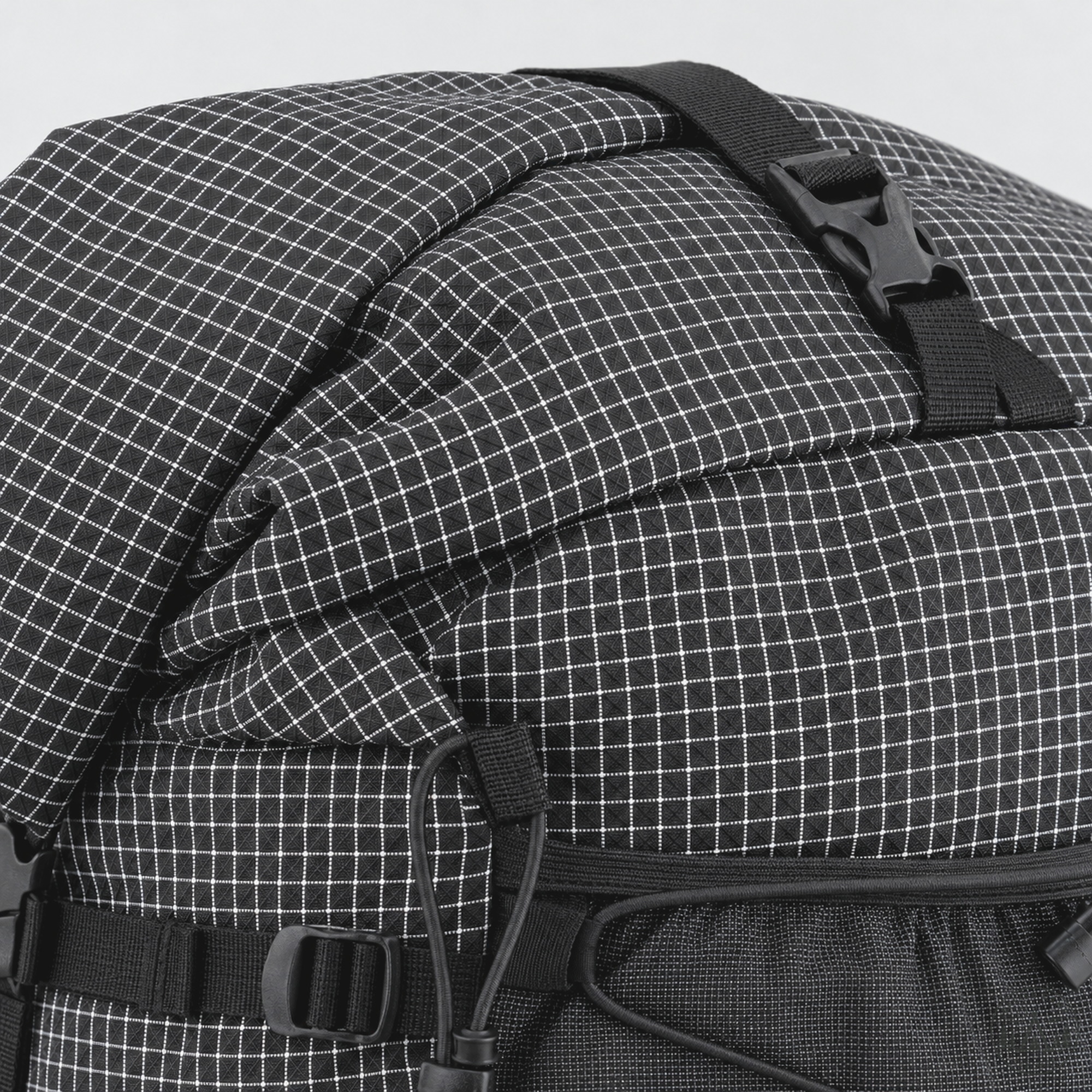
The 400 Robic fabric is highly water resistant, with a three-pass polyurethane coating and C0 PFAS-free DWR. The rolltop closes much like a dry bag, creating a water-resistant seal. That doesn’t make the Circuit waterproof. On an extended rainy day in the North Cascades or along the Olympic coast, I would absolutely use a waterproof pack liner — inexpensive insurance for the sleeping bag, insulating layers, and spare clothing. Prolonged exposure, seams, and repeated wet handling create opportunities for moisture to enter even when the outer fabric sheds rain. The rolltop still has practical value; I simply wouldn’t trust it as the only barrier between persistent Pacific Northwest rain and my sleeping insulation.
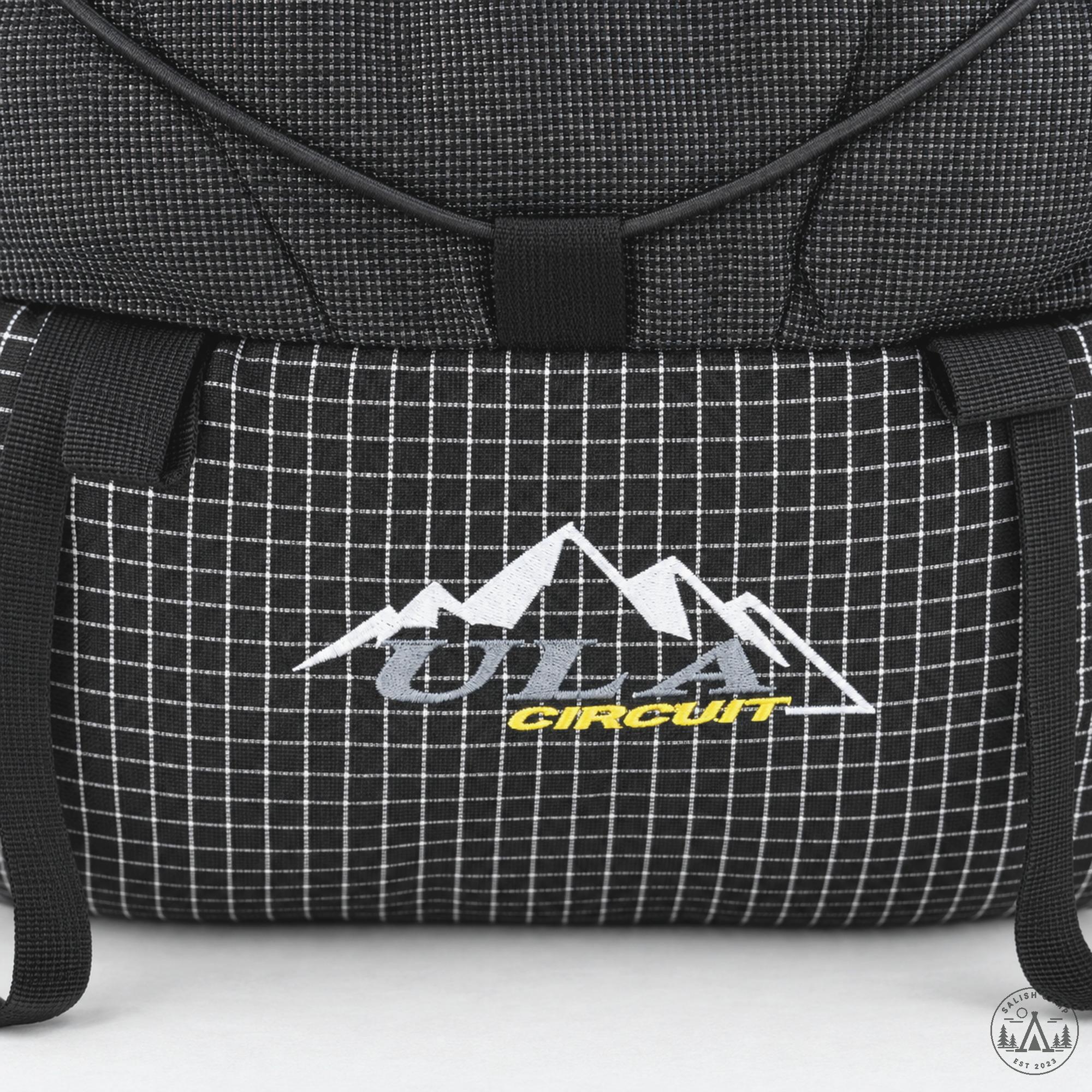
The Circuit uses 400 Robic nylon ripstop in a pack intended for repeated trail use, with a 400 Robic bottom panel that is welcome when setting the pack down on gravel, wet roots, or rough campsites. I would still avoid dragging it across sharp rock or treating the stretch-mesh pocket as abrasion-proof. For a long PCT section, the combination of capacity, exterior organization, and supportive suspension makes practical sense. ULA cites the Circuit as the most popular pack on the Pacific Crest Trail for four years in the Halfway Anywhere survey — popularity doesn’t guarantee fit, but it helps explain the appeal for hikers who have reduced their gear without embracing the smallest possible pack. There are lighter Dyneema options for people prioritizing minimum weight. At the opposite end, a heavier traditional backpack is the smarter purchase if you regularly carry loads beyond 35 lb, need extensive padding, or travel with bulky equipment that pushes the Circuit past its intended range. For my style of hiking, I would rather carry a modest amount of additional pack structure than spend a long, wet day adjusting uncomfortable shoulder straps.
Pros
- Comfortable framed carrying system. The hybrid suspension and adjustable hipbelt provide meaningful support for loads within the recommended range.
- Versatile 68 L capacity. Enough room for bear-canister trips, extra shoulder-season clothing, and extended food carries, with a rolltop that manages smaller loads.
- Durable, practical materials. The 400 Robic body, 400 Robic bottom panel, and UltraStretch front pocket balance abrasion resistance with useful exterior storage.
- Excellent fit customization. Independent torso and hipbelt sizes, J-Strap or S-Strap harnesses, and adjustable belt positioning accommodate a range of body shapes.
Cons
- Firm 35 lb carrying ceiling. Hikers who routinely carry heavier loads should choose a backpack with a more substantial suspension.
- Not fully waterproof. Persistent Pacific Northwest rain still calls for a reliable pack liner to protect critical insulation and clothing.
- Not the lightest ultralight option. Weight-focused hikers with smaller, more compact kits can find lighter Dyneema alternatives.
Technical Specifications
| Specification | Details |
|---|---|
| Product | ULA Circuit |
| Config in photos / primary | Black Robic, Medium torso (18–21 in), S-Strap, SKU 201702 |
| Price (primary) | $299.99 USD (ula-equipment.com, 2026-10-09, in stock) |
| Weight | 38.5 oz (1,092 g) |
| Volume | 68 L (4,200 cu in) total; main body 39.3 L (2,400 cu in); extension collar 8.19 L (500 cu in) |
| Exterior pockets | Front mesh 6.6 L; two side pockets 6.6 L each; two hipbelt pockets 1.5 L each |
| Recommended max load | 35 lb (16 kg) |
| Frame | 1.2 oz carbon fiber and Delrin suspension hoop, dense internal foam frame, single aluminum stay |
| Main fabric | ULA 400 Robic nylon ripstop, C0 PFAS-free DWR, three-pass PU coating |
| Front pocket | UltraStretch 4-way stretch mesh |
| Closure | Rolltop |
| Torso sizes | Small 15–18 in, Medium 18–21 in, Large 21–24 in, X-Large 24 in+ |
| Hipbelt sizes | XS 26–30 in, S 30–34 in, M 34–38 in, L 38–42 in, XL 42–47 in, XXL 47 in+ |
| Shoulder straps | J-Strap or S-Strap |
| Options | Y-strap top strap; Bottom Strap Kit (+$16.99) |
| Made in | U.S.A. (Utah) |
| Warranty | Lifetime, per ULA terms |
Final Thoughts
The ULA Circuit is the kind of backpack I would choose when I want to simplify my gear without narrowing the trips I can take.
Its biggest strength is how it brings together a supportive suspension, substantial usable volume, durable fabric, and a straightforward organization system. It has enough room for a bear canister on the Olympic coast, enough flexibility for a quick Goat Rocks weekend, and the carrying capacity to handle a long Cascades section hike without becoming unnecessarily complicated.
The Black Robic configuration with a Medium torso and S-Straps is a particularly practical setup for hikers whose measurements and body shape suit that harness. Getting those choices right matters more than chasing the smallest possible pack weight.
The limitations are clear. Stay below the 35 lb recommended maximum, use a pack liner in sustained rain, and don’t expect it to compete with the lightest minimalist packs on weight alone.
For someone who has already reduced their base weight but still values a proper frame, reliable exterior storage, and enough room for real shoulder-season conditions, the Circuit is an excellent all-around choice.