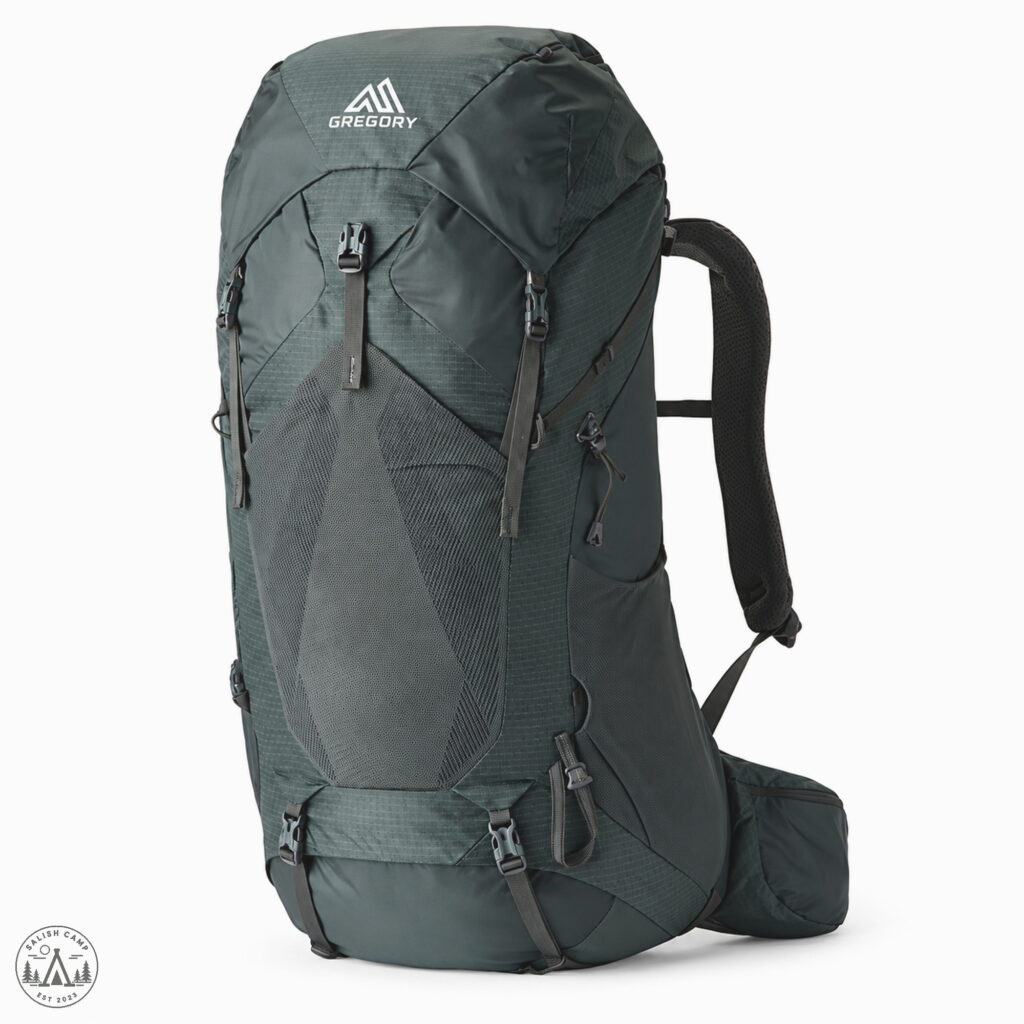
Buy if you want a supportive framed backpack that you can dial in to your torso and hips, with enough room for a multi-day Cascades kit and useful access when the weather turns. The Gregory Paragon 60 makes sense for backpackers who value carrying comfort, adjustable suspension, and organized packing more than shaving every possible ounce.
Skip if you want a minimalist lightweight pack, regularly carry very heavy loads, or prefer a simple bag with fewer zippers and compartments. The Paragon carries its weight well with a sensible load, but it is not the lightest approach to a weekend kit, and its comfort advantage narrows as the pack gets heavily loaded.
What Stands Out
- Adjustable suspension for a more precise fit. The MD/LG version accommodates different torso lengths, letting you position the shoulder harness relative to your hips rather than settling for a fixed back length.
- FreeFloat movement on uneven terrain. Gregory’s FreeFloat hybrid suspension uses dynamic hipbelt flex panels that move with your body, helping the pack follow your stride through steep switchbacks and off-camber trail sections.
- Full-length side-zipper access. A long side-opening zipper lets you reach clothing, cookware, or other buried gear without unpacking everything through the top.
- Dedicated sleeping-bag compartment. The zippered lower opening and removable divider make it easier to isolate sleep gear or open up one continuous packing space.
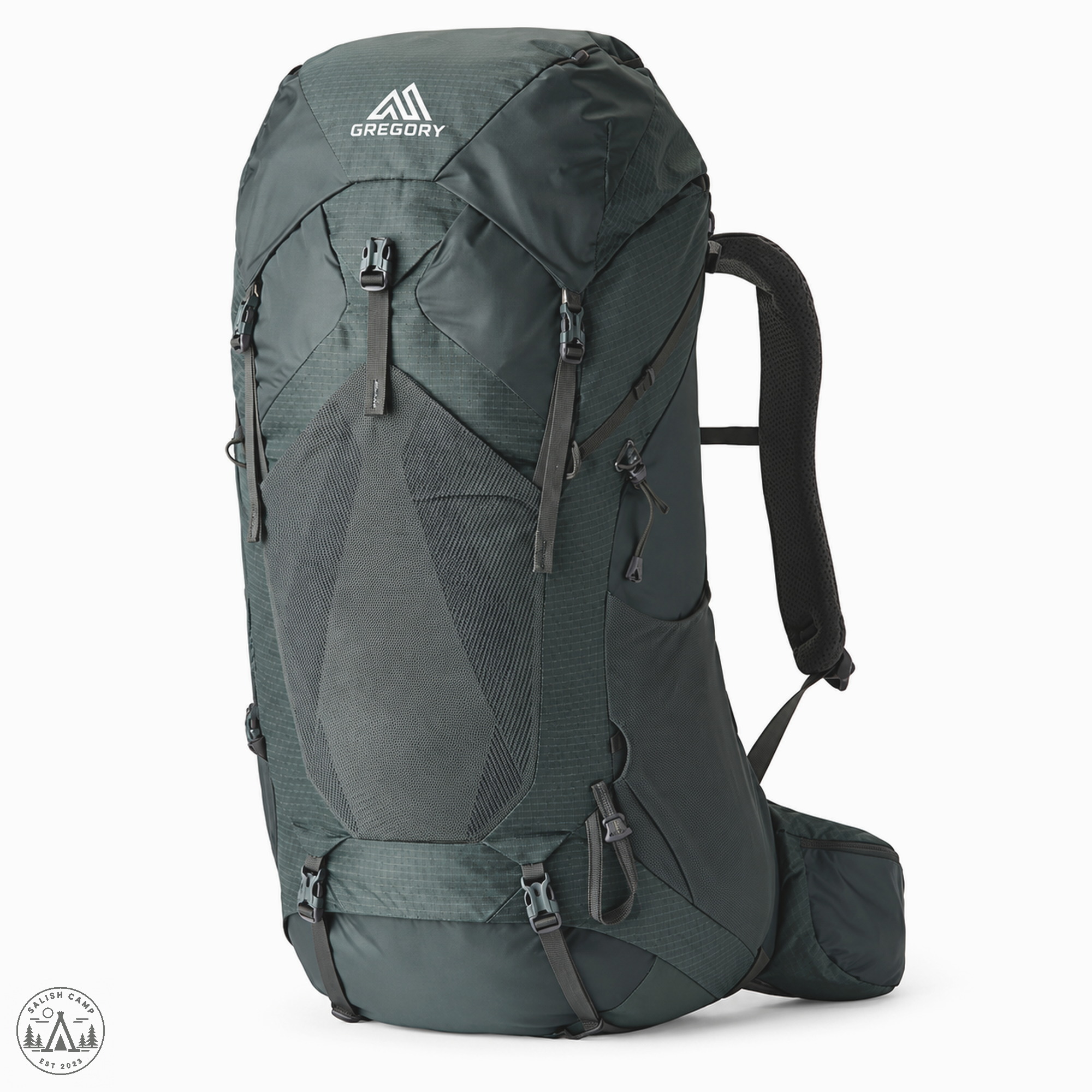
- Useful exterior storage. Two side stretch-mesh pockets, an oversized front mesh pocket, and a floating top lid provide places for wet layers, bottles, rain protection, and frequently used items.
- Trail-ready shoulder storage. The On-The-Go shoulder strap pocket accommodates a Garmin inReach (not included), small snacks, or sunglasses, keeping essentials within reach without removing the pack.
- A supportive internal structure. A perimeter alloy wire frame works with a fiberglass anti-barreling cross-stay to help the loaded pack maintain its shape instead of collapsing into a rounded bag against your back.
In The Field
The Gregory Paragon 60 is the kind of pack I’d choose when the trip involves more than just getting from the car to a campsite. An August loop through Goat Rocks, with long exposed traverses, loose volcanic dirt, and enough climbing to make every pound noticeable, is exactly where an adjustable framed pack earns its place. I want the hip belt doing its share of the work, the shoulder straps sitting naturally, and the load staying controlled when I’m picking my way across uneven ground. At 3.72 lb, the Paragon is not an ultralight pack. Its case is that the structure, adjustments, and access features are worth carrying.
The first thing I’d spend time on is fit. Torso length is not the same as standing height, and a pack that technically fits your body can still feel wrong if the harness is positioned badly. I start by measuring from the prominent vertebra at the base of my neck to the level of my iliac crests, the upper edges of the hip bones. Then I adjust the torso setting so the hip belt can sit over those bones while the shoulder straps wrap comfortably over my shoulders. I make these adjustments with actual trip weight inside the pack, not with it empty on the garage floor.
The 3D comfort cradle adjustable hipbelt is the next piece to get right. I center it around my pelvis, fasten it snugly, and tighten it before pulling hard on the shoulder straps. Once the belt is supporting the load, I take up the slack in the shoulder harness and adjust the load lifters until the upper bag feels controlled without dragging the straps into my shoulders. The sternum strap should stabilize the harness, not squeeze my chest. If my shoulders are carrying most of the weight from the first mile, I stop and revisit the fit rather than assuming I’ll get used to it.
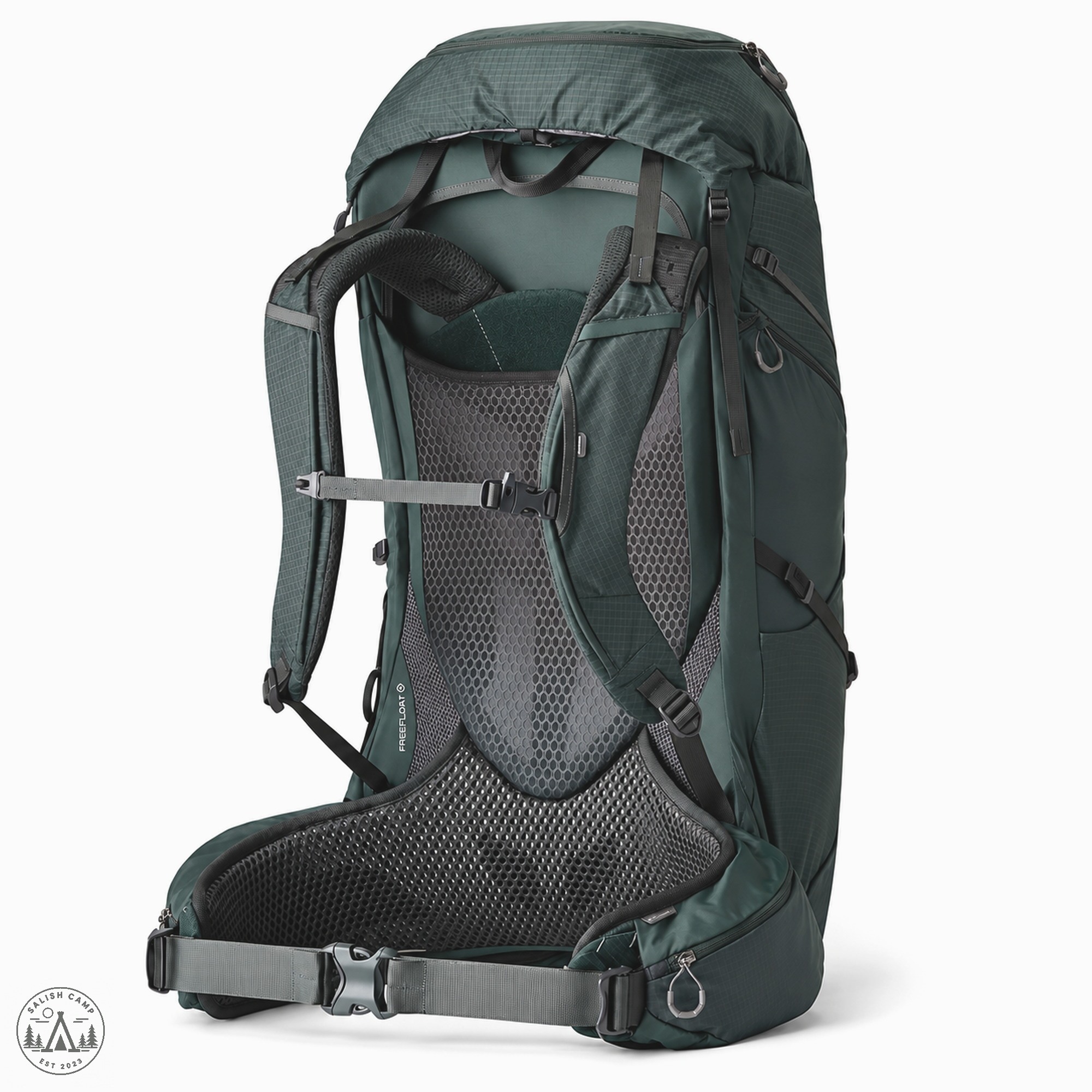
The suspension’s movement becomes more relevant once the trail leaves level ground. On a Goat Rocks climb, I might be stepping over roots one minute and traversing a slope the next. I want my hips to rotate naturally while the pack stays reasonably centered behind me. The flexible hip-belt panels help accommodate that motion without making the entire pack feel disconnected. On sidehills, I keep the heavier contents close to my spine so the suspension isn’t fighting a poorly balanced load.
The AirCushion mesh backpanel is another comfort detail I appreciate on a wet Enchantments approach. Even when the forecast calls for rain, a long climb produces plenty of sweat. The ventilated mesh creates a more forgiving contact surface than a completely flat slab of padding. I don’t expect it to keep my back dry during a steep ascent, especially with a shell on, but the combination of cushioning and airflow is welcome. The perforated, dual-density shoulder harness feels appropriately substantial for a pack designed around multi-day loads.
One packing detail deserves attention before planning a trip around the advertised capacity. Gregory lists 60 L for this size, but a measured main compartment in a major gear test came in closer to 48 L. The total label includes the pockets and lid, so I would plan around roughly 48 L of main-bag space and deliberately use the exterior storage for the remaining gear. That distinction matters with a bulky sleeping bag, extra insulating layers, and several days of food. I always do a complete packing rehearsal at home rather than discover at the trailhead that my cold-weather setup cannot fit comfortably.
The full-length side zipper is probably my favorite practical feature of the Paragon. On a conventional top-loader, retrieving a fleece near the middle of the bag can mean pulling out food, clothing, and half the contents of the main compartment. Here, I can lay the pack on a relatively clean patch of ground, open the side, and reach the item directly. At a wet North Cascades lake camp, that’s valuable when daylight is fading and I want an insulating layer before setting up shelter. I still make sure the pack is not overstuffed before operating the zipper, and I keep the opening pointed away from rain and mud.
The bottom sleeping-bag compartment changes how I organize camp gear as well. I like keeping my sleeping bag in a waterproof liner near the bottom, where it can be accessed without disturbing the food and clothing above. The removable divider is useful because it doesn’t force a particular packing system. If I’m carrying a larger shelter or an unusual load, I can open the internal space and treat the pack more like one continuous bag. I avoid putting loose wet equipment directly against my sleeping insulation, even when the compartments are divided.
The exterior pockets are particularly well suited to the constant gear shuffling of a Pacific Northwest day. An oversized front stretch-mesh pocket is where I’d put a wet rain shell or a damp groundsheet, separated from dry clothing inside. The side mesh pockets handle water bottles and other items I want to grab quickly, with one offering trail-side access. The compression-strap pass-through options also give me more flexibility when securing awkward equipment. On a North Cascades lake overnight with a fly rod, I’d use suitable external attachment points and compression to secure the rod tube vertically, keeping it clear of my legs and away from branches.
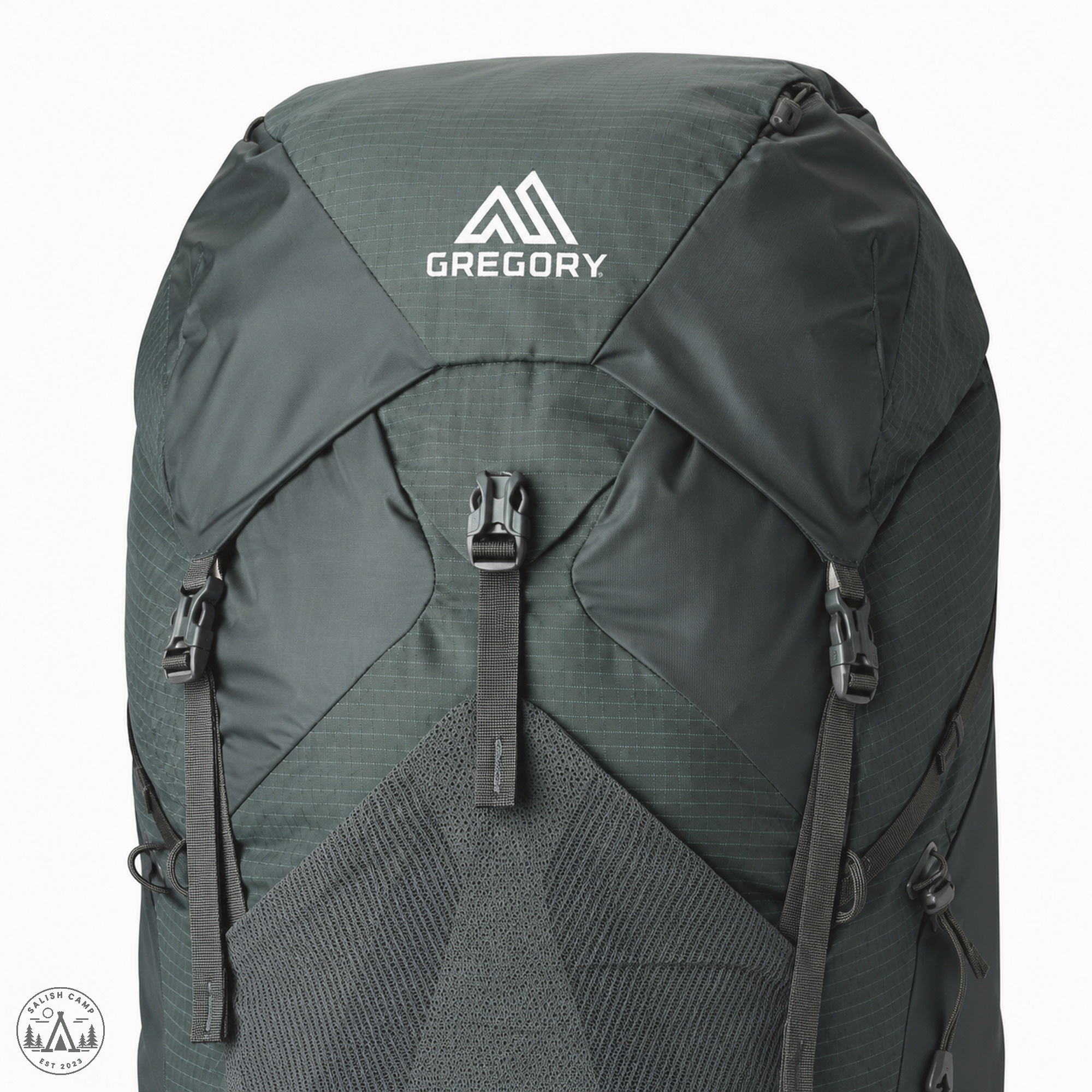
The floating top lid adds another level of organization. I prefer keeping my headlamp, water filter accessories, map, and small repair items in the large zippered pocket, with smaller valuables or a key secured in the underside compartment. For hydration, the internal sleeve and SpeedClip hanger provide a dedicated way to carry a compatible reservoir, which must be purchased separately. I still put moisture-sensitive gear inside waterproof bags because water-resistant pack fabric is not a substitute for reliable internal waterproofing in prolonged Northwest rain.
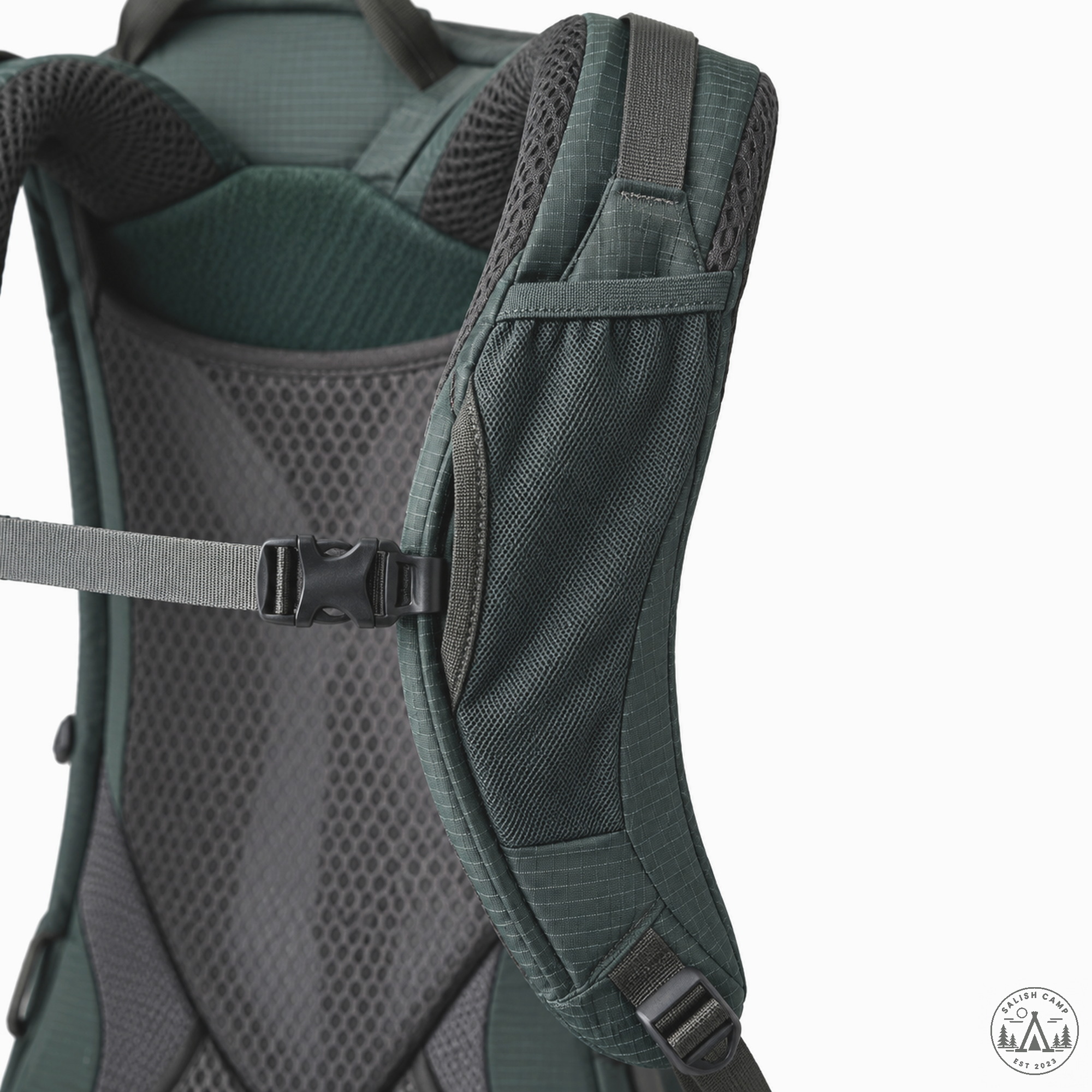
On the move, the shoulder pocket is a small feature that makes a difference. I don’t want to take the entire pack off every time I need a snack or want to check a satellite communicator. Trekking poles can ride on the molded attachment loop and upper shock lock when I want my hands free for easier sections of trail.
The main limitation shows up when the load gets heavy. With the pack loaded toward its 50 lb maximum carry, shoulder straps can dig into the shoulders, and the bag can feel less secure against the mesh backpanel, according to reported carrying experiences. I would treat that number as an upper limit rather than the ideal target for a long Cascade climb. At 3.72 lb, the Paragon makes the most sense to me with a moderate, well-balanced load where its frame and hip-belt comfort can do their jobs without being overwhelmed.
At the end of the trip, the practical details still matter. After hiking out through muddy trail sections, I want to rinse grit off the hip belt, wipe down the lower fabric, inspect the zipper tracks, and let the pack dry thoroughly before storing it. For the kind of Cascades backpacking I do, that’s a sensible trade.
Pros
- Highly adjustable carrying system: Torso adjustment, supportive hip-belt shaping, and responsive suspension allow a more personalized fit for multi-day hiking.
- Excellent access options: Top loading, full-length side zipper, and a separate sleeping-bag compartment make packing and camp setup easier.
- Practical exterior organization: Front stretch storage, accessible side pockets, shoulder storage, and a multi-pocket lid keep commonly used gear convenient.
- Supportive framed construction: The alloy perimeter frame, fiberglass cross-stay, and substantial shoulder harness provide structure for typical backpacking loads.
Cons
- Heavier than minimalist alternatives: At 3.72 lb and $299.95 list, it carries a noticeable weight penalty compared with simpler lightweight backpacking designs.
- More components to manage: The separate compartments, adjustable suspension, multiple zippers, and compression straps add complexity if you prefer one large, straightforward bag.
- Comfort depends on careful fitting: The suspension works best when the torso adjustment, hip-belt placement, and internal load distribution are properly dialed in.
Technical Specifications
| Specification | Details |
|---|---|
| Product | Gregory Paragon 60 |
| Config | MD/LG Cascade Green (item 1523428884), style 1523PAR60 |
| Price | $299.95 USD list (gregory.com, 2026-10-09) |
| Type | Men’s framed backpacking pack |
| Volume | 60 L |
| Weight | 3.72 lb |
| Dimensions | 29.9 in H × 10 in L × 13.8 in W |
| Fits torso | 18″–22″ |
| Fits hips/waist | 27″–53″ |
| Max carry | 50 lb |
| Access | Top / bottom / full-length side zipper |
| Frame | Perimeter alloy wire; fiberglass anti-barreling cross-stay |
| Suspension | FreeFloat hybrid; AirCushion mesh backpanel; 3D comfort cradle hipbelt |
| Body fabrics | 100D and 210D high-density nylon with C0 DWR; 300D 40% recycled nylon ripstop with C0 DWR (PFAS-free) |
| Lining | 40% post-consumer recycled 135D polyester with C0 DWR (PFAS-free) |
| External pockets | 6 |
| Hydration | Compatible; SpeedClip hanger (reservoir not included) |
| Sleeping bag compartment | Yes, zippered, removable divider |
| Warranty | Limited Lifetime |
Final Thoughts
The Gregory Paragon 60 occupies a useful middle ground between stripped-down lightweight backpacks and heavier expedition-oriented haulers. It offers enough adjustability, storage, and structure for extended Cascades weekends without demanding that you adopt an ultra-minimal packing system.
What makes it appealing is the combination of fit and accessibility. I value a pack that lets me position the load correctly on my hips, move naturally across broken trail, and find a dry layer without unpacking the entire bag. The Paragon handles those priorities with a thoughtful suspension system, a genuinely useful side zipper, and compartments that work well for the way I organize a wet-weather backpacking kit.
The trade-offs are real. Its weight is noticeable, the carrying system needs proper adjustment, and the comfort advantage diminishes when the pack is pushed toward its upper load limit. It’s better suited to a carefully packed multi-day trip than a habit of carrying everything that might come in handy.
For a Goat Rocks loop, a North Cascades lake trip, or a wet shoulder-season weekend where a reliable framed pack matters more than the lightest possible setup, the Paragon 60 belongs on the shortlist. I’d choose it for its adjustable carry, useful storage, and trail-friendly access, while keeping the load sensible and the fit carefully tuned.