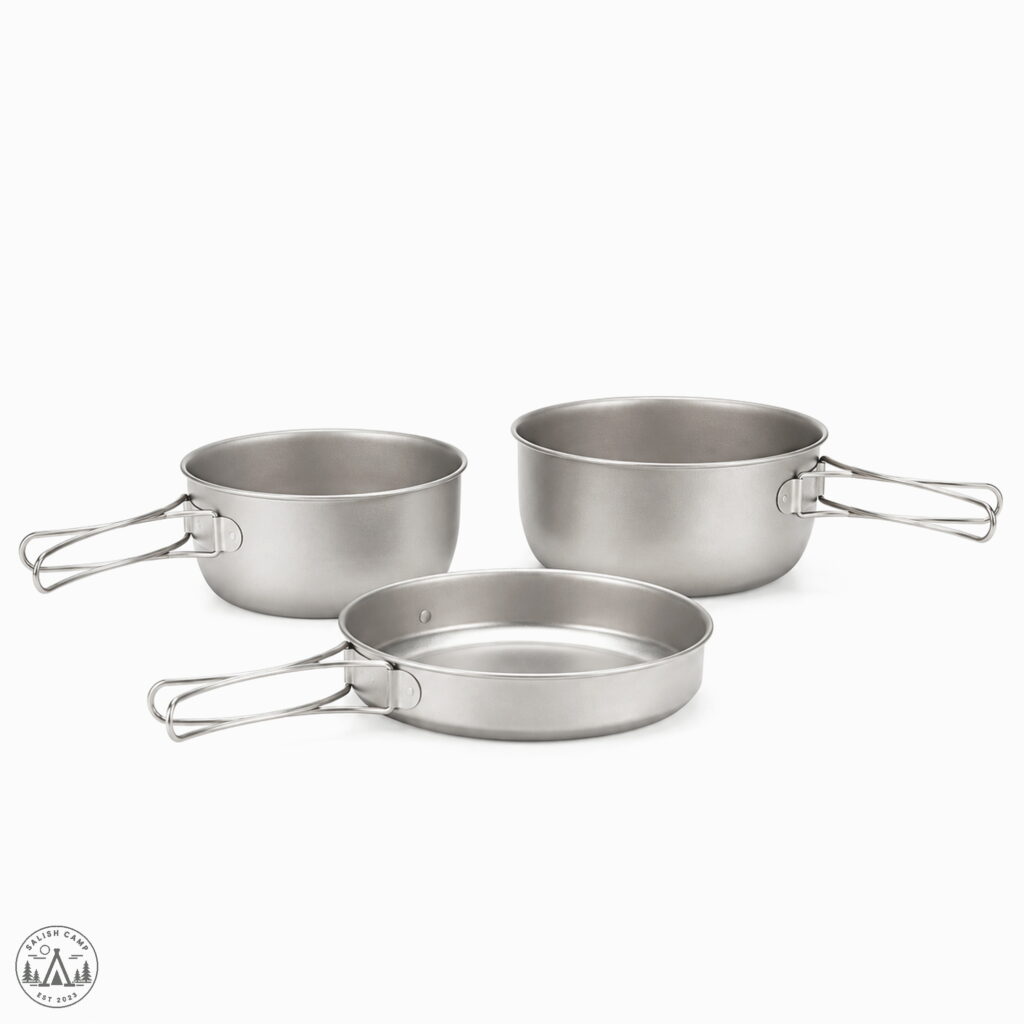
Buy if you backpack with another person, actually cook more than a single boil-and-rehydrate meal, and want two pots plus a separate frying surface without carrying a heavy cookware set. The Snow Peak 3 Piece Titanium Cookset STW-001T weighs 7.1 oz / 200 g for the two pots and fry pan, nests together for storage, and includes a mesh bag. At $54.95, it is a particularly straightforward step up from one-pot cooking if breakfast, coffee, or a second-night pan meal matters to you.
Skip if your entire trail routine is boiling water in one vessel. I like having multiple cooking surfaces when sharing food, but they only earn their place if I use them. A solo backpacker who mainly heats water may be better served by the simpler Snow Peak Titanium Trek 900. Also note that the STW-001T was sold out on Snow Peak’s US site when these specifications were checked on October 4, 2026.
What Stands Out
- 7.1 oz / 200 g for three cooking pieces. That is the central argument for this set: two pots and a fry pan while remaining firmly in backpacking territory.
- Two different pot diameters. Pot 1 measures 5.5 inches in diameter by 2.25 inches high; Pot 2 is 5 inches by 2.2 inches, allowing the pieces to nest rather than travel as three separate objects.
- A 5.75-inch fry pan changes the menu. This is the piece that distinguishes the kit from a basic boil pot for me. It gives me a dedicated shallow cooking surface rather than asking one deeper pot to do everything.
- It is explicitly positioned for two people. Snow Peak’s feature line calls STW-001T a lightweight titanium cookset “for 2 persons,” which matches the way I would use it: shared backpacking rather than an elaborate solo kitchen.
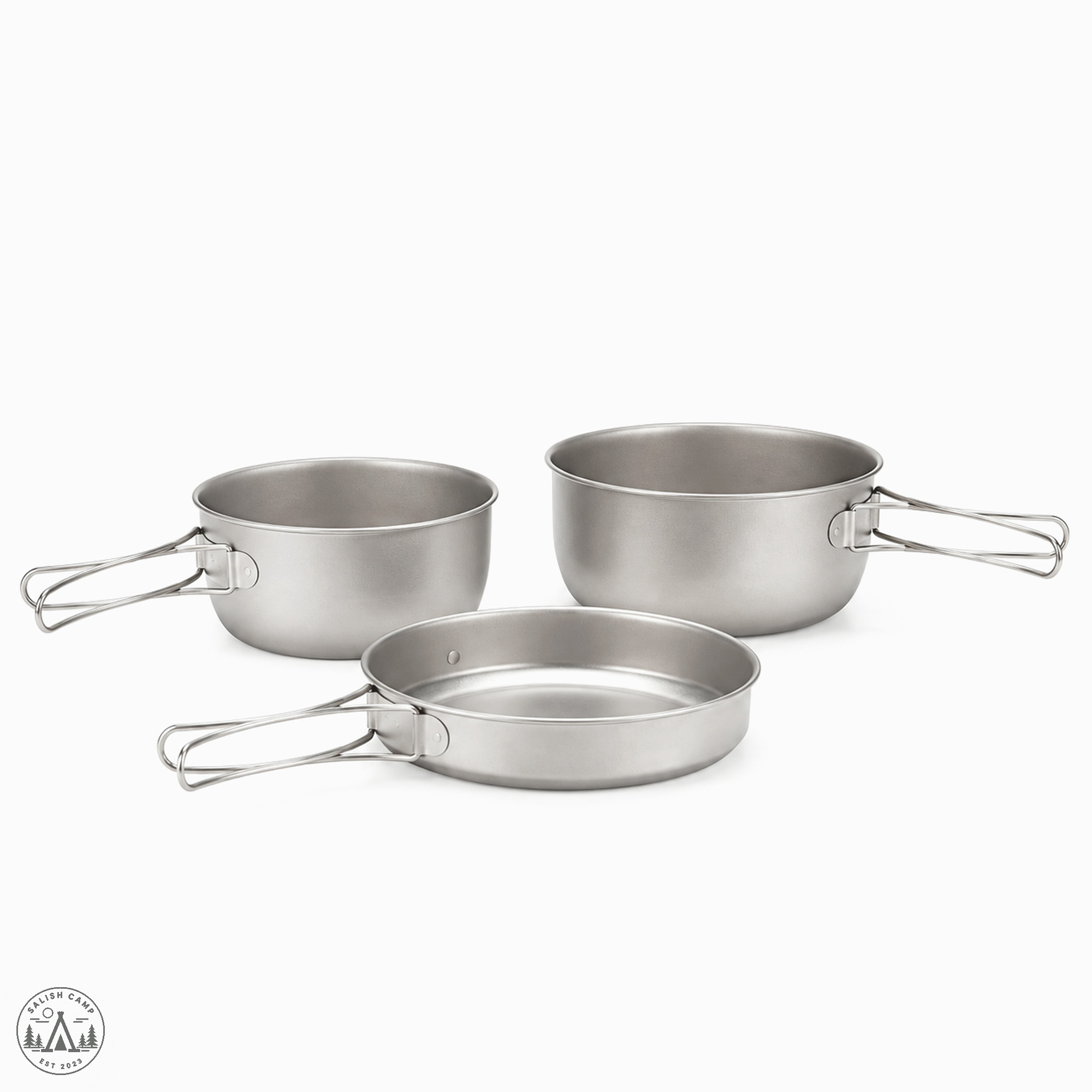
- Foldable handles keep the system packable. All three pieces are designed around nesting storage rather than fixed cookware handles sticking out inside the pack.
- The mesh bag is included. The official contents are two pots, fry pan, and mesh bag. A stove is not part of the cookset.
- Snow Peak specifically names the LiteMax Titanium Stove as the pairing. That’s a suggested backcountry combination, not an included stove. STW-001T is the cookware set only.
In The Field
The question I would settle before buying the STW-001T isn’t whether titanium cookware makes sense for backpacking. It does. The more useful question is whether I want three cooking surfaces badly enough to carry them instead of one pot.
That’s an important distinction.
On plenty of Cascade trips, I can get through a weekend with one pot. Water for coffee, water for breakfast, water for a dehydrated dinner—done. That’s where something like the Titanium Trek 900 makes sense to me. It keeps the kitchen conceptually simple.
The STW-001T is for the trip where I know I’m going to want more flexibility.
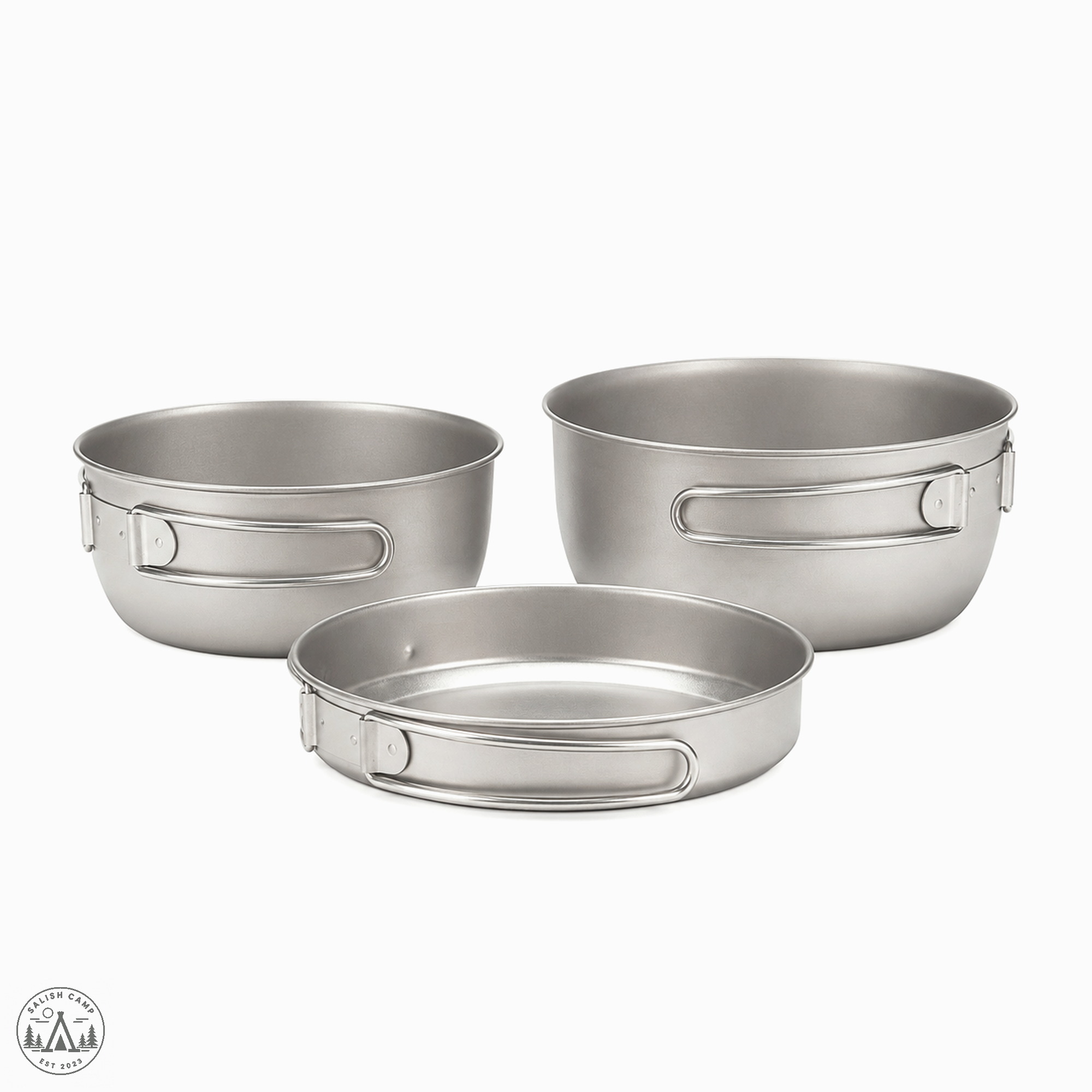
The first benefit is obvious once two people are involved. Having two pots means I don’t necessarily have to finish one job before beginning another. On a cold Cascade morning, that’s useful. I might want hot water going while another part of breakfast occupies the second vessel. I don’t have to turn every meal into a carefully sequenced one-pot operation.
That’s not a revolutionary capability, but on the second morning of a wet trip, small conveniences become much more noticeable.
The official capacity specification is 14–26 oz, and I would leave it at that. Snow Peak’s US page doesn’t assign an individual capacity to each pot, so I wouldn’t look at the dimensions and manufacture my own volume figures. If you need an exact per-pot capacity for a particular meal or water requirement, the PDP doesn’t provide enough information to make that calculation an official specification.
What it does give us are useful physical dimensions. Pot 1 is 5.5 inches in diameter and 2.25 inches high. Pot 2 is 5 inches in diameter and 2.2 inches high. The fry pan is 5.75 inches in diameter; Snow Peak doesn’t list its height.
Those numbers tell me more about how I would cook with the set than a marketing paragraph does. These are relatively broad, shallow pieces rather than one tall vessel doing every job.
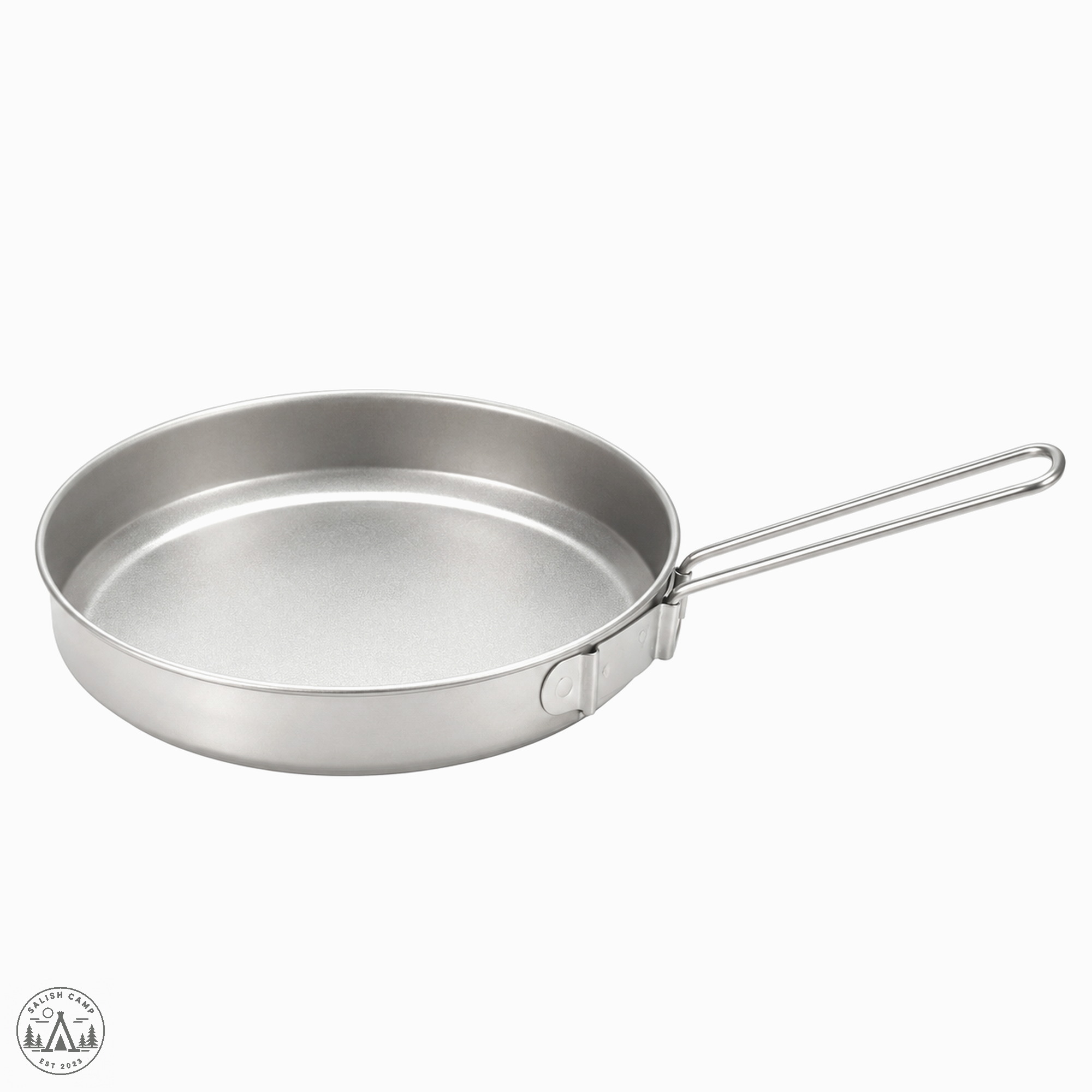
The fry pan is the piece I’d think hardest about before choosing this over a simpler kit.
If my trail food is exclusively freeze-dried meals, oatmeal, instant coffee, and other things that mainly require hot water, I don’t need it. I’m carrying another piece of cookware to solve a problem I don’t have.
But my second-night food often gets a little more ambitious. That’s when a separate shallow pan starts making sense. I can reserve it for food that benefits from being spread across a wider cooking surface instead of sitting at the bottom of a deeper pot.
There is a novice caveat here: titanium cookware does not automatically make pan cooking effortless. A lightweight titanium pan is not the same thing as a thick kitchen skillet designed to distribute and retain heat. I use more attention and restraint when cooking actual food over a backpacking stove. I don’t treat a small titanium fry pan like cast iron, blast one concentrated spot with heat, and expect the cookware to compensate for me.
That is technique rather than a missing specification. Snow Peak doesn’t state a wall thickness or nonstick coating on this PDP, so I’m not going to invent either one.
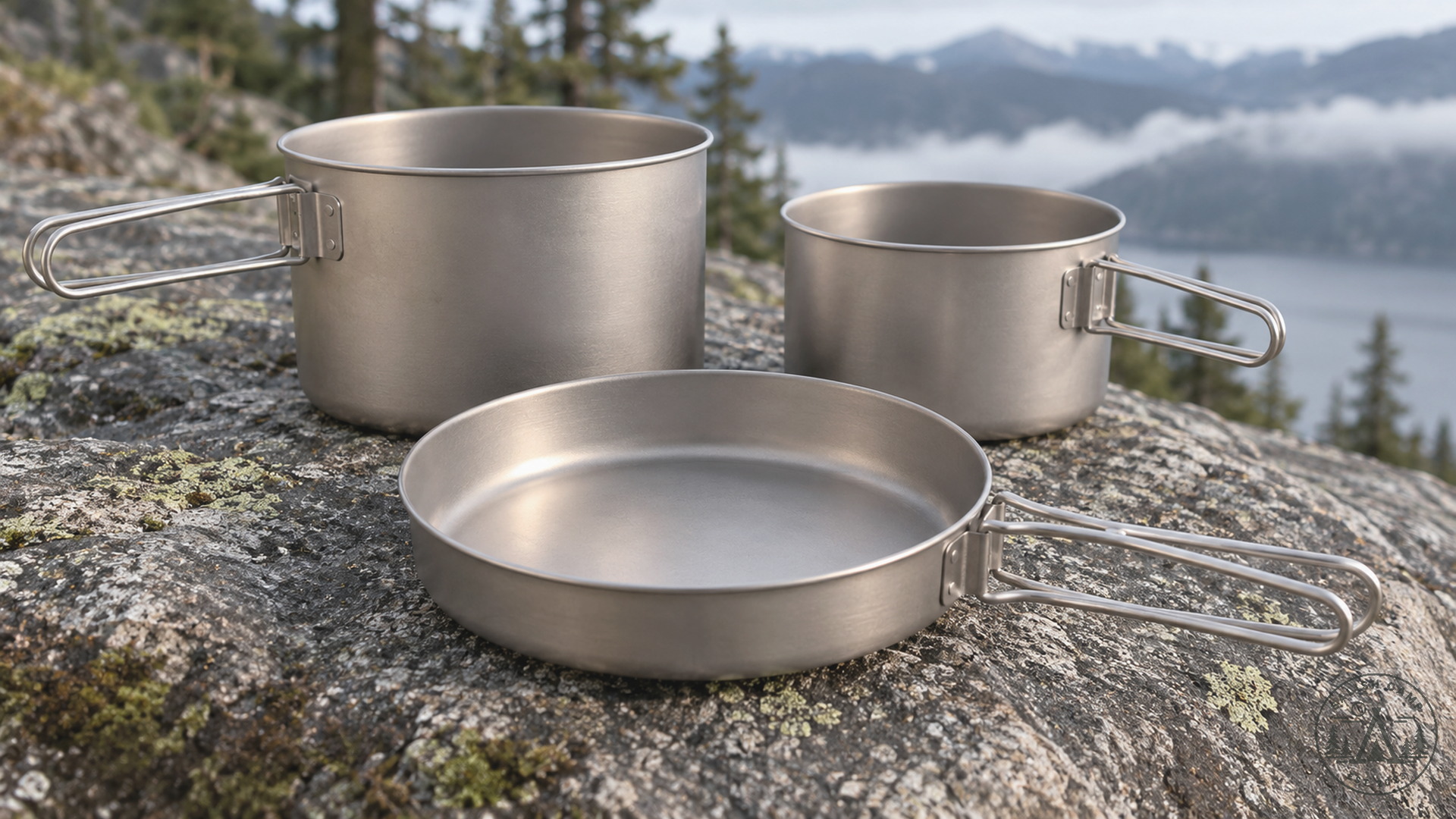
The handles are similarly simple in concept but important in practice. Snow Peak specifies foldable handles, which is exactly what I want in nesting backpacking cookware. Fixed handles would defeat much of the packing logic.
For a first-time buyer, I would make a habit of confirming that the handles are properly positioned before lifting a pot containing hot water. Backpacking cookware gets handled when I’m tired, cold, hungry, and sometimes wearing gloves. I don’t want my first check of the handle position to happen after I’ve already picked up the pot.
That’s especially true on the uneven surfaces I find around Cascade camps. I want the stove on the most stable, level spot I can establish, the handle arranged deliberately, and the cooking area clear before I light anything.
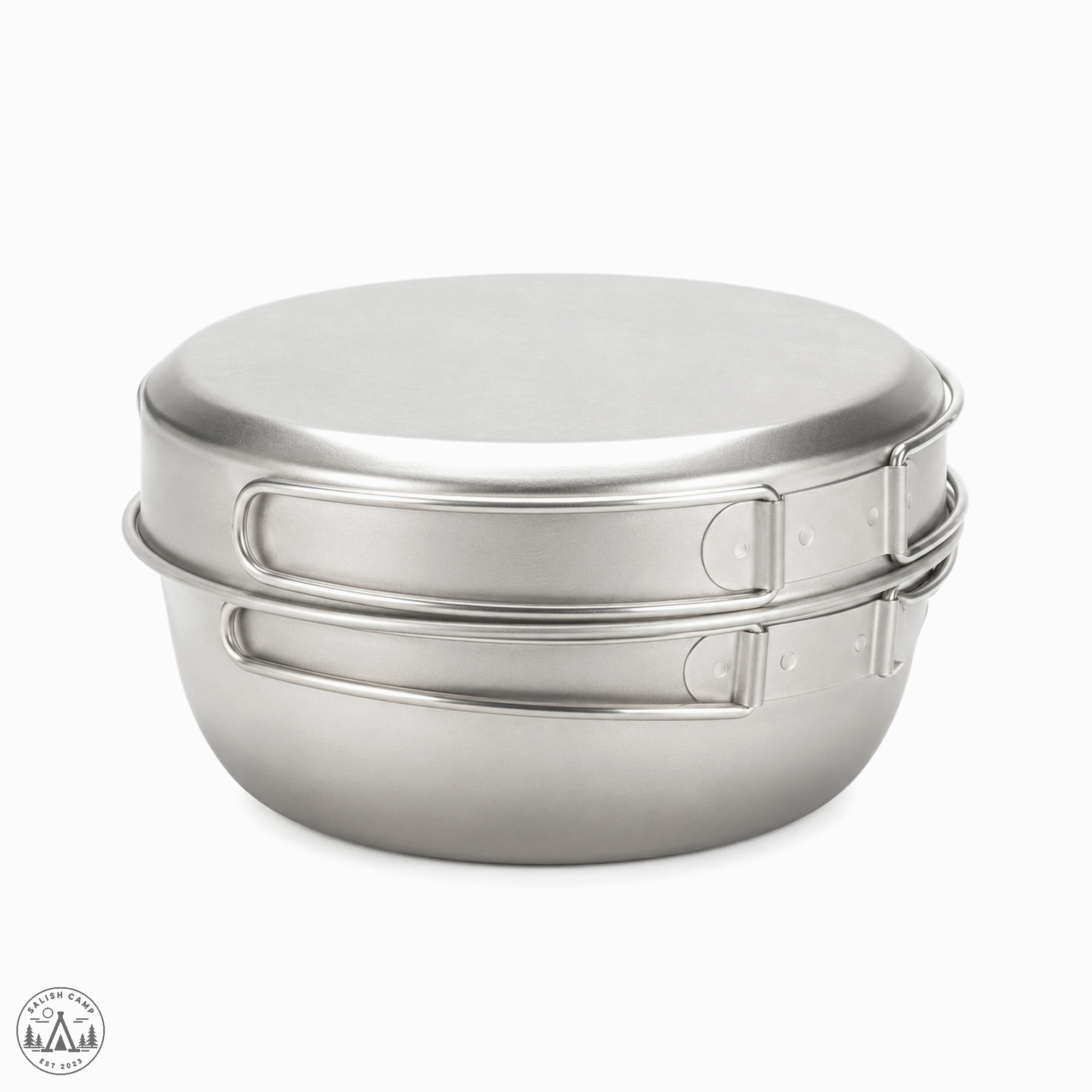
Then there is nesting, which may sound like a storage footnote but is one of the reasons this set works at all.
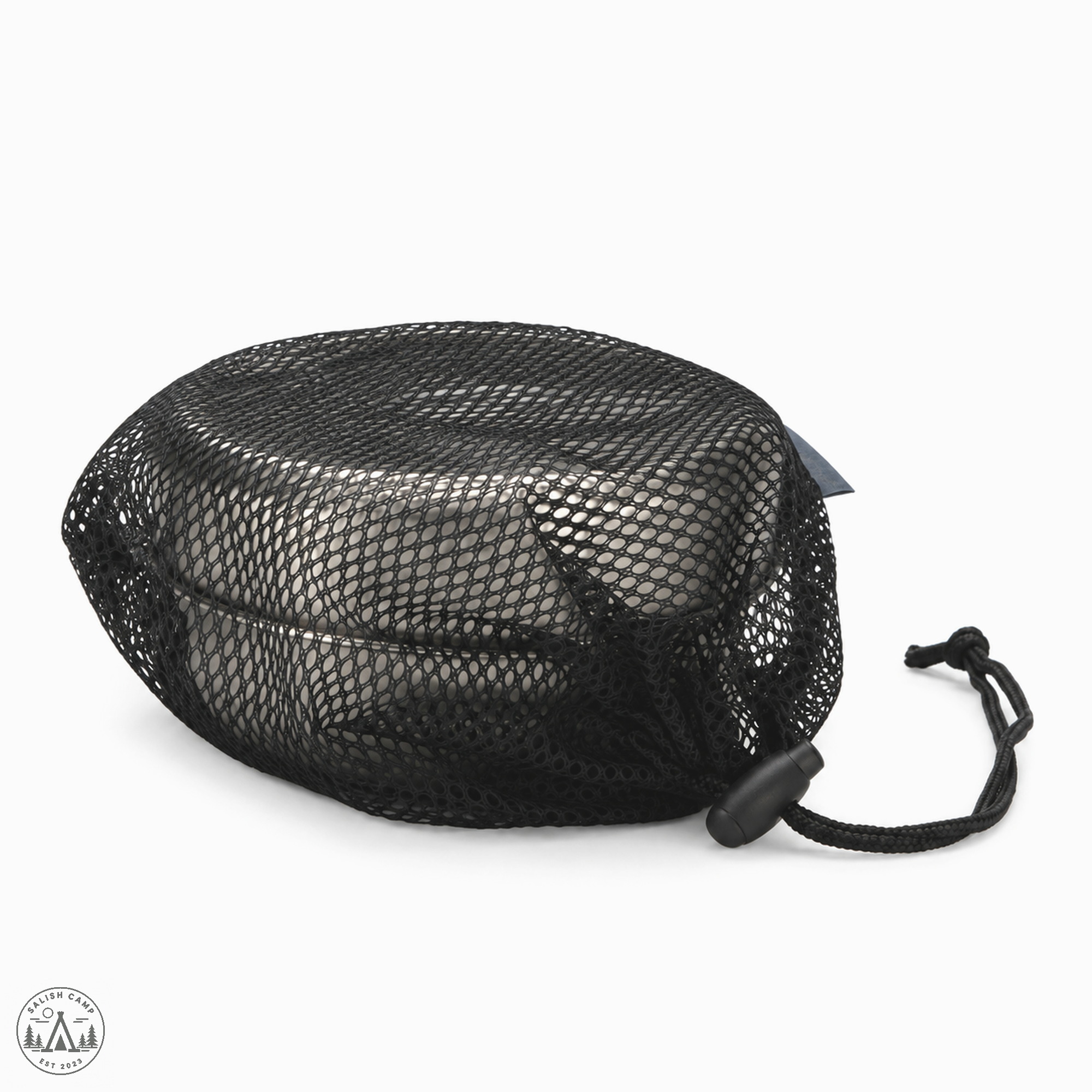
Three loose titanium pieces rattling around my pack would be irritating. The pots and pan instead nest within each other for storage, and the mesh bag keeps the set together. I can treat it as one cook-kit unit when packing rather than finding three separate homes.
Snow Peak does not list a packed size on this PDP, so I wouldn’t claim a particular nested measurement. The dimensions of the individual pieces are official; a final packed dimension isn’t.
The same caution applies to what fits inside the nested cookware. It’s tempting to assume a particular fuel canister or stove will fit because nesting cooksets are often used that way. But that isn’t a specification Snow Peak provides here. I’d rather physically verify my own stove, canister, lighter, and other cooking pieces than promise a packing configuration from dimensions alone.
Snow Peak does say to pair the cookset with its LiteMax Titanium Stove. That makes sense as the manufacturer’s named backcountry setup, but it needs to be read literally: the stove isn’t included.
You can also build a different stove-and-cookware combination. If you’re already using the Snow Peak GigaPower Stove, the cookset decision should still be based on whether these vessels suit the way you cook. STW-001T is cookware, not a bundled stove system.
At 7.1 oz / 200 g, I think the three-piece format becomes compelling because the penalty for having choices remains controlled. I’m getting two pots, the fry pan, and the ability to separate cooking jobs without moving into the sort of cookware I would reserve for car camping.
Still, “for 2 persons” doesn’t mean I would expect this to behave like a home kitchen set scaled down for the woods. It means the format makes sense for two backpackers. You’re still working with compact cookware, compact cooking surfaces, and a backcountry meal plan.
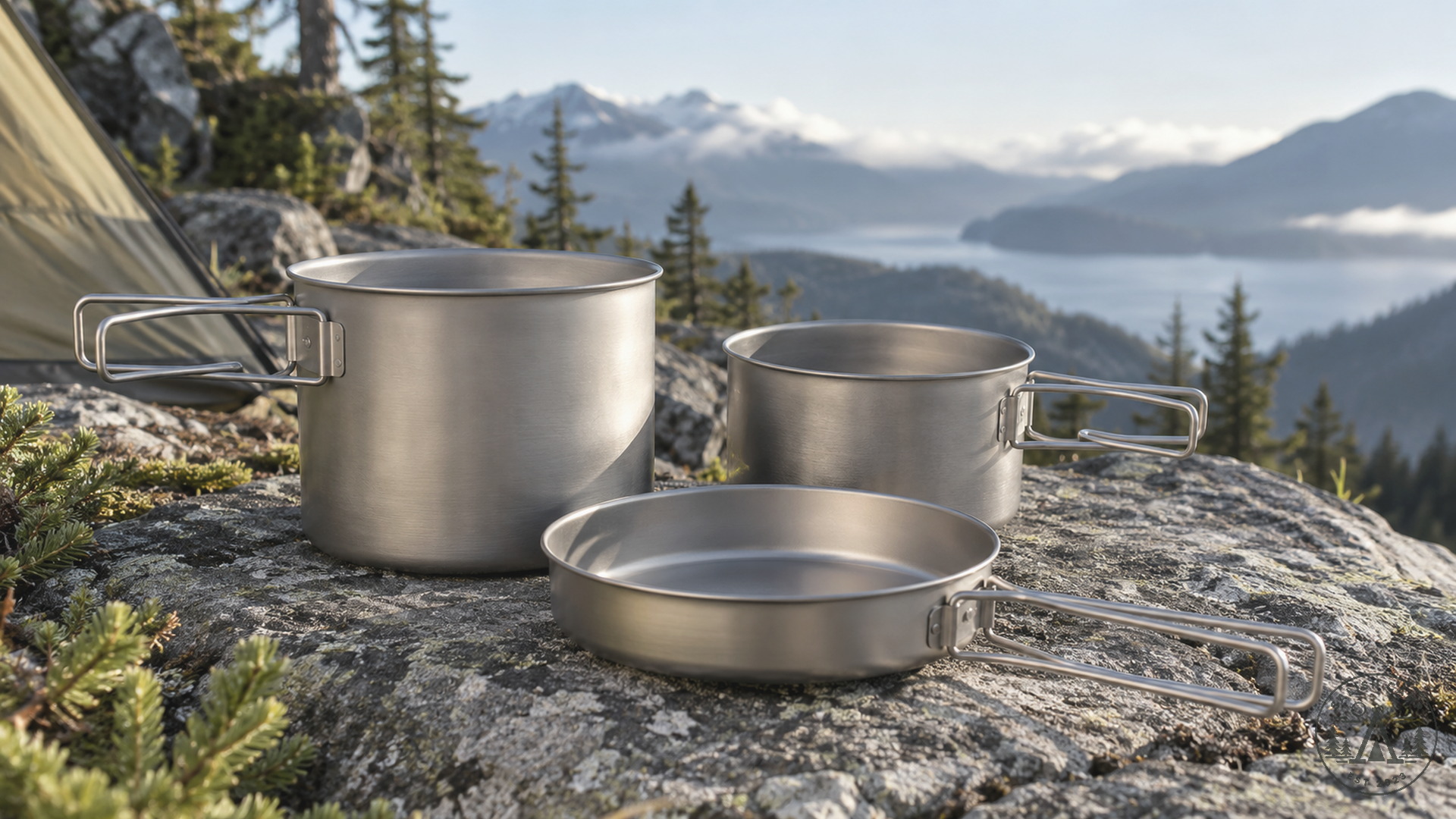
For two people, I’d plan meals around that reality. One pot can handle one part of the meal while the other takes another task. The pan gives me a third format when I want it. Then everything collapses back into the nested set.
That’s the part I find more persuasive than the simple existence of three titanium pieces.
There is also value in what Snow Peak doesn’t claim. The product page doesn’t give individual pot volumes. It doesn’t list wall thickness. It doesn’t specify a lid. It doesn’t provide a packed size or handle length. I’m not going to fill those blanks with assumptions based on photographs or similar Snow Peak cookware.
That matters when comparing cooksets because small differences get exaggerated online. A few missing specifications can quickly turn into very precise-looking claims repeated from one store listing to another. For STW-001T, I would base the purchase on what is actually documented: titanium construction, two pots, one fry pan, nesting storage, foldable handles, mesh bag, the stated dimensions and capacity range, and the 7.1-ounce total weight.
So my decision comes back to how I eat outdoors.
If I’m alone and boiling water, three pieces are difficult to justify. If two of us are splitting meals and I know the pan will come out on night two, the equation changes. At that point I’m not carrying redundant cookware. I’m carrying a small, 7.1-ounce kitchen that gives us more than one way to cook.
That is where the STW-001T makes the most sense to me.
Pros
- Only 7.1 oz / 200 g for two pots and a fry pan.
- Three separate cooking surfaces give two backpackers substantially more flexibility than a one-pot setup.
- Nesting construction and foldable handles keep the individual pieces organized for packing.
- Titanium construction and included mesh bag make it a purpose-built backcountry cookset rather than downsized household cookware.
Cons
- Three pieces are unnecessary for boil-only backpacking. If you don’t use the second pot and pan, their versatility becomes dead weight.
- The PDP leaves several useful details unspecified, including individual pot capacities, packed size, wall thickness, handle length, and whether a lid is included.
- Availability was an issue when checked. Snow Peak’s US page listed the $54.95 STW-001T as sold out on October 4, 2026.
Technical Specifications
| Product | 3 Piece Titanium Cookset |
|---|---|
| SKU | STW-001T |
| Price | $54.95 (snowpeak.com, 2026-10-04, sold out) |
| Weight | 7.1 oz / 200 g |
| Pot 1 | D 5.5 in × H 2.25 in |
| Pot 2 | D 5 in × H 2.2 in |
| Pan | D 5.75 in (height not listed) |
| Capacity | 14–26 oz (not split by piece) |
| Best use | Backpacking, for 2 persons |
| Material | Titanium |
| Included | 2 pots, fry pan, mesh bag |
| Not included | Stove. LiteMax is the named pairing only |
| Not on PDP | Per-pot volume, lid, wall thickness, packed size |
Final Thoughts
The Snow Peak 3 Piece Titanium Cookset STW-001T occupies a useful middle ground. It isn’t the minimalist answer for someone who wants one vessel for boiling water, and it isn’t trying to turn a backpacking campsite into a full kitchen. It’s a 7.1 oz / 200 g two-person set with two pots and a fry pan, and that extra cooking flexibility is the reason to buy it.
For my own Cascade trips, I’d choose it when I’m sharing the cook kit and planning at least one meal that makes the second pot or fry pan genuinely useful. The nesting design means those extra surfaces still travel as a coherent set, and the $54.95 price is easy to understand without adding a stove or other accessories to the equation.
If every ounce in my pack has to justify itself, that’s the test: will I actually use all three pieces? If the answer is yes, STW-001T gives two backpackers a surprisingly complete set of cooking options for its weight. If the answer is no, I’d simplify.