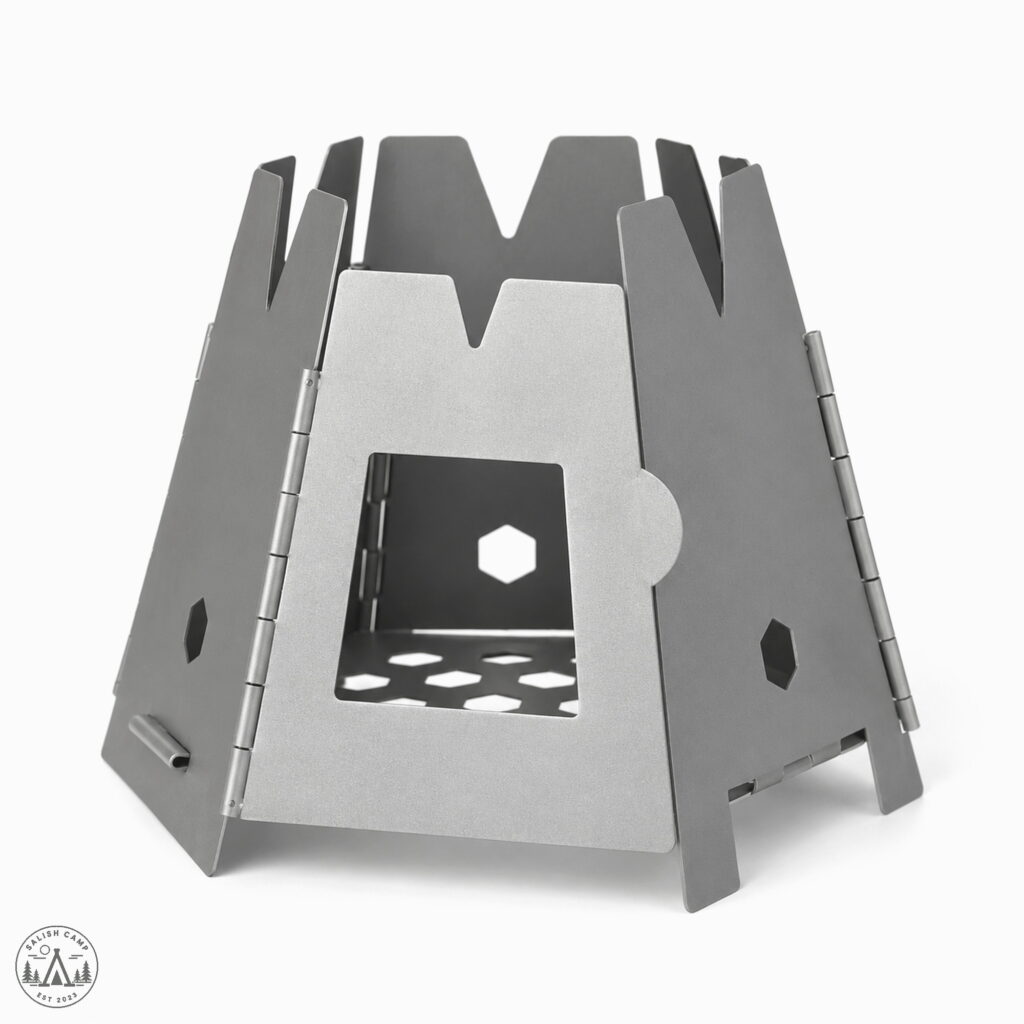
Buy if you want an ultralight, wood-only cookfire for backpacking trips where a 4.1 oz / 116 g stove makes sense, you enjoy tending a small fire, and you like the idea of carrying a titanium stove that folds completely flat. The Vargo Hexagon 2 is especially interesting to me for Pacific Northwest overnights where I can legally burn, conditions are favorable, and dinner is as much about slowing down at camp as getting calories into me.
Skip if you want predictable cooking regardless of weather, expect a stove to work with minimal attention, or regularly travel under fire restrictions. Wet Cascades fuel is still wet Cascades fuel, and the Hexagon 2 doesn't change the fundamental compromises of a wood stove. At $59.95, this Titanium T-337 version is clever niche gear rather than a straightforward replacement for a canister stove.
What Stands Out
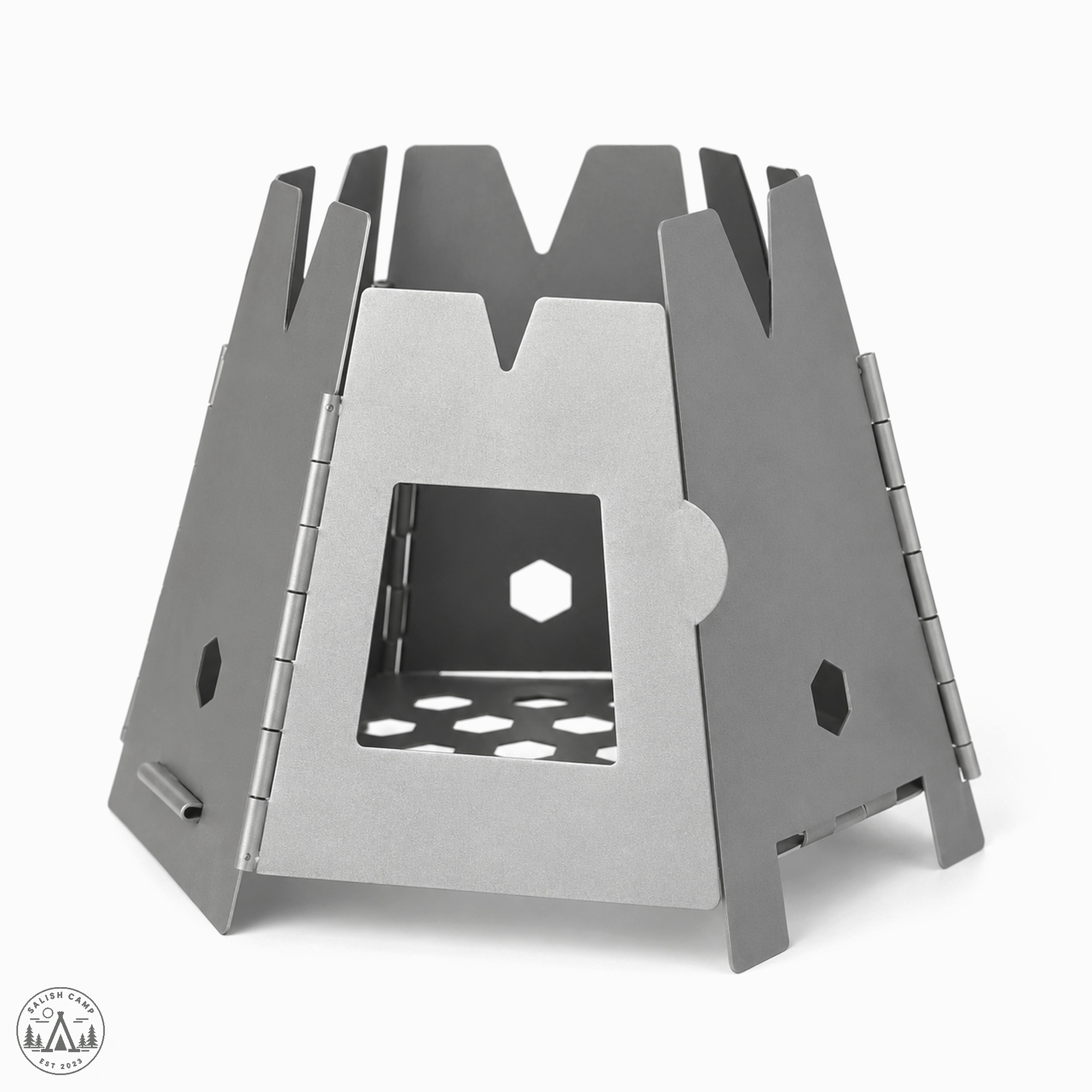
- 4.1 oz / 116 g titanium construction: That's the PDP-listed weight for the Titanium T-337 and the number that matters when I'm comparing it with the rest of an ultralight cook kit.
- One-piece origami-style construction: The hinged panels remain together rather than becoming a collection of separate plates that have to be assembled at camp.
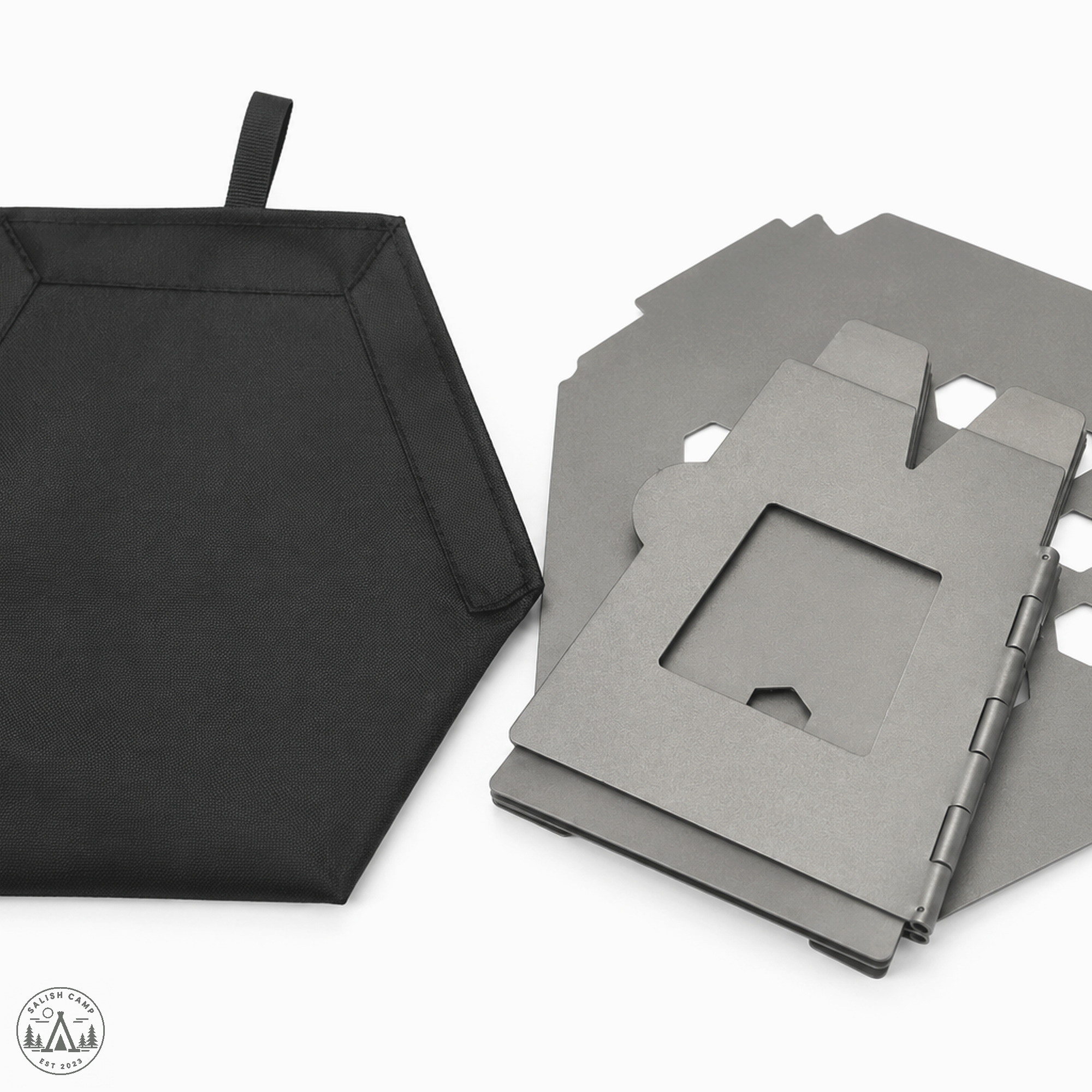
- It folds completely flat: The packed form is arguably as important as the low weight because it can disappear alongside other flat gear instead of consuming a dedicated chunk of pack volume.
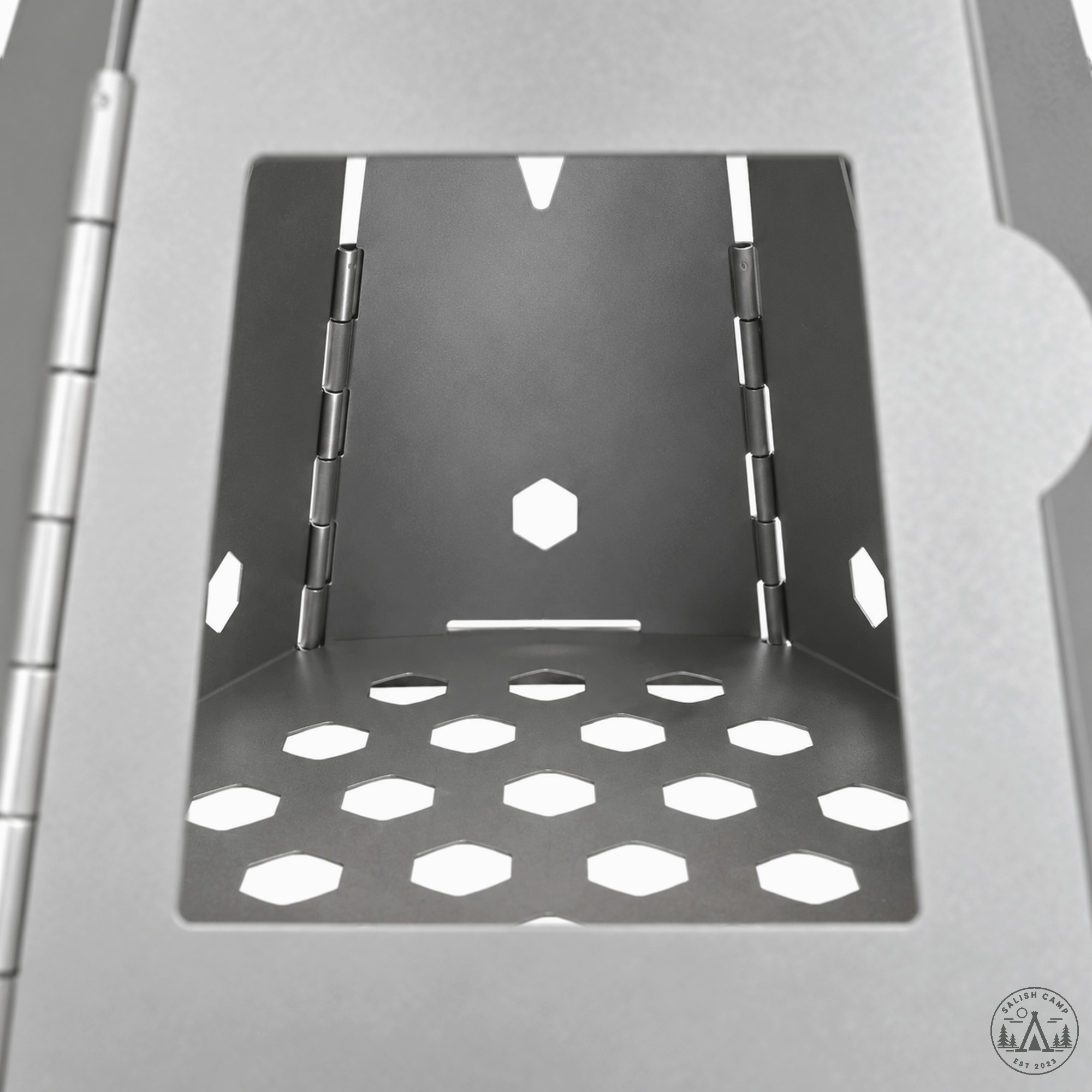
- Fuel-access cutout in the door: The Hexagon 2 update gives me a practical route for feeding small pieces of wood without completely disrupting the stove.
- Three additional side-panel vents: These join the existing bottom vents to improve airflow through the small fire chamber.
- V-shaped upper cutouts: The top edge is shaped to distribute heat around a pot while giving combustion gases somewhere to escape.
- A nylon carry case is included: Useful with a wood stove because the stove that goes into the pack after dinner isn't necessarily the clean stove that came out of it.
In The Field
There are two very different ways I can look at the Vargo Hexagon 2. One is as a stove. The other is as 4.1 ounces of folded titanium that gives me the option of building a controlled little cookfire when conditions cooperate.
The second description makes much more sense to me.
I don't approach a wood stove like this expecting canister-stove convenience. When I've put in miles in the Cascades or Olympics and arrive at a damp camp hungry, the easiest answer is not wandering around looking for appropriately sized dry twigs. A wood stove asks for participation. I have to find fuel, judge how damp it is, get a small fire established, keep feeding it, manage the pot, and pay attention to what the flame is doing.
That's either part of the appeal or the reason not to buy one.
What makes the Hexagon 2 compelling is how little stove I'm carrying in exchange for that capability. The Titanium T-337 weighs 4.1 oz / 116 g, according to Vargo's PDP SPECS and SPECIFICATIONS. That is the product weight that matters here. Shopify product.json lists a generic 5.0 oz / 142 g shipping weight for both Titanium and Stainless variants — I'm using the PDP-printed 4.1 oz / 116 g for Titanium. More important in actual packing, the hinged panels collapse completely flat.
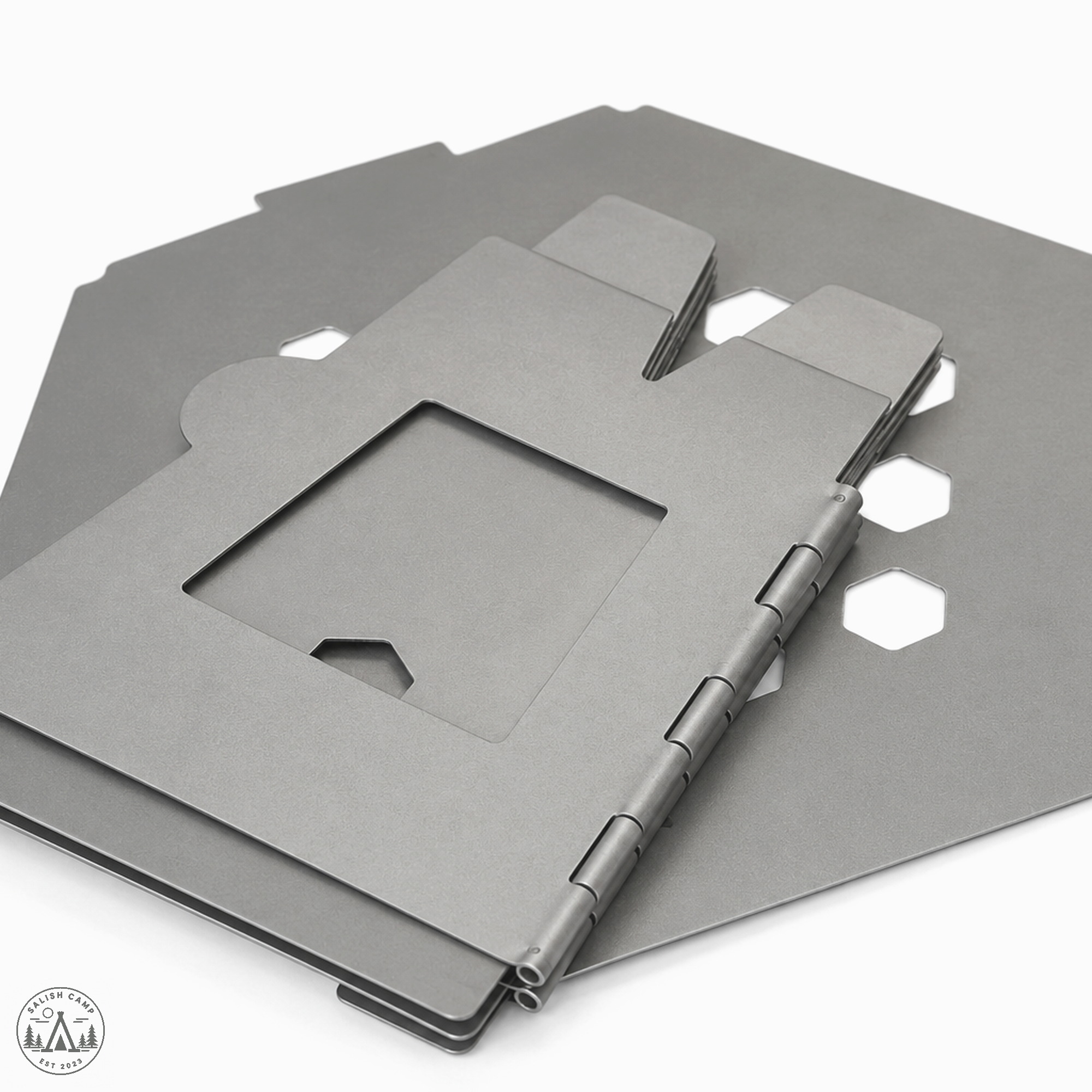
That flat form is excellent backpacking geometry. Cylinders, fuel canisters and rigid cook systems dictate where they live inside a pack. A thin folded stove is easier to slide beside another piece of gear or into an otherwise awkward bit of space. Vargo includes a nylon carry case, which is something I'd use rather than consider optional nicety. Once titanium panels have spent dinner sitting around burning sticks, I don't want their residue rubbing directly against the rest of my kit.
Setup is also more interesting than the usual collection of interlocking stove panels. The Hexagon design dates back to 2009, and its defining idea is the one-piece, hinged, origami-style construction. I unfold the panels and form the conical stove rather than sorting loose walls and working out which tab belongs in which slot.
For a novice, that's worth understanding: ultralight doesn't always mean fiddly. The Hexagon 2 is unusual because its low packed bulk comes from folding the structure rather than breaking it down into a pile of independent components.
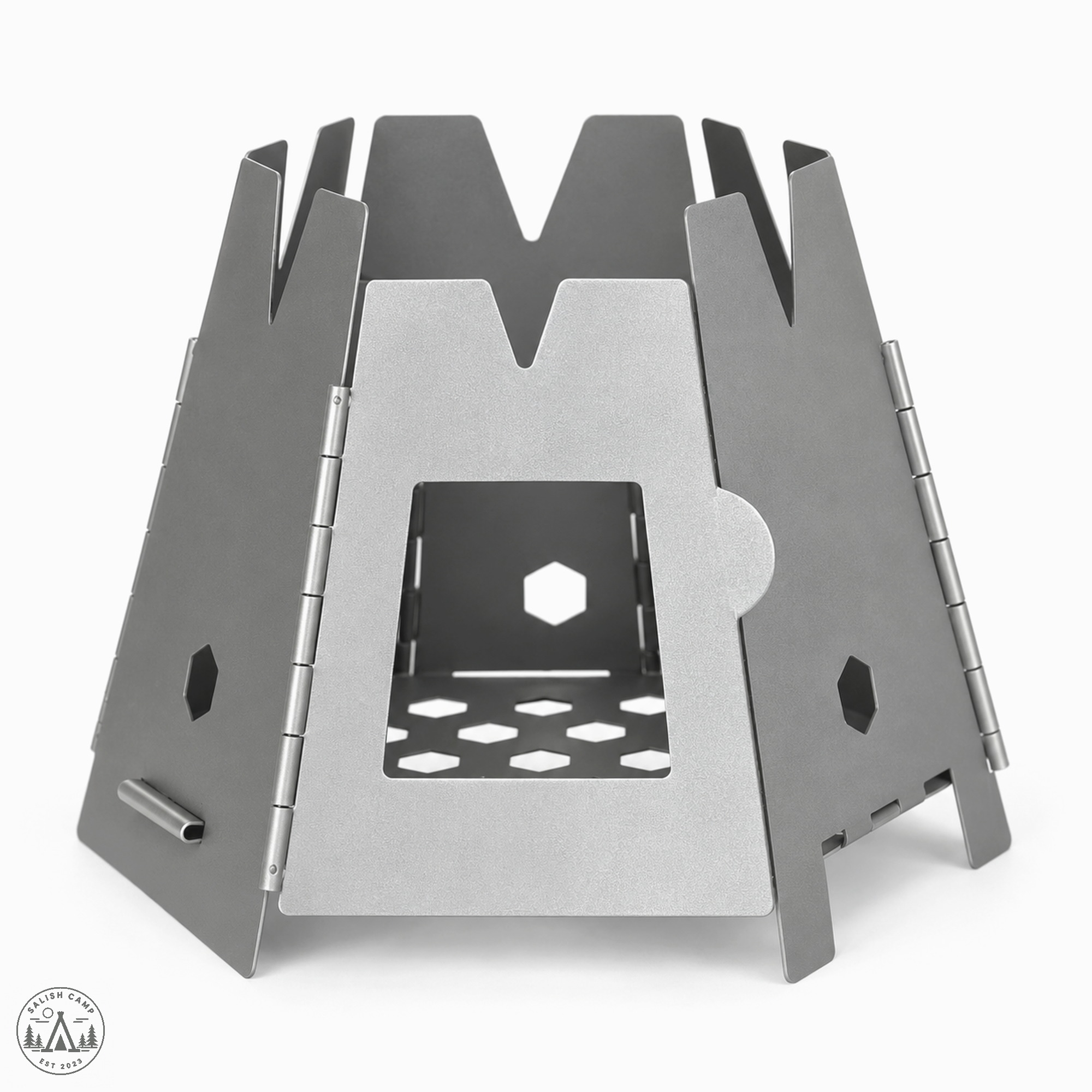
Once it's standing, the stove has a 5-inch / 127 mm base diameter, narrowing to a 3-inch / 76 mm top diameter, with a 4-inch / 101 mm height. Those labeled SPECIFICATIONS are the dimensions I'd use. Vargo's separate SPECS line prints the metric triplet as (76 × 127 × 101 mm) beside the 5-inch base × 3-inch top × 4-inch height; the labeled specification block makes clear that the intended mapping is 127 mm base, 76 mm top and 101 mm height.
That size also sets expectations. This isn't a fire pit shrunk for backpacking. It's a compact combustion chamber, so fuel preparation and attention matter. I want small material that physically works with the stove and can keep the fire supplied without repeatedly smothering it.
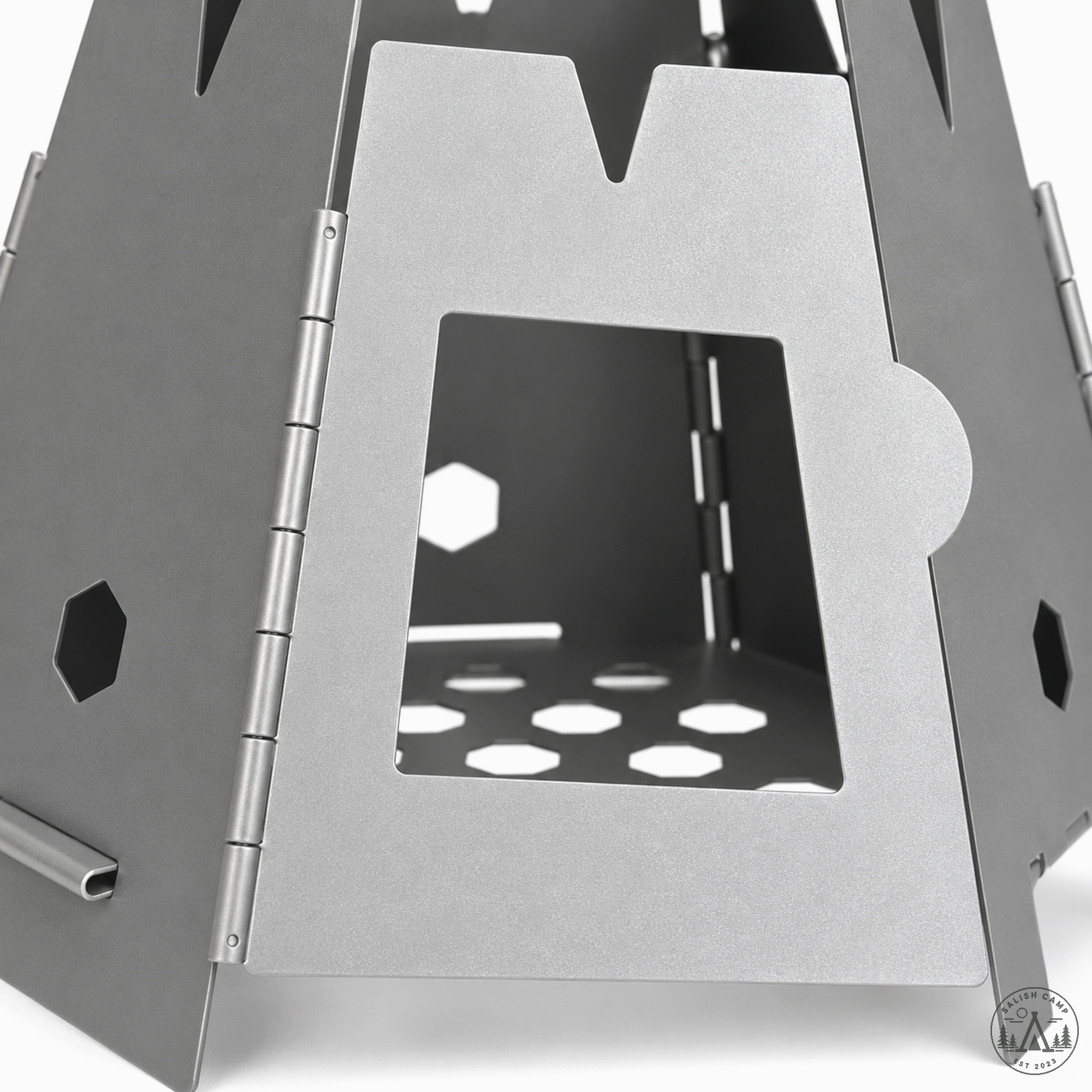
The Hexagon 2's new fuel-access cutout in the door is therefore more consequential than it sounds. With a pot sitting above the fire, I don't want my normal refueling method to require dismantling the cooking arrangement. Being able to introduce fuel through the front is exactly the kind of incremental refinement I appreciate on a stove whose underlying concept is already established.
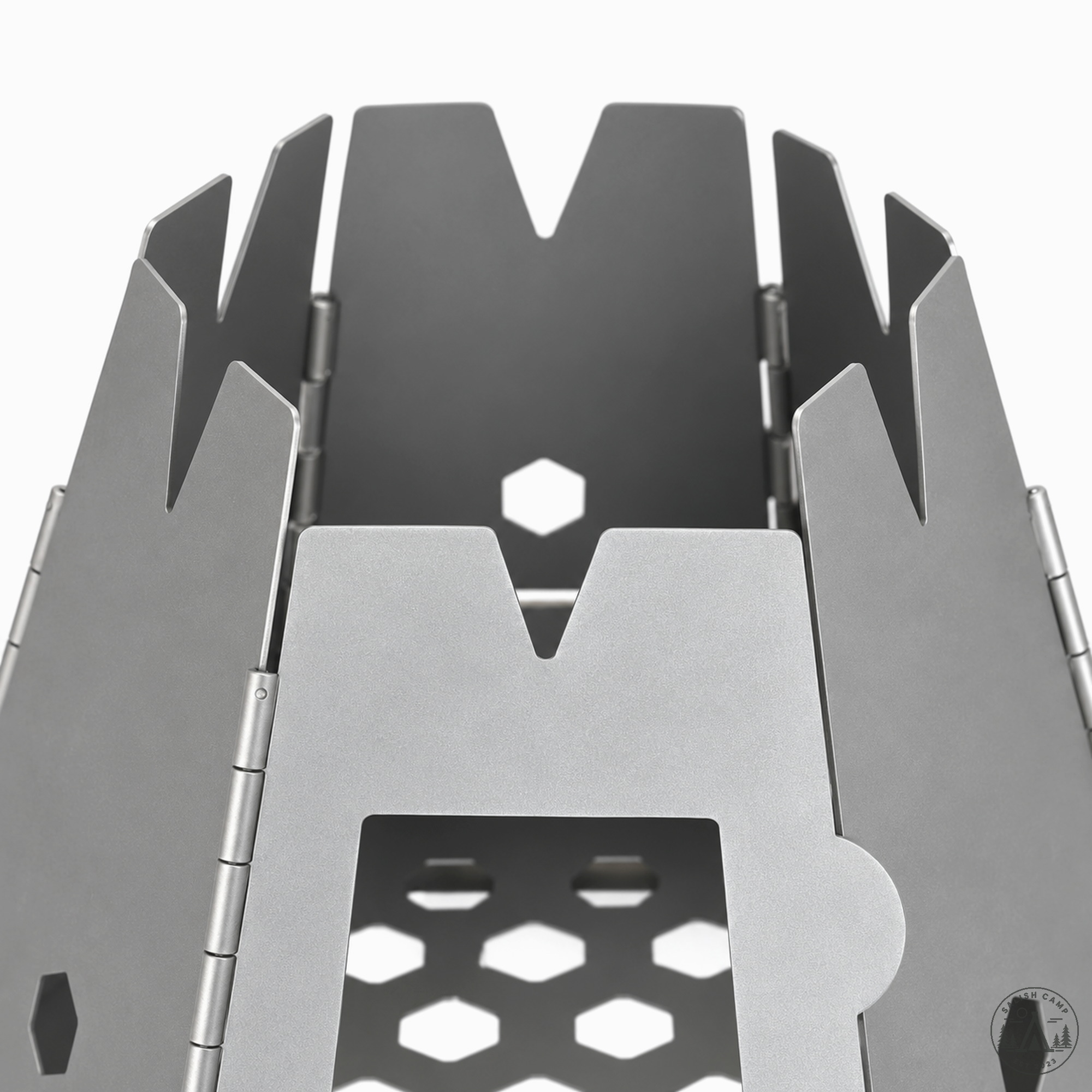
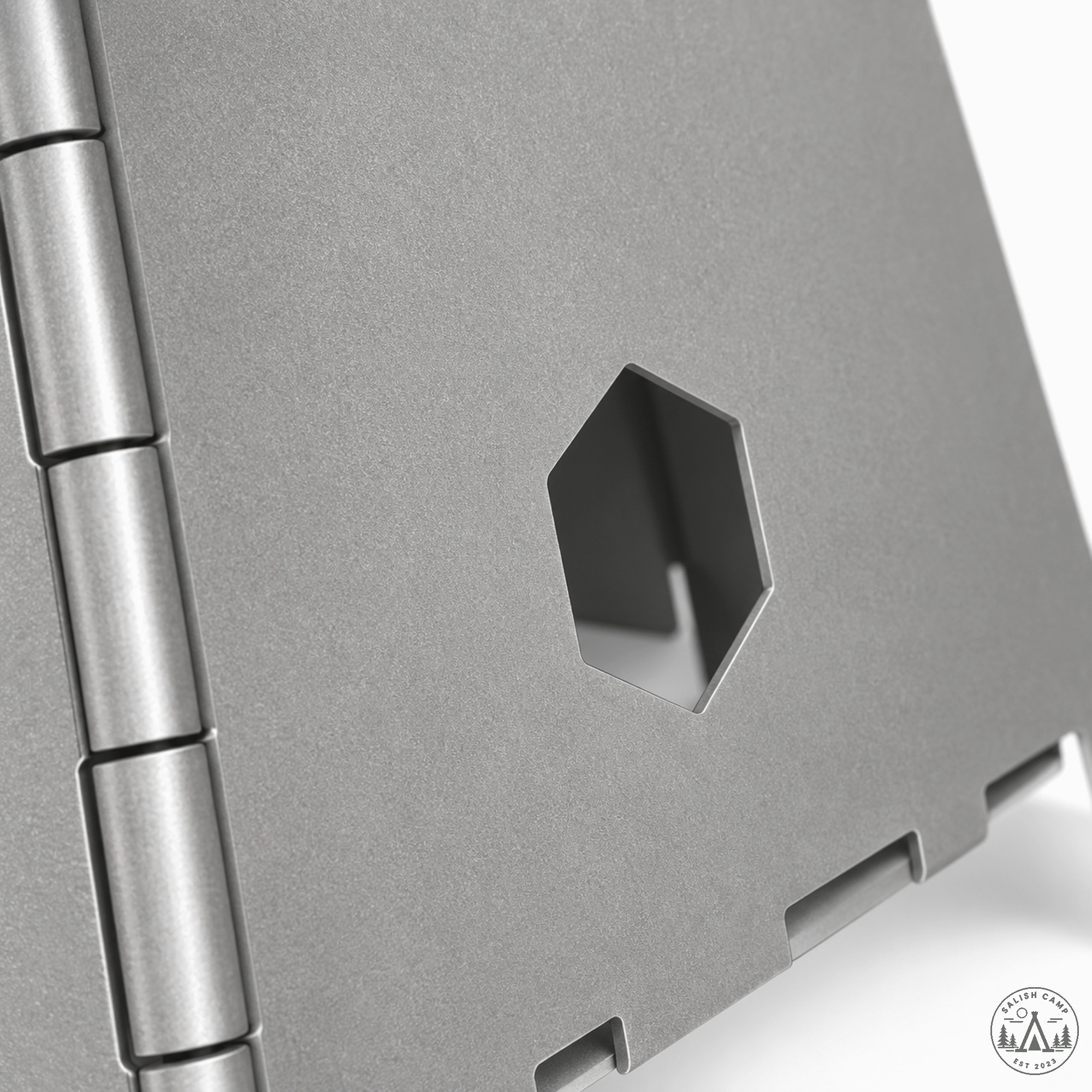
Air management is similarly simple and physical. Vargo places vents at the bottom and V-shaped cutouts around the top. The Hexagon 2 also adds three additional side-panel vents, which Vargo says improve airflow, reduce smoke, and enhance flame performance.
There's no reason to turn that into more than it is. A tiny wood fire needs oxygen. The lower and side openings provide routes for incoming air, while the upper openings allow heat and combustion gases to move around the pot. What happens in practice still depends heavily on the fuel I put inside.
That matters enormously in western Washington.
On a dry trip, finding small combustible material can be straightforward. After sustained rain or during a wet shoulder-season outing, the equation changes. The stove doesn't magically turn saturated forest debris into cooperative cooking fuel. I can select better material, split or expose drier interiors where appropriate, and pay attention to where I collect fuel, but I'm still operating a wood fire in a wet environment.
For someone buying their first wood stove, that's probably the biggest conceptual distinction from a canister stove: the fuel is part of the skill set.
Wind and changing conditions add another variable. I don't treat the Hexagon 2 as an appliance where ignition means the cooking problem has been solved. I keep watching the fire. Small fuel can burn through quickly, and adding too much at once can change combustion just as easily as letting the fire run down. There is a rhythm to maintaining a small wood stove, and learning that rhythm is part of owning one.
I also wouldn't build a trip plan around the assumption that because the stove weighs only 4.1 ounces, it is automatically the ultralight answer. Stove weight is only one line in the system. The more useful question is whether its operating requirements match the trip.
If I'm doing an overnight with appropriate conditions, legal wood fires, available fuel, and enough time at camp to enjoy the process, the Hexagon 2 becomes interesting. I don't need to dedicate pack volume to a fuel canister for the stove itself, and the folded titanium body adds very little weight.
If I want to arrive, boil water with minimal fuss, eat and crawl into my shelter, wood fire management may feel like work rather than pleasure.
Fire restrictions are an even simpler decision point. I already check the applicable rules before relying on any wood-burning setup. The Hexagon's compact walls don't exempt it from restrictions that prohibit the type of fire I'm intending to make. If the trip or season doesn't permit its use, its 4.1-ounce weight becomes 4.1 ounces of gear I can't cook with.
That's why I see this as specialized equipment rather than a universal ultralight recommendation.
Price reinforces that conclusion. The Titanium T-337 is $59.95. There is also a Stainless Steel T-340 at $39.95 and 7.4 oz / 210 g, although that version was listed Out of Stock when captured on October 6, 2026. For this review, the titanium model is the interesting one because 4.1 ounces and fold-flat packing are central to the proposition.
I'm paying more to preserve that unusually low weight.
And that gets to where the Vargo works for me. I wouldn't bring it because it's the fastest or least complicated way to make dinner. Vargo doesn't publish a boil time on this product page, and I don't think an invented stopwatch number would tell the important part of the story anyway.
I'd bring it because I want a real little wood cookfire, I'm traveling somewhere I can responsibly and legally use one, and I want the hardware required to make that happen to have almost no impact on my pack.
In that role, the Hexagon 2 is a clever piece of titanium.
The one-piece hinges solve an annoying packing and assembly problem. The conical body creates a compact fire chamber. The fuel-access cutout addresses the practical need to keep feeding that chamber. The additional side vents refine airflow. Then the entire thing folds flat and goes back into its case.
That's a coherent design.
But it remains a wood stove. Rain doesn't care how clever the hinges are. Fire restrictions don't care that the stove is titanium. Hunger at the end of a long day doesn't make damp sticks easier to light. Those realities are exactly why I wouldn't recommend the Hexagon 2 to someone who simply asks, "What's the easiest ultralight stove?"
It isn't.
For someone who instead asks, "What's a very light, packable way to cook over wood when conditions are right?" the answer becomes much more interesting.
Pros
- Extremely light at 4.1 oz / 116 g for the Titanium T-337
- One-piece hinged construction folds completely flat
- Fuel-access cutout makes tending the small fire more practical
- Additional side vents complement the bottom vents and upper V-shaped cutouts
Cons
- Wood-only cooking demands more attention and fuel management than a convenience-oriented stove
- Wet Pacific Northwest fuel can make the experience considerably more difficult
- Fire restrictions can remove the stove from consideration entirely on some trips
Technical Specifications
| Specification | Details |
|---|---|
| Product | Vargo Hexagon 2 Wood Stove |
| Config in photos / primary | Titanium, SKU T-337 |
| Price (primary) | $59.95 USD (vargooutdoors.com, 2026-10-06, In Stock) |
| Weight (primary) | 4.1 oz / 116 g (PDP SPECS + SPECIFICATIONS) |
| Stainless context | T-340; $39.95; 7.4 oz / 210 g; Out of Stock on capture |
| Height | 4" (101 mm) |
| Base diameter | 5" (127 mm) |
| Top diameter | 3" (76 mm) |
| Design | One-piece origami-style conical wood stove; folds flat; hinged |
| Hexagon 2 updates | Fuel-access cutout in door; three additional side-panel vents |
| Airflow / heat | Bottom air vents; top V-shaped cutouts for heat around pot |
| Includes | Nylon carry case |
| Patent | 29/953,686 |
| Shipping JSON note (once only) | product.json lists 5.0 oz / 142 g for both variants — primary is PDP 4.1 oz / 116 g for Titanium |
Final Thoughts
The Vargo Hexagon 2 Titanium lands in a narrow but appealing corner of backpacking gear. At 4.1 oz / 116 g, it gives me a genuine wood-burning cookfire in a structure that collapses almost completely out of the packing equation. The hinged origami construction is the part I like most: instead of making ultralight synonymous with loose pieces and tedious assembly, Vargo keeps the stove together and lets the entire body fold flat.
The Hexagon 2 updates are sensible rather than dramatic. The fuel-access cutout addresses the everyday problem of feeding a compact fire beneath a pot, while the three additional side vents refine airflow. They don't change the fundamental character of the stove, and that's probably the point.
This still isn't what I'd choose when cooking certainty is the priority. Pacific Northwest moisture can make fuel gathering harder, a small wood fire needs tending, and restrictions can determine whether I can use it at all. Those aren't flaws unique to Vargo; they're operating realities that directly affect whether this particular stove belongs in my pack.
At $59.95, I therefore see the Titanium T-337 as enthusiast gear. It's for the backpacker who specifically wants the process of a tiny wood cookfire and appreciates how elegantly the hardware disappears afterward.
When that's the trip I have in mind, the Hexagon 2 makes sense. When I simply want hot water with the least possible involvement after a long day of hiking, I'd choose a different type of stove.