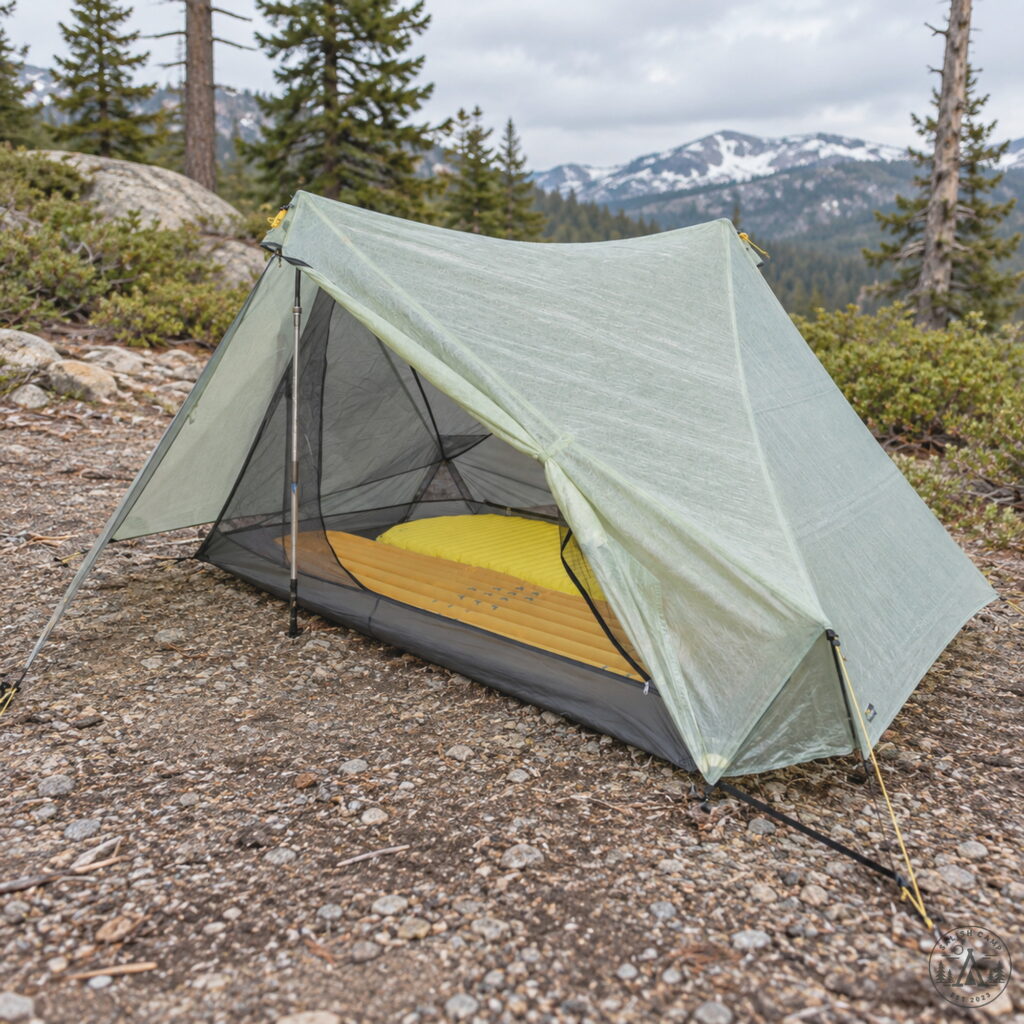
Buy if you already backpack with trekking poles and want a genuinely spacious two-person shelter without carrying the weight of a conventional double-wall tent. The Tarptent StratoSpire 2 Li with the Wide Mesh (2+) interior (SKU 220.41) is $649.00 and weighs 33.55 oz / 951 g Typical, including stakes, bags, struts, and apex guylines, or 29.7 oz / 842 g at minimum. For that you get a Dyneema Composite Fabric fly, two independent doors, substantial vestibule storage, and a storm-oriented pitch for longer trips through the Cascades and Olympics.
Skip if you prefer a freestanding tent you can move around camp after setup, regularly camp on hard surfaces where staking is difficult, or want a simple shelter that takes little practice. The StratoSpire’s six-stake hexagonal pitch, separate trekking poles, and relatively large footprint demand more attention than its packed weight suggests.
What Stands Out
- 33.55 oz / 951 g Typical for the Wide Mesh configuration. That buys a DCF fly, double-wall construction, and two-person interior space without moving into the weight class of many traditional backpacking tents.
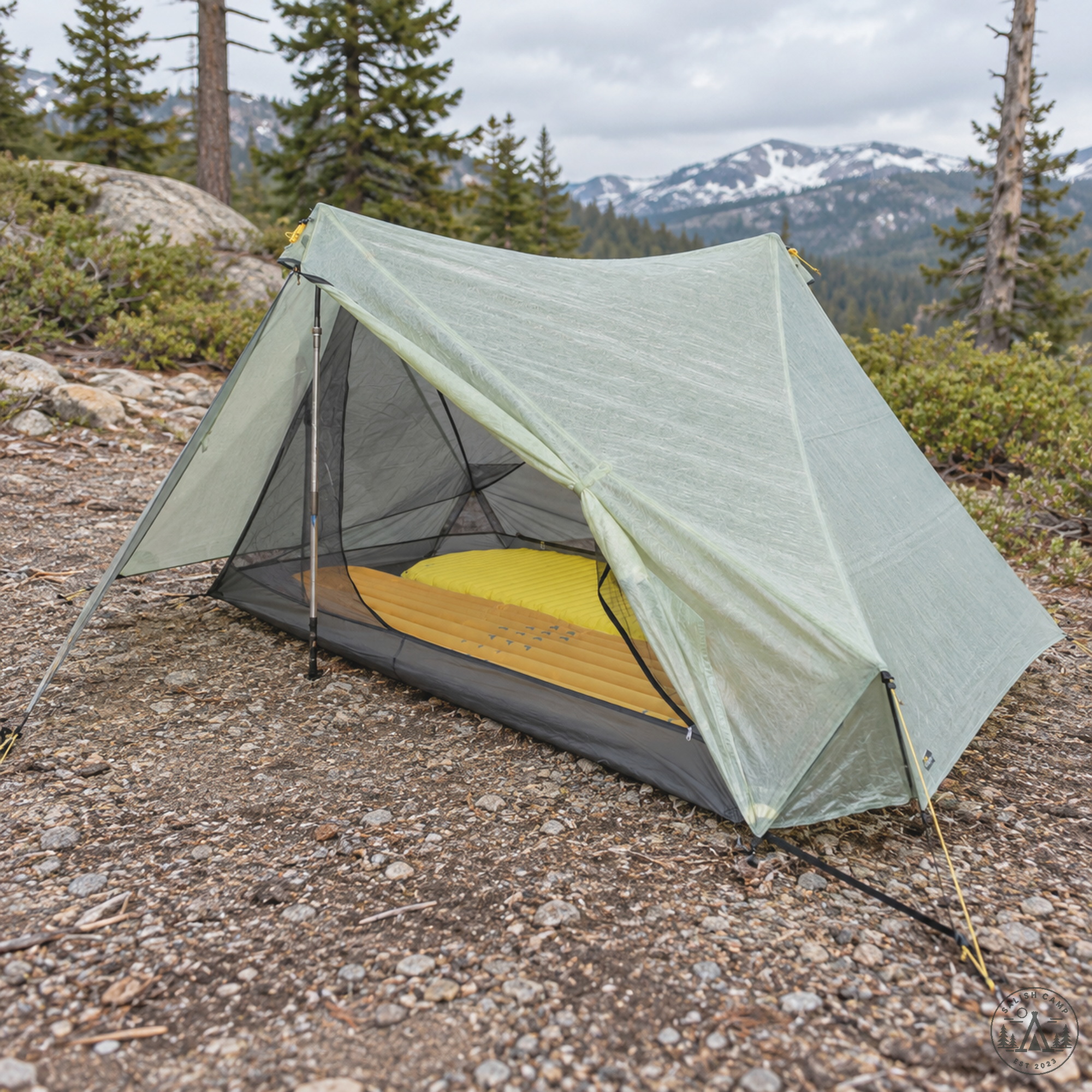
- Offset ridgeline and PitchLoc corners. Four carbon fiber struts support the tent’s distinctive ends, adding usable space near the perimeter and creating the tensioned shape that sets this shelter apart from a conventional A-frame.
- Two large, independent vestibules. Each gives 12.1 sq ft of covered space, so two backpackers get separate entrances and room for wet footwear and packs.
- Wide Mesh (2+) interior. The 52-inch-wide floor is built for two wide sleeping pads, with 86 inches of interior length and 44 inches of interior height.
- Fly-first, double-wall construction. The fly can go up before the mesh interior, which protects the sleeping compartment during a rainy setup. The interior can also be pitched on its own when conditions allow.
- Adjustable weather protection and ventilation. The fly can sit low against wind-driven rain or be raised for airflow. Rollback vestibules, adjustable high and low vents, and peel-back corners give you several ways to manage condensation.
- Premium hardware and factory-taped DCF. YKK #5 Aquaguard zippers, magnetic door ties, reflective UHMWPE-core guylines, DAC stakes, and large reinforcement radials round out the shelter.
In The Field
When I’m choosing a two-person shelter for the Pacific Northwest, I care about more than the number on the scale. A tent can be exceptionally light and still be frustrating when two people reach a wet campsite, pull out soaked packs, and try to get organized without dragging water into their sleeping bags. That’s where the StratoSpire 2 Li makes sense to me. The Wide Mesh version is for backpackers who want the weight advantage of DCF but aren’t ready to give up the practical separation of a double-wall shelter. With two doors and two big vestibules, neither person has to crawl over the other to get outside.
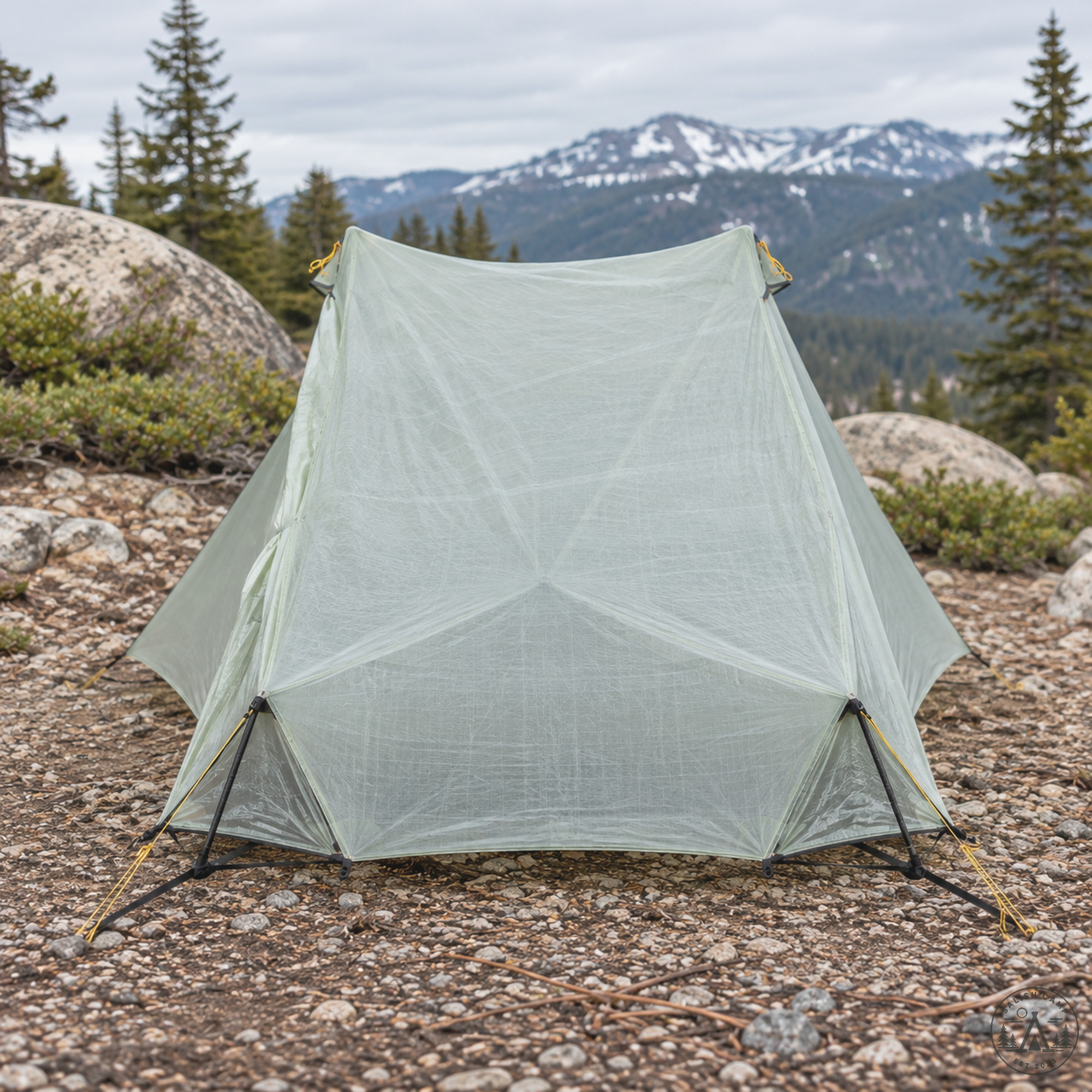
The StratoSpire 2 Li is not freestanding. It depends on stakes, fabric tension, and two trekking poles or substitute poles. For someone coming from a dome tent, that matters. With a freestanding tent, I can assemble the poles, lift the shelter, and reposition it before staking. With the StratoSpire, the stakes set the geometry, so site selection has to be deliberate. The fly uses a six-stake pitch, and the trekking poles support an offset ridgeline rather than a symmetrical centerline. The poles can go tip-up or handle-up with optional adapters, and you can angle them to widen the doorways.
I’d practice the full setup at home several times before taking this tent into the Olympics on a wet shoulder-season weekend. The learning curve isn’t about complexity. It’s about understanding how each stake position affects the rest of the shelter. If one corner is badly placed, pulling harder on another guyline won’t always produce the balanced pitch you want. The PitchLoc ends add another variable, but they’re also part of the design’s advantage, keeping interior volume usable without long traditional end panels.
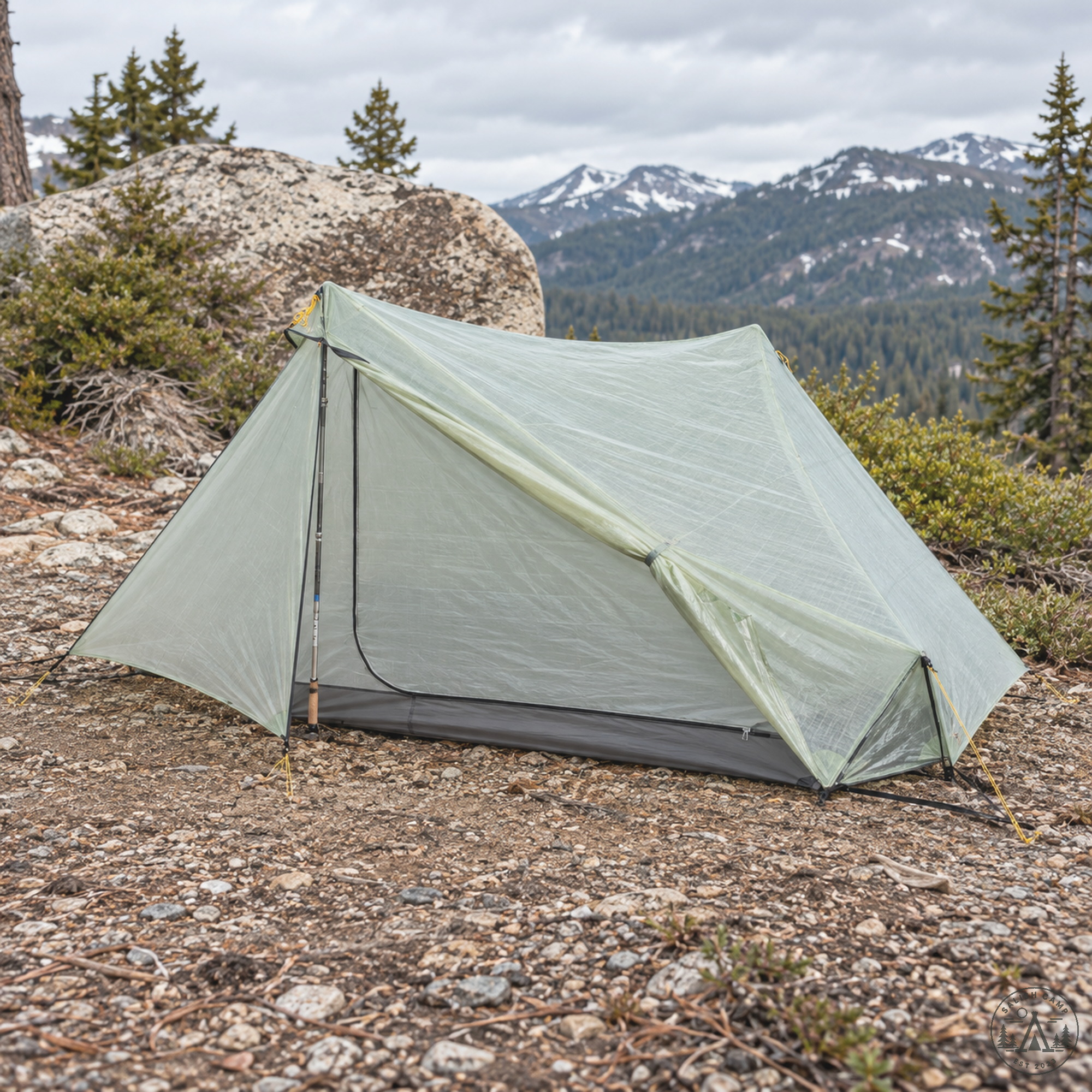
One of my biggest concerns with any backpacking tent is setting up in continuous rain. On an exposed Olympic Peninsula campsite, I don’t want to spread a mesh inner across wet ground and then spend several minutes getting a fly over it. The fly-first design addresses that directly: the outer shelter goes up before the interior is exposed. It doesn’t make the process effortless. The fly still needs a correctly tensioned pitch, and the interior still has to be clipped in without dragging it through mud. Breaking camp is easier too, since I can handle a wet fly and the inner separately. The fly is factory seam taped, so there’s no seam-sealing project before the first trip.
A two-person tent should comfortably hold two real sleeping systems, not just two narrow pads arranged for a product photo. The Wide Mesh interior measures 52 by 86 inches with 44 inches of height, and Tarptent says it fits two wide pads up to 26 inches each (one store tag says 25 inches, so I’d measure my actual pads). Combined with separate doors, that width means two people can sleep side by side without either crossing the other’s space to get out. The 86-inch length suits taller backpackers, too; Tarptent recommends the tent for people up to 6 feet 4 inches. Interior pockets and overhead clips seem like small details until I’m hunting for a headlamp in the dark. The floor is 15D coated nylon 6.6, not Dyneema; the DCF is in the fly.
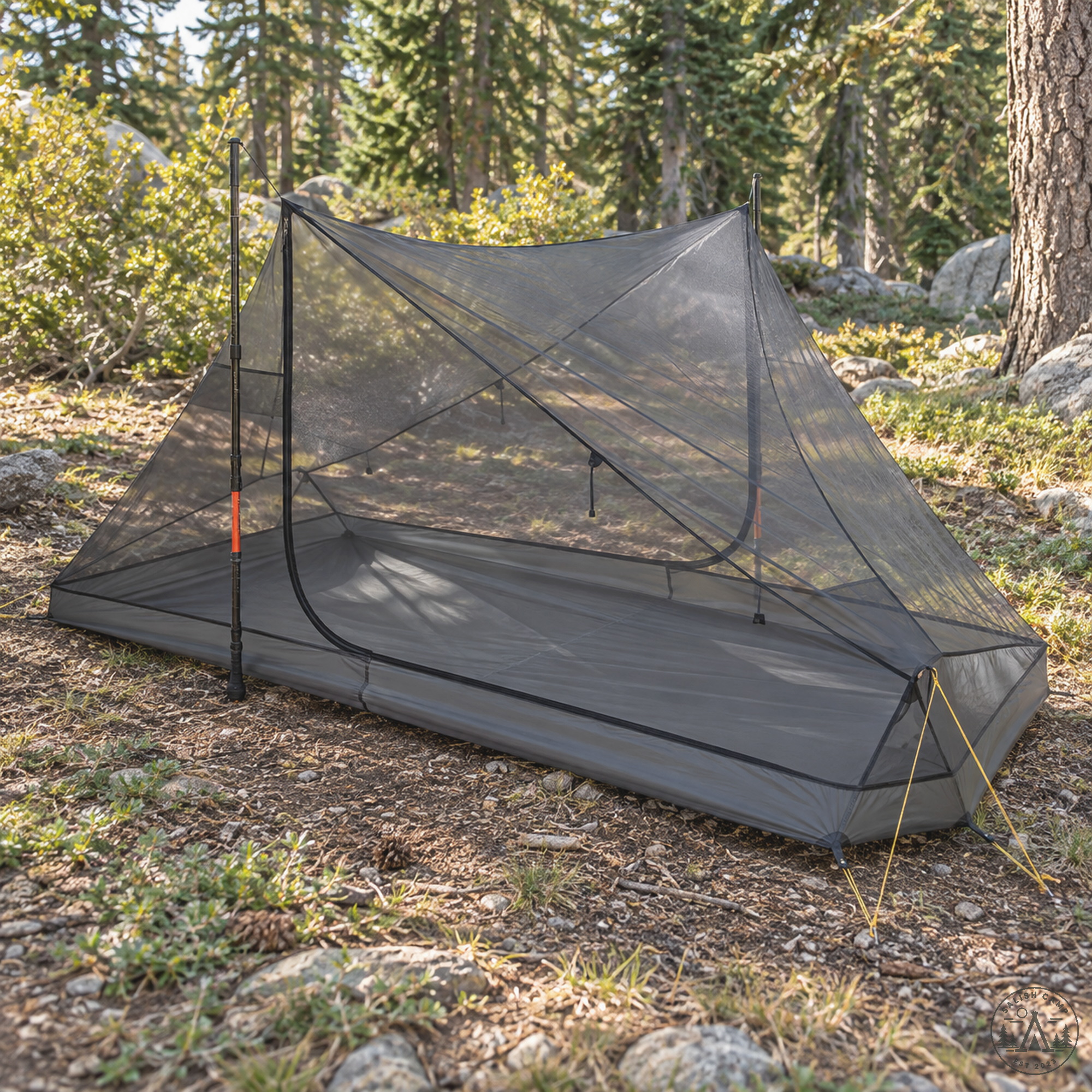
The vestibules are among the strongest reasons I’d consider this shelter. Each side gives 12.1 square feet of covered space, so there’s a place for boots, packs, and gear that doesn’t belong beside a sleeping bag. After a rainy day in the Cascades, I’d give one vestibule to wet footwear and packs and keep the other clear for access. The doors roll completely back, and integrated buckles let you flatten the vestibules when the site is tight. That helps, because the hexagonal layout can still be awkward on narrow benches, rooty ground, or small established tent pads. As for cooking, I’d never treat a vestibule as an automatically safe stove enclosure. Combustion gases, flames, and hot cookware demand care and ventilation, and I cook outside whenever conditions allow.
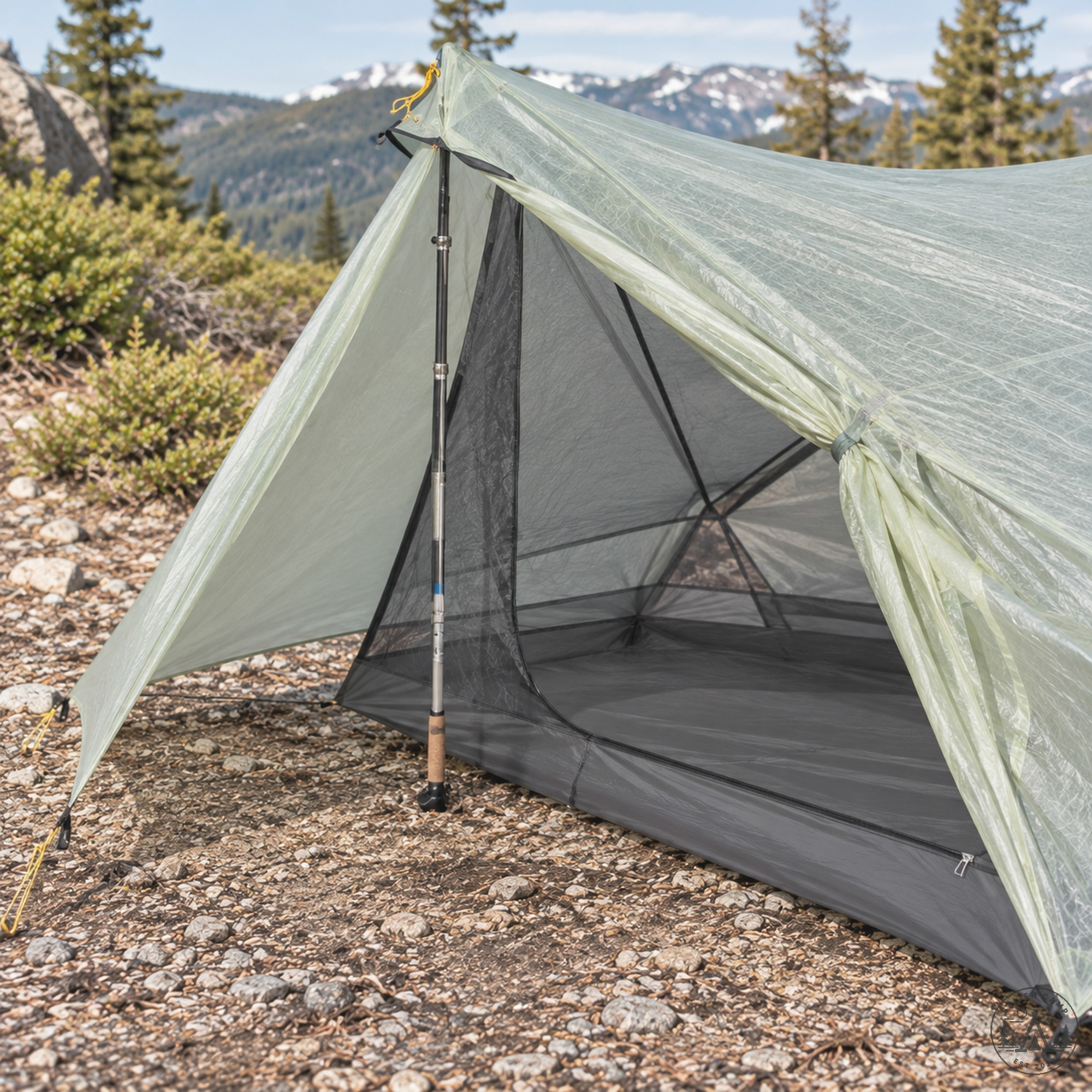
Wind is where the unusual geometry gets interesting. Tarptent credits the hexagonal shape, small panel sizes, and balanced tension lines for its wind performance, and the PitchLoc corners support the ends without a pyramid’s geometry. I wouldn’t assign it a wind rating, and I wouldn’t assume Tarptent’s four-season listing makes it a mountaineering shelter. But on an exposed site above the trees, the fly can be pitched to the ground to cut wind-driven rain and splash, and pre-attached apex guylines plus perimeter tie-outs give extra anchoring. I’d still focus first on secure stakes, balanced panel tension, and the most protected spot available. A poorly anchored ultralight tent is still a poorly anchored tent. The steep walls shed snow, but I’d keep an eye on accumulation.
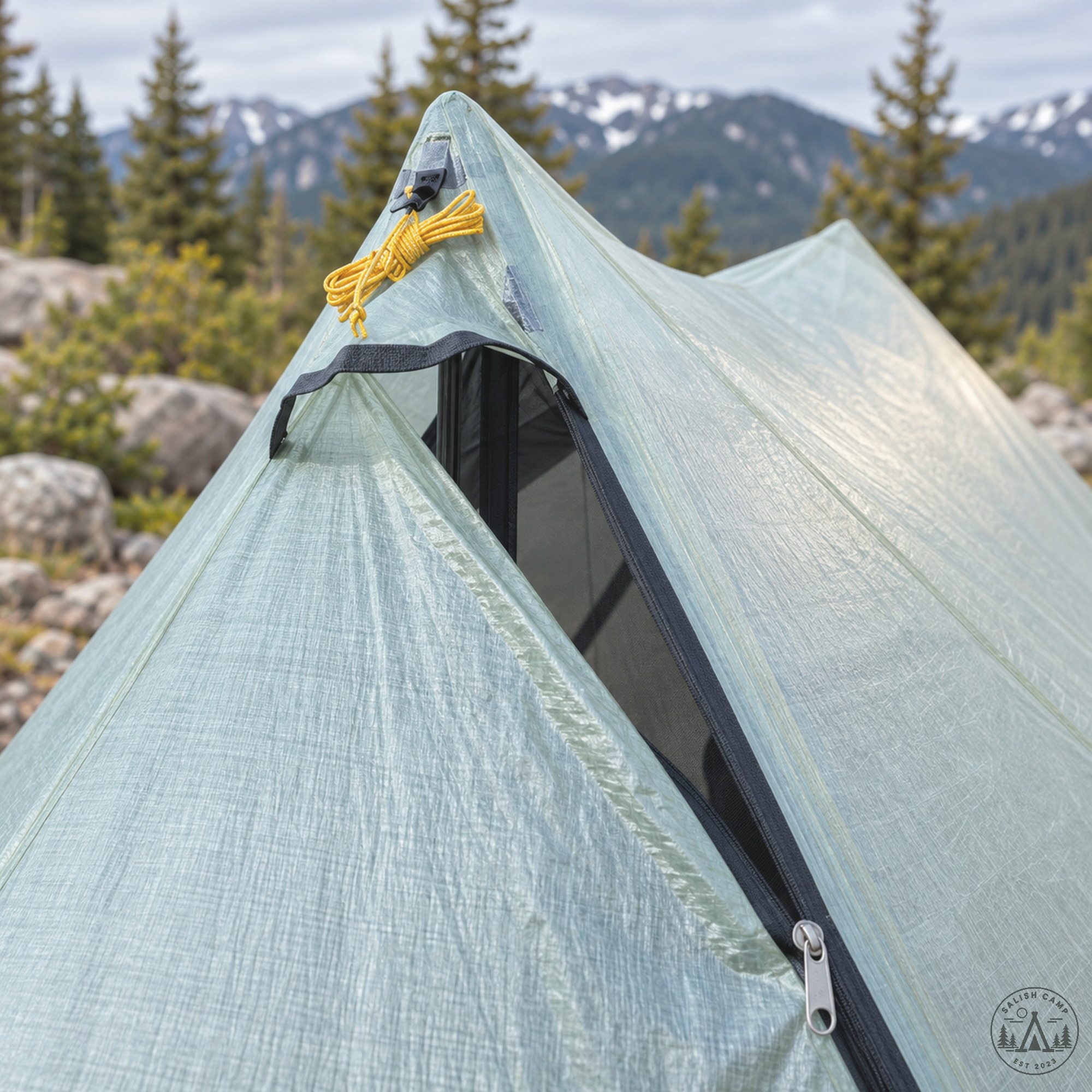
Condensation is part of camping in the Pacific Northwest. Cold ground, humid air, and two people breathing in a small shelter make moisture even when the fabric is fully waterproof. The StratoSpire offers adjustable high and low venting, corners near the PitchLoc ends that peel back, and a fly that can be raised when conditions allow. A still forest camp calls for a different setup than a gusty ridge with sideways rain, so I like having options. The mesh inner keeps us from brushing a wet fly wall. It doesn’t eliminate condensation, but it makes damp nights more manageable. And the interior stays protected from overhead rain with the fly doors open, which helps when getting in and out during showers.
DCF calls for a different packing mindset. Tarptent recommends folding or rolling the shelter rather than stuffing it, and the carbon struts come out of the fly easily. A separate groundsheet usually isn’t needed, but Tarptent recommends one on highly abrasive or sharp ground, which describes some gravel-heavy Cascades trailhead camps. The included DCF patch kit doesn’t make the shelter indestructible, but it gives me a repair option for small damage away from home.
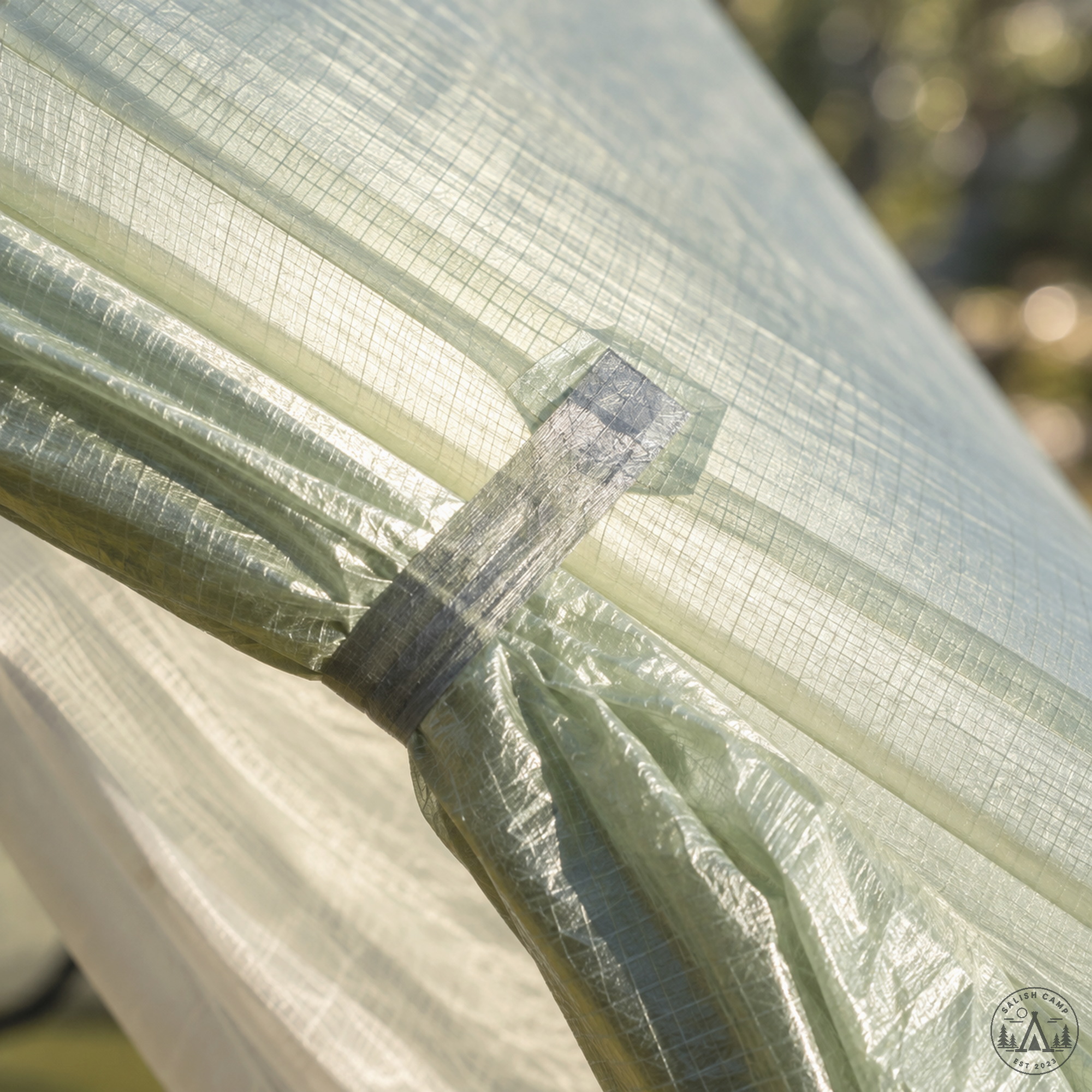
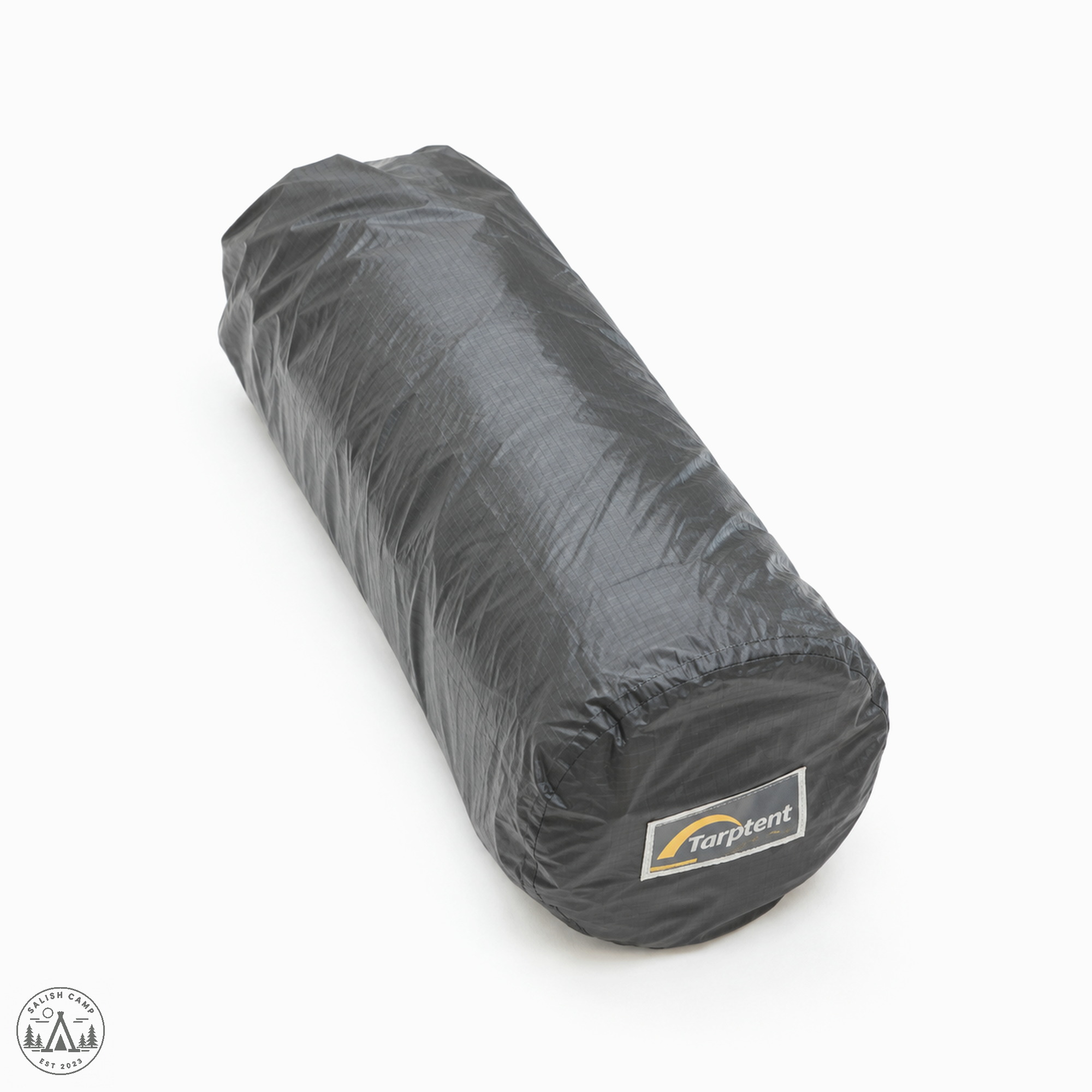
Packed, the StratoSpire measures 16 × 5 × 5 inches, which is reasonable for a two-person shelter with this much covered space.
At $649, the Wide Mesh StratoSpire 2 Li is a significant purchase, and it’s the configuration I find most interesting: extra sleeping width, the ventilation of mesh, and two independent vestibules. The solid interiors may appeal to backpackers who want more enclosure in colder, windier, or dustier conditions, but I wouldn’t choose one by default for every Pacific Northwest trip. The real decision is whether I’m willing to learn the pitch and whether my usual campsites have room for the hexagonal shape. If I already hike with trekking poles, the shelter slots naturally into my kit; if I don’t, carrying substitute poles changes the equation. For longer trips where shelter weight, weather protection, and livable space all matter, it’s a compelling combination. For casual weekends on cramped tent pads, I’d be less enthusiastic about the setup demands.
Pros
- Excellent space-to-weight balance: A two-person Wide Mesh interior, double-wall construction, and two large vestibules at 33.55 oz / 951 g Typical.
- Storm-oriented fly design: The offset ridgeline, PitchLoc corners, adjustable fly height, and reinforced guyline points give useful weather-management options.
- Practical two-person layout: Independent doors and vestibules make wet-weather entry, gear storage, and nighttime exits easier.
- Thoughtful materials and hardware: Factory-taped DCF, carbon fiber struts, DAC stakes, Aquaguard zippers, and magnetic door ties make for a well-specified shelter.
Cons
- Expensive for a trekking-pole shelter: The $649 Wide Mesh configuration is a substantial investment, especially for backpackers who don’t already own suitable poles.
- Hexagonal footprint limits campsite flexibility: Narrow benches, small tent pads, and rocky surfaces can make a good pitch harder to find.
- Pitch requires practice and dependable staking: The non-freestanding geometry rewards careful setup but is less forgiving than a pole-supported dome.
Technical Specifications
| Specification | Details |
|---|---|
| Product | Tarptent StratoSpire 2 Li |
| Config in photos / primary | Wide Mesh (2+) interior, SKU 220.41 |
| Price (primary) | $649.00 USD (tarptent.com, 2026-10-08, in stock) |
| Weight Typical (primary) | 33.55 oz / 951 g (wide interior; incl. stakes, bags, struts, apex guylines) |
| Weight Minimum | 29.7 oz / 842 g (wide interior; no bags, stakes, or apex guylines) |
| Fly / Wide mesh interior | 15.2 oz / 431 g; 14.9 oz / 422 g |
| Other interiors / prices | Narrow Mesh $629.00; Narrow Full Solid $679.00 (out of stock); Wide Full Solid $699.00 |
| Sleeps / seasons | 2 / 4 (per Tarptent) |
| Type | Double-wall, non-freestanding trekking-pole tent; two trekking poles or substitute poles required (not included) |
| Wide interior | 52 in / 132 cm W × 86 in / 218 cm L; 29.6 sq ft / 2.75 sq m |
| Interior height | 44 in / 111 cm |
| Vestibules | 12.1 sq ft / 1.12 sq m each; 24.2 sq ft / 2.24 sq m total |
| Pad / user fit | Two wide pads up to 26 in / 66 cm each; users up to 6 ft 4 in / 1.93 m |
| Packed size | 16 × 5 × 5 in / 41 × 13 × 13 cm |
| Fly fabric | Dyneema® Composite Fabric 0.55 (CT1E.08), rated over 8,000 mm HH, made in USA, olive green; factory seam taped |
| Wide floor | 15D quadruple ripstop Sil/PeU-coated nylon 6.6, rated over 4,000 mm HH |
| Mesh | 15D nylon no-see-um |
| Zippers | YKK #5 Aquaguard waterproof, dual pull |
| Struts | Four 16 in / 41 cm pultruded carbon fiber (PitchLoc corners) |
| Stakes / guylines | Six 6.38 in aluminum DAC J stakes (2.7 oz / 77 g total); 2.5 mm reflective UHMWPE-core cord; apex lines pre-attached |
| Included | Fly, interior, stakes, stake bag, tent bag, DCF patch kit |
Final Thoughts
The Tarptent StratoSpire 2 Li is the kind of shelter I’d consider once I’ve moved past simply looking for the lightest tent and started prioritizing how comfortably two people can live through several days of unpredictable weather.
The Wide Mesh configuration brings together three things I value on Pacific Northwest backpacking trips: enough interior width for two proper sleeping pads, separate vestibules for wet gear, and a fly-first design that makes sense when rain is in the forecast.
Its offset geometry and PitchLoc corners are more than visual quirks. They’re central to how the shelter creates interior volume, holds tension, and provides weather coverage without a freestanding pole structure.
The trade-offs are just as clear. At $649, this is premium equipment. The hexagonal footprint demands care in campsite selection, and the six-stake trekking-pole pitch is something I’d want to learn thoroughly before depending on it on an exposed, windy night. I also wouldn’t choose it for trips where I expect to camp mostly on hard ground with limited staking options.
But for backpackers who already carry trekking poles, travel regularly with a partner, and want to reduce shelter weight without giving up two doors and substantial covered storage, the StratoSpire 2 Li delivers a 52-inch-wide mesh interior and 24.2 square feet of total vestibule space at 33.55 oz typical.