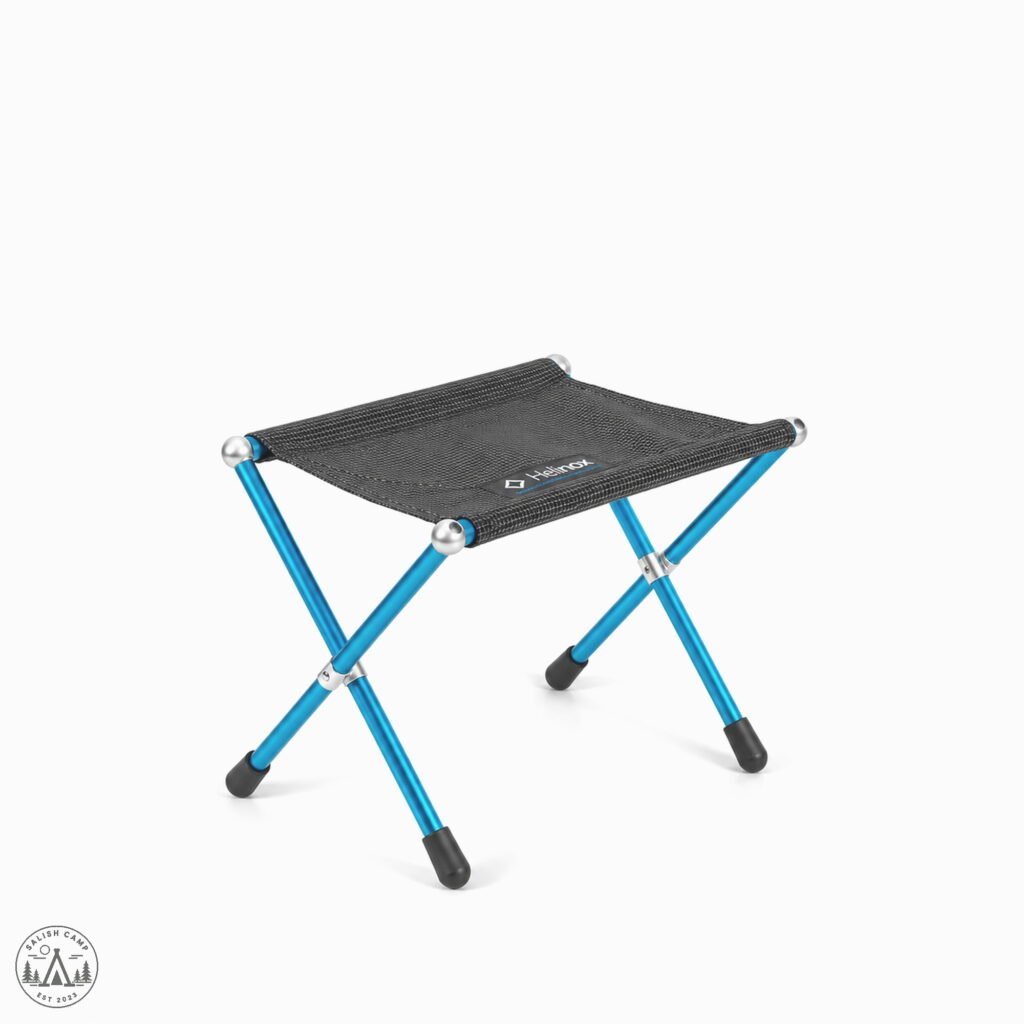
Buy if you fish from river bars, hike with a small daypack, or want a lightweight seat that opens without assembling poles. The Helinox Speed Stool is a practical alternative to sitting on wet gravel, driftwood, or a spare gear bag, and its slim carry shape suits short stops where a full camp chair feels unnecessary.
Skip if you want a chair for extended lounging, need back support, or have trouble getting up from a low seat. At 27 cm off the ground with a small footprint, it is a quick-rest seat, not a replacement for a supportive camp chair.
What Stands Out
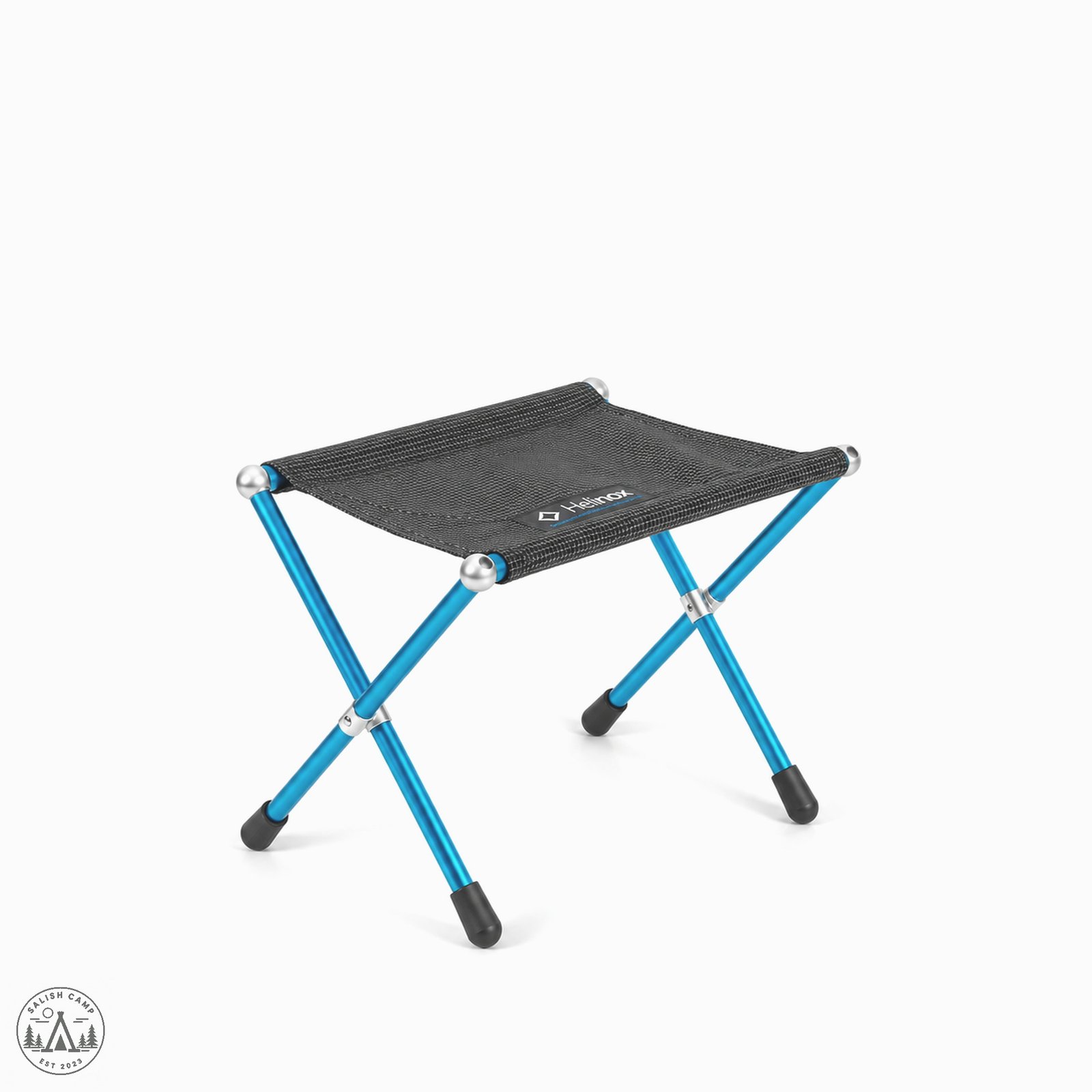
- Self-deploying frame: The Speed Stool opens without assembling separate poles, which makes it convenient for quick breaks along a trail or fishing bank.
- Genuinely lightweight: At 416 g assembled, it stays under a pound and is easy to justify carrying for a short rest.
- Low 27 cm seating: The compact height keeps you close to the ground, favoring quick rests and planted feet over conventional chair posture.
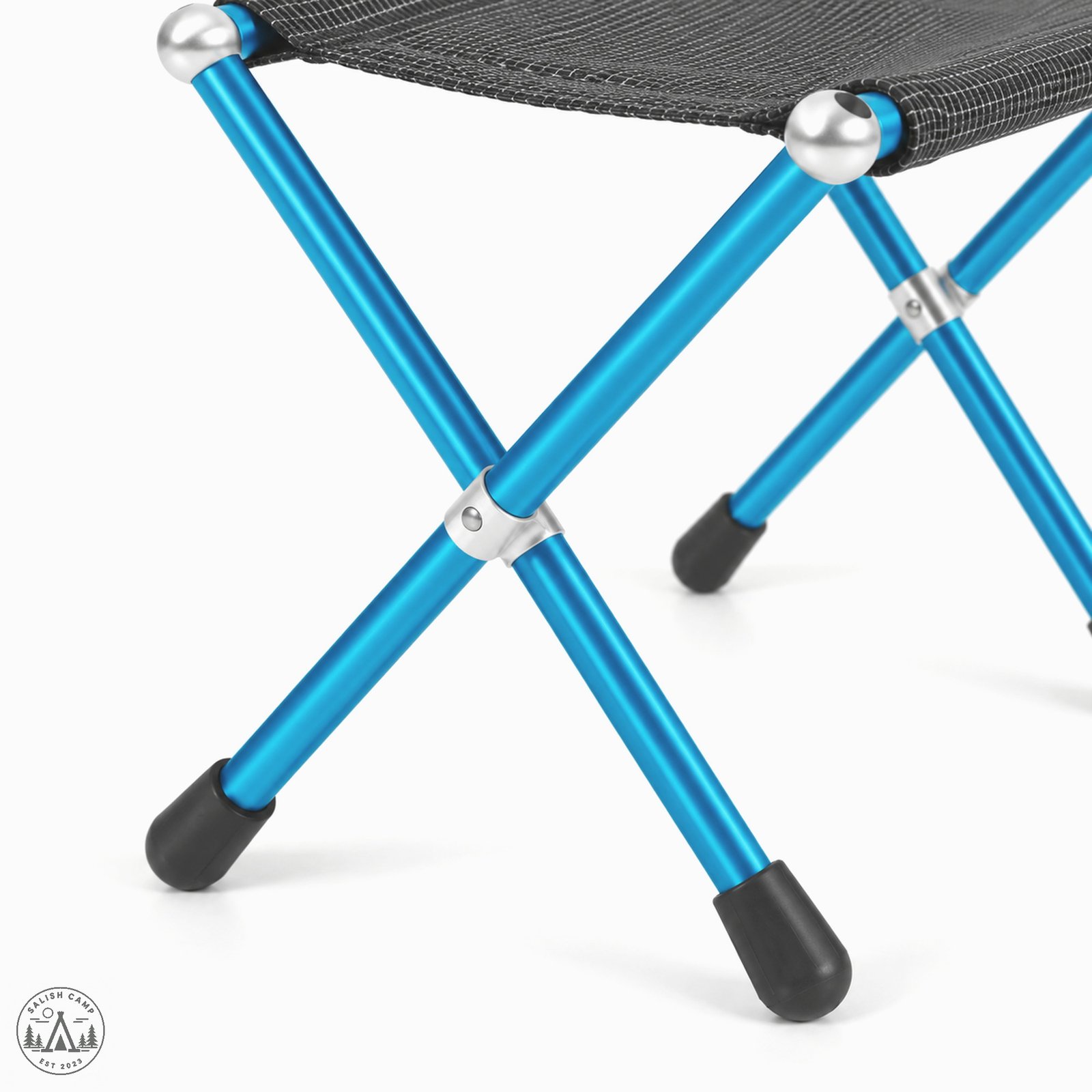
- DAC aluminum construction: A shock-corded DAC aluminum alloy frame and machined aluminum connectors give the folding structure a purpose-built feel without fussy hardware.
- Tough, light seat fabric: The black 100D aramid polyester ripstop seat provides the sitting surface without the bulk of padded materials.
- Long, narrow packed profile: The 43 cm packed length suits the side of a daypack better than a small internal pocket.
- Made for short outdoor stops: Fishing, hiking, cycling, and compact car-camp setups are all places where a stool that opens quickly makes practical sense.
In The Field
There are plenty of times in the Pacific Northwest when I want somewhere to sit but don’t want to carry a traditional camp chair. Steelhead fishing along the Skagit is a good example. A morning spent moving between runs involves standing, walking over rounded cobble, and finding a place to stop while watching the water. Sometimes I sit on a driftwood log. Other times the only option is damp rock or gravel. A lightweight stool strapped to the pack makes those short breaks more comfortable without turning the outing into a full camp setup.
That is the appeal of the Helinox Speed Stool. It isn’t trying to be a lounge chair, and it doesn’t need to be. It is a small, simple place to sit when the alternative is the ground.
The first thing I appreciate is the setup. With many compact camp chairs, I have to pull poles from a bag, let the shock cords find their connections, and stretch a fabric seat over the frame. That is manageable at a campsite, but less appealing when I just want to eat lunch before continuing up the trail. The Speed Stool skips the separate assembly. I take it out, unfold the connected structure, and let the frame open into its sitting position. There are no loose pole sections to organize.
That simplicity matters most when conditions are miserable. On the Olympic Peninsula, rain can come through just as I reach a spot where I want to stop. I’d rather spend my break under a tree or near a sheltered bank than assemble furniture with cold hands. The integrated frame keeps the process straightforward, and it makes packing up less of a chore when it’s time to move again.
The next thing to understand is how low this stool actually sits. At 27 cm, the seat is much closer to the ground than most camp chairs. When I sit down, my knees stay noticeably bent and my feet remain planted in front of me. It feels more like sitting on a low step than settling into a chair at a picnic table. That works well for pulling on boots, a short food break, or resting between stretches of walking, and standing back up takes a little more effort than rising from a taller chair, particularly after a long hike.
I find the low position most natural beside the water. When I’m checking tackle, changing a leader, or watching a run from the gravel bar, I don’t need a high seat. I want my feet on the ground and my gear within easy reach. The stool works well for that kind of focused, temporary stop.
Ground selection deserves attention, especially around rivers. A gravel bar on the Skagit might look flat from a distance, but the surface is often a mix of rounded cobble, loose stones, and pockets of sand. A small stool is not automatically stable just because the frame is well made. Each leg needs solid support, and I wouldn’t set it across uneven rocks where the legs can’t settle.
Before sitting, I look for a level patch, move any loose stones that might shift, and press down gently to check the footing. On sloping ground, I reposition the stool rather than leaning my weight the other way to compensate. It takes little effort, and the difference in confidence is noticeable. For the same reason, I wouldn’t set it in flowing water or on a steep bank. A firm, dry section of shore is a much better choice.
At a Cascades car-camp, my use is different. I’m usually moving between the cooking table, the vehicle, and whatever sheltered spot we’ve set up for the evening. A compact stool is handy when I’m sorting gear, taking my boots off, or eating a quick snack, and it can sit near the kitchen without taking up the space of a larger chair. Once dinner is done and the evening moves to the fire, though, I switch to a chair with a backrest. The Speed Stool supports me underneath but not behind, and that is the tradeoff of a compact, low design.
Wet weather adds another consideration. During an Olympic Peninsula trip or a late-season outing on the coast, I don’t assume a fabric seat will stay dry just because it sits off the ground. Wind-driven rain reaches almost anything left outside. If the stool gets wet or sandy, I wipe it down and let the fabric and frame dry before storing it. I also check the joints after use around sand or grit. A quick wipe beats folding abrasive debris into the frame and leaving it there until the next trip.
Packing is where expectations matter. The Speed Stool folds into a long, narrow package rather than a short bundle. Its 43 cm packed length makes it better suited to an external daypack pocket or attachment point than to a small compartment already filled with food, rain gear, and fishing accessories.

For hiking, I secure the bag along the side of the pack so it can’t slide out while scrambling or working through brush. For fishing, the same placement keeps the stool accessible without digging through the main compartment, as long as it’s cinched tight enough not to swing when stepping between rocks.
The stool weighs 416 g assembled and 436 g packed in its bag, which is reasonable for a dedicated seat. Whether that is worth carrying depends on the trip. On a short hike with plenty of dry logs or benches, I might leave it behind. On a long day moving between fishing spots where I know I’ll stop regularly, the convenience is easy to justify.
The stated 100 kg capacity is a load limit I take seriously. I avoid dropping into the seat abruptly, particularly when the legs rest on loose gravel. Controlled sitting and sensible ground selection go a long way toward making a lightweight stool feel dependable.
What I like most is that the Speed Stool solves a small but recurring problem without adding complexity. Sometimes I just want to sit above the wet ground, eat something, adjust my gear, and keep moving. For that job, the quick-opening frame and low carry weight matter more than elaborate comfort features.
Pros
- Self-deploying design: No separate pole assembly, so quick breaks stay quick.
- Light enough for a daypack: 416 g assembled is practical for hikes and fishing days.
- Purpose-built materials: The DAC aluminum frame and aramid polyester ripstop seat balance portability with durable construction.
- Slim packed shape: It rides along the outside of a pack without the bulk of a full camp chair.
Cons
- Low seat height: Standing up takes more effort, especially with tired legs or limited mobility.
- No back support: Comfort fades during longer sitting sessions.
- Small footprint: It needs careful placement on loose cobble, uneven gravel, and sloping ground.
Technical Specifications
| Specification | Details |
|---|---|
| Product | Helinox Speed Stool |
| Config | Black (SKU 14501) |
| Price | $99.95 USD (helinox.com, 2026-10-10) |
| Seat height | 27 cm (10.5 in) |
| Footprint | 24 x 36 cm (9.5 x 14 in) |
| Packed size | 43 x 8.5 x 8.5 cm (17 x 3.5 x 3.5 in) |
| Weight | 416 g assembled / 436 g packed |
| Capacity | 100 kg (220 lb) |
| Frame | DAC aluminum alloy, machined aluminum connectors, shock-corded |
| Seat | 100D aramid polyester ripstop |
| Carry bag | 50D nylon ripstop |
| Warranty | 5 years, manufacturing defects |
Final Thoughts
The Helinox Speed Stool is gear I appreciate more for the problem it solves than for any claim of exceptional comfort. It gives me a quick place to sit when I’m fishing a gravel bar, taking a break on a Cascades trail, or working around a compact campsite. The self-deploying design removes the usual hassle of assembling a small chair, and the light weight makes bringing it along an easy decision.
Its limits are equally clear: it is a low, backless stool that wants reasonably level ground. Anyone expecting the comfort of a conventional camp chair should look elsewhere.
For my style of Pacific Northwest fishing and hiking, though, the Speed Stool makes sense. I’d carry it whenever I expect regular short breaks, especially where wet ground and uneven shorelines make sitting on the terrain unpleasant. It is compact, purpose-built, and refreshingly straightforward.