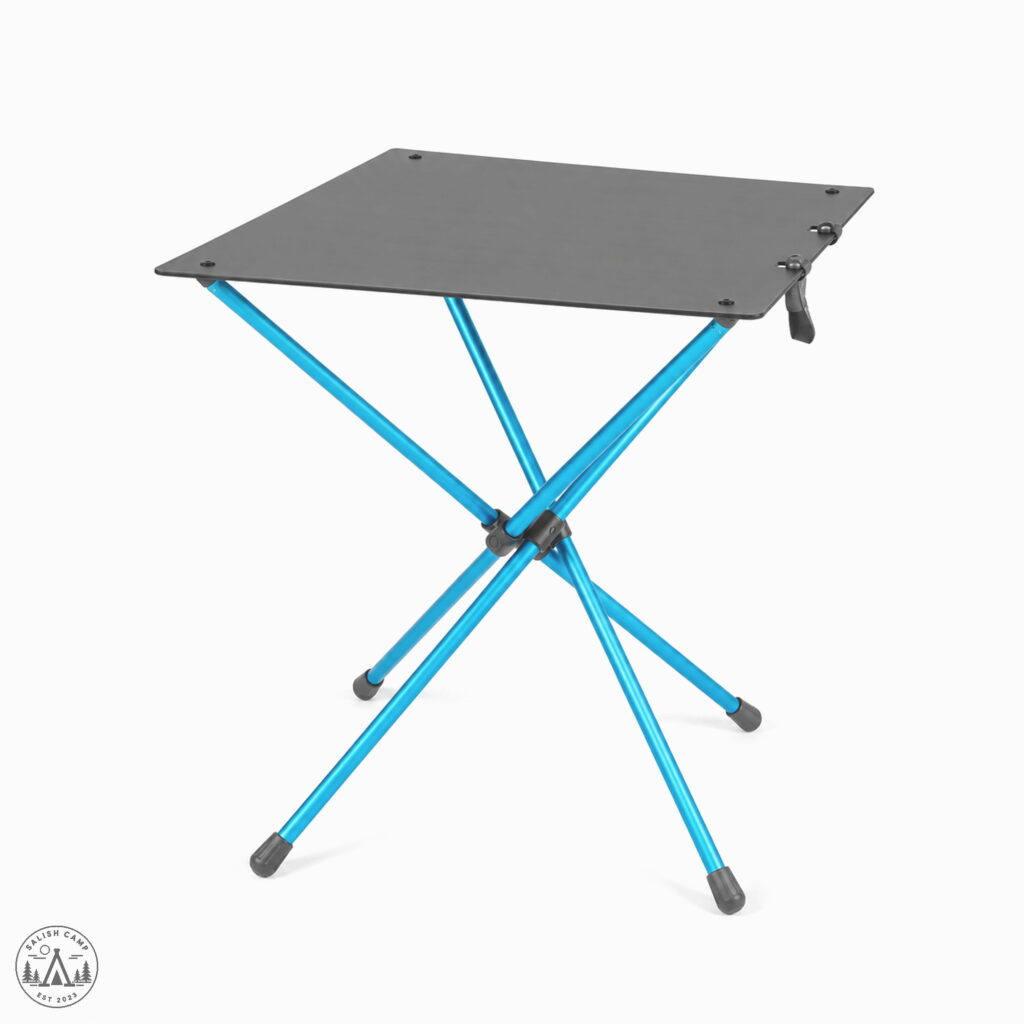
Buy if you want a real dining-height table for car camping, campsite meals, picnics or van-life stops. The Helinox Café Table pairs a rigid, easy-to-clean laminate top with a DAC aluminum frame, and it makes the most sense alongside Café Chairs, where the taller height gives you a natural seated dining position.
Skip if you mostly backpack, prefer low camp furniture, or need a table that disappears into a small gear bag. It packs into a wide, flat case that needs deliberate storage space, and it’s an expensive way to gain dining height if you only need somewhere to set down a mug.
What Stands Out
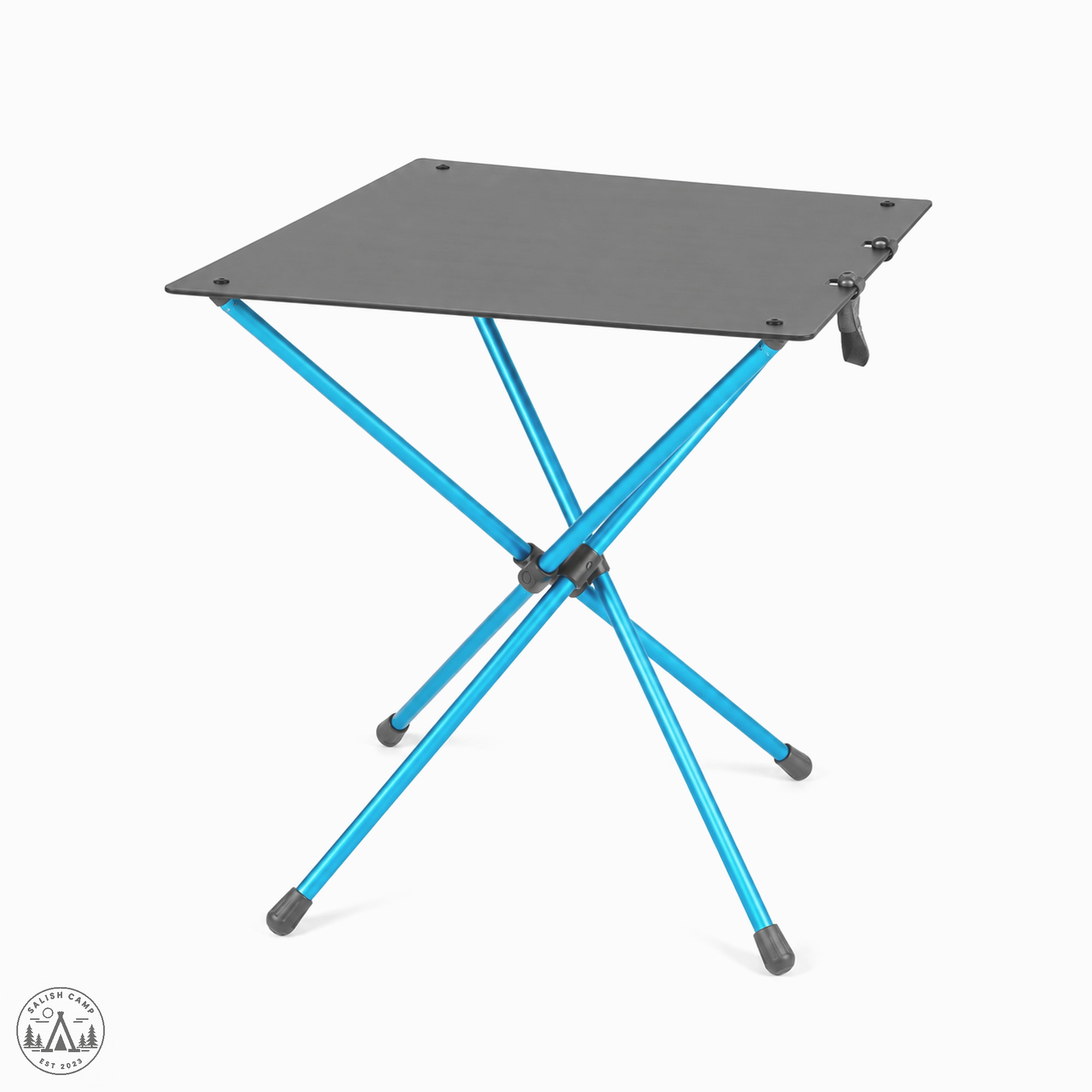
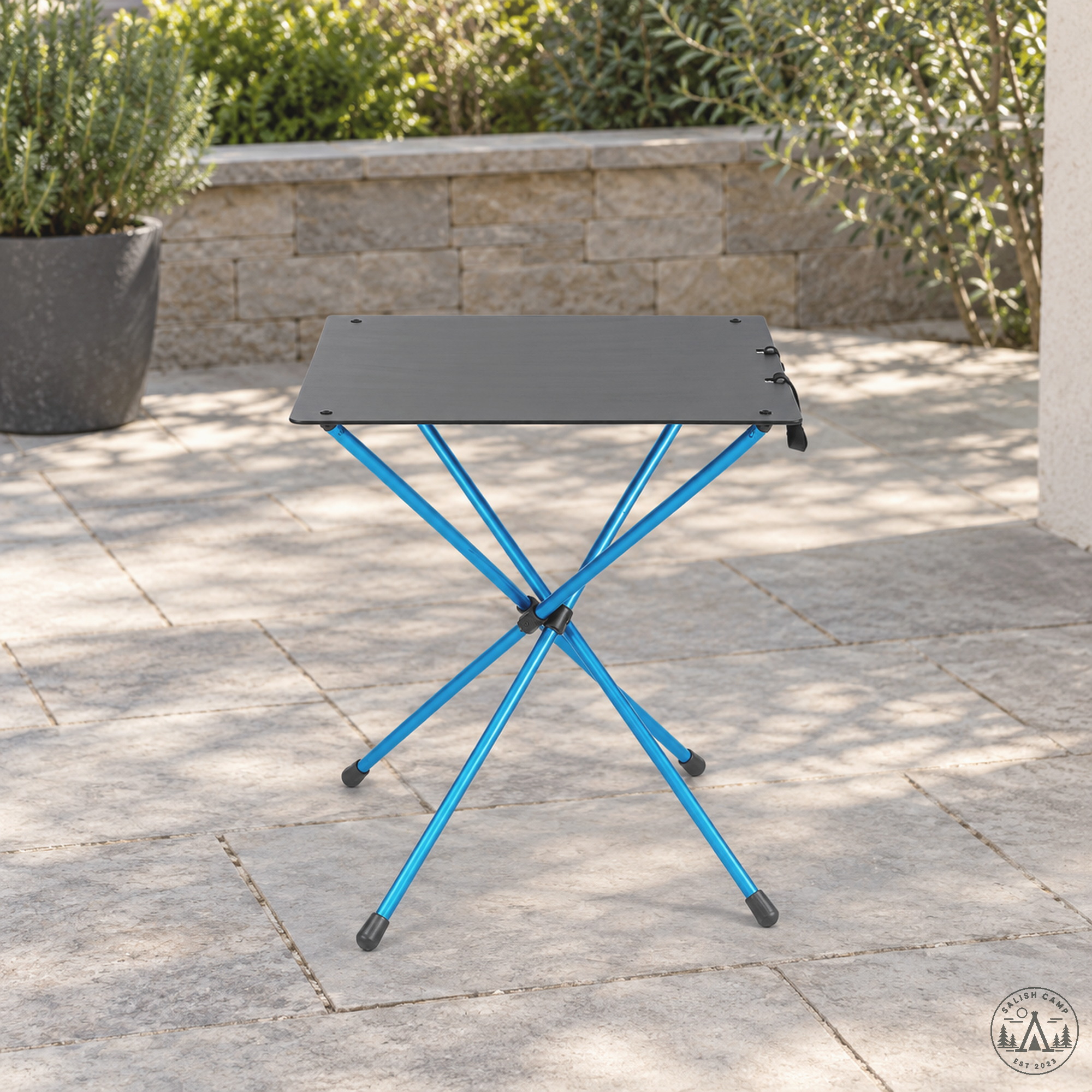
- True dining height: At 68 cm tall, it sits much closer to household dining furniture than the low tables common at camp.
- Rigid laminate top: The 60 x 60 cm high-pressure laminate surface is a firm platform for plates and cups, with no fabric sag.
- Rated heat resistance: Helinox rates the laminate top to 356°F, useful reassurance around warm dishes, though I still reach for a trivet.
- Shock-corded DAC frame: DAC aluminum alloy poles and a rotary resin hub bring Helinox’s familiar construction to a taller table.
- Built for the Café Chair: Its proportions are meant for upright seating, not lounging near the ground.
- 50 kg capacity: Plenty of headroom for dinner, serving dishes and camp essentials when the load is spread out.
- Flat ripstop case: A 300D polyester ripstop case keeps it together in a flat package, with a broad footprint as the tradeoff.
In The Field
The appeal of the Café Table becomes clear when I think about the difference between sitting around camp and actually eating a full meal there. I use plenty of low camp tables, and they’re great beside a relaxed chair when the evening is coffee, a small stove and a fire. Once dinner gets more involved, though, that low position wears thin. I’m leaning forward to cut food, reaching down for utensils, balancing dishes and trying not to knock over a drink.
The Café Table solves exactly that. It gives you a dining-height surface without hauling a household table into the woods. For the way I set up a Cascades car-camp, that’s a useful distinction: the table that holds cooking accessories and the table I sit down to eat at don’t need to be the same piece of furniture.
Height is the defining feature. At 68 cm, you sit upright and bring food closer to a normal dining position instead of bending toward a low top. Breakfast might be quick, but dinner at a settled campsite means cutting food, passing dishes, pouring drinks and lingering after the cooking is done. Those are the moments a taller table earns its place.
The Helinox Café Chair is the natural companion, and I’d treat the table as part of that seating arrangement rather than a standalone accessory. Chair height matters. Pair it with a low camp chair and you’ll be reaching up toward the top, which defeats the point. If you already love your low chairs, I wouldn’t replace the whole setup for this table. But if you dislike hunching over meals, the change in geometry is meaningful.
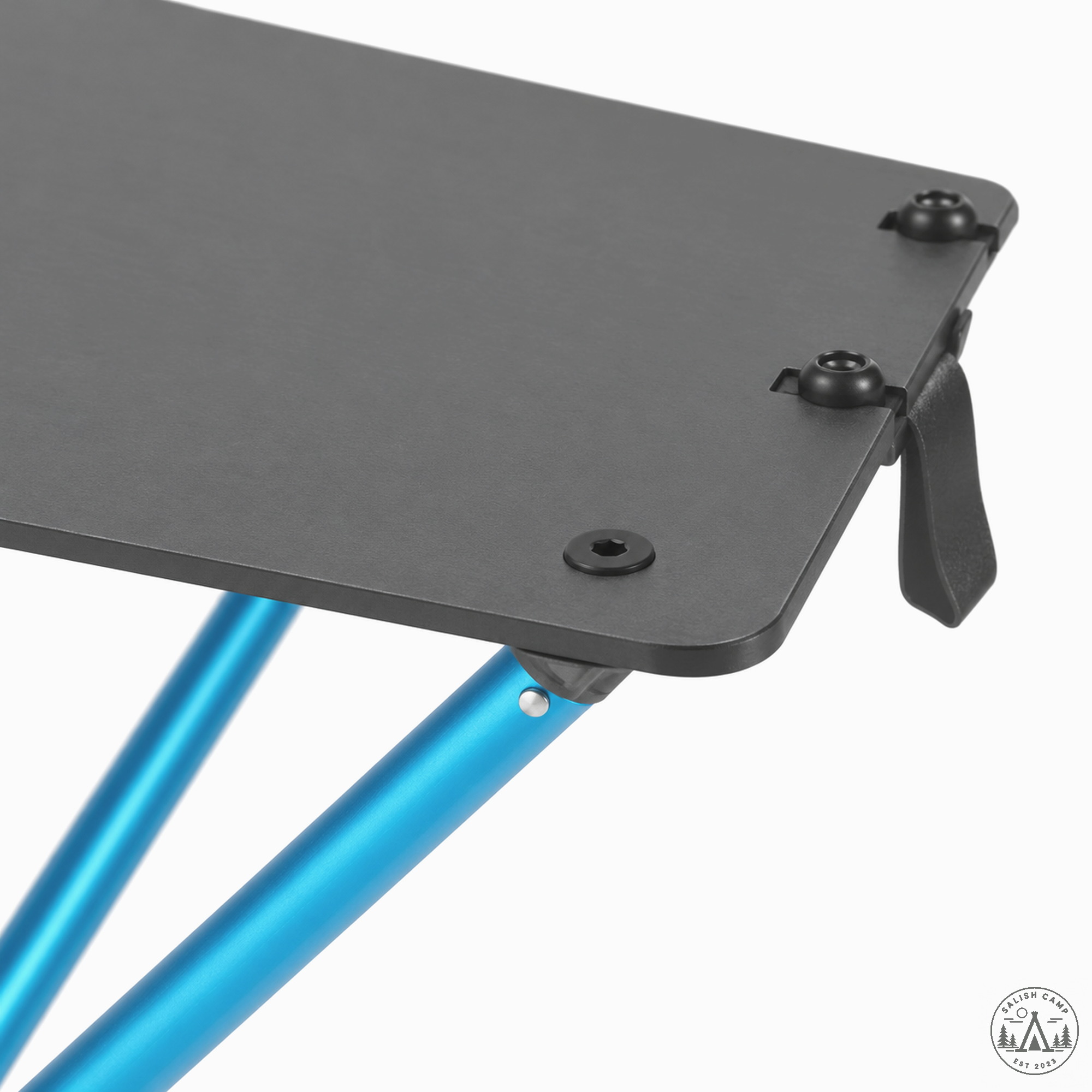
I like lightweight fabric tables for some jobs, since they pack efficiently and hold snacks and cups just fine. For proper meals, I prefer something rigid. The laminate top gives a predictable surface for plates and serving dishes, with no tensioned fabric shifting under a concentrated load. At 60 x 60 cm, though, it’s a compact dining space, not a sprawling kitchen counter. One person’s meal or a simple shared spread fits comfortably; with big plates, drinks and communal dishes, I plan the layout rather than assume everything fits. I also use a separate cutting board to protect the finish.
On a wet Olympic Peninsula morning, the easy-clean top is a real advantage. Mud, spilled coffee, condensation and food residue are routine in the Pacific Northwest, and wiping laminate beats dealing with fabric that’s soaked them up before you pack.
Helinox says the laminate handles temperatures up to 356°F, which matters for a table that sees warm cookware and serving dishes. I don’t read that as permission to set any hot pan straight on the surface, though. A rating is a material spec, not a guarantee against everything in an outdoor kitchen, so I put a trivet or heat-resistant pad under anything coming directly off the stove, and I keep burners and open flame off the top entirely. This is a dining table first, not a stove stand.
A taller table brings a consideration that’s easy to miss when shopping online: stability on exposed sites. In a sheltered forest campground I worry less, but on an open gravel bar on the Skagit or a late-season coastal site, wind and uneven ground matter more. A taller table has more leverage when it’s bumped or pushed, so I pay attention to how evenly the legs sit and where the weight is on top.
The frame doesn’t change basic ground realities. I pick a reasonably level spot, make sure every pole is fully seated in the hub, and check that the top feels secure before loading dinner. The 50 kg capacity is a load rating, not a promise against tipping on rough ground or in a gust, so I keep heavier items toward the center. On a windy evening I also don’t leave light cups or napkins unattended. The rigid top won’t stop an empty cup from blowing off.
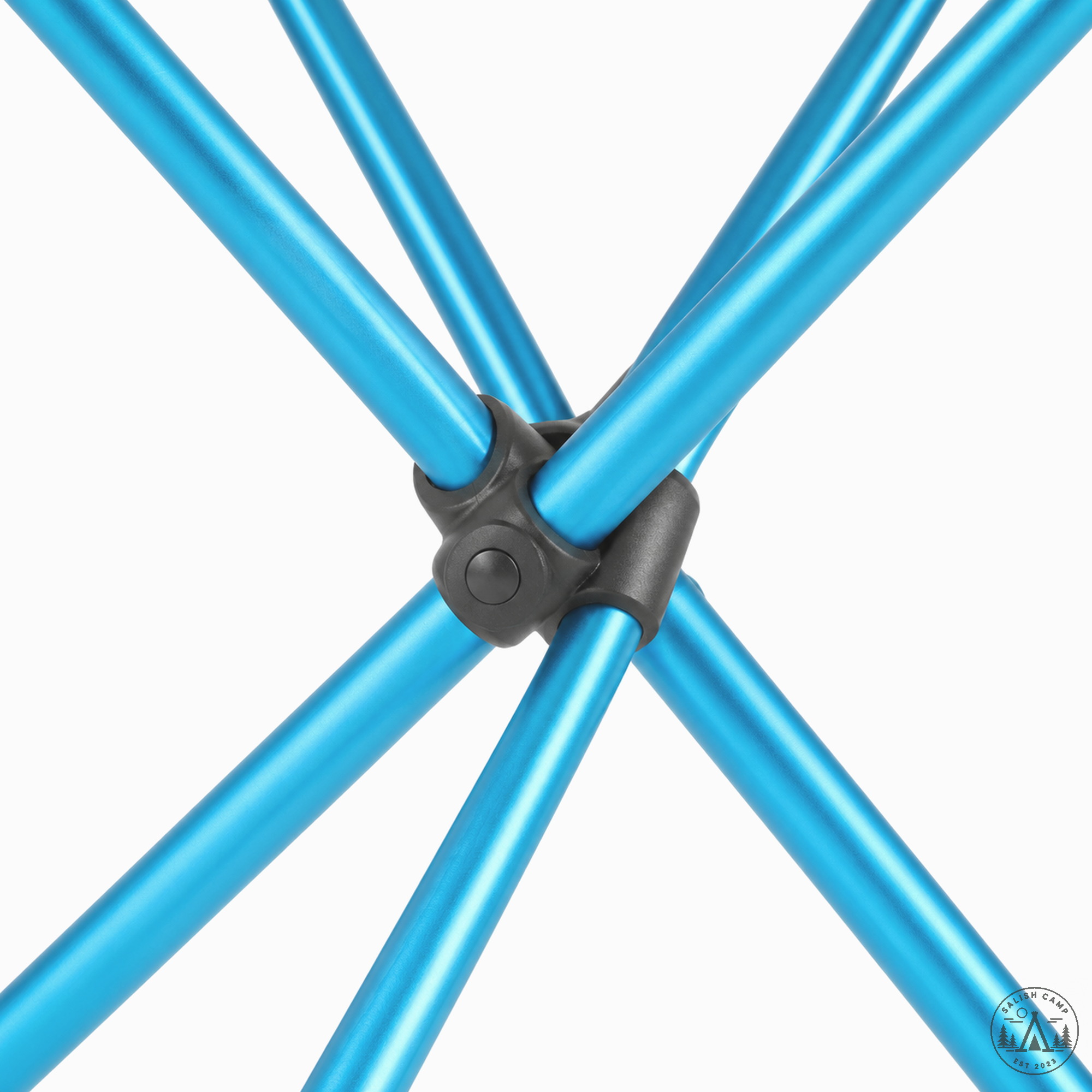
Setup suits how I like to camp. The shock-corded poles stay connected as part of the assembly, so I’m not spreading loose parts across wet gravel or trying to remember which fitting goes where. I still align and seat each connection carefully, and I never force one that feels off. In the rain, keeping parts clean matters more than speed: grit collects around joints, so I wipe everything down and dry the top, especially its edges, before it goes back in the case.
The table weighs 2,625 g assembled and 3,109 g packed. That’s perfectly reasonable for a car-camp dining table, but it isn’t ultralight furniture. The bigger issue is the packed shape: 60 x 61 x 9 cm, a broad flat package. In a van or a well-organized load, it slides in beside other flat gear. In a small car stuffed with sleeping bags, a tent, chairs and food bins, I’d measure the space before buying. Carrying it from the car to a picnic area is easy; carrying it on a long walk to a remote site is another story.
At $249.95, it’s also a premium buy, which makes it easiest to justify for longer, settled stays. On a quick overnight, a smaller low table is usually enough. During a long Cascades stay, when the site turns into a temporary living room, a dining-height table gets used over and over for breakfast, lunch prep, dinner and coffee. I’d still keep the stove on a separate cooking surface, which keeps hot cookware and fuel away from where people eat.
Pros
- Comfortable dining height: Works naturally with Café Chairs and upright seating.
- Rigid, easy-clean top: High-pressure laminate gives a stable platform with rated heat resistance.
- Proven portable frame: DAC aluminum, a rotary resin hub and shock-corded poles make setup repeatable.
- Made for longer car camps: A strong pick when sit-down meals are part of the routine.
Cons
- High price: It costs a lot compared with simpler car-camp tables.
- Wide packed footprint: The flat case needs more dedicated vehicle space than many soft-top tables.
- Mismatched with low seating: Its height works against ground-level lounge furniture.
Technical Specifications
| Specification | Details |
|---|---|
| Product | Helinox Café Table |
| Config | Black (SKU 11078) |
| Price | $249.95 USD (helinox.com, 2026-10-10) |
| Height | 68 cm (27 in) |
| Surface | 60 x 60 cm (23.5 x 23.5 in) |
| Packed size | 60 x 61 x 9 cm |
| Weight | 2,625 g assembled / 3,109 g packed |
| Capacity | 50 kg (110 lb) |
| Frame | DAC aluminum alloy, rotary resin hub, shock-corded |
| Top | High-pressure laminate, heat-resistant to 356°F per Helinox |
| Case | 300D polyester ripstop flat case |
| Warranty | 5 years, manufacturing defects |
Final Thoughts
The Helinox Café Table fills a role that’s easy to underestimate until you’ve eaten enough meals at low camp tables. It isn’t meant to be the lightest surface for a backpacking trip. It’s meant to make dining at camp feel like dining at a real table.
The rigid laminate top, true dining height and DAC frame make sense for established car-camp setups, especially paired with Café Chairs and kept separate from the cooking station. The compromises are real: a wide flat case, substantial weight for portable furniture, a premium price, and a height that asks you to think about chairs, ground and wind.
I’d recommend it to someone who regularly camps at drive-in sites, values a comfortable seated meal and has room for flat furniture. For backpacking or sitting low by the fire, I’d choose something else. But for a Pacific Northwest car-camp where dinner is an event, not a bowl on my lap, it earns its space in the vehicle.