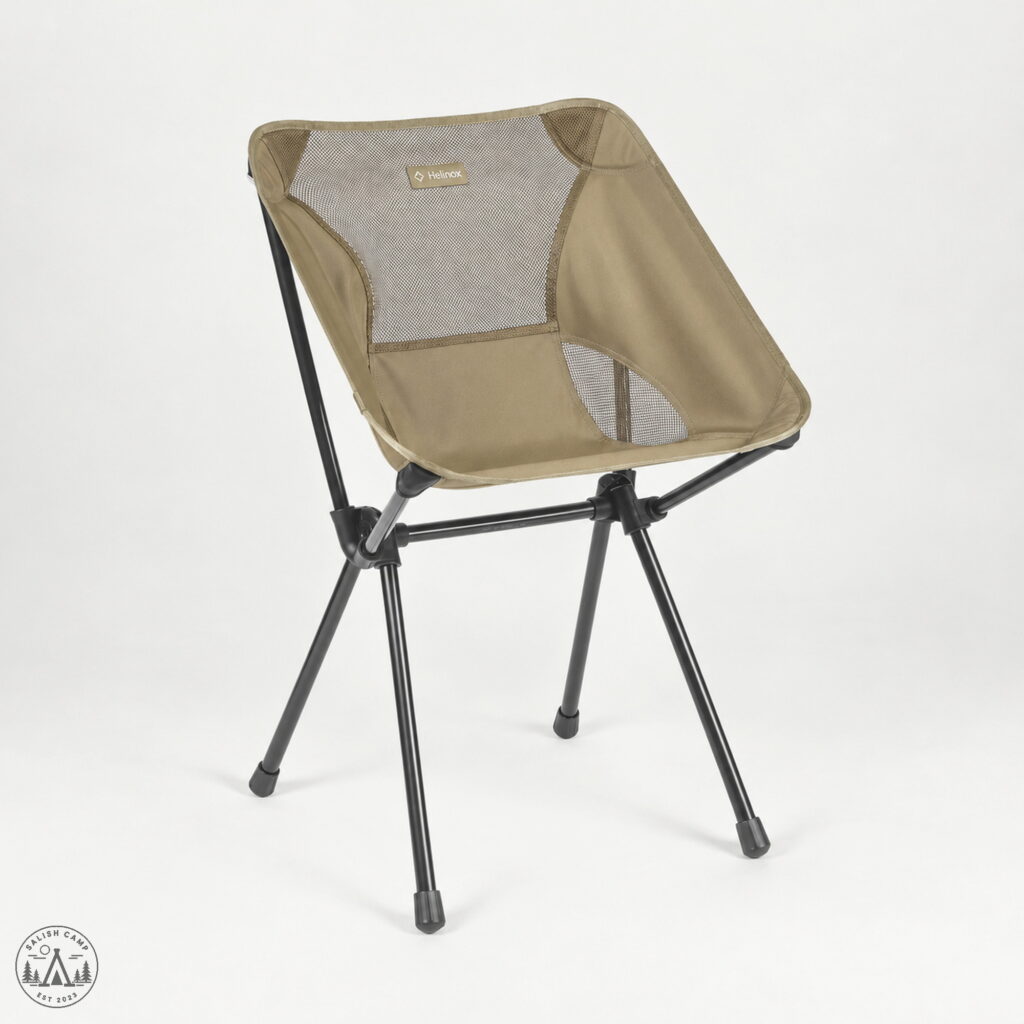
Buy if your camping routine revolves around a proper table. The Helinox Café Chair in Coyote Tan (SKU 14360) costs $184.95 and weighs 3 lb 2 oz (1418 g) packed, or 2 lb 13.5 oz (1218 g) assembled. It puts you in a more natural position for preparing food, eating dinner, or playing cards without constantly leaning forward. Its upright back, wider base, reinforced corners, and 320 lb capacity make it a practical choice for established campgrounds, vehicle-supported basecamps, and cabin decks.
Skip if you mainly want a chair for lounging beside the fire, stretching out after a hike, or carrying into the backcountry. The Café Chair is designed around dining rather than reclining. Its 23 in packed length also takes more planning than the narrow cylindrical case suggests. At $184.95 for one chair, it makes the most sense when a dining-height table is already central to your camping setup.
What Stands Out
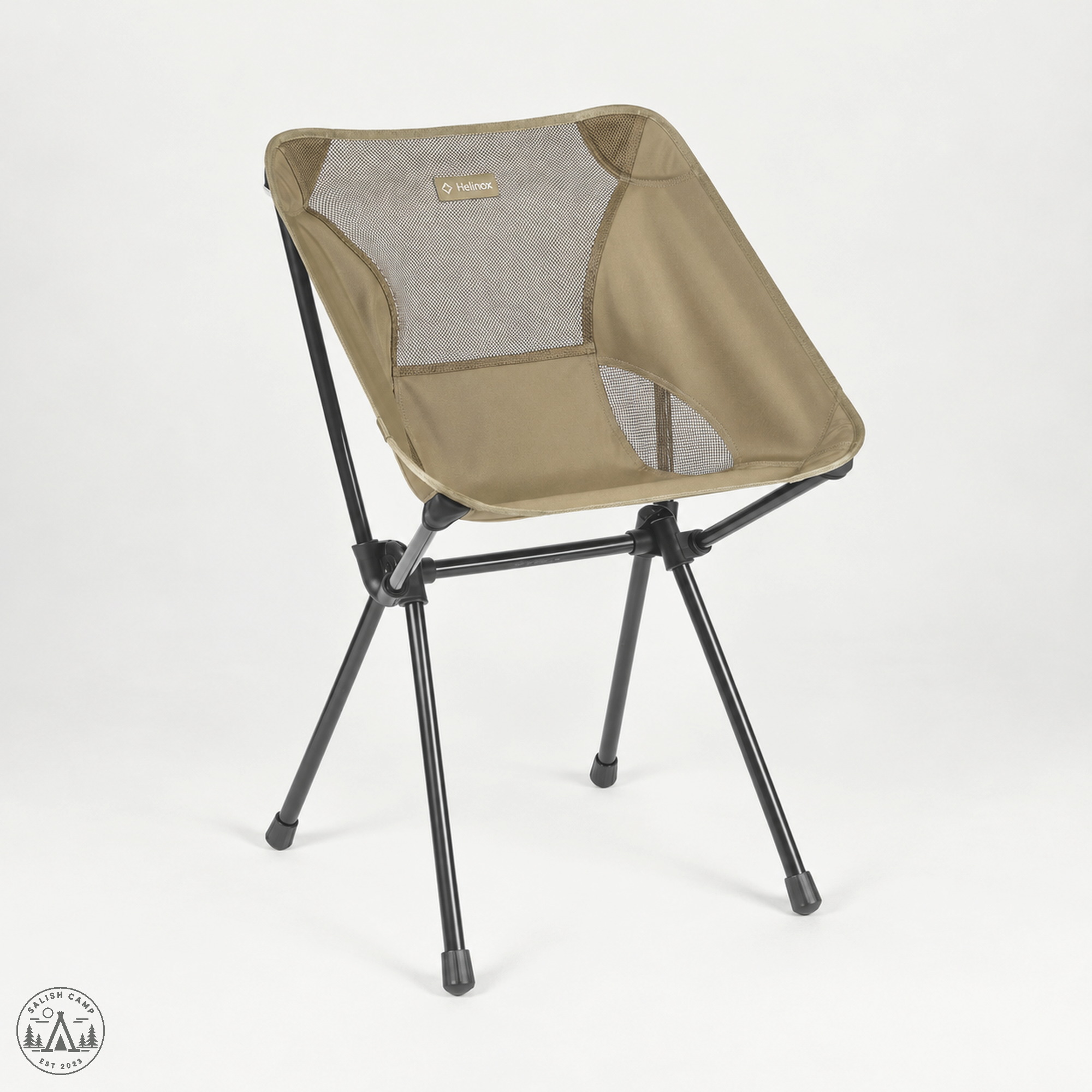
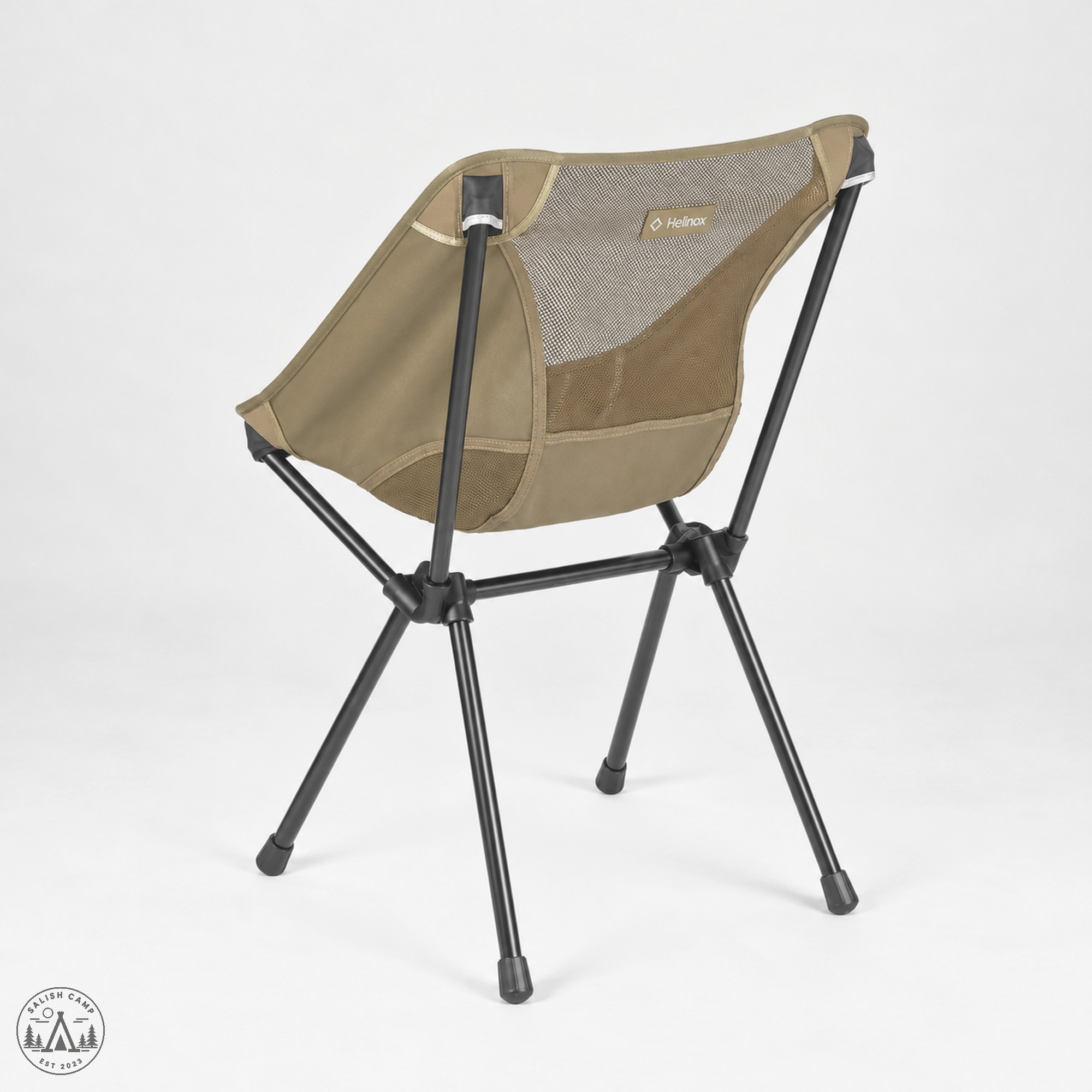
- A genuinely upright dining position. The Café Chair sits 12° more upright than the Chair One, bringing your upper body closer to the table without making you bend forward out of a relaxed camping posture.
- Designed for standard dining tables. Helinox says the chair easily slides under a 28 in dining table, which makes it a practical match for campground dining setups and the Helinox Café Table.
- A wider, reinforced foundation. A wider base, leg poles thicker than the Chair One's, stronger proprietary nylon resin hubs, and reinforced seat corners support the chair's taller build.
- 320 lb capacity. The proprietary DAC aluminum alloy frame pairs a manageable 3 lb 2 oz packed weight with substantial load capacity.
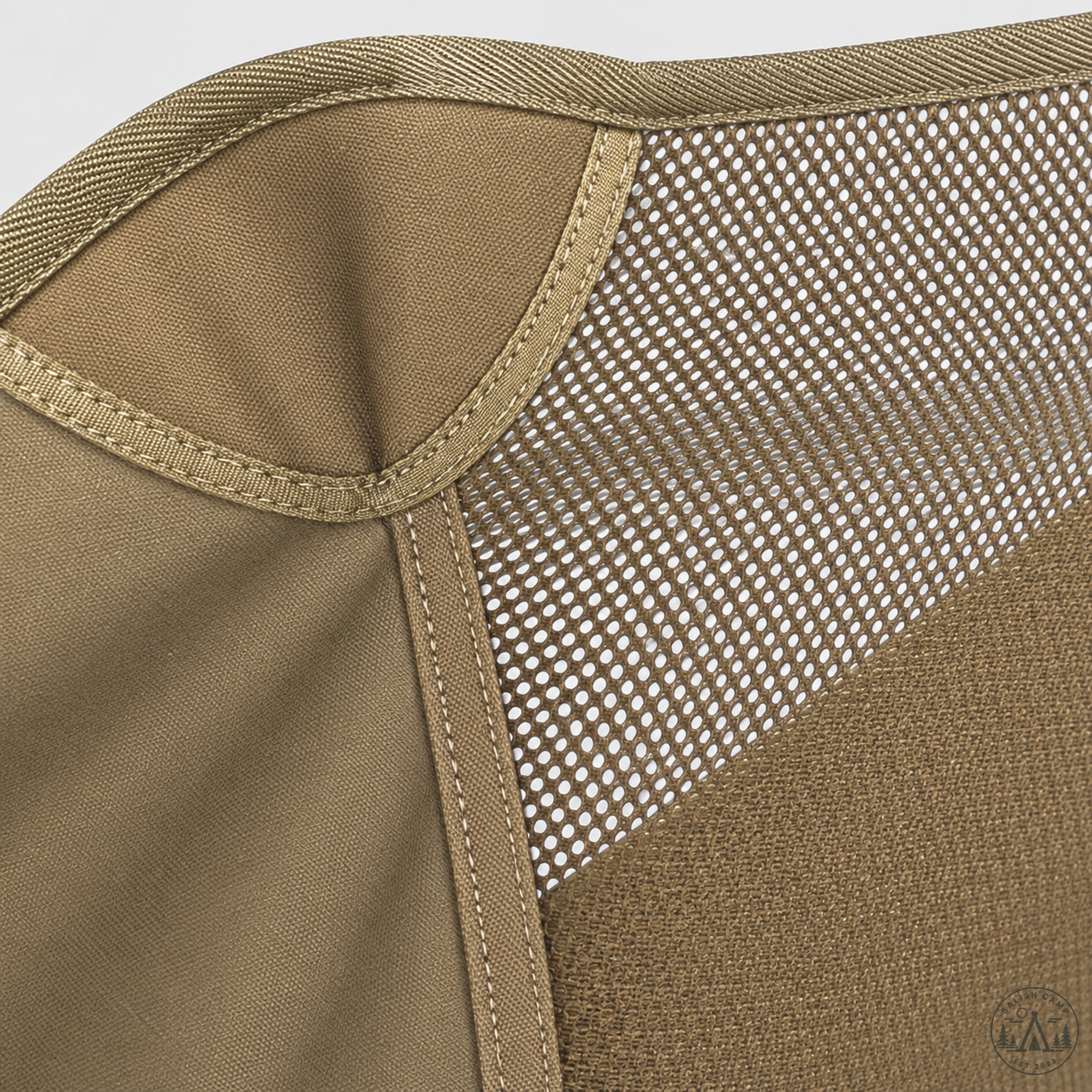
- Breathable, supportive seating. The bluesign®-certified recycled 600D polyester seat adds recycled polyester mesh paneling for airflow during long meals and warm afternoons.
- Straightforward shock-corded setup. Shock-corded poles lock the frame into place, so setup doesn't involve sorting a pile of loose parts.
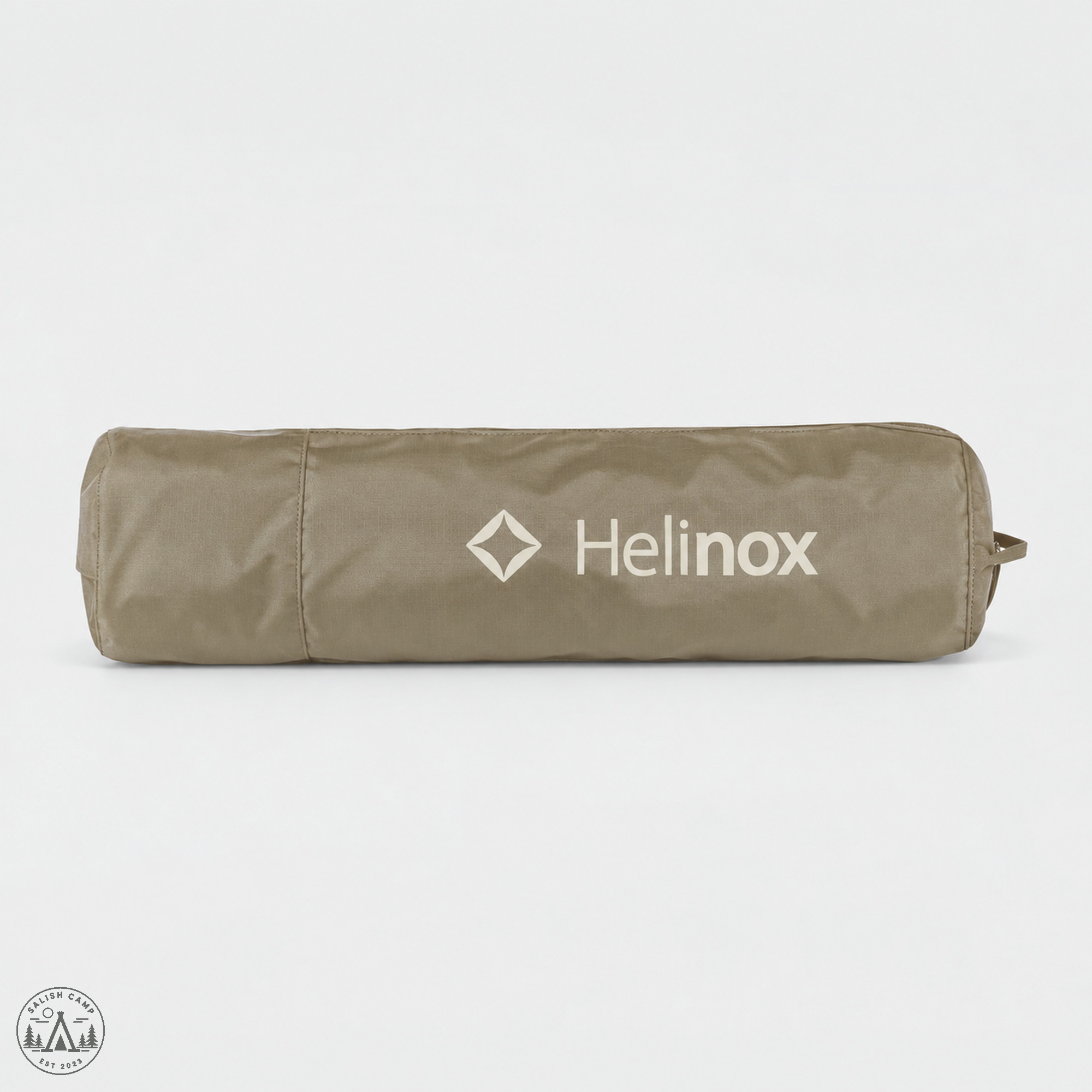
- A practical cylindrical carrying case. The 23 x 6.5 x 6.5 in case has a 3/4 zipper, a daisy chain, and a D-ring, although its length matters when you're packing a smaller vehicle.
In The Field
Low camping chairs have a problem that gets more noticeable the longer I spend at a table. They're comfortable when I'm sitting back with coffee or watching the fire. But the moment I start chopping vegetables, eating dinner, or dealing cards, that relaxed position works against me. I end up leaning forward or perched on the front edge of the seat. At a campground picnic table, I sometimes abandon the chair altogether and use the bench.
That's the problem the Helinox Café Chair is designed to solve. Rather than trying to be a do-everything camp chair, it concentrates on what happens around a table. For my Pacific Northwest camping, that matters. A lot of time at camp isn't spent staring at the fire. It's spent preparing meals, keeping gear organized, making coffee, or waiting out another stretch of rain under a tarp.
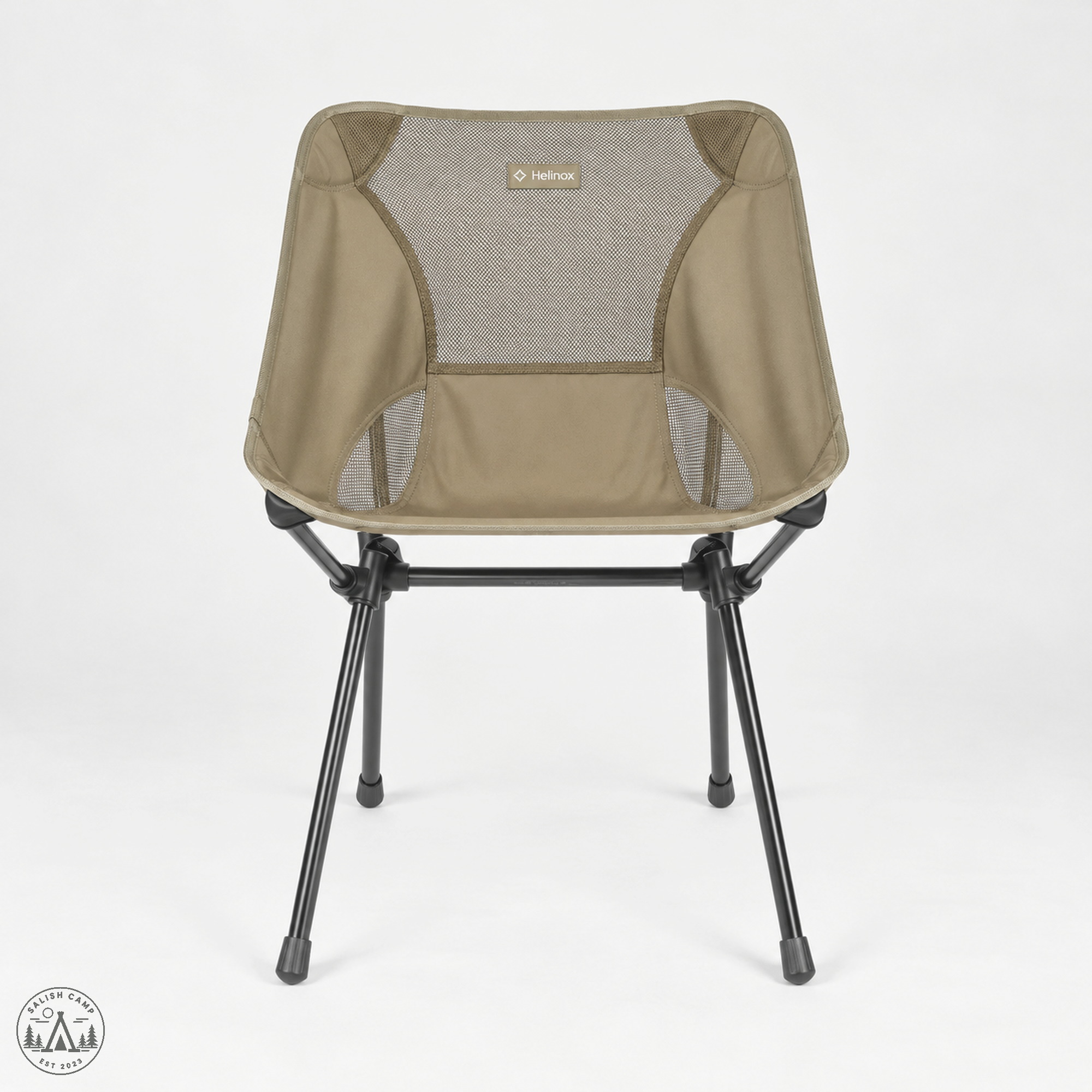
The backrest is noticeably more upright by design. Helinox puts it at 12° more upright than the Chair One, and the intent is clear: keep the upper body positioned for dining rather than reclining. Sitting too far back means reaching toward the table over and over. That's tolerable for a quick snack, but it gets irritating when dinner takes an hour and everyone stays for cards afterward.
The reinforced seat corners make sense for this job too. At a table, I shift my weight often, lean toward a plate, and reposition to reach the cooking gear. Still, upright doesn't automatically mean more comfortable. When I'm done eating and want to settle in beside the fire, I'd rather have a chair built for lounging. The Café Chair makes its priorities clear, and I see that as a strength.
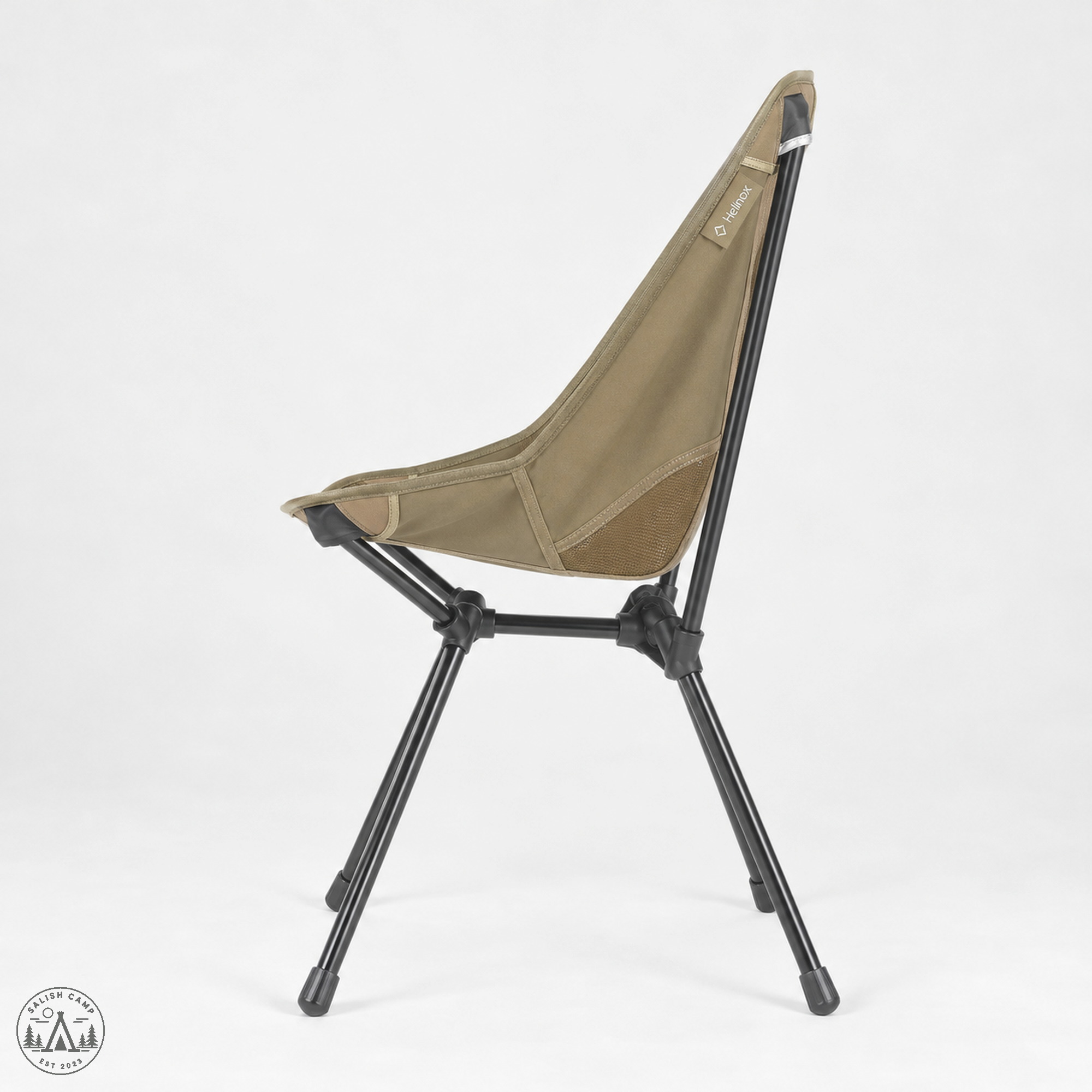
Stability is one of my concerns with taller portable chairs. A compact chair can feel fine when I'm sitting still and less reassuring when I reach across a table or shift my weight to stand up. Helinox addresses the Café Chair's taller build with a wider base, leg poles thicker than the Chair One's, and stronger proprietary nylon resin hubs. The frame is DAC aluminum alloy with shock-corded sections that connect into the hubs, and rubber feet meet the ground.
Those details matter at Pacific Northwest campgrounds, where gravel pads, packed dirt, wooden decks, and patches of soft ground are more common than perfectly level surfaces. I'd still pick a reasonably flat spot and check whether the feet are sinking unevenly before settling into a meal. The wider base doesn't make the chair immune to tipping. And the 320 lb capacity is reassuring, but it's a seating capacity, not permission to rock backward or stand on the chair.
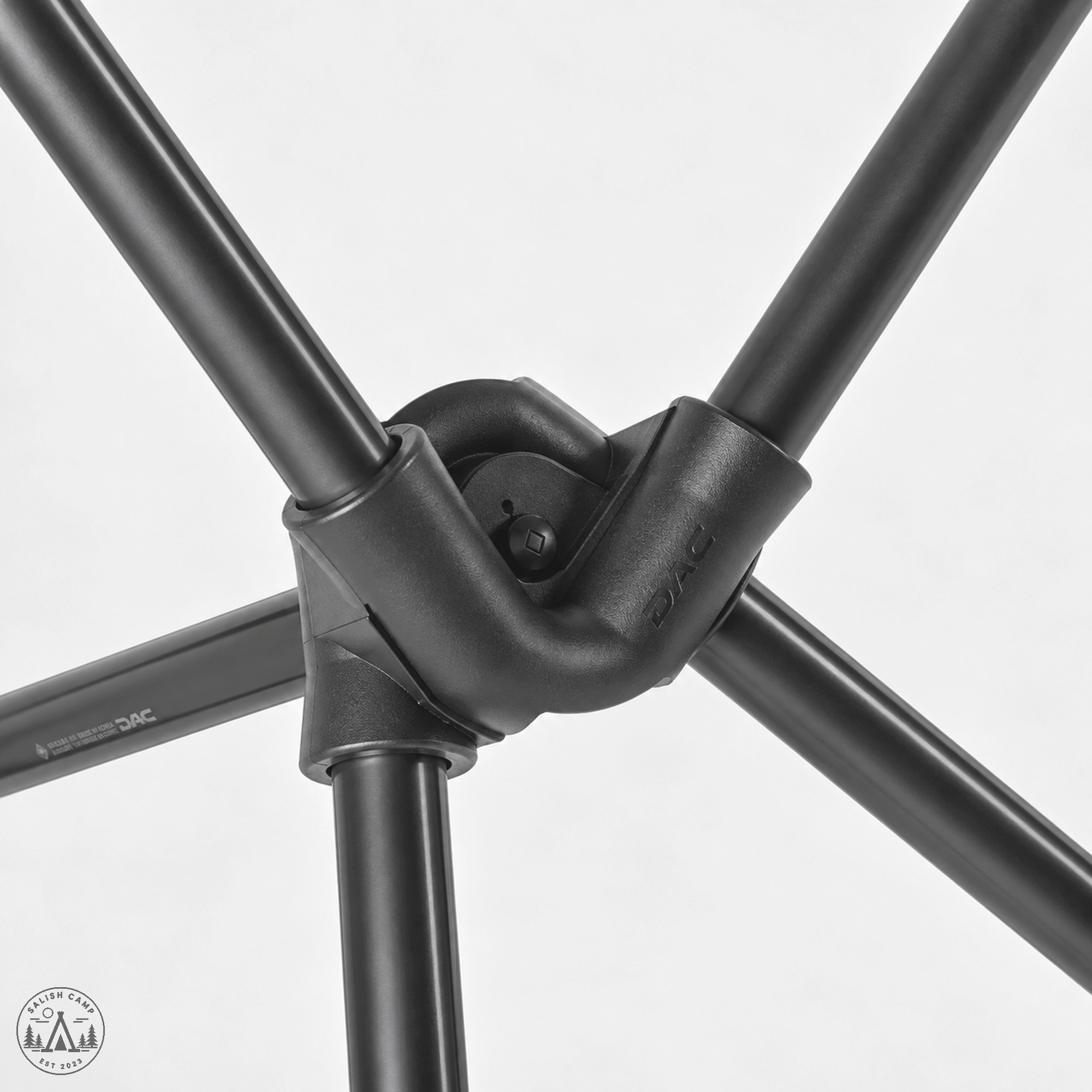
A shock-corded frame is one of those small conveniences I value more after years of setting up camp in bad weather. When I pull into an Olympic Peninsula campground with intermittent rain in the forecast, I don't want furniture that means sorting through a pile of similar-looking parts. The connected poles go together into the assembled frame, and then the seat fabric goes on. The habit that matters is making sure each pole is fully seated before putting weight on the chair, and checking that the fabric corners are properly in place rather than forcing a half-assembled frame into shape.
Breakdown deserves similar care. If the chair has sat under a damp tarp all evening, I'd wipe down the poles and let the fabric dry when practical. Mesh gives up moisture readily, but the corners, seams, and packed fabric can still hold dampness, and I wouldn't leave any camp chair sealed in its case for long after a wet trip.
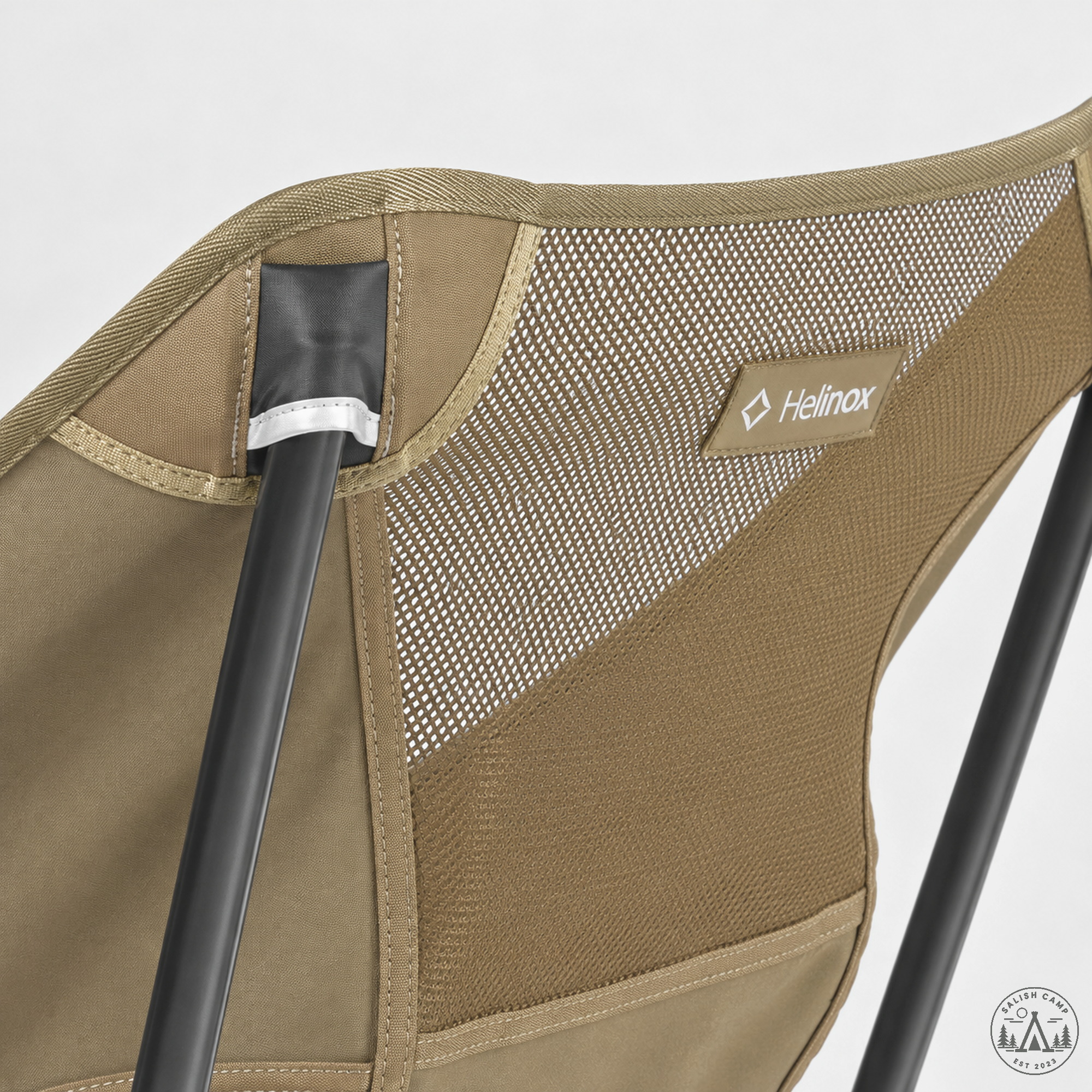
Coyote Tan is the version I'd choose for the Salish Camp setup. Its muted earth tone works naturally with the dark greens, weathered wood, gray tarps, and subdued gear colors I tend to have around camp. That's an aesthetic preference, not a performance advantage. Black is the more neutral option and may be easier to match with an existing set of dark camp furniture, while Coyote Tan can make dust, food stains, or wet marks more obvious. Both were listed at the same $184.95.
The seat uses bluesign®-certified recycled 600D polyester with recycled polyester mesh paneling. The solid sections carry the load, while the mesh adds ventilation. That's useful on warm summer afternoons when a fully solid seat can feel stuffy. In the shoulder season, ventilation matters less. When I'm eating dinner under a tarp in October, I care more about staying warm and dry than about airflow, and I'd still avoid leaving the chair out in prolonged rain or storing it wet.
The Café Chair weighs 3 lb 2 oz (1418 g) packed in its case and 2 lb 13.5 oz (1218 g) assembled. For vehicle-supported camping, that weight is easy to accommodate. I'd be more concerned with how the 23 x 6.5 x 6.5 in cylindrical case fits among everything else. It can slide in alongside a folding table, tent poles, or a camp kitchen bin, but it isn't something I'd expect to disappear into a small daypack. In a truck bed, a larger cargo area, or a dedicated camp storage system, the dimensions are manageable. For backpacking, they make little sense. This is a chair I'd bring when the campsite itself is the destination.
Where the Café Chair makes the most sense is a stationary camp kitchen. Picture a folding table under a tarp on a rainy afternoon in the Cascades, with dinner ingredients laid out and everyone waiting for the weather to improve. I want to sit close enough to prep food comfortably without leaning out of a low chair, then eat at the same table and stay seated for a game of cards. The upright position supports exactly that routine.
Helinox designed it to pair with the Café Table, but I wouldn't treat that as a requirement. I'd check any other table's actual height, underside clearance, and crossbars before assuming it will work. The 28 in table line is useful guidance, not a guarantee for every table frame. At a campground picnic table, the fixed benches can also get in the way of a separate chair. On a cabin deck or beside a freestanding folding table, placement is much easier.
So is it worth $184.95? It isn't an inexpensive way to sit outside, and a pair for a shared camp dining setup costs $369.90 before any other furniture. The justification comes from how often you use a table. If I were camping for a single night, cooking quickly, and spending most of the evening by the fire, I wouldn't prioritize this chair. For multi-day basecamps, family campground trips, and weekends where the cooking area becomes the center of camp life, I'd give it serious consideration. Its strength is doing one job well, and for someone tired of hunching over dinner from a low lounge chair, that may be exactly what makes the price worthwhile.
Pros
- Purpose-built dining posture: Upright seating makes cooking, eating, and tabletop activities more natural than using a low lounge chair.
- Strong, reinforced construction: DAC aluminum alloy, reinforced corners, a wider base, and stronger hubs support a 320 lb capacity.
- Breathable seating materials: Recycled polyester fabric and mesh paneling balance support with ventilation.
- Convenient portable design: Shock-corded assembly and a zippered cylindrical carrying case make the chair practical for vehicle-supported camping.
Cons
- Premium price: $184.95 for one chair makes outfitting an entire camp dining area expensive.
- Long packed profile: The 23 in case is less convenient for compact storage and unsuitable for most backpacking setups.
- Limited lounging appeal: The upright design prioritizes dining and table use over relaxed fireside seating.
Technical Specifications
| Specification | Details |
|---|---|
| Product | Helinox Café Chair |
| Option in photos | Coyote Tan, SKU 14360 |
| Other option | Black, SKU 14351, $184.95, in stock |
| Price | $184.95 Coyote Tan (helinox.com, 2026-10-08, in stock) |
| Assembled weight | 2 lb 13.5 oz (1218 g) |
| Packed weight | 3 lb 2 oz (1418 g) |
| Assembled size | Height 33.5 in (85.5 cm), width 22.5 in (57 cm), depth 18 in (45.5 cm) |
| Packed size | 23 x 6.5 x 6.5 in (58 x 16.5 x 16.5 cm), 3/4-zip cylinder case with daisy chain and D-ring |
| Table fit | Slides under a 28 in dining table |
| Back angle | 12° more upright than the Chair One |
| Capacity | 320 lb (145 kg) |
| Frame | Proprietary DAC aluminum alloy, proprietary nylon resin hubs, silicone shock cord, rubber feet; wider base than Chair One |
| Seat | bluesign®-certified recycled 600D polyester with recycled polyester mesh paneling |
| Carry case | bluesign®-certified recycled 300D polyester ripstop |
| Warranty | 5 years, manufacturing defects |
Final Thoughts
The Helinox Café Chair solves a specific problem that traditional low camping chairs often overlook: sitting comfortably at a proper table.
I like that Helinox hasn't tried to turn it into another general-purpose lounge chair. The more upright seating position, wider base, reinforced construction, and breathable fabric all serve the same purpose.
For the way I think about Pacific Northwest basecamp living, that purpose is meaningful. Meals stretch longer when the weather keeps everyone under the tarp. A folding kitchen table becomes the place for morning coffee, afternoon food prep, and evening card games. A chair designed for those activities makes more sense than constantly adapting a low seat.
Coyote Tan would be my choice for its understated look alongside natural wood, canvas, and muted camp gear. Black is an equally valid option for someone who prefers darker equipment.
The biggest reservation is value. At $184.95, the Café Chair needs to earn its place through frequent table use. Its 23 in case and upright seating geometry make it a specialized addition rather than the only chair I'd want for every trip.
For established campsites, cabin decks, and well-organized vehicle-supported kitchens, I can see the appeal. For backpacking or relaxed fireside evenings, I'd choose something else.