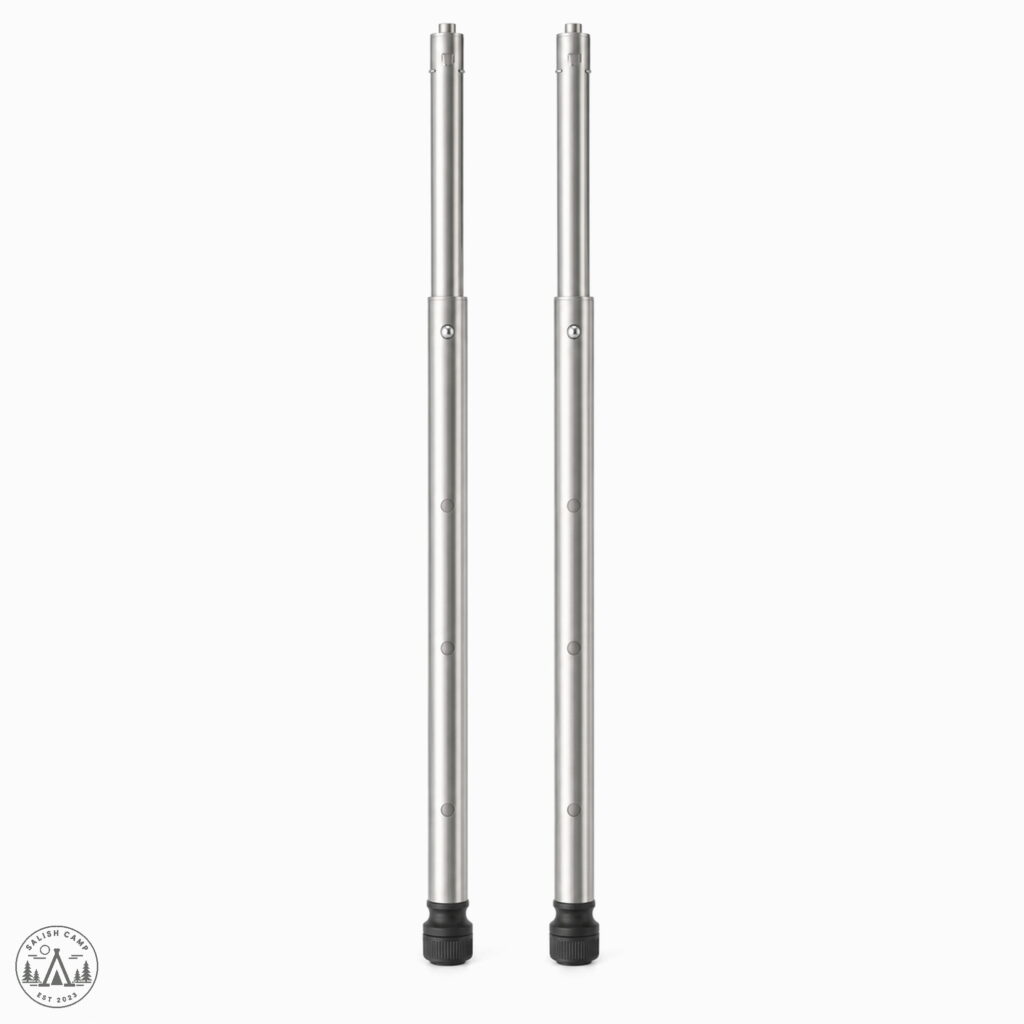
Buy if you’re building an IGT kitchen around a Stanluck frame and want to cook seated, work at a middle height, or stand at the tailgate. The Long Adjustable IGT Legs give you three defined heights in stainless steel, which suits a camp kitchen that changes jobs through the day.
Skip if you want the lightest possible kitchen, need fine height adjustment to level rough ground, or would rather have a fixed-height table with less setup. The legs are sold separately from the frame, and Stanluck doesn’t publish their weight.
What Stands Out
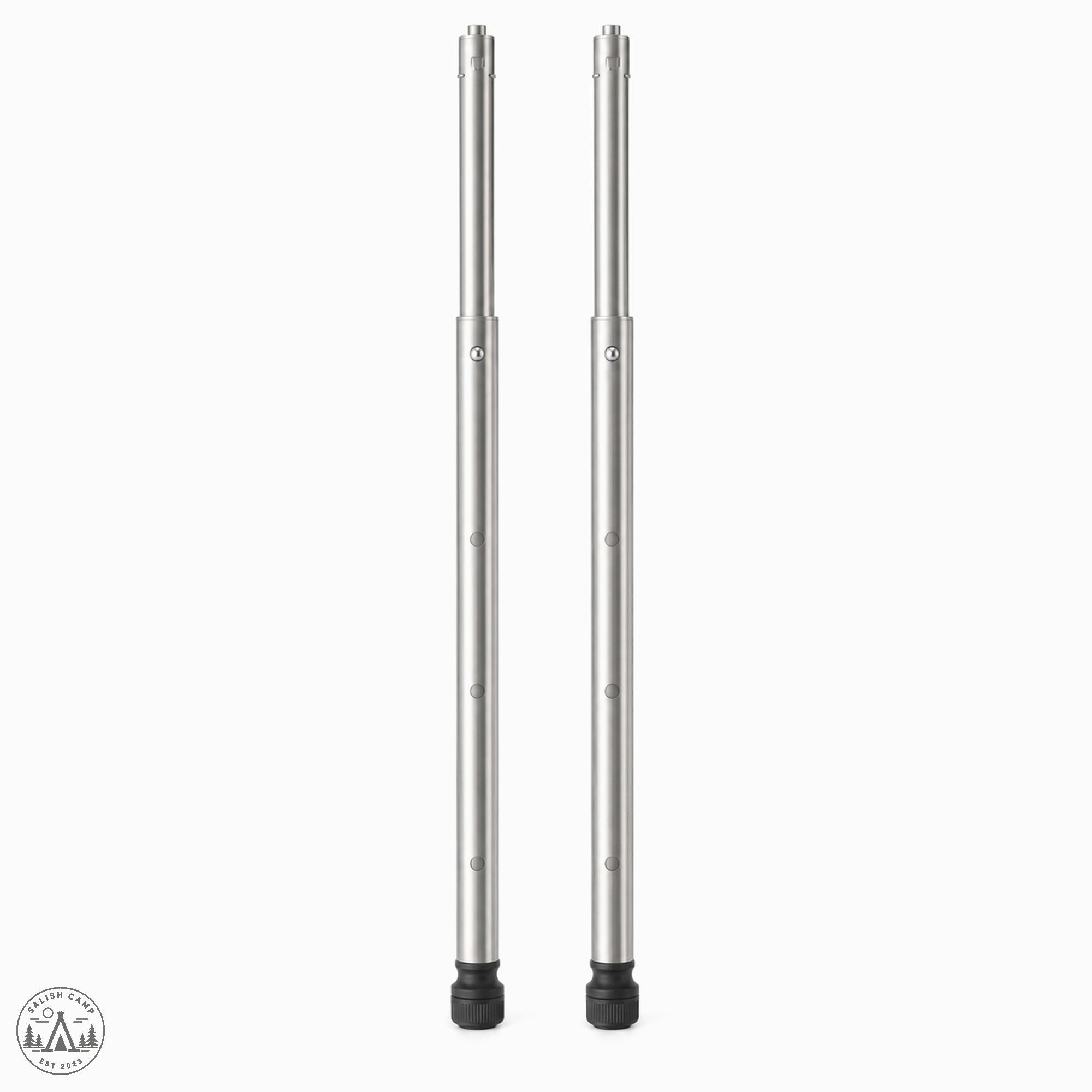
- Three useful working heights: The 550, 660 and 830 mm settings cover seated meals, a middle working position and standing food prep.
- One frame, several setups: Changing leg height lets one Stanluck IGT frame do different jobs without a separate table for each.
- A real standing option: The 830 mm setting raises the work surface enough to make standing prep more practical than hunching over a low camp table.
- Stainless steel and resin: The specified materials give these legs a different profile from aluminum-focused camp furniture and suit wet, often-cleaned kitchens.
- Sold as a pair: Each order includes two legs, so plan the whole frame setup before ordering.
- Compact when collapsed: At 23 x 3 x 3 in collapsed, they’re easy to plan around in a vehicle kit.
- Defined steps, not fine leveling: Three positions suit changing activities but don’t replace a level spot on the ground.
In The Field
What makes an IGT kitchen interesting isn’t just the modular surface. It’s how that surface fits the way you actually use a campsite. After enough weekends on the Olympic Peninsula and in the Cascades, I’ve learned the height that feels right for breakfast isn’t always the one I want for dinner, washing up, or sitting around after the rain finally stops.
That’s where the Stanluck Long Adjustable IGT Legs make sense. Instead of choosing one working height when I build the kitchen, I get three. I can set the frame low for meals, move it to the middle when the chairs and task call for it, or raise it for standing prep.
I treat these legs as part of a complete Stanluck IGT kitchen, not a standalone piece of furniture. The frame sets the work surface, the inserts and cooking gear decide how I use it, and the legs set the ergonomics: how far I bend, whether I’m comfortable in a chair, and how the setup feels when I’m standing. That’s why I choose leg height early when planning a kitchen rather than as an afterthought.
One purchasing detail matters for anyone new to modular camp furniture. These are sold as a pair, and Stanluck’s page doesn’t say how many legs a given frame needs, so I’d confirm the frame’s support requirements before ordering.
The lowest setting, 550 mm, is where I start for seated meals. A low lounge-style chair and a more upright dining chair put your elbows at very different heights, so before settling on the lowest setting, I sit in the actual chair and check where my hands rest. I want to reach the surface without lifting my shoulders or leaning forward, and with a very low chair, even 550 mm can feel high for relaxed eating.
The middle setting, 660 mm, bridges the two ways of using a table. For a seated cook in a taller chair, it can bring food and utensils into a better working position, and it’s a good fallback when the lowest setting puts the surface below where I want it. I wouldn’t call it a standing prep height for most people, though. That depends on your height and the task.
The highest setting, 830 mm, is the one I’d prioritize for a standing kitchen. Chopping vegetables, organizing ingredients or assembling breakfast beside an open tailgate is far more pleasant when I’m not bent over a low table, especially after a long drive or a wet hike. Still, check the height against your own body rather than assuming one setting fits everyone. The real advantage isn’t that any single height is perfect. It’s that I can pick the one that suits the job.
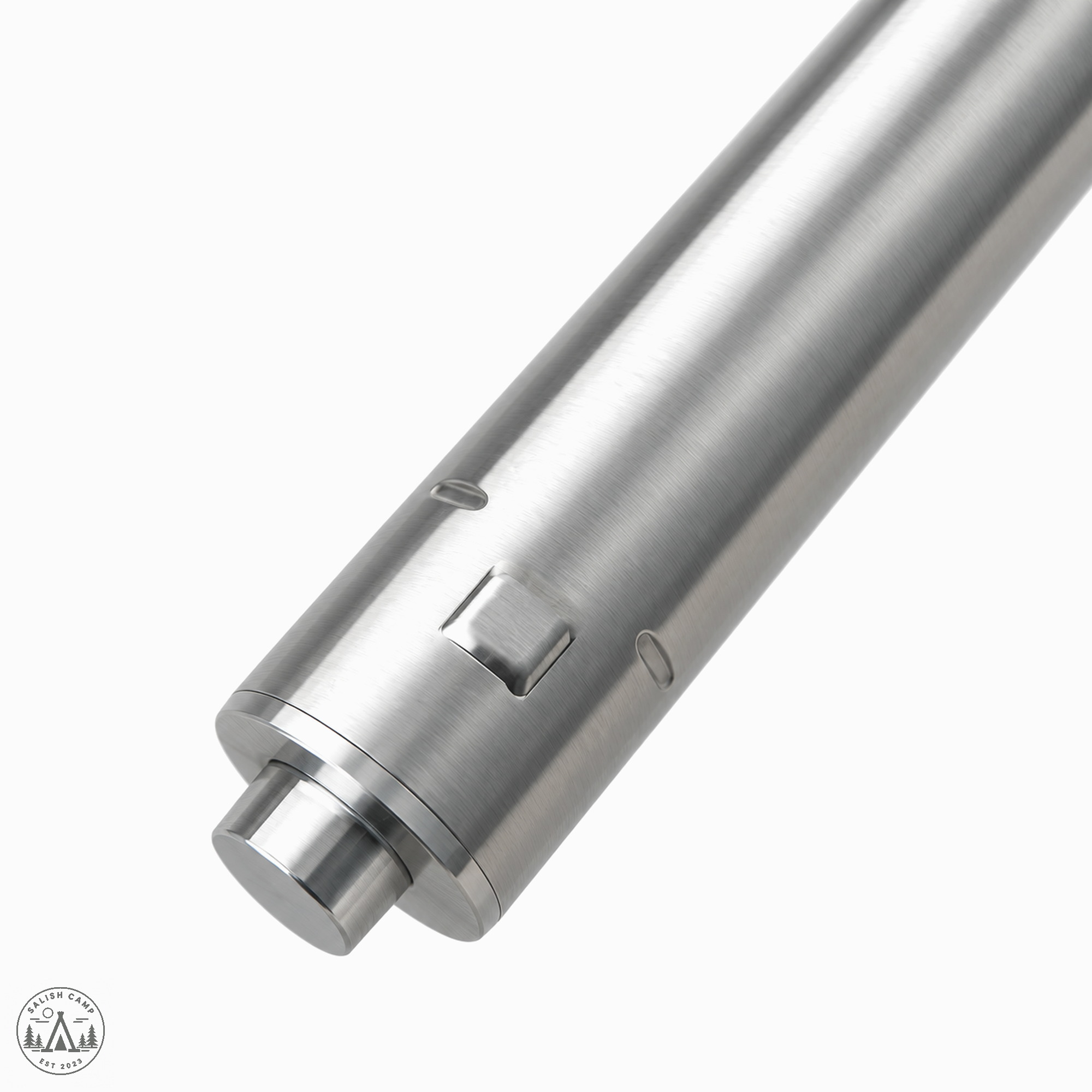
At a Cascades car-camp, I start with the ground rather than the legs. I find the most level, firm part of the site, clear loose rocks and branches, and decide where the cooking surface should sit relative to the vehicle, seating and shelter. Then I attach the legs following Stanluck’s instructions, set the height, and check that each adjustment is fully secured before loading anything on top. A leg that looks extended isn’t necessarily locked.
Once it’s assembled, I press gently at different points on the surface and check for rocking or shifting. That matters even more at 830 mm, where a little movement at the base shows up more at the top. Stanluck doesn’t publish a load rating for the legs, so I follow the frame’s loading guidance and don’t treat the tall setup like a heavy-duty workbench.
A gravel bar on the Skagit is a good reminder that adjustable height and leveling aren’t the same thing. A patch can look flat until one foot lands on a stone and another sits in a shallow dip, and three fixed steps can’t correct that kind of difference. Rather than improvising with mismatched settings, I move the table to a better patch of gravel, clear small obstructions, and make sure every leg is firmly planted. That matters most around hot cookware. I don’t want to discover a wobble while lifting a pot or reaching across a burner.
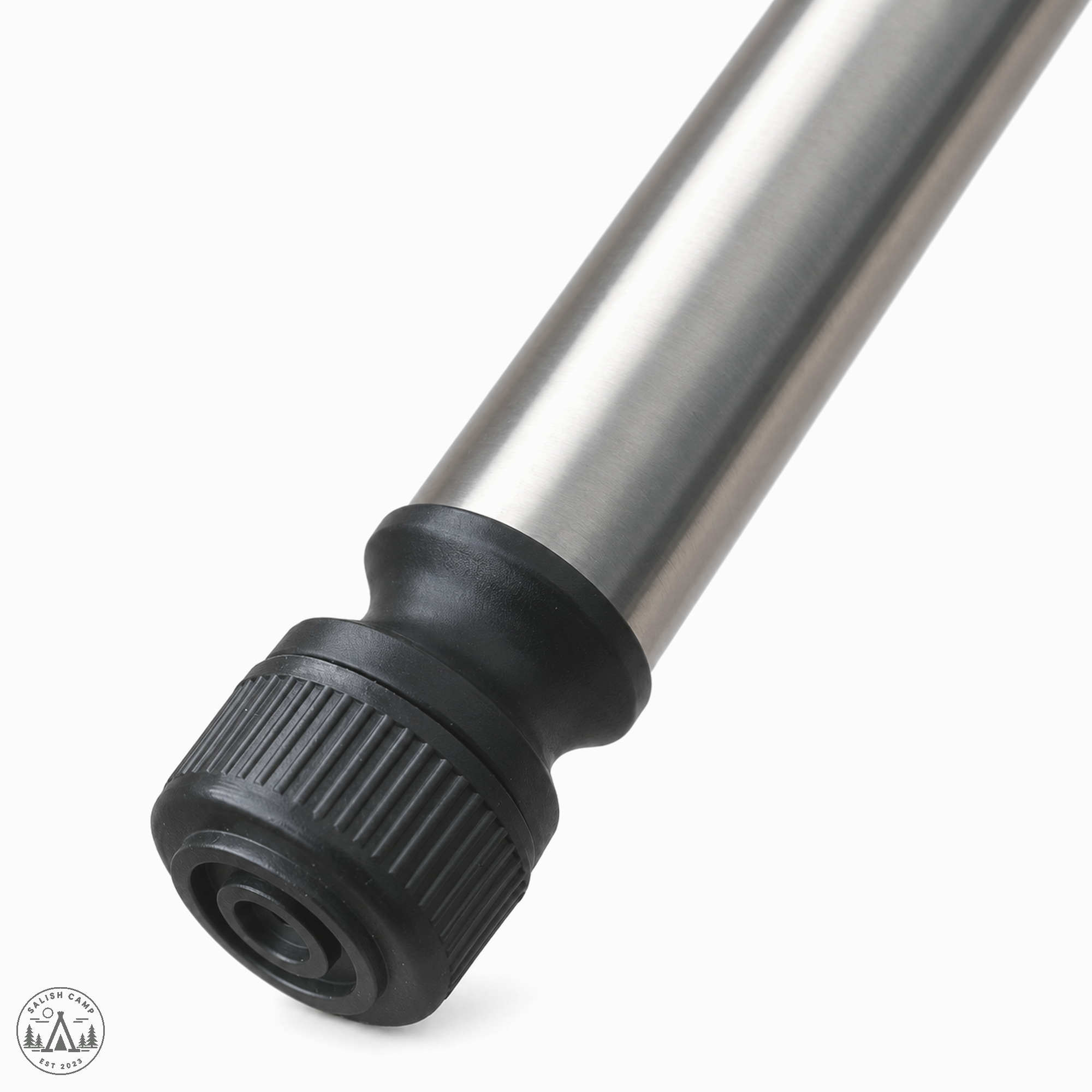
Stainless steel suits gear that sees moisture, splashes and frequent cleaning, which is attractive on the coast or in steady Olympic Peninsula drizzle. It isn’t maintenance-free, though, and there are resin parts too. I wipe the legs down after a trip, pay attention to the joints and adjustment areas, and let everything dry before storing them.
Stanluck doesn’t publish a weight, so I can’t compare the carry weight with lighter alternatives. For a car-camping kitchen, I care more about how the legs pack alongside the frame, chairs and cooking gear, and at 23 x 3 x 3 in collapsed they slot into a kitchen bin easily. Still, the missing weight makes it harder to judge the whole kitchen before buying.
At a late-season coastal site, the kitchen does several jobs over a weekend. Breakfast might be a quick standing task before everyone heads out, lunch a seated affair, and dinner a bigger prep session under the tarp. I like being able to change the height instead of forcing every meal into one arrangement. I make those changes with the surface cleared and the frame unloaded, never with hot cookware or loose gear on top. For beginners, adjustable doesn’t mean something you adjust while the kitchen is in use.
There’s also a limit to how much flexibility I need. If I cooked standing on nearly every trip, fixed-height legs might be simpler. If I always sat in a low chair, I’d rarely use the taller settings. The long adjustable version makes the most sense when the kitchen genuinely changes roles during a trip.
Over the next few seasons, I’ll keep checking whether the adjustment joints develop play, whether the legs keep holding their set positions, and whether the connections stay easy to work after dirt and moisture. For a modular car-camping kitchen, the ability to change working height is reason enough to take these seriously. I just want the hardware to stay dependable after the novelty wears off.
Pros
- Versatile height selection: Three positions make one Stanluck IGT kitchen work for seated and standing jobs.
- Practical standing height: The 830 mm setting gives a more natural position for most food prep.
- Stainless steel construction: A sensible material for a camp kitchen exposed to moisture and regular cleaning.
- Modular approach: The legs become part of a configurable kitchen built around a Stanluck frame.
Cons
- No published weight: It’s hard to judge the carry weight of the complete kitchen before buying.
- Extra cost on top of the frame: Sold separately, they add to the total cost of the kitchen.
- Steps, not fine leveling: Three set heights don’t fix uneven ground, and there’s little long-term data on the adjustment joints yet.
Technical Specifications
| Specification | Detail |
|---|---|
| Product | Stanluck Long Adjustable IGT Legs 550/660/830MM (Pair) |
| Config | Long, stainless steel (TL-215), pair |
| Price | $76 USD per pair (stanluck.com, 2026-10-10) |
| Heights | 21.65 in, 26 in, 32.67 in (550 / 660 / 830 mm) |
| Collapsed length | L 23 x W 3 x D 3 in |
| Material | Stainless steel, resin |
| Origin | Korea |
| Sold as | Pair |
Final Thoughts
The Stanluck Long Adjustable IGT Legs answer one of the most practical questions in building a modular camp kitchen: how high should the work surface be? For me, the answer changes through the trip. Sometimes I want to sit with coffee and put together a simple breakfast, and sometimes I’m standing at the tailgate getting dinner ready. Using one Stanluck frame for both is the strongest reason to buy these.
The trade-offs are manageable but real. You buy the legs separately, there’s no published weight, and three fixed positions don’t replace a level site on rough ground.
For a vehicle-based Pacific Northwest camp kitchen where comfort and flexibility matter more than minimalist packing, these are an easy component to build around. I’d choose them for the way they let the kitchen adapt to the day.