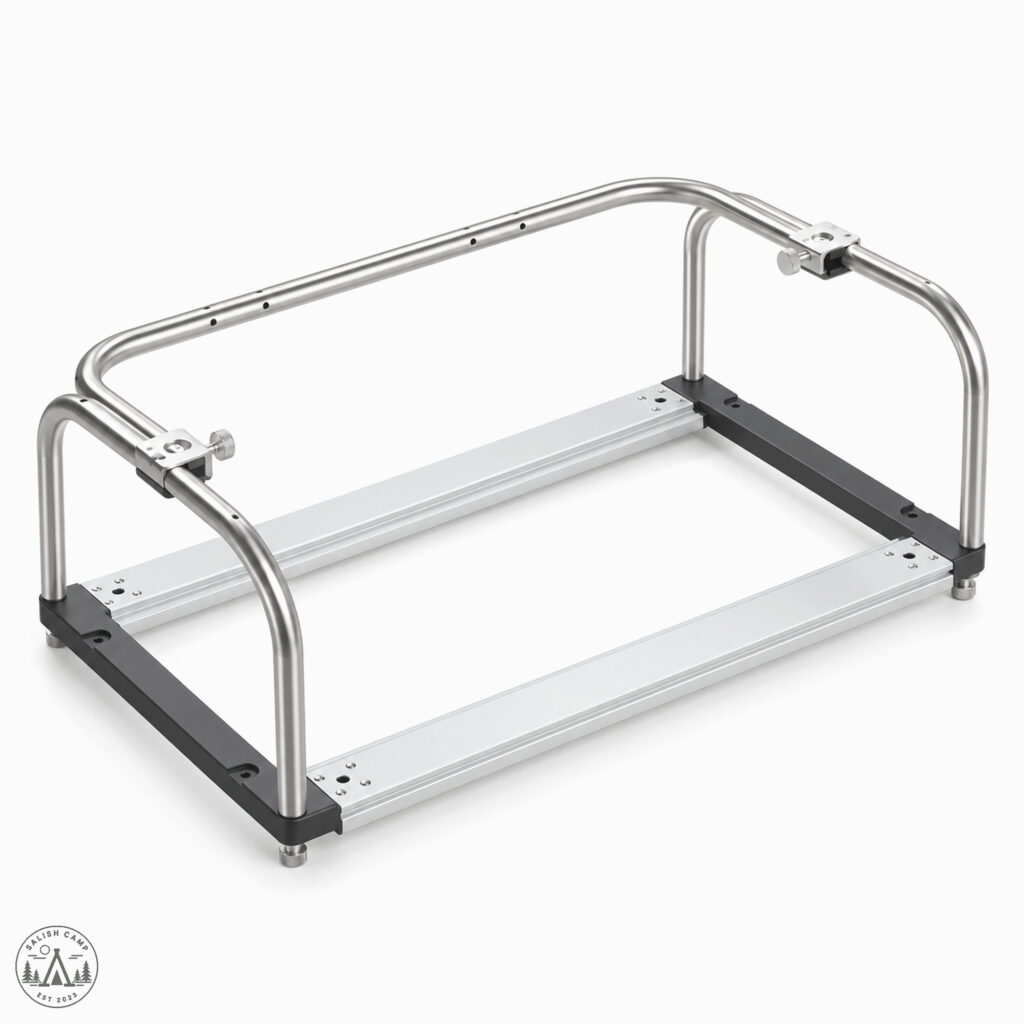
Buy if you already run a 3-unit or 4-unit IGT kitchen and want utensils, tongs, towels and other hanging essentials off the tabletop. The Stanluck IGT Kitchen Rack makes the most sense for a deliberate car-camping setup where organization and clear cooking space matter more than a short gear list.
Skip if you use a 2-unit IGT frame, prefer a minimal cook station, or don’t have enough kitchen clutter to justify another accessory. It’s a specialized storage add-on, not a work surface.
What Stands Out
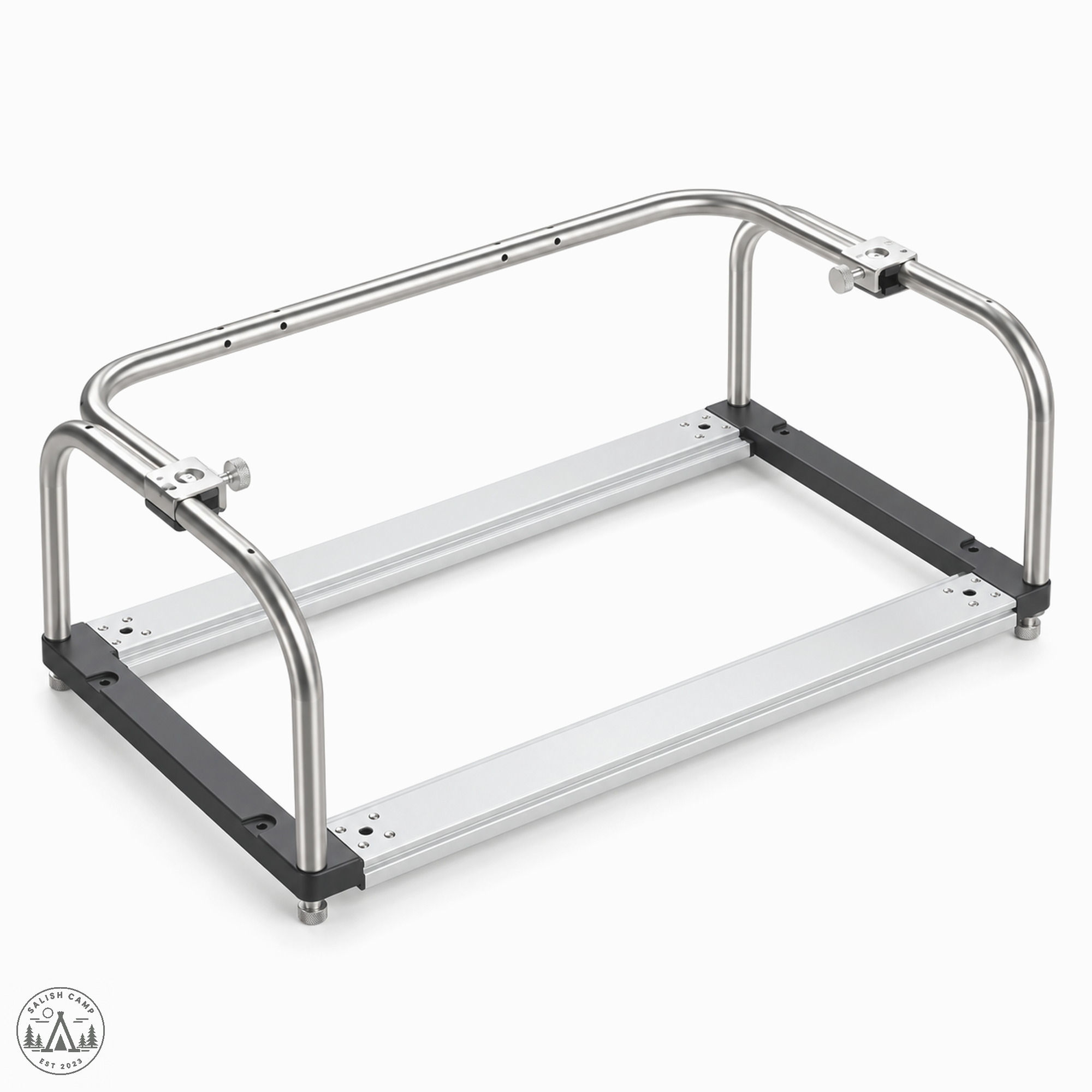
- Vertical storage for an IGT kitchen: The rack moves often-used tools above the work surface, freeing tabletop space for prep and cooking.
- Three-sided coverage: It fits over three sides of an IGT frame, creating a defined overhead storage zone.
- Made for bigger layouts: It works with 3-unit and 4-unit frames, which suits established kitchens with separate cooking and prep zones.
- Essentials within reach: Hanging utensils and tongs cuts the back-and-forth between tabletop, bins and burner.
- A tidier cook station: Moving tools overhead separates active prep space from gear that just needs to stay handy.
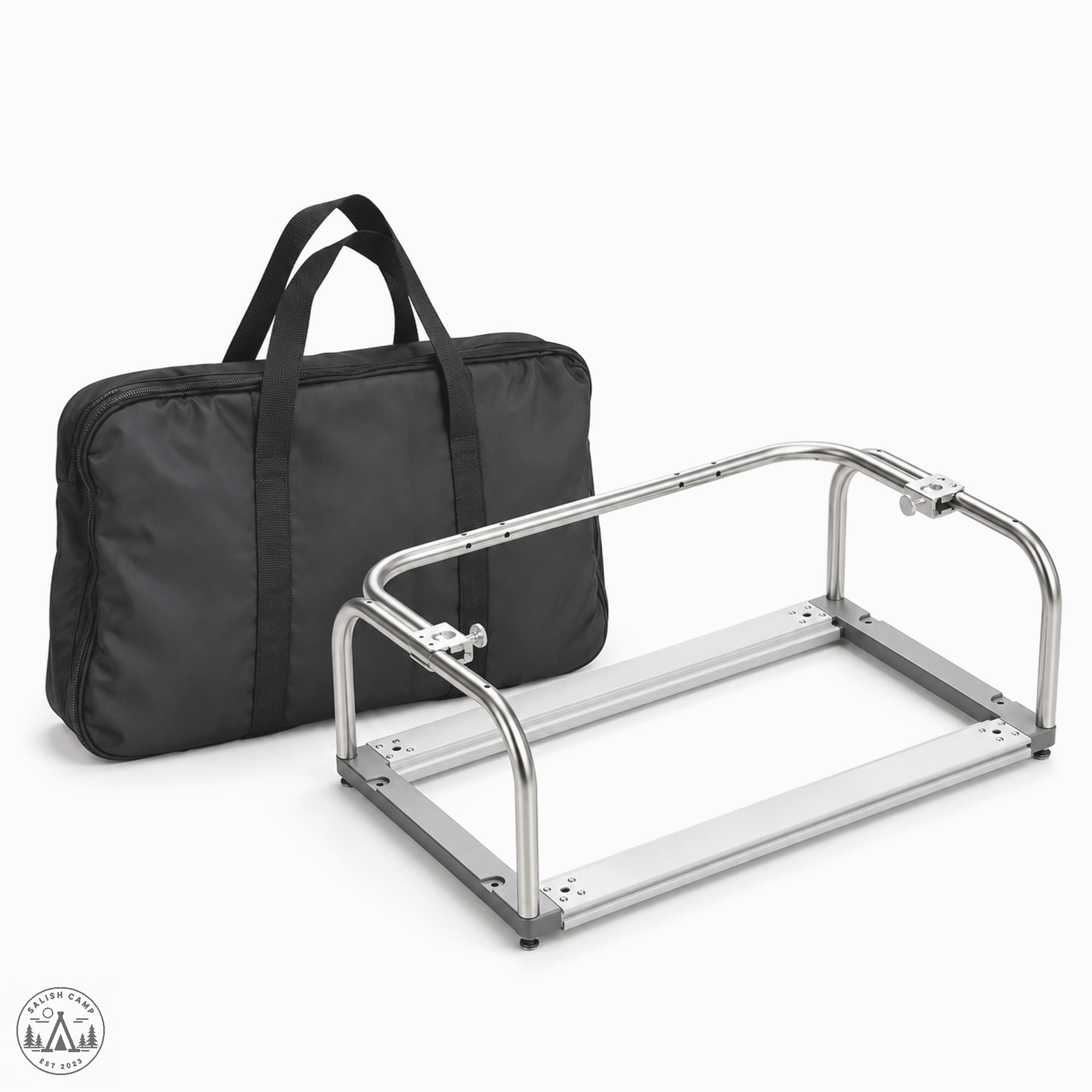
- Storage bag included: The bag gives the rack its own place in the packing system alongside other IGT parts.
- Purpose-built, not universal: IGT-specific fit is a plus for the right kitchen, but it won’t work on a 2-unit frame.
In The Field
The challenge with a developed IGT camp kitchen isn’t having enough tabletop. It’s keeping that tabletop free once cooking starts. On a wet Olympic Peninsula morning, with breakfast going and rain falling past the tarp, even a generous cook station fills up fast. Tongs land beside the burner, a dish towel takes over the prep area, and small accessories migrate around because they have no home.
The Stanluck IGT Kitchen Rack tackles that by using the space above the frame instead of adding more tabletop. It’s a simple idea that fits the way I like to build a semi-permanent kitchen for a weekend. On a normal IGT setup, the tabletop becomes the default spot for everything. Vertical storage changes the workflow. Instead of putting tongs down after every adjustment at the burner, I hang them. Instead of draping a clean towel across a tabletop section, I keep it handy but off the prep surface. That only works if the hanging layout makes sense, so I give the most reachable spots to things I use constantly and leave occasional gear in its usual bin.
Compatibility comes first. Stanluck lists the rack for 3-unit and 4-unit IGT frames and says it doesn’t fit 2-unit frames. That matters because IGT parts can look interchangeable while having different mounting requirements. Before buying, I’d confirm my frame size and picture where the rack sits relative to the cooking and prep areas. It covers three sides by design, so it isn’t a generic bar you clip wherever there’s room. I’d also check clearances against my burner, inserts and any other side- or overhead-mounted parts before building a layout around it. The rack shines when it slots into a kitchen that already works, not when it forces a comfortable layout to be rearranged.
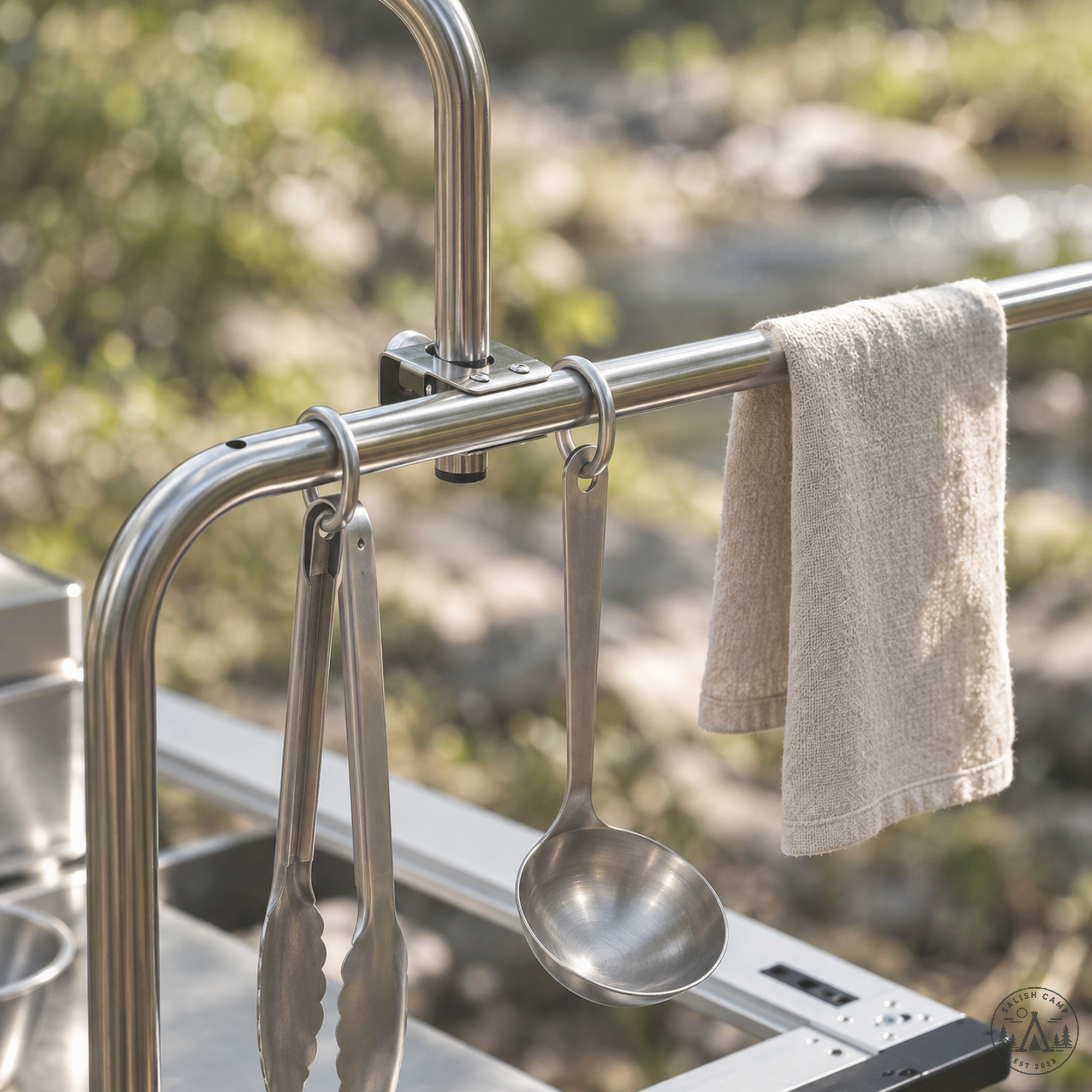
At a Cascades car-camp, my kitchen setup follows a set order. I pick the flattest practical ground, set the IGT frame, decide where the burner and prep surfaces go, and then add accessories. I mount the rack after the frame is in position but before spreading utensils and supplies around, so the hanging space shapes the rest of the layout.
I don’t start by hanging everything I own. I begin with the core cooking tools and check that each one is easy to reach from where I actually stand to cook. A rack can make a kitchen look tidier while making it less convenient if things are hung awkwardly. Long tools shouldn’t swing into the prep area, and nothing I need should force me to reach across a hot burner.
I also check the rack once it’s mounted, before loading it. Stanluck doesn’t publish a load rating, so I don’t assume it can carry heavy cookware. Light kitchen tools are the sensible start until the manufacturer says otherwise.
Breakdown runs in reverse. I take every tool off the rack and wipe down anything greasy, then lift the rack off before folding the frame, so nothing gets bent or pinched. On a wet morning, I let the rack drip dry under the tarp while I pack the rest of the kitchen, then bag it last.
A calm site makes overhead storage look easy. A breezy gravel bar on the Skagit changes that. Anything hanging in an exposed kitchen can swing, rattle or shift, a towel catches the wind, and utensils knock against nearby gear. That’s true of any vertical storage at an outdoor cook station, not just this one. I keep the hanging setup restrained, never leave loose fabric where it could blow toward a flame, and face the kitchen away from the wind where I can. The rack isn’t a windscreen, either. At a late-season coastal site, I empty it whenever the kitchen isn’t in use rather than assuming an organized station is wind-resistant.
The biggest benefit I see is a clear split between the work surface and the storage above it. The tabletop stays free for cooking and prep, frequently used tools live overhead, and anything that needs a flat, stable surface stays below. That also makes me think about heat. An overhead rack is never an excuse to hang towels, lanterns or other heat-sensitive gear directly over a burner.
I like the idea of a lantern spot that doesn’t eat tabletop space, but Stanluck describes hanging space for tools and utensils, not a lantern mount or a load limit. Before hanging a lantern, I’d make sure it attaches securely, isn’t too heavy, and stays well clear of heat. Good camp kitchen design is as much about what you don’t hang as what you do.
The included storage bag helps. I prefer keeping modular kitchen parts in their own bags rather than a general gear bin, which makes setup predictable and cuts down on rummaging when I reach camp. Stanluck doesn’t publish packed dimensions or a weight, though, so I can’t say how much room it takes in the car or whether it’s light. For car camping, those gaps aren’t deal breakers, but they matter if you’re trying to keep the kitchen compact.
The real question is whether it earns its place every time I cook. If I regularly run a full IGT station, keeping the tabletop clear is a real improvement. If my cooking is mostly boiling water and simple meals, I wouldn’t get enough out of it to justify packing it.
I see the rack as a finishing piece for an IGT kitchen that already works, not where to start. Its appeal is workflow: finishing breakfast without constantly shuffling small tools out of the way, with the towel and tongs in their place and the work surface ready for the next job.
Pros
- Frees up tabletop space: Overhead storage gives utensils and small kitchen tools a home.
- Built for the IGT system: Fits 3-unit and 4-unit frames.
- Defined storage zone: The three-sided layout creates a clear vertical storage area.
- Storage bag included: Keeps it organized in transit and at home.
Cons
- No 2-unit fit: Smaller modular kitchens are left out.
- No published dimensions or weight: Packing and layout planning take guesswork.
- Specialized add-on: Its value depends on how much overhead storage you actually need.
Technical Specifications
| Specification | Details |
|---|---|
| Product | Stanluck IGT Kitchen Rack |
| Config | IGT Kitchen Rack (TT-201) |
| Price | $190 USD (stanluck.com, 2026-10-10) |
| Fit | Over three sides of an IGT frame |
| Compatible | 3-unit and 4-unit frames |
| Not compatible | 2-unit frames |
| Includes | Storage bag |
| Origin | Korea |
Final Thoughts
The Stanluck IGT Kitchen Rack gets more attractive as a camp kitchen grows past the basics. I wouldn’t make it an early purchase for someone still building a first IGT setup. A working cook surface and a comfortable layout matter more than overhead storage.
For anyone already using a 3-unit or 4-unit frame, it’s a practical way to tidy a familiar workspace: frequently used tools within reach, tabletop free for the work that needs it. The frame limits narrow its audience, the missing dimensions and weight make packing hard to judge, and wind and heat clearance need attention.
For my style of Pacific Northwest car camping, it’s a logical refinement once the basic kitchen is working well, and a useful, specialized addition rather than something every camper needs.