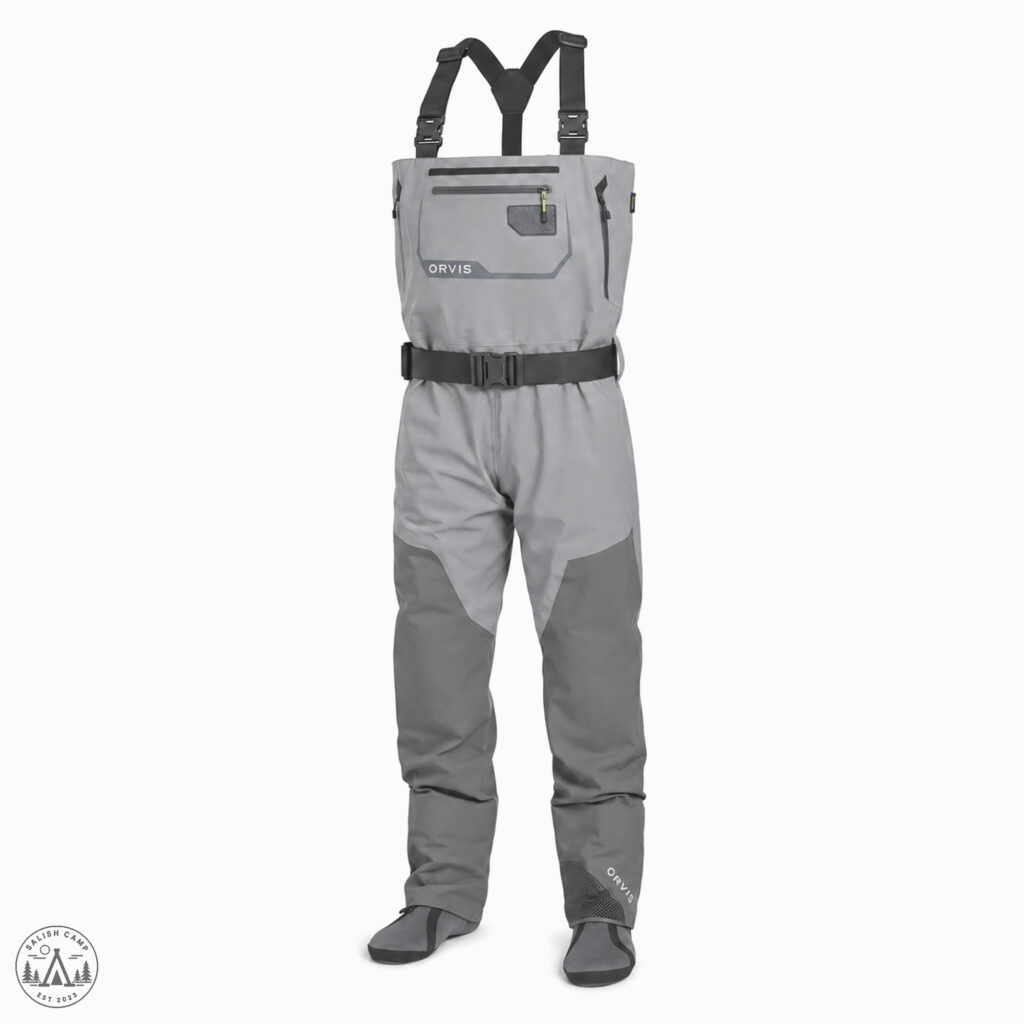
Buy if you regularly fish brushy, rocky rivers where getting to the run involves pushing through blackberry, scrambling over downed timber, and kneeling on sharp cobble. The Orvis Men’s PRO Waders in Shadow are built around a reinforced CORDURA shell, a movement-friendly seam layout, and removable knee pads. For winter steelhead, coastal salmon, and anglers who want a durable wader for years of demanding use, that construction makes sense.
Skip if your fishing is mostly easy-access summer trout water, warm-weather walk-and-wade trips, or long hikes where lightweight, highly breathable gear matters more than abrasion protection. These are substantial waders that reward careful sizing, proper layering, and a willingness to carry more material than a lighter fishing setup requires.
What Stands Out
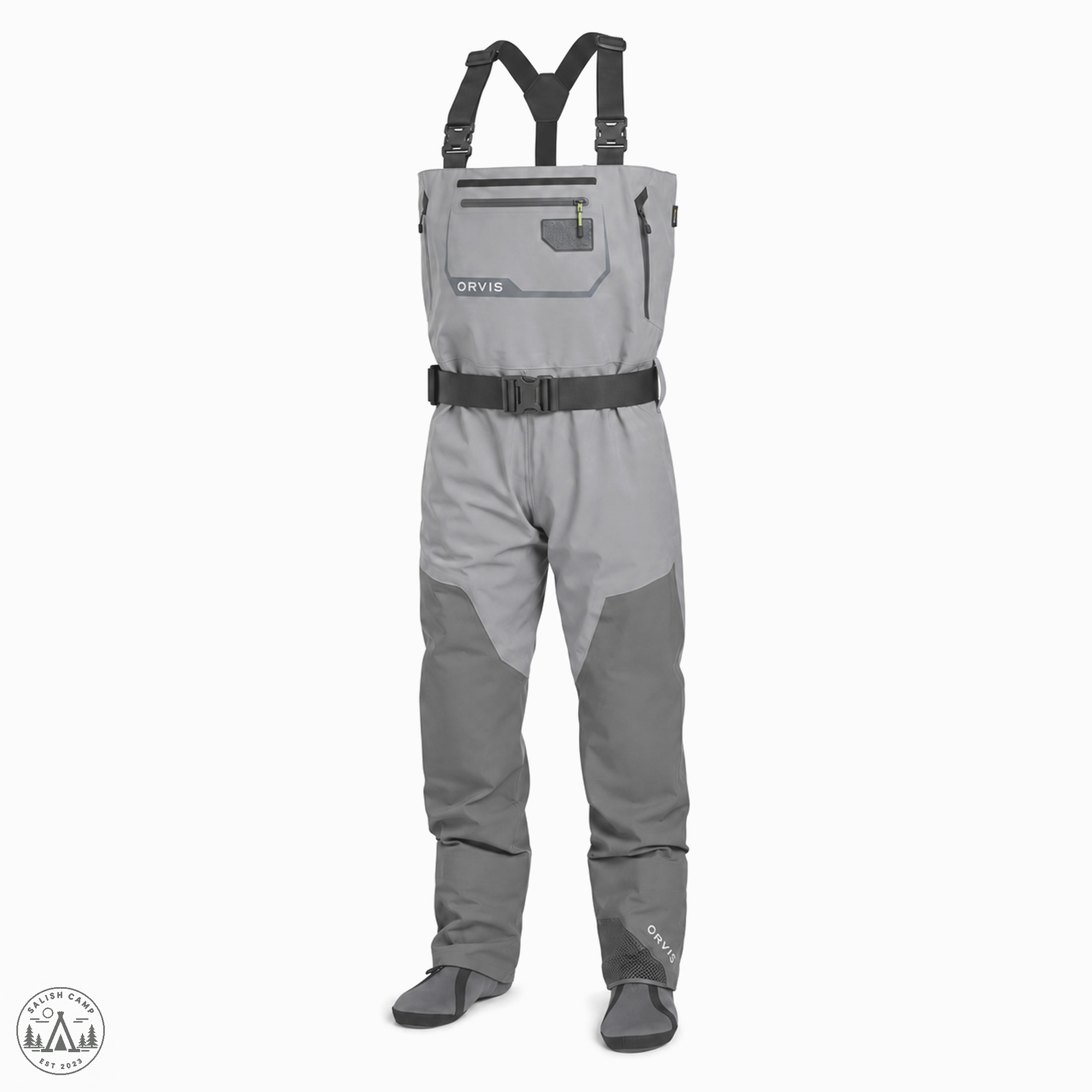
- Reinforced CORDURA construction: The proprietary four-layer CORDURA upper and five-layer lower-leg shell concentrate additional protection where boots, rocks, brush, and streamside obstacles create the most contact.
- Movement-focused seam layout: A gusseted crotch, low-profile construction, and rear-leg seam placement reduce the amount of prominent stitching exposed to repeated rubbing while climbing, kneeling, and stepping over logs.
- Removable knee protection: OrthoLite 6 mm knee pads provide a cushion between your knees and rough riverbed surfaces without requiring a separate set of external pads.
- Streamlined stockingfoot system: Anatomically shaped neoprene booties fit inside separate wading boots, while PU-reinforced stretch-mesh gravel guards cover the boot tops to help keep debris out.
- Functional chest storage: The external pocket combines a YKK AquaGuard water-resistant zipper, fly patch, daisy chain, and rubberized attachment tabs for frequently used fishing accessories.
- Cold-weather hand and interior storage: Fleece-lined kangaroo handwarmer pockets and a large four-way stretch power-mesh interior pocket help organize essentials without loading down the outside of the waders.
- Convertible chest-to-waist design: Adjustable elastic suspenders use opposing buckles that allow the upper section to fold down and secure around the waist when full chest coverage is unnecessary.
In The Field
I look at waders differently after spending a few winters chasing steelhead in Northwest rivers. It’s easy to appreciate a lightweight pair when you’re standing in a fly shop. It’s harder to appreciate that same thin shell when you’re forcing your way through devil’s club and blackberry to reach a Skagit run, dragging a knee across wet rock, or climbing a muddy bank with cold hands and a rod tucked under your arm. For that kind of fishing, my priorities shift. I want something waterproof, certainly, but I also want a shell that tolerates the repeated contact that comes with getting into difficult water. That’s the strongest argument for the Orvis PRO.
The layered construction is the first thing worth understanding. Four-layer and five-layer don’t mean four or five separate waterproof membranes. They describe a layered fabric system that combines protective material with waterproof components. The PRO uses fewer layers in the upper body, where mobility matters, and an additional layer in the lower legs, where contact with rocks, gravel, and brush is more frequent. The DWR treatment helps surface water bead and roll away, while the underlying waterproof coating and membrane provide the actual barrier. Once the exterior wets out, a wader can feel clammy even without leaking.
On a Sauk tailout, I’m often moving sideways across uneven cobble, stepping around boulders, then crouching behind a rock to change a leader out of the wind. The gusseted crotch matters in those moments. Instead of forcing the fabric into one tight intersection between the legs, the additional shaped panel provides room to open your stance and raise a knee. The single lock-stitched taped seam at the back of the legs also keeps a prominent seam away from much of the forward-facing abrasion. No stitching layout makes a wader immune to damage, though.
Knee protection is another feature I appreciate more on a real river than in a product photograph. Landing a coho on the Hoh can mean dropping onto wet cobble while keeping the fish in shallow water. Without padding, a pointed rock finds your kneecap immediately. The removable inserts add useful cushioning for those moments. They aren’t a substitute for carefully choosing where to kneel, and they don’t turn sharp rocks into soft ground. But they take some of the punishment out of routine river work. I also like being able to remove them when I want less bulk.
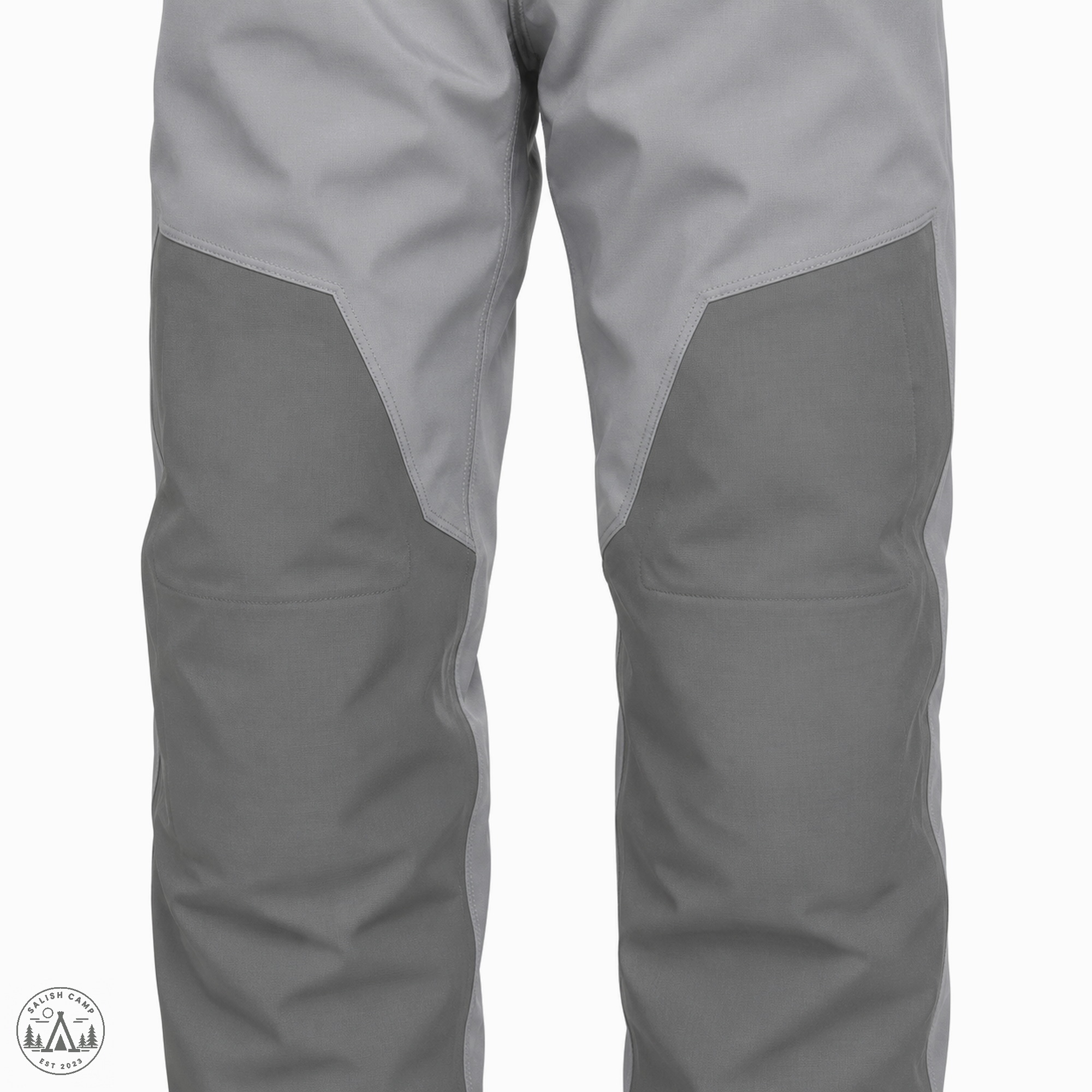
The stockingfoot design deserves an explanation for someone buying serious waders for the first time. These do not have hard-soled boots permanently attached. Instead, the waterproof lower sections end in shaped neoprene socks, and you wear separate wading boots over them. A bootfoot wader combines both into one unit; stockingfoot construction lets you choose boots suited to slippery river rock, hiking approaches, or your preferred traction system. The booties should follow the shape of your feet without being stretched tight or bunched underneath. The boots need enough interior volume to accommodate them and your cold-weather socks without squeezing your toes.
That fit becomes important on a mile-long hike into a Cowlitz bar. Tight boots can make your feet uncomfortable long before you reach the river. Oversized boots can allow excessive movement and rubbing. I would try the complete combination while wearing the socks I expect to fish in. Once everything is on, the integrated gravel guards stretch down over the boot tops to help stop sand and small stones from entering around the ankles. Their snug mesh construction also avoids much of the loose material that can catch current or collect water around a bulky boot collar.
Sizing the PRO is more involved than choosing the size printed on your everyday pants. The Medium Regular reference is useful for comparison, but I would begin with three measurements: chest or waist circumference, inseam, and foot size. The important check is how those measurements work together. A longer inseam doesn’t automatically mean a larger foot, and a roomier torso doesn’t necessarily call for longer legs. Orvis offers short, regular, long, and extra-long length options across its stated size range. I would use the actual chart rather than relying on a letter size alone.
I would also try a full squat, a high step onto a bench, and a deep knee bend while wearing my intended base and insulation layers. The crotch shouldn’t pull tight, the suspenders shouldn’t lift the booties, and there should be enough material to move naturally without excessive folds around the knees.
Storage is another area where the design reflects actual fishing. The chest pocket gives me a convenient place for a small fly box or compact accessories, but I wouldn’t treat a water-resistant zipper as waterproof dry-bag protection. A phone or other water-sensitive item still belongs in a sealed case. The fly patch and daisy chain keep small tools accessible, and the rubberized tabs offer additional attachment points. Inside, the stretch-mesh pocket handles items I don’t need every few casts, while the fleece handwarmer openings are welcome when a cold wind follows the river upstream.
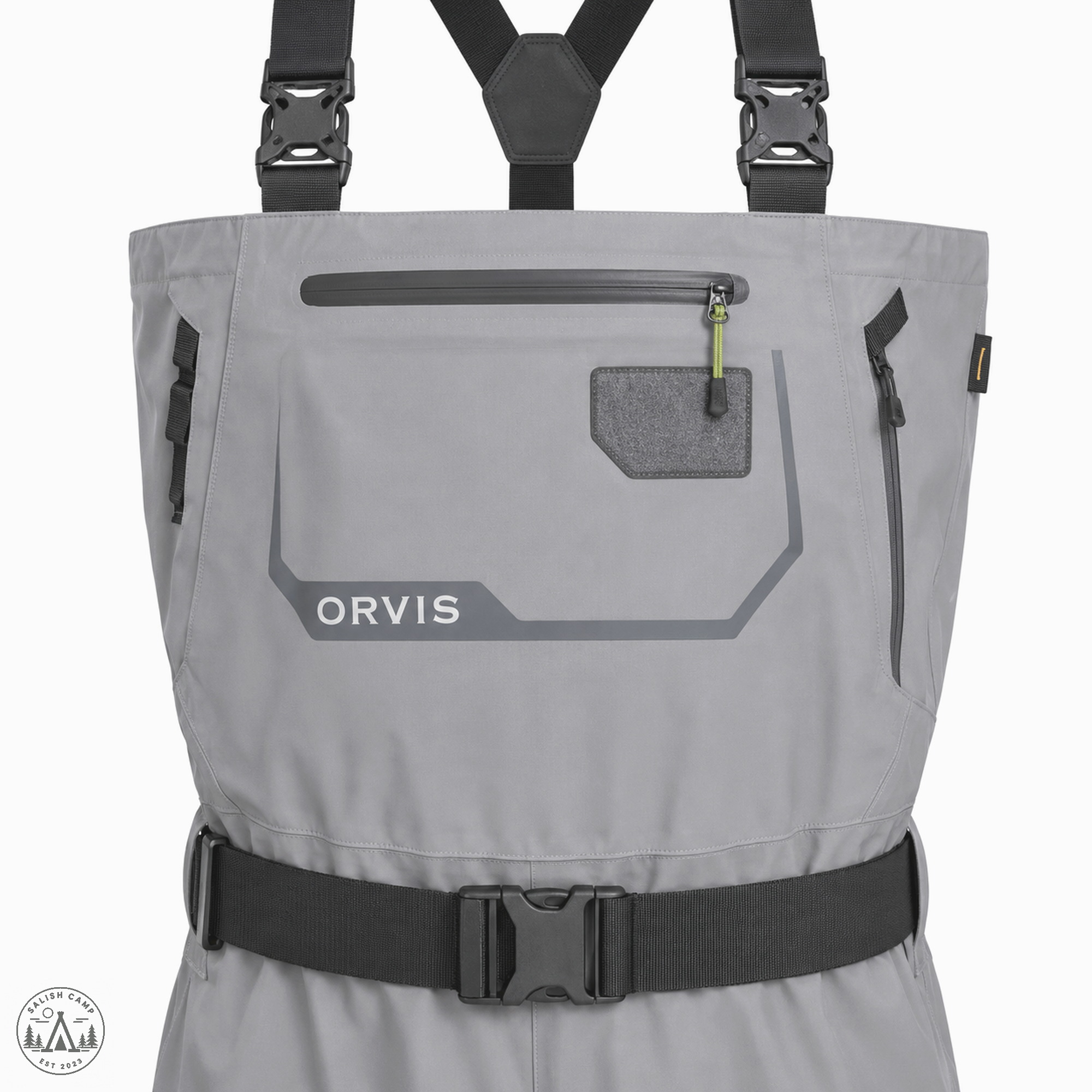
On a warmer afternoon, I appreciate being able to convert chest waders to waist height. The opposing buckles let the folded upper section secure around the waist rather than leaving the bib hanging loose. It’s useful when hiking back toward the truck or fishing shallower water in comfortable weather. It doesn’t change the waterproofing limits of the lower section, and I wouldn’t leave the waders folded down when entering water that could overtop the waist.
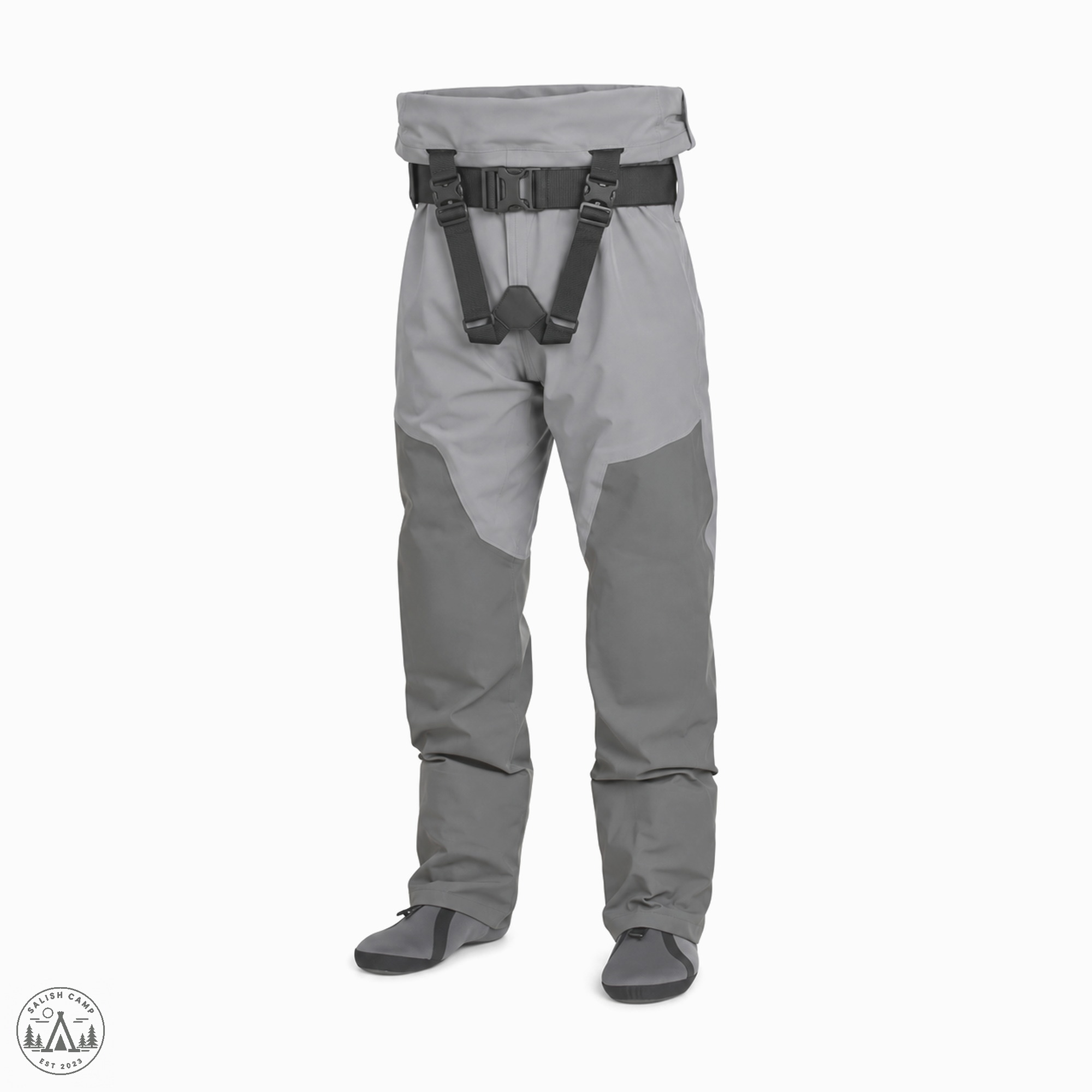
Winter layering is straightforward but important. I start with a moisture-managing base layer, then add insulating fleece or appropriately fitted underwader pants as temperatures drop. Cotton is a poor choice because it holds moisture against the skin. In freezing weather, I pay particular attention to warm socks without crowding the booties. A correctly fitted wader needs a little internal space for layering, but it shouldn’t balloon around the legs. At about 46 oz (medium regular) this is a meaningful amount of wader to carry, and the heavy CORDURA shell is stiff and warm on long hot hikes compared with lighter waders.
Back home, I don’t leave damp waders rolled in a bag. After a muddy fishing day, I rinse away grit, inspect the booties and high-wear areas, and hang the waders in a ventilated part of the garage. I dry the inside when necessary, then make sure both sides are completely dry before storage. I also keep them away from direct heat. A small puncture is worth identifying and repairing with a compatible wader repair product before it becomes a bigger problem. Proper cleaning and renewing the DWR when needed help maintain comfort, even though DWR alone doesn’t seal a damaged membrane.
Pros
- Excellent coverage for abrasive river conditions: Reinforced lower legs and durable upper fabric make sense for brushy approaches, rocky banks, and frequent contact with natural obstacles.
- Thoughtful movement and kneeling features: The gusseted construction, reduced seam exposure, and removable padding address common problems encountered on uneven riverbanks.
- Useful fishing-specific storage: Chest organization, handwarmer pockets, attachment points, and interior storage keep small essentials accessible.
- Versatile chest-to-waist configuration: The convertible upper and adjustable suspenders make the waders more practical across changing conditions.
Cons
- High initial investment: At $698 list, these make the most financial sense for anglers who regularly encounter demanding conditions rather than occasional easy-access trips.
- Fit requires attention: Torso room, leg length, neoprene foot sizing, insulation, and boot volume all need to work together.
- Pocket protection has limits: The water-resistant chest zipper is convenient in rain and spray, but valuable electronics still need dedicated waterproof protection.
Technical Specifications
| Specification | Details |
|---|---|
| Product | Orvis Men’s PRO Waders |
| Config | Shadow (Item 2RY7) |
| Price | $698 USD list (orvis.com, 2026-10-09) |
| Type | Stockingfoot chest waders, waist-high convertible |
| Shell | 4-layer CORDURA upper, 5-layer CORDURA lower legs |
| Waterproofing | DWR CORDURA over waterproof coating and membrane |
| Seams | Single lock-stitched taped seam at back of legs; gusseted crotch |
| Weight | About 46 oz (medium regular) |
| Sizes | S–XXL in short, regular, long and extra-long |
| Booties | Anatomical neoprene |
| Gravel guards | PU-reinforced stretch mesh |
| Knee pads | Removable OrthoLite 6 mm |
| Pockets | Zip chest pocket, interior mesh pocket, fleece handwarmers, removable accessory pocket |
| Warranty | Orvis Warranty and Repair program |
Final Thoughts
The Orvis Men’s PRO Waders are the kind of gear I would choose for a specific kind of fishing: cold rivers, difficult approaches, uneven rock, and days when the bank is almost as demanding as the water. Their value is in the combination of reinforced fabric, practical movement, protected knees, and river-oriented details. None of those features is revolutionary by itself. Together, they create a wader suited to anglers who spend a lot of time in rough places.
For someone who mostly fishes easy trout water in summer, I would rather save the bulk and choose something lighter. But for winter steelhead on the Skagit, February tailouts on the Sauk, or coastal salmon trips where blackberry and cobble are unavoidable, I see the advantage of construction that prioritizes physical protection.
I particularly appreciate that the knee pads, rear seam arrangement, and stockingfoot fit address problems that appear after several hours on the water. The convertible upper adds flexibility, while the repair program supports the argument for maintaining the waders rather than treating them as disposable equipment.
The tradeoff is that you have to buy them for the conditions they’ll actually encounter. If brushy riverbanks, long seasons, and repeated kneeling are part of your routine, the design makes sense. If your fishing is primarily warm, dry, and accessible, much of that protection may be unnecessary.