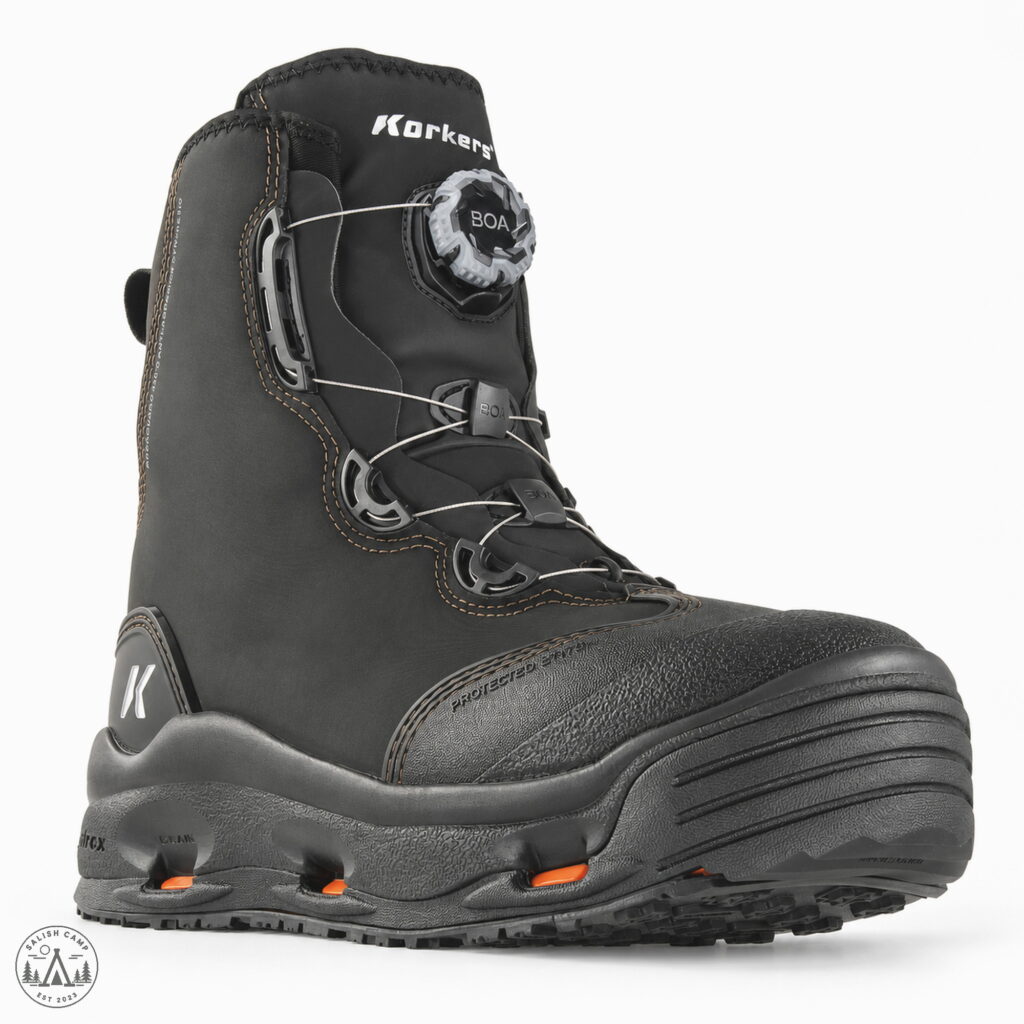
Buy if you fish different rivers and want one wading boot that can handle a muddy walk into a steelhead run, a day in a drift boat, and slippery cobble without owning three pairs. At $229.99, the Black Devil’s Canyon with felt and Kling-On rubber outsoles gives you two traction options, a BOA M4 closure that’s easy with cold hands, and a flexible upper that feels more like an athletic boot than heavy traditional wading footwear.
Skip if you regularly wade deep, powerful current, spend long days balancing across large unstable boulders, or need substantial lateral ankle support. The Devil’s Canyon prioritizes mobility and comfort over rigid support. For difficult crossings and uneven rock gardens, a stiffer, more supportive wading boot is the better call.
What Stands Out
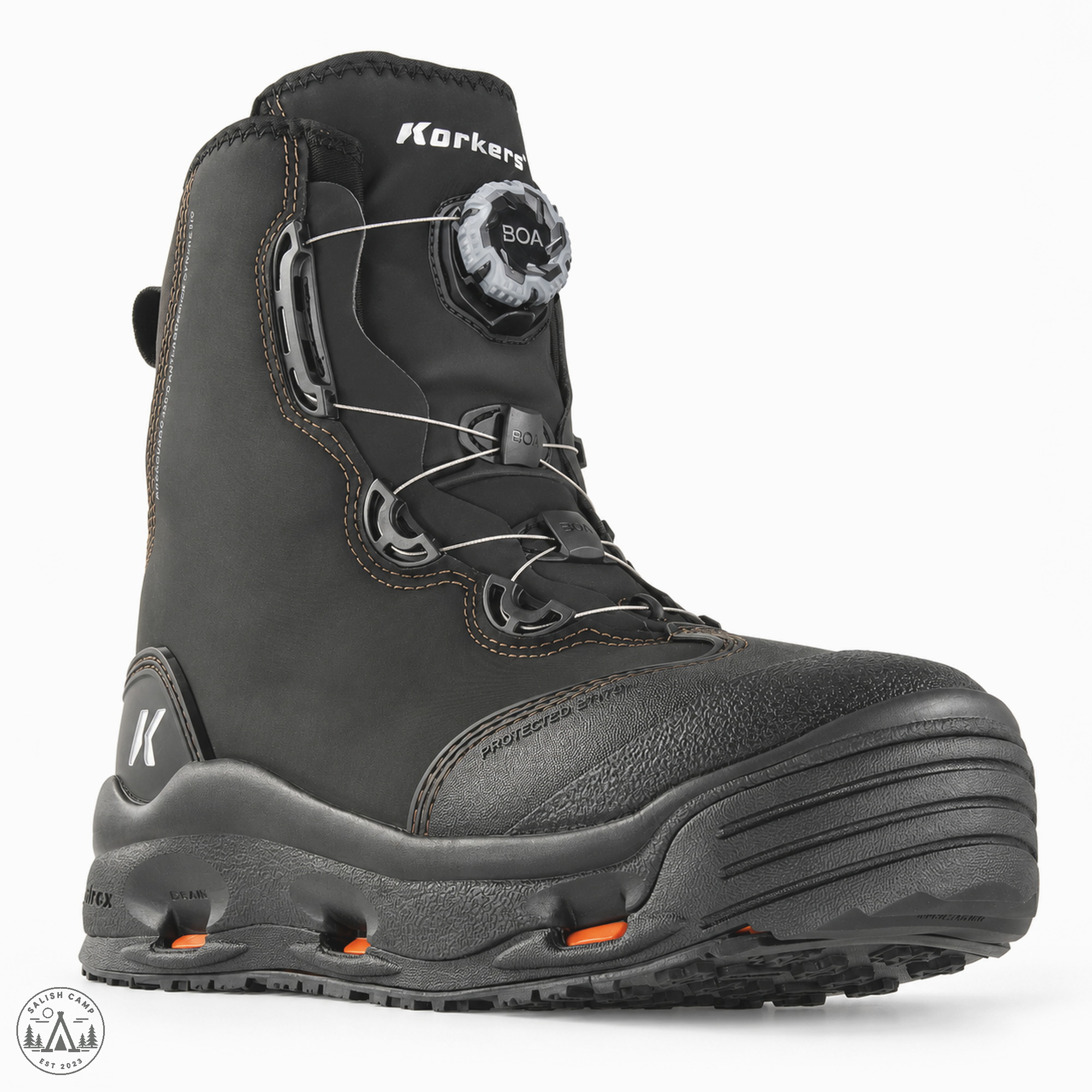
- Two traction systems in one box. The included felt and Kling-On rubber outsoles let you match the boot to slippery river rock, muddy approaches, and boat decks without buying another pair.
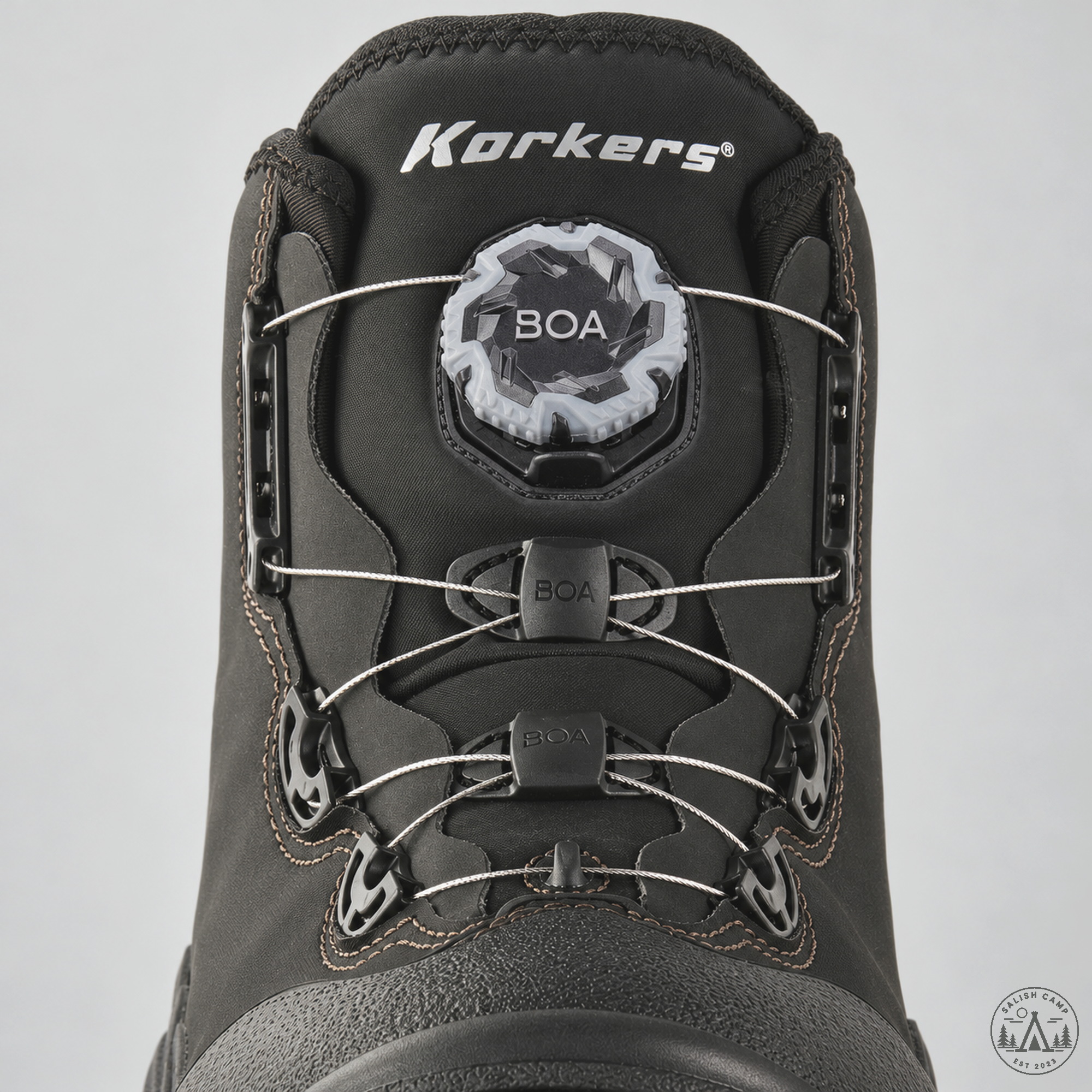
- BOA M4 closure. A dial on the tongue tightens the cable lacing evenly and keeps loose lace ends from catching on brush or fighting cold fingers.
- OmniTrax interchangeable outsoles. Removable soles lock into the boot’s underside so you can swap felt for rubber as conditions change.
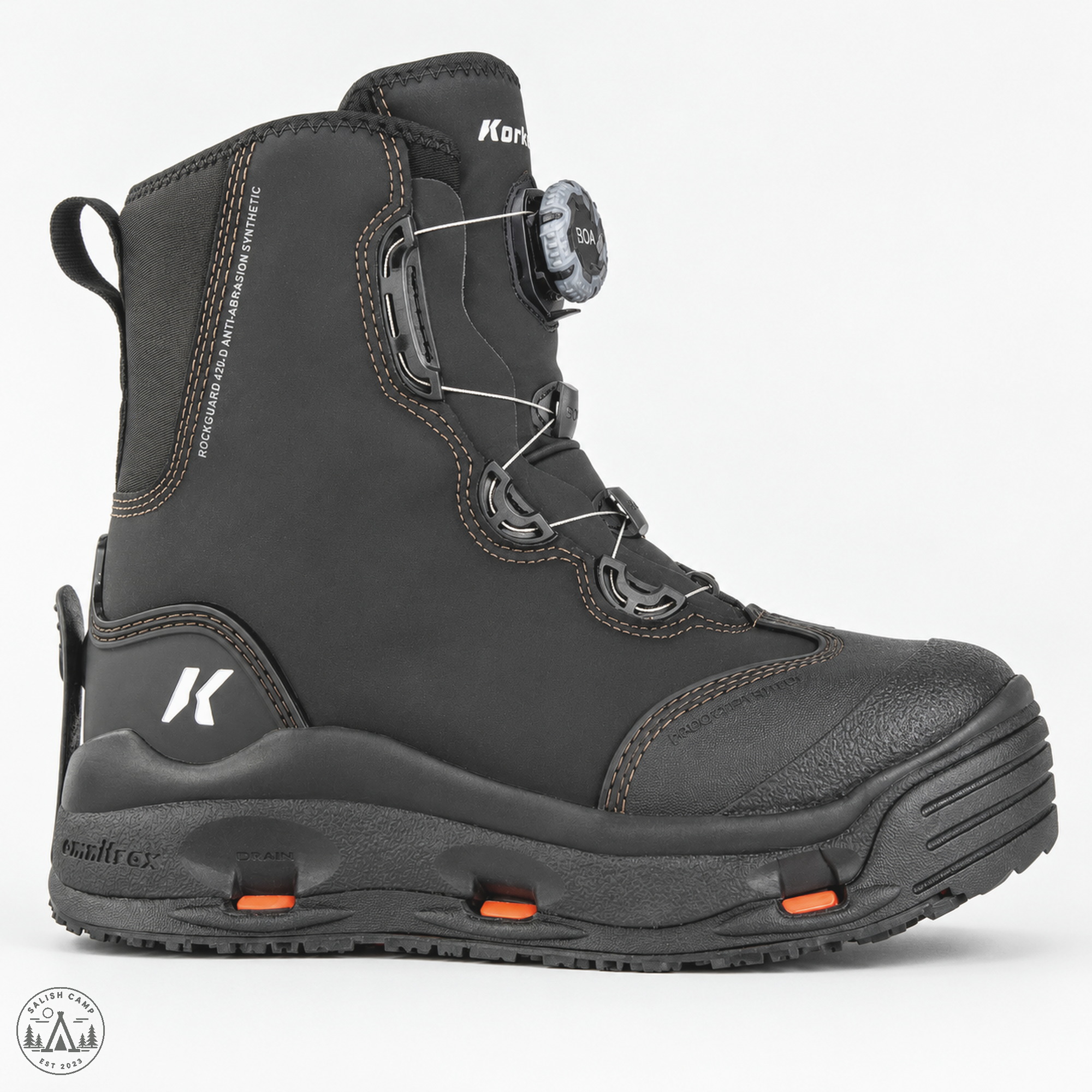
- Athletic stretch cuff. The flexible upper wraps the ankle for a close, glove-like feel. It aids mobility and hiking comfort but gives up lateral support versus a more structured boot.
- Internal drainage channels. Water moves through channels inside the boot and exits midsole ports, cutting the water you carry after leaving the river.
- Abrasion-focused construction. Rubberized synthetic uppers, recessed triple stitching, reduced seams, an enhanced midsole, and a molded toe cap protect the areas that take rock and bank abuse.
- Manageable pair weight. Korkers specifies 3 lb 2 oz per pair with felt soles; the size for that figure isn’t stated, so real weight rises and falls with boot size.
In The Field
I rarely fish the same kind of water two trips in a row. One weekend might mean working the Deschutes over polished basalt and loose cobble. The next could be a cold morning on an Olympic Peninsula steelhead river, a muddy hike along the Sauk, or a drift-boat day on the Yakima. Those trips ask different things from footwear: grip on wet rock, comfort on a mile of bank walking, and a closure that doesn’t turn a cold tailgate into a wrestling match. I also don’t want three pairs of wading boots filling the truck.
The Devil’s Canyon answers that mix with OmniTrax interchangeable soles and a BOA M4 fit system. The current korkers.com page lists the BOA as M4 on this package; that is the closure I am reviewing here.
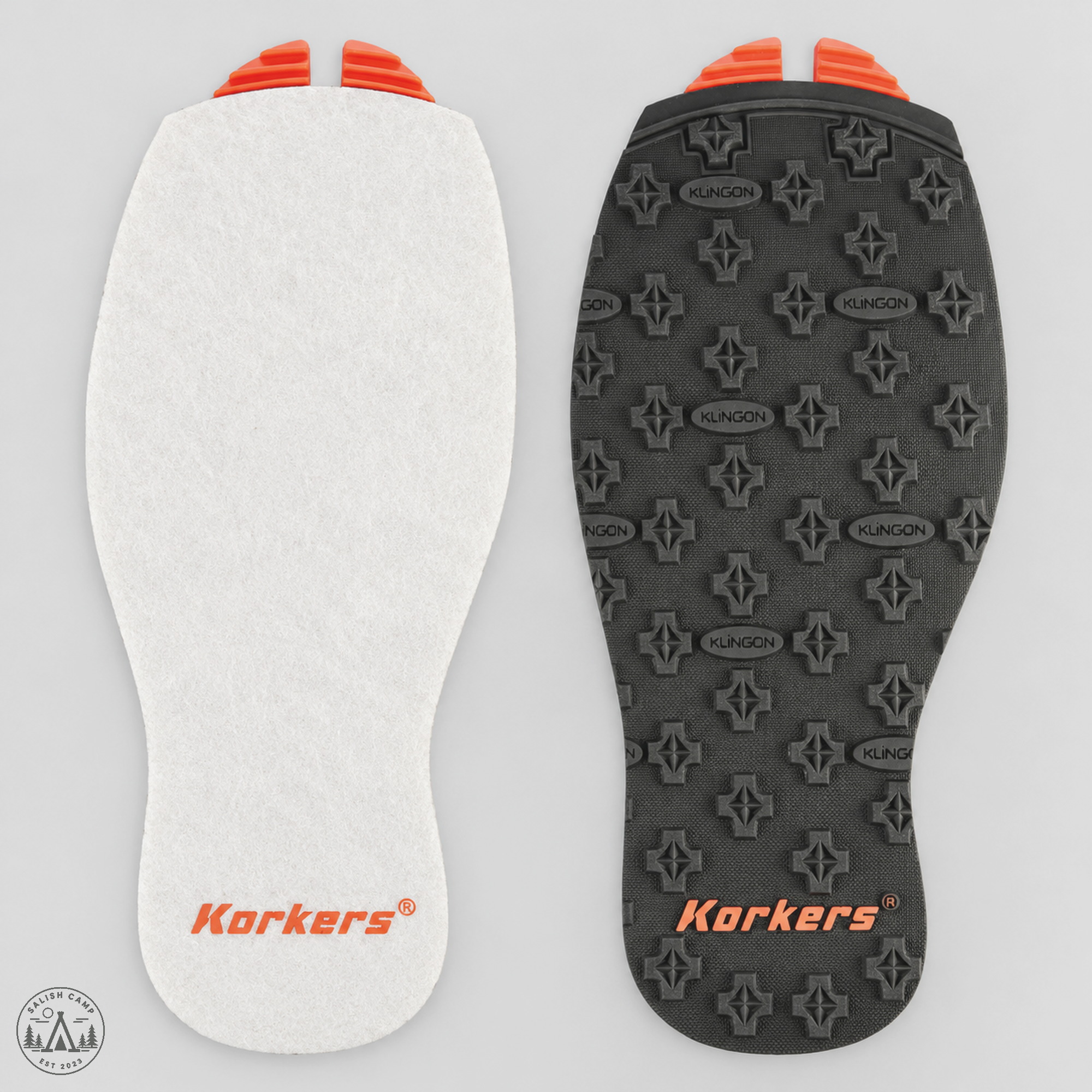
With the $229.99 Felt and Kling-On package, one pair of felt soles and one pair of Kling-On sticky rubber soles come in the box. Both mount to the same boot. On the Deschutes, where smooth wet basalt and rounded stones make every step deliberate, I’d reach for felt when regulations allow it. Kling-On makes more sense on a muddy bank, around a raft, or for a day spent mostly in a drift boat. Owner feedback matches that split: Kling-On grips well on land and in boats but is the weaker choice on slimy round rock, where felt is better. Felt is restricted in some states and waters, so check local rules; the included Kling-On soles are the answer where felt isn’t permitted.
Changing soles is a dry-ground job. I’d rinse grit from the attachment points, release the installed sole at the OmniTrax tabs, seat the replacement, then check the perimeter and give it a firm pull before stepping into moving water. I wouldn’t swap mid-river. For a day that starts muddy and ends on technical rock, I’d still pick the outsole for the most demanding footing I expect, not change halfway through every outing.
After a long drive to an Olympic Peninsula put-in, cold fingers and wet gloves make traditional laces slow. The BOA M4 dial draws the cable tight over stockingfoot waders in a few turns, and release opens the upper without digging for knots. The tradeoff is section-by-section lace tuning: BOA favors quick, even tension, so I’d dial it in on solid ground before a steep bank rather than assume the first setting is perfect.
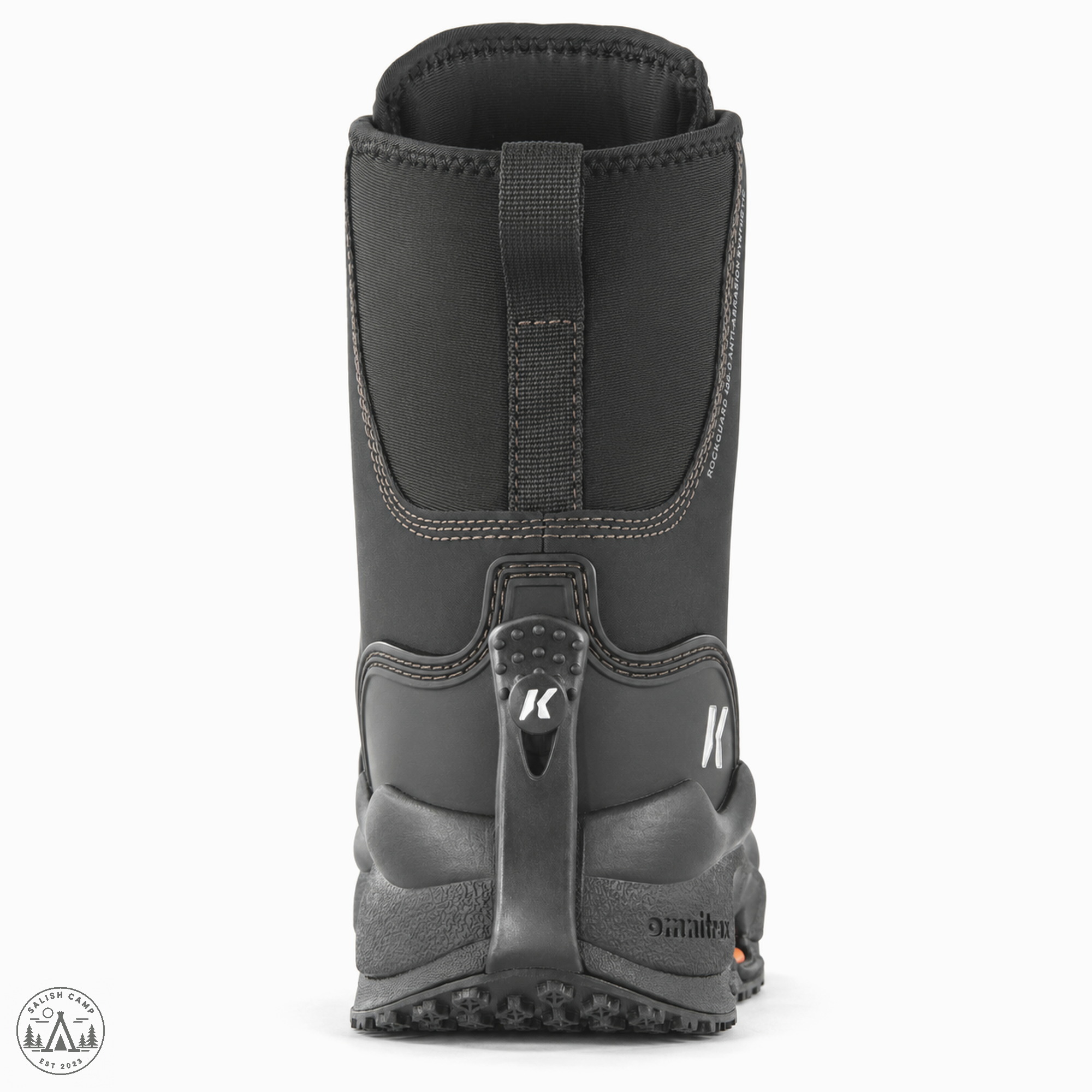
The stretch cuff is both the benefit and the compromise. It moves with the ankle on a Skagit gravel bar or a narrow trail down to a run, and owners and testers call the fit comfortable and glove-like. That same soft ankle gives up lateral stability when current pushes hard and the riverbed is large, unstable rock. For mobile fishing, bank hiking, boat access, and moderate wading, the flexibility is attractive. For aggressive winter crossings or demanding boulder fields, I’d take a stiffer boot. No outsole fully covers for weak ankle support or poor wading technique.
Sizing needs a clear answer for anyone new to stockingfoot waders. Korkers’ chart says order one full size above your street shoe — street 10 or 10.5 maps to a men’s 11 Devil’s Canyon, the reference size for this review (SKU FB4110-11). Some owners and one tester find the boot roomy and size down at half sizes. I’d start with the chart, then check the fit in the exact waders and socks I fish in: enough toe room for downhill walking, a secure heel, and a snug hold after the BOA is tightened, not cable tension masking a boot that’s simply too big.
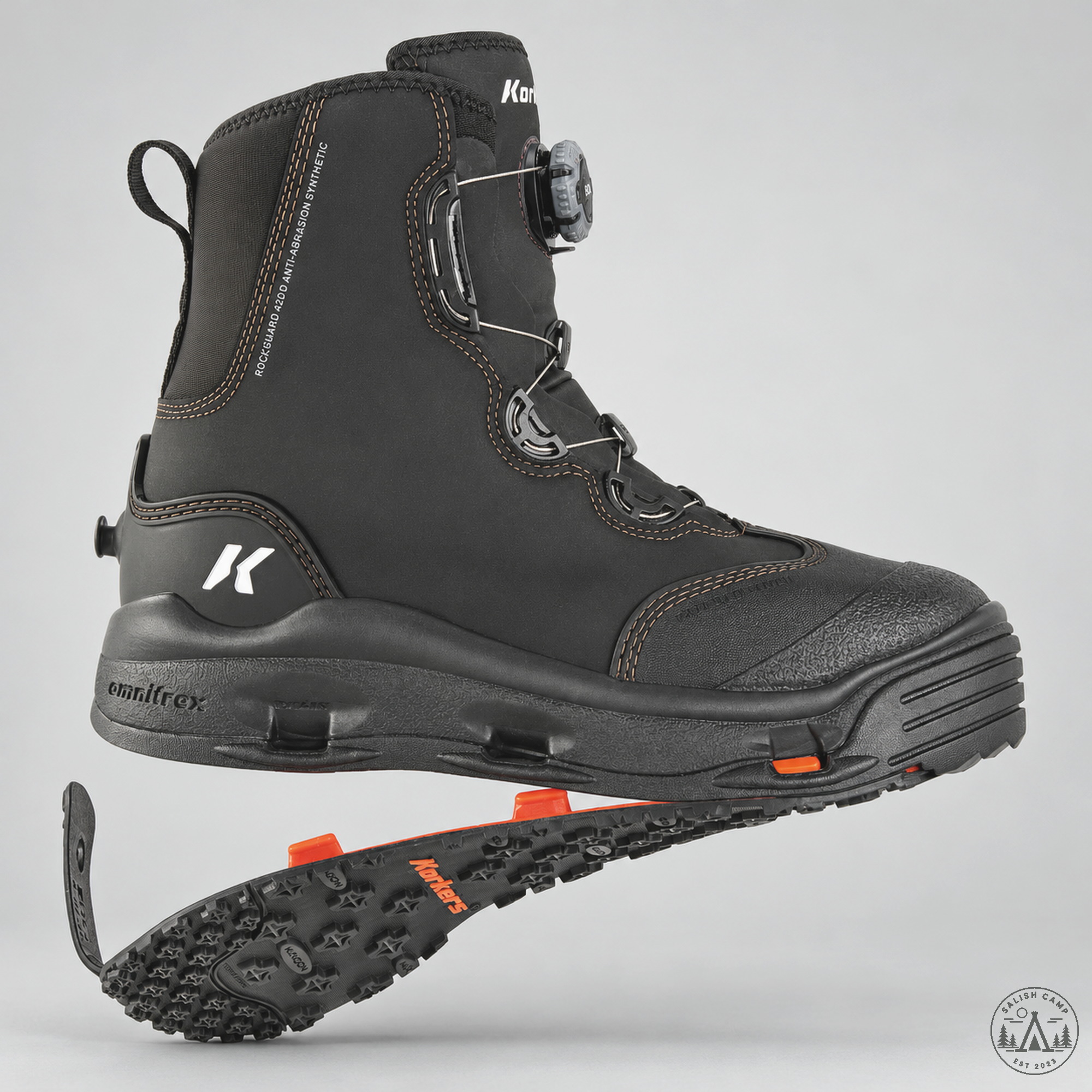
Korkers specifies 3 lb 2 oz per pair with felt soles and doesn’t name the size, so weight varies by size. For a boot with a protective upper, molded toe cap, and swap-sole system, that’s a workable target. Once submerged, retained water matters as much as dry weight: internal channels drain through midsole ports, and the upper is built to dry faster. Korkers notes that faster dry times lessen the chance of spreading invasive species. The rubberized anti-abrasion synthetic, recessed triple stitching, reduced seams, and molded toe cap address the scuffing of rock gardens and rough banks. Those are sensible choices, not a claim the boot is indestructible.
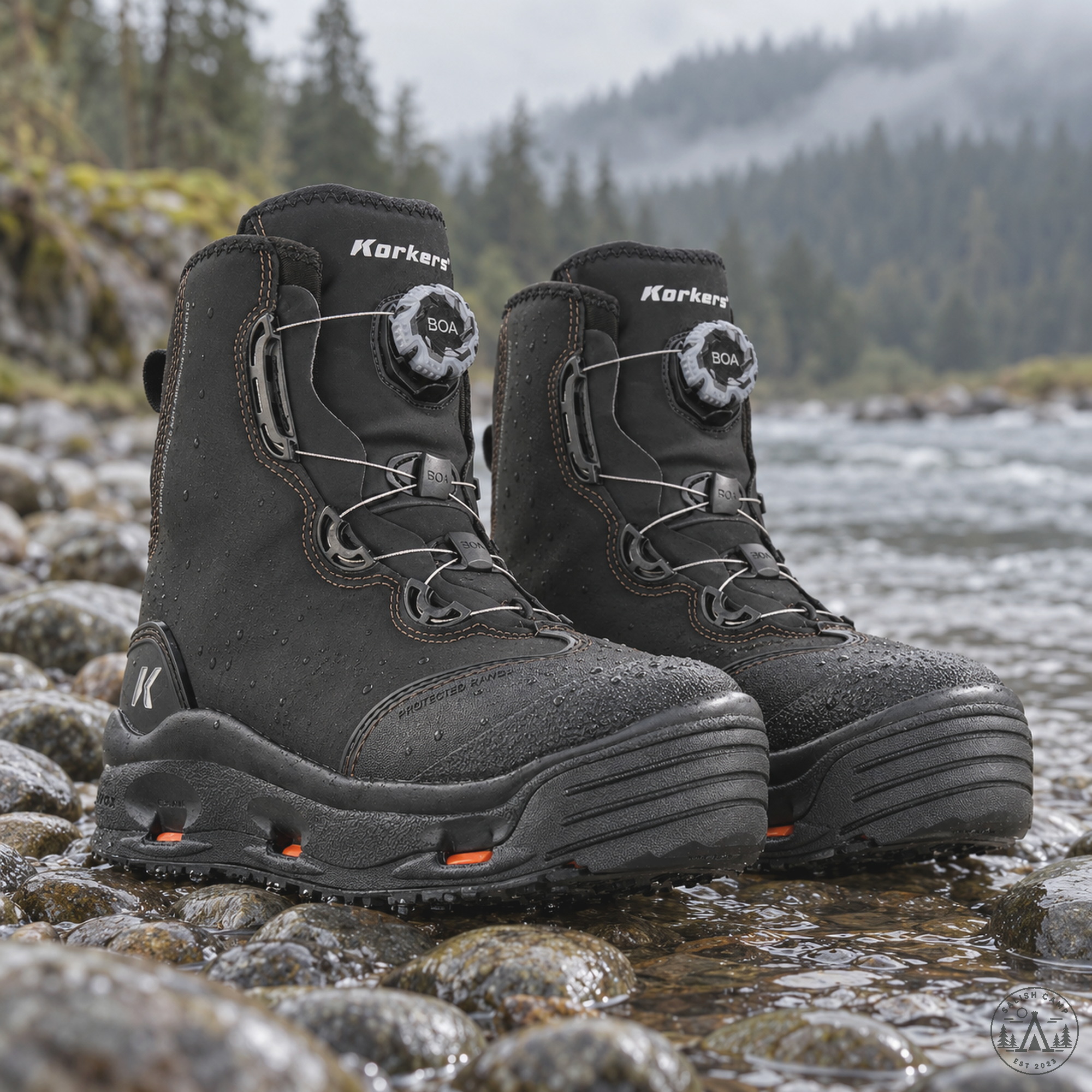
Where the Devil’s Canyon makes the most sense is a season that mixes boat days, hike-ins, and moderate wading rather than one specialized heavy-current fishery. For a Yakima drift-boat day I’d install Kling-On before leaving home; for a Deschutes outing on slick submerged rock I’d choose felt where allowed; for an Olympic approach with moderate wading I’d decide from the footing I expect at the river. The flexible ankle and BOA keep the package appealing when the day involves frequent walking and water entries. If my fishing routinely meant powerful current and difficult rock gardens, I’d accept more bulk and stiffness. Adaptable traction and mobility are the priorities that make this boot convincing.
Pros
- Excellent traction versatility. Felt and Kling-On rubber outsoles are included, so the same boot covers different river and bank conditions.
- Fast BOA M4 adjustment. Convenient tightening and removal with wet gloves and cold fingers.
- Comfortable athletic construction. Flexible stretch cuff and glove-like upper suit anglers who hike between runs.
- Thoughtful protective details. Internal drainage, recessed triple stitching, rubberized synthetic construction, and a molded toe cap address common river wear.
Cons
- Limited lateral ankle support. The flexible upper gives up stability versus stiffer boots in heavy current and uneven boulder fields.
- Potentially roomy sizing. Fit can run generous, so a proper try-on over stockingfoot waders matters.
- Traction changes need planning. The interchangeable system helps only if the right sole is selected and locked in before difficult water.
Technical Specifications
| Specification | Details |
|---|---|
| Product | Korkers Devil’s Canyon |
| Config in photos / primary | Felt and Kling-On Outsoles package, Black, men’s size 11 (SKU FB4110-11) |
| Price (primary) | $229.99 USD (korkers.com, 2026-10-09, in stock) |
| Type | Wading boot with interchangeable outsoles |
| Height | 9 in |
| Weight | 3 lb 2 oz per pair with felt soles (Korkers spec; varies by size) |
| Closure | BOA M4 Fit System |
| Outsoles included | One pair felt, one pair Kling-On sticky rubber (OmniTrax interchangeable) |
| Upper | Rubberized anti-abrasion synthetic, recessed triple stitching, molded toe cap, stretch upper cuff |
| Drainage | Internal channels with midsole ports |
| Sizes | Men’s 7–15, whole sizes; Korkers advises one size up from street shoe |
| Other version | Kling-On & Studded Kling-On package, $249.99 |
| Guarantee | Rock Solid Guarantee, minimum one year, material and workmanship |
Final Thoughts
The Korkers Devil’s Canyon makes its best case when fishing covers more than one kind of terrain. A fast BOA closure, a flexible upper, internal drainage, and two included traction systems are a practical setup for a Yakima drift-boat weekend, a muddy Sauk bank hike, and a Deschutes day on slick cobble.
OmniTrax is the defining feature. Having felt and Kling-On available means preparing for the day’s conditions without keeping multiple pairs in the truck. It is not a stand-in for a truly supportive wading boot: the athletic construction comes with a softer ankle, and that matters if difficult crossings or powerful current are routine.
At $229.99, the included outsoles and BOA M4 system make a strong package for mobile anglers who value versatility and convenience. I’d choose it for mixed river conditions, hike-in fishing, and boat days — not for the most demanding technical wading.