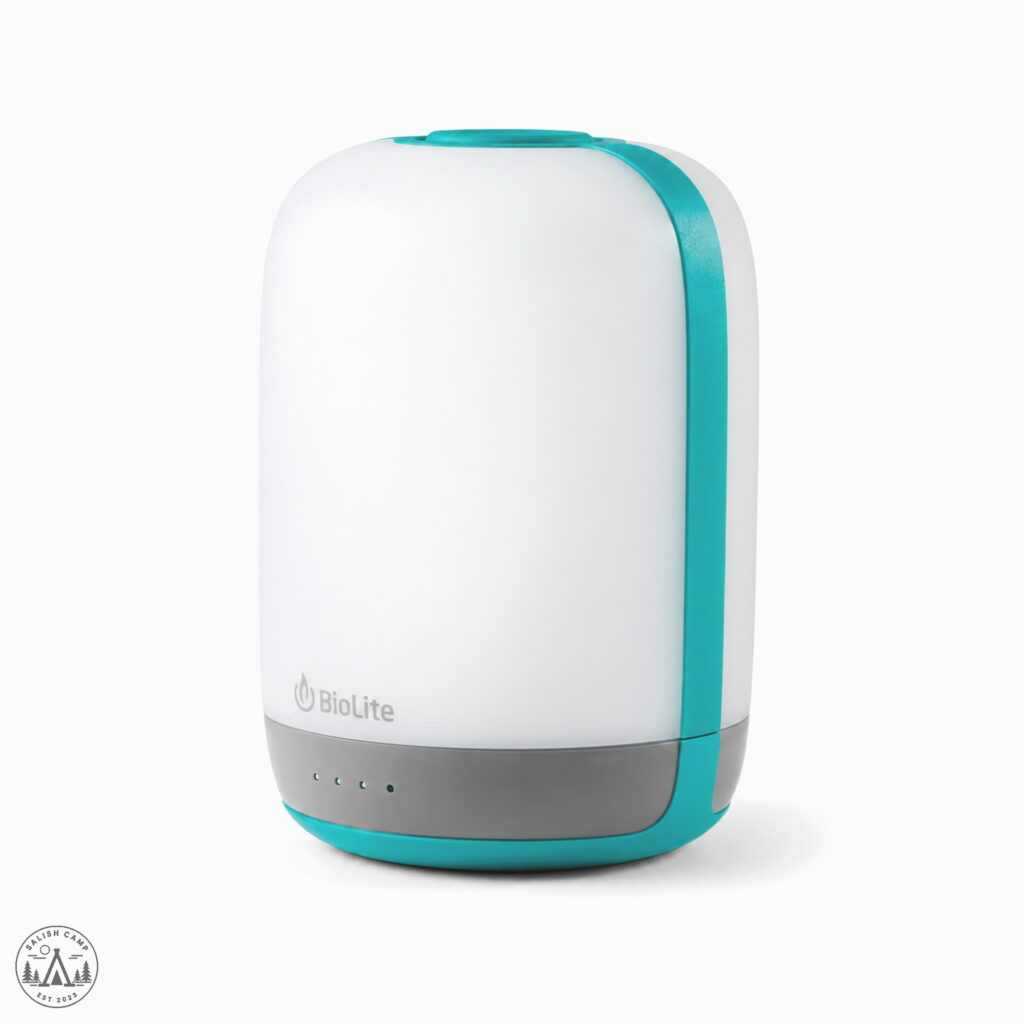
Buy if you want one versatile lantern for car camping, tent reading, rainy evenings under a tarp and occasional power outages at home. The AlpenGlow 500 earns its $79.95 price through a broad range of usable light, particularly its warm 2700K setting and CRI 90 color rendering. The folding hook, dimming controls and 6,400 mAh battery make it more practical than a basic single-mode lantern.
Skip if you only need inexpensive white light, prefer a lightweight backpacking setup or want to eliminate micro-USB cables from your charging kit. Its color effects are enjoyable but not essential, and the 5-hour runtime at maximum brightness means you still need to manage power during a long weekend without electricity.
What Stands Out
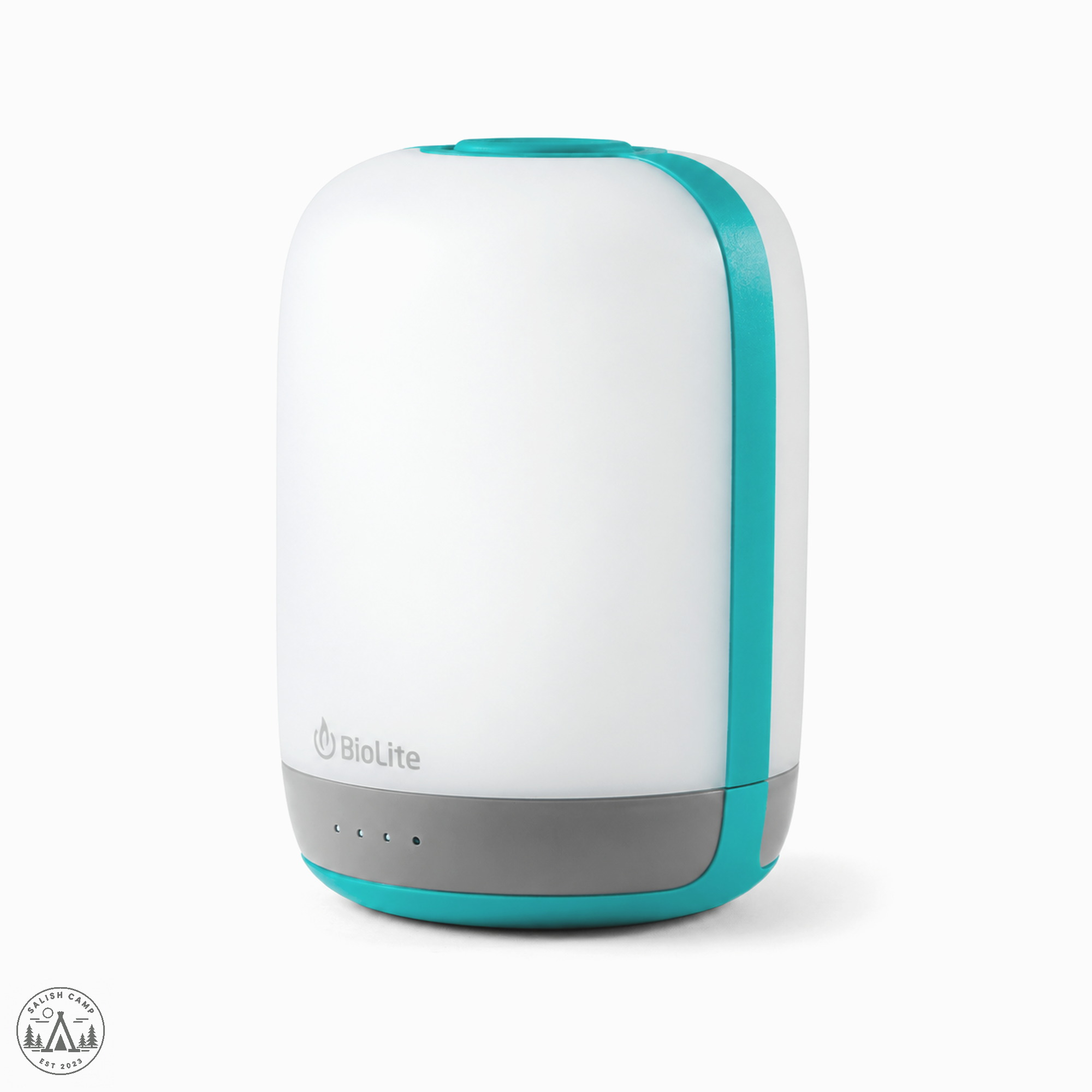
- A genuinely useful brightness range: The AlpenGlow 500 delivers 500 lumens on high and dims down to 5 lumens on low. That covers everything from preparing dinner at a picnic table to keeping a soft orientation light inside a tent.
- Warm light with accurate color rendering: BioLite’s ChromaReal broad-spectrum LED has a CRI of 90. The warm 2700K setting provides a gentler alternative to harsh white illumination while keeping food, clothing and camp gear looking more natural.
- A wide selection of lighting modes: Cool white, warm white, single-side illumination, individual colors, multicolor effects and animated modes give this lantern more flexibility than a conventional on/off camp light.
- Shake-activated lighting effects: A shake changes warm white illumination into candle flicker or turns static multicolor illumination into party mode. It is a playful feature, but it also avoids adding another dedicated control.
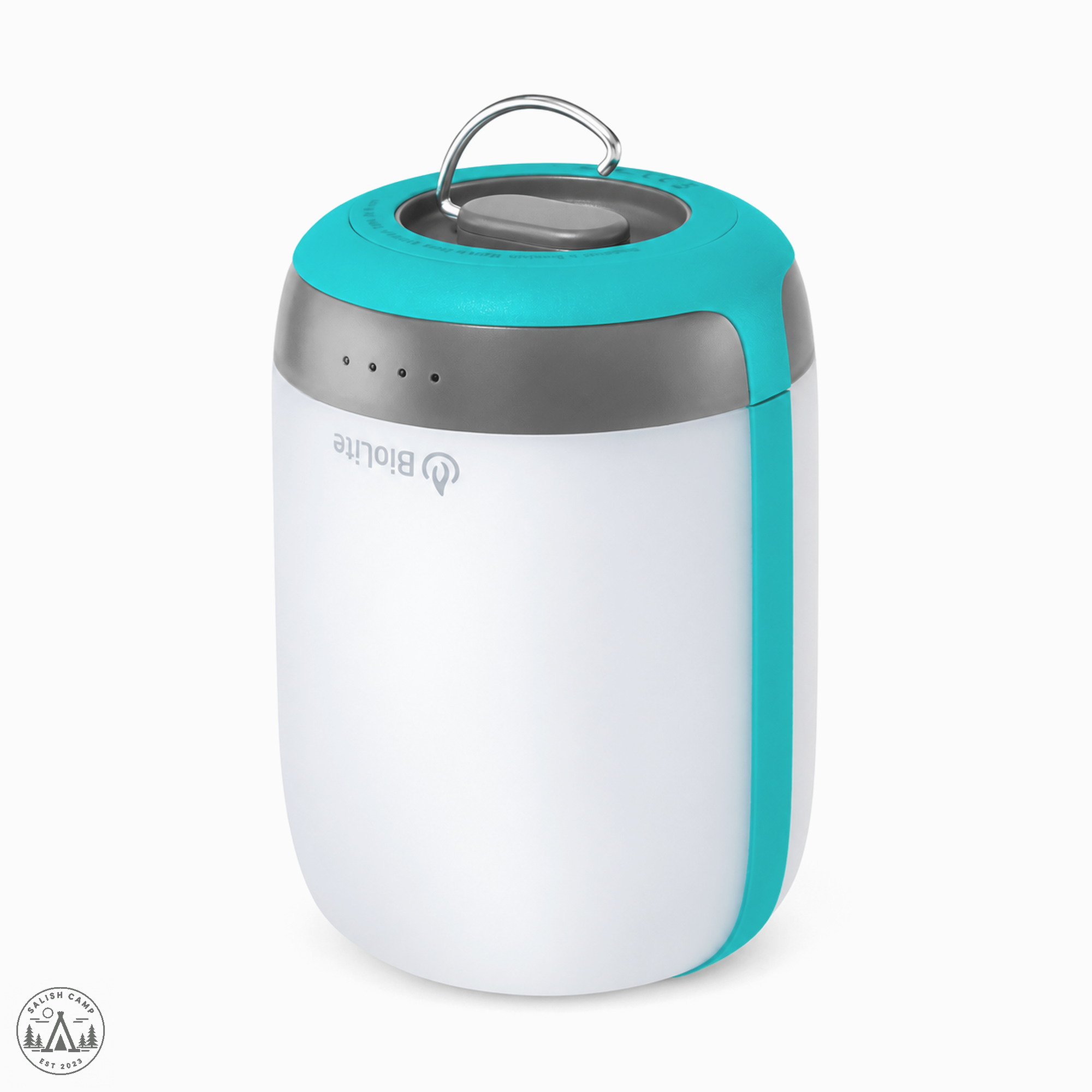
- A folding overhead hook: The integrated hook makes the lantern useful over a picnic table or inside a tent. Hanging it overhead spreads light across a work area and keeps the lantern off a crowded table.
- A 6,400 mAh backup battery: The internal 23.6 Wh lithium-ion battery can supply power through a USB-A output, making the lantern useful for topping up a phone or running compatible string lights.
- Rain-ready IPX4 construction: The lantern is designed to handle splashing, dew and ordinary rain exposure with its rubber port covers closed. That is useful in Pacific Northwest camp conditions, although IPX4 is not a waterproof or submersible rating.
In The Field
A November camping trip on the Washington coast can make a lantern feel more important than half the gear in the vehicle. At Kalaloch, sunset comes around 4:30 p.m., and by the time dinner is started, the picnic table is already sitting in darkness. There might be another five or six hours before anyone climbs into a sleeping bag. For that kind of evening, I want more than a tiny emergency light, but I also don’t want to run a headlamp every time I reach for a knife, stove control or jacket.
That’s where the AlpenGlow 500 makes sense. It is substantial enough for a car-camping main light, compact enough to move between table, tent and vehicle, and its cylindrical diffuser spreads illumination for close-range camp living rather than throwing light across a campground.
The headline 500-lumen output needs some perspective. Inside a typical two-person or three-person tent, maximum brightness is a lot of light—enough to illuminate the floor, sleeping bags and gear pockets at once. I wouldn’t want that setting shining beside my face while settling down for the night. At a picnic table, those same 500 lumens are much easier to appreciate: a larger area to cover, surfaces that absorb light and darkness beyond the table. At the other end, 5 lumens is not enough for serious cooking or sorting a packed gear bin. It is the sort of light I want when waking up in a tent, finding a water bottle or checking that my boots are still by the door.
I particularly like the idea of using the AlpenGlow’s warm white setting at a wet Deception Pass campsite. With rain tapping the tarp above the picnic table, the last thing I want is a harsh, blue-white light reflecting off damp dishes and glossy food packaging. The 2700K warm setting gives the table a softer appearance. Cool white at 5700K is available when a more clinical light is useful, but warm white would be my default for most evenings.
The CRI 90 specification is worth explaining because it is less familiar than a lumen rating. CRI measures how faithfully a light source renders colors compared with a reference source. A high-CRI light makes it easier to distinguish ingredients, clothing and small equipment—when cutting vegetables, checking whether food is cooked or finding a particular colored item in a gear bag. BioLite’s ChromaReal LEDs are one of the strongest practical reasons to choose this lantern over a cheaper single-mode alternative.
Reading inside a tent is another place light quality matters. At a Mount Rainier campground in October, there can be a long stretch between finishing dinner and going to sleep, especially when rain eliminates the appeal of sitting outside. I prefer hanging a lantern above or slightly behind where I’m sitting rather than placing a bright point of light directly beside a book. The AlpenGlow’s overhead hook and adjustable white output make that arrangement straightforward. Its single-side lighting option is also useful when I want illumination directed toward one part of the tent instead of lighting everything equally.
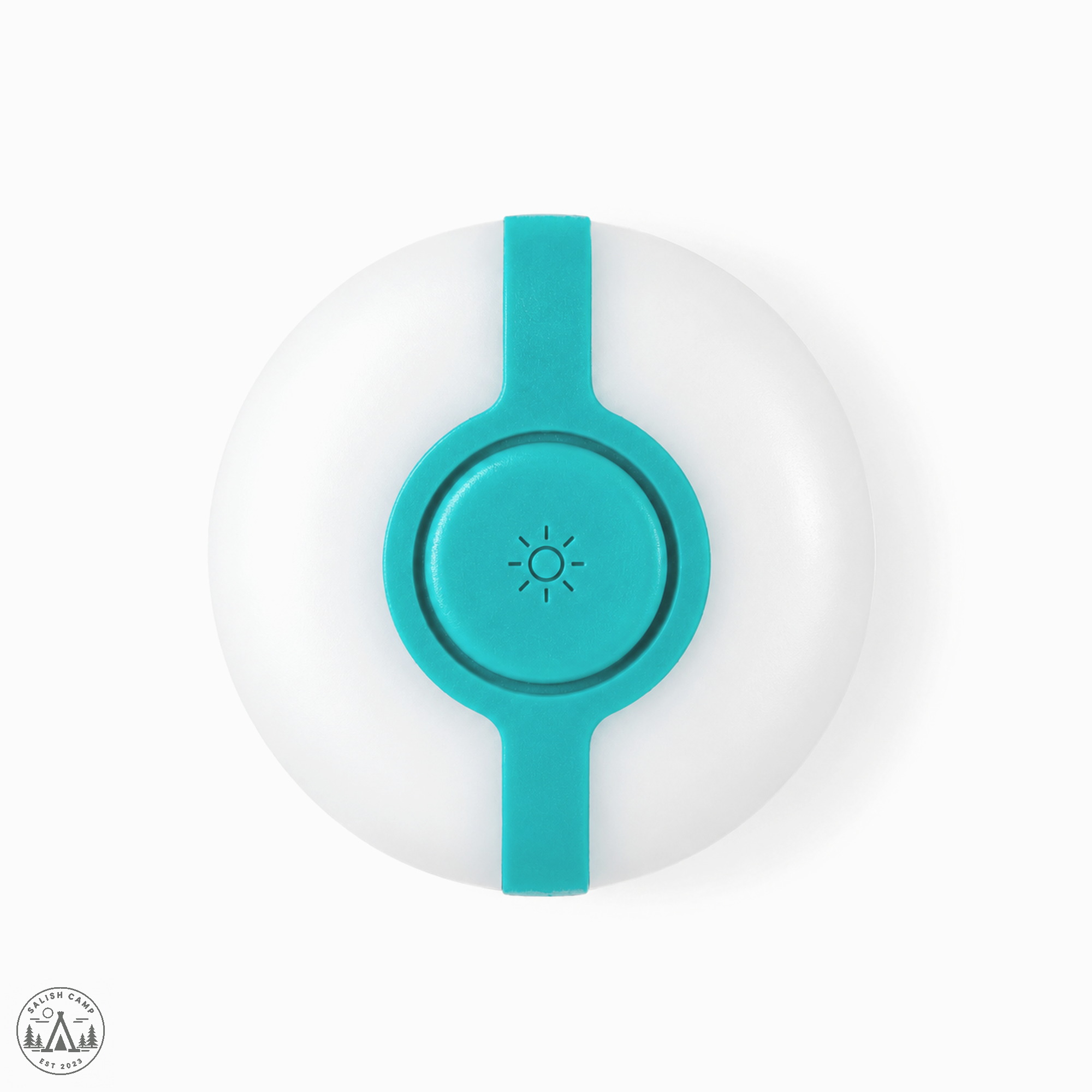
The controls are more interesting than the hardware initially suggests. There is one button on top, with additional effects activated by shaking it. In warm white mode, a shake produces a candle-like flicker. In static multicolor mode, a shake activates party mode. During a color cycle, pressing and holding allows a choice among three cycle speeds. This is convenient once the behavior becomes familiar, although a shake doesn’t always register on the first attempt. I would rather have simple, dependable white illumination than spend time experimenting with effects while wearing wet gloves.
The multicolor settings do have a place around a campsite with kids, and for adults a static color or slow cycle can add a pleasant background glow after cooking. The fireworks and party settings are fun occasionally, but I wouldn’t pay $79.95 for them alone. BioLite also lists a Red Night Mode in its features, though that mode does not appear in the printed Tech Specs mode list, and BioLite does not describe how to reach it.
The battery is the bigger practical consideration. BioLite specifies 5 hours on high and up to 200 hours on low. Those numbers represent very different lighting demands, not a promise that every brightness setting or effect will run for either duration. Five hours at full output might get through one long winter evening, but it isn’t enough for three consecutive nights of cooking, conversation and cleanup at maximum brightness. For a three-night trip, I would use the brighter settings only when they are actually needed, then drop lower once the stove is packed away, and still charge before departure.
Four small LEDs at the bottom provide a battery-level indication. As the battery approaches empty, the lantern automatically enters Low Power Mode, producing low white illumination for approximately one additional hour.
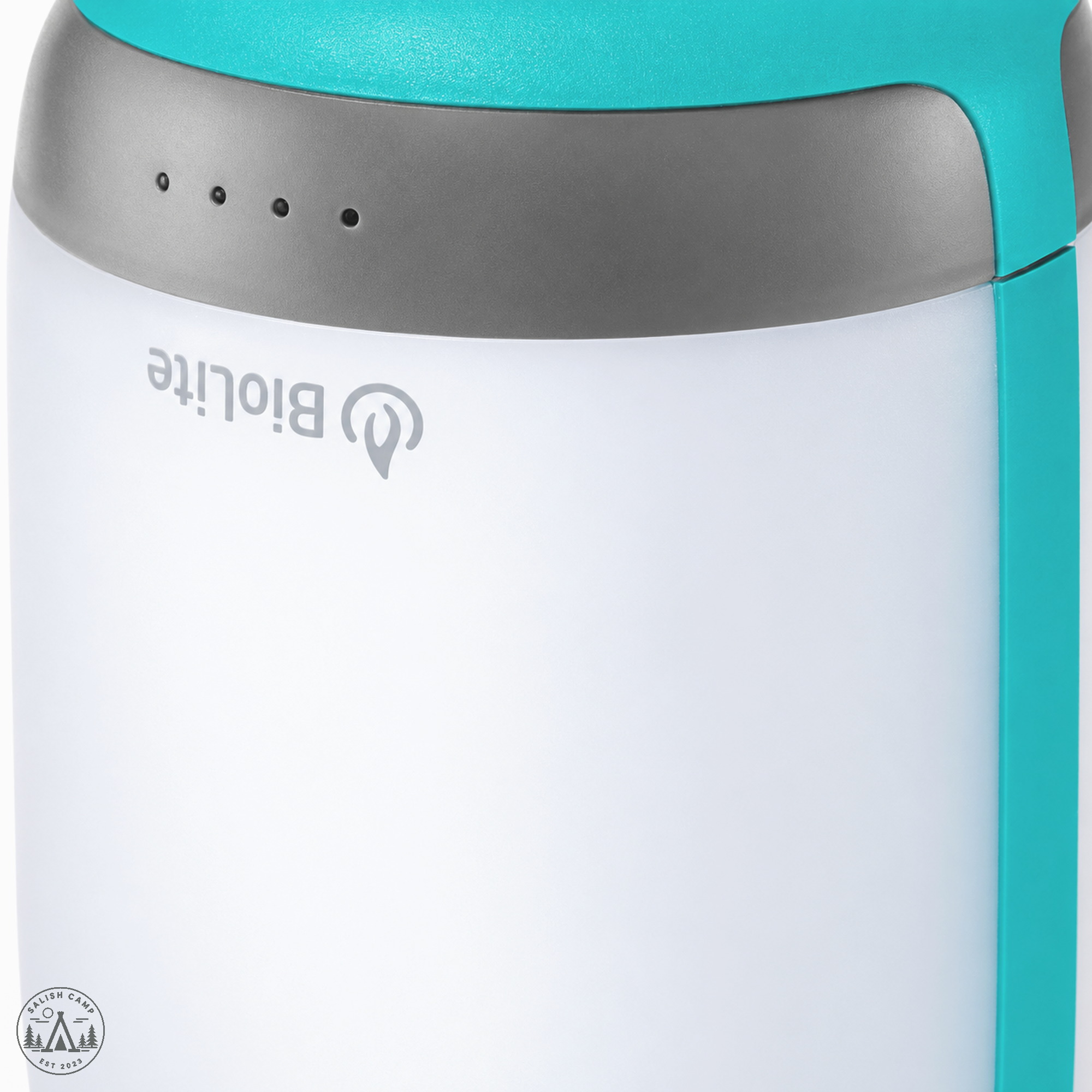
Charging is where the AlpenGlow feels dated in 2026. It uses micro-USB input, with the cable included. BioLite specifies approximately three hours for a full recharge using a 5V/2A charger—reasonable around a campsite with electricity or before leaving home, but it means keeping a separate cable if the rest of my electronics have moved to USB-C. The USB-A output, rated at 5V/2.4A, partly balances that inconvenience by topping up a phone or running compatible string lights. The 6,400 mAh battery gives me additional options during a weekend away, but I wouldn’t treat the lantern as a replacement for a dedicated power bank—charging another device consumes energy that could otherwise keep the camp illuminated.
The same feature makes the AlpenGlow useful at home. After a Puget Sound windstorm knocks out power, a rechargeable lantern on the kitchen counter is easier to live with than a headlamp, and warm white plus the USB output cover reading and a low phone battery.
An IPX4 rating covers splashing water from different directions, so the AlpenGlow is appropriate for damp coastal campsites, condensation and rain hitting the outside of the lantern. It doesn’t mean the lantern can be submerged. BioLite says the lantern can remain outside overnight in dew and rain with its rubber port doors shut, but recommends bringing it inside during freezing temperatures to protect the battery. On a frosty shoulder-season night, that means the AlpenGlow comes into the tent with me rather than remaining on the picnic table.
At 13.4 oz (380 g), this isn’t the lantern I would choose for an ultralight backpacking trip into the North Cascades. It’s better suited to camping where the vehicle is nearby. BioLite lists the dimensions as 5.4 x 3.8 in (136 x 97 mm) under a "diameter" label, even though the product image marks 5.4 in as height and 3.8 in across; either way, the lantern is manageable on a table or tent floor. Its value is in replacing several camp-lighting functions rather than being the smallest possible light source.
Those functions justify the price more clearly for Pacific Northwest camping from October through March than for occasional summer car camping. Warm, accurate light, overhead mounting, adjustable brightness and emergency charging are what I would use repeatedly; the animated colors are a bonus.
Pros
- Excellent light quality: CRI 90 ChromaReal LEDs and a 2700K warm white setting make cooking, reading and general camp lighting more comfortable.
- Flexible brightness and modes: The 500-to-5-lumen range accommodates both practical tasks and subdued tent lighting.
- Useful emergency versatility: A 6,400 mAh battery with USB-A output adds backup charging capability at camp and at home.
- Practical campsite design: A frosted diffuser, integrated folding hook, Lock Mode and IPX4 water resistance suit car camping in damp conditions.
Cons
- Dated charging connection: Micro-USB input is inconvenient in 2026, particularly for campers who have standardized on USB-C equipment.
- Heavy for minimalist trips: 13.4 oz (380 g) is reasonable for a feature-rich car-camping lantern but difficult to justify for ultralight backpacking.
- Premium price with ownership caveats: At $79.95, the extra lighting effects won’t appeal to everyone, and mixed owner reports on battery longevity and durability are worth considering.
Technical Specifications
| Specification | Details |
|---|---|
| Product | BioLite AlpenGlow 500 |
| Config in photos / primary | Single variant (SKU LNB0100) |
| Price (primary) | $79.95 USD (bioliteenergy.com, 2026-10-09, in stock) |
| Type | Rechargeable LED camp lantern with USB power bank |
| Output | 500 lm high, 5 lm low |
| Burn time | 5 h high; up to 200 h low; 1 h reserve |
| Light modes | Cool white, warm white, single color, multicolor, single side light, candle flicker, 1-color cycle, multicolor party, fireworks |
| Color rendering | ChromaReal broad-spectrum LED, CRI 90 (cool 5700K, warm 2700K) |
| Battery | 6,400 mAh (23.6 Wh) Li-ion |
| Charging | Micro-USB in, about 3 h at 5V/2A |
| Power out | 1x USB-A, 5V / 2.4A |
| Water resistance | IPX4 |
| Weight | 13.4 oz (380 g) |
| Dimensions | 5.4 x 3.8 in (136 x 97 mm) |
| Lock mode | Yes |
| In the box | Lantern, instruction manual, micro-USB cable |
| Warranty | 1 year |
Final Thoughts
The BioLite AlpenGlow 500 makes the most sense when camping involves more time living around a table or inside a tent than hiking between destinations. In the Pacific Northwest, that describes a lot of trips between October and March. A lantern that can illuminate dinner preparation, settle into a gentle reading light and provide backup power during an outage earns its place in a car-camping kit.
For me, the standout is the warm white illumination and CRI 90 color rendering. The color effects are enjoyable, but the everyday experience of seeing food, equipment and surroundings in natural-looking light matters more. The broad dimming range and folding hook make the lantern genuinely versatile rather than merely decorative.
The limitations are straightforward. Micro-USB charging feels behind the times, the weight pushes it away from backpacking use, and a $79.95 lantern ought to provide dependable service over multiple seasons. I would also resist the temptation to rely on the maximum runtime figure without considering how often brighter light is needed.
For a camper who spends most evenings outside during warmer months, a simpler lantern may be sufficient. For someone facing early sunsets, wet picnic tables, long tent evenings and the occasional winter power outage, the AlpenGlow 500 offers a compelling combination of illumination and utility.