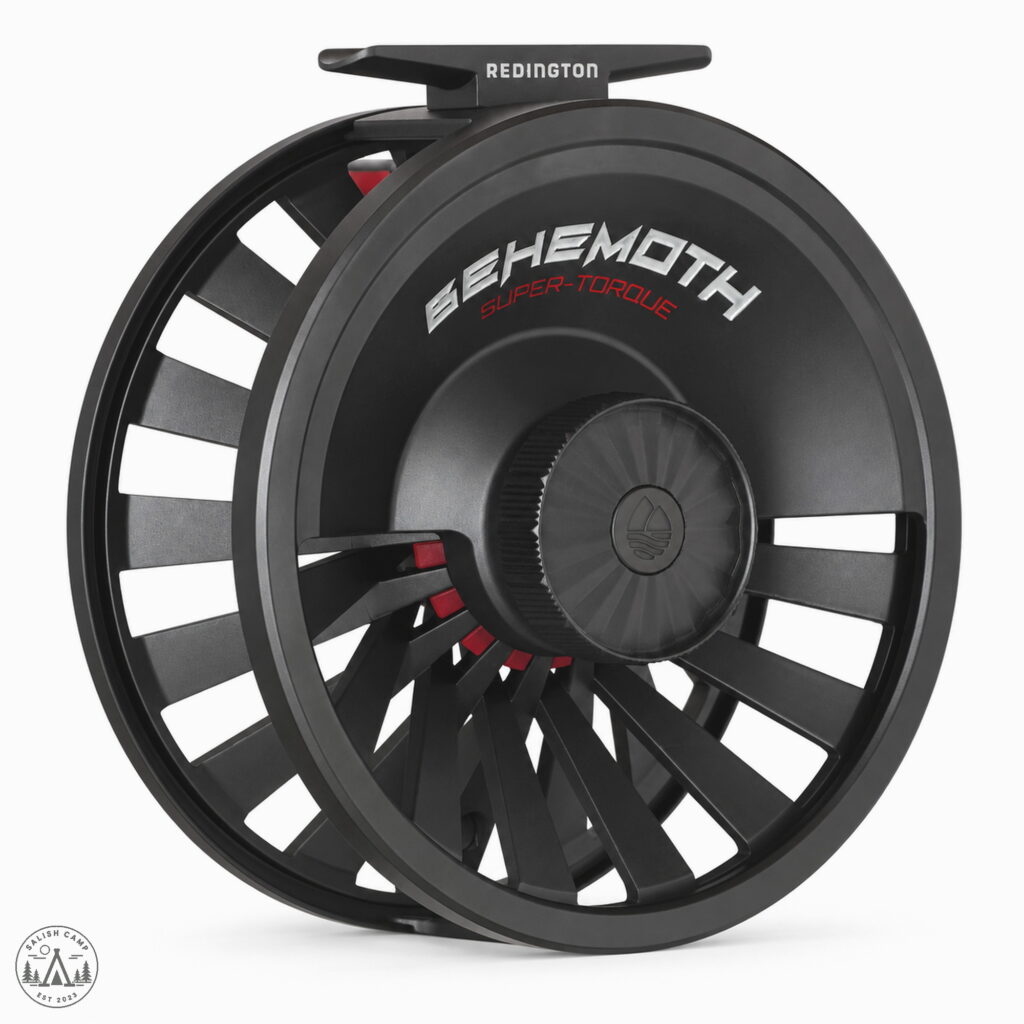
Buy if you want one capable fly reel for 5 and 6 weight applications without paying machined-reel prices. The Redington Behemoth 5/6 makes particular sense for a Pacific Northwest angler who fishes the Yakima during summer, works Central Washington lakes in spring, and occasionally walks a Puget Sound beach for sea-run cutthroat. The adjustable carbon-fiber drag, deep V-spool, large-arbor design, and oversized drag knob offer a useful combination of line capacity and fish-fighting control for $159.99.
Skip if you’re building the lightest possible trout outfit, want a reel with a sealed drag, or would rather pay more for machined aluminum construction. At 5.7 oz, the Behemoth 5/6 is substantial for a reel that might spend most of its time handling ordinary trout. Its drag capability is appealing, but not every 12-inch rainbow requires a powerful drag system. If low weight and a more refined finish matter more than drag strength and backing capacity, a lighter machined trout reel may be the better long-term purchase.
What Stands Out
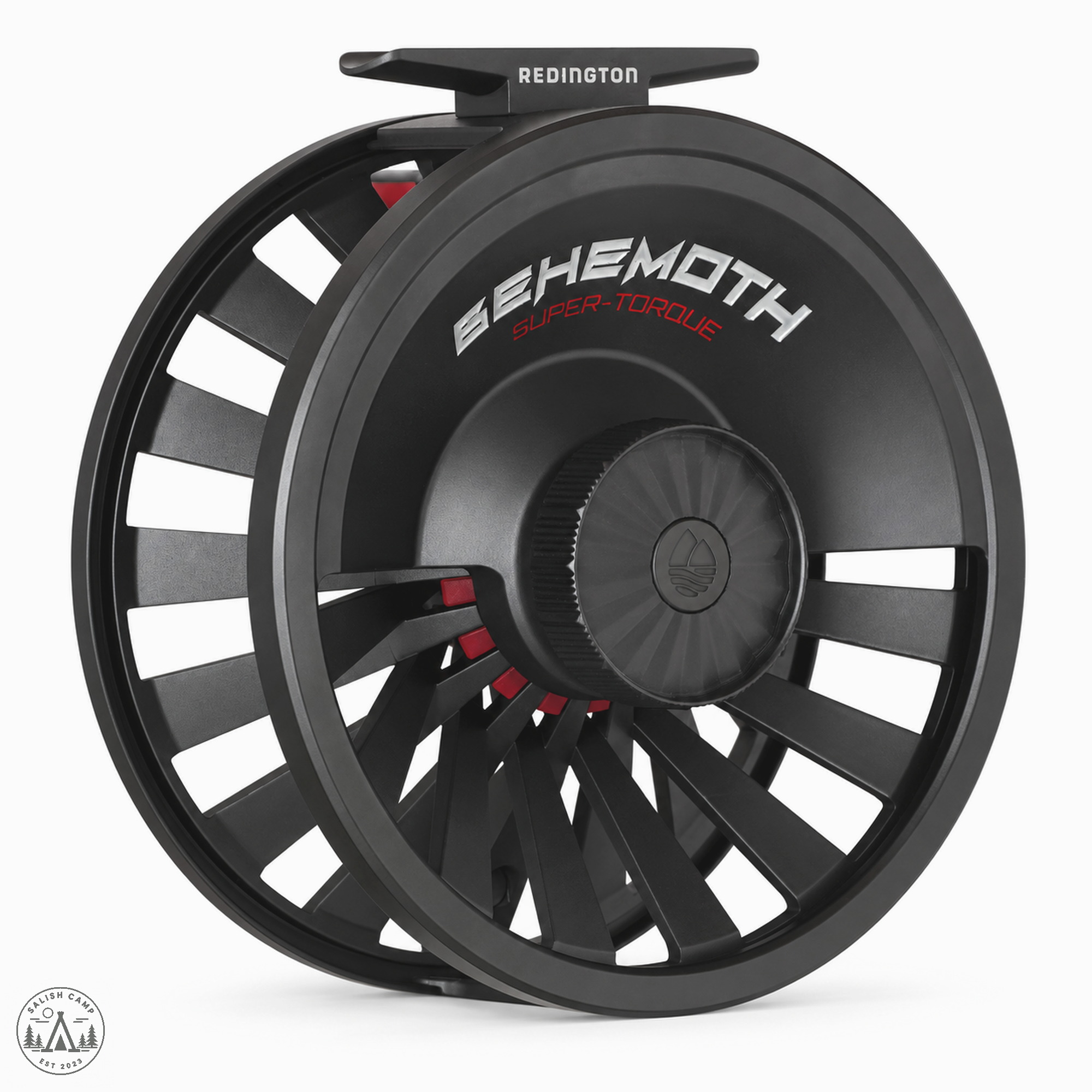
- Carbon-fiber drag with serious adjustment range: Redington calls the Behemoth’s drag "the most powerful drag in its class." That’s a manufacturer claim, not a published drag measurement, but the adjustable system is a major reason to consider this reel for lake rainbows, sea-run cutthroat, and unexpected larger fish.
- Deep V-spool with useful backing capacity: The interlocking spool design combines a large arbor with a deep V-shaped profile. Redington specifies capacity as 125 yards of 20 lb backing, giving the 5/6 a useful reserve when a fish takes line beyond the fly line.
- Large arbor for quicker line recovery: A larger working spool diameter helps retrieve loose line faster and reduces tight coils that develop when line sits wound on a smaller arbor. That matters when a fish changes direction or runs back toward you.
- Oversized drag knob for cold fingers: The prominent adjustment knob is easier to find and operate when wearing thin fishing gloves or dealing with numb hands on an October morning. It’s a practical design detail rather than decoration.
- Distinctive die-cast construction: Redington describes the Behemoth’s interlocking design as "unmachinable." The casting process allows its angular cross-spoke appearance and deep spool geometry without using the conventional machined construction found on more expensive reels.
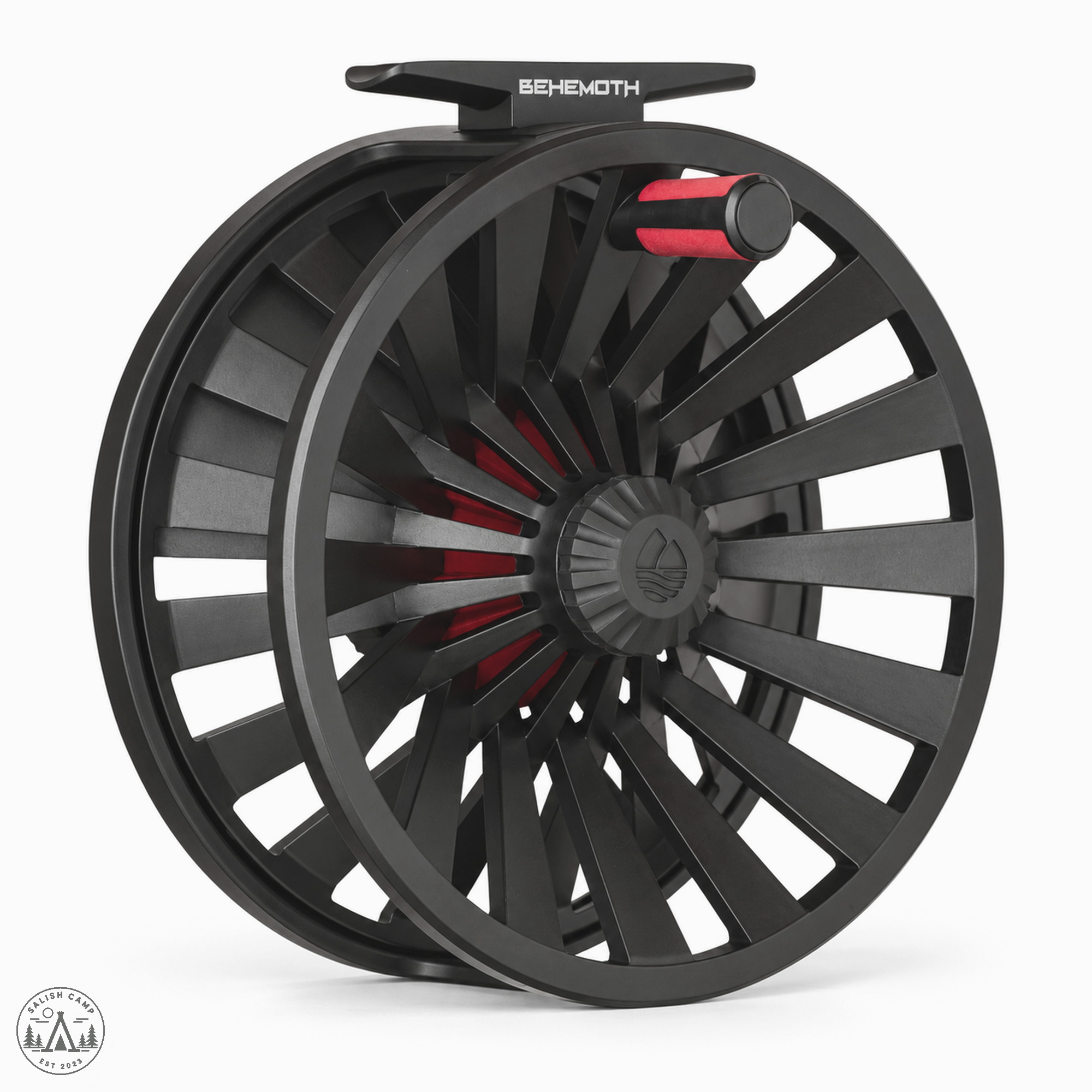
- Reversible retrieve and soft-touch handles: The reel converts between left- and right-hand retrieve, making it adaptable to individual casting and reeling preferences. Its twin molded, soft-touch handle design gives the fingers a defined contact point during retrieval.
- Useful ownership package: A nylon reel case is included, and Redington provides a lifetime warranty. Those are meaningful considerations for a reel intended to move between boats, gravel bars, campgrounds, and the back of a truck.
In The Field
The Behemoth 5/6 makes sense to me as an all-around Pacific Northwest fly reel because our fishing rarely stays in one neat category. One weekend might involve small dry flies on the Yakima River. The next could be chironomids under an indicator on a Central Washington lake. By fall, I might be walking a gravel beach on Puget Sound for sea-run cutthroat. Those are different kinds of fishing, but I don’t want three separate reels to cover them. I want something that holds line reliably, protects a fish when it runs, and doesn’t require special treatment every time it gets wet.
That’s the appeal of the Behemoth. It’s not a delicate, minimalist trout reel. It has a substantial body, an aggressive spool design, and a drag system built around strength. Some of those characteristics are useful every day. Others become important only when the fish is bigger than expected.
The 5/6 designation means this version is intended for 5 and 6 weight applications. A 9 ft 5-weight trout rod is a natural match; a 6-weight outfit used for larger trout, lakes, and beach cutthroat also fits. The designation isn’t a measurement of reel weight or drag strength. For a first fly outfit, I’d match the reel to the rod’s line-weight designation. The Behemoth 5/6 covers that range without forcing a choice between a dedicated lightweight trout reel and something intended for much heavier fishing.
What interests me most is the combination of its large arbor and deep V-spool. Because the line winds around a relatively large diameter, each turn can recover more line than a smaller-arbor design, depending on how full the spool is. It also helps reduce the tighter coils that develop when fly line sits on a small-diameter spool. On a Yakima River caddis evening, that means less attention spent dealing with loose line and more attention on the drift. When a trout turns downstream, I want slack under control before the fish builds momentum. A large arbor doesn’t replace good line handling, but it makes picking up line more convenient.
The deep V-spool provides room for backing beneath the fly line without abandoning the large-arbor layout. Redington lists 125 yards of 20 lb backing. An ordinary trout won’t take anywhere near that amount, but backing is something I’d rather have and not need. At a Central Washington lowland lake in April, a hooked rainbow may move through deeper water; when it runs, the backing provides room beyond the fly line. The same reserve is useful on a Puget Sound beach, where a healthy sea-run cutthroat can pull line quickly. Capacity doesn’t make a fish easier to land. It gives the angler more line to work with while the drag and the rod manage the pressure.
For a typical 12-inch Yakima River trout, you don’t need much drag. On small dries or light tippets, I’m more concerned about protecting the tippet than applying heavy resistance. A strong drag isn’t something you use at full strength just because it’s available. I’d start with a light setting, pull line by hand, and increase resistance only until it feels appropriate. When a fish runs, controlled drag is more useful than trying to stop it. The Behemoth’s oversized knob helps with those adjustments. On a cold Skagit tributary in October, with wet gloves and stiff fingers, a large control is easier to locate than a small recessed dial.
The stronger drag becomes more meaningful on lakes or beaches. A larger lake rainbow can make a sustained run, and a good sea-run cutthroat may move quickly through current or chop. There’s also the occasional surprise steelhead on water where trout gear is normally in use. That doesn’t make a 5-weight my preferred steelhead outfit, but it shows why predictable drag adjustment matters. Redington doesn’t publish a numerical drag-strength figure for the 5/6. I wouldn’t invent one. I’d judge the reel by how appropriately I could adjust the resistance and how consistently I could manage line during a fight.
5.7 oz is Redington’s published weight for the Behemoth 5/6. On a 9 ft 5-weight rod, that gives the outfit a more substantial feel than a very lightweight trout reel. Whether that feels comfortable depends on the rod. I’d assemble the outfit, hold it around the grip, and see how naturally it settles in the hand. During a long Yakima evening, a little extra mass isn’t necessarily a dealbreaker. But if I’m carrying a rod for miles and casting small dries all day, the advantage shifts toward a lighter machined reel.
The Behemoth’s body is formed through casting, allowing its distinctive angular geometry. Machined reels are cut from metal stock and often use simpler shapes. Neither process automatically guarantees superior fishing performance. The real questions are how well the finished reel holds up and how it handles repeated use. Die-cast frames can scuff and look worn sooner than machined reels, and some owner reports describe longer-term problems, including broken handles. Because the drag is unsealed, I also consider a freshwater rinse essential after salt or sand. Those owner reports don’t establish how frequently failures occur, but they’re worth considering before choosing this reel for years of use.
The Behemoth converts between left- and right-hand retrieve. Follow Redington’s instructions: remove the spool as directed, change the winding direction per the manufacturer’s procedure, reinstall the spool so it seats correctly, then pull line and turn the handle to confirm retrieve direction and that resistance is applied when line is pulled out. I’d do this at home rather than in a gravel parking lot with cold hands.
Redington describes the broader Behemoth family as extending to "saltwater ready, big-game sizes." That wording applies to the larger reels in the series, not specifically to the 5/6, which is positioned around a 5-weight trout rod. For occasional sea-run cutthroat fishing, I’d use the 5/6 knowing it needs careful cleaning afterward. I wouldn’t treat it as a sealed saltwater reel. At a Puget Sound gravel beach, salt spray and windblown sand can reach the reel even when I don’t submerge it. At the tailgate, I’d rinse it gently with clean freshwater, paying attention to the frame and spool without blasting water into the mechanism, then let everything dry thoroughly before putting it away. If sand has worked into the reel, I’d clean accessible surfaces according to Redington’s guidance rather than turning the handle through gritty resistance. The same approach makes sense after a muddy river day.
For me, the Behemoth 5/6 is most convincing as a freshwater trout and lake reel that can occasionally visit the beach, provided I’m willing to clean it afterward. If saltwater fishing became the main purpose of the outfit, I’d reconsider whether this was the appropriate reel.
Pros
- Strong, adjustable carbon-fiber drag. Useful capability for larger lake trout, sea-run cutthroat, and occasional unexpected fish.
- Deep V-spool and large-arbor design. Good backing capacity, faster line recovery, and reduced line memory.
- Competitive $159.99 price. Offers a substantial feature set without the cost of a more expensive machined reel.
- Versatile 5/6 configuration. Covers 5 and 6 weight applications with reversible retrieve and an oversized adjustment knob.
Cons
- Noticeable weight for a trout reel. The substantial construction won’t appeal to anglers building particularly lightweight outfits.
- Unsealed drag. Requires more attention to cleaning and maintenance when fishing sandy environments or occasional saltwater beaches.
- Less refined than a premium machined reel. The angular construction and heavier feel favor functionality over minimalist weight and finish.
Technical Specifications
| Specification | Details |
|---|---|
| Product | Redington BEHEMOTH 5/6 Reel |
| Config in photos / primary | Black (SKU 5-5506R56B) |
| Price (primary) | $159.99 USD (farbank.com, 2026-10-09, in stock) |
| Type | Die-cast large-arbor fly reel |
| Line weights | 5 and 6 weight |
| Weight | 5.7 oz |
| Capacity | 125 yd of 20 lb backing |
| Drag | Adjustable carbon fiber drag, oversized drag knob |
| Spool | Interlocking large-arbor deep V-spool |
| Retrieve | Converts between left- and right-hand |
| Handle | Twin molded soft-touch handles |
| Included | Nylon reel case |
| Warranty | Lifetime |
Final Thoughts
The Redington Behemoth 5/6 is appealing because it puts money into things that can make a practical difference on the water: an adjustable carbon-fiber drag, useful backing capacity, a large spool, and a drag knob that’s easy to operate. It’s not trying to be the lightest or most refined fly reel. Its die-cast construction is part of how Redington delivers the distinctive spool design and substantial drag system at this price.
For a Pacific Northwest angler buying one reel to cover a 5-weight trout rod or a 6-weight outfit, that’s a sensible compromise. I’d be comfortable choosing it for Yakima River trout, spring lake rainbows, and occasional sea-run cutthroat fishing. Those environments don’t require an expensive reel, but they do reward dependable line handling and drag adjustment.
Where I’d hesitate is a dedicated lightweight dry-fly setup or an outfit intended primarily for saltwater exposure. In those cases, I’d place greater importance on reducing weight or selecting a reel designed specifically for the environment. The Behemoth’s greatest strength is that you don’t have to pay premium-machined-reel money to get a capable drag and useful spool design. Its biggest limitation is that the substantial die-cast construction and maintenance requirements aren’t equally appealing to everyone.
For anglers who value practical fish-fighting capability over minimum weight, it’s a compelling choice. Just match it to the right rod, take care of it after rough days, and recognize that strong drag is only one part of landing a fish.