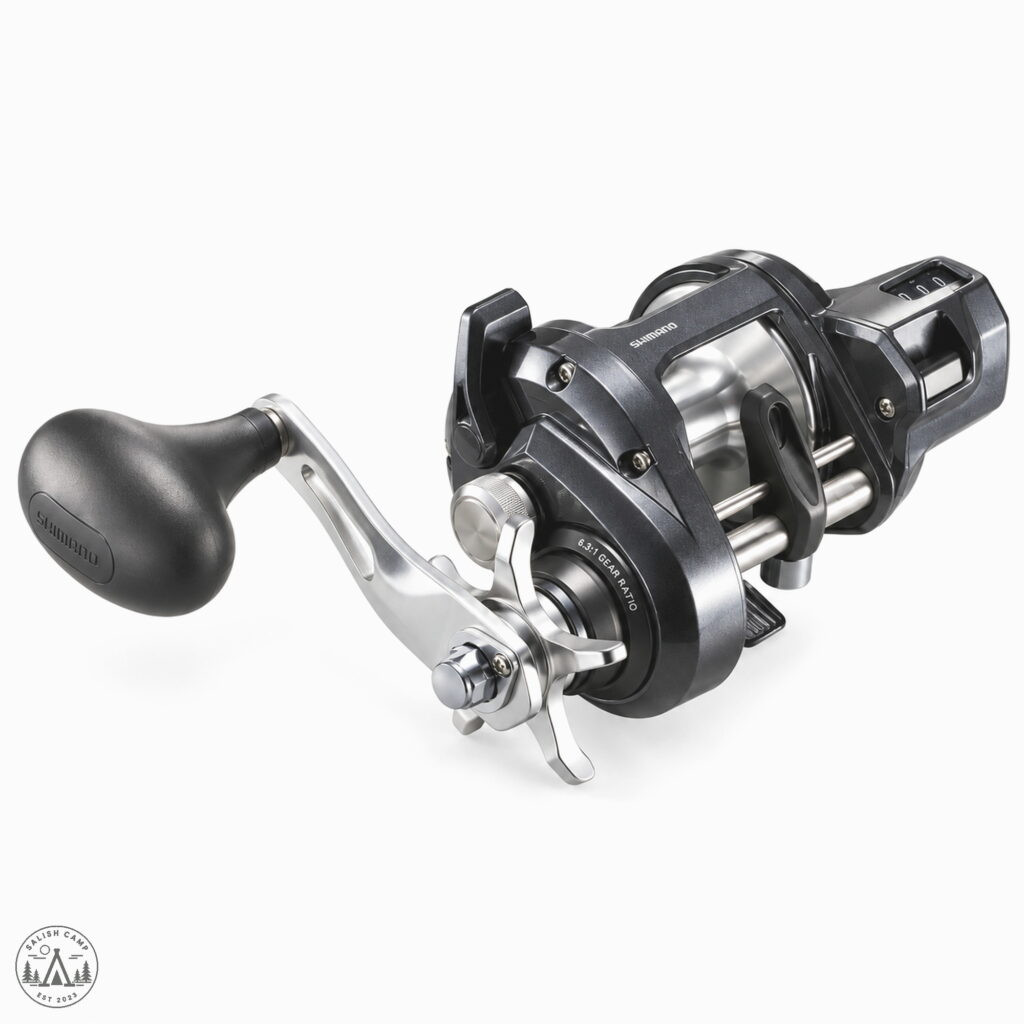
Buy if you run downriggers for salmon in Puget Sound or the Strait of Juan de Fuca and want a compact, right-hand conventional reel that makes setting repeatable trolling depths easier. The Shimano Tekota A 500 LC gives you a counter integrated into the left side plate, a rigid HAGANE metal body, 24 lb of maximum drag, and 38 inches of line retrieval per crank. At $264.99, it makes sense for an angler who trolls regularly, occasionally mooches, and values consistent line placement across multiple rods.
Skip if you primarily mooch with a traditional direct-drive reel, prefer a slower retrieve, or need substantially more line capacity for heavier offshore setups. The 16.4 oz weight is noticeable compared with lighter conventional reels, and the integrated counter adds another component to maintain in saltwater conditions. Anglers who rarely troll at a controlled setback may not get enough benefit from the counter to justify this particular configuration.
What Stands Out
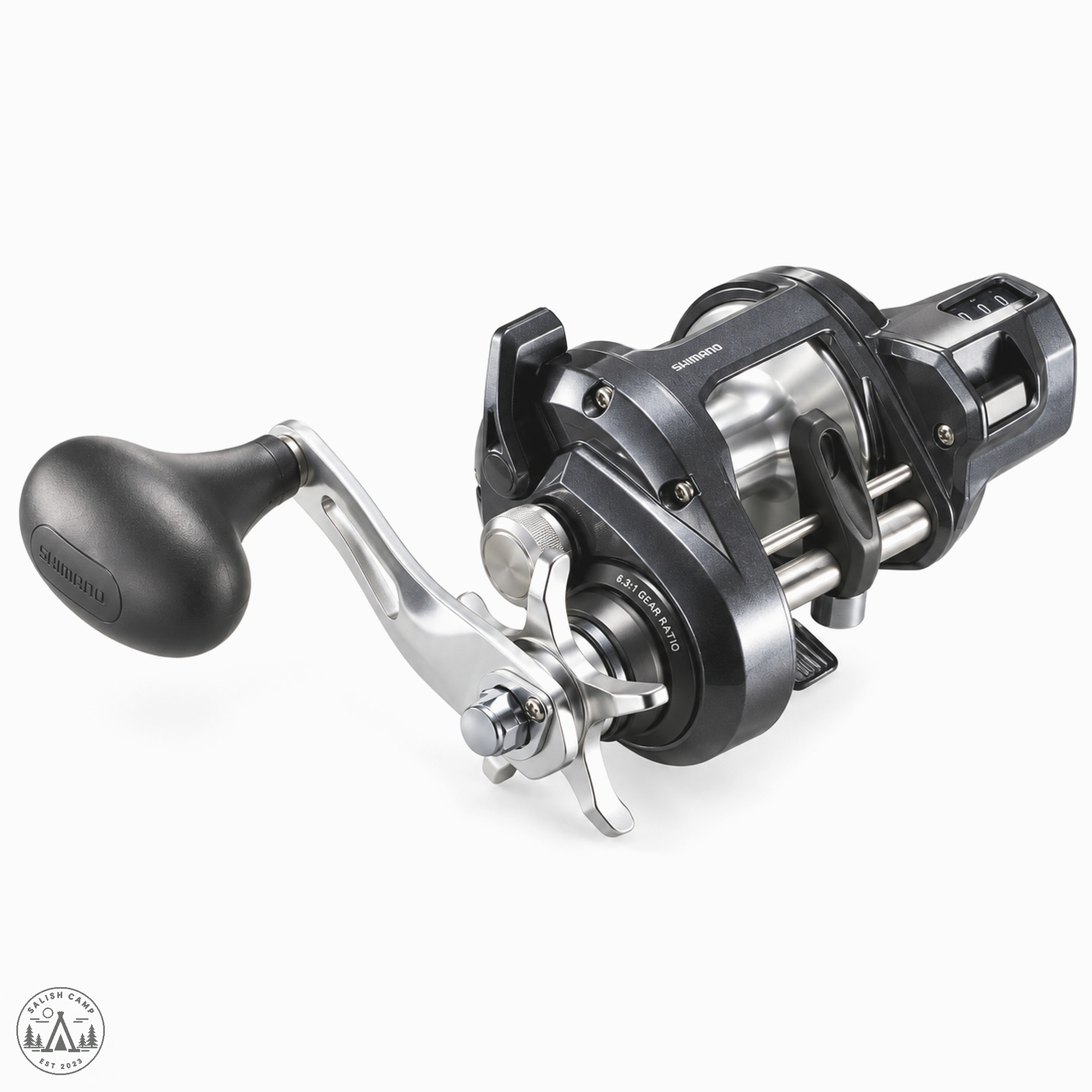
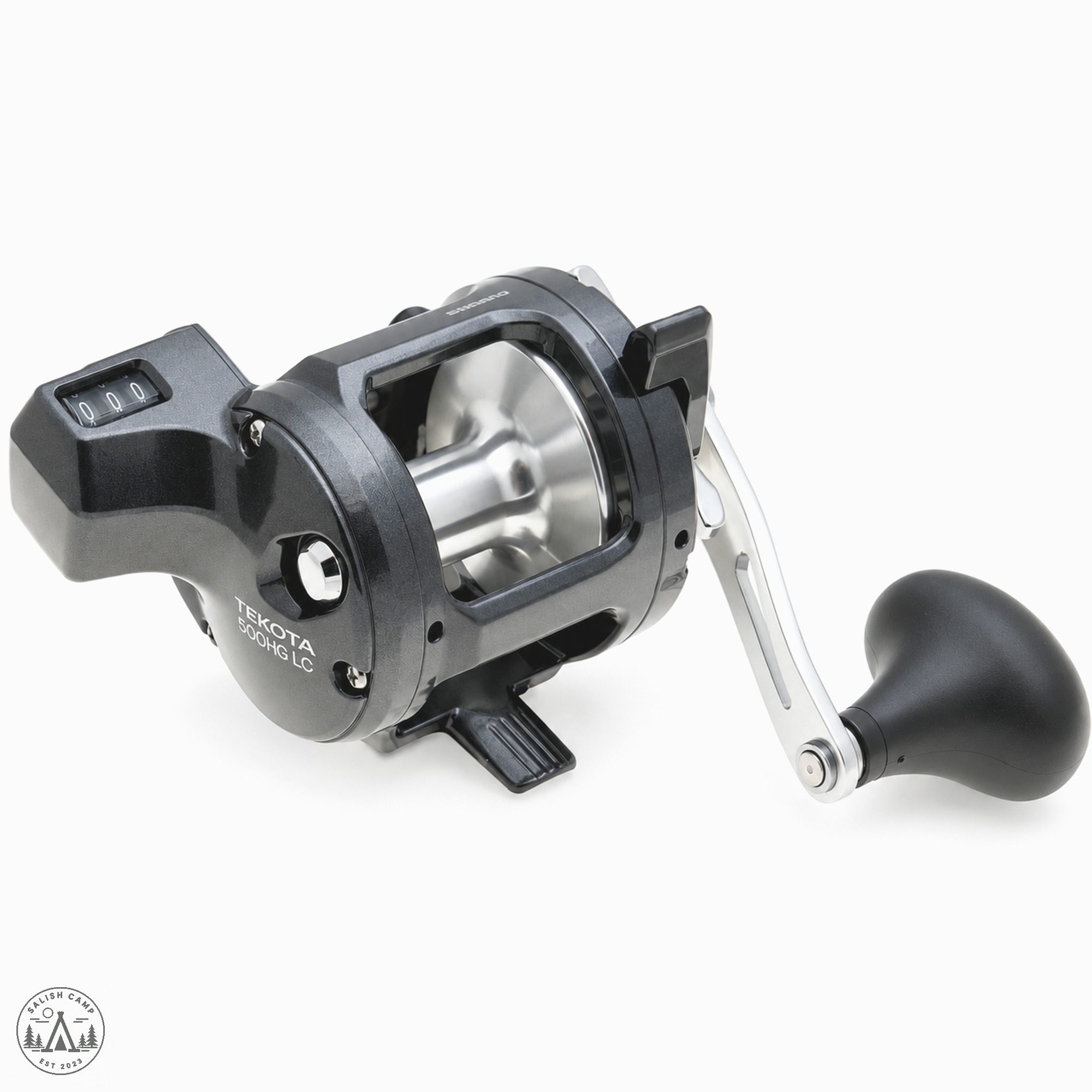
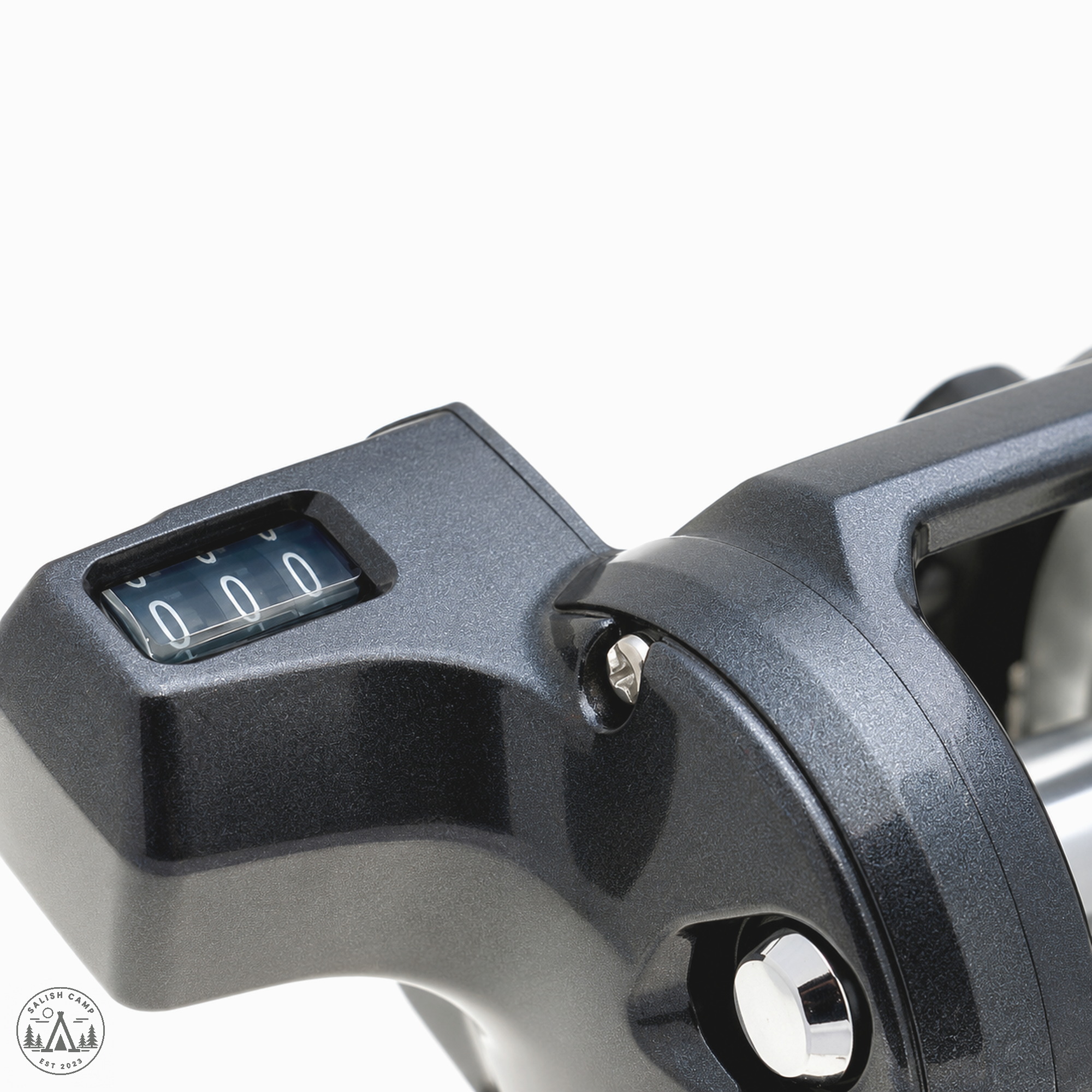
- Integrated B-side line counter. The counter sits in the left side plate of this right-hand reel, keeping line measurement available without adding a separate device to the rod or downrigger.
- Fast 6.3:1 gearing. With 38 inches of retrieval per crank, the Tekota brings gear back quickly when resetting a downrigger, clearing a spread, or recovering line after a salmon changes direction.
- Rigid HAGANE metal body. Shimano’s metal construction supports the drivetrain under load, an advantage when winding against a large fish or repeatedly retrieving trolling gear.
- Cross Carbon Drag with 24 lb maximum. The star-drag system provides adjustable resistance for salmon runs, with more maximum drag than most ordinary Sound trolling situations require.
- Compact palming geometry. Shimano’s S-Compact design makes the non-handle side plate smaller, helping the reel sit more comfortably in the hand when mooching or fighting fish.
- Saltwater-oriented protection. CoreProtect and shielded S A-RB bearings are designed to resist water, salt, and sand intrusion without making the reel feel unnecessarily heavy in operation.
- Useful 500-size capacity. The spool accommodates 285 yards of 16 lb mono or 330 yards of 50 lb PowerPro braid, providing practical options for salmon trolling and mooching without moving to a larger reel.
In The Field
When I’m trolling off Point No Point or working the edge of Possession Bar, I generally want my two downrigger rods fishing in a predictable spread. I’m watching the sounder, checking the downrigger depths, following the contour, and trying to keep the gear fishing instead of spending time correcting one rod. That’s where a line-counter reel earns its place.
The Tekota A 500 LC doesn’t tell me how deep my lure is running. That’s an important distinction for anyone buying their first counter-equipped reel. The downrigger controls the depth of the release, while the reel’s counter helps me repeat how much line I’ve paid out behind the boat. If I’m running a flasher and lure behind a downrigger ball, I can use the counter to establish a repeatable setback. After bringing a rod up to change bait or clear weeds, I can send it back out to approximately the same line setting. With two rods, that keeps the presentations separated without estimating one setback by eye and guessing at the other.
The counter measures line movement, not actual lure depth. A mechanical counter tracks spool rotation, so fill level and line diameter affect the reading—two reels with different fills may not match at identical numbers. I spool paired rods with the same line, keep fill levels consistent, and treat the counters as repeatable references rather than precision instruments.
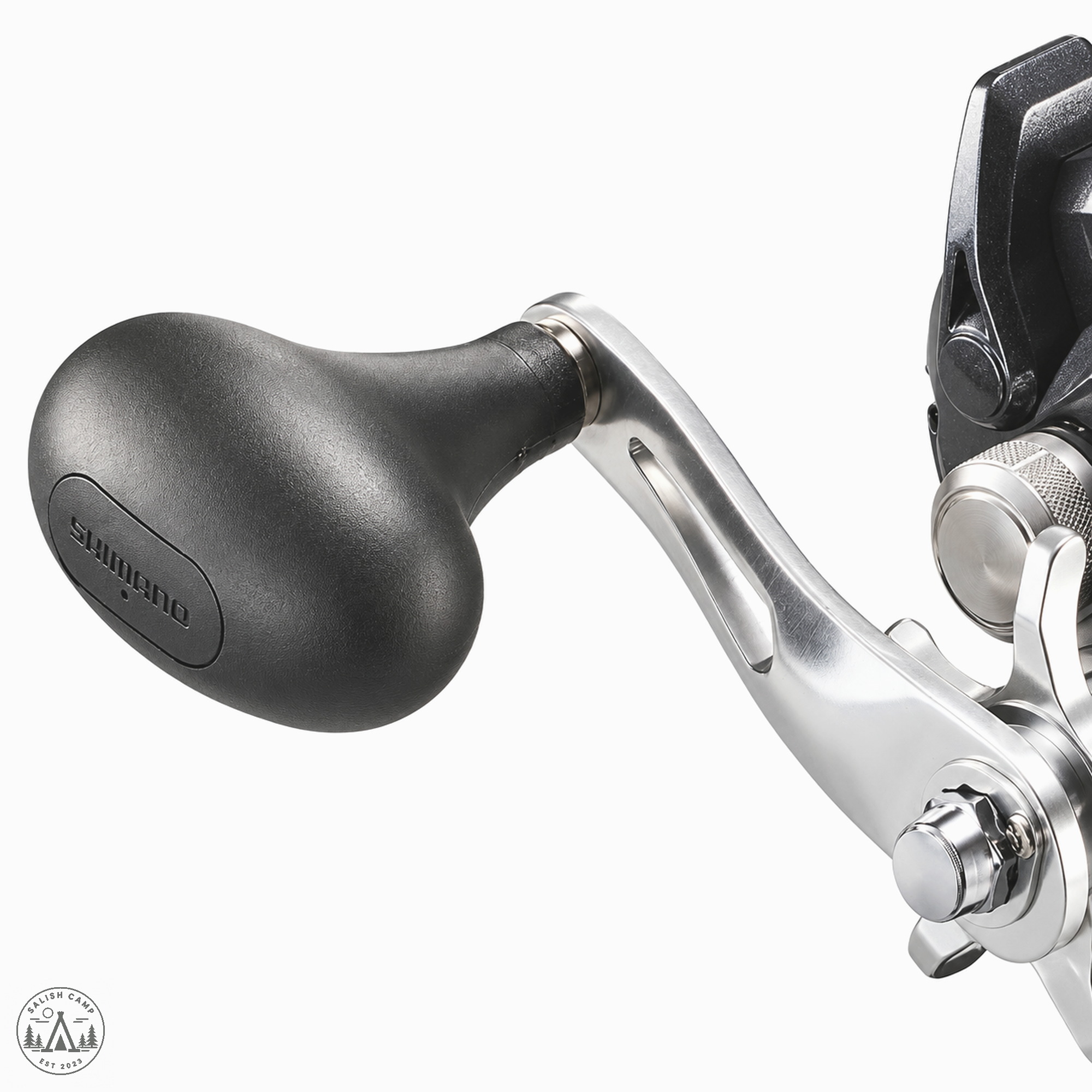
The specific reel here is the TEK500HGLCA, the right-hand retrieve version. I turn the handle with my right hand while the counter sits on the left-side plate. When the rod is in a downrigger holder, the viewing angle depends on how that holder is positioned. Integrating the counter into the side plate keeps one fewer accessory to manage on a small boat. The S-Compact body’s smaller palming side helps when I take a rod out of the holder and hold it while a salmon works against the drag. Handle preference still comes first; Shimano also offers the 501 left-hand version.
The 6.3:1 gearing and 38-inch retrieval rate raise a fair question: is that much speed necessary when you’re mooching a cut-plug herring? For slow, deliberate mooching around Sekiu or Neah Bay, I don’t need to retrieve 38 inches every time I turn the handle. Most of the presentation happens while the bait is descending, hanging in the current, or being brought back at a controlled pace. A fast reel doesn’t force me to fish fast—I can turn the handle more slowly, pause, and manage the presentation with the rod.
Where the gearing becomes valuable is between presentations. If I’m bringing a bait up from deeper water to inspect it, replace it, or get back into the productive part of a drift, the faster retrieve saves cranking. On a downrigger troll, that advantage is even clearer when I need to reset gear repeatedly. A crowded Buoy 10 tide is another situation where quick line recovery helps—recovering slack or clearing a line efficiently when boats and fish cross the spread. The tradeoff is mechanical advantage: when a strong fish is pulling hard, I rely on the rod, drag, and controlled pumping rather than forcing every turn of the handle. For a reel that spends most of its time trolling but occasionally comes out for mooching, I consider the faster gearing a net positive.
The Tekota’s Cross Carbon Drag has a published maximum of 24 lb—not a target setting for everyday salmon fishing. With a typical setup, I want the drag adjusted to protect the line, absorb sudden runs, and keep enough pressure to control the fish. I don’t need to approach the maximum to land a chinook or coho. When a fish turns away from the boat, I want the drag to release line predictably instead of sticking and then suddenly letting go. That matters more than the number on the specification sheet. The clicker is useful for audible line movement when a rod is in a holder.
For most of my Puget Sound salmon fishing, the 500-size capacity is reasonable. Shimano specifies 440 yards of 12 lb mono, 340 yards of 14 lb mono, or 285 yards of 16 lb mono. With PowerPro braid, the published capacities are 390 yards of 40 lb, 330 yards of 50 lb, and 240 yards of 65 lb. Monofilament offers stretch that can be forgiving when a salmon shakes its head close to the boat, but it occupies more spool volume. Braid offers thinner diameters and less stretch, which helps maintain contact—and means I need closer attention to drag settings and rod action. For downrigger work, line compatibility with the release clip matters as much as raw yardage. The 285-yard capacity at 16 lb mono is the figure I’d examine carefully for larger salmon in more demanding water. For ordinary Sound trolling, I find it practical. If I were regularly fishing farther offshore, using much heavier mono, or expecting unusually long runs, I’d consider stepping up to the 600 size.
A reel that spends its weekends in Puget Sound has to tolerate more than the occasional splash—spray across the stern, wet handles for hours, and a fine salt coating before we reach the launch. CoreProtect, shielded S A-RB bearings, and the HAGANE body help, but none of that makes the reel maintenance-free. Owner reports describe drags that feel sticky or creep looser during a fight, clickers that go quiet, a levelwind that failed out of the box, and counters that fog or act up. Those reports don’t establish how frequently problems occur, but they’re worth considering for repeated saltwater use. After fishing, I give the exterior a gentle freshwater rinse rather than directing a hard stream into the side plates or counter housing, wipe it down, let it dry, and check for salt around the handle and line guide. I also inspect how the drag and clicker feel before the next trip. Periodic service matters through a full salmon season.
I see this reel primarily as a downrigger tool that can comfortably handle a second job. On a gray Strait of Juan de Fuca morning—adjusting trolling depth, resetting gear, watching two rods—the line counter and fast retrieve have a clear purpose. When I switch to mooching, the compact body and conventional star-drag arrangement still make sense, even though the counter becomes less important. I wouldn’t choose the Tekota A 500 LC as a replacement for every traditional mooching reel; there’s a different feel to a direct-drive setup, and anglers who enjoy that connection may prefer to keep it. But if I’m outfitting two matched downrigger rods and want the same counter readings, handle orientation, and retrieval characteristics on both, this is the kind of reel I’d put on the shortlist. At $264.99 each, buying a pair is a meaningful investment. For my style of Sound fishing, the counter and fast retrieve qualify.
Pros
- Practical integrated line counter makes it easier to repeat downrigger setbacks and maintain a consistent two-rod trolling spread.
- Fast 38-inch retrieve reduces the effort of bringing gear back for bait changes, adjustments, and quick resets.
- Rigid HAGANE metal body and compact palming design combine drivetrain support with comfortable handling during salmon fights.
- Cross Carbon Drag and CoreProtect technology provide useful fish-fighting control and saltwater-oriented protection.
Cons
- 16.4 oz weight is substantial for anglers who spend long periods holding a rod while mooching.
- Limited heavier-mono capacity makes the 285-yard specification at 16 lb worth considering before choosing it for more demanding offshore use.
- Integrated counter adds complexity compared with a conventional reel without a line counter, particularly for anglers who rarely need repeatable trolling setbacks.
Technical Specifications
| Specification | Details |
|---|---|
| Product | Shimano Tekota A 500 LC |
| Config in photos / primary | TEKOTA 500HG LC A, right-hand retrieve, SKU TEK500HGLCA |
| Price (primary) | $264.99 USD (fishshop.shimano.com, 2026-10-09, in stock) |
| Type | Star-drag levelwind conventional reel with integrated line counter |
| Line counter | Integrated into the B-side (left) plate |
| Retrieve | Right hand |
| Gear ratio | 6.3:1 |
| Retrieve per crank | 38 in |
| Max drag | 24 lb |
| Drag | Cross Carbon Drag, star drag |
| Bearings | 3+1 (S A-RB shielded) |
| Weight | 16.4 oz |
| Mono capacity | 12 lb / 440 yd, 14 lb / 340 yd, 16 lb / 285 yd |
| PowerPro braid capacity | 40 lb / 390 yd, 50 lb / 330 yd, 65 lb / 240 yd |
| Body | HAGANE metal body, S-Compact palming side plate, CoreProtect water resistance |
| Warranty (store page) | 1 year from manufacturing defects |
Final Thoughts
The Shimano Tekota A 500 LC is a sensible choice for salmon anglers who spend more time trolling than mooching but want one reel capable of both.
Its biggest advantage isn’t any single headline specification. It’s how the integrated counter, fast retrieve, compact body, and conventional star drag work together on a small salmon boat.
When I’m running two downrigger rods off Possession Bar, I want to get my gear back to a repeatable position without guessing. When the bite comes on, I want to recover line quickly, manage a running fish, and reset the rod without unnecessary effort.
The Tekota’s 38-inch retrieval rate and side-plate counter directly support that routine.
At the same time, this isn’t a lightweight reel, and the 500-size spool isn’t the answer for every line choice or fishing situation. I also wouldn’t mistake Shimano’s corrosion-protection features for a promise that the reel can survive years of saltwater exposure without attention.
For an angler building a dedicated Puget Sound trolling spread, I like the balance of features and capacity at $264.99. I’d choose two matching reels, spool them consistently, and make freshwater rinsing and regular maintenance part of the routine.
For occasional mooching, the reel remains capable, though its strongest argument is still the work it does behind a downrigger.