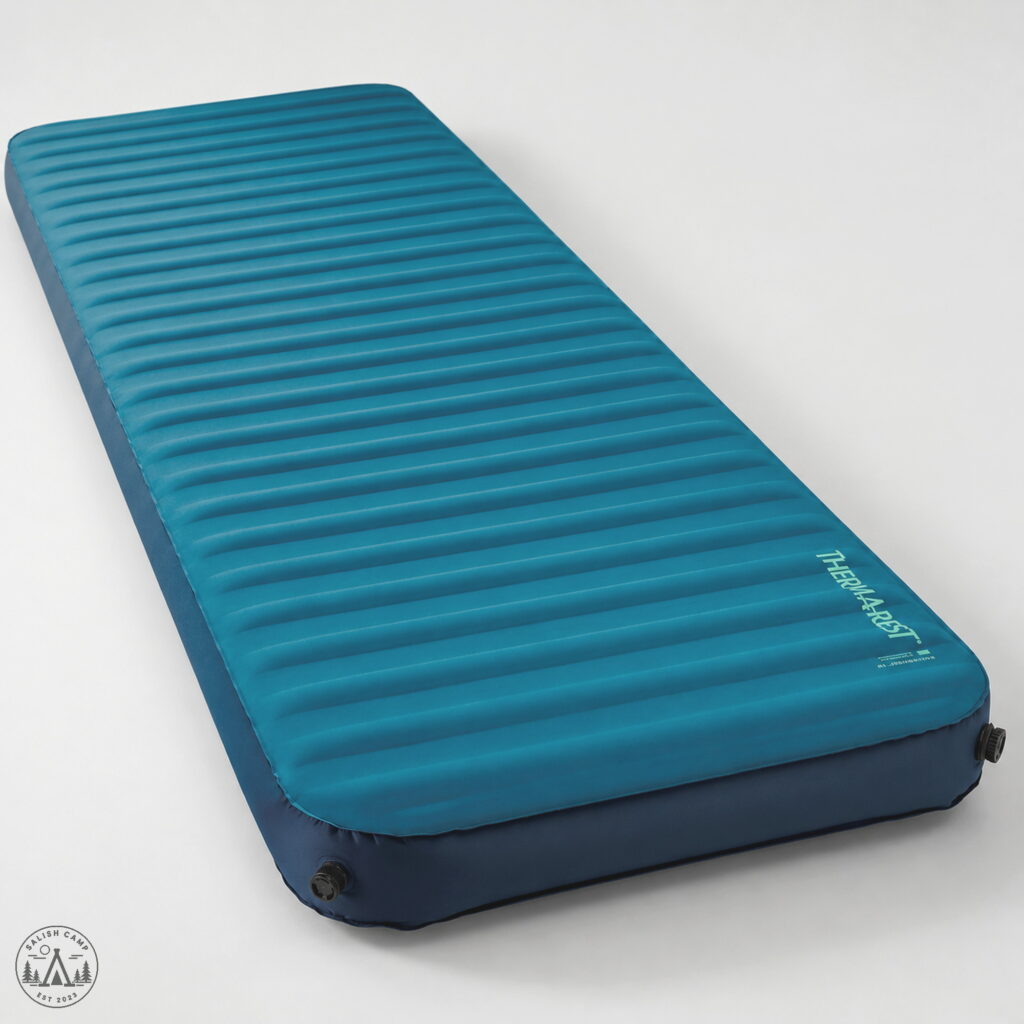
Buy if you want a genuinely comfortable sleeping surface for Pacific Northwest car camping, truck-bed nights, or a semi-permanent basecamp setup. The Therm-a-Rest MondoKing 3D Large in Marine Blue (SKU 14020) costs $259.95 and weighs 4 lb 6 oz (1.99 kg). For that you get an R-value of 7 for cold ground, a 25 x 77-inch sleeping area with vertical sidewalls, and 4.25 inches of supportive foam. It makes sense for campers who put a good night's sleep ahead of packed size and weight.
Skip if you're carrying your gear any meaningful distance, have limited vehicle storage, or only camp occasionally in mild summer weather. At 4 lb 6 oz, with a packed roll measuring 26 x 10.3 inches, the MondoKing 3D is substantial equipment, and $259.95 is a lot to spend on a single-person pad that only makes sense near the car. Its thickness also won't make up for a tent floor that's too small or uneven ground underneath.
What Stands Out
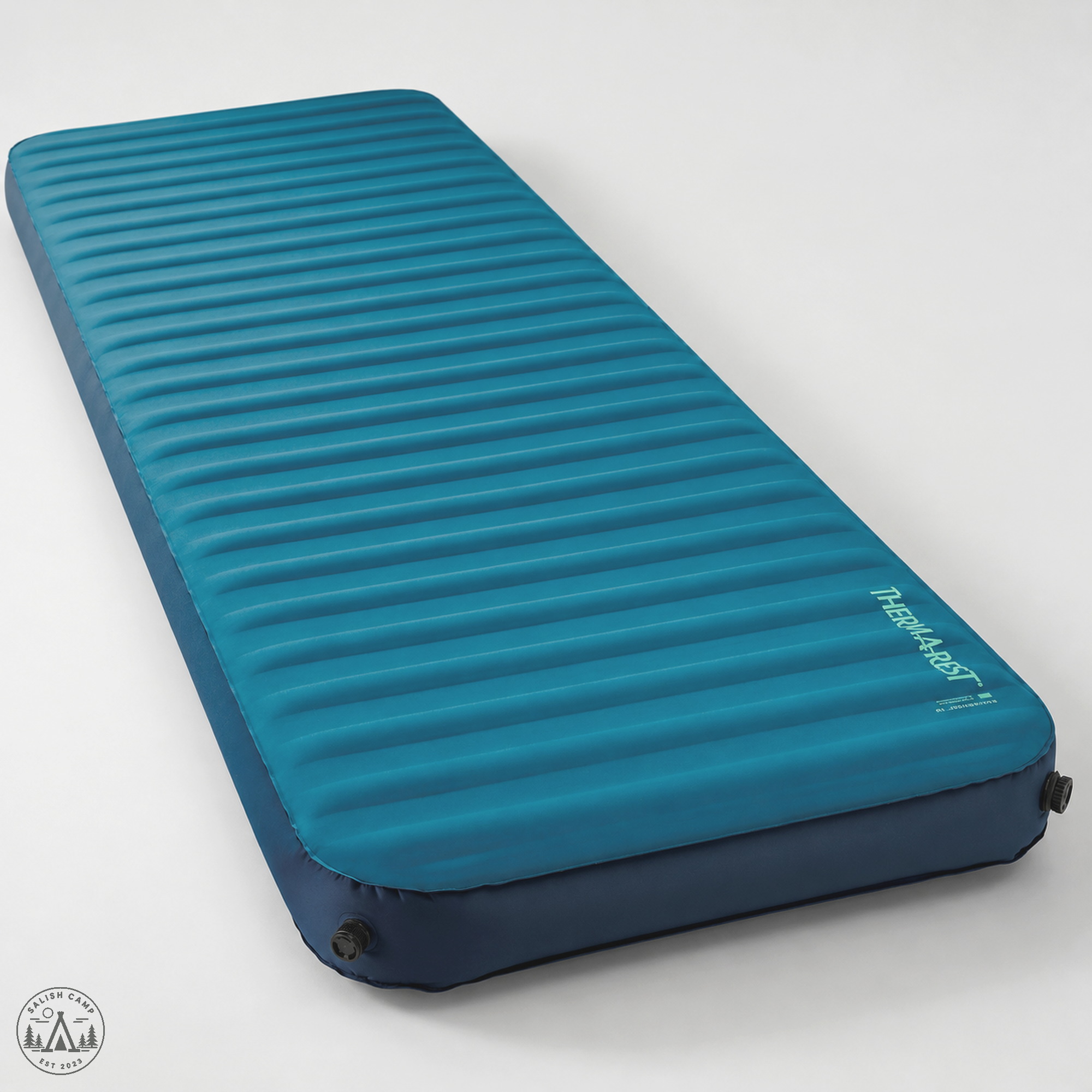
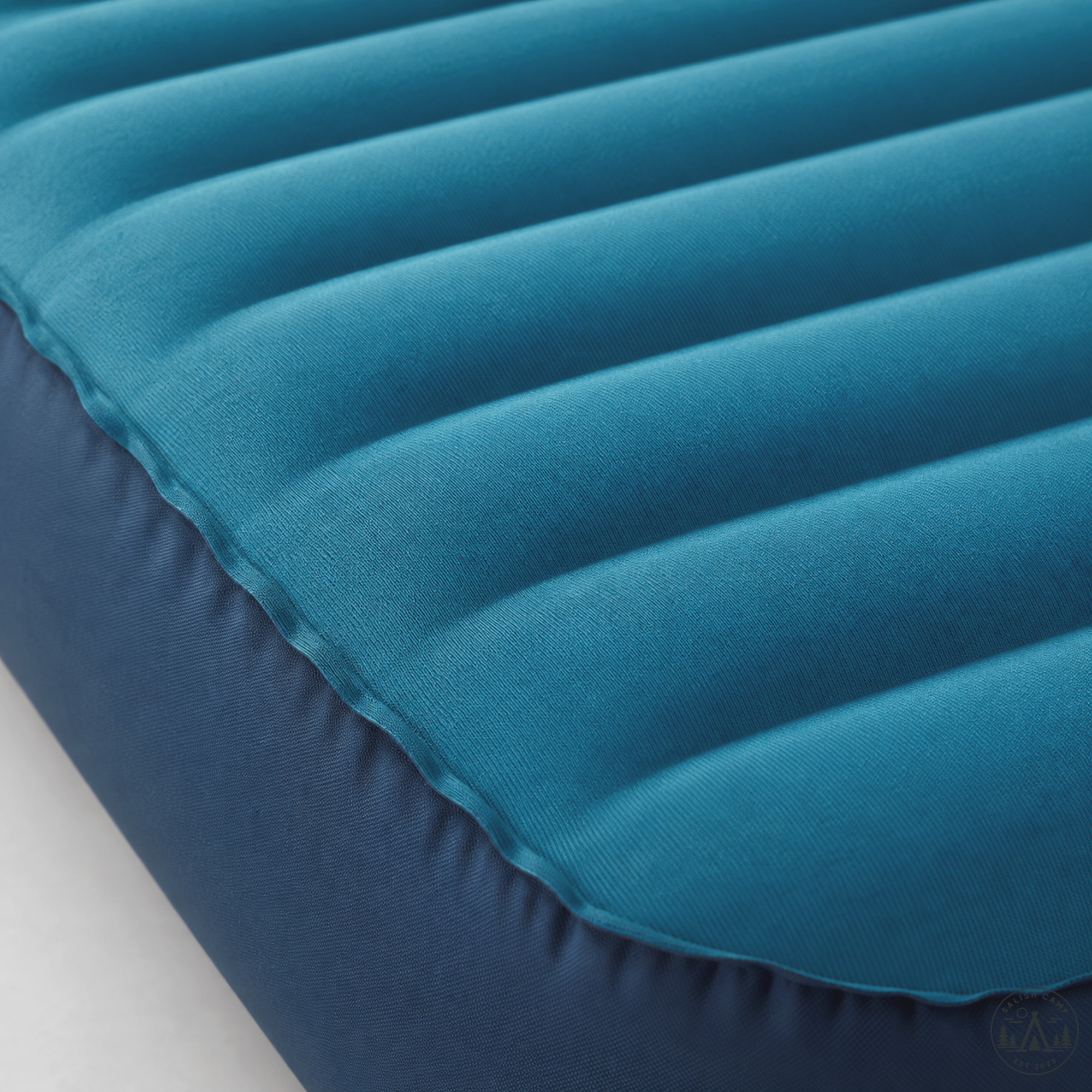
- 4.25 inches of foam-supported comfort. The self-inflating StrataCore construction puts a continuous layer of thermal foam between alternating ridges of air and foam. The result is a thick, supportive sleeping platform rather than a pure air chamber.
- R-value 7 for cold-ground insulation. This is a major advantage for shoulder-season camping in the Cascades and on the Olympic Peninsula, where cold ground can undermine an otherwise warm sleeping system.
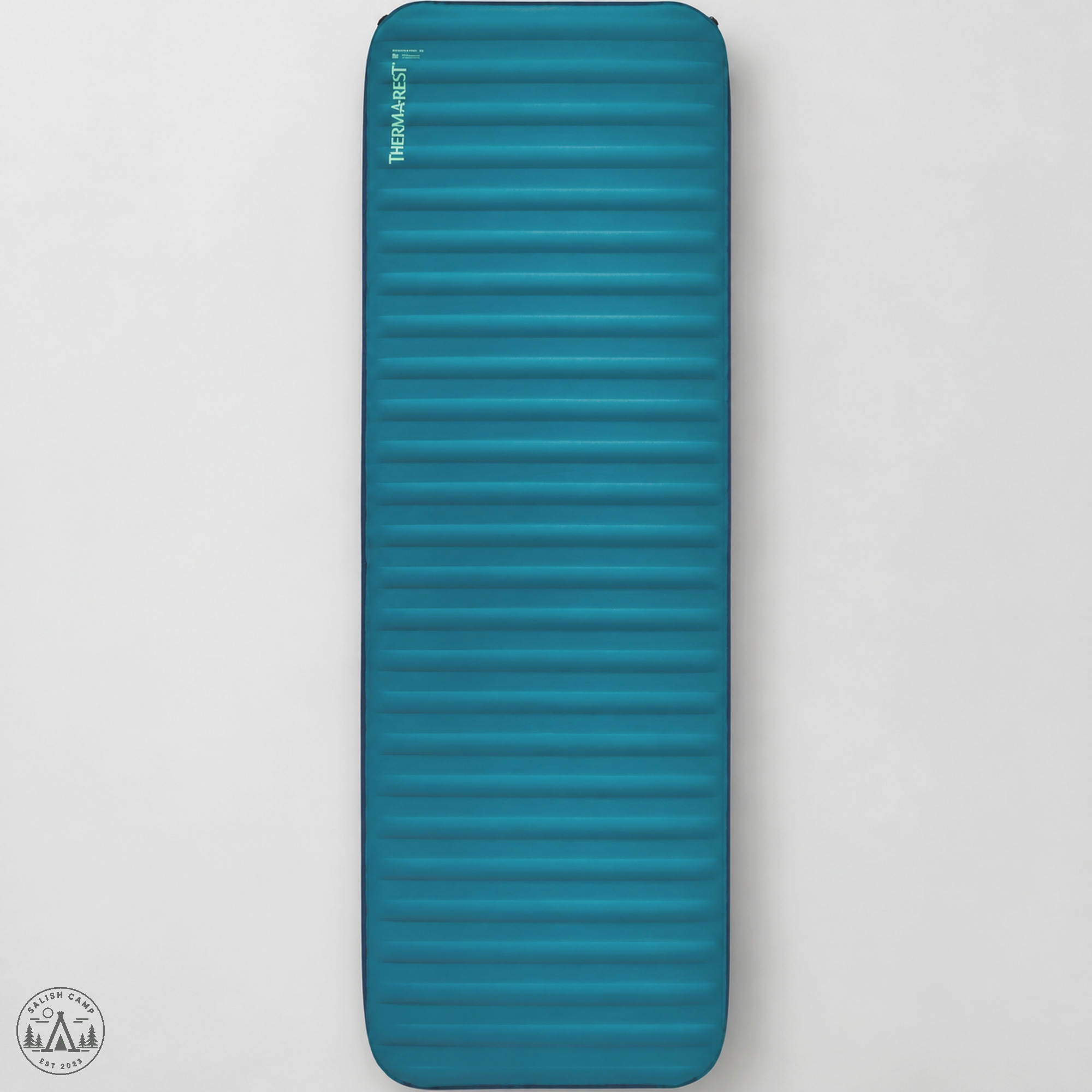
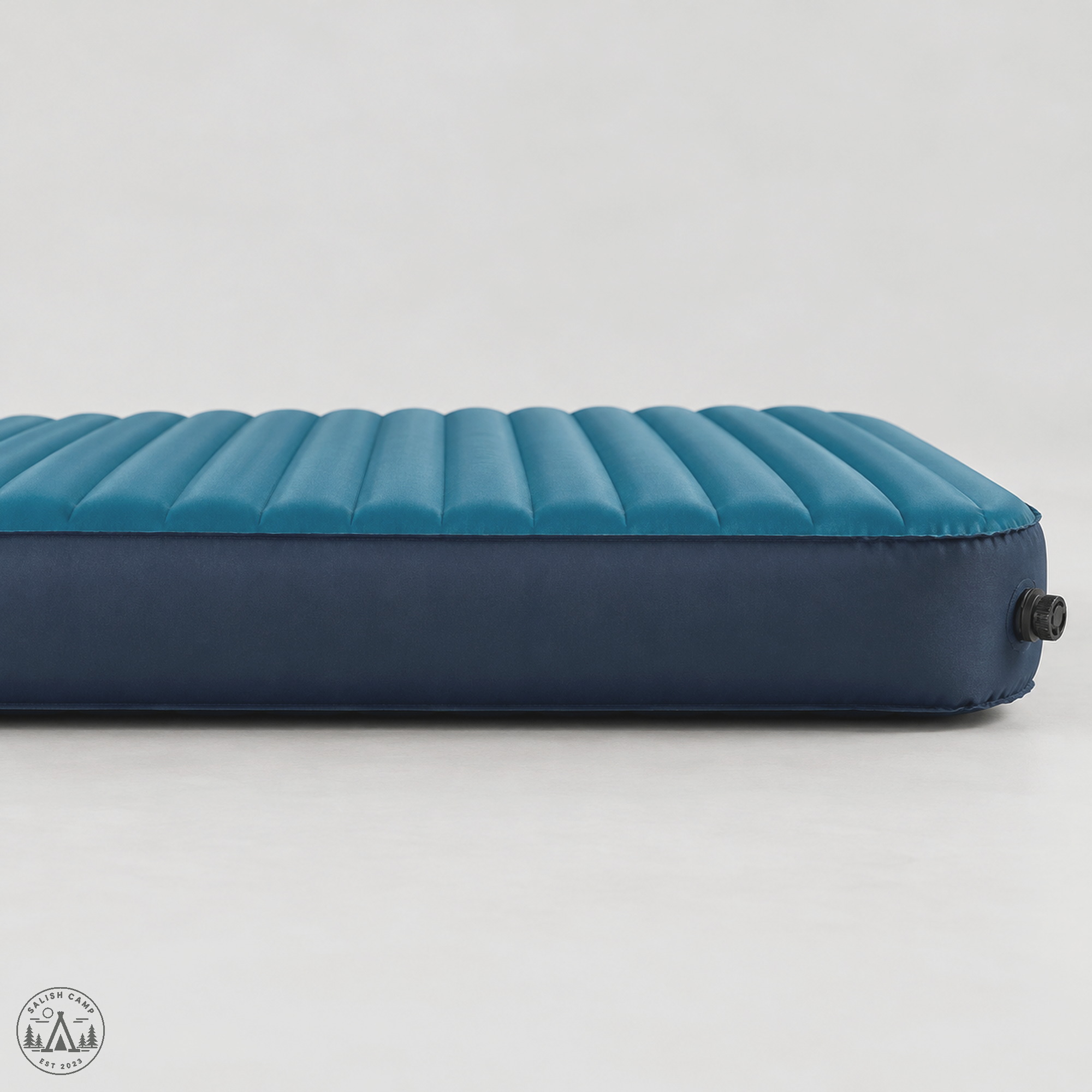
- A genuinely usable 25 x 77-inch surface. Vertical sidewalls keep usable width all the way to the edges instead of rounding them off. For most solo sleepers, the Large is enough without stepping up to the XXLarge.
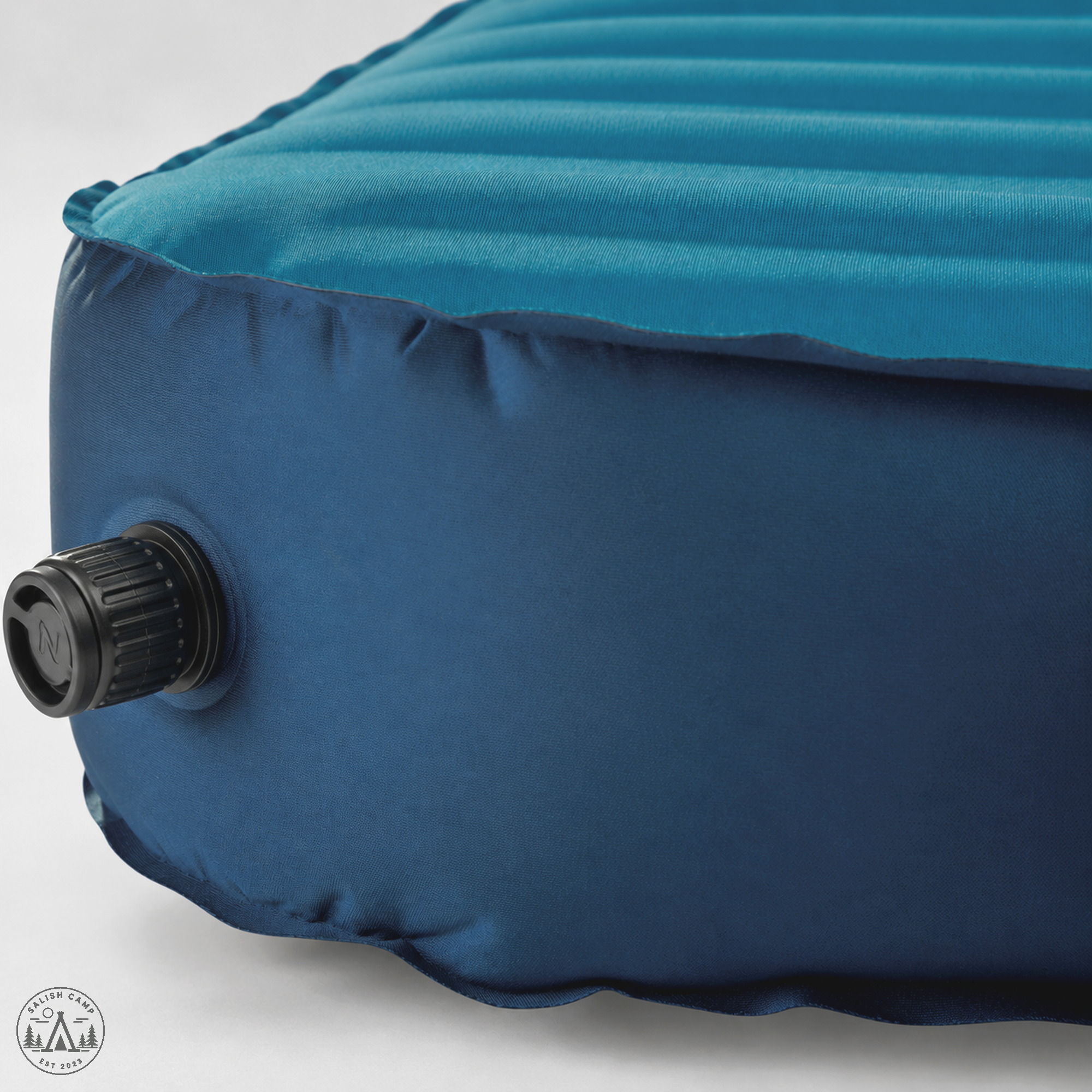
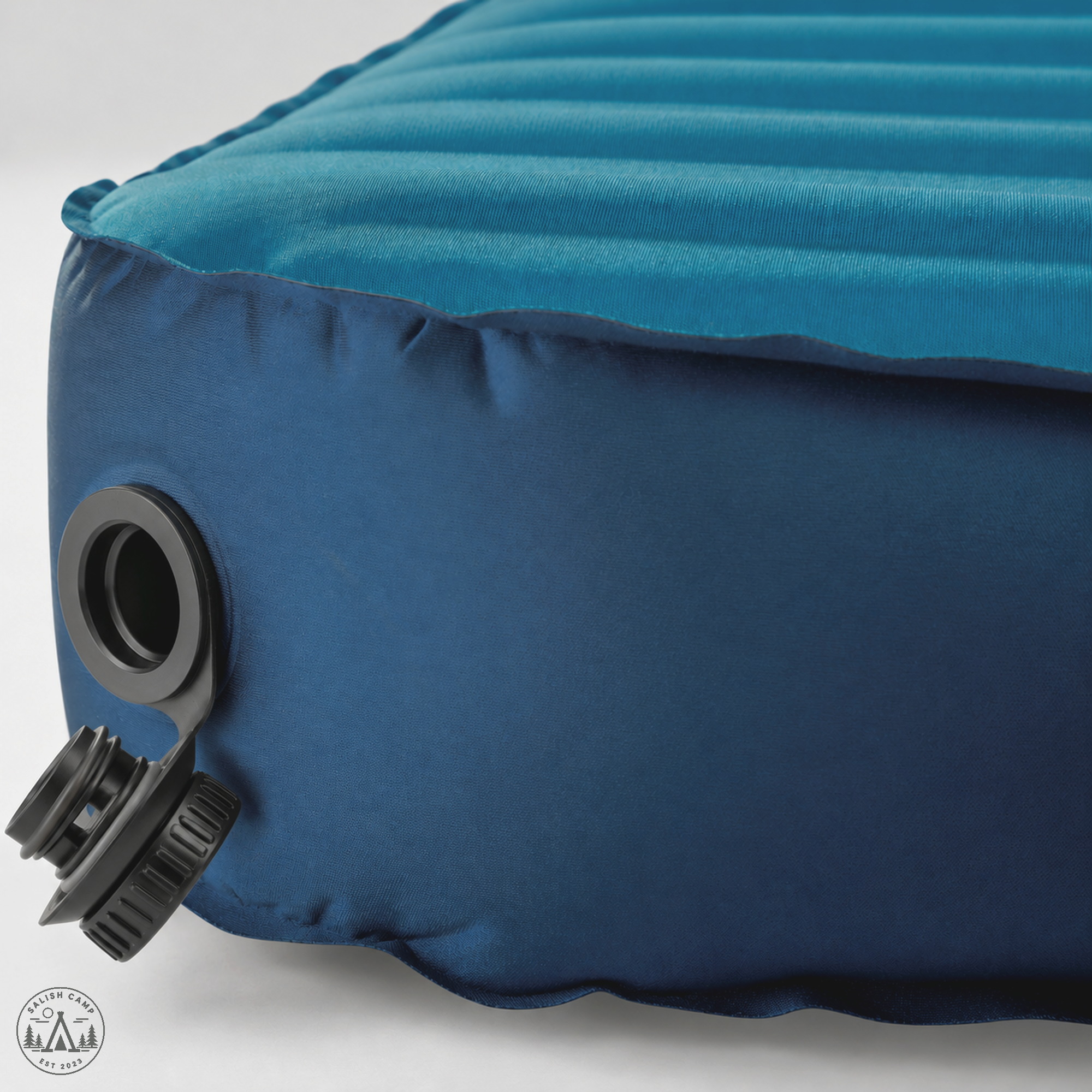
- Separate TwinLock inflation and deflation valves. One-way IN and OUT valves simplify setup and packing. Therm-a-Rest says the pad inflates three times faster and deflates five times faster than with its classic valve.
- A softer fabric surface. The 50D polyester stretch-knit top has a supple, plush feel, while the 75D polyester bottom gives the ground-facing side a heavier layer.
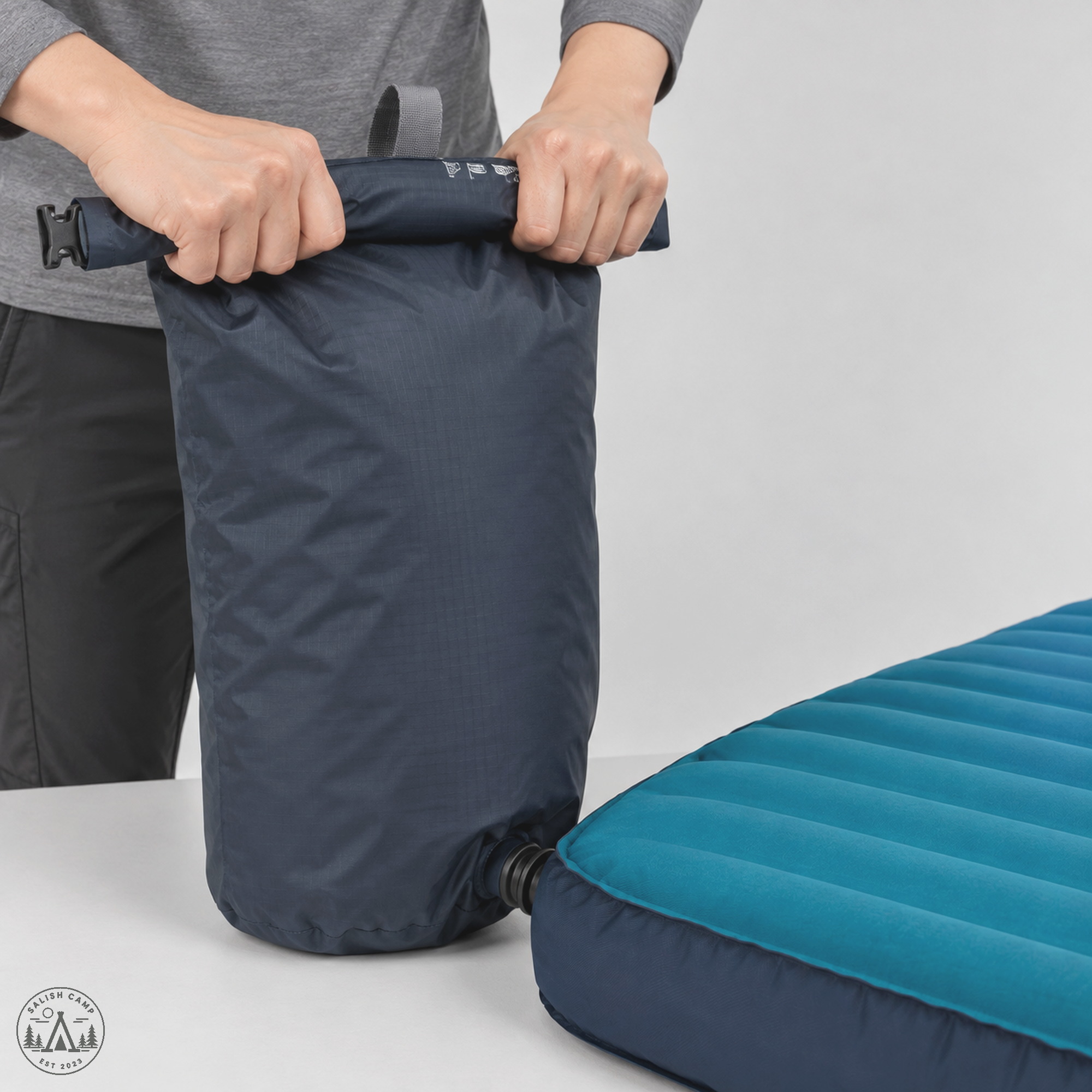
- An included pump/stuff sack. The carry sack doubles as an inflation tool, so you can adjust firmness without using your breath. That matters in freezing weather, when Therm-a-Rest advises against breath inflation.
- A mateable 3D shape. The MondoKing 3D mates with other 3D mattresses, which is interesting for campers building a larger sleeping platform inside a family tent or vehicle.
In The Field
When I'm setting up camp on the Olympic Peninsula or spending a cold weekend near a Cascades trailhead, my priorities are different from those on a backpacking trip. I'm not counting every ounce or trying to fit my sleeping system inside a small pack. I want a dependable place to sleep after a long day outside, preferably without waking up because my hip has been pressing into the ground. That's the kind of camping the MondoKing 3D is built for.
At 4.25 inches thick, this is closer to a portable bed than the thin pads many of us started camping with. The important difference isn't just the amount of cushioning. A thick mattress filled only with air can feel bouncy or unstable when you shift your weight. In the MondoKing, the StrataCore foam keeps the sleeping surface more controlled, and the air lets you fine-tune firmness. That matters when you're rolling from your back onto your side.
Side sleepers, in particular, should appreciate the extra depth. The shoulder and hip have more room to settle before they reach the ground.
One page detail is worth flagging. The Stable Comfort feature bullet describes 4 inches of stabilized loft, while the technical specifications list 4.25 inches. I'm using the 4.25-inch spec as the primary thickness.
The R-value 7 is one of the pad's strongest selling points for Pacific Northwest camping. Cold ground is easy to underestimate. You can have a warm sleeping bag, dry clothes, and a sheltered tent and still feel chilled from underneath. That's especially true on shoulder-season trips, when the air temperature is manageable but the ground stays cold and saturated from days of rain.
R-value describes a pad's resistance to heat loss, and Therm-a-Rest's FAQ cites ASTM F3340-18 as the industry standard for sleeping-pad R-value ratings. For my style of car camping, I'd rather bring one well-insulated mattress than stack several thin pads. The same logic applies to a truck bed, where the sleeping platform may be cold metal. For newer campers, one distinction matters: R-value measures insulation, not heat generation. You still need an appropriate sleeping bag or quilt, dry sleepwear, and protection from wind and rain.
Size is the next decision, and for most solo car campers I'd start with the Large. At 25 x 77 inches, it gives you a useful amount of sleeping space without getting unnecessarily wide. The vertical sidewalls keep that rectangle usable all the way to the edges.
The XXLarge expands the footprint to 30 x 80 inches. That's five more inches of width and three more of length, which could be worthwhile for taller campers, broad-shouldered sleepers, or anyone who wants more room to change positions. But it costs $289.95 instead of $259.95, weighs 5 lb 8 oz instead of 4 lb 6 oz, and packs into a longer 31-inch roll. Before ordering either size, I'd measure the space it has to fit: the tent floor and what's left over for another sleeper or gear, or the distance between the wheel wells in a truck bed.
Self-inflating also doesn't mean the mattress instantly turns into a finished bed. The foam inside has been compressed for storage. When you open the IN valve, the foam starts to recover its shape and draws air in as it expands. Therm-a-Rest's general guidance is that its self-inflating pads take roughly 5–15 minutes to inflate on their own. New or long-stored pads take longer, and cold weather can slow the process too. Unrolling the pad on a clean tent floor and opening the valve is one of the first things I'd do after pitching the tent, then let it work while I organize the rest of camp.
Before the first trip, Therm-a-Rest recommends inflating the pad by breath or with the pump sack and leaving it fully inflated for 2–4 hours. Even after the foam has expanded, you'll usually want to add air, because self-inflation sets the shape, not necessarily your preferred firmness. The included pump sack handles that top-off, and it's the better choice in freezing conditions, where moisture from your breath can freeze inside the mattress.
On a pad this thick, the TwinLock layout earns its keep with two separate one-way valves. The IN valve handles inflation, so air you add with the pump sack doesn't escape between pumps.
The OUT valve handles deflation, so air can escape as you roll the pad without being drawn back in. Therm-a-Rest says the system inflates three times faster and deflates five times faster than its classic valve. Those are relative claims, not a promise of a specific number of minutes. Giving each valve one job keeps packing simple with cold fingers.
The amount of air still determines how firm the pad feels. For back sleeping, I'd start moderately firm so the hips don't sink too far relative to the upper body. For side sleeping, I'd try slightly less air so the shoulder and hip can settle in farther. Too much air makes even a thick mattress feel hard, and too little lets you bottom out when you shift positions. Test it lying in your normal sleeping position rather than pressing a hand into the surface, and expect to make a small adjustment after the pad has sat in a cold tent. The supple 50D polyester stretch-knit top adds to the plush feel.
Insulation and moisture protection are separate concerns. I'd still put a proper tent floor or another protective layer under the mattress. The 75D polyester bottom is heavier than the 50D top knit, but I wouldn't deliberately set it on sharp gravel, abrasive metal edges, or exposed wet ground. If the floor is damp in the morning, I'd wipe down the underside and let it dry before packing it.
The trade-off for all this comfort is packed size. The Large rolls up to 26 x 10.3 inches, a substantial cylinder next to compact backpacking pads. I'd plan a dedicated spot for it in the trunk rather than assume it will squeeze in after the tent, cooler, and camp furniture. To pack it, open the OUT valve and roll the pad toward the valve end, pushing the air out as the foam compresses. Then slide it into the included stuff sack.
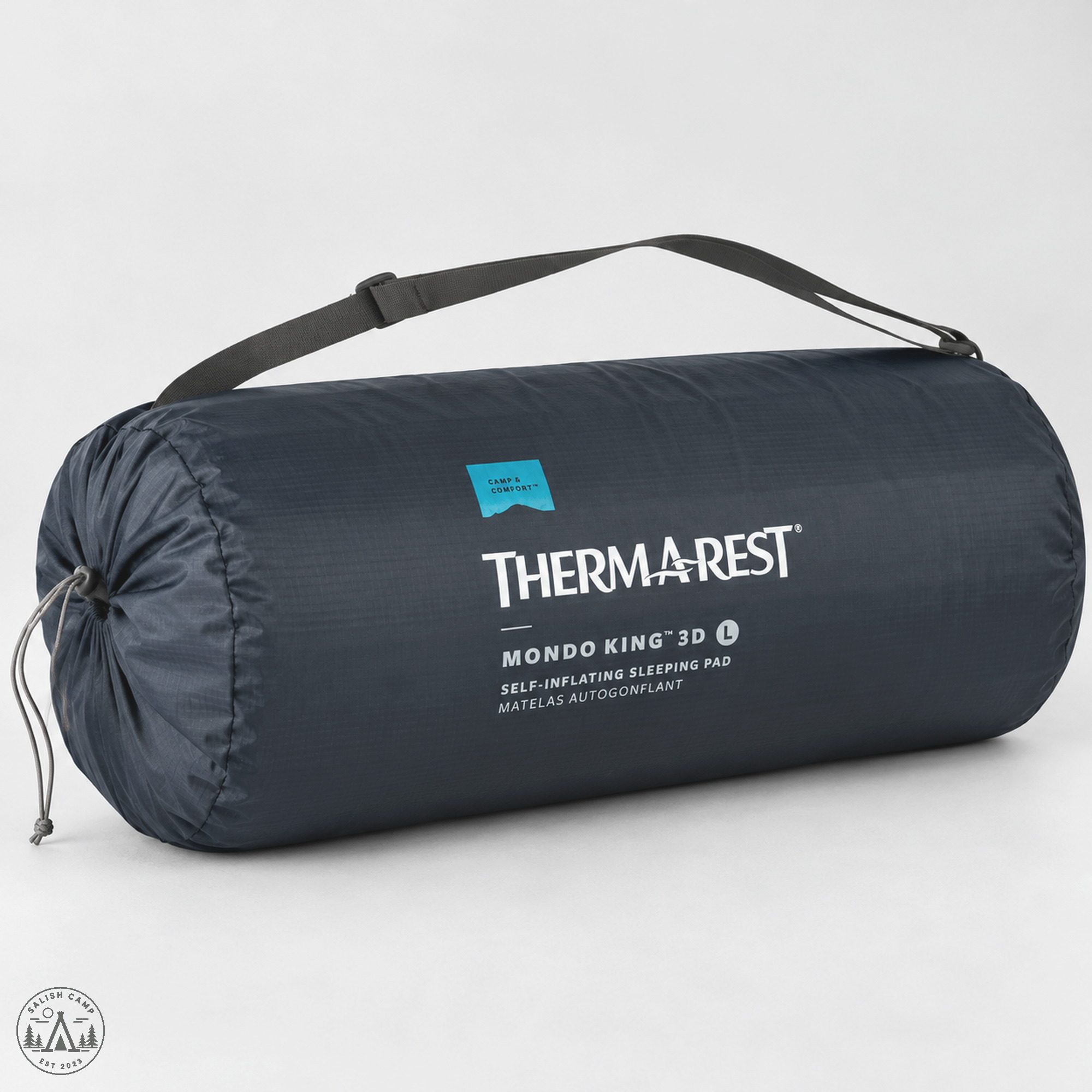
Long-term storage is different. Therm-a-Rest recommends storing self-inflating pads unrolled and fully inflated in a dry place with the valve open, which helps the foam self-inflate faster on the next trip. Prolonged storage in a damp space can cause mildew damage, and the warranty doesn't cover that. For cleaning, use a hose or a bathtub with the valves closed, never a washing machine.
So is it worth $259.95? If I'm hiking several miles to a campsite, a 4 lb 6 oz mattress with a large packed size isn't a sensible choice, and I'd carry a purpose-built backpacking pad instead. But when the vehicle is parked near the tent, weight matters much less than sleep quality.
The real question is whether you camp often enough to justify the cost and the storage space. For regular weekends at established campgrounds, basecamps, or truck-bed setups, I think that trade-off makes sense. For someone who camps twice a year in warm weather, it may be more mattress than they need.
Pros
- Excellent sleeping depth and support: The 4.25-inch StrataCore construction provides a thick, foam-supported surface with adjustable firmness.
- R-value 7 insulation: A strong choice for cold-ground nights and shoulder-season camping in the Pacific Northwest.
- Generous rectangular dimensions: The 25 x 77-inch Large and its vertical sidewalls provide usable room without stepping up to the XXLarge.
- Practical inflation system: Separate TwinLock valves and an included pump/stuff sack simplify setup, firmness adjustments, and packing.
Cons
- Bulky and heavy: At 4 lb 6 oz and 26 x 10.3 inches packed, the Large needs dedicated space in the vehicle.
- Premium price: $259.95 is a significant investment for a single-person car-camping mattress.
- Requires setup and storage attention: The foam needs time to self-inflate, usually needs a pump-sack top-off, and should be stored unrolled with the valve open.
Technical Specifications
| Specification | Details |
|---|---|
| Product | Therm-a-Rest MondoKing™ 3D Sleeping Pad |
| Size in photos / primary | Large, SKU 14020, Marine Blue |
| Price | $259.95 USD Large (cascadedesigns.com, 2026-10-08, in stock) |
| Other size | XXLarge, SKU 14021, $289.95; 5 lb 8 oz / 2.50 kg; 30 x 80 in (76 x 203 cm); packed 31 x 10.3 in (79 x 26 cm) |
| Weight (Large) | 4 lb 6 oz / 1.99 kg |
| R-value | 7 |
| Dimensions (Large) | 25 x 77 in (64 x 196 cm) |
| Thickness | 4.25 in (11 cm) |
| Packed dimensions (Large) | 26 x 10.3 in (66 x 26 cm) |
| Construction | Self-inflating StrataCore; urethane foam; vertical sidewalls (3D shape) |
| Top fabric | 50D polyester knit |
| Bottom fabric | 75D polyester |
| Valve | TwinLock™ (separate one-way inflate and deflate valves) |
| Included | Pump/stuff sack |
| Color | Marine Blue |
| Country of origin | Made in USA of US and imported materials |
| Warranty | Therm-a-Rest Limited Lifetime Warranty |
Final Thoughts
The Therm-a-Rest MondoKing 3D is the kind of sleeping pad I'd consider when a camping trip is more about settling into a comfortable basecamp than moving efficiently between campsites.
For the Olympic Peninsula, Cascades trailhead camping, or cold-weather truck-bed setups, an R-value of 7 combined with 4.25 inches of foam-supported comfort is compelling. The Large has enough width and length for a comfortable single-person setup, and its vertical sidewalls make that space more usable.
I also like that the design doesn't rely entirely on air pressure for support. The StrataCore foam gives the mattress a more substantial foundation, and the TwinLock system makes inflation and deflation easier to manage.
There are compromises. It's expensive, it takes up a meaningful amount of trunk space, and it needs proper storage between trips. I'd only choose the XXLarge if I genuinely needed the extra width and length.
For frequent car campers who value sleep quality, those compromises are reasonable. I'd rather have one well-insulated, comfortable mattress I look forward to sleeping on than keep settling for thinner pads that leave me sore in the morning.
The MondoKing 3D isn't the mattress I'd take into the backcountry. It's the one I'd want waiting in the tent when the truck is parked nearby, the ground is cold, and there's another full day outdoors ahead.